


Likes
Comments
Share

@AbbyCat
Follow
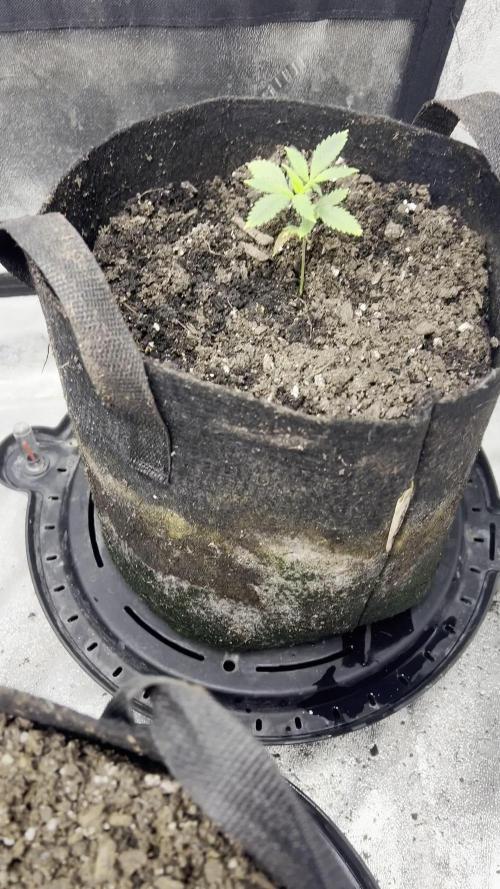
The sick ones are looking stronger and still really behind, but I think they will all bounce back. The new growth looks healthy, and they look strong for the most part. Just really small compared to the healthy sisters. 4 week veg starting with nut change, removed Voodoo Juice.

Likes
34
Share

@Hempface86
Follow
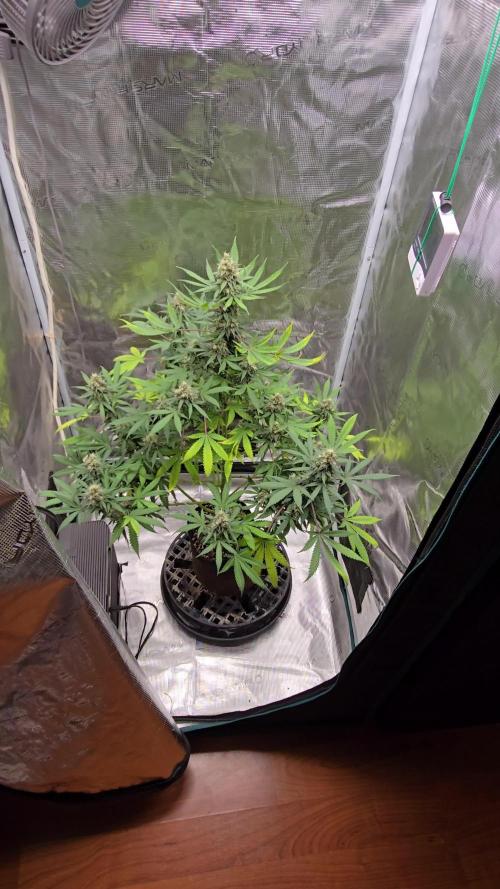
Another week passes and it's official.I will never ever know what strain this is smh .. i feel like she has a few weeks at minimum left so I gave her some green sensation in hopes of helping her bulk up .. hope everyone is doing well.God bless and happy growing ✌️
Likes
8
Share


@CashiLashae
Follow
Adding in additional nutrient called Overdrive for the nexts couple weeks


Likes
10
Share

@Sators
Follow
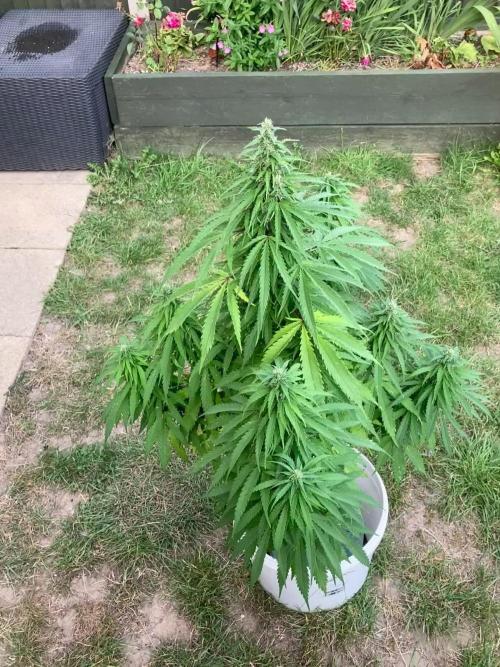
Day 99 – Royal resilience in full bloom!
What a week it’s been in Ramsgate — mostly dry, high UV, and just enough breeze to test her stems! Yet this CBD Auto 20:1 by FastBuds stands proud and unfazed. She’s forming a majestic canopy with striking vertical growth, and those buds are stacking like she means business.
After 17 days since the last Bat Guano top-dress, I’m preparing for a final microboost — a light sprinkle to support resin and terpene production as she enters her ripening phase.
Yellowing lower leaves show she’s using her energy wisely, and given this organic setup — super soil, sunlight, and zero synthetic inputs — her response has been truly exceptional.
A massive shoutout to FastBuds for creating such a powerful, stable, and sun-loving CBD strain! The vigor, resistance, and structure of this phenotype are nothing short of impressive — a real gift for low-intervention growers looking for clean, medicinal harvests.
This lady is thriving with confidence, and I’m genuinely excited to see her final expression soon. Patience and sunlight are doing their magic.
Likes
45
Share


@masterofsmeagol
Follow
5/28 It poured yesterday so i dodnt bring the girls outside. Seedlings are transplanted into gallon pots. Once the fill that they'll go in final homes. I brought the plants out on this overcast day to harden them off. They're under the cover of the barn though placed by the open door. I've been putting in some work. Once this rain stops I have a couple things to do on the cage then I'll put the bags in the spots I have mapped out and mix my soil and fill the bags. The next day I typically transplant and add the first layer of supports. I have more pictures but not enough time to download them.
5/29 wow this site sucks. I have already done and saved this shit but its not here. Good thing I copy and pasted from grow with Jane. Only thing that sucks is I can't upload videos. It's not working here anyway so.... Watered and used about 3 gaterade bottles total. I may have messed up and watered the event horizon to much. They seem to be getting rootbound. Plants are doing well though with the transition. They are still hardening off. Tomorrow I plan to position and fill the bags with soil and if able I'll transplant them in the next few days. I want to make sure they're hardened off. Low tonight is 49 but it's 50s after that so I should be good. I'm hoping this video will load. Very stressful to do this shit over and over.
5/30 Plants have spent all day in tje Cafe and are coming in for the night. I finished mixing soil and filling the grow bags. They are ready for transplant. Weather is looking good so if plants respond well to this mild weather they will be transplanted with first set of supports added either tomm or the next day. Depends on plants response today (so far they're doing great) on whether I transplant tomorrow or the day after. I am sore as hell. Pictures are having trouble uploading and I'm not even gonna try to upload the video I took.
5/31 Plants have been taking a few days of full sun and they're doing fine. I'm planning on transplanting this afternoon. I had to water today. I weighed the pots and some were in tje 1200's grams which is dry. I'll update as I work. I have some errands to run then I'm putting the girls in their final homes.
EDIT: WIND WAS RIDICULOUS! I TRANSPLANTED 3 OF THE HEALTJY GMO'S. WHEN I GOT BACK PLANTS WERE RIGHT SIDEWAYS FROM THE WIND. I WENT WITH INTUITION AND TRANSPLANTED 3 GMO'S. OTHER BAGS ARE READY. THE REST OF THE PLANTS WILL GO OUT TOMORROW MORNING. THE SMALL SUPPORTS I HAD DIDNT DO SHIT. I HAD TO ADD TOMATO CAGES AND TOE THE STALK TO THE TOMATO CAGE. SUCKS I COULDNT GET THEM ALL IN BUT BETTER SAFE THAN SORRY. TRANSPLANTS WENT REAL SMOOTH. KNOCK ON WOOD. I TJ8NK THE OTHERS WILL TOO. THEY'RE READY FOR A NEW
6/1 Finished transplanting everything. Easiest transplant I've had so far. 4 gmo 1 toasted toffy 1 sherb pie and 2 event horizon. Everything is in 20 gal smart pots. One gmo is in a 30 gal smart pot. The medium is 1/3 of each roots organic 707, fox farm happy frog and fox farm ocean forest. Used mykos when transplanting. Wind gusts were coming from everywhere direction so I couldn't put a tarp up to block it. I bought "grow cages" which are kind of like tomato cages. The wind is so strong it blows the plants right against the cage. Oh well. I hope it works out. I'll check on them a little later and see how they're doing.
6/2 It was 45 degrees this morning. Nice out now. Plants are doing good. A couple gmos are drooping but it was cold. One gmo looked as good as ever! Sherb pie and toasted toffy are totally unaffected. In this new area plants get a lot of direct sun. Slight tacking on the gmos in the front. The event horizons really needed that transplant. Grow cages seem to be working out well.
6/3 I Watered the garden this morning as its been 75-80 out. I only used a gallon of water for the 8 clones. I'm not sure if I watered enough when I transplanted or not. Some plants have some burns from the intense direct sunlight. Plants could've used a bit more hardening but they'll be fine. A few of them seem great and have no real signs of stress dispute 25mph wind gusts and 15 mph constant wind and this hot sun. I should go check on my plants again this evening but I figure they'll be alright until morning. I've had an incredibly busy day and they were fine at noontime. I'm going to consult my other diaries and see what I did watering volume wise. I've for some videos but they take FOREVER to upload.
EDIT: Looked at last year's diary and it was rainy as fuck and I took way more time hardening the plants. I've had more going on in life which has effected that. Went over at 3pm and gave the plants 3 more gallons of water. Bags were light and soil was dry af. Granted I added soil after it settled but still. I watered one gallon this morning so I figured 3 more gallons would make it a half gallon a plant. Planning to increase to a gallon each if they do OK. Its supposed to thunder storm tomorrow so hipfully we will get some rain. I removed one leaf that was bleached but there are a few others. The weather is beautiful but we've gotten zero rain. In hindsight perhaps I should've given the plants an extra gallon at least.

Likes
32
Share


@Dunk_Junk
Follow
Still watching and waiting for milky trichomes. they are 95% clear right now.
Likes
122
Share


@Mr_Di
Follow
Starts VIII week of veg!
During VII week:
1 ecrased amount of water to 400 ml per day - autowarering system open flow 3 times a day for totally 400 ml/day
2 during DAy 48 i defoliated some fan leaves and added 1 35w led on top on her canopy
——
During this week:
1 Start lollipop
2 Added potassium silicate (rhino skin)
3 Removed Bvitamin complex (b52) for a lighten nut. Solution
4 Added phitobscillus (vodoo juice)
—
Soon I will see sprout come up to net, when canopy will be 50-60 cm I finish lollipop under net and then start flipping, i’m Planning that for 10th week of veg.
_
Update
Day 50: some sprouts are over the net
day 51 : added 2 oscillating fan - Secret Jardin 20watt - 1 turned on with light, 1 tuned on h24

Processing
Likes
1
Share


Likes
24
Share


@TerpTurtle
Follow
White Truffle x Red Pop by Detroit Seed Co
BuildASoil 3.0 LOYAL TO THE SOIL
Strawberry truffle | Vivosun 2x4 | Mars hydro sp3000 | 7 gallon pot
Chem 91 x Red pop | AC infinity 2x3 | AC Infinity Iongrid 24 | 5 gallon pot


Likes
2
Share


@Mr_nugs_lover_David
Follow
She's looking super healthy and strong ready to start flowering! She's definitely loving this organic super soil I prepared for my baby girls.


Likes
17
Share


@OrganicConnoisseur420
Follow
going strong still, shown a slight def of K on the lower leaves so have increased organic PK 4-8 and stopped Magnecal. Switched back to bloom on last watering. So the 1ml/l organic pk was with 2.5ltr of RO water and then after i did the bloom watering 0.5ml/l with 2.5ltr

Likes
16
Share


@AutoCrazy
Follow
Week 7 of Flower
This plant is going to be done in about a week or so. She never really filled out like I had hoped but what she lacks in chunk she makes up for in frost. I don’t expect a huge yield but the smell of this plant has me super excited for the end result.
Cooler internals;
5.9 pH
350ppm
66 F
😎
Likes
175
Share


@love_2_grow
Follow
Day 63 Flower (Day 105)
I'm back! Iceland was breathtakingly beautiful as usual, and I even managed to see an active volcano. Amazing!
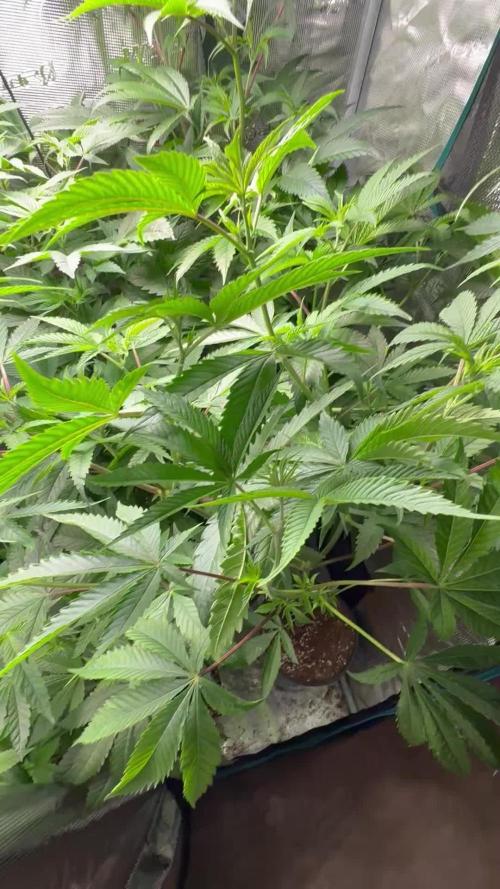
I have good news and bad news regarding my girls. The good news is that they are both still alive and are overall looking pretty good.
The bad news for the left girl is that the cheap irrigation system failed and only watered around 1 liter of water during the entire week. She was extremely thirsty, although still looking pretty good without any drooping. A couple of her leaves turned purple from the stress, though.
I recorded a video just as I opened the tent for the first time after coming back a couple of hours ago.
The news is worse for the right girl, though. The irrigation system worked flawlessly, so that wasn't the problem. Instead, I detected bud rot in three buds, and of course, it was in the three most significant colas. Fuuuuuuuu...
I also shot a video as I opened the tent, and the affected buds are visible if you are paying attention.
I have never had bud rot before, so I will need to do additional research on what to do next. I immediately cut off the affected buds and disposed of them outside. I hope I got all the affected areas, but I will inspect all the buds more closely tomorrow. Been traveling most of the day today and need some rest before scouting her buds.
I looked at her trichomes quickly and still couldn't see much amber, but I will have a better look tomorrow.
The worms have been busy while gone, though, and they were crawling all over when I lifted the old avocados.
They aren't the only ones who have been busy as the fungus gnats are back, Sigh. Only a few so far, but yeah, another thing to sort out. The fun just never ends...





Likes
12
Share


@Frosth
Follow
05.10.2022 - feed her with 5ml/lt connoisseur grow A-B. She seem happy with it!
06.10.2022 - a harf defolation applied. Clear all lower branches, nodes and leaves for to make her ready for bloom. Last touches before switch the bloom!
07.10.2022 - feed her with 2ml/lt connoisseur grow A-B. she is okay, growing for to be monster!
Likes
62
Share


Processing
Likes
14
Share


@Reforced
Follow
Been trying to keep up with pruning, just trimmed all of them up a bit today (12/8) and watered 2 of the master kushs. Looking healthy for the most part.


Likes
62
Share

@masterofsmeagol
Follow
9/5 PREVENTATIVE SPRAY OF 1TBSP POTASSIUM BICARBONATE AND 1/4 TBSP DAWN TO TREAT WPM. Foggy this morning and rained again last night. Weather hasn't been the greatest. Not seeing much PM unless it advanced so much that it just killed all the leaves. I still have yellowing leaves that die. It's probably septoria and I probably should've used a copper fungicide but I'm in flower. Ice cream cake and a couple seedlings are far behind but everything else seems like it will finish. This weather has been getting me down. I may feed later today or I might wait until tomorrow. I also need to add a few more supports. Wet buds are heavy. I'm getting there. Slowly but surely.
9/6 FED TWO GALLONS TO GARDEN
PLANNED TO USE BEASTIE BLOOM BUT COULD ONLY FIND CHA CHING. Rained heavy all night. I came back to hanging branches but no damage. I added some supports quickly and tied up a hanging branch. Ran a couple strings across the frame but I have more work to do. I took some pics and a video. At least now I'm seeing buds. Walking down there is like getting slapped in the face with a wet bud (which happened today). It's a super strong smell. Trichomes are developing at various stages. This is when things get paranoid but it's also fun. I can't wait until fall.
9/7 Plants we're wet this morning so I gave them a good shake. Defoliated what needed it and added a couple more supports. I don't like these leaves falling like this. Didn't have time to work on the ice cream cake that's growing into the fence. Now it's a race with the weather. Things are looking pretty good but I'm getting antsy. Also I'm not sure what caused all this weird damage from earlier and if I should just cut off useless branches. I'm hesitant as I don't want to create an open wound for more fungal infections.
9/8 Rained like crazy. Super heavy at times. I added a video I took yesterday. and took some pictures. Defoliated some dead stuff but it's hard to work in the pouring rain. Forecast said three inches. Plants are booming thoughgh
9/9 Still raining. Hard. No damage. Defoliated what I could and added supports where needed. I do need to say the plants I'm growing are some resilient girls. They've taken a beating and come back kicking butt. If we can get a few good days in a row shit will really start taking off. Need to spray BT and do another k bicard spray or switch it up with peroxide. I've checked the tops of my plants with a ladder and things look good so far. I'm super excited.
9/10 Poured like crazy. I fucked my diary up a bunch of times so I'll probably have to upload vids/pics again. Cannabis gods heard my cries and at noon time it's all sunshine. Was able to defoliate what needed it. Plants are just exploding. I'll do pics tomm. BT and K Bicarb spray needed. YEAH IM MISSING A BUNCH OF PICS AND A VIDEO. WILL HAVE TO FIX LATER
9/11 Beautiful sunny day. Found my beastie bloom and fed two gallons to the garden. I started low but I'll increase if it seems to benefit. Continued with only 1tbsp of grow big. Then if I like it I'll move on to cha ching. One plant will be ready VERY shortly. I took out my scope to check things out. In the bright sun ours easy to spot little pm patches. Oh well. I'll spray tonight. Everything looks so amazing. Also found more moth eggs it's time for a BT spray. Defoliated and added more supports as it's windy af out here


