Likes
3
Share
@Amboss
Follow
With this 405g of only flowers i will made bubble hash and Show you the result. Maybe i do cold melt curing …
Likes
11
Share
@LiamF
Follow
When will this end? lol Pretty cold week, temp dropped to 12°c @ night So the top 2 huge colas are like 30% amber The middle big buds are like 10% amber and the small lowest buds are like 80% cloudy with no amber I think tomorrow(friday 10/02 first day of week 16) will harvest i dunno i think there's no benefits of letting her live more, i know its not 100% perfect but i think the combination of the very ambery top colas with the middle ones cloudy will balance the unconsistent ambers on each buds.
Likes
7
Share
Nov.5 -we placed these girls in a paper towel and paper towel in ziplock Nov.6 - Once girls seeds showed tap root we placed the tap root down into the rockwool Nov.9 - Started DWC, put a small layer of pellets at the bottom then placed in rockwool then covered rockwool with pellets Nov.10 - Took a light away and put it in our small tent, these guys only have the one light now
Likes
17
Share
Hung up my new California Lightworks UVB supplement light. I think I originally hung it a bit too close (18 inches from canopy) based on the subtle color change in the leaves, so I raised it up to 24" above the canopy. I was most certainly skeptical, since this is my first time using UVB, but even over the course of its first week under the bulbs I've notice a VERY visible increase in trichomes. Every one of this plant's buds is COVERED in trichomes! It looks like someone sprinkled sugar all over the damn place!
Likes
38
Share
Pulled a few fan leaves, had a house inspection so I had to move them all outside , they went from 26°c to -2°C for ten hours they also had their dark cycle interrupted during the course of moving them. The smell is very strong now from all 6 pheno
Likes
4
Share
@KhaVigga
Follow
now im start to using many kind of sugar till harvest, beer-fpj-molasses-coconut water...
Likes
11
Share
Shes doing super well and seems to only want water. 4 weeks left on this girl.
Processing
Likes
29
Share
@Grey_Wolf
Follow
Ginger Nut Cookies & Aussie Music Videos Two weeks Of Flowering Completed 12th March 2020 Ginger Nut cookies managed to squeeze in another inch or so of stretch this week but is now focusing on the flower production. I'ts only early on but I can already detect a distinct difference in aromas from both the mother plant and the Red Diesel clone "Feminised pollen " donor. The GSC mother had a strong funky smell , whilst the red diesel was straight up Gassy smelling. The buds on this plant smell sort of Fruity and sweet which is interesting. Now that the stretch is done I'll switch my supplemental feeds to More Potassium etc . Gave her a nice Drink yesterday of unsulphured Australian sugar cane Mollasses mixed with Rain water. This is a great source of Iron , Calcium and Potassium as well as lots of sugars and carbs for the roots to use as food. I did the weekly Ph and Temp check and it was 6.5 and 22c . That is about all I have to Report this week so...... Now it's Time for...... The Weekly aussie Music Video/s 👍 Last week was Daddy Cool with a couple of their hit songs "Eagle Rock" and "Come back again" For This weeks Video/s I have chosen an Iconic Aussie Pub Rock Band called Cold Chisel. Cold chisel are fronted by Two singers Jimmy Barnes who will feature again next week as a solo artist and Ian Moss who is also Chisels Lead Guitarist. I have chosen two videos that features each lead singer performing . The first Video is 'Khe sanh' sang By Jimmy Barnes https://www.youtube.com/watch?v=inKlN0ScObA And the second video is 'Bow River' sang by Ian Moss https://www.youtube.com/watch?v=y2by810nulE Hope you enjoy the music and please leave a like I'll be back again next week with another update and Aussie Music Video/s 👍👍👊
Likes
23
Share
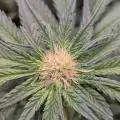
Week 14! I am starting to get really excited about this plant! She is plumping up and producing a lot of trichomes! Smell is very enjoyable. Fruity, sweet and lemony are smells that come to mind. Doing minor defoliation if I see leaves shading buds.
Likes
18
Share
Green light is radiation with wavelengths between 520 and 560 nm and it affects photosynthesis, plant height, and flowering. Plants reflect green light and this is why they appear green to our eyes. As a result, some growers think that plants don’t use green wavelengths, but they actually do! In fact, only around 5 – 10% of green light is reflected from leaves and the rest (90 – 95 %) is absorbed or transmitted to lower leaves [1]. Green wavelengths get used in photosynthesis. Chlorophyll pigments absorb small amounts of green wavelengths. Light that doesn’t get absorbed is transmitted to leaves that are shaded out from direct light. This means that leaves at the bottom of the canopy get more green light than leaves at the top. A high proportion of green wavelengths compared to other colors tells lower leaves that they are being shaded out, so they are able to react accordingly. Lower leaves may react by opening or closing their stomata or growing longer stems that help the leaves reach brighter light [1, 2, 3]. When it comes to growing cannabis, many cultivators are interested in the quality of light used for the flowering stage. In many plants, flowering is regulated by two main photoreceptors: cryptochrome and phytochrome. Both photoreceptors primarily respond to blue light but can also respond to green, although to a lesser extent. Green can accelerate the start of flowering in several species (although cannabis has yet to be tested) [1, 4, 5]. However, once flowering has begun, it’s important to provide plants with a “full spectrum” light that has high amounts of blue and red light, and moderate amounts of green, in order for photosynthesis to be optimized. Green light mediates seed germination in some species. Seeds use green wavelengths to decide whether the environment is good for germination. Shade environments are enriched in green relative to red and blue light, so a plant can tell if it is shady or sunny. A seed that senses a shaded environment may stay dormant to avoid poor growing conditions [1]. Some examples of plant species where researchers have documented this response are: ryegrass (a grass that grows in tufts) and Chondrilla (a plant related to dandelion) [1, 6]. Although green wavelengths generally tell plants NOT to germinate, there are some exceptions! Surprisingly, green wavelengths can stimulate seed germination in some species like Aeschynomene, Tephrosia, Solidago, Cyrtopodium, and Atriplex [1, 6, 7]. Of course, light is not the only factor affecting seed germination – it’s a combination of many factors, such as soil moisture, soil type, temperature, photoperiod, and light quality. When combined with red and blue light, green can really enhance plant growth [1, 8]. However, too much green light (more than 50% of the total light) can actually reduce plant growth [8]. Based on the most current research, the ideal ratio of green, red, and blue light is thought to be around 1:2:1 for green:blue:red [9]. When choosing a horticultural light, choose one that has high amounts of blue and red light and moderate amounts of green and other colors of light. Not many studies can be found about the effect of green light on cannabis growth or metabolism. However, if one reads carefully, there are clues and data available even from the very early papers. Mahlberg and Hemphill (1983) used colored filters in their study to alter the sunlight spectrum and study green light among others. They concluded that the green filter, which makes the environment green by cutting other wavelengths out, reduced the THC concentration significantly compared to the daylight control treatment. It has been demonstrated that green color can reduce secondary metabolite activity with other species as well. For example, the addition of green to a light spectrum decreases anthocyanin concentration in lettuce (Zhang and Folta 2012). If green light only reverses the biosynthesis of some secondary metabolites, then why put green light into a growth spectrum at all? Well, there are a couple of good reasons. One is that green penetrates leaf layers effectively. Conversely red and blue light is almost completely absorbed by the first leaf layer. Green travels through the first, second, and even third layers effectively (Figure 2). Lower leaf layers can utilize green light in photosynthesis and therefore produce yields as well. Even though a green light-specific photoreceptor has not yet been found, it is known that green light has effects independent from the cryptochrome but then again, also cryptochrome-dependent ones, just like blue light. It is known that green light in low light intensity conditions can enhance far red stimulating secondary metabolite production in microgreens and then again, counteracts the production of these compounds in high-intensity light conditions (Kim et al. 2004). In many cases, green light promoted physiological changes in plants that are opposite to the actions of blue light. In the study by Kim et al. blue light-induced anthocyanin accumulation was inhibited by green light. In another study it has been found that blue light promotes stomatal opening whereas green light promotes stomatal closure (Frechilla et al. 2000). Blue light inhibits the early stem elongation in the seedling stage whereas green light promotes it (Folta 2004). Also, blue light results in flowering induction, and green light inhibits it (Banerjee et al., 2007). As you can see, green light works very closely with blue light, and therefore not only the amount of these two wavelengths separately is important but also the ratio (Blue: Green) between these two in the designed spectrum. Furthermore, green light has been found to affect the elongation of petioles and upward leaf reorientation with the model plant Arabidopsis thaliana both of which are a sign of shade avoidance symptoms (Zhang et al. 2011) and also gene expression in the same plant (Dhingra et al. 2006). As mentioned before, green light produces shade avoidance symptoms which are quite intuitive if you consider the natural conditions where the plants grow. Not all the green light is reflected from the highest canopy leaves in nature but a lot of it (50-90%) has been estimated to penetrate the upper leaves at the plant level ((Terashima et al., 2009; Nishio, 2000). For the plant growing in the understory of the forest green light is a signal for the plant of being in the shade of a bigger plant. Then again, the plants growing under unobstructed sunlight can take advantage of the green photons that can more easily penetrate the upper leaves than the red and blue photons. From the photosynthetic pigments in higher plants, chlorophyll is crucial for plant growth. Dissolved chlorophyll and absorb maximally in the red (λ600–700 nm) and blue (λ400–500 nm) regions of the spectrum and not as easily in the green (λ500–600 nm) regions. Up to 80% of all green light is thought to be transmitted through the chloroplast (Terashima et al., 2009) and this allows more green photons to pass deeper into the leaf mesophyll layer than red and blue photons. When the green light is scattered in the vertical leaf profile its journey is lengthened and therefore photons have a higher chance of hitting and being absorbed by chloroplasts on their passage through the leaf to the lower leaves of the plant. Photons of PPFD (photosynthetic photon flux density) are captured by chlorophyll causing an excitation of an electron to enter a higher energy state in which the energy is immediately passed on to the neighboring chlorophyll molecule by resonance transfer or released to the electron transport chain (PSII and PSI). Despite the low extinction coefficient of chlorophyll in the green 500–600 nm region it needs to be noted that the absorbance can be significant if the pigment (chlorophyll) concentration in the leaf is high enough. The research available clearly shows that plants use green wavelengths to promote higher biomass and yield (photosynthetic activity), and that it is a crucial signal for long-term developmental and short-term dynamic acclimation (Blue:Green ratio) to the environment. It should not be dismissed but studied more because it brings more opportunities to control plant gene expression and physiology in plant production. REFERENCES Banerjee R., Schleicher E., Meier S. Viana R. M., Pokorny R., Ahmad M., Bittl R., Batschauer. 2007. The signaling state of Arabidopsis cryptochrome 2 contains flavin semiquinone. The Journal of Biological Chemistry 282, 14916–14922. Dhingra, A., Bies, D. H., Lehner, K. R., and Folta, K. M. 2006. Green light adjusts the plastic transcriptome during early photomorphogenic development. Plant Physiol. 142, 1256-1266. Folta, K. M. 2004. Green light stimulates early stem elongation, antagonizing light-mediated growth inhibition. Plant Physiol. 135, 1407-1416. Frechilla, S., Talbott, L. D., Bogomolmi, R. A., and Zeiger, E. 2000. Reversal of blue light -stimulated stomatal opening by green light. Plant Cell Physiol. 41, 171-176. Kim, H.H., Goins, G. D., Wheeler, R. M., and Sager, J. C. 2004.Green-light supplementation for enhanced lettuce growth under red- and blue-light emitting diodes. HortScience 39, 1617-1622. Nishio, J.N. 2000. Why are higher plants green? Evolution of the higher plant photosynthetic pigment complement. Plant Cell and Environment 23, 539–548. Terashima I., Fujita T., Inoue T., Chow W.S., Oguchi R. 2009. Green light drives leaf photosynthesis more efficiently than red light in strong white light: revisiting the enigmatic question of why leaves are green. Plant & Cell Physiology 50, 684–697. Zhang, T., Maruhnich, S. A., and Folta, K. M. 2011. Green light induces shade avoidance symptoms. Plant Physiol. 157, 1528-156. Wang, Y. & Folta, K. M. Contributions of green light to plant growth and development. Am. J. Bot. 100, 70–78 (2013). Zhang, T. & Folta, K. M. Green light signaling and adaptive response. Plant Signal. Behav. 7, 75–78 (2012). Johkan, M. et al. Blue light-emitting diode light irradiation of seedlings improves seedling quality and growth after transplanting in red leaf lettuce. HortScience 45, 1809–1814 (2010). Kasajima, S., et al. Effect of Light Quality on Developmental Rate of Wheat under Continuous Light at a Constant Temperature. Plant Prod. Sci. 10, 286–291 (2007). Banerjee, R. et al. The signaling state of Arabidopsis cryptochrome 2 contains flavin semiquinone. J. Biol. Chem. 282, 14916–14922 (2007). Goggin, D. E. & Steadman, K. J. Blue and green are frequently seen: responses of seeds to short- and mid-wavelength light. Seed Sci. Res. 22, 27–35 (2012). Mandák, B. & Pyšek, P. The effects of light quality, nitrate concentration and presence of bracteoles on germination of different fruit types in the heterocarpous Atriplex sagittata. J. Ecol. 89, 149–158 (2001). Darko, E. et al. Photosynthesis under artificial light: the shift in primary and secondary metabolism. Philos. Trans. R. Soc. B Biol. Sci. 369 (2014). Lu, N. et al. Effects of Supplemental Lighting with Light-Emitting Diodes (LEDs) on Tomato Yield and Quality of Single-Truss Tomato Plants Grown at High Planting Density. Environ. Control Biol. 50, 63–74 (2012).
Likes
12
Share
@Daviz_42
Follow
Sin duda para los amantes del terpeno anaranjado es una clarisima ganadora, es pura mandarina, citrico, refrescante, imagino una extraccion con esta genetica tiene que ser increible.
Likes
2
Share
We have topped her this week. We also forgot to post that we transplanted a week ago. All of the girls seem to have bounced back from the over watering. We have attempted our first compost tea to boost the microbiology in the soil. 7.5ml fish shit 1/2 tablespoon recharge 1 teaspoon stonington plant food 1 1/2 handful work casting 1 1/2 coast of Maine Brewed sightly less than 24hs but not much, ph to 6.3😎
Likes
5
Share
Space is limited and I'm struggling with the time to keep up with these plants since things are back to normal on my parts of town. Just gonna keep about eye on em at keep defoliating. Plants flipped after 1 month veg
Likes
34
Share
She looks amazing the buds are nice and dens, one more week and ready for harvest.
Likes
103
Share
@Hou_Stone
Follow
️ Tarte Tatin = Caramel Apple Gelato x King’s Tart ️ 🌲💚 Tin tin tin tin tintin 🎵 ------------------------------------------------------------ 💧Watering each pot: Day 25 : 0.5 L Day 28 : 0.5 L I use tap water, adjust the ph to around 6 and water ------------------------------------------------------------ 🔥❄️Temperature of the week : Day : 19-23°C (Humidity : 60-75%) Night : 14-17°C ------------------------------------------------------------ 🚀Equipment of the week ⭐️ : Light FC3000 Mars hydro. power 95% at 50cm Extractor 6 inch Mars Hydro. power 1/10. ON 24/24h 2 fans to circulate the air inside the tent. Each on for 30 minutes then off for 1 hour. this rhythm repeats itself in a loop Heating mat 95x95cm. ON 45 minutes. OFF 30minutes. In a loop. The day only ------------------------------------------------------------
Likes
2
Share
31/07 - Currently in week 2 of flower. Pistil hairs are slowly developing and colas are becoming more established. I also watered them today. 1L of water ph 6.5, I also mixed 1ml of bio grow, 2ml bio bloom, and 1ml top max 03/08 - Watered plants 500ml of just water ph at 6.5. Hope you have a great day! Peace
Likes
15
Share
@Uwish
Follow
Nothing special, everything is actually working. Clearly once my water was at the right temperature, no more worries. The flowers arrived at 12/12 + 11 with the trichromes that pop, it starts to be pleasant! So of course, I'm not going to break any records on this RUN but in any case, I've eliminated a lot of "novelty" and mistakes that I'll make more. I'm counting on the run I'm re-launching to blow all that up, I'm going to go for a performance goal The stretch is off to a good start, it should settle down around 12/12 +21 - 28, so I will place my second net next week. I have done a defoliation. I change the soup in 2 days, so my solution lasts 10 days. I have a slight over-fattening, but really nothing serious, I will switch to an EC of 1.8 - 1.9 instead of 2.0. and I will observe. Here we can see the delay of one of the plants, it's as if I was shooting with only 3 plants. Next time, only one strain, same size of cuttings and passage by cuttings and RDWV DIY mandatory before passage in the V-system. Next week, I change the brand of fertilizer for the RDWC, I go to Athena, I will introduce the PK of Athena which according to their recommendation starts at the 21st day at a rate of 2ML/L. I turn with the base sensi bloom a and b + athena pk Otherwise, I receive the parts this week for my RDWC DIY system for growth, I'll make it with my friend and I'll test it and I'll give you a feedback on the next update, especially since I'm going to restart right away, I'm going to do 10-15 days in cuttings and then I'll go to the RDWC DIY system for growth until I finish the FLO of the V-SYTEM and then I'll go straight to the next one. I'm going to put my LEDS at 80% which is the MAX recommendation of SANlight without c0² ( I don't forbid myself to grow at 100% in week 5-6, I'll see... )
Likes
278
Share
A big hello to all the cannabis growing gardeners...and all the other visitors that came across my grow journal. Just on harvest day I was summoned on a long quest...around 700 km. will be away for three days. I will update this diary as fast as i"m back. For now just the photos as no time for anything. ---------------------------------------------------------------------------------- Now cannabis smell is overpowering in my grow room I can finally write something about Spider Farmers 6-Inch Inline Fan with Smart Controller and Carbon Filter :) As my grow room gets really stinky at times i always invest in a top shelf carbon filter almost twice the size of the one provided by Spider Farmer, to my shock Spider Farmer carbon filter absorbs the smells wonderfully well. No smell leaks and that just when the fan is running at 5 out of 10 levels of output. The smart controller is something completely new to me, and had a lot of fun experimenting with it during the veg and early flower, when the smell began i needed it to run full time at level 4 or 5 to rid the fragnance. All in all the whole combo is a great deal. If you are not as keen on technology the set without the controller is awesome on it's own. But to have some extra options open, the controller at the device throws at you a ton of settings you can use to optemiase you grow enviornment. The SE 7000 is hanged at 40 cm. over the canopy and runs at 520W. This whole grow's main sponsor is Spider Farmer. You can easily obtain all the great grow equipment we use at: spider-farmer.com A big thank you to Jessie and the whole Spider Farmer crew for supporting me with the newest technological advancements in horticulture. Thanks to them what i do here is possible. Thank you Mafia Seeds for giving me the opportunity to try out your stock. seedsmafia.com/en/feminized-cannabis-seeds/moby-dick-feminized.html Plagron did send us their Contest package for the Power Buds competition . Thank you for your visit, please leave a like and hope to see you beck here in about a week.
Likes
2
Share
Very high quality strain. No joke, I'm glad I have discovered such a fruity and sweet sativa strain. This m8 by gea seeds is a pleasure to smell, I'm so sad about growing her in that little 11l pot, hope next year I can make a very big bush full of fruity big colas 👨‍🌾🤤🍭🍓🍓🍏🍉🍉🍊 Loving the fragrance. Very recomended guys. Peace ✌️💚❤️💛