


Likes
43
Share


@Wicked_Stix
Follow
We are 14 days since switching the lights to 12/12 and this one didn't waste any time hitting flower. She is stretching fast and starting to stack on budsites already. Gave them the weekly flush and fresh nutrients. I will be cutting out the maxigro and start them on liquid Koolbloom next week.

Likes
12
Share


@SkunkyDog
Follow
Hallo zusammen 🤙.
Sie wachsen sehr schön und machen keine Probleme.
Sie bekommen 20 % Rabatt bei Zamnesia und der Code lautet ZAMMIGD2023.

Processing
Likes
65
Share


@Dedon
Follow
Hi Everyone !
Everything is ok.
Plant are still healthy. specially the tank on the left, they drink 15L during this week and maybe less than 10L for the tank on the right
Guess which one has a nice root system ? 🙏😉

Likes
2
Share

@CaveGanja
Follow
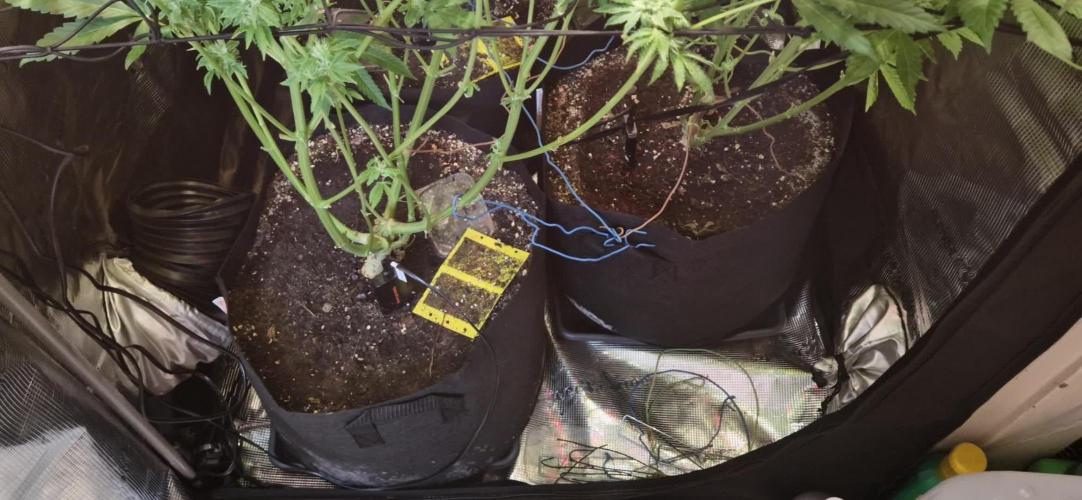
Every day i open the tent the only thing i think is pls dont let me spot budrot.
Plants donig well i have 3 fans on max lvl and my dehumidifier 24/7 runnig.
I use less fertilizer.
last week i forgot to turn on 2 fans for 24h gives me the bad feeling you f*** up but still all seems fine.
Likes
14
Share


@GODSGIFT_2005_JM
Follow
For LIQUIDS & Nutes ******GREEN BUZZ NUTRIENTS***** organic.
Also i’m using their LIVING SOIL CULTURE in powder form!
MARSHYDRO ⛺️ has large openings on the sides which is useful for mid section groom room work. 🤩
☀️ MARSHYDRO FC 3000 LED 300W
💨MARSHYDRO 6” in-line EXTRACTOR with speed-variation knob, comes complete with ducting and carbon filter.


Likes
9
Share


@Hazebuster888
Follow
In der sechsten Blütewoche haben sich die Blüten weiter verdichtet und an Größe zugenommen. Die Pflanze profitiert sichtbar von der erhöhten Lichtintensität und den zusätzlichen Netzen, die für Stabilität sorgen. Das Scrogging hat sich als äußerst effektiv erwiesen, da alle Blüten gleichmäßig Lichlt erhalten und sich prächtig entwickeln. Die Pflanze wirkt insgesamt sehr vital, und die Blütenstände zeigen eine schöne Harzbildung, was auf eine erfolgreiche Ernte hoffen lässt.
Likes
14
Share


@JamieKnolliver
Follow
Hey Leute!
Das ist nun der Stand nach Woche 3.
Die Blütenstände entwickeln sich allmählich und allgemein macht sie mir einen guten Eindruck.
Einige Blätter werden langsam gelb-lila farben, was hoffentlich auf den Fortschritt der Blüte hindeutet und nicht auf einen Mangel.
Wenn ihr da mehr drüber wisst bzw. Sagen könnt, gebt mir doch gerne mal ein Kommentar.
Möchte nochmal erwähnen, dass ich kein Profi bin sondern dies mein 2. Grow ist.
Falls ihr Tipps für Verbesserungen habt oder Anregungen für Veränderung, gerne kommentieren!
Habe die Zufuhr von Stickstoff nun angehoben um auf den erhöhten Bedarf zu reagieren, da mir die Blätter etwas zu hell aussahen.

Likes
145
Share


@Green_Man_420
Follow
Day 36, She is in flower mode! Really happy with how this lady is coming along. Back right in the photo. Water and feed tonight. ✌️
Day 37, She had a good drink and feed last night. She is back right in the photos ✌️
Day 38. Video attached ✌️✌️
Day 39, She is flying along. Water tonight 💪🏼
Day 40, bud shots. Watered and fed last night. ✌️
Day 41, @seedsmafia genetics are very good! Happy happy happy ✌️
Day 42, really happy. Water tonight. Will keep an eye on the temps. May go to 20/4 if it gets too cold during lights off. ✌️

Likes
16
Share


@Fronti89
Follow
Der Stretch is ist im vollem Gange und den Lady geht es soweit gut ! 2 Der Damen haben ein etwas schlechteres Wachstum,sie wurden etwas mehr aufgebockt um nicht unter zu gehn.Teils wurde ein wenig etwas Untergestellt um das Höhenwachstum den größten Pflanzen anzupassen.Nachdem ich die Pflanzen überprüft habe musste ich leider feststellen das zwei Damen von oben bis unten voller Säcke waren.Diese wurden sofort entfernt ! Bei allen anderen passt alles soweit. 😉


Likes
29
Share


@GreenHouseLab
Follow
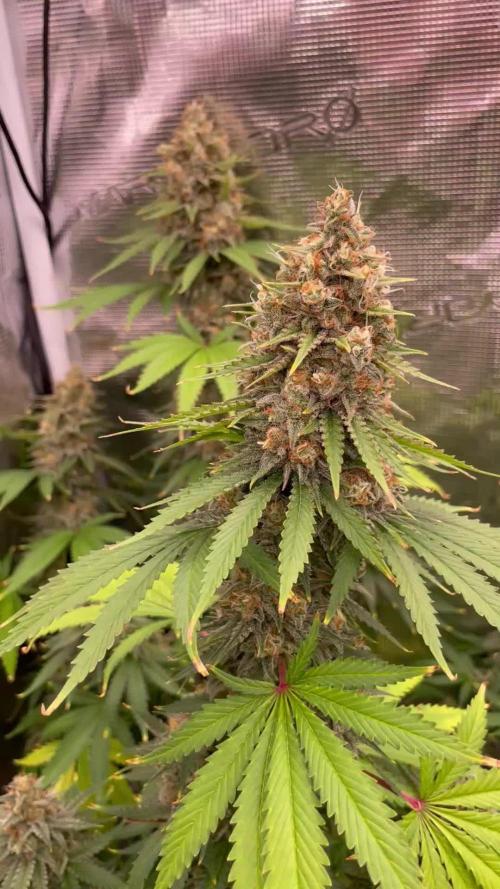
Iphone 7 is a piece of garbage nevertheless these buds still make it shine hard. Smell of cheetah piss hoping it will be very unique smoke and effect.
Enjoy hope all are having killer success with their grows, ✌️
GHL
Likes
1
Share

@all_about_420
Follow
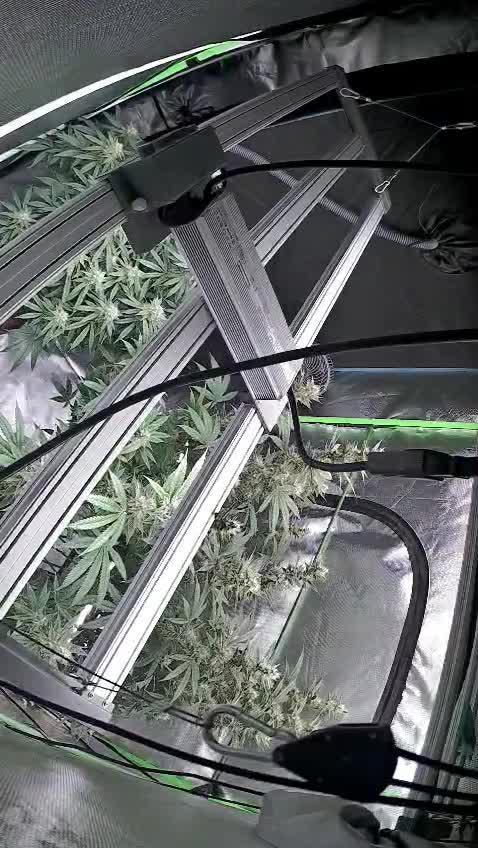
Ein kleines Highlight rettet das Logbuch dieser Woche: Ein 17-sekündiges Zeitraffer-Video dokumentiert die Tage meiner Abwesenheit. Während im ersten Teil primär die RS11 im Fokus steht, lässt sich im zweiten Abschnitt die Entwicklung dieser Lady hervorragend nachvollziehen. Das Bildmaterial offenbart jedoch auch die prognostizierte Schwachstelle. Die langen, grazilen Blütenstränge beginnen unter dem zunehmenden Gewicht der Blütenbildung nach und nach umzukippen und lehnen sich bereits deutlich gegen die Zeltwand. Der Babysitter hat in dieser Hinsicht leider nicht eingegriffen, sodass die Stabilisierung der Traphouse Genetics nun ganz oben auf der To-Do-Liste für meine Rückkehr steht. Die Harz- und Blütenproduktion läuft ungeachtet dessen auf Hochtouren weiter.
Processing
Likes
2
Share


@GrowXown
Follow
Loving this Queen of Sheba growth! Excellent looking leaves. Still a bit impatient with regards to growth. If any tips please pass them along my way!
Likes
12
Share


@NurseGreen23
Follow
This girl is lookin great. She's speeding toward the finish with some of her pistils already ambering up. Smells wonderful.

Likes
39
Share


@SamDo
Follow
Hello, 1ère semaine, on démarre en douceur, les plantes ont 1 jour, une graine de critical+ 2.0 n’a pas germé, mais cela arrive, je l’ai remplacée aujourd’hui.
J’ai mit vidéos du set up de la box et une qui reprend rapidement les conditions de cultures. C’est mon 1er journal, j’attend vos conseils et vos suggestions bienveillantes.. je ferais un update en fin de semaine...
Update fin de semaine fait. Toutes les graines sont cette fois bien sorties!!👍Il y a donc un léger décalage entre elles, mais aucuns soucis. happy grow!!😎

Likes
39
Share


@BelgianBudtender
Follow
Heyo bud,
Did some serious training this week, all lower growth was removed, kind of like a lazy main-line. She's as good as recovered and bushier than before defoliating it all! You can see her bounce back in the time lapse, its pretty cool!
Still chasing the gunk around the roots, worried it might be rot, treated her with some h202 whilst I shop around for some bennies here in Europe, if you have any advice hit me up!
Rot or not, the root growth this week was great, despite the absurd amount of stress I put her under, Maybe this little girl isn't so weak and behind after all, the genetics seem hardy.
going to let my little plant recover as I keep adjusting ties, I want to find a solution to my root issue and have a bit more green growth before I flip to flower, I'll reconsider my flip date next week, I don't want to veg too long, I do need weed in my Jars.
Thanks for checking out my Diary, keep safe and keep growing!

Likes
18
Share


@maneaura
Follow
defoliated some more and it grew ALOT. Buds getting fat!! cant wait to harvest.
Processing
Likes
24
Share


@DaddyPrime
Follow
8/23 shes smelling so much like blueberries💚 im super concerned with the amount of leaves my plants are cannibalizing/ losing. They've been turning yellow and then eventually golden brownish crisp and fall off. The leaves that are falling off, only seem to be fan leaves and all the leaves around the pistils/main parts of branches/plant, all seem to be intact and very healthy still. I hope she's able to stay healthy till the finish of the grow. First outdoor grow. Learning experience 💚🤘I should have added some fish meal in the middle of July so she had some nitrogen for the beginning of flowering. I'm concerned the leaves lost is due to nitrogen deficiency. But I'm 3 weeks into flower and dont want to confuse her with more nitrogen than I have been giving
8/24 fed some more open sesame.
8/28 thinking my plants have been having a ph lock out causing magnesium deficiency

Likes
6
Share


@Aleks555
Follow
Zamnesia - Pineapple Express (F1 Auto) - 76 Days
The time has come—harvest day! It's bittersweet to say goodbye to this incredible journey, but all great things must come to an end. The Pineapple Express (F1 Auto) has been a true wonder, delivering both in strength and flavor, with an aroma that's unforgettable. This strain produced the hardest buds we've ever grown—rock-solid and packed with resin, the likes of which we’ve never seen before.
A massive thank you to Zamnesia for providing these remarkable seeds! And an extra special shoutout to Xpert Nutrients for the outstanding fertilizers. The results speak for themselves—your nutrients truly work miracles, creating those dense, powerful buds that we're so proud of.
Stay tuned for the final photo and video showcase of this incredible harvest. We're thrilled to share it with you all!
Xpert Nutrients – The Key to Powerful Harvests
When it comes to achieving the best results, we trust only proven solutions. And with Xpert Nutrients, our plants are getting nothing but the best! These nutrients are not just a product, they’re a true catalyst for growth and powerful yields. Thanks to a balanced formula, each dose nourishes our plants with essential elements, promoting their health, strength, and abundant harvests.
Every cycle with Xpert Nutrients shows progress. We see incredible results: dense, resinous buds, rich aromas, and, of course, yields we can be proud of. With these nutrients, there are no compromises – only maximum performance!
Thank you, Xpert Nutrients, for your continuous support and for helping us unlock the full potential of our plants. The results speak for themselves!
