
Processing
Likes
5
Share
@EKWCR
Follow
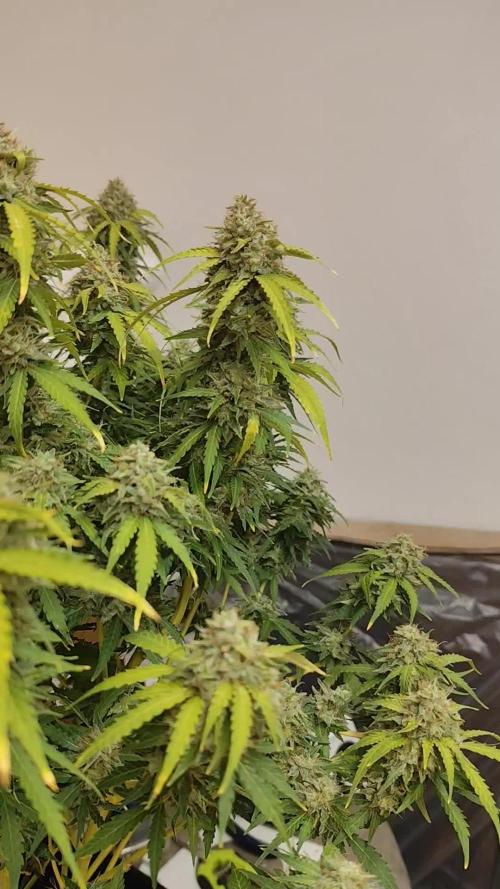
After 1 week of flush the plant start to fade gently, i hope that gonna be good before harvest. I think my additives tend to keep my plant green, both contain seaweed extract and are slow release. There is a little bit of nice fox tailing.
Likes
11
Share
@Radagast_
Follow
26.07. Wedding Cake 1# Day 92# Wedding Cake 2# Day 86# Wedding has not grown much again this week, but it is still spreading abnormally, the trunk and branches are getting sickly thick, a huge difference from the last update... I don't think it will go much higher by the time it stretches, which would be ideal. Today it started to rain and it will rain for the next 4-5 days, while there will be storms for 2-3 days, and it will cool down a lot and the next 10 days will be much better weather... today I added another layer of netting to this row and pulled them through, in a few days I will add the third and let them grow through it. I forgot to take a picture of the second one, it will be in the next update..everything is the same with her, constantly hungry and thirsty, from the next feeding I'm going to force her with food, so let's see how much she eats because this is unreal lol Stay High and Keep Growing!!!
Likes
19
Share
Yellow butterfly came to see me the other day; that was nice. Starting to show signs of stress on the odd leaf, localized isolated blips, blemishes, who said growing up was going to be easy! Smaller leaves have less surface area for stomata to occupy, so the stomata are packed more densely to maintain adequate gas exchange. Smaller leaves might have higher stomatal density to compensate for their smaller size, potentially maximizing carbon uptake and minimizing water loss. Environmental conditions like light intensity and water availability can influence stomatal density, and these factors can affect leaf size as well. Leaf development involves cell division and expansion, and stomatal differentiation is sensitive to these processes. In essence, the smaller leaf size can lead to a higher stomatal density due to the constraints of available space and the need to optimize gas exchange for photosynthesis and transpiration. In the long term, UV-B radiation can lead to more complex changes in stomatal morphology, including effects on both stomatal density and size, potentially impacting carbon sequestration and water use. In essence, UV-B can be a double-edged sword for stomata: It can induce stomatal closure and potentially reduce stomatal size, but it may also trigger an increase in stomatal density as a compensatory mechanism. It is generally more efficient for gas exchange to have smaller leaves with a higher stomatal density, rather than large leaves with lower stomatal density. This is because smaller stomata can facilitate faster gas exchange due to shorter diffusion pathways, even though they may have the same total pore area as fewer, larger stomata. Leaf size tends to decrease in colder climates to reduce heat loss, while larger leaves are more common in warmer, humid environments. Plants in arid regions often develop smaller leaves with a thicker cuticle and/or hairs to minimize water loss through transpiration. Conversely, plants in wet environments may have larger leaves and drip tips to facilitate water runoff. Leaf size and shape can vary based on light availability. For example, leaves in shaded areas may be larger and thinner to maximize light absorption. Leaf mass per area (LMA) can be higher in stressful environments with limited nutrients, indicating a greater investment in structural components for protection and critical resource conservation. Wind speed, humidity, and soil conditions can also influence leaf morphology, leading to variations in leaf shape, size, and surface characteristics. Small leaves: Reduce water loss in arid or cold climates. Environmental conditions significantly affect gene expression in plants. Plants are sessile organisms, meaning they cannot move to escape unfavorable conditions, so they rely on gene expression to adapt to their surroundings. Environmental factors like light, temperature, water, and nutrient availability can trigger changes in gene expression, allowing plants to respond to and survive in diverse environments. Depending on the environment a young seedling encounters, the developmental program following seed germination could be skotomorphogenesis in the dark or photomorphogenesis in the light. Light signals are interpreted by a repertoire of photoreceptors followed by sophisticated gene expression networks, eventually resulting in developmental changes. The expression and functions of photoreceptors and key signaling molecules are highly coordinated and regulated at multiple levels of the central dogma in molecular biology. Light activates gene expression through the actions of positive transcriptional regulators and the relaxation of chromatin by histone acetylation. Small regulatory RNAs help attenuate the expression of light-responsive genes. Alternative splicing, protein phosphorylation/dephosphorylation, the formation of diverse transcriptional complexes, and selective protein degradation all contribute to proteome diversity and change the functions of individual proteins. Photomorphogenesis, the light-driven developmental changes in plants, significantly impacts gene expression. It involves a cascade of events where light signals, perceived by photoreceptors, trigger changes in gene expression patterns, ultimately leading to the development of a plant in response to its light environment. Genes are expressed, not dictated! While having the potential to encode proteins, genes are not automatically and constantly active. Instead, their expression (the process of turning them into proteins) is carefully regulated by the cell, responding to internal and external signals. This means that genes can be "turned on" or "turned off," and the level of expression can be adjusted, depending on the cell's needs and the surrounding environment. In plants, genes are not simply "on" or "off" but rather their expression is carefully regulated based on various factors, including the cell type, developmental stage, and environmental conditions. This means that while all cells in a plant contain the same genetic information (the same genes), different cells will express different subsets of those genes at different times. This regulation is crucial for the proper functioning and development of the plant. When a green plant is exposed to red light, much of the red light is absorbed, but some is also reflected back. The reflected red light, along with any blue light reflected from other parts of the plant, can be perceived by our eyes as purple. Carotenoids absorb light in blue-green region of the visible spectrum, complementing chlorophyll's absorption in the red region. They safeguard the photosynthetic machinery from excessive light by activating singlet oxygen, an oxidant formed during photosynthesis. Carotenoids also quench triplet chlorophyll, which can negatively affect photosynthesis, and scavenge reactive oxygen species (ROS) that can damage cellular proteins. Additionally, carotenoid derivatives signal plant development and responses to environmental cues. They serve as precursors for the biosynthesis of phytohormones such as abscisic acid () and strigolactones (SLs). These pigments are responsible for the orange, red, and yellow hues of fruits and vegetables, while acting as free scavengers to protect plants during photosynthesis. Singlet oxygen (¹O₂) is an electronically excited state of molecular oxygen (O₂). Singlet oxygen is produced as a byproduct during photosynthesis, primarily within the photosystem II (PSII) reaction center and light-harvesting antenna complex. This occurs when excess energy from excited chlorophyll molecules is transferred to molecular oxygen. While singlet oxygen can cause oxidative damage, plants have mechanisms to manage its production and mitigate its harmful effects. Singlet oxygen (¹O₂) is considered a reactive oxygen species (ROS). It's a form of oxygen with higher energy and reactivity compared to the more common triplet oxygen found in its ground state. Singlet oxygen is generated both in biological systems, such as during photosynthesis in plants, and in cellular processes, and through chemical and photochemical reactions. While singlet oxygen is a ROS, it's important to note that it differs from other ROS like superoxide (O₂⁻), hydrogen peroxide (H₂O₂), and hydroxyl radicals (OH) in its formation, reactivity, and specific biological roles. Non-photochemical quenching (NPQ) protects plants from damage caused by reactive oxygen species (ROS) by dissipating excess light energy as heat. This process reduces the overexcitation of photosynthetic pigments, which can lead to the production of ROS, thus mitigating the potential for photodamage. Zeaxanthin, a carotenoid pigment, plays a crucial role in photoprotection in plants by both enhancing non-photochemical quenching (NPQ) and scavenging reactive oxygen species (ROS). In high-light conditions, zeaxanthin is synthesized from violaxanthin through the xanthophyll cycle, and this zeaxanthin then facilitates heat dissipation of excess light energy (NPQ) and quenches harmful ROS. The Issue of Singlet Oxygen!! ROS Formation: Blue light, with its higher energy photons, can promote the formation of reactive oxygen species (ROS), including singlet oxygen, within the plant. Potential Damage: High levels of ROS can damage cellular components, including proteins, lipids, and DNA, potentially impacting plant health and productivity. Balancing Act: A balanced spectrum of light, including both blue and red light, is crucial for mitigating the harmful effects of excessive blue light and promoting optimal plant growth and stress tolerance. The Importance of Red Light: Red light (especially far-red) can help to mitigate the negative effects of excessive blue light by: Balancing the Photoreceptor Response: Red light can influence the activity of photoreceptors like phytochrome, which are involved in regulating plant responses to different light wavelengths. Enhancing Antioxidant Production: Red and blue light can stimulate the production of antioxidants, which help to neutralize ROS and protect the plant from oxidative damage. Optimizing Photosynthesis: Red light is efficiently used in photosynthesis, and its combination with blue light can lead to increased photosynthetic efficiency and biomass production. In controlled environments like greenhouses and vertical farms, optimizing the ratio of blue and red light is a key strategy for promoting healthy plant growth and yield. Understanding the interplay between blue light signaling, ROS production, and antioxidant defense mechanisms can inform breeding programs and biotechnological interventions aimed at improving plant stress resistance. In summary, while blue light is essential for plant development and photosynthesis, it's crucial to balance it with other light wavelengths, particularly red light, to prevent excessive ROS formation and promote overall plant health. Oxidative damage in plants occurs when there's an imbalance between the production of reactive oxygen species (ROS) and the plant's ability to neutralize them, leading to cellular damage. This imbalance, known as oxidative stress, can result from various environmental stressors, affecting plant growth, development, and overall productivity. Causes of Oxidative Damage: Abiotic stresses: These include extreme temperatures (heat and cold), drought, salinity, heavy metal toxicity, and excessive light. Biotic stresses: Pathogen attacks and insect infestations can also trigger oxidative stress. Metabolic processes: Normal cellular activities, particularly in chloroplasts, mitochondria, and peroxisomes, can generate ROS as byproducts. Certain chlorophyll biosynthesis intermediates can produce singlet oxygen (1O2), a potent ROS, leading to oxidative damage. ROS can damage lipids (lipid peroxidation), proteins, carbohydrates, and nucleic acids (DNA). Oxidative stress can compromise the integrity of cell membranes, affecting their function and permeability. Oxidative damage can interfere with essential cellular functions, including photosynthesis, respiration, and signal transduction. In severe cases, oxidative stress can trigger programmed cell death (apoptosis). Oxidative damage can lead to stunted growth, reduced biomass, and lower crop yields. Plants have evolved intricate antioxidant defense systems to counteract oxidative stress. These include: Enzymes like superoxide dismutase (SOD), catalase (CAT), and various peroxidases scavenge ROS and neutralize their damaging effects. Antioxidant molecules like glutathione, ascorbic acid (vitamin C), C60 fullerene, and carotenoids directly neutralize ROS. Developing plant varieties with gene expression focused on enhanced antioxidant capacity and stress tolerance is crucial. Optimizing irrigation, fertilization, and other management practices can help minimize stress and oxidative damage. Applying antioxidant compounds or elicitors can help plants cope with oxidative stress. Introducing genes for enhanced antioxidant enzymes or stress-related proteins over generations. Phytohormones, also known as plant hormones, are a group of naturally occurring organic compounds that regulate plant growth, development, and various physiological processes. The five major classes of phytohormones are: auxins, gibberellins, cytokinins, ethylene, and abscisic acid. In addition to these, other phytohormones like brassinosteroids, jasmonates, and salicylates also play significant roles. Here's a breakdown of the key phytohormones: Auxins: Primarily involved in cell elongation, root initiation, and apical dominance. Gibberellins: Promote stem elongation, seed germination, and flowering. Cytokinins: Stimulate cell division and differentiation, and delay leaf senescence. Ethylene: Regulates fruit ripening, leaf abscission, and senescence. Abscisic acid (ABA): Plays a role in seed dormancy, stomatal closure, and stress responses. Brassinosteroids: Involved in cell elongation, division, and stress responses. Jasmonates: Regulate plant defense against pathogens and herbivores, as well as other processes. Salicylic acid: Plays a role in plant defense against pathogens. 1. Red and Far-Red Light (Phytochromes): Red light: Primarily activates the phytochrome system, converting it to its active form (Pfr), which promotes processes like stem elongation and flowering. Far-red light: Inhibits the phytochrome system by converting the active Pfr form back to the inactive Pr form. This can trigger shade avoidance responses and inhibit germination. Phytohormones: Red and far-red light regulate phytohormones like auxin and gibberellins, which are involved in stem elongation and other growth processes. 2. Blue Light (Cryptochromes and Phototropins): Blue light: Activates cryptochromes and phototropins, which are involved in various processes like stomatal opening, seedling de-etiolation, and phototropism (growth towards light). Phytohormones: Blue light affects auxin levels, influencing stem growth, and also impacts other phytohormones involved in these processes. Example: Blue light can promote vegetative growth and can interact with red light to promote flowering. 3. UV-B Light (UV-B Receptors): UV-B light: Perceived by UVR8 receptors, it can affect plant growth and development and has roles in stress responses, like UV protection. Phytohormones: UV-B light can influence phytohormones involved in stress responses, potentially affecting growth and development. 4. Other Colors: Green light: Plants are generally less sensitive to green light, as chlorophyll reflects it. Other wavelengths: While less studied, other wavelengths can also influence plant growth and development through interactions with different photoreceptors and phytohormones. Key Points: Cross-Signaling: Plants often experience a mix of light wavelengths, leading to complex interactions between different photoreceptors and phytohormones. Species Variability: The precise effects of light color on phytohormones can vary between different plant species. Hormonal Interactions: Phytohormones don't act in isolation; their interactions and interplay with other phytohormones and environmental signals are critical for plant responses. The spectral ratio of light (the composition of different colors of light) significantly influences a plant's hormonal balance. Different wavelengths of light are perceived by specific photoreceptors in plants, which in turn regulate the production and activity of various plant hormones (phytohormones). These hormones then control a wide range of developmental processes.
Likes
21
Share
One week down looking they're very good I can see a lot trikos on the got a new camera coming the smell is seeking out having hard time try stay stealth I belive starting to stay on my clothes my whole house 😷
Likes
14
Share
@Leeyum
Follow
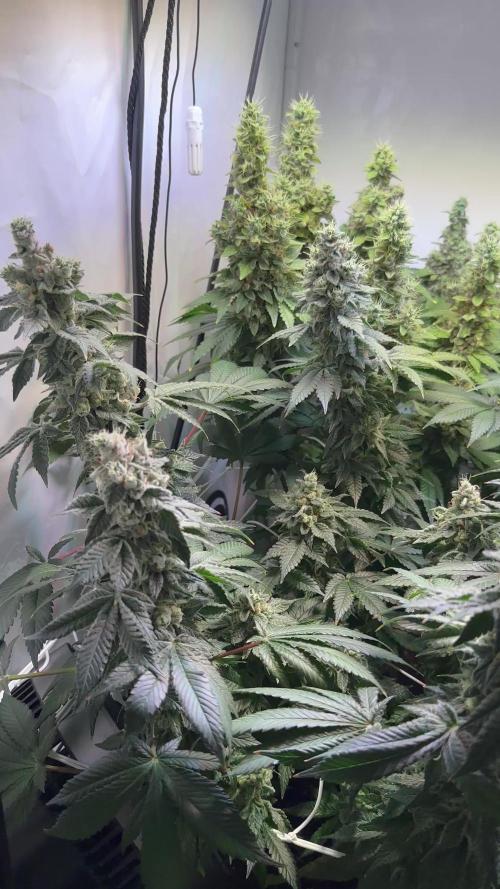
On the home stretch of the flush. The berry smell is unrealistic. It smells like a fruity perfume in my room. I could hold this plant under a non-weed smokers nose and they'd have no idea. She's gettin her lean on too, a heavy girl.
Likes
1
Share
@Naujas
Follow
42 diena...... ir mergytei labai blogai, net nežinau, kas jai darosi, duodu jai vandens 6,3 pH oro temperatūra 27° drėgmė 55%. tai mano kaltė, nežinau, kaip auginti su tokiu dirvožemiu, teko į jį įberti perlito, ko nedariau :( tik iš viršaus matosi perlitas, giliau jo nėra :( ...... be to, dirvožemis labai maistingas, ir dar įbėriau papildomų maistinių medžiagų, tikriausiai jų padauginau......... vienu žodžiu, prastas augimas..
Likes
47
Share
New week. 55-65 DLi. Development seems a little slow, which can be good or bad. Probably give her a PK boost later in the week. The dodecahedron is the only Platonic solid that has infinite numerical pathways.
Likes
8
Share
Double Dunked got harvested 16/11 and I'm planning to let her dry for 14-21 days before trimming and put them in glass+boveda (58%) and grove bags for final cure. Drying conditions are as follows: 16-18°C 55-60% RH
Likes
22
Share
: 📆 Semana de Cosecha – Blue Zushi La Blue Zushi llega al final de su ciclo con una presencia arrolladora. ✂️💎 Los tricomas están en su punto justo, con mayoría lechosa y toques ámbar que marcan el momento ideal. Los cogollos son duros, pesados y completamente nevados, con ese tono azulado que la convierte en una planta de escaparate. El olor es profundo y embriagador, mezcla de cítricos dulces, kush cremoso y especias suaves que anticipan un perfil terpénico de categoría. La resina habla sola: pegajosa, densa y presente incluso en las hojas más bajas. Se corta en su mejor momento, tras semanas de mimo con XpertNutrients y el empuje final de Sticky Fingers, que ha redondeado la floración con una capa extra de calidad. Blue Zushi al bote. Cultivo cerrado con broche de oro. 💚✂️ ¡Cosechamos fuerte! 💪
Processing
Likes
15
Share
--- Week 3 --- ----- Day 15 ----- Okay ladies are doing great!! Today's leaf sample shows the beginning stages (very early) of most likely manganese or zinc deficiency. Only on Wedding Cake, and only 5% max leaves. Watering today was 2 separate instances. 12 Liters with all the additives and 0.33ml of FloraNova Bloom 1450ppm 6.4ph Second watering FloraNova Bloom 8 Liters 1450ppm at 6.4ph. The second feeding was to top up any micro nutrients that have been causing the very beginning stages of deficiency symptoms. No more Bud Ignitor anymore. B-52 came back and sticks around till week 6 Main stems I was measuring are done growing, other stems have taken over but still only about 1 inch taller then measured stem. Preflowering clusters are almost complete. 4 or 5 days till pruning. *Update* Usually zinc deficiencies are quite rare, but it would make sense due to the lack of FloraNova Bloom in my fertilizing application regiment. I was potentially thinking early light burn, but I tested some stems canopies at 50k lumens (or lux can't remember appropriate term) and it's still showing the deficiency symptoms. If I could give it a % i'd also say i'm about 5% worried of over fertilizing. But due to the plants size and being able to take in previous nutrient levels without issues I am just worrying for no reason really. I'd wager (a hypothesis) the sheer mass of these plants and their huge fan leaves on the Wedding Cake, without any nitrogen or magnesium/calcium deficiencies has drained the zinc as I was barely using any FloraNova Bloom. If the plants we're half or 1/4 size I most likely wouldn't deplete the zinc levels enough to show deficiency. Zinc is crucial for plant development, and is a key player for many enzymes and proteins that lead to processes that help growth and internode elongation. Due to the stretch period transition I hypothesis the stretch itself has drained the zinc enough to show early symptoms. Will update throughout the week on deficiency symptoms, and hopefully they are gone by next feeding. *Update* I wanted to see the internode spacing randomly in the canopy. Here is some info on the last 2 pics (Day 15 - Node Pic 1 & 2) Pic 1 - Great spacing on this main ScrOG stem. 5 bud sites in roughly 5.5 inches length Pic 2 - RED CIRCLE - Will remove this down to the first node producing a preflower bud site. YELLOW CIRCLE - I will most likely leave these unless they get longer. BLUE CIRCLE - I'm fine with this length as it should be swallowed by the bud eventually. Pruning is set for Day 18, this Wednesday. A bit earlier as the inner canopy bud sites are going to need more light very soon. ----- Day 16 ----- GREAT day! Woke up and the canopy tips showing slight deficiency signs are now BACK TO NORMAL!!! Zinc issues can manifest and dissipate within 24-36 hours, and due to the major feeding of full micro/macro FloraNova Bloom it looks like the plant has topped up the reserves and is back to full production. PRUNING - Moved up to TOMORROW. Why? Undercanopy photo shows fan leaf drooping. This tells me the plant has finally realized undercanopy fan leaves are not worth the nutrient expense and are now letting them die off. This allows me to go under tomorrow and remove the first 6 or more inches without the plant wanting to re-grow fan leaves due to it already killing them off. If the plant doesn't want them anymore, I'll just quicken the drop off process. Super simple. Multiple checks throughout the day for deficiency signs today and tomorrow. 6~ hours into light cycle I will do a leaf sample and post pics. TOMORROW FEEDING - Due to the upcoming LOSS of water transpiration mechanisms (fan leaves) I will be feeding about 2/3rds regular water amount (probably only 8 to 10 liters instead of 15). This should help the roots not become wet for too long during the plants loss of removing large amounts of water from the soil through their leaves and photosynthesis processes. I will be aiming for 1300ppm maximum instead of 1500ppm to help with process to not overload the remaining plant leaves. I'll check the water levels ten times more often during that period to "learn" the drinking requirements of the 4 plants. I'll figure out how many hours (X) i'm away from normal feeding (dry time). Since it usually takes 48 hours to dry, I will do these calculations for new water requirements: Amount of liters of water used (average) divided by 48 hours = plant intake per hour. Then after pruning with 2/3rds of watering Amount of liters of water divided by amount of hours before it dried = Plants new intake per hour I will then adjust the original number to the new one, and then do: Plants new intake per hour times 48 hours = New watering amount in liters after Prune. This number will adjust over the days and weeks as bud sites and new photosynthesis transpiration mechanisms increase to offset the original loss from pruning during flowering. I test up to the 2nd knuckle on my pointing finger (the middle knuckle) and will often grab a small fist-full of dirt in areas the roots allow it to "feel" the moisture level. If I can squeeze it and it remains together when I open my palm, they're at the perfect level of moisture content. If water droplets remain on my hand or my fingers feel wet, it's still too wet too worry about it, and if if it crumbles and doesn't form a tight mass from squeezing, it's ready for water. I grab the tiny fist full of dirt from the deepest part of the hole my finger made, usually less than a tablespoon of dirt, i'll then put it back and close up the hole. First Update Day 16 done. More pics and updates later. *UPDATE* Half way through lights on Fixing the deficiency signs meant feeding additional nitrogen in the restricted nitrogen stretch phase. This increase of Nitrogen has given the main stem I measure on the Wedding Cake 1 additional inch in height. I expect this to stop before another inch is grown. Stems on back left Wedding Cake have increased their height as well, still same 1~inch higher than measured stem before this last 24 hours of stretch. Canopy tops are breaking 100k (Lux or lumen I routinely forget which it is) that are directly under the light, 2 stems total effected. 104~106k was seen. I'll probably cut up an old t-shirt into 2 tiny patches and string them up as a shade cloth (yea.. ridiculous right?) over each stem if I get anal enough about demanding perfection from these grows. Light height is at maximum. Will watch tips of those 2 stems and if I see too much white developing i'll McGuyver some weird shade cloth to bring it down under 90k. I expect stretch to end by tomorrow... due mainly to pruning and as well return to normal restricted nitrogen feeding %'s at tomorrow's watering. Zinc deficiency signs are probably on only 1-2% of leaves visually, and have dissipated 50+% of the yellowing developing. Very fast improvement. Most likely due to a 7 gallon root system with 4+ inch diameter trunks. I also pre-feed my pro-mix soil before use with Piranha, Tarantula, Voodoo Juice and molasses, and maintain moisture in the big Rubbermaid it's in (top on no lights) by spraying water and a tiny bit of molasses to re-moisturize the soil until use to inoculate ahead of grow, and that way I don't have to feed fertilizers and then feed these bacteria/microbes during veg as I don't know if the chemical nutrients I use would kill them before making it into the soil. Final pics at end of day today. *END OF DAY* Well.. close enough. Added more photos. No burn at tips, couple are beginning yellow at the very tips, not a concern at all. Leaves are looking a lot better now then even 3 hours ago. Plants are phenomenal. Tomorrow morning at lights-on prune is on. Lots o' pics for this tomorrow. Gonna prob toss up 5-10 for each of the 4 plants. ----- DAY 17 ----- Holy crap 4 and a half hours later I'm done pruning. A hell of a lot more bud sites then expected. This yield could be MONSTROUS. Pulled down the stems that were in the 120k lux/lumen rating and locked em in at 100k. Later today I'll set up a new trellis net above the stems and put in that shade cloth for the stems above 100k lux/lumen. I don't want white tips since i'm being so meticulous, no sloppiness allowed. Fed 1350ppm 6.4ph at 9 Liters My fat ass and stomach push the leaves on the front 2 plants down while mid tent pruning, ignore that it's not hurting in any way it's just me being fat. lol. Water moisture content will now be closely monitored due to such a HUGE amount of defoliation. There were 4x more fan leaves then I anticipated. Couple final pictures later tonight before lights off. Going to give the ladies time to recover today and just let them be. Dehumidifier was broken, but residual humidity is down to 50% currently so will go get a new one today and then hook it up tomorrow to drop it down to 40%. *UPDATE* I'm way too excited to leave them be. Here's a Panorama and a video i'm just about to check works if not i'll make it into a gif!! LOVE this grow. Gonna get MONSTERS I can friggin feel it. *LAST UPDATE* Didn't I tell you I'd MacGuyver the shit out of this grow? oh wait no? it was McGuyver? Well whhhaaatttevaaah is the correct term i'm goin with MacGuyver. I did it. 100K stem canopy Lux/Lumen ratio cause i'm tarded and don't remember which it really is turned to 72 and 63 k lux/lumens/rainbows. Used an old 4X4 trellis. stretched the friggin shit out of it with some twist ties so if that fails over night i'll jimmy up a perma-solution. Cut up a metal porch screen. Tossed it on the stems over 100k. We're good! Till tomorrow! *edit* checkin the photos the lux meter says lux. so it's LUX NOT LUMEN. LUX DAMMIT! FOREVER LUX. LUUUUX! ----- DAY 18 ----- Easy day. Plants are in phenomenal shape. Added pics. Will add more before lights off. Slow day of waiting to potentially feed tomorrow and check soil moisture level before lights off. Dehumidifier is now running. Has to drop the whole basement a good 20% humidity. Expecting 2-3 days before residual humidity hits 40%. Will be aiming for 35% out of the tent, to make up for transpiration humidity released by the plants in the tent. Temps a bit too hot today, opened the roof vent of the tent, temps have dropped 2 degrees so far, I'd like 1-2 more so will keep checking today and maybe add 1 more fan. You'll notice 1 fan is at the bottom of tent aiming up. I positioned this directly under the HID light to push cold air at the bottom of tent up directly at the light producing heat. I might add another to this. Two fans rotating at roughly 2 inches above canopy height (to move but not wind damage stems) 1 for each side of tent. No pics to add for this update *update* Dehumidifier has a loooot of work to do. 1 full container of water is 3% basement humidity.. so this could take 4 to 5 days to bring down to 35%~ but that's fine. It's only a concern being above 50% around week 5+ Evening pictures have been uploaded. Some bud development shots too. ----- DAY 19 ----- 10 liters was the perfect feed for prune. No turgor pressure issues but the root zone is dry. 10 liter feeding at 1350ppm 6.4ph Some fan leaves I left have full matured. On Day 21 I will check all stems to clear any fan leaves one last time blocking light. Humidity is still an issue. Ran dehumidifier all night in basement only lost 1% humidity. Might have to upgrade the dehumidifier. Will watch closely today as I've now chosen a continuous mode instead of a % shut off. If humidity tomorrow isn't below 48% I'm buying a bigger dehumidifier. Bud sites look great. Plants look great, haven't watched stretch since yesterday and it looks like its done now. Next feeding will be 12 Liters as plant and bud sites increase allowing for water loss increases. **** EDIT **** LOST POWER - Total time - 27 minutes. No light whatsoever in tent - 3 minutes. Replaced with - 10 high powered LED white light flashlights and incandescent orange glow camp lanterns. WILL BE WATCHING EXTREMELY CAREFULLY OVER NEXT 4 DAYS FOR HERMAPHRODITES. Lights off for less than 4~ hours should not hurt plant. But I'm paranoid. Will remove any male flower stems, no matter if I lose major bud stems. I'm not getting a seed yield F that. ----- Day 20 ----- Water in roots have been used up. Have to feed a day early. Back to normal feeding 15 liter amount now that the ladies are back to full grow mode. Everything going well dehumidifier is slowly working, basement now down to 47% residual humidity *UPDATE * I didn't want to fertilize two days in a row, there's no deficiency signs and i'm not gonna screw around with over feeding. Fed the ladies each roughly 1 Liter of tap water (10ppm 6.2ph) for 4 Liters total. Water was only given to "breach the gap" between 2 day feedings. Tomorrow they will have finished that 1 Liter watering and be ready for a full proper feed. Tomorrow will be probably doing 18 Liters based on how fast they chewed through the 10 I fed yesterday. Bud sites are very very quickly accelerating in size, plants done stretch 100% certain today. It popped out some fan leaves at the canopy top, and it seems to work cause so far all stems i've checked aren't having lighting issues. Humidity still too high. Got storms rolling through that pump the house humidity 5-10% so it's been a pain to dump 5 gallons of water from my dehumidifier only to come back an hour later and it's back to the original % I turned it on at. I'll be running both dehumidifiers starting day 30 if humidity does not drop enough, then see if 1 can just maintain the 35% basement humidity., Plants in tent produce 5% more residual humidity in tent than outside of tent hence the basement 35% for tent 40%. No new pics, nothin new to show since last update *Update* Took some pics. Some shots have a bright white LED flashlight aimed at them for true color exposure. ----- Day 21 ---- LAST DAY OF WEEK 3 Dehumidifier broke rofl. New one coming in today 45 Pint for basement, much stronger lets pray to the water removing gods that we get down to 35% finally. Been a pain in the ass. Will take photos at end of day. 80~ images in a week is a bit much. FED TODAY - 20 Liters 6.4ph 1500 ppm (Back to full strength) Week 4 fertilizing is same as Week 3, one of the only double weeks to have same fert regiment. (For those wondering how I count my weeks) Week 1 Day 1-7 (Day 1 is the first 24 hours of COMPLETE 12/12) Week 2 Day 8 -14 Week 3 Day 15- 21 etc. etc.
Likes
43
Share
~ GG4 SHERBET FAST FLOWER by FastBuds ~ Well fam, here we go again with another epic strain from FastBuds Fast Flowering stable. After having such tremendous success growing their Gorilla Cookies Fast Flower outdoors last year, I've decided to run another of their fast flowering strains outdoors this year... GG4 Sherbet Fast Flower! The best description of this awesome cultivar comes directly from my friends at FastBuds which is as follows: "Bred from extremely potent and flavorful Gorilla Glue and Orange Sherbet genetics, GG4 Sherbet FF (Fast-Flowering) takes all the best traits to the next level, offering a high-yielding strain that can produce up to 600 g/m2 in a 7-week flowering time. This super resilient Indica-leaning hybrid thrives indoors and outdoors, and in all types of climates while producing mouth-watering sweet, fruity, spicy and earthy terps that translate into a delicious sugary hazelnut aroma. Expect an extremely relaxing and overall happy effect that’ll leave you with a huge smile from ear to ear. It’s the perfect strain for growers of all levels of experience seeking low-maintenance yet highly productive photoperiod varieties that deliver quality and quantity without extra effort. GG4 Sherbet FF grows chunky buds with long dark orange hairs and spade-shaped calyxes that get encrusted with trichomes by harvest time, giving them a gorgeous silvery-white appearance. This medium-sized photoperiod can reach up to 200 cm in height and yields up to 650 g/m2 while developing that typical hybrid structure. GG4 Sherbet FF grows with a stocky, bushy appearance, developing one sturdy main cola and fat side branches that support huge yields without much effort. This super-fast variety produces distinctive light-green buds with a high bud-to-leaf ratio, making your trimming sessions a breeze. It’s a top-notch resin producer that doesn’t need much maintenance and will thrive in almost every climate, rewarding growers of all levels with extremely flavorful resin that makes for outstanding hash end extracts." ________________________________________________________________________________________________________________________________________________________________________________________________________________________________________________________________________________________________________________________ The Setup: This is going to be an outdoor grow, but I have started the GG4 Sherbet Fast Flower indoors as our weather is still too cold to put her outside (nighttime temp's dipping regularly into the 30's℉). The plan is simple... let her grow inside under a 19/5 light schedule until the nighttime temperatures stay above the mid 40's℉, at which point she'll be moved outside and transplanted into the soil which I have already setup and inoculated with beneficial microbes, and then let the fun begin!🤪💚 ________________________________________________________________________________________________________________________________________________________________________________________________________________________________________________________________________________________________________________________ Weekly Updates: 4/11- Here we go into the second week of life for my FastBuds GG4 Sherbet Fast Flower and she's doing really well! All I'm doing right now is making sure that her medium remains moist, watering only when necessary. I'm checking her root development daily and she will be ready to transplant outdoors any day now! 4/13- Today is TRANSPLANT DAY! I moved the GG4 Sherbet outside to her prearranged 'new home' which I had previously prepped by adding some Coco/Perlite into the soil to improve the texture and drainage. I then pre-amended the soil with Gaia Green 4-4-4 All Purpose slow release dry amendment along with 3g of Wiggle Worm castings, 2 cups of ground Alfalfa and 1/4 cup of Extreme Gardening's MYCOS. After which, I kept the soil moist to allow the microbial colony to populate for a week. To transplant, I first made a hole then placed a Solo cup in it to make sure that the depth was adequate, then packed the medium up against the cup firmly which leaves a nice Solo cup shaped hole in the ground. I then wet the inside of the hole that I formed and coated the hole with Extreme Gardening's MYCOS root enhancer, after which I removed the GG4 Sherbet from her Solo cup and placed her snugly into her new home! After planting her in the ground all that was left to do was lightly water her in... Let the fun begin!🤪 4/15- The GG4 Sherbet FF from FastBuds is doing extremely well in her new environment. To be quite honest I was slightly hesitant to place her outside this early as we are only getting approximately 13 or so hours of sunlight daily. Based on my experience last year growing a Gorilla Cookies FF, which was placed outside at a similar time and did extremely well, I went ahead with the transplant, confident that she would be just fine. 4/17- I'm watering around every 2-3 days right now using water straight from my well through a garden hose... super simple! I do not worry about PH as long as the water isn't chlorinated and is good enough for me to drink, it's good enough for my plants and the microbial colony in the soil will adjust the PH to where they need it and at the same time provide the nutrients that the plant requires... again, nice and simple. Well there goes two weeks for this little lady. The next coming weeks should see an increase in size and vigor as long as the weather cooperates... fingers crossed!🤞 Thank you for checking out my diary, your positive comments and support make it all worthwhile! 💚Growers Love!💚😎🙏
Likes
Comments
Share
@Piro420
Follow
End Week 8 a lil light burn. Still shocked 14day veg at 14inches went over 65 inches(lights max is 63). I bent tucked topped and folded still in the lights. Other then some cooked tops it looks to be a good harvest soon. Stinky and sticky af.
Likes
30
Share
week intel: we are going through slowly stresses : just a little E.C stress around 1.4 once a week feeding: i feed them 3 times this week with this order : day 1 : i feed them heavy with silicate +base nutrients(calcium & micros + Bloom) about 700 ppm - 1.4 e.c to cause a little stress. day 3 : i feed them low dose of Feeding Booster around 327 ppm - 0.64 e.c to let them recover a little but not fully recover still a little stress will caused. day 5 : i feed them with low dose of Top-Max + B-52 around 255 ppm - 0.5 e.c to let them recover the stresses to get ready for another stress next week. guide of the week : know your plant tolerance limit of E.C stress once you saw the very very little yellowing on tips of leaves , that's the sign to don't go further , never reach that limit if you want a high quality buds, in my case tolerance is 1.4 and i'll reach to that level only once a week to cause precision stress , love your plants and have a happy growing!
Likes
18
Share
This week was a bit worrying as she was having issues with high run off again. I had to make the decision to begin flushing her with just ph water. Day 61 ppm 429 run off 580! Day 63 ppm 329 run off 730!!! I was panicking at this stage but I didn’t wanna be too drastic and put her into shock, sounds like she got nutrient lock out. but I had faith this hulkberry girl will still produce great tasting buds. She smells delightful. The colas are rock solid. I’m surprised I haven’t had to stake her up. I think because the stem is huge so it supports the weight better. Day 65 end of week 9. Ppm 332 run off 272 (phew) that’s better. The buds are packing out daily. I cannot wait to cure her off and enjoy her in edibles. Nom nom. trying to pack up smoking very soon so I times that perfect.
Likes
4
Share
The last few weeks of her in flower week 9…she smells lovely
Likes
4
Share
@m0use
Follow
***Sponsored Grow*** = Medic || https://medicgrow.com || Grow = ***Sponsored Grow*** Breaking into my last stock of Dinafem seeds before they all age out, this one is something I have been looking forward to. Part of their Dinamed lineup consisting of all pure cbd strains. This is based off their classic award winning Dinamed lineup, its a mix of dinamed cbd plus and dinamed cbd autoflower. The CBD plus has a increased terpene profile and slightly higher levels of CBD vs their regular dinamed cbd. Granted the original Dinamed CBD is award winning. Maybe this one would have won some awards as well if the company did not abruptly get shut down. As of now I've scarified the seed, soaked in water for 20hr then moved to paper towel till a 1mm or less tap root was showing then planted in the medium. This grow has a lot of new things happening. its my first attempt at indoor growing using dry crystal fertilizers, the brand of nutrients I'm using is Lotus. It was also a gift from another user @SanderanderS as shipping to them would have been astronomical for the stuff they wanted. I have noticed some weird things like boated packaging, off gassing and weird consistency with the nutrient line up so far and been in contact with the reps online about it, They said everything is normal and not to worry. Another new thing with this grow is how it will be grown under the new LED's by Medic Grow. They will be under MINI-SUN 2 240W LED grow lights using their V1 Spectrum, Its good from seed to harvest. You can find more information about this in the foot note. Just going to wait for another week till It pops up and will update as follows. Watered in with PH of 6.2 and a EC of 0.6 or 340ppm 500 scale. This is part of a 5 part diary in conjunction with medic grow led lights, in the beginning it was to be 6 plants but one of the selected strains died out and its replacement/backup seeds also failed. Sorry to say Humboldt Seeds Raspberry Diesel was a big flop all 3 seed did not meet my expectations, really wanted to try that one it looked nice. Can add that to the failed 4 seeds of Seedsman Cookies Chill :( ***Sponsored Grow*** Official Website: https://medicgrow.com/ Facebook: https://www.facebook.com/medicgrowled Twitter: https://twitter.com/medicgrow Instagram: https://www.instagram.com/medicgrow420/ YouTube: https://www.youtube.com/channel/UCNmiY4F9z94u-8eGj7R1CSQ Growdiaries: https://growdiaries.com/grower/medicgrowled https://growdiaries.com/grow-lights/medic-grow
Likes
10
Share
@BudXs
Follow
Super busy with a move and a big garden reno. Sorry, this is the only update for this week
Likes
2
Share
Que pasa familia, vamos con la primera segunda de floración de estas Pink Sunset feminizadas de silentseeds. Vamos al lío ,se trasplantaron en macetas de 7 litros definitivamente. El ph se controla en 6.0 , la temperatura la tenemos entre 24/20 grados y la humedad ronda el 50%. El ciclo de floración puse 12h de luz, el foco está al 50% de potencia. De momento van creciendo a buen ritmo y tienen un buen color. Agradecer Agrobeta por el envío de un kit para la temporada, son unos jefes. - os dejo por aquí un CÓDIGO: Eldruida Descuento para la tienda de MARS HYDRO. https://www.mars-hydro.com Hasta aquí todo, Buenos humos 💨💨💨
Likes
41
Share
@Stork
Follow
Day 120 PH 5.8 EC 0.2 PPM DLI 6h PPFD/ Water 18c Day 121 Tue PH 6.0 EC 0.2 PPM DLI 6h PPFD/ Water 18c Day 123 PH 6.0 EC 0.2 PPM DLI 6h PPFD/ Water 18c Day 125 PH 6.0 EC 0.2 PPM DLI 6h PPFD/ Water 18c