


Likes
Comments
Share

@WeedleyScott
Follow
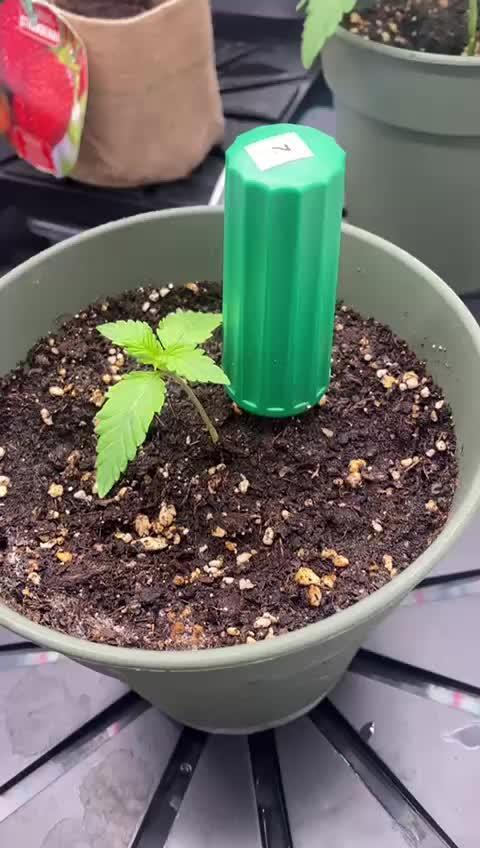
Woche zwei der Nachzügler hat sich gut entwickelt und die Hauptpflanze ist fast schon ready für den nächsten Top, ich werde mal Erde ansetzten und alles vorbereiten.

Likes
64
Share


@Grow4Releaf
Follow
She's almost done.
Starting to see cloudy so I'm just continuing to water. Started the water only last week so things should start to fade out alil more now. ..
Definitely learned alot for next time I run this strain.
Gonna be fun to redo.
See how this week goes tho, not the biggest plant but for the minimum amount of inputs she's done well.
But till the next update. Hope ur all doin well ,best of luck !!

Likes
11
Share


@Mcdiggley420
Follow
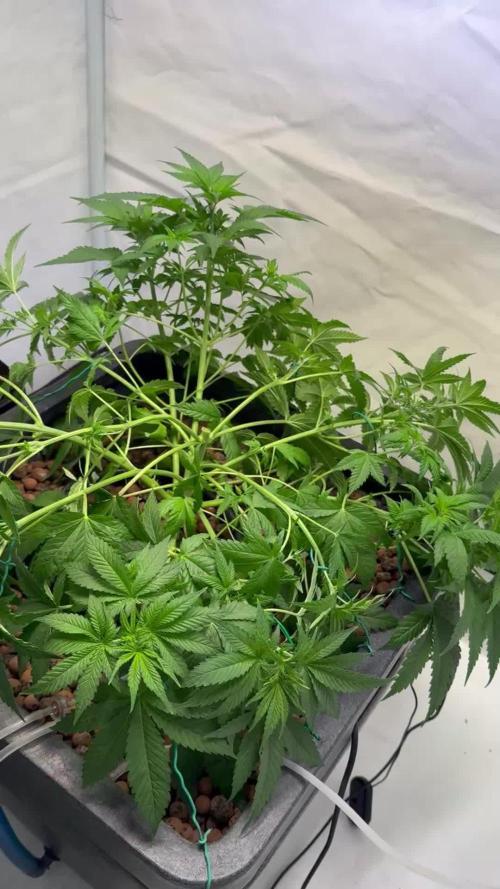
Blue dream autos gone into full flower gsc is still in pre flower im liking how big they're getting tho
Blue dreams not liking the strength of nutes dropped it back down to half strength hopefully she picks herself back up today



Likes
21
Share

@BlaKX
Follow
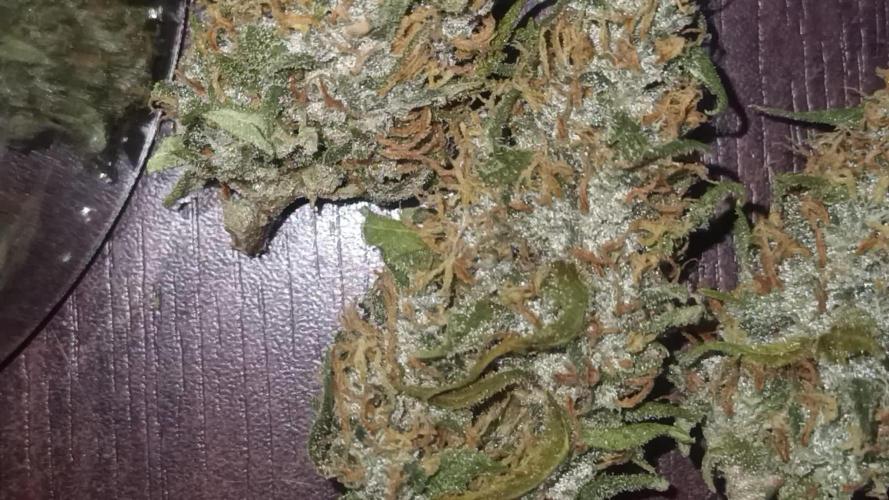
Ai Gude Growmies war was das Versprechen angeht Nothern Light Alter Schule zu bekommen mehr als misstrauisch und skeptisch. Aber ich wurde eines besseren belehrt der Alte tobi machte am anfang sorgen und war am ende der größte und Buds wie früher die sich deutlich von modernen unterscheiden.



Likes
9
Share


@Mr_nugs_lover_David
Follow
I feel sorry for myself for not being able to show this transplant either just because of the battery of my freaking phone guys, but anyways, this beautiful cross of Casey Jones X cookies kush by gecko seeds called the big jeff, (pheno #1) has been Transplanted after 39 days since planted, I've prepared the 15L pot with the complete biotabs organic line, so I added 25g of startrex for every 5L of soil, then sprinkled a couple of grams of mycotrex on the transplant hole and then I added 1 biotab slow release tablet for every 5L of soil (3 tabs) after that I watered the plants immediately with 1G of bactrex per liter and 1ml per liter of orgatrex, so let's see how this beautiful lady performs!! Don't miss this 2021 diaries guys, it's gonna be fun!

Likes
15
Share


@AustinRon
Follow
LJ4Q23 Flower 4
SOP LJ4Q23 - 8-Plant SOG from Cuts
Objective:
- 8 Plants - Single Colas - No Branches
- Harvest Lemon Jeffery (Narrow Leaf Phenos): 70±5 days
- Light Intensity - Ramp up from 200
- > 40 DLI, at 13 hour ScotoPeriod, will need MAX Light to Achieve
- Ramp Light Intensity to MAX ASAP (3 Weeks?)
Notes:
- Lemon Jeffery handles HIGH LIGHT Well, even within 6” of Light @ ~1800 µMol/m2/
- The challenge will be achieving minimum 40 Mol/day, which in this setup requires 1000 µMol/m2/s @ 13 hour Scotoperiod
______________________________________
Start of Week: [ 2023-12-20, LJ4Q 29:B:3:1]
End of Week:
[ 2023-12-26, LJ4Q 35:B:3:7]
Flower Week 4 _______________________________
Environment Targets (Flower 4 - 6):
- Scotoperiod: [ 13, h] # Contiguous dark hours daily
- TemperatureMax: [ 78, °F]
- RH: [63, %]
- VPD: [ 1.0, mS]
- LightIntensityMax: [ 1000, µMol/m2/s]
- LightDistance: [ 16.5, “]
Fertigation Plan:
- RLA Hydro Chart, EC 1.8 - 2.0
- Primer A: [ 10, ml, gal]
- Primer B: [ 10, ml, gal]
- Silica Skin: [ 6.25, ml, gal]
- Build-a-Soil:
- Quillaja20 Powder: [ 0.5, tsp, gal]
- Microbelife Hydro:
- Photosynthesis Plus: [ 6, ml, gal]
- Mammoth Microbes:
- Mammoth-P: [ 0.6, ml, gal]
- Build-a-Soil:
- Quillaja20 Powder: [ 0.25, tsp, gal]
- South Cascade Organics:
- SLF-100: [ 5, ml, gal]
Cease All Foliar Feeding
__
Wed Dec 20, 2023
LJ4Q 22:F:3:1
Monitor Runoff
- [ ] Amt: [ TBD, ml]
__
Thu Dec 21, 2023
LJ4Q 23:F:3:2
- [x] Amt: [ ~100, ml] # Scant 1/3” in bottom of drain bucket.
- [x] Increased Feeds 2 - 4 to 2:45 (from 2:30)
__
Fri Dec 22, 2023
LJ4Q 24:F:3:3
- ‘Overnight’ humidity stuck at ~70% with ACI. Blower on HIGH. Brought Humidifier into the grow room, outside the tent, set at @50% RH
- [x] Runoff Amt: [ 400, ml]
- [x] Refresh 4 Gallons, EC: 2.0
- RLA Primer A: [ 40, ml]
- RLA Primer B: [ 40 ml]
- Mammoth-P: [ 0.24, ml]
- Photosynthesis Plus: [ 24, ml]
- TerpsPlus: [ 2, ml]
- SLF-100: [ 20, ml]
__
Sat Dec 23, 2023
LJ4Q 25:F:3:4
- [x] Runoff Amt: [ 250, ml]
__
Sun Dec 24, 2023
LJ4Q 26:F:3:5
- [x] Runoff Amt: [ 100, ml]
__
Mon Dec 25, 2023
LJ4Q 27:F:3:6
Increase Fertigation Frequency to 6x/day from 4x/day - Adjust Fill Times to Maintain 250, < 400, ml Runoff/day.
HF IrrigationChange:
# from 2:30 duration - 4/day, to 1:50 duration - 6 Times/Day
# 13 Hour Scotoperiod
Initiate Irrigation Irrigation Complete actual duration
Event 0 18:45:00 18:46:52 1m 52s
Event 1 20:55:00 20:56:20 1m 20s
Event 2 23:05:00 23:06:20 1m 20s
Event 3 01:15:00 01:16:20 1m 20s
Event 4 03:25:00 03:26:20 1m 20s
Event 5 05:35:00 05:36:20 1m 20s
- [x] Reprogram NearPow Controller
- [x] Runoff Amt: [ 100, ml]
__
Tue Dec 26, 2023
LJ4Q 28:F:3:7
- [x] Runoff Amt: [ 0, ml]*
- Raised to full minute, adding 0:40 to events 1-5, and 0:10 to initial
Initiate Irrigation Irrigation Complete actual duration
Event 0 18:45:00 18:47:30 2m 30s
Event 1 20:55:00 20:57:00 2m
Event 2 23:05:00 23:07:00 2m
Event 3 01:15:00 01:17:00 2m
Event 4 03:25:00 03:27:00 2m
Event 5 05:35:00 05:37:00 2m

Likes
7
Share


@Dingle_Dangle
Follow
09/10/2023 - Day 98 - Week 15 - Week 10 flower
She's ready.
Last update.
Stunning smell, colors, size and everything.

Likes
4
Share


@losgrowershermanos
Follow
Rega com Fertilizante. Terminando de regar com o ultimo litro feito. Mais ou menos 150 ml em cada planta. 1 ml do liquido por litro + 0,15 g por litro do sólido. Ajustado o PPFD para aproximadamente 500 em cada planta
Likes
40
Share


@BudXs
Follow
Here we go, my first attempt to be blown away by the most designer genetics I could find. Spoke with GreenMachine back in November 2019 on getting these, watched him do it first in his version of hempy buckets (do check him out, quite unique)
6 plants run in 4 gallon hempy buckets 30% perlite, 70% coco. Top feed twice daily till resevoir spills out of the buckets. Will up it in flower to at least 3 feedings. All drains to waste
Room is dialed in. See my build journal, this space is in a non climatised garage. Insulation and air conditioning are key, as well as odor control for my neighbors sake.
Growing out 4 phenos to look for the frostiest nuglet and will then clone it over the winter for next years run.
Follow my son on his first Grow Diaries adventure - Budxless
I go live on insta Sunday nights from the garden at 9:30pm EST - Budxsmedical

Likes
27
Share

@MrGrowDiarie
Follow
Day 84
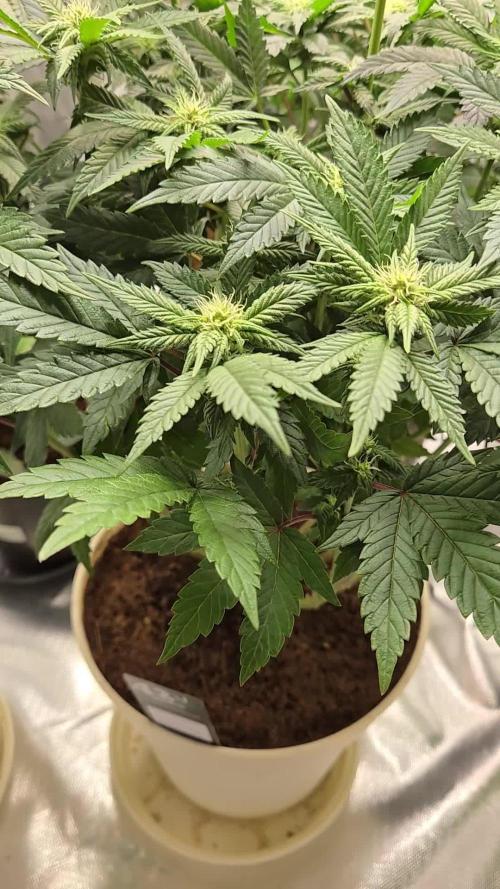
What a transformation! At Day 84, our main plant is looking incredibly healthy and vigorous, showing all the signs of a successful transition from the vegetative stage. We're now deep into the mid-flowering phase, likely around Week 4 to 5 of bloom.
Plant Health and Structure
The plant has developed a fantastic, bushy canopy with excellent lateral branching, a clear benefit of prior training (like topping or LST). The overall color is a rich, uniform dark green, indicating optimal nutrient management, with no visible signs of deficiencies or burn. The fan leaves are large and spread out, demonstrating effective light absorption
Likes
62
Share


@Babygurl98793
Follow
Really hoping this storm dont affect my girls its suppose to storm rest if day

Likes
17
Share


@Hashy
Follow
Harvest report for green crack.
Breaking ground to harvest was 103 days.
Wet weight was 378 grams
Dry weight =52g
Power used for 14 weeks 5days. 288Kw used on lighting. £86.40at £0.30 a watt.
Average 2.79 kw a day 139 Watts power an hour.
Dry weight from this grow.
#1 49g
#2 37g
#3 46g
#4 39g
#5 51g
#6 52g
Total 273g
True g/W 273÷139=1.96g/W
This was one great grow and there are a few strains I'm really considering running again straight away. I'm impressed this one made it to harvest after all the neglect.
One thing I have learnt during this grow is that the idea of cramming 9 autos into my tent was a stupid idea and trialling it with 6 plants was wise.
Likes
2
Share


Likes
7
Share


@SpecialgrowerZ
Follow
I'm so fuckin' crazy, i change my hps lamp 250w for a led lamp 600w 👽⛈️
Processing
Likes
13
Share


@William38
Follow
This week was good plant looks better add root farm bloom 10 ml....what went wrong well making video I snapped a branch off 🤔...tryed honey to try and root it seen on YouTube some guy did it so I tryed need to get clone x or something like that any ideas???

Likes
73
Share


@Herbz_Unkraut
Follow
i looked awesome all growcycle...i streched alot & i noticed it drank alot more then the other plants while growing...had a good yield, i´m very happy overall





Likes
5
Share

@Marijuanaut
Follow
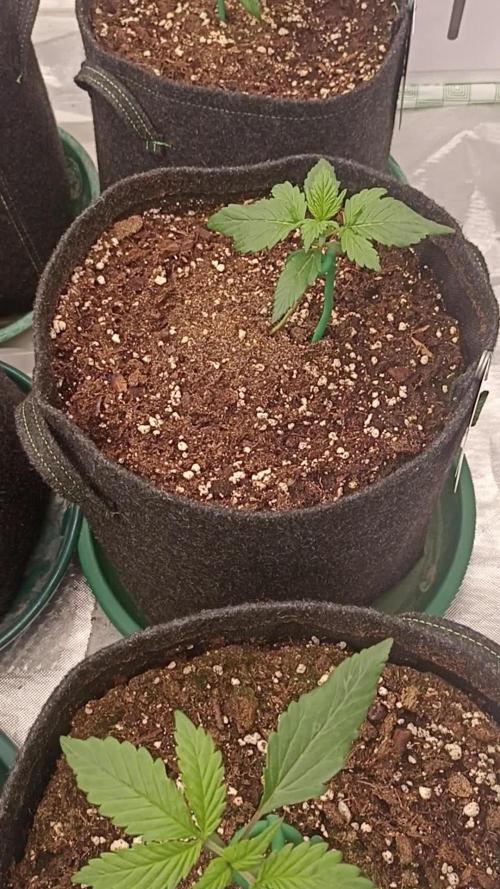
Finally these long legs are getting some leafs! 😅
First week of veg went smooth and the ladies seem to be recovering well 😌
Bumped the led power, reduced the distance to plants and applied the first feeding with a leftover from a previous grow so it doens´t go to waste... proceeding next week with the aptus premium line! 😉

Likes
11
Share

@Growfather1
Follow
Hello everyone,
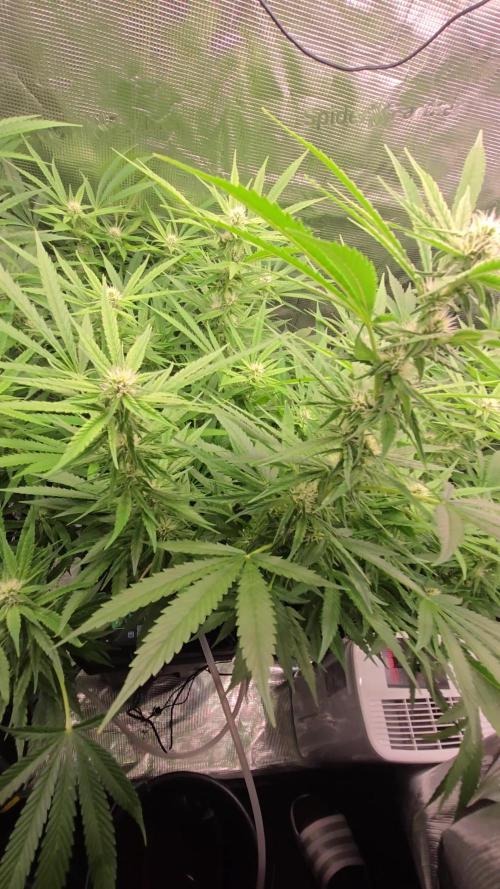
The weeks are flying by in the tent the amnesia fast is drink more and more consuming about 10 liters per 3 days.
She will get her last defoliation in a couple of days and then she will get almost no stress from my growstyle.
I placed a dehumidifier in the tent to counter high humidity 67% when the lights are off. I'm pulling about 5 liters of water out the dehumidifier per day.
Let's see how she looks next week after the defoliation.
Thanks for stopping by and have a nice day.
Best regards,
Growfather
