


Likes
Comments
Share




Likes
2
Share


@4F1M6
Follow
This cut is from when I topped the mother. I put the top into a diy dwc bubble cloner. Took 6 days to see root nubs. After 8 days there was enough roots to plant the cutting. I planted the cutting in a 1 gallon fabric pot. Filled up the pot with sunshine mix #4. I preventative moistened the medium to avoid compaction and damage to the fresh and fragile new root system.
After just under a week of settling in to the medium. I had my first signs of new growth. Marking the first day of veg and the start of this diary. I also gently and very gradually bent her back and tied her down. Lst will be utilized through out this whole grow to get a full even canopy. Looking forward to it.
Until next update. Happy growing and stay lit fam.



Likes
8
Share


@DogDoctorOfficial
Follow
💙 Project Blue Tent – Week 7
Blue Waffle F1 – Pheno A (Folder 13A)
Welcome back everyone to another week inside Project Blue Tent! 💙🌱
If you're new here, welcome aboard.
This project is all about exploring the incredible Blue Waffle F1 genetics from Zamnesia while putting the complete growing ecosystem through its paces.
Rather than documenting four plants as a single diary, each phenotype receives its own individual journey from seed to harvest. They share the same tent, the same environment, the same nutrition, the same irrigation and the same lighting.
And yet...
They still manage to tell four completely different stories.
As I always like to say:
We're not just growing plants.
We're getting to know them.
────────────────────────
🌿 Week Seven – The Final Cleanup
This week feels like a milestone.
The SCROG has done its job.
The canopy is full.
The plants have established their structure.
And now it's time to prepare everything for the next chapter...
Flowering. 🌸
Plant A is looking absolutely beautiful at the moment.
Her foliage has developed into the rich, healthy green I've been hoping to see, and the overall structure is remarkably balanced. After several weeks of gently guiding branches underneath the SCROG, we've managed to create a canopy that is surprisingly even from one side of the tent to the other.
At approximately 60 cm, she's sitting comfortably within the space we've created for her.
And although she could certainly continue growing vegetatively, I don't want to simply keep filling the tent with more and more foliage.
At some point, you have to stop building the canopy...
...and start preparing it for what comes next.
That's exactly where we are now.
────────────────────────
🕸️ From SCROG to Flower
Over the last couple of weeks, the SCROG has completely changed the way these plants occupy the tent.
Instead of allowing individual branches to dominate vertically, we've been gently guiding them horizontally beneath the screen.
The result is exactly what we were looking for:
A broad, relatively even canopy with many developing tops sharing the available light.
SCROG isn't about forcing a plant into submission.
It's about working with its natural growth and redistributing that growth across the available space.
And looking at the tent now...
I'd say the mission has been accomplished.
The screen is filled.
The plants have claimed their territory.
Now we need to create the best possible starting point for flowering.
Which brings us to this week's main job.
────────────────────────
✂️ Defoliation – Cleaning Today for a Better Tomorrow
This week we're performing a deep, purposeful defoliation across the canopy.
For anyone unfamiliar with the technique, defoliation simply means selectively removing leaves from the plant.
But it's important to understand what defoliation isn't.
It isn't stripping a plant bare.
It isn't removing leaves just because they're in the way.
And it isn't something that should automatically be performed every week.
The purpose is to improve the structure we've already created.
After several weeks of SCROG training, there is now a tremendous amount of foliage packed into a relatively small space. While those leaves are essential during vegetative growth, too much overlapping foliage can eventually create unnecessary congestion inside the canopy.
So we're removing selected leaves that are:
• Blocking developing growth
• Creating unnecessary overlap
• Restricting airflow through the interior
• Shading lower areas that we've decided to retain
• Or simply no longer contributing enough to justify occupying that space
The goal isn't to make the plant look empty.
The goal is to make the plant efficient.
────────────────────────
🌬️ Why Defoliate Before Flower?
Timing is everything.
We're doing this now because the plants are still in vegetative growth and have time to recover before we ask them to transition into flowering.
Defoliation is a form of stress.
Even when performed carefully, removing a significant amount of foliage temporarily changes the plant's balance between its leaves, roots and growing points.
That's why I don't want to perform a major cleanup deep into flowering unless there's a very good reason.
Right now, the plants can take that short period of recovery while they're still operating under an 18/6 light schedule and actively producing new vegetative growth.
After the cleanup, we'll give them time to recover, settle and rebuild their foliage before flipping the lights.
The idea is simple:
Stress now.
Recover now.
Flower later.
Rather than asking the plant to simultaneously deal with a major transition into flowering and a significant amount of pruning, we're separating those events.
One step at a time.
That's especially important in a project like this, where I'm trying to observe the plants rather than simply push them as hard as possible.
────────────────────────
🌿 Plant A – Looking Better Than Ever
Plant A continues to impress me.
The first thing that stands out this week is the colour.
That slightly lighter appearance we saw earlier in the grow has completely disappeared. The foliage is now displaying that rich, healthy green that tells me the current nutritional strategy is working extremely well.
She's vigorous without looking excessive.
Healthy without showing signs of nutritional stress.
And most importantly...
She's balanced.
Her branches have responded beautifully to the SCROG, and the canopy has developed into a very usable structure for flowering.
This is one of those moments where you can look at the plant and realize that the weeks of small adjustments have finally come together.
The topping.
The recovery.
The daily SCROG work.
The irrigation.
The feeding.
The environmental stability.
None of those things created this canopy by themselves.
They're all pieces of the same puzzle.
────────────────────────
💧 The Drip Irrigation System
One of the things I have become particularly impressed with during this project is the automatic drip irrigation system.
It's working beautifully.
With the plants now drinking more consistently and the canopy becoming increasingly demanding, having a reliable irrigation system makes maintaining uniformity across the tent considerably easier.
Each plant is currently receiving approximately 1.2 L per 24 hours, delivered through the drip system.
And the plants are clearly enjoying the consistency.
One of the advantages of automated irrigation isn't simply saving time.
It's repeatability.
Instead of relying on every watering being manually performed at exactly the same interval and volume, the system provides a much more consistent routine for the plants.
That consistency becomes increasingly valuable as the root systems develop and the plants transition toward flowering.
So far...
The system is doing exactly what I wanted it to do.
And honestly, watching four plants respond so uniformly to the same irrigation strategy has been one of the most satisfying parts of this project.
────────────────────────
🥥 Feeding Program
The feeding recipe remains unchanged this week.
And for now, I don't see a reason to interfere with something that is clearly working.
Current nutrition:
• Plagron Hydro A — 1.9 ml/L
• Plagron Hydro B — 1.9 ml/L
• Plagron Hydro Roots — 1 ml/L
Current EC remains approximately:
1.92 mS/cm
with the solution maintained around 18°C and pH at 5.8.
The plants are showing excellent colour, strong growth and healthy leaf development, so I'm perfectly comfortable maintaining the current recipe for now.
We may increase the nutritional strength next week depending on how the plants respond after defoliation and as flowering approaches.
But that's exactly why I don't like changing several variables at once.
First, we observe.
Then we adjust.
The plants will tell us what they need.
────────────────────────
🌡️ Environmental Conditions
The Blue Tent continues to remain remarkably stable.
This week's average conditions were:
• 🌡️ Day Temperature: 28°C
• 🌙 Night Temperature: 27°C
• 💧 Relative Humidity: 65%
• 🥥 Substrate Temperature: 24°C
• 💦 Nutrient Solution: 18°C
• ⚗️ pH: 5.8
• ⚡ EC: 1.92 mS/cm
• 💨 CO₂: approximately 450 ppm
• 💡 Light Schedule: 18/6
• 💧 Irrigation: approximately 1.2 L/plant/24h
• ? Pot Size: 8 L
• 📏 Plant Height: approximately 60 cm
The plants are continuing to respond beautifully to these conditions.
The root-zone temperature remains particularly stable, irrigation is consistent, and the canopy has enough air movement to support vigorous transpiration.
As we move toward flowering, environmental management will become even more important.
The room we've created now needs to support not only vegetative growth...
...but the much denser flowering structure that is coming next.
────────────────────────
🌬️ Why the Cleanup Matters
One of my main objectives with this defoliation isn't simply aesthetics.
It's airflow.
When four vigorous plants completely fill a 100 × 100 × 200 cm tent, the amount of foliage inside that space becomes considerable.
From above, everything can look absolutely perfect.
But underneath that beautiful canopy is another story.
Leaves overlap.
Branches cross.
Interior spaces become crowded.
Air needs to move through all of that.
By selectively removing excess foliage now, we're opening those internal spaces before flowering begins.
That gives us a cleaner structure going forward and makes it much easier to inspect the plants, maintain airflow and monitor the developing flowers.
This is also one reason I'm much happier doing the major cleanup before the flip rather than waiting until the plants are deep into flowering.
Once flowering begins, the priorities change.
I want the plant concentrating its energy on developing flowers rather than repeatedly recovering from major structural work.
So we're preparing the room now.
Clean canopy.
Good airflow.
Healthy structure.
Then...
Flower.
────────────────────────
🧠 Defoliation Isn't About Removing Leaves
One of the biggest misconceptions surrounding defoliation is that more leaves automatically means a worse plant.
That's not true.
Leaves are incredibly important.
They're the plant's solar panels.
They capture light and help drive photosynthesis.
So the objective should never be:
"How many leaves can I remove?"
The better question is:
"Which leaves are no longer contributing enough to justify occupying this space?"
That's the philosophy I'm following here.
We're not trying to weaken the plant.
We're trying to improve the relationship between:
Light → canopy → airflow → growing sites.
And because we've already spent weeks creating the structure with SCROG, this cleanup is simply the final refinement of that work.
────────────────────────
🌱 Plant A's Personality
Every phenotype continues to develop its own personality, even when all four plants are living under almost identical conditions.
Plant A has consistently been one of the more balanced girls in the tent.
She doesn't appear interested in becoming the biggest plant in the room.
Instead, she seems much more interested in becoming an efficient one.
Her growth is structured.
Her canopy is balanced.
Her foliage is beautiful.
And after weeks of training, she has settled into the SCROG extremely well.
Now, after today's cleanup, she looks almost like a different plant.
Less crowded.
More open.
More organized.
And ready for the next chapter.
That's the part of growing I really enjoy.
You spend weeks slowly building something...
Then one day you step back and suddenly realize:
It all came together.
────────────────────────
👀 Looking Ahead
The next few days will be about one thing:
Recovery.
No unnecessary training.
No chasing perfection.
No constantly changing the environment.
Just observation.
The plants have been through topping.
They've been trained beneath the SCROG.
They've filled the canopy.
And now they've received their final major vegetative cleanup.
So we're going to let them breathe.
Let them recover.
Let them continue growing.
And then, assuming everything continues to look as good as it does today...
we flip the Blue Tent into flower. 🌸
This is the point where all those weeks of preparation finally start paying off.
The screen is full.
The structure is ready.
The plants are healthy.
Now we just need to let them do what plants do best.
Grow.
────────────────────────
💙 Thank You
A huge thank you to Zamnesia for making Project Blue Tent possible, from these fantastic Blue Waffle F1 genetics to the complete ecosystem surrounding this grow.
A massive thank you to Plagron for providing the Premium Growbags together with the Hydro nutrient line, which continues delivering excellent results and beautifully healthy growth.
A special thank you to Mars Hydro for the drip irrigation and automatic drainage system. After watching these plants respond to the consistency of automated irrigation week after week, I'm genuinely impressed with how well the system is performing.
Thank you as well to GrowDiaries, for giving growers around the world a place to document their journeys, exchange knowledge and learn from one another.
And finally...
Thank you to everyone following Project Blue Tent.
Every comment, every question, every bit of feedback and every person simply stopping by to see how these four phenotypes are developing means more than you probably realize.
We've spent weeks building this canopy together.
Now the really exciting part is about to begin.
The plants are cleaned.
The SCROG has been filled.
The room is ready.
Flower is next. 🌸💙
Until next week...
Growers Love, happy growing, and take care everyone! 🌱💙


Likes
Comments
Share


@Danger_Mouse
Follow
Very easy-to-grow plants that aren't causing any problems at all. However, there are two different phenotypes in structure, and the four plants smell very different from each other (the tallest one smells like melon, and one of the shorter ones smells very citrusy).




Likes
3
Share


@Cookies420
Follow
07/10
Hey guys, how you doing ?
Flushed the plants with 2l of water per plant, they responded very well and are very happy.
First pistils showing up, thats a nice sign.
Both the Amnesia plants are still in veg but definitely noticed stretching.
As soon as they dry out im gonna give them some nuts, probably half the recommended dosage.


Likes
17
Share


@Roberts
Follow
Melon Gum is doing great. I defoliated her center out today everything is looking good, and she is the biggest in the run. Thank you Pure Instinto, Spider Farmer, and Athena. 🤜🏻🤛🏻🌱🌱🌱
Thank you grow diaries community for the 👇likes👇, follows, comments, and subscriptions on my YouTube channel👇.
❄️🌱🍻 Happy Growing 🌱🌱🌱
https://youtube.com/channel/UCAhN7yRzWLpcaRHhMIQ7X4g.

Likes
21
Share


@Herbie
Follow
The time has come to pass for this super cool Red poison auto from Sweet seeds.
The one bud beauty has been fun from the start.
It took as much time trying to figure out what 16oz was in English and then actually find a 473ml cup, as it took this girl to germinate.
I've mentioned before it was a picture entry from this this comp previous that drew me to grow diaries in the first place. (Yes I'm a bud slut, don't judge)
Back to miss Red P, she has taken the usual beating of me forgetting to water and feed a few days, a neglect that all my plants enjoy at some stage of their lives.
She started life in a converted shoe cupboard grow thing and ended her weeks in the main converted wardrobe where alongside the usual cheap LEDs she has had a few doses of the old UVB 10 reptile light. *Giving her a fantastic sugar looking crystal coating. My opinion through some research and personal experimentition*
Although nuits problems showed in her leaves in the second half of her growing life and some forgeful watering, they produced some stunning, ever changing colours, which were ironically a nice change to see from the regular grows of green and would probably have been more concerned if it was happening to one of the other girls.
The Purple to Red coloured main bud is bigger than the cup itself and weighs a ton. I had to put support in last week to hold her upright.
Her leaves look fake and plastic as my wife commented, true too which makes for a nice look I've never seen before.
perfect timing on the grow time although I could have harvested earlier to be fair but the bud just kept getting bigger and well, you know. ..
As of writing I've not posted the root pics but will soon.. . Honest... I just like looking at her for now.. . Every now and then a quick admiring close up look at them buds.....
I just don't want to part with her yet ok. give me time!
Likes
12
Share


@Growing_Spartan
Follow
This week I watered with recharge and split a gallon of water between the 3 plants and they seemed perfect, little to no run off, pots still moist and I’m watering maybe once to twice a week the most.
Plants seem happy and cheerful, hopefully we can keep them that way till finish 🤘 but till then keep the peace and smoke a fat one! 🙏
Likes
12
Share


@Growing_Skills
Follow
Chinazes) The nuts have all sprouted, Easy to grow, 70 days have passed from the beginning of the first week to harvest, Incredible, sweet, delicious smell, once you smell this aroma, you can enjoy this smell for hours)) I recommend it to everyone!!)) I will put this variety in the top.


Likes
172
Share

@GreenHobbit
Follow
Laughing Buddha – Woche 22 | Blütewoche 7
Diese Woche stand ganz klar unter dem Motto: Zurück zu den Wurzeln – beziehungsweise zurück zu Hesi. 😅
Nachdem sich die Probleme mit dem Green House Feeding inzwischen lange genug durch den Grow gezogen haben und ich bei meinen Autos ein sehr ähnliches Bild gesehen habe, ist für mich die Sache mittlerweile ziemlich eindeutig. Unter meinen Bedingungen scheint das Zeug einfach nicht schnell genug verfügbar zu werden. Die Buddha hat zwar ordentlich Futter im Topf, aber offenbar nicht dann, wenn sie es braucht. Für mich war damit endgültig Schluss mit dem Experiment – Hesi kommt zurück ins Spiel.
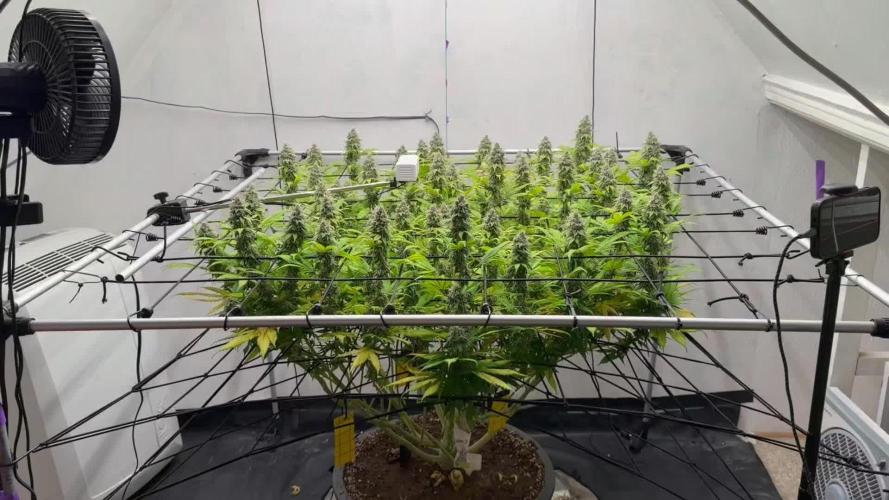
Beim Gießen war zuletzt durch unsere Renovierung außerdem etwas der Rhythmus durcheinander geraten. Eigentlich hatte ich den 45 Liter-Topf mit täglich etwa 5–6 Litern ziemlich gut im Griff. Diese Woche bekam sie dann wieder eine ordentliche Ladung und der Bodensensor zeigte schön, wie sich das Wasser anschließend im Topf verteilt hat. Direkt nach dem Gießen war die obere Zone erwartungsgemäß deutlich feuchter, einige Stunden später hatte sich das Ganze wesentlich gleichmäßiger nach unten verteilt. Auch der gemessene EC im Substrat ist nach der Hesi-Gabe etwas angestiegen – genau das wollte ich erstmal sehen.
Und trotz des ziemlich mitgenommenen Blattkleids macht die Buddha einfach weiter. 😅
Von oben sieht das Dach inzwischen zwar ziemlich hell aus und gerade weiter unten verabschiedet sich einiges an Laub, aber die Blüten erzählen eine ganz andere Geschichte.
Die Colas legen sichtbar weiter zu. Mittlerweile stehen über die komplette Fläche unzählige kleine und größere Türme, viele davon schön kompakt und ordentlich mit Harz überzogen. Gerade aus niedriger Perspektive sieht man inzwischen richtig gut, wie weit die Buds teilweise am Trieb herunterreichen. Einige der größeren Colas entwickeln sich langsam zu richtig schönen Kloppern. 🤤
Was mich dabei momentan am meisten beruhigt: Die Pflanze wirkt trotz ihrer Vorgeschichte nicht so, als würde sie gerade zusammenbrechen. Die verbliebene Blattmasse arbeitet, die Buds entwickeln sich weiter und über das gesamte 120×120-Gerüst ist weiterhin ordentlich Leben vorhanden. Nach all dem Theater der vergangenen Wochen hätte das definitiv auch anders aussehen können.
Damit ist meine Aufgabe für die nächsten Wochen eigentlich ziemlich simpel: Nicht mehr experimentieren. Bewässerung wieder sauber im Rhythmus halten, mit Hesi kontrolliert weiterfüttern und die Buddha möglichst störungsfrei ihren Job machen lassen.
Denn auch wenn sie vielleicht keinen Schönheitspreis mehr für ihr Laub gewinnt – beim Blick zwischen die Netze wird langsam ziemlich deutlich, wofür die ganze Arbeit draufgegangen ist. 😅
Eine Pflanze. 45 Liter. 120×120 cm. Und mittlerweile ein verdammter kleiner Wald aus Buds. 🌳😎
Mal schauen, wie fett die Türmchen in den nächsten Wochen noch werden. 🤗


Likes
12
Share


@li0nhe4rt
Follow
14/12 just gave her a nutrient feed diluted with water, 500ml nutrient feed with 1 Litre water mixed together then sprayed around pot. Unfortunately the next 4 weeks ill be on holiday so there wont be any update pics, sucks but ill try get some up here and there.
17/12 got some updated pics today while on holiday, looks like shes doing good
18/12 2L normal watering.

Likes
6
Share

@eldruida_lamota
Follow
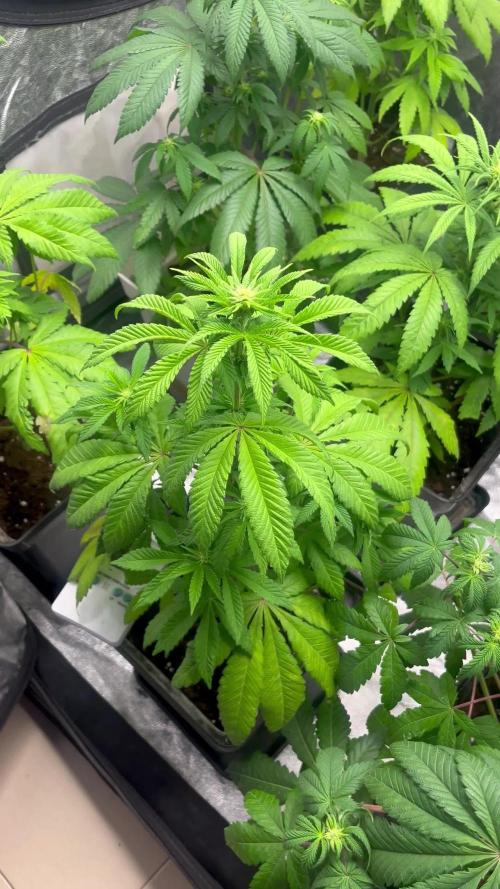
Que pasa familia, vamos con la segunda semana de floración de estas Fishy Zoap feminizadas de Seedstockers.
Vamos al lío ,se trasplantaron en macetas de 7 litros definitivamente.
El ph se controla en 6.0 , la temperatura la tenemos entre 24/20 grados y la humedad ronda el 50%.
El ciclo de floración puse 12h de luz, el foco está al 50% de potencia.
De momento van creciendo a buen ritmo y tienen un buen color, estaban muy bien enraizadas al realizarle el trasplante se notaba la abundancia radicular.
Comentar que llevan un pequeño estrés hídrico debido a la bajada de temperatura , par de grados por la noche, lo cual no absorbieron bien, pero estoy al tanto de solucionarlo.
Gracias Agrobeta por el envío de la Gold series para esta temporada, se vienen cositas 🙏
- os dejo por aquí un CÓDIGO: Eldruida
Descuento para la tienda de MARS HYDRO.
https://www.mars-hydro.com
Hasta aquí todo, Buenos humos 💨💨💨
Likes
29
Share


@Rangaku
Follow
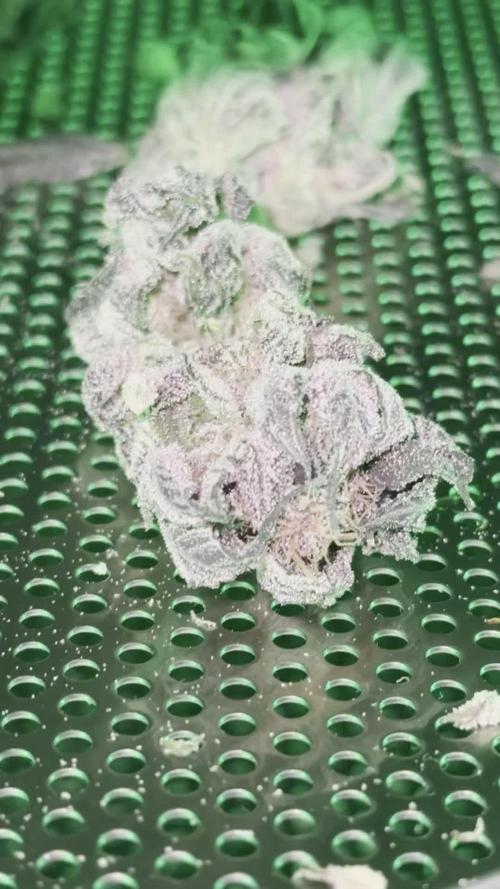
Blackberry is chunking out and dripping with resin , just feeding her up and letting her go . I should give her a defol the next few days for airflow as these flowers look to phat up . Same same next week



Likes
34
Share


@TheWeedaltor
Follow
Still a cold April this year but the HPS makes it more warm 🔥
Happy 420 to all the growers here 💚