Likes
Comments
Share

@LegacyGrow
Follow
Englischversion below
Deutsch:
Tag 49 Veg:
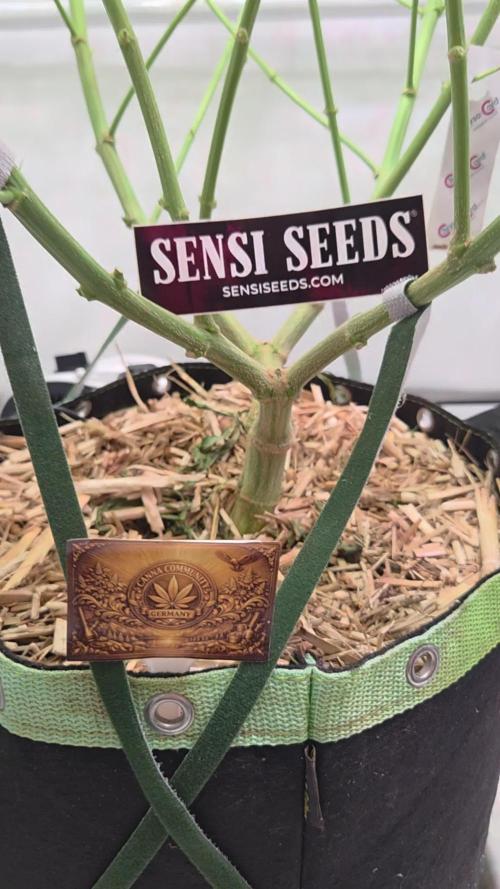
Alle Pflanzen haben das Ziel erreicht - den Rand des Topfes. Eine starke Entlaubung und Entfernung der kleineren Triebe stand an. Dadurch soll verhindert werden, dass die Pflanzen viel Energie in die Biomasse stecken, die später ohnehin beschnitten wird.
Ein Pulse-Zero und ein Bodenfeuchtigkeitsmesser ergänzen nun das Setup. Im angesicht der kommenden Blüte wird der VPD in Richtung 1-1,2 gepusht ( hauptsächlich durch ein geringeren RLF%).
Sobald sich die Ladies vom Stress erholt haben, wird die Blüte eingeleitet - im Streach wird dann wahrscheinlich das SCROG-Netz eingespannt.
Tag 52 Veg:
Wir sind voll auf Kurs - der VPD liegt zwischen 0,90-1,2 was für die späte, bald endende Veg-Phase genau das Ziel ist. Auch vom LST haben sich die Damen erholt.
Die stärksten Triebe wurden "ge-Supercroppt" - abgeknickt. Dadurch sind die Triebe wieder alle auf einer Höhe.
3 Marienkäfer sind als Beschützer ins Zelt eingezogen - wenn ich noch mehr finde, dürfen diese ebenfalls einziehen.
--------------------------------------------------------------------------------------------------------------------------------------------
Day 49 – Vegetative Phase:
All plants have reached the target — the edge of the pot. A heavy defoliation and removal of smaller shoots were carried out. This is intended to prevent the plants from investing excessive energy into biomass that would later be pruned anyway.
A Pulse Zero and a soil moisture sensor have now been added to the setup. In preparation for the upcoming flowering phase, VPD is being increased toward a range of 1.0–1.2, primarily by lowering relative humidity.
Once the plants have recovered from the stress, flowering will be initiated. During the stretch phase, a SCROG net will likely be installed.
Day 52 – Vegetative Phase:
We are fully on track — VPD is currently between 0.90 and 1.2, which is exactly the target range for the late vegetative phase as it approaches transition. The plants have also recovered well from LST.
The strongest shoots were supercropped (bent). This brought the canopy back to an even height.
Three ladybugs have moved into the tent as natural protectors — if more are found, they will also be welcomed in.

Likes
92
Share


@DogDoctorOfficial
Follow
Week 6 Veg Update: The Scrog Is Filling Up! 🌱✨
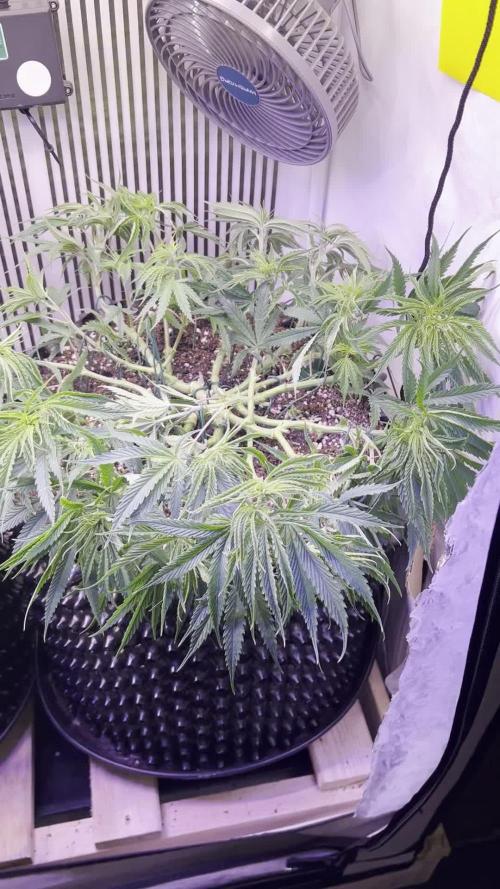
Hey Grow Fam! 🌿 It’s Week 6 of Veg, and let me tell you, the ladies are thriving! The scrog net is doing its job perfectly, creating a beautiful and even canopy. The plants are spreading out, taking up all that space, and loving every moment of it. The combination of great genetics and smart techniques is really paying off!
The Magic of the Autopots & AquaValve System 🚰
Let’s dive into one of the systems making this grow so much smoother: Autopots and the AquaValve. This gravity-fed, zero-electricity system is a lifesaver! It’s built on a simple yet genius design, where the AquaValve allows water to flow into the tray beneath each pot. When the water level reaches a certain height, it automatically stops, letting the plant absorb all the water before refilling again. This ensures that the plants only take up water as they need, preventing overwatering and keeping the root zone perfectly hydrated. Plus, the fact that it operates with no electricity? It’s a win-win! 🌊
I can’t stress enough how this system makes growing more effortless. It allows me to keep a consistent moisture level in the medium without constantly having to check or water manually. With gravity working for me, it’s a set-it-and-forget-it system! 💧
Precision-Controlled Environment With TrolMaster 🌡️🌿
And then there’s the TrolMaster system, which has become my right hand in this grow. The app is packed with so much data, helping me keep everything dialed in without lifting a finger. I’m able to monitor and control every aspect of the environment from my phone, ensuring my plants are always in the perfect conditions to thrive.
Here’s what the numbers look like this week:
• Temp: 26.2°C
• Humidity (RH): 70.6%
• CO2: 757 ppm
• VPD: 0.87 to 1.0 kPa
• Light: 423 PPFD
• Solution pH: 5.83
• Solution TDS: 445 ppm
• Solution Temp: 25.2°C
• Medium TDS: 445 ppm
• Medium Temp: 26°C
Thanks to the TrolMaster app, I get all this data in real-time, making adjustments as needed. It’s amazing to have such control and insight into the grow room, especially with how easy it is to navigate the app. Everything from CO2 levels to VPD is dialed in, and I can tweak the settings wherever I am. Truly a game-changer!
Looking Forward 🌟
As we move closer to the flip, I’m thrilled with how things are progressing. The plants are healthy, strong, and ready to take on the next stage. The scrog is filling in beautifully, and the environment is locked in for success. I’m so excited to see how they bloom!
Remember, it’s all about patience and consistency. By letting the systems work for you and paying attention to the details, you can achieve incredible results.
Thanks for following along on this journey! 🌿 Stay tuned for the next update—things are about to get even more exciting as we inch closer to flower time.
Growers love to all! 💚
#ScrogLife #Autopots #TrolMasterMagic #GrowWithMe #PrecisionGrow #DogDoctorOfficial #IndoorGrow #AutopilotGrow #GravityFedSystem #ZeroElectricity #SustainableGrowing #GrowTech #PlantScience #OrganicAndMineral #ControlledEnvironment #CannabisCultivation #PositiveVibesOnly #GrowDiaries #Week6Veg #SmartGrowing
Shout Outs!
As always, huge thanks to TrolMaster and ThinkGrow LED for the amazing gear, to Aptus Holland for their top-notch nutrients and Pro-Mix for the best soil i have used so far. Big love to the seed banks, the amazing Grow Diaries community, and all my followers—you guys make this journey so much more exciting. Don’t forget to catch up on my social media, Instagram, and YouTube for real-time updates and exclusive content!
Stay tuned for more—next week is going to be epic!
DogDoctorOfficial Discount Codes so you can save big on your next check out 💚💚💚
Kannabia - DOGDOCTOR 30% off
SeedsmanSeeds - DOGDOCTOR 10% off
CannaKan- DOGDOCTOR 15% off
terpyz.eu - DOCTOR 15% off
The Neutralizer - PORKIT5-DOG 15% off
As always thank you all for stopping by, for the love and for it all , this journey of mine wold just not be the same without you guys, the love and support is very much appreciated and i fell honored and so joyful with you all in my life 🙏
With true love comes happiness 💚🙏 Always believe in your self and always do things expecting nothing and with an open heart , be a giver and the universe will give back to you in ways you could not even imagine so 💚
Friendly reminder all you see here is pure research and for educational purposes only
Growers Love to you all 💚💚💚


Processing
Likes
2
Share


@EL_MANDARINO
Follow
estas plantas las conseguí por los viveros cerca a mi casa, no se genetica exacta pero cuando las consegui estaban con 2 pisos de hojas, cuando estaban en el 4to a los 15 dias hice el FIM, las fotos q se ven aho son 15 dias despues despues de hacer una poda de hojas
Likes
11
Share


@ZombieKushAddicted
Follow
to view this lamp or any other marshydro product go to: https://instagram.com/marshydro_aliexpress?igshid=YmMyMTA2M2Y=

Likes
48
Share


@DreamIT
Follow
🧙♂️🍁BUBBA HAZE BY REGULAR SEEDS 🍁🧙♂️
🧙♂️ 19.3 Father's day in my part, so a couple of photos of Bubba Haze's dad. Greetings to all dads in general 🤘
🧙♂️ 20.3 ...
🧙♂️ 21.3 ...
🧙♂️ 22.3 ...
🧙♂️ 23.3 ...
🧙♂️ 24.3 The male is blooming and has begun to open the sacs. The female, on the other hand, stopped growing in height (finally, I was afraid that she would come to pierce the box 😆)
🧙♂️ 25.3
___________________________________________________________
😮 What ???? New to Regular Seeds?
Take a look at their site, you won't regret it !!
http://bit.ly/REGULARSEEDS
________________________________________________________________
📜 A look at the details of what I'm growing 📜
🧙♂️🍁Bubba Haze 🍁🧙♂️
⚧ Gender
▪️ Regular
➰ Genes
▪️ 75% Indica / 25% Sativa
🎄 Genetics
▪️ Bubba Kush x Jack Herer x Cannalope Haze
🚜Harvest
▪️ 550 g/m²
🌷Flowering
▪️ 8 weeks
✨THC
▪️ Very High
✅CBD
▪️ 1.0%
🏡Room Type
▪️ Indoor
🌄Room Type
▪️ Outdoor
🕋Room Type
▪️ Greenhouse
__________________________________________________________________________
📷🥇 Follow the best photos on Instagram 🥇📷
https://www.instagram.com/dreamit420/
🔻🔻Leave a comment with your opinions if you pass by here🔻🔻
🤟🤗💚Thanks and Enjoy growth 💚🤗🤟
Likes
15
Share


@Taskot_Joe
Follow
Well the stretch well and truly came! She is humming along now without me having to alter conditions too much thanks to the lovely local spring weather, The flowering sites have popped up in abundance and the simple LST I was experimenting with, Has certainly given the plant a nice even canopy! Should start seeing some real nice progress happen over the next week or two 🤙
🍃 Happy Growing 🍃
Likes
8
Share


@SpruceSauce
Follow
Week 2 of flower, feeding time. Intake was 1040ppm full dose of nutes, run off was 690,740,780ppm. 5 days between feeding so will do a flush next time.

Likes
38
Share


@Silverback_Guerilla
Follow
8/4:
I decided that instead of taking them outdoors to the "solar surface bugstorm," I'm just gonna grow them and a few autos that popped when I was testing my new cloners as a seed germinator indoors in the closet.
So...I went ahead and ordered a new carbon filter, set the timers and flipped them to 12/12. I'll continue to take the auto seedlings out for 24 hours of light for a while.
I'm really digging the TPS ONE...makes life easy for an old stoner like me. I no longer have to remember whether I fed the last time or just watered...with this stuff, it's the same feed with every watering.
8/8:
Preflowers on the more indica looking plants...all 4 of them..pretty sure they are the #10's, and preflowers on a couple of the other ones too.

Likes
10
Share


@Kroniclesofnarnia
Follow
Sherbets nearly ready now, another's 2 week plus a week flush should hopefully do it, gorilla glue is coming like dr grin spoon tiny popcorn buds (see pic) think it's cos I've had them on 12-12 not too sure
Likes
Comments
Share


@Uneasy
Follow
Two of the plants started blooming 2-3 days after changing the light pattern. The other two started late. So there is about 1 week-10 days between them.

Likes
4
Share


@DeepRootsGrowTrees
Follow
CHERRY 🍒 COLA by FASTBUDS
WEEK #3 June 15th-22nd
Week #2 Veg
This week she's doing great outside no issues to report this week. She's made the transition to outside effortlessly.
Likes
56
Share


@PEAKYPLANTERS
Follow
Hi everyone, brothers of the Weed.
Welcome back to the enchanted gardens of Peaky!
Excellent departure for these beautiful females that develop strong roots that enjoy excellent health!
Two other girls were added to the roadway who were late compared to the sisters ...
We are ready to take off ..... and you?

Likes
55
Share


@BodyByVio
Follow
Just got done with trimming the 4x4 @greenhouseseedco Super Silver Haze / @blimburnseeds Silver Surfer Haze tent.
The final yield is exactly 1000g plus some (kind of a lot)that I smoke in the last 2 weeks 😃
Also got 6, gallon size ziploc bags filled with good quality trim for concentrate.
To be honest I was expecting a little more but keeping in mind that this grow I did not supplemented with bottled CO2 I think I’m good with the results.
Definitely I enjoyed a lot this grow and I’ve learned even more.
Likes
7
Share


@ibbzy
Follow
Ahhhhh this tent is atleast going somewhat well. It’ll be a recovery from the photoperiod tent light leak :(
They still stretching ahaha, each strain has a dwarf pheno which is hilarious imo
Smells like an orange/tangarine forest….damn.
Likes
12
Share


@BudXs
Follow
Im not sayin a fkn word about these till Heather says I can.
Ive already said too much
Likes
6
Share


@Skinnytalls420
Follow
Day 29-02/09/22 trying to get back on track with all these diaries after being Sick and product earth festival!!! These 3 purple punch look good got some
Burnt tips but nothing major think it’s more the light than nuts burn as light was closer to these 3 plants because they got taller than the others
Likes
35
Share


@ThatoneAKguy
Follow
The two big dawgs started to really pack it on this week. Number one is holding strong a week ahead of two. Has a bit of a learning curve with the new hydro setup and HLG leds. I learned that the intensity causes the flowers to use more cal-mag than standard hps/halide according to some reading. It also could be they are just using more than the recommended dosage and a had a bit of a phosphorus deficiency. Either way I upped my Cali magic and the young leaves look great as do the flowers. #1 is starting to get some pinks and purples and #2 is still cranking out white pistils.
Likes
51
Share


@MadeInGermany
Follow
Info:
Unfortunately, I had to find out that my account is used for fake pages in social media.
I am only active here on growdiaries.
I am not on facebook instagram twitter etc All accounts except this one are fake.
Hi everyone :-)
This week it has developed really well again :-).
I didn't train her this week, I'll do it again next week :-).
It was poured twice this week with 1.2 l each time (see nutrient table above for adding nutrients).
I sprayed them all with GreenBuzzLiquida Fast Plant spray.
I also cleaned the entire tent and checked everyone's health.
Fresh osmosis water was prepared and filled into canisters.
Yellow boards against flies have been put up and blue tags to prevent trips.
Unfortunately I still struggle with them but they have become significantly less pushed.
I think in a few weeks the last story should be :-).
Otherwise, like every day, they were looked at and petted for a while ;-).
I wish you lots of fun and stay healthy 🙏🏻
You can buy this Nutrients at :
https://greenbuzzliquids.com/en/shop/
With the discount code: Made_in_Germany you get a discount of 15% on all products from an order value of 100 euros.
You can buy this Strain at :
https://www.exoticseed.eu/
Type:
Herz Og
☝️🏼
Genetics:
Larry OG X Kosher Kush
Indica 60 % / Sativa 40 %
👍
Vega lamp:
2 x Todogrow Led
Quantum Board 100 W
💡
Bloom Lamp :
2 x Todogrow Led
Cxb 3590 COB 3500 K 205W
💡💡☝️🏼
Soil :
Canna Coco Professional +
☝️🏼
Nutrients :
Green Buzz Liquids :
Organic Grow Liquid
Organic Bloom Liquid
Organic more PK
More Roots
Fast Buds
Humic Acid Plus
Growzyme Big Fruits
Clean Fruits
Cal / Mag
Organic Ph - Pulver
☝️🏼🌱
Water: Osmosis water mixed with normal water (24 hours stale that the chlorine evaporates) to 0.2 EC. Add Cal / Mag to 0.4 Ec Ph with Organic Ph - to 5.8