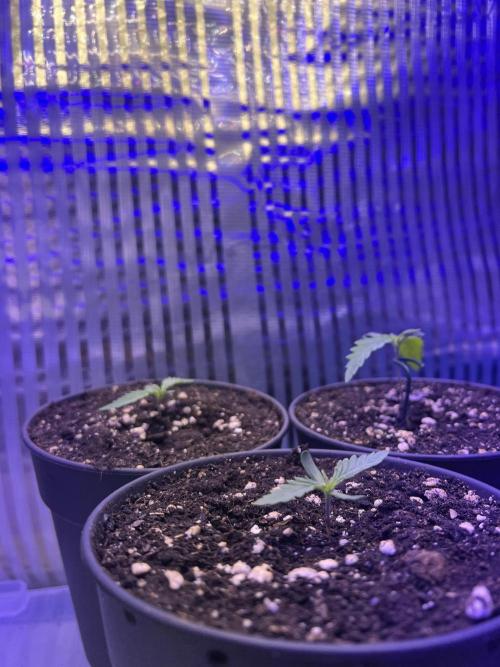
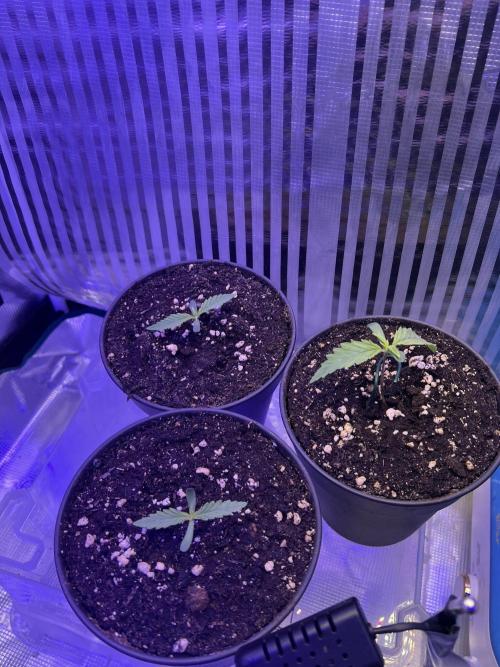
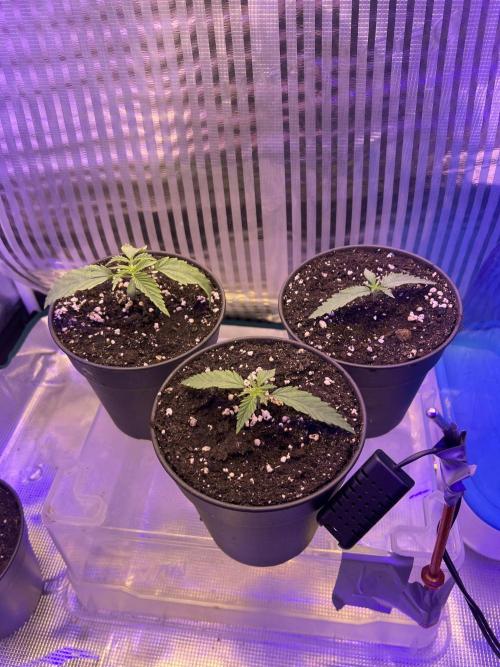
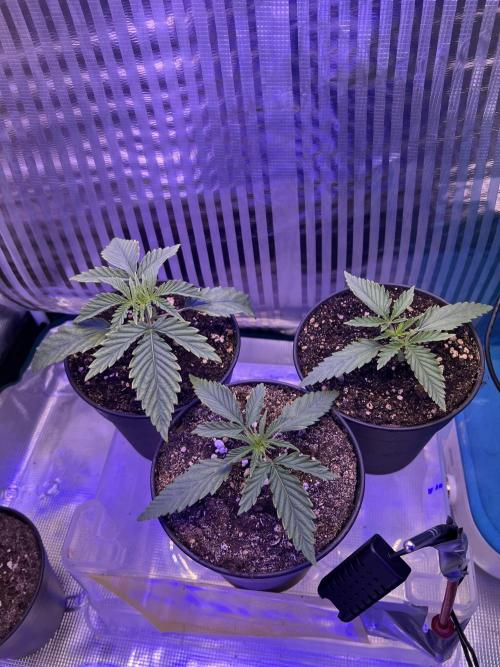
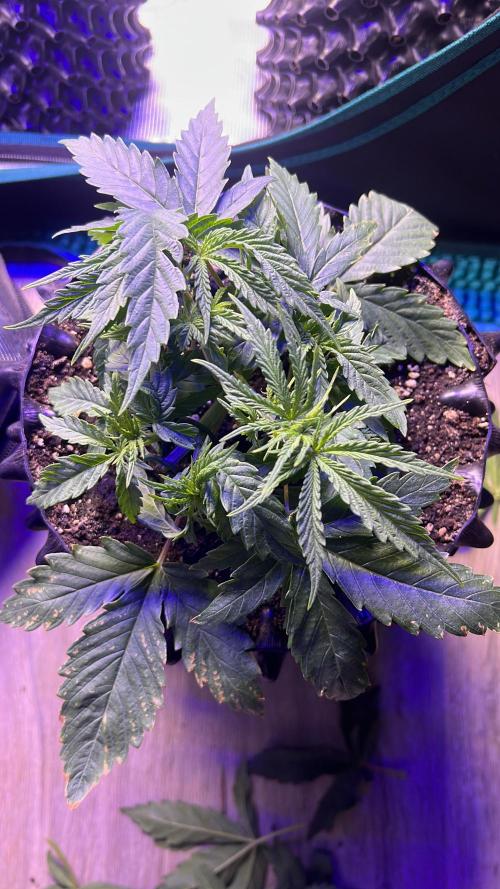
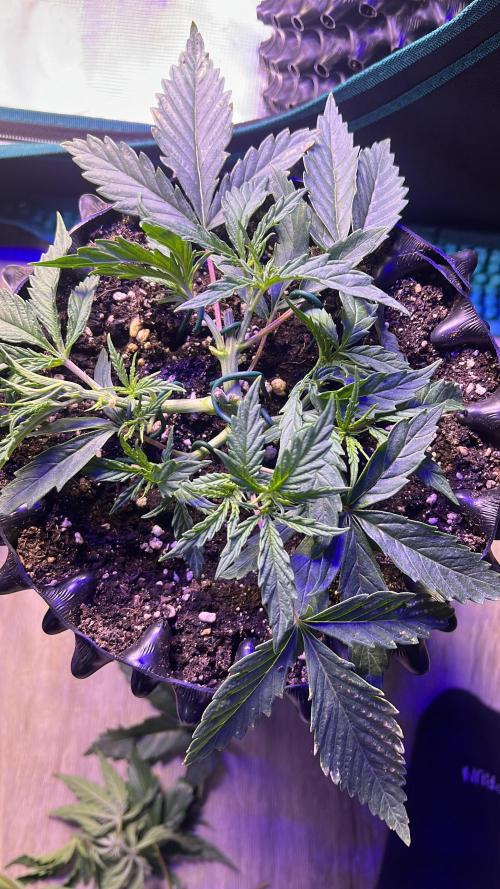
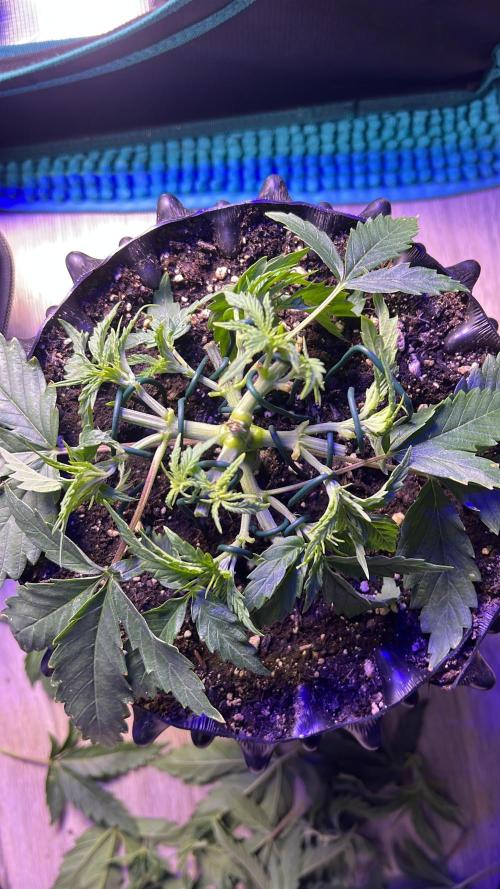
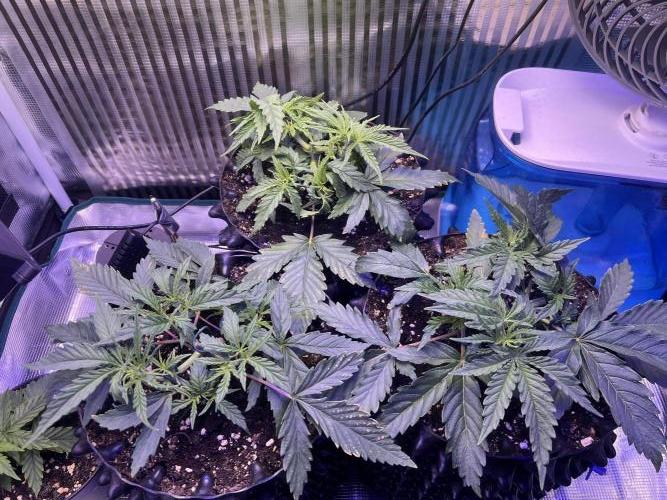
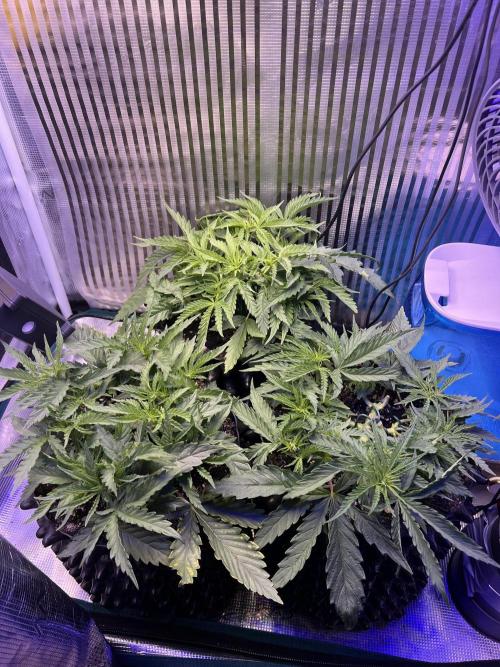
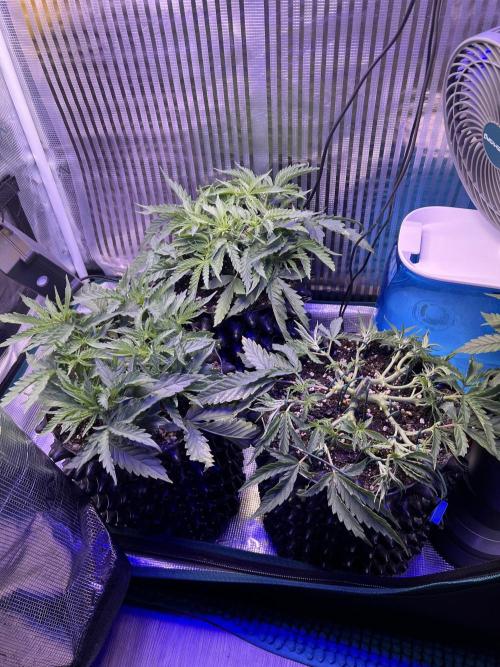
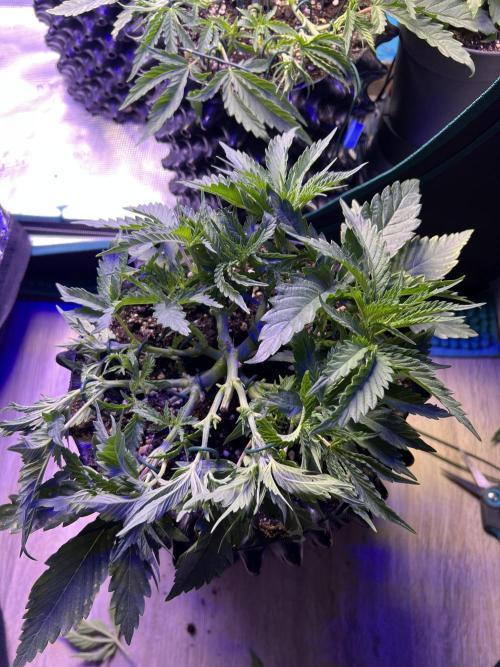
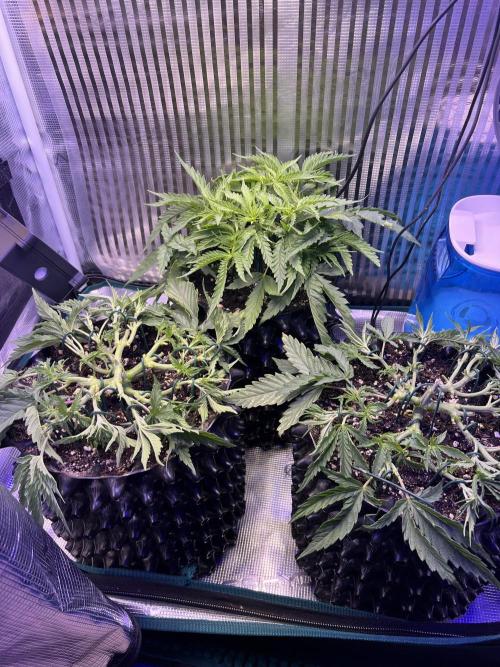
LegacyGrow Day 1 – Germination:
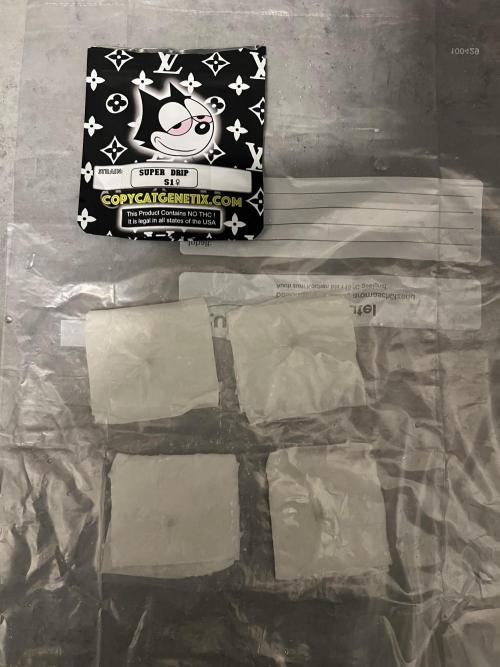
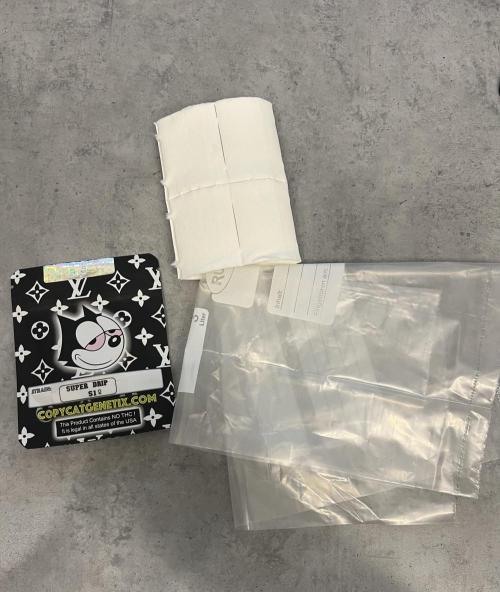
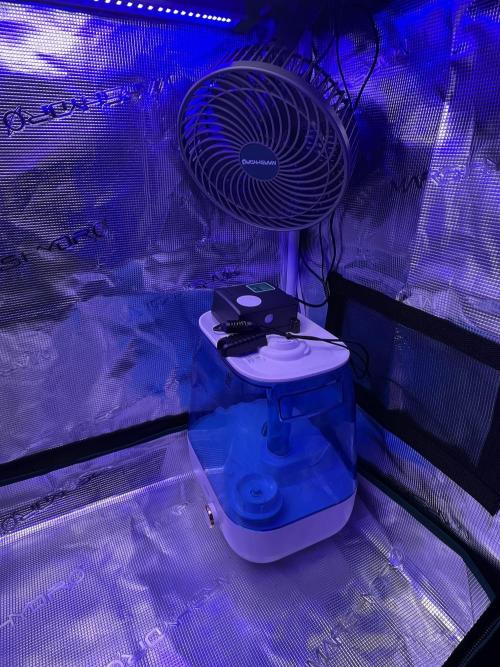
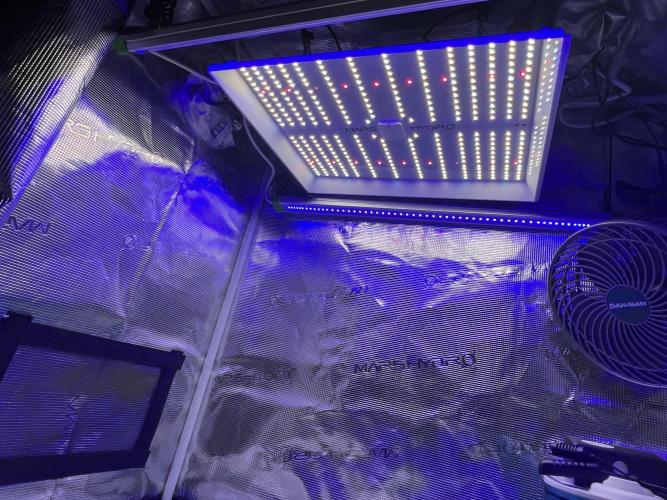
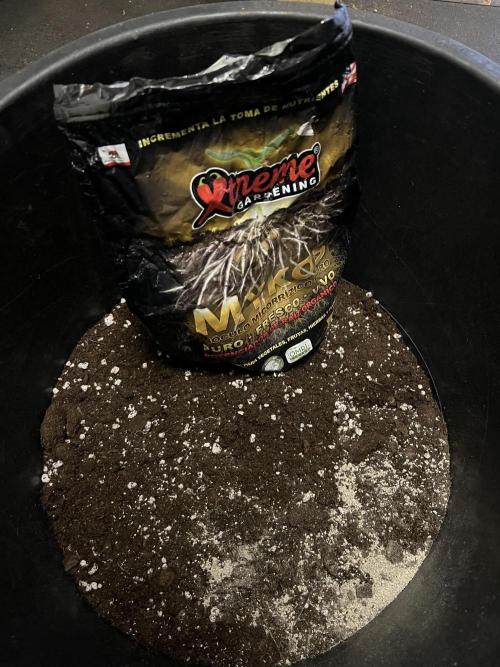
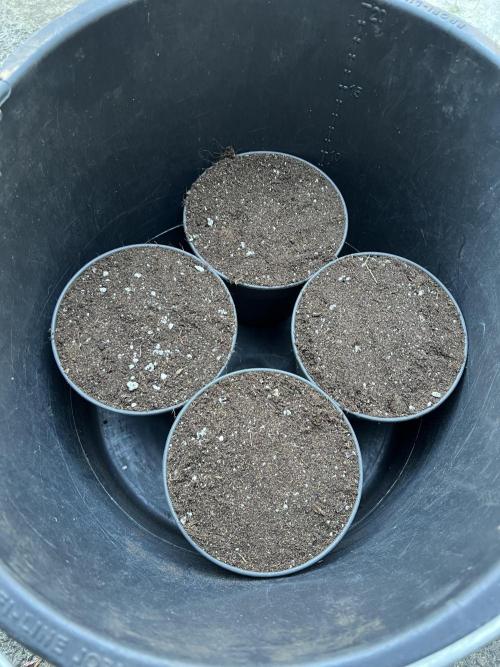
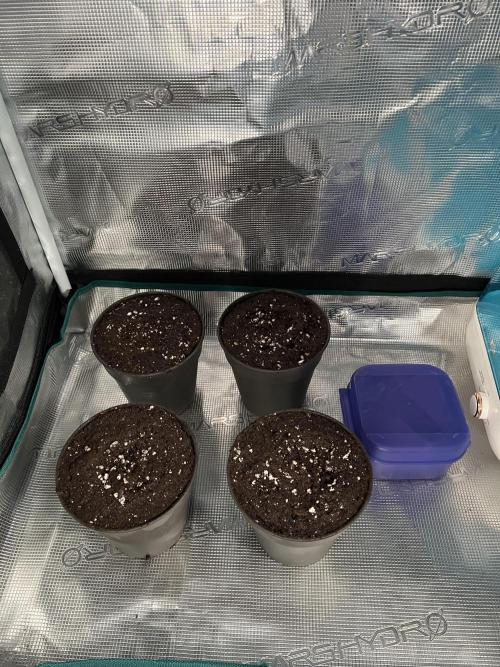
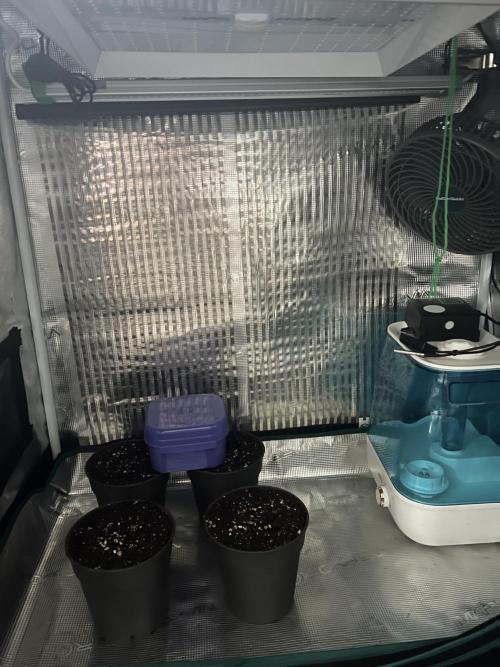
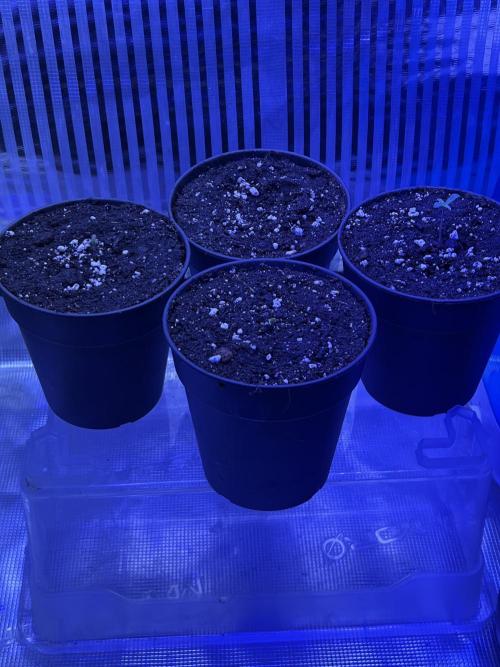
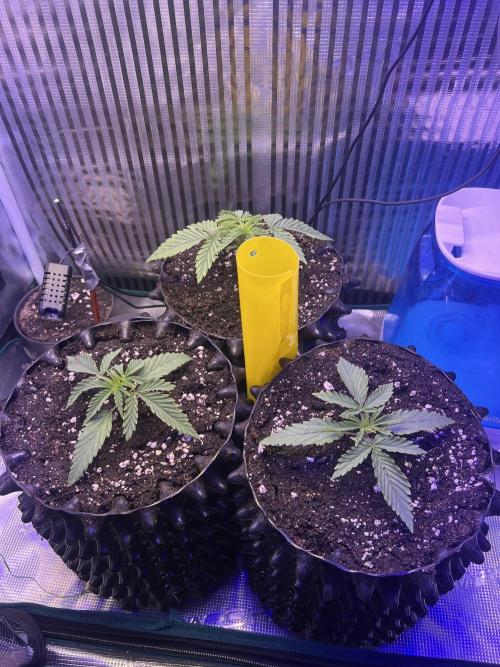
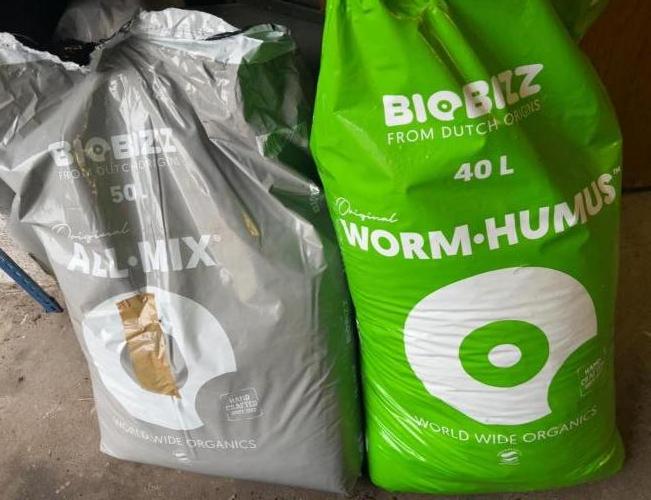
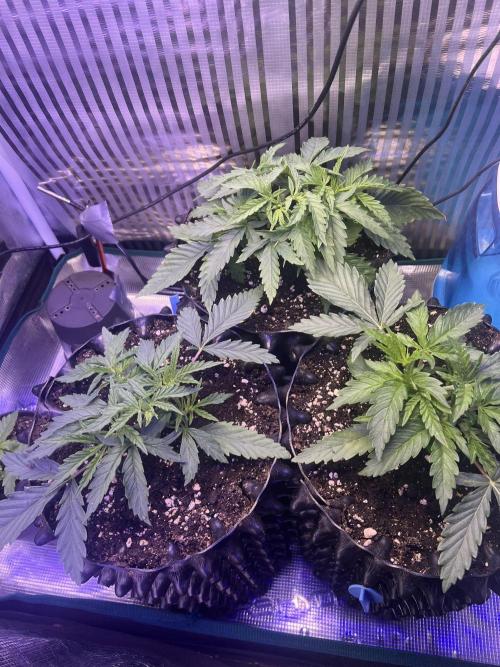
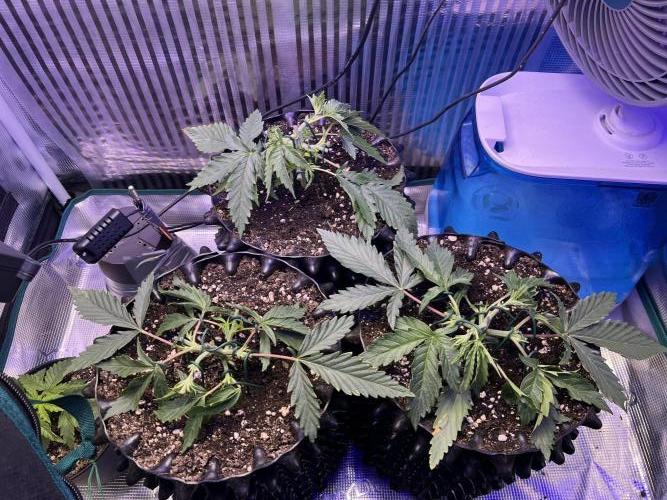
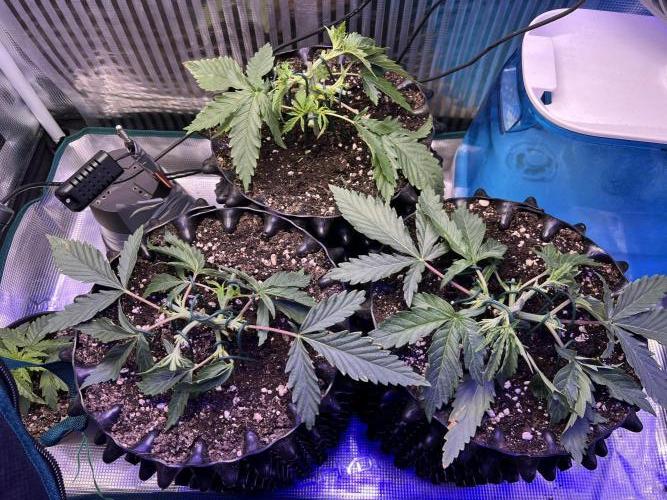
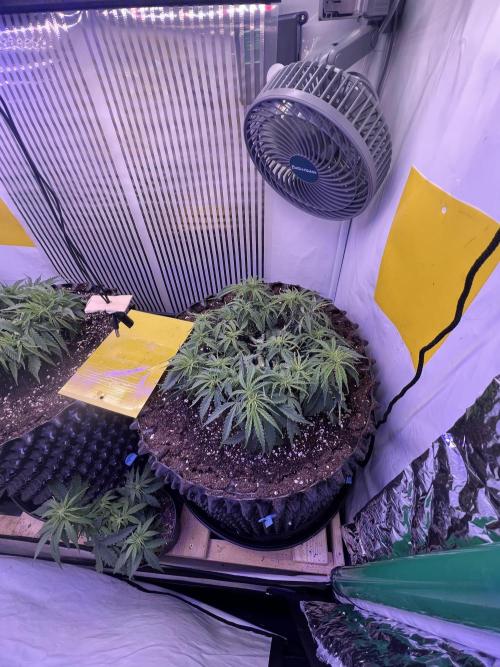
From germination until approximately the middle of the flowering phase, the grow takes place in the propagation tent. For germination, I use moistened paper towels sealed inside a freezer bag. These are stored in a dark and warm location for 2–3 days. I start with a total of four plants, which allows me to select the strongest three or compensate for major mistakes. Hygiene and cleanliness are a high priority in order to prevent complications. Therefore, I use latex gloves and disinfect all tools before each use. My setup is listed in the description. The CO₂ inlet is installed behind the fan, ensuring direct distribution to the plants. If temperatures drop too low, a 35-watt infrared heating mat is available. Based on experience, temperature stability in the propagation tent is usually not an issue. On the day of germination, I prepare the seedling pots: 500 ml of BioBizz All-Mix combined with one tablespoon of Xtreme Gardening Mykos per pot (a proven mycorrhiza additive). After an initial watering until slight runoff, the microbiome is given time to establish.
Day 3 – Germination:
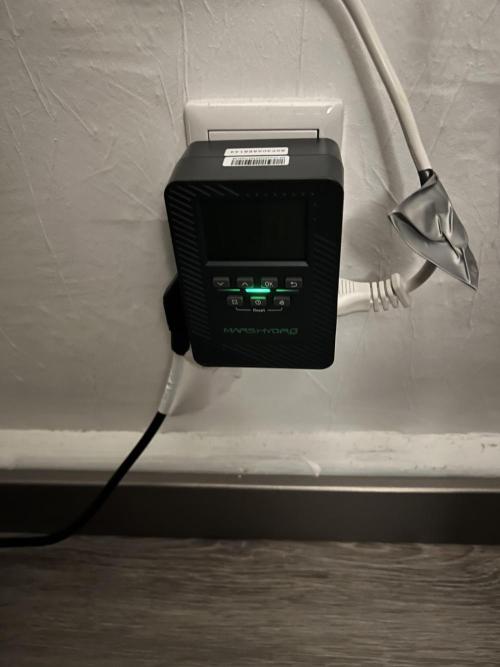
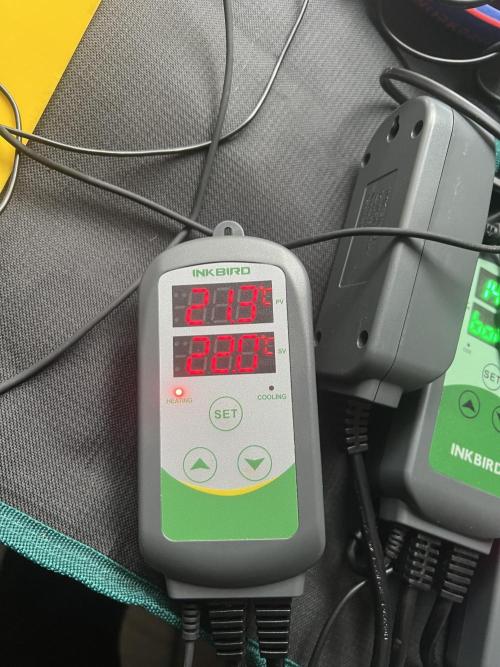
Overnight, the temperature drops to 19 °C. I aim to maintain the tent temperature between 21 and 26 °C, including during the night cycle. While a temperature drop at night is physiologically important for the plant, 21–22 °C is sufficient. The difference between day and night temperatures should not exceed 6 °C. For this reason, I installed the Inkbird temperature controller as well as a 35-watt infrared heating mat today. All four seeds have already germinated; however, before planting, I wait until the taproot reaches a minimum length of 1–2 cm.
Day 5 – Germination:
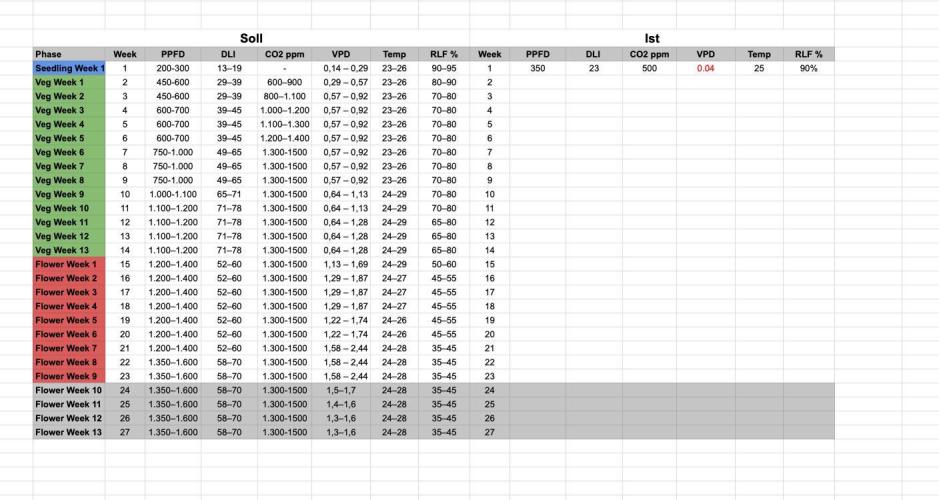
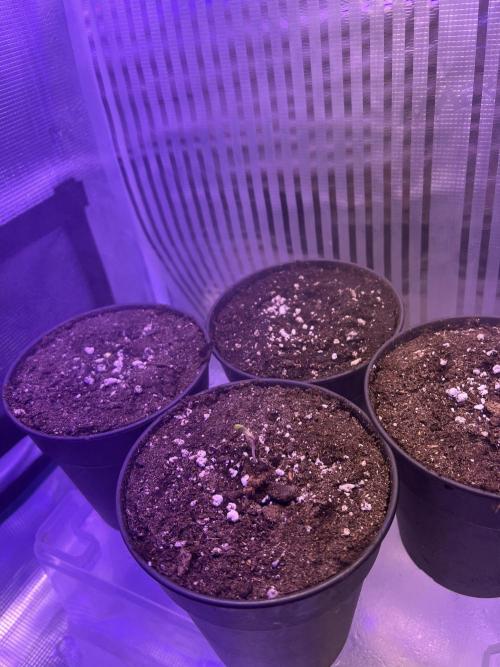
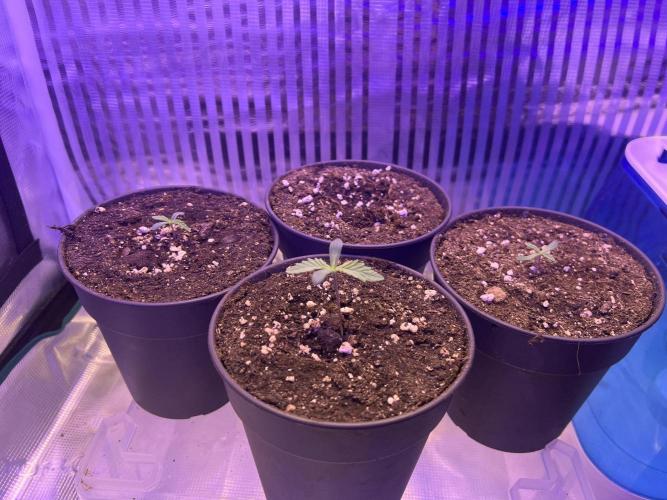
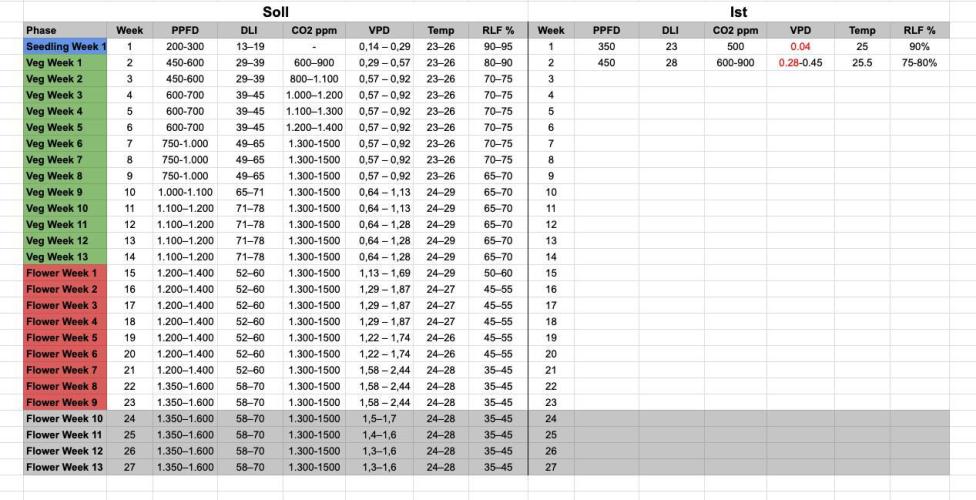
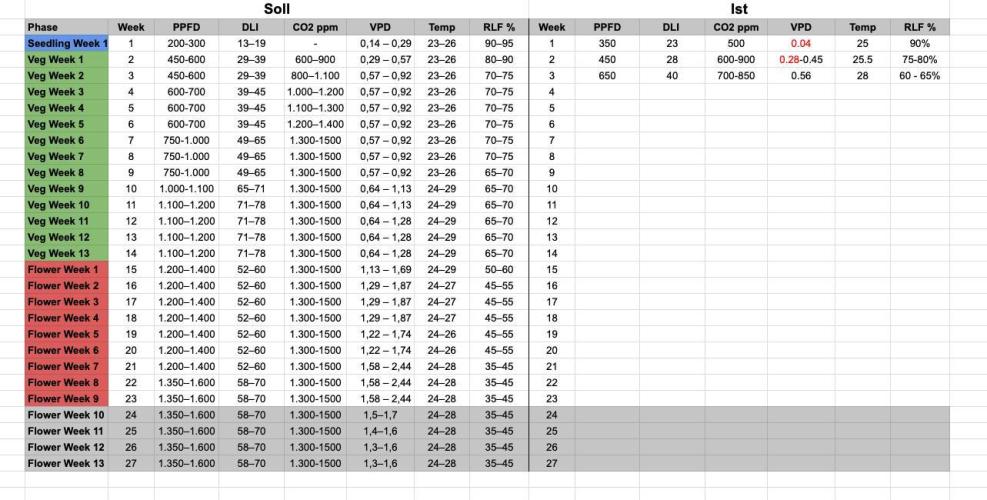
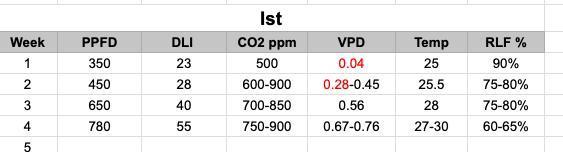
The first two plants have emerged from the soil. Until all four plants have surfaced and developed their first set of true leaves, they remain in the seedling stage. During this phase, little to no photosynthesis takes place. For this reason, the VPD values (due to the selected 90% relative humidity) and CO₂ levels (as CO₂ becomes relevant primarily for photosynthesis) deviate from the physiological optimum. The lighting was activated at a distance of 30 cm with an intensity of 350 PPFD, resulting in a DLI of approximately 23. The approach follows a target–actual (planned vs. measured) framework.
Day 6 – Germination:
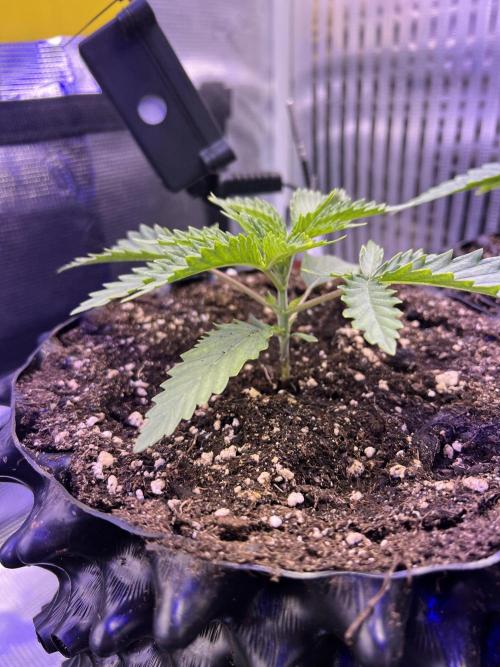
Three out of four plants have emerged from the soil. The last one is also close to breaking through. The growing medium has dried out, with the pots having lost more than 50% of their initial weight. Therefore, 600 ml of water was adjusted to a pH of 6.3, supplemented with 2.5 ml of BioBizz Root·Juice, and evenly distributed across the four pots. Prior to watering, the partially dried substrate was lightly misted to ensure uniform water infiltration into the soil.
6 likes
comments
Share
Used method
Paper Towel
Germination Method
1
Week 1. Vegetation
10mo ago
1/7
2 cm
Height
18 hrs
Light Schedule
26 °C
Day Air Temp
6.3
pH
75 %
Air Humidity
23 °C
Solution Temp
0 °C
Substrate Temp
22 °C
Night Air Temp
0.98 liters
Pot Size
0.11 liters
Watering Volume
30 cm
Lamp Distance
750 PPM
CO₂ Level
Nutrients 2
CalMag Agent
0.264 mll
Root-Juice
2.5 mll
LegacyGrow Day 1 – Vegetative Phase:
January 4, 2026, is interpreted as Day 1 of the veg phase.
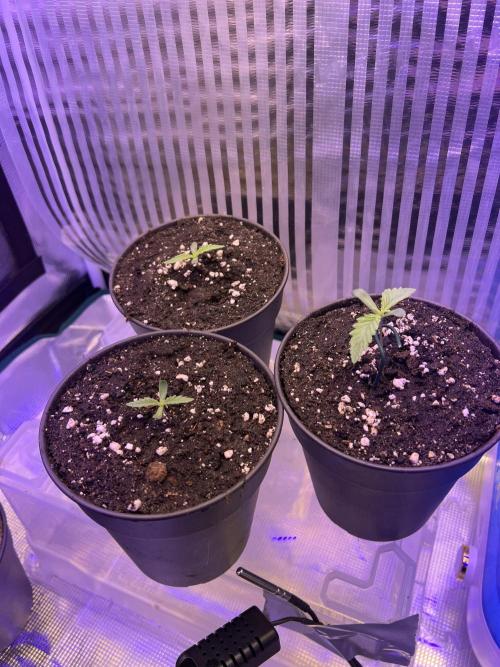
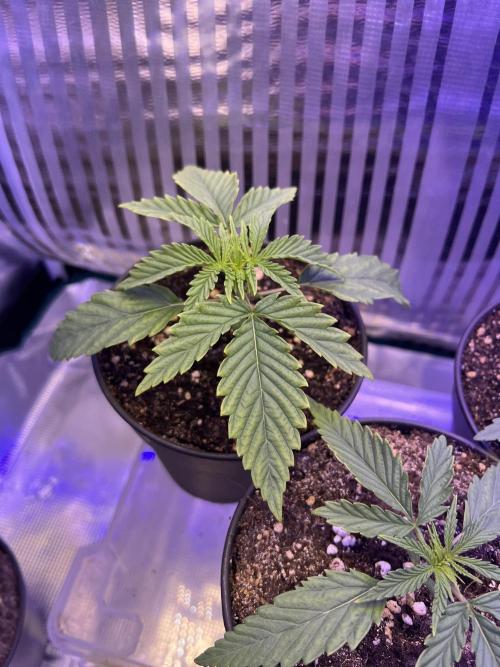
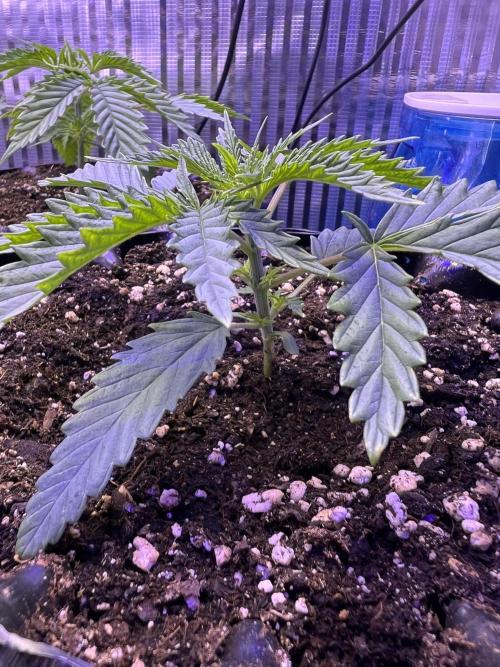
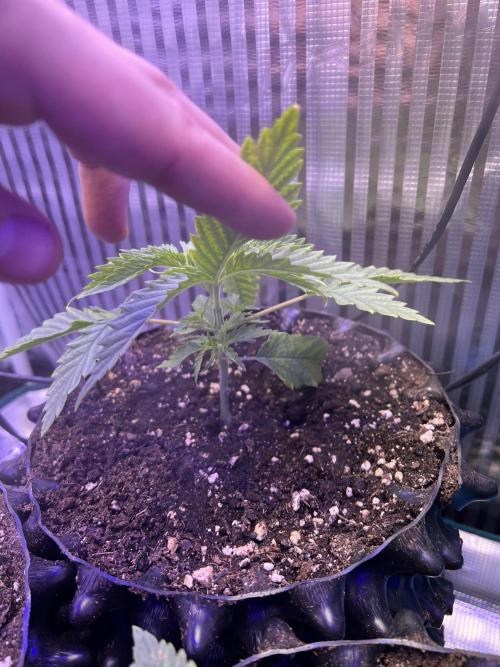
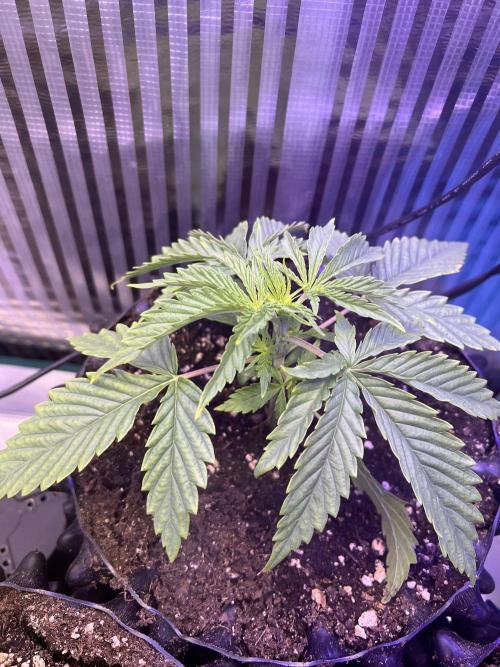
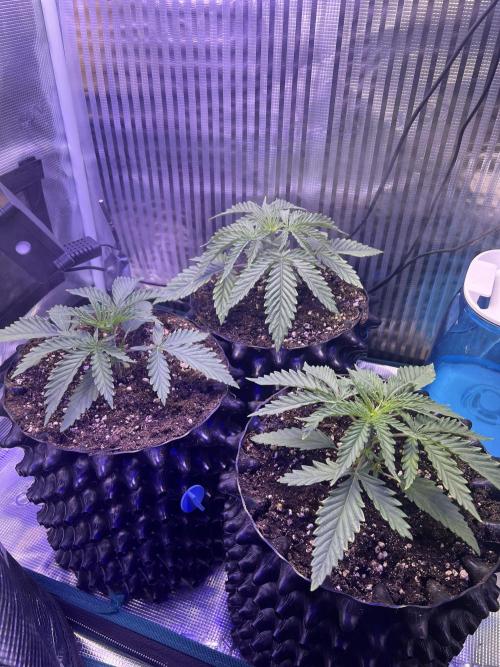
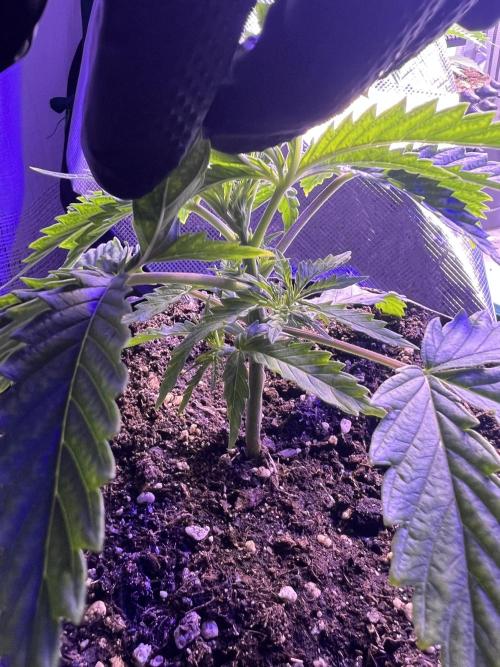
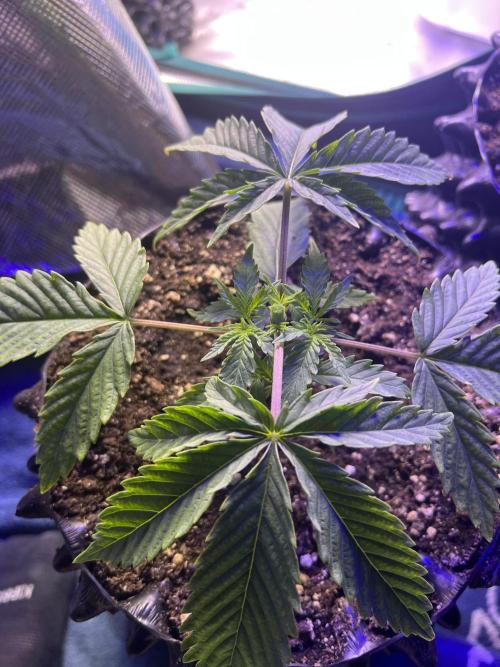
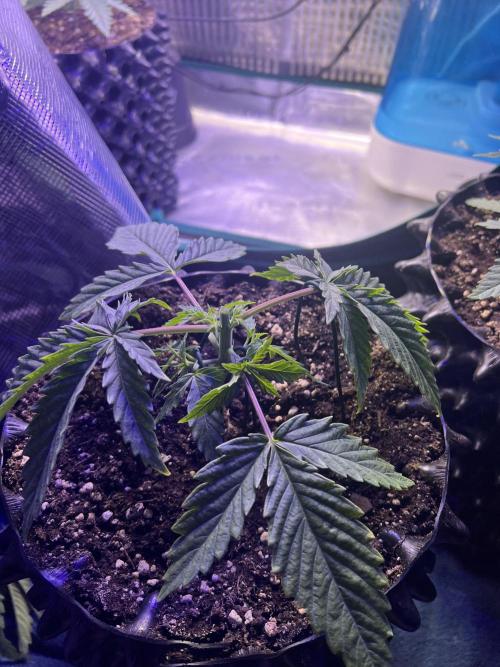
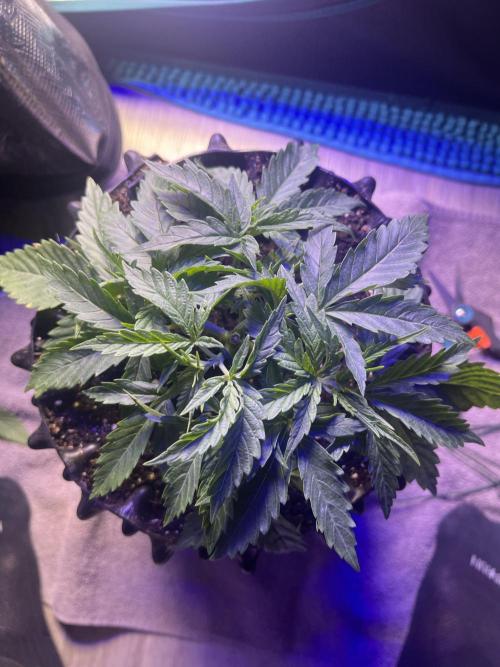
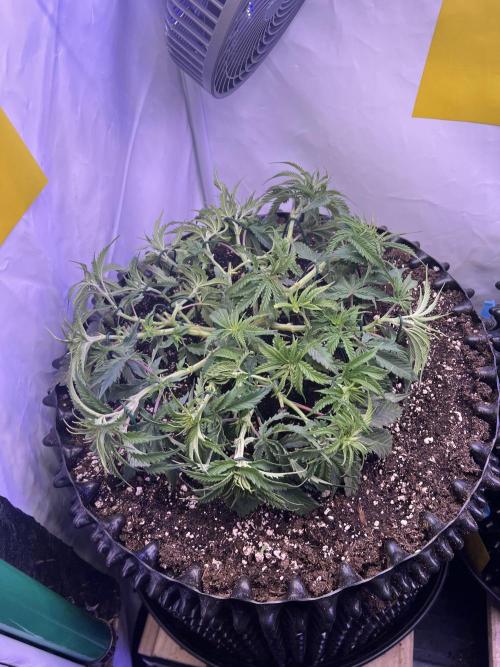
About 7 days after germination, 3 ladies have developed their first true leaves. This signals the introduction of CO2. As seen in the plan, the light was adjusted to 450 PPFD and is to be gradually increased to 600 PPFD by the end of the week. This results in a current DLI of 28. In my opinion, combined with CO2, this is just right. The VPD will also receive more attention starting this week. The RH is slowly being lowered to reach a target RH% of about 75%. This results in a VPD of 0.28-0.45. Due to the lighting, the tent heats up to about 26-27 degrees at times. The planning for the RH% had to be adjusted to achieve the appropriate VPD.
Plant number 4 continues to struggle with emergence. Based on the growth rate, I suspect it is a damaged plant. It will not catch up, so I am not waiting for adjustments to light, RH%, etc. for it.
Topping / LST and mainlining to 16 (starting with 4 branches) or to 24 (starting with 6 branches) are planned. For this, we will wait for the development of the 3rd to 5th node.
Day 2 – Vegetative Phase:
The soil was very dry, and the pots were relatively light. Accordingly, 200 ml of water was given per plant. Previously enriched with 3 ml/L BioBizz Root Juice and adjusted to a pH of 6.4.
My pH value is supposed to and can vary (between 6.1 and 6.7 is all fine for me). Not all nutrients are absorbed equally efficiently at a constant pH level. The RH was lowered due to the rising temperature to maintain the VPD. The VPD should be the value to check.
Day 4 – Vegetative Phase:
Lady number 4 did not make it. Therefore, the grow will continue with the planned 3 ladies. This requires maximum concentration for future training.
To support the plant's growth, an oscillating fan is directed at the plants on the lowest setting. This stimulates the growth of the stem.
Day 6 – Vegetative Phase:
The soil has dried out. Accordingly, the ladies each receive about 300 ml of water with a pH of 6.3 and 1 ml Canna Cal-Mag/L. Fertilizer is currently omitted, as the substrate is BioBizz AllMix. Root Juice was also no longer given.
From the vertical growth of the plants, we can see that the light intensity of 450 PPFD is absolutely sufficient. (The fact that the plants grow towards the light can be derived from this - more internodal spacing = weak light and vice versa). My plants show very small distances.
4 likes
comments
Share
2
Week 2. Vegetation
9mo ago
1/21
5 cm
Height
18 hrs
Light Schedule
28 °C
Day Air Temp
6.3
pH
65 %
Air Humidity
23 °C
Solution Temp
0 °C
Substrate Temp
23 °C
Night Air Temp
0.98 liters
Pot Size
0.3 liters
Watering Volume
30 cm
Lamp Distance
850 PPM
CO₂ Level
Nutrients 1
Premium Mycorrhizae
1.3 mll
LegacyGrow Day 1 – Vegetative Phase:
Since day 6 of the vegetative phase, leaf discolorations have been observed that initially resemble nitrogen deficiency, despite the use of BioBizz All-Mix as the substrate and the plants being at an early developmental stage. Given the nutrient composition of the substrate, a limitation in nutrient availability within the soil itself is unlikely. Instead, the issue appears to be related to restricted nutrient uptake capacity.
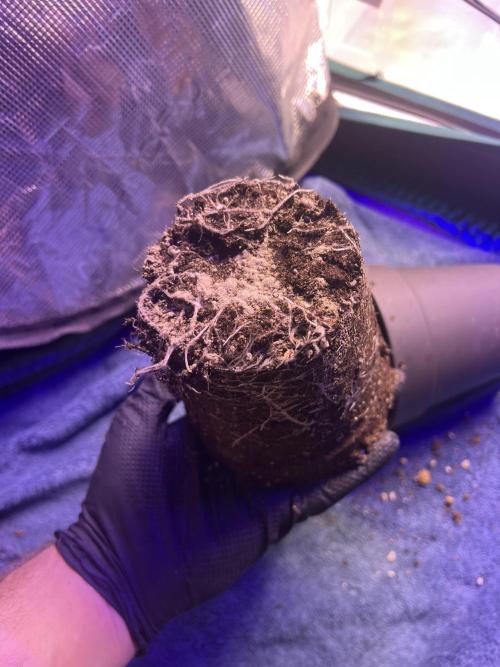
Following consultation and comparison with multiple specialist forums, it is assumed that the CO₂ concentration was set too high relative to the applied light intensity. In addition, the combination of strong growth stimuli from the LED lighting and elevated CO₂ levels likely induced excessive growth signals. As a result, aboveground growth may have progressed faster than the root and transport systems were able to absorb and supply the required nutrients. This imbalance is considered the primary cause of the observed plant symptoms.
To counteract this issue, the plants will be transplanted into 8-liter pots the following day to increase root volume and ensure adequate nutrient supply moving forward. Furthermore, light intensity has been increased to 700 PPFD to improve the balance between light input and CO₂ availability.
Day 11 – Vegetative Phase:
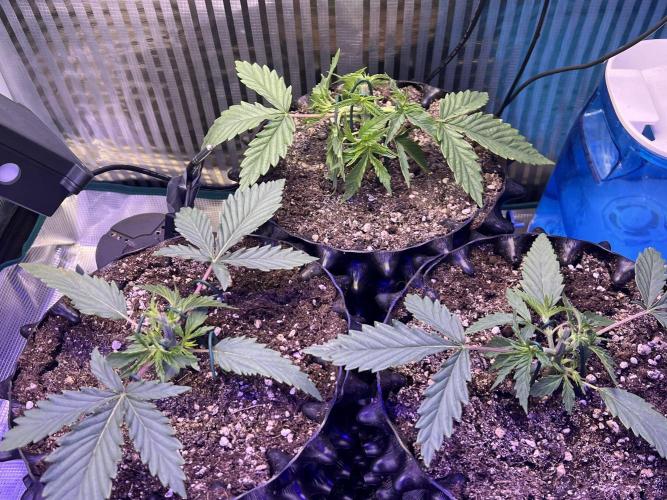
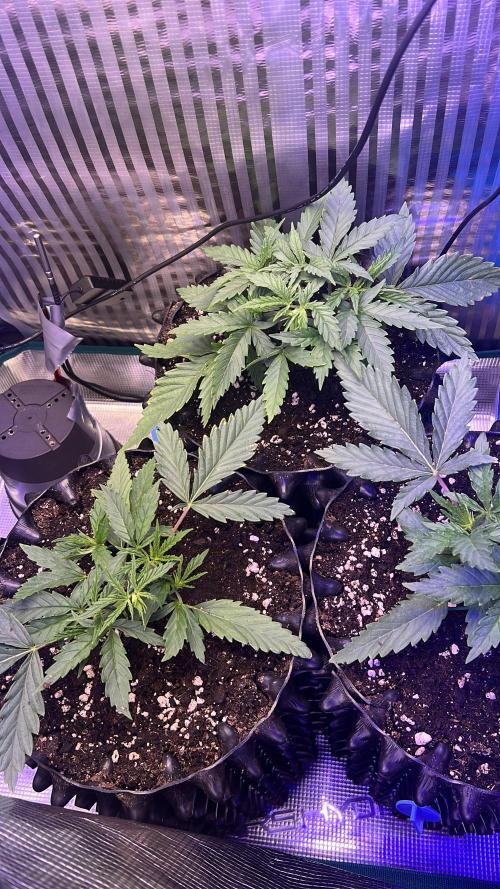
The plants are responding to the transplant with visible growth. Leaf discoloration has noticeably decreased; only the leaf tips remain yellow. Differences in growth rate between the plants are becoming apparent, particularly in the development of the side shoots. As these young side shoots are still very flexible, the use of LST to position them is being considered at this stage.
Day 12 – Vegetative Phase:
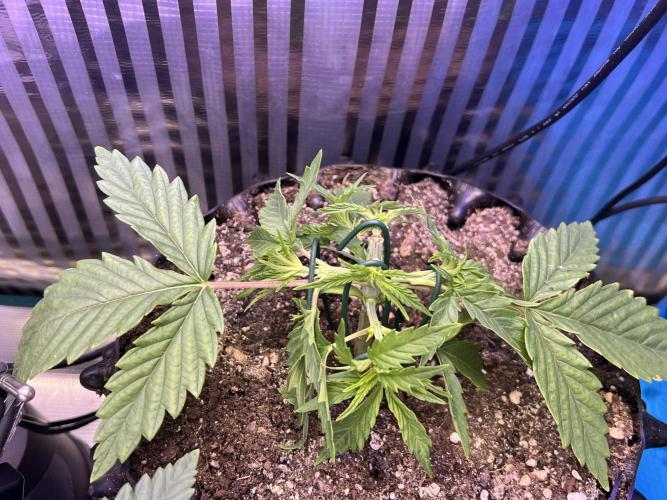
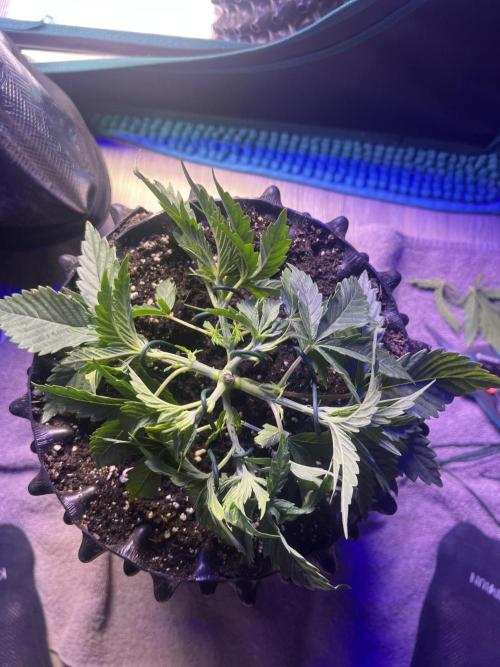
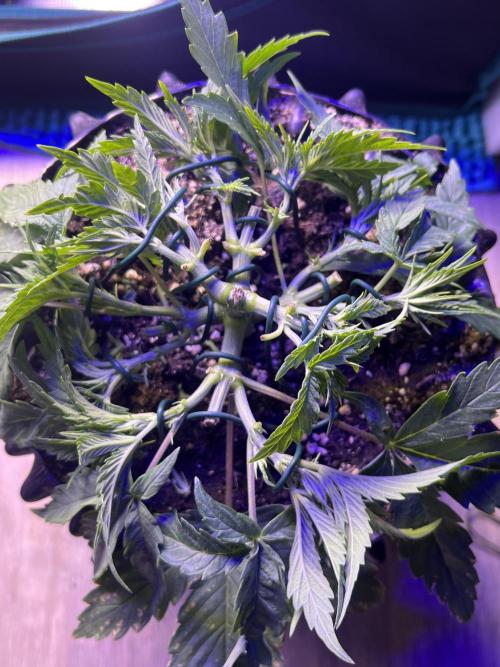
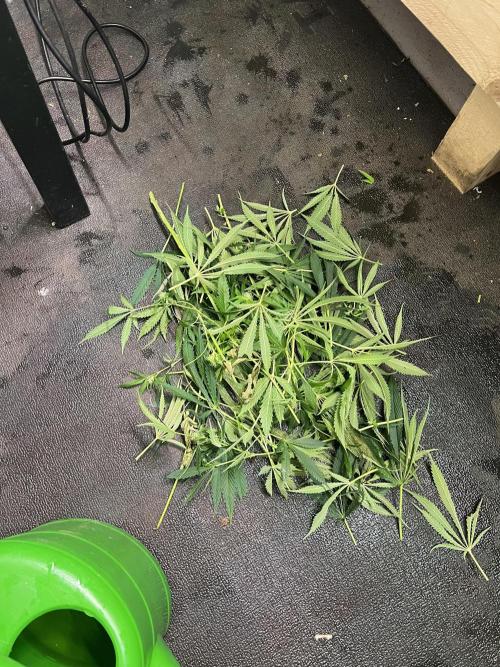
Training begins: First, all three plants were topped for the first time above the third node. This helps, among other things, to slightly reduce differences in growth between the plants. Primarily, however, it stimulates the development of the side shoots. For the more advanced plant, the first ground stakes have already been used to fix the branches in position.
Day 14 – Vegetative Phase:
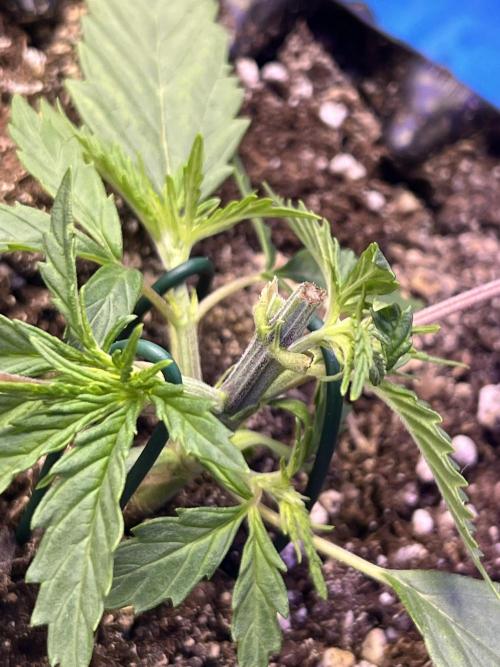
LST is checked every two days and the wire fixations are adjusted accordingly. The upper leaf layer was also removed to allow more light to reach the young shoots. Unfortunately, during this work one of the main shoots broke on one plant. Caution: young shoots are fragile. Fortunately, topping was performed above the third node, so it is still possible to continue working effectively with this plant. Growth is also visibly strong, so there is little concern regarding the issues observed in week 1.
3 likes
comments
Share
Used techniques
Umtopfen
Technique
LST
Technique
Topping
Technique
3
Week 3. Vegetation
9mo ago
1/23
5 cm
Height
18 hrs
Light Schedule
28 °C
Day Air Temp
6.3
pH
Weak
Smell
70 %
Air Humidity
27 °C
Solution Temp
0 °C
Substrate Temp
23 °C
Night Air Temp
0.27 liters
Pot Size
1.4 liters
Watering Volume
7.5 cm
Lamp Distance
750 PPM
CO₂ Level
Nutrients 1
CalMag Agent
0.396 mll
LegacyGrow Day 16 – Vegetative Phase:
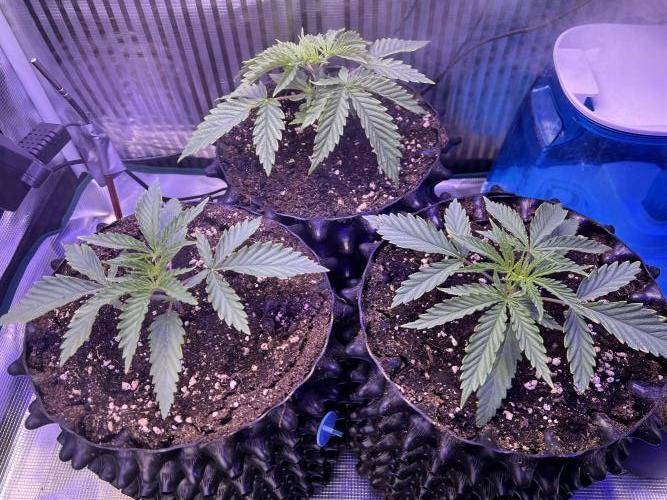
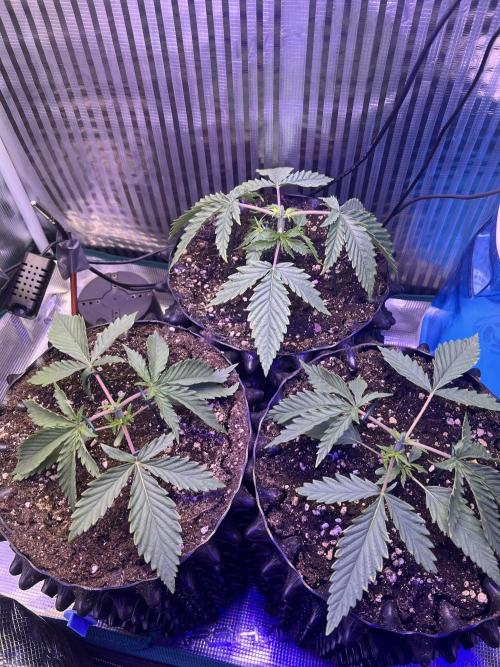
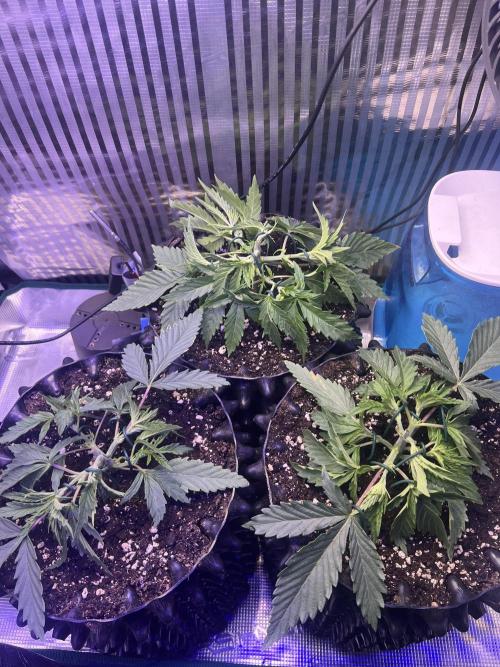
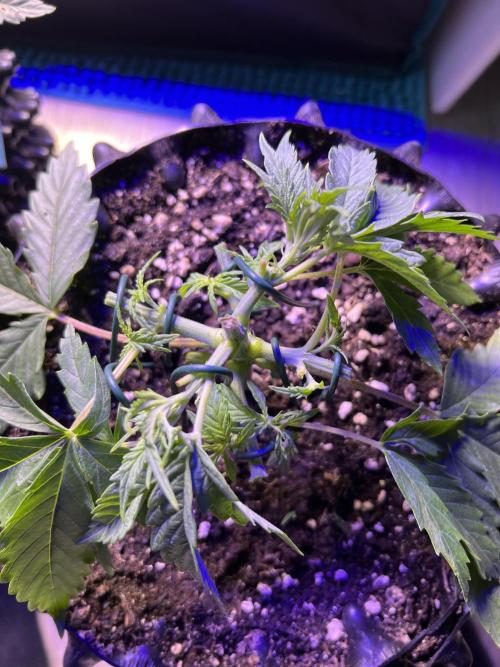
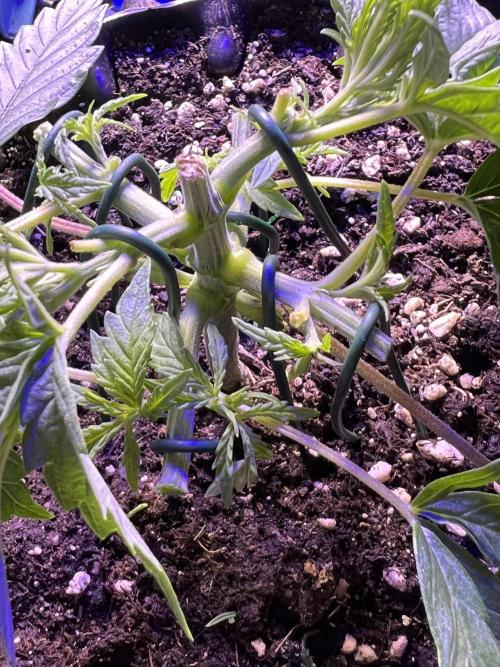
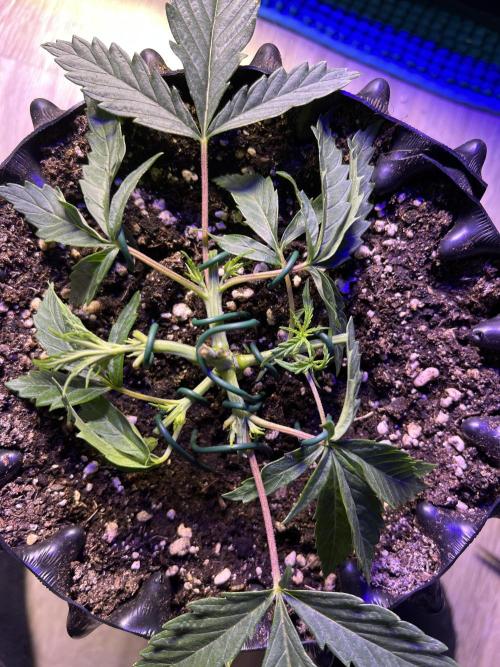
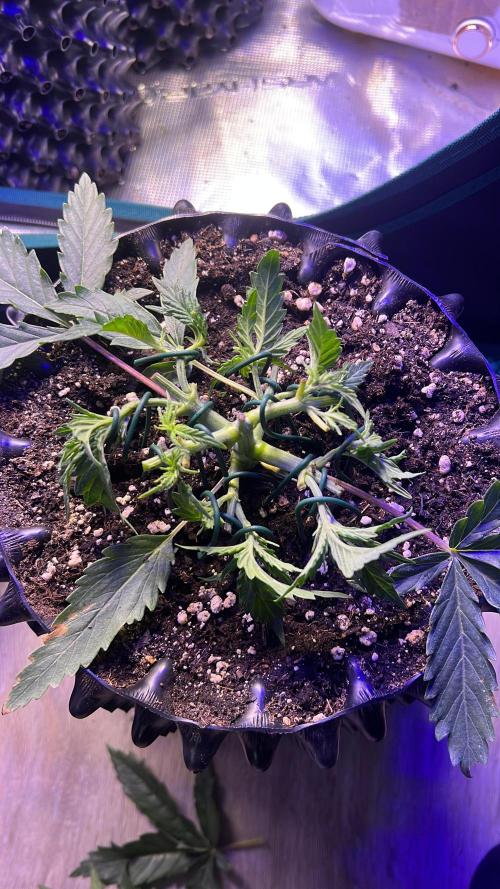
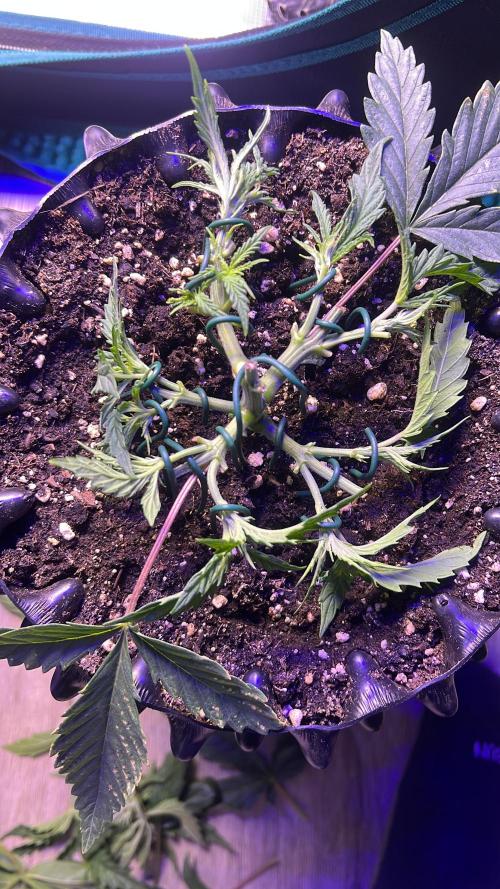
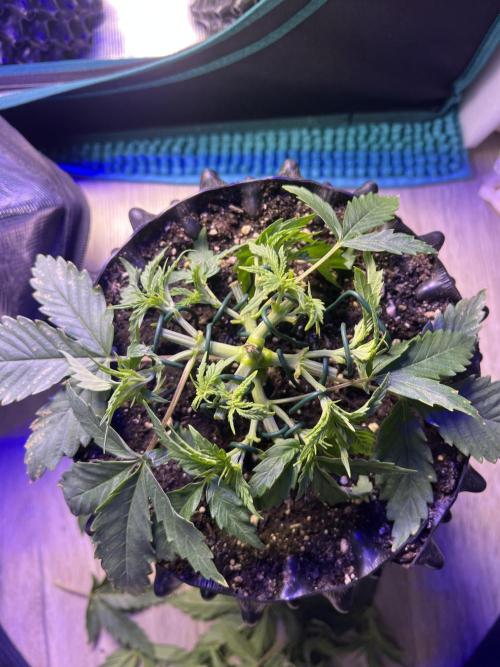
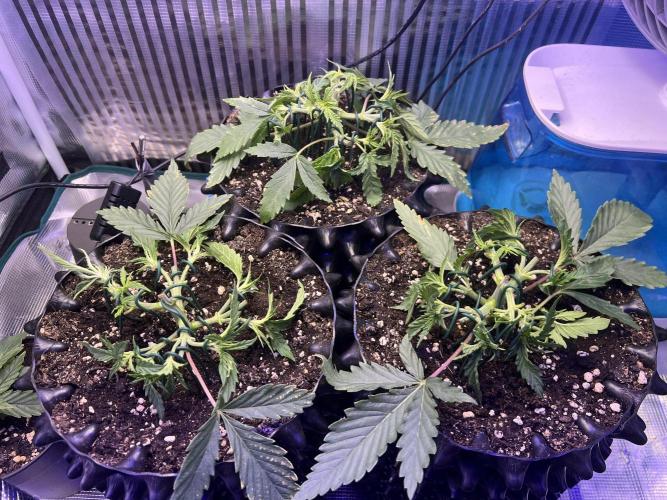
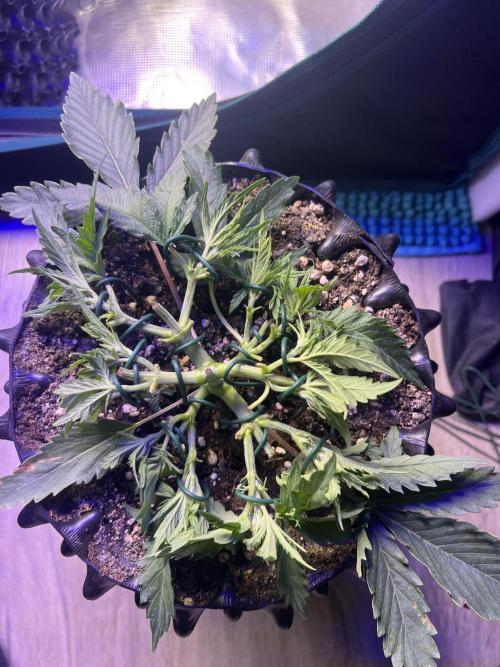
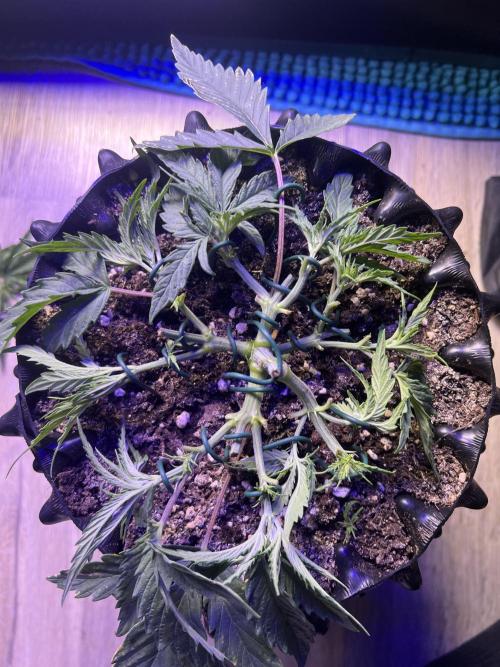
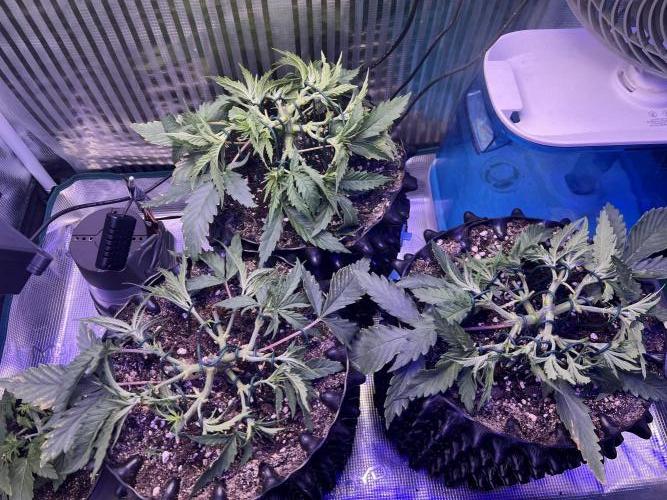
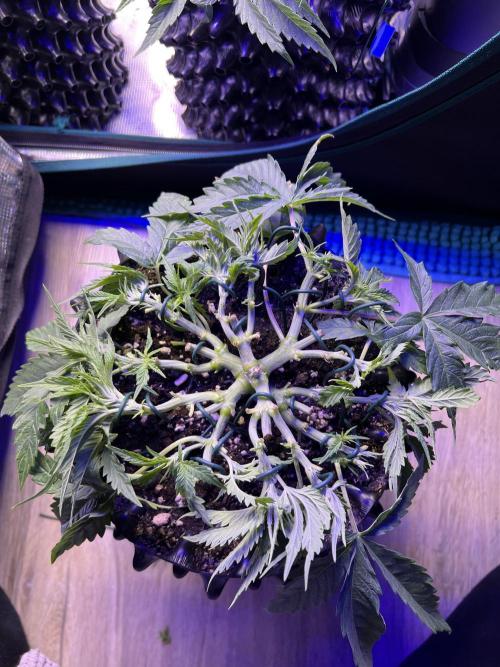
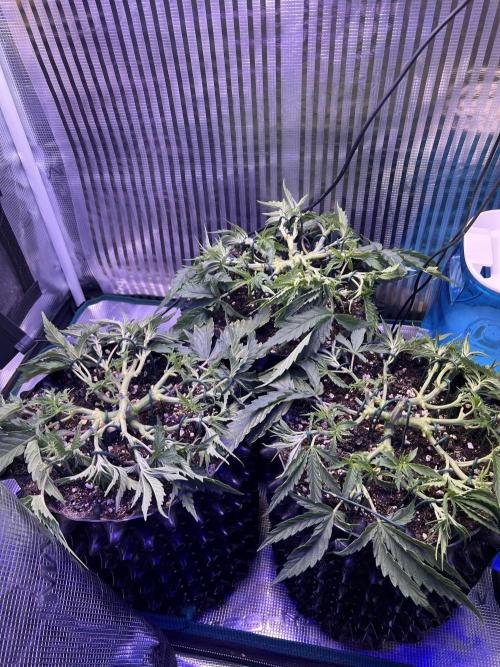
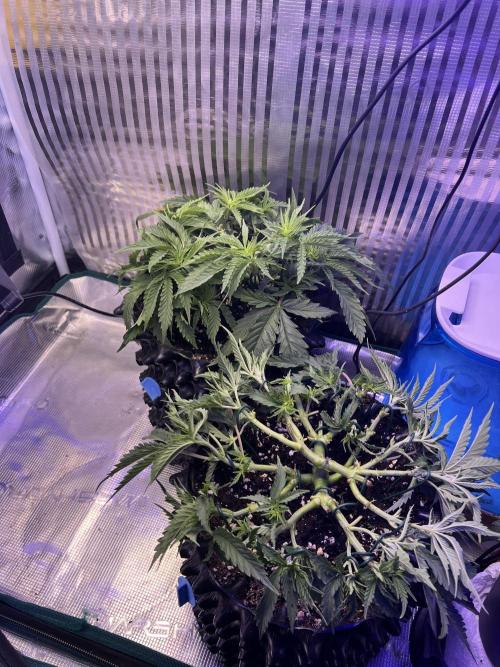
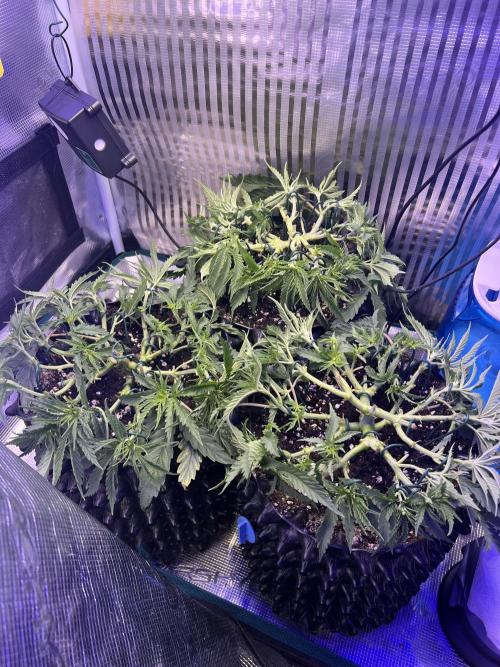
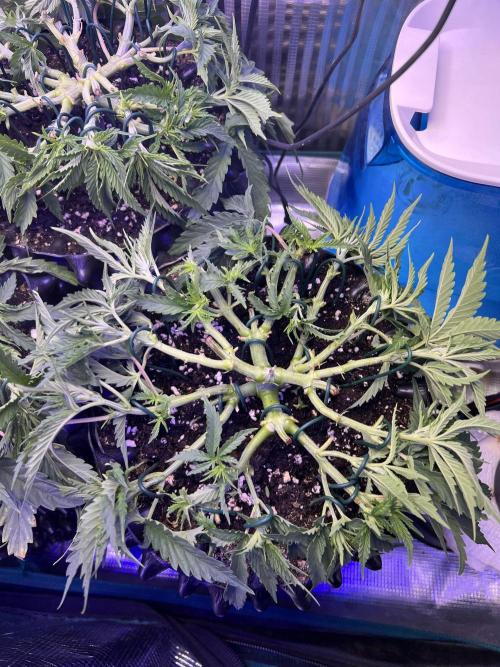
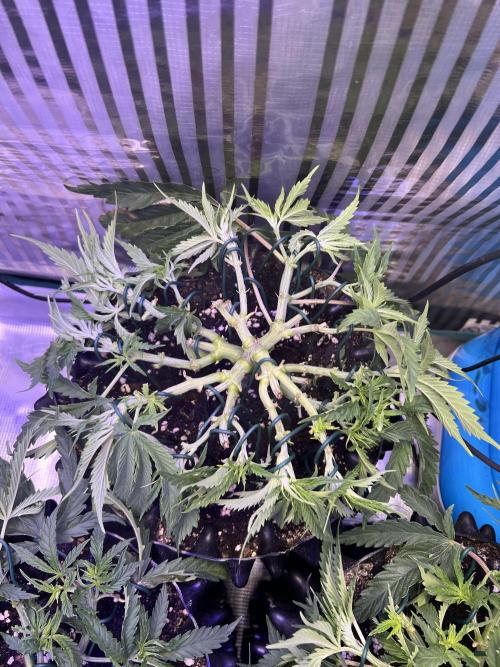
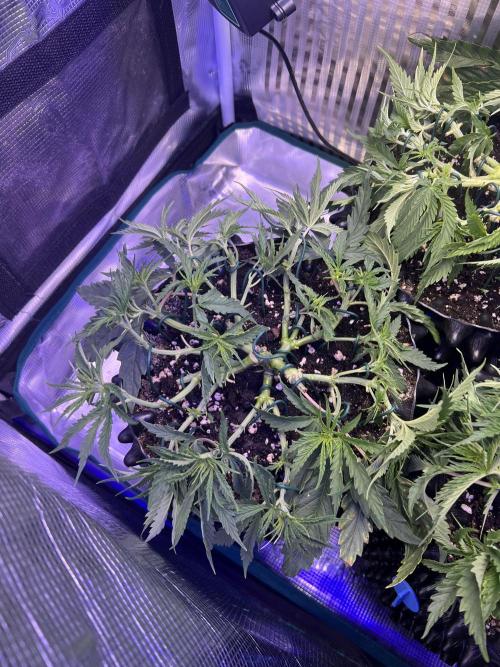
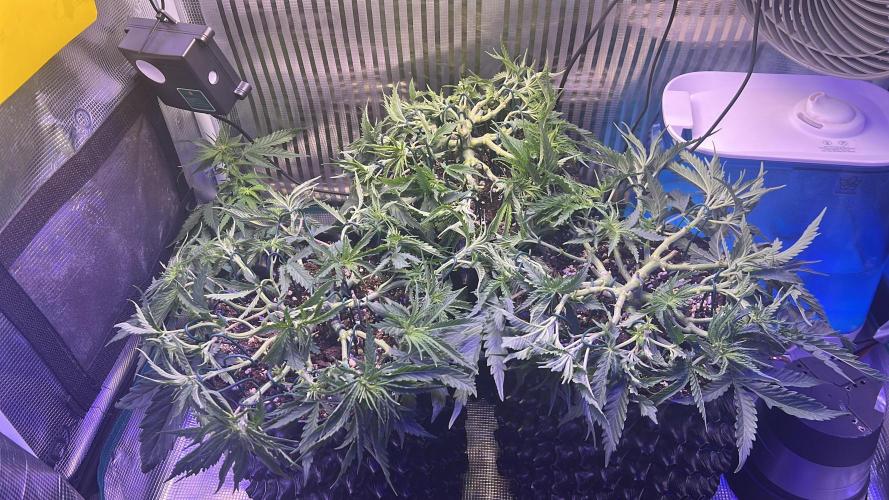
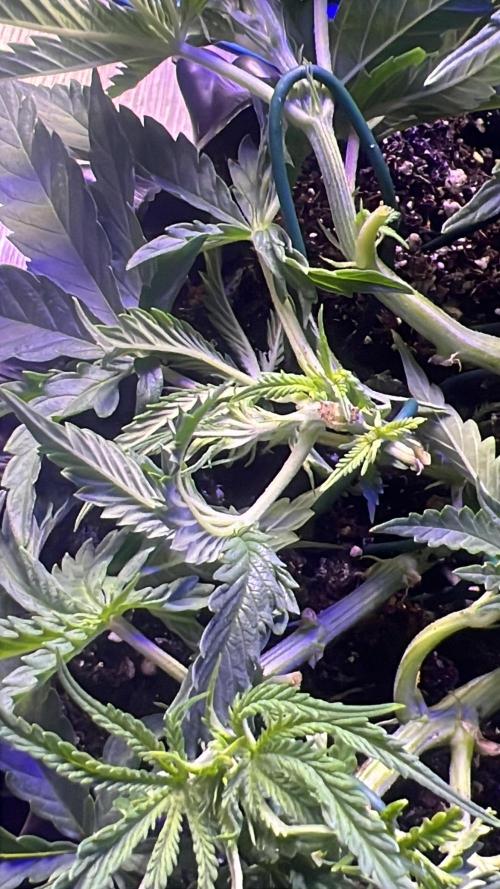
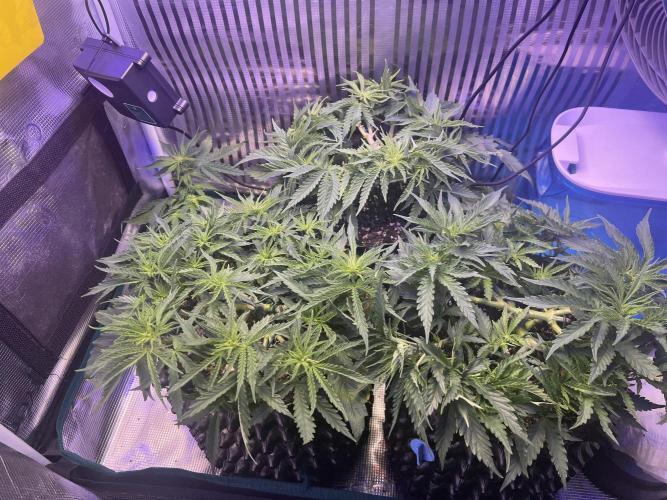
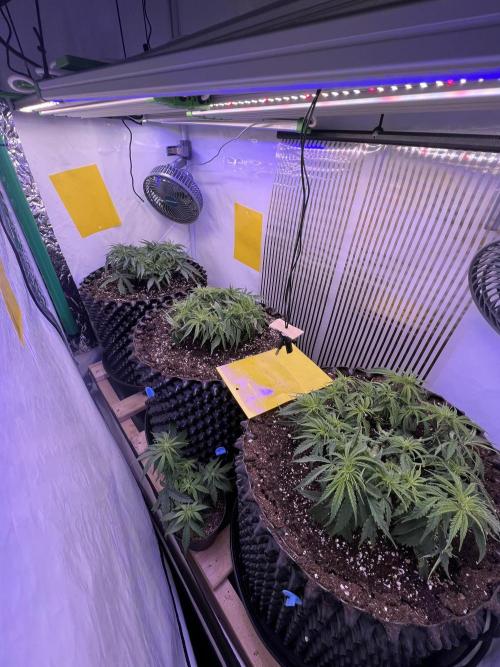
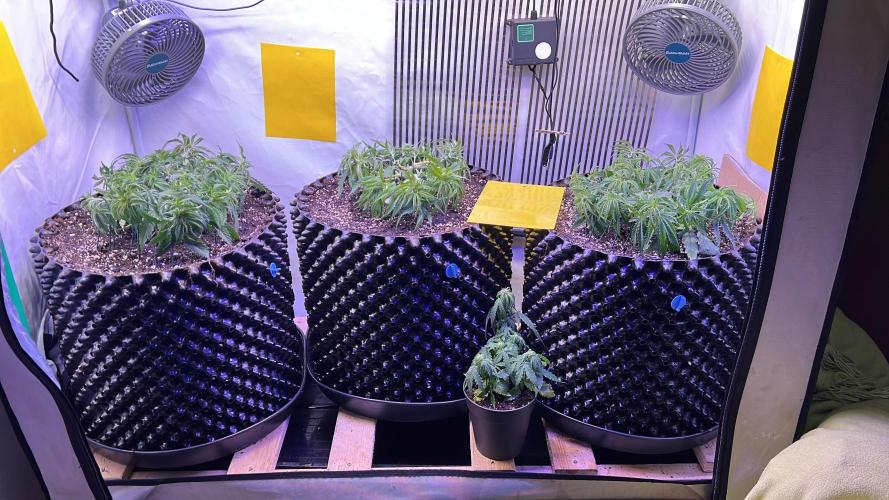
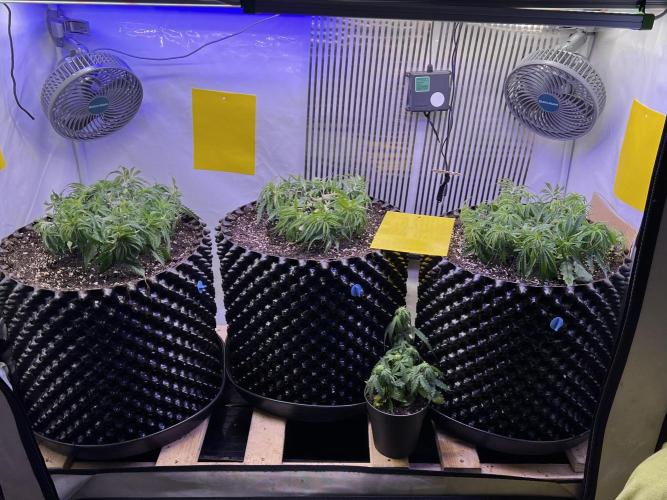
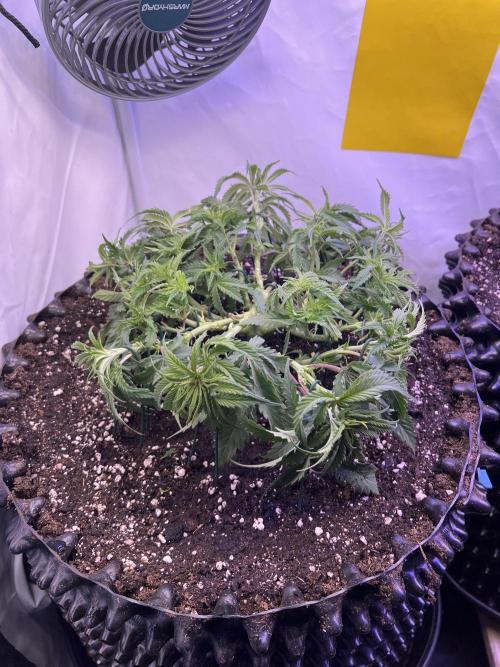
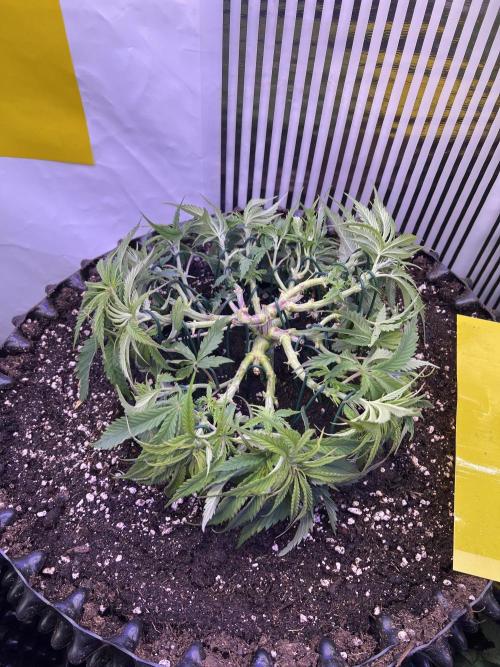
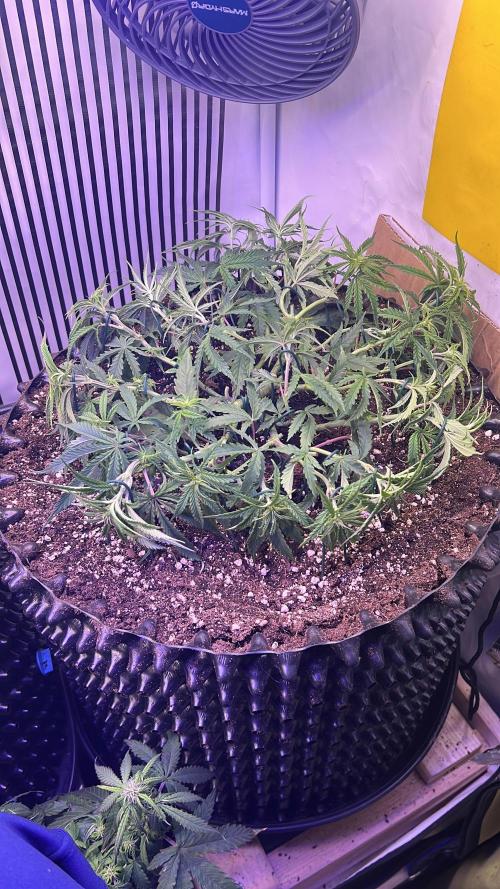
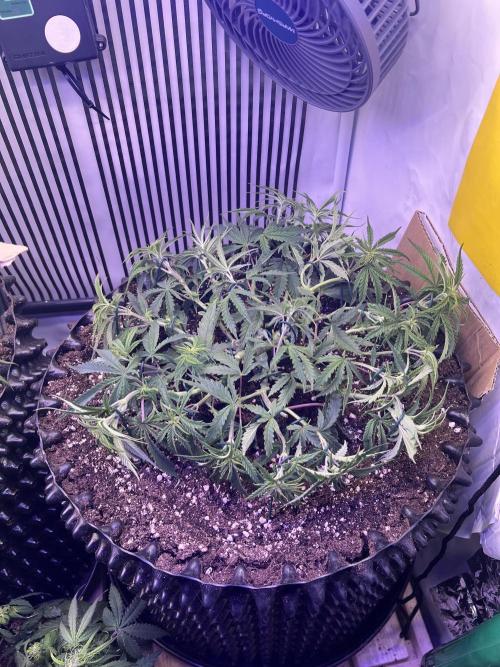
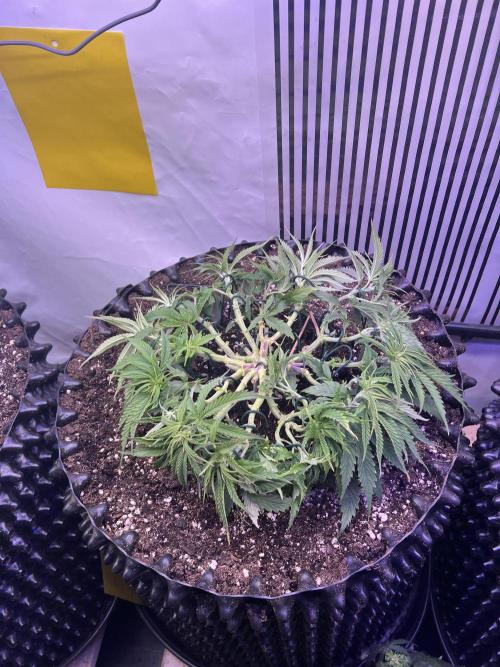
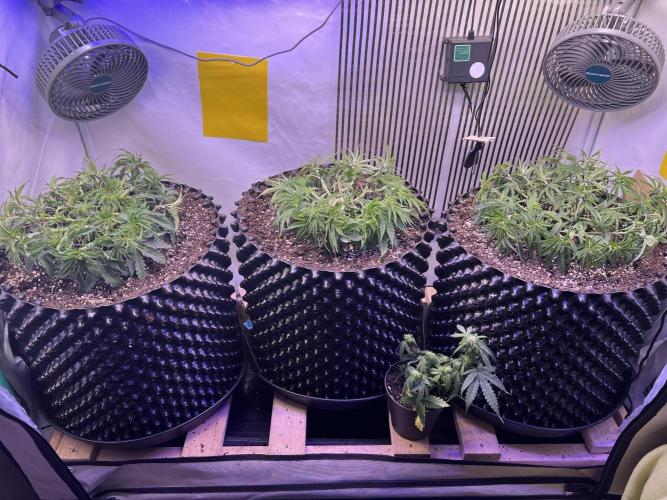
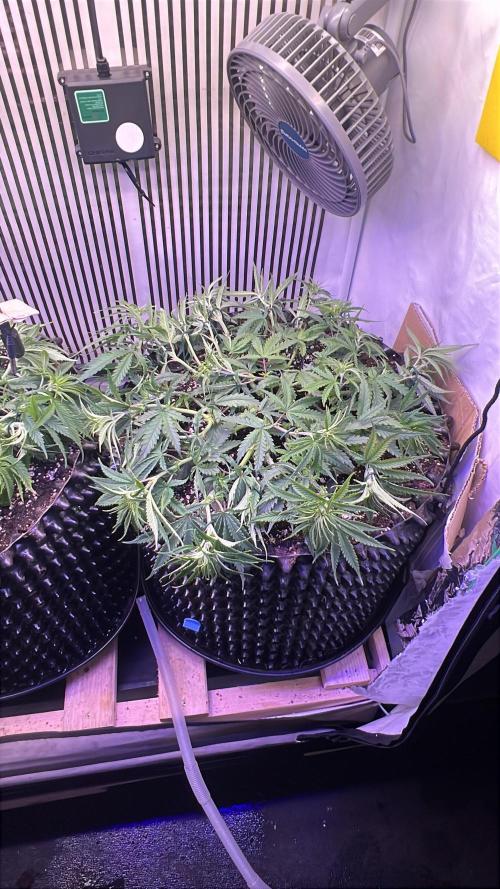
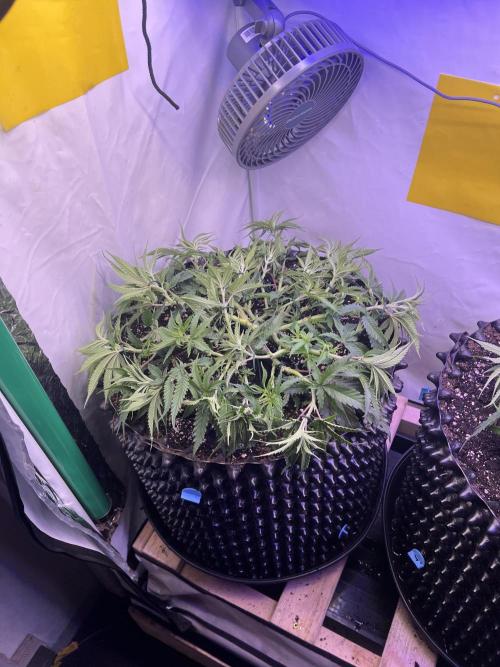
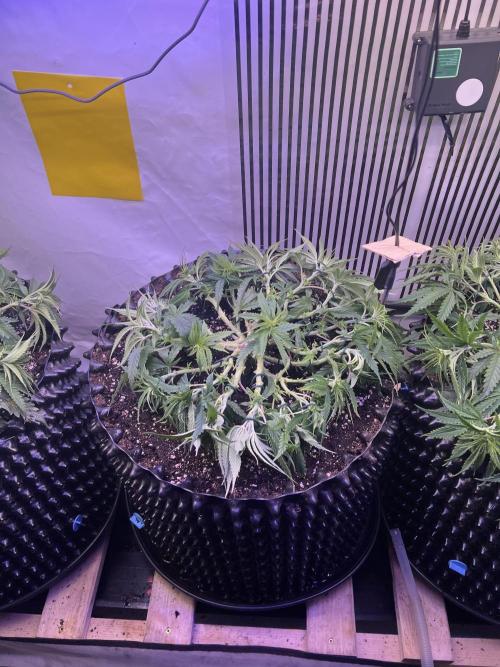
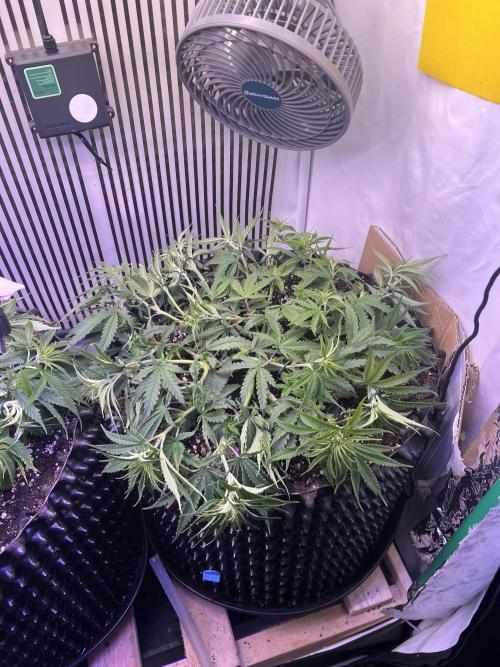
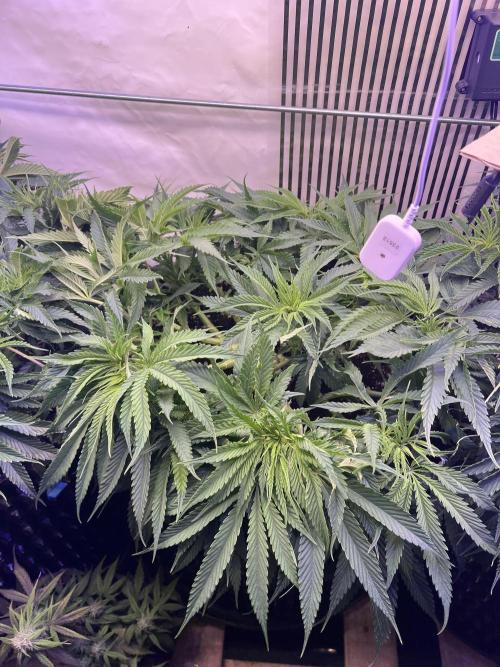
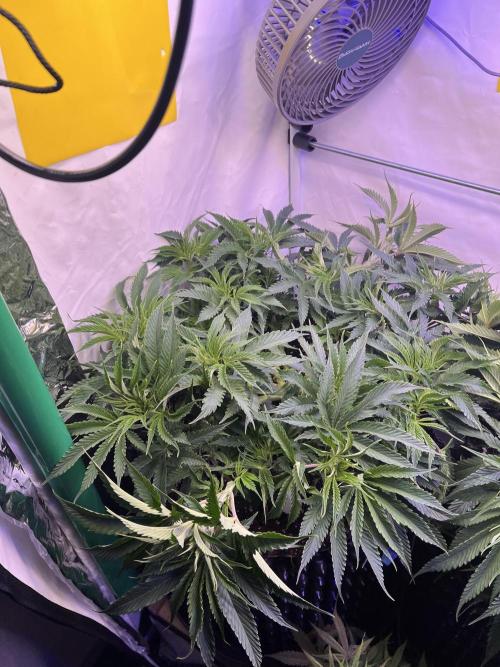
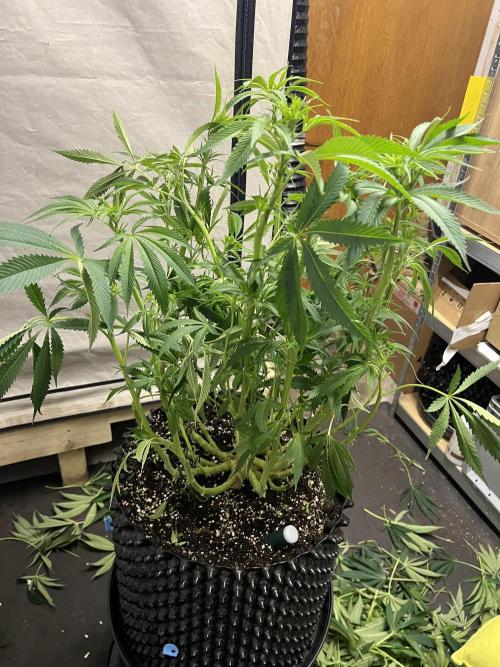
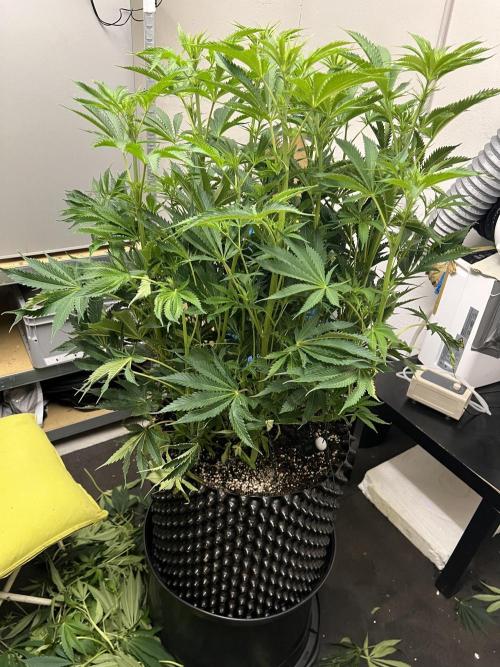
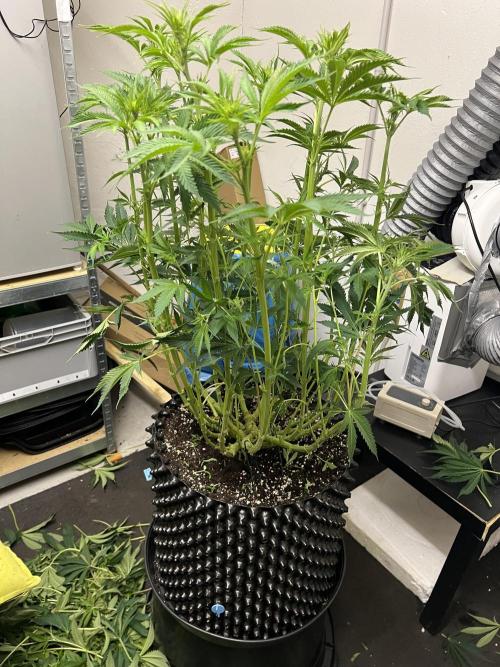
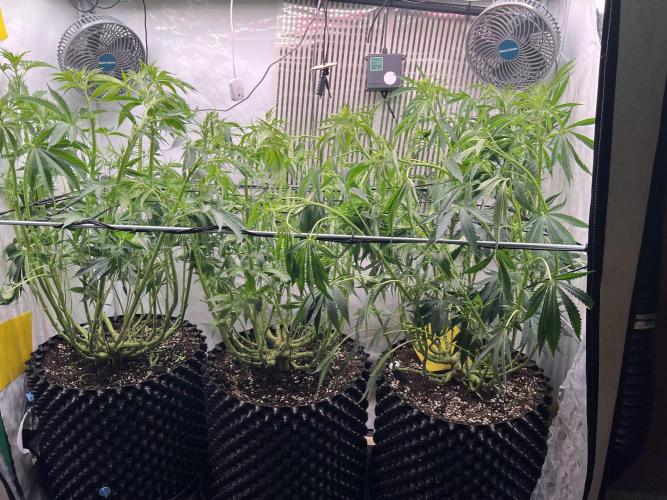
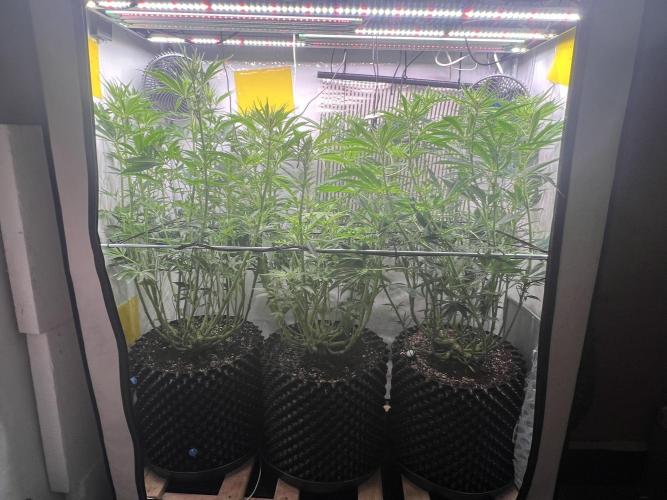
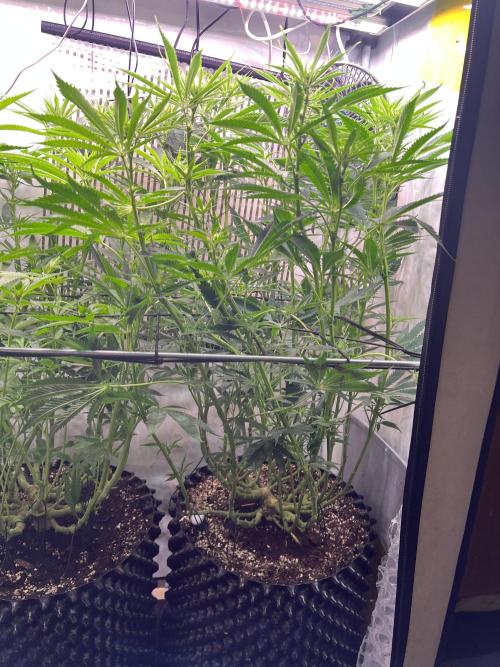
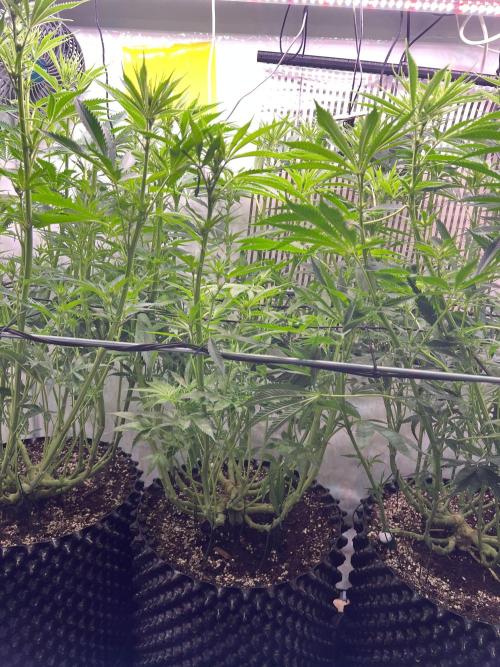
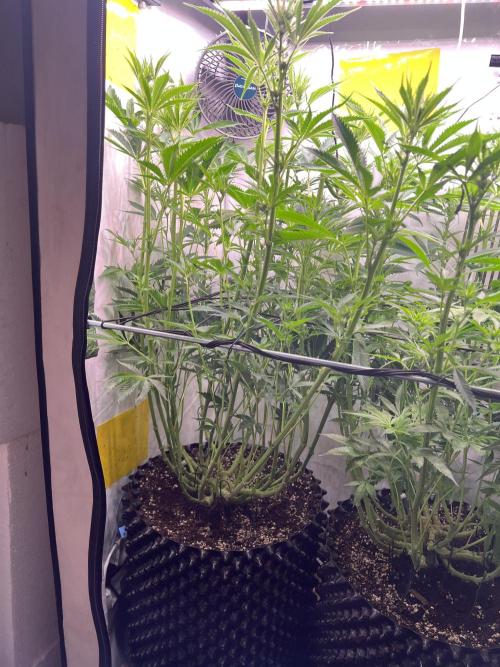
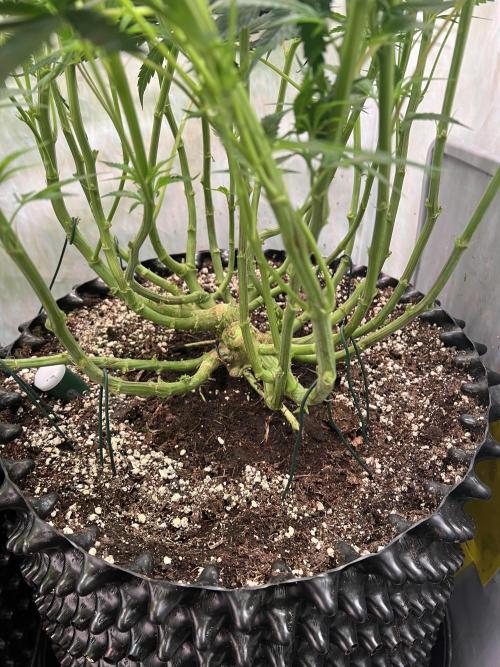
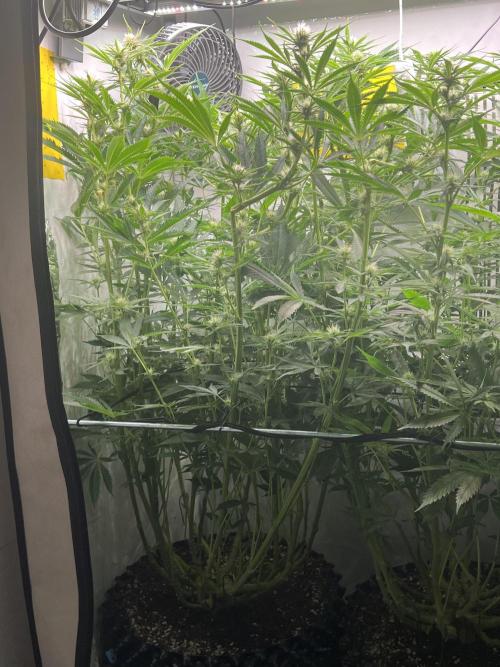
LST and topping are the next steps to be carried out. LST needs to be performed and monitored daily, if not several times a day, to ensure that the desired plant structure is achieved. As can be seen in the images, the plant at the front left has fewer shoots. During training, one shoot was lost due to inattention, and another shoot failed to develop properly and was therefore removed. During LST, the goal is to bend each shoot into its own direction and then orient it horizontally to the ground.
I am waiting another two days before the next topping. This is done partly to distribute stress more evenly across the plants, and partly because the growth of some shoots on the weaker plants is not yet sufficiently advanced.
VPD is currently between 0.44 and 0.68, which is ideal for the early growth phase. This is also reflected in the visible growth of the plants.
Day 17 – Vegetative Phase:
Early this morning, topping was performed for the second time, this time at the first newly formed node. Only the upper shoots were left untouched, as they were still too young. Why were the lower shoots topped anyway? First, it makes sense to distribute the high level of stress over several days. In addition, a specific plant structure is intended to be achieved. Before and after the remaining node, ground anchors were placed to keep the shoots in position.
Day 19 – Vegetative Phase:
Today, approximately 1–1.2 L of liquid was applied to each plant, adjusted to a pH of 6.3 and supplemented with 1 ml/L Cal-Mag. The water was administered gradually in 125 ml increments until a slight runoff of about 100 ml was observed.
Day 20 – Vegetative Phase:
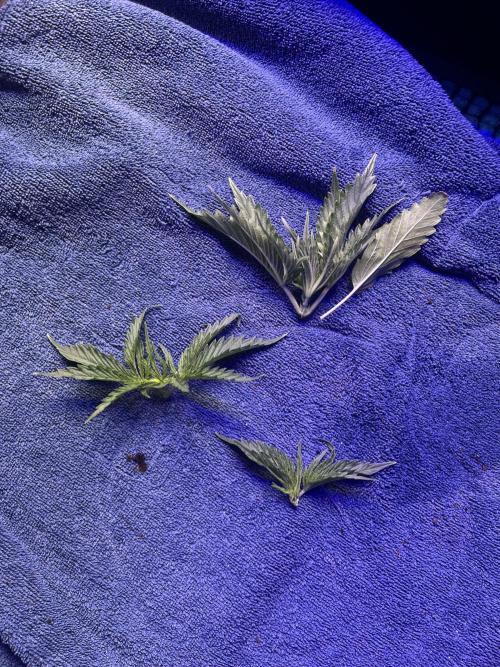
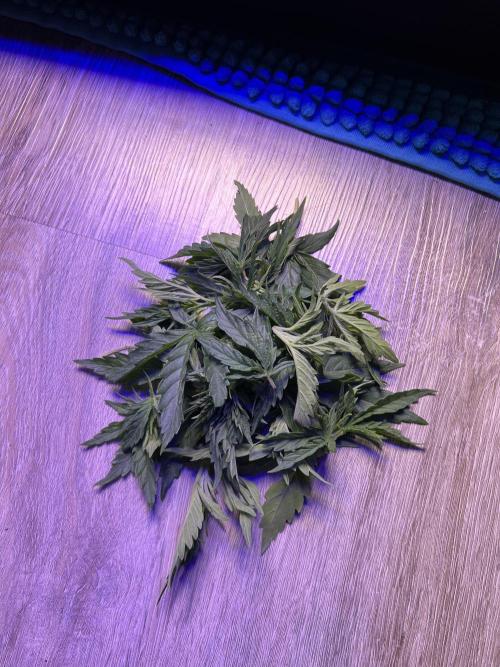
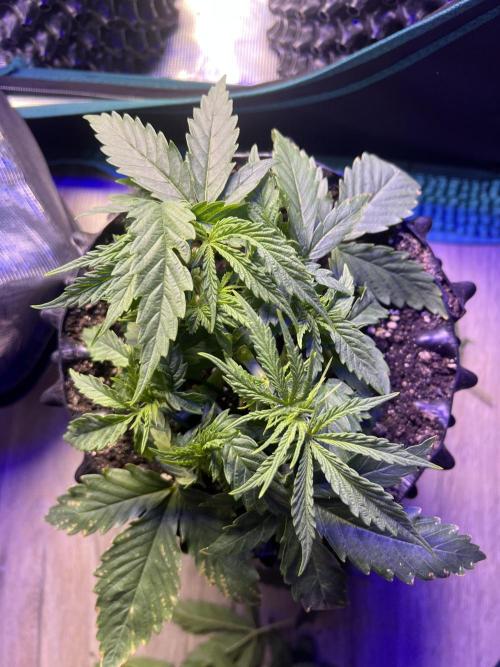
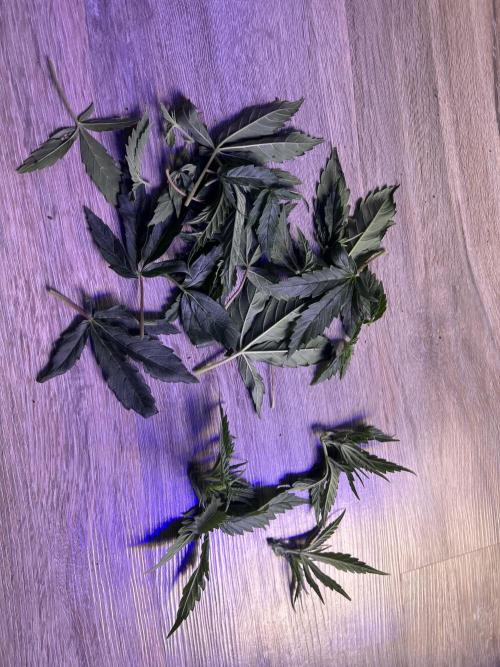
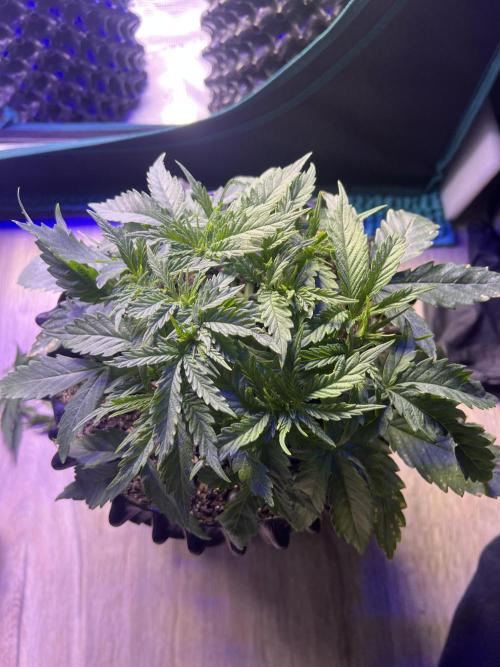
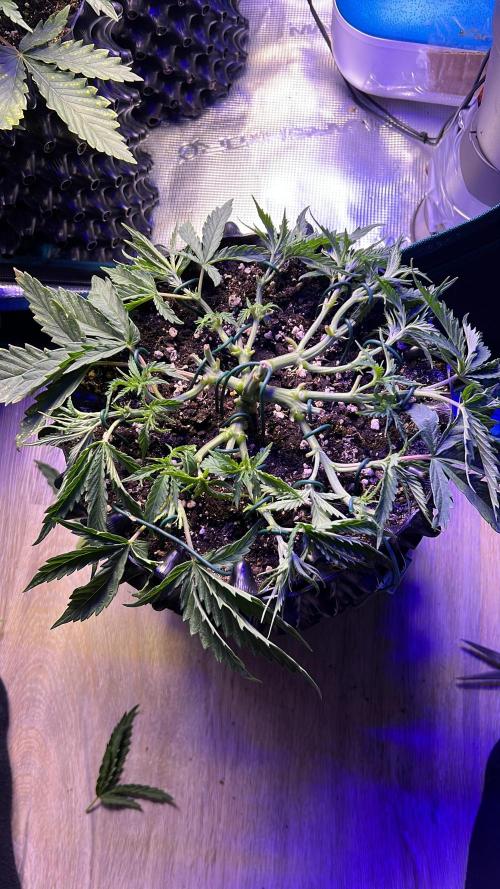
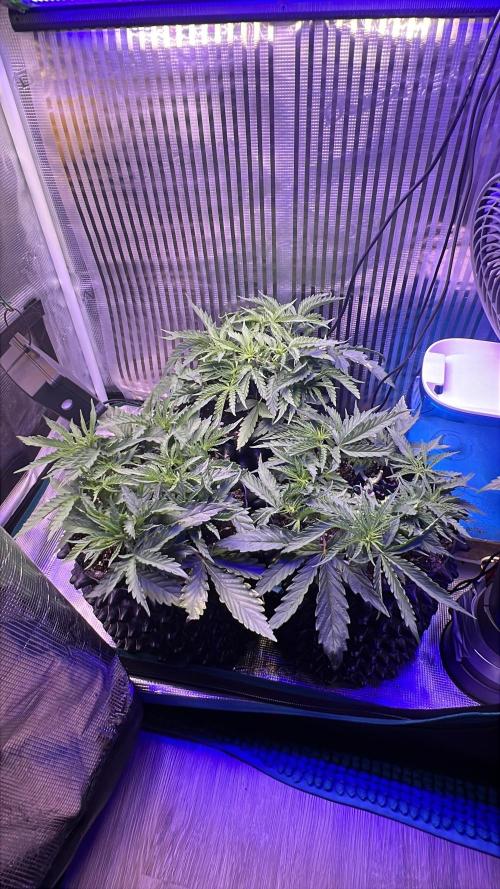
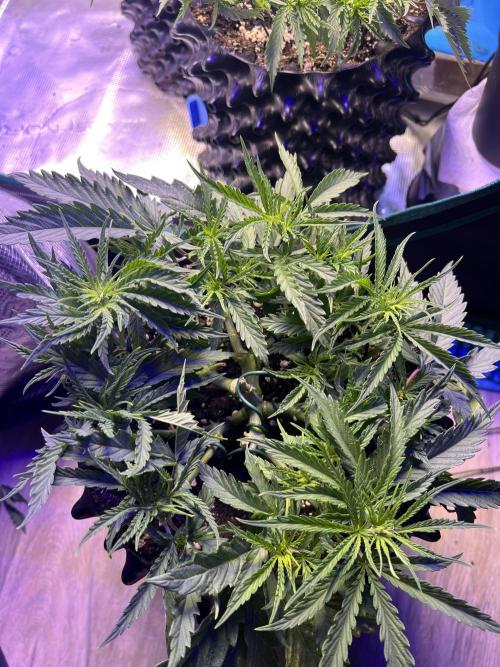
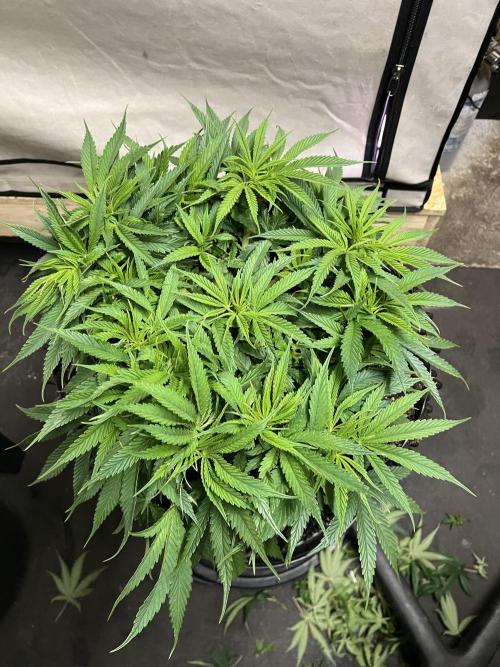
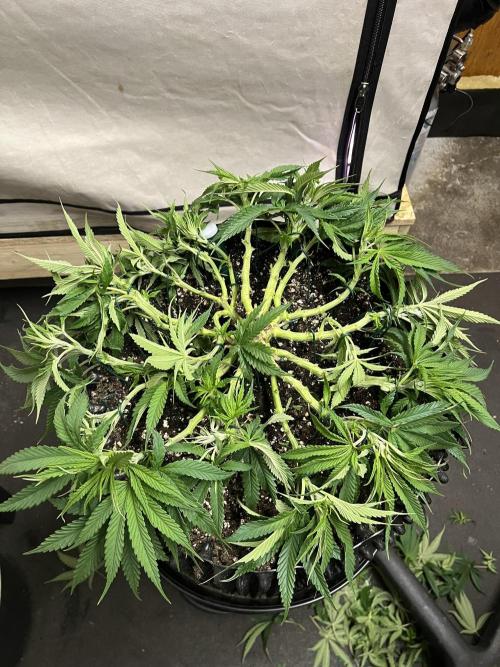
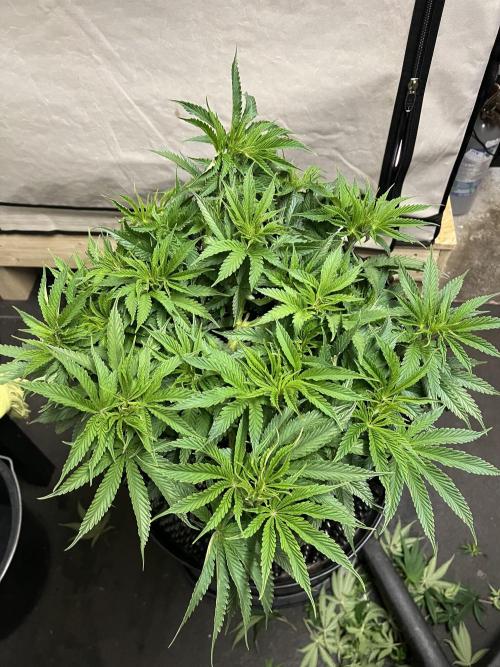
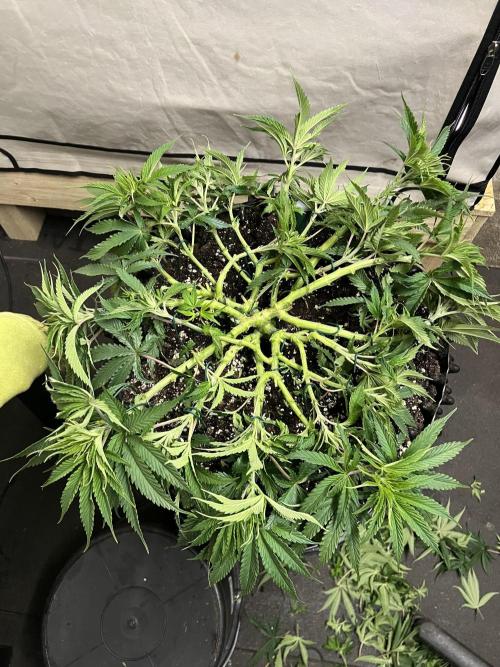
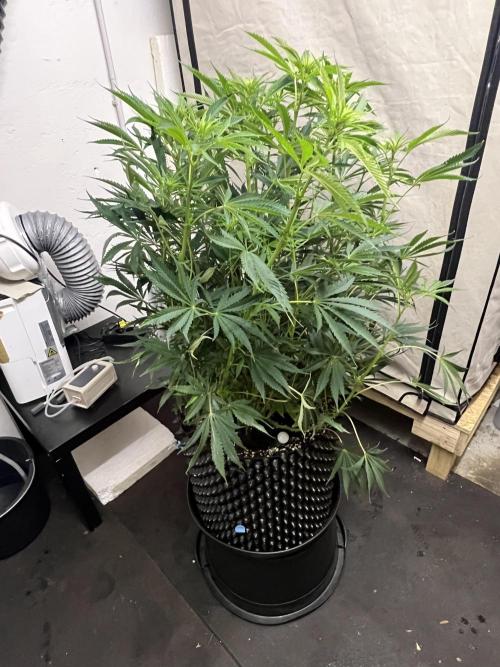
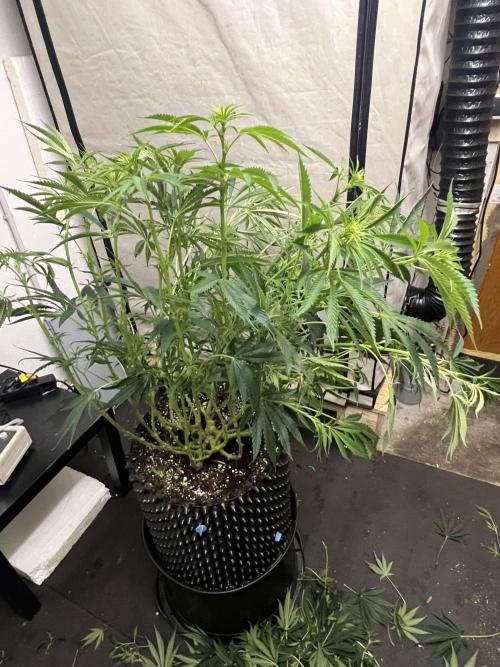
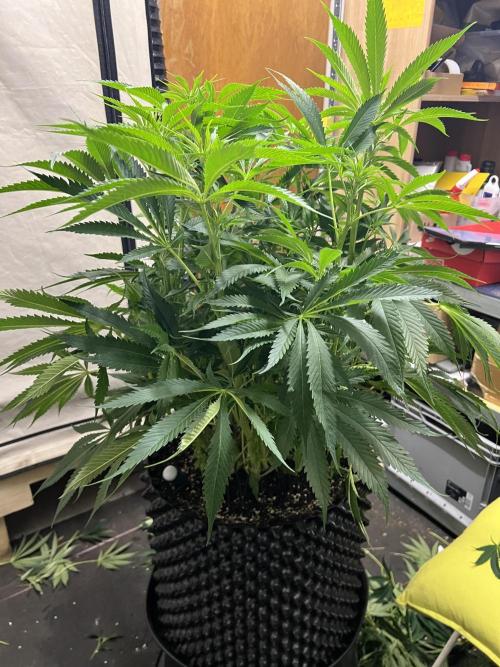
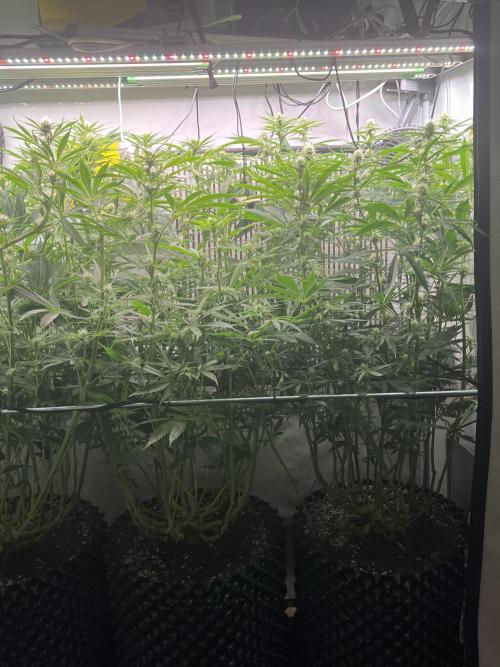
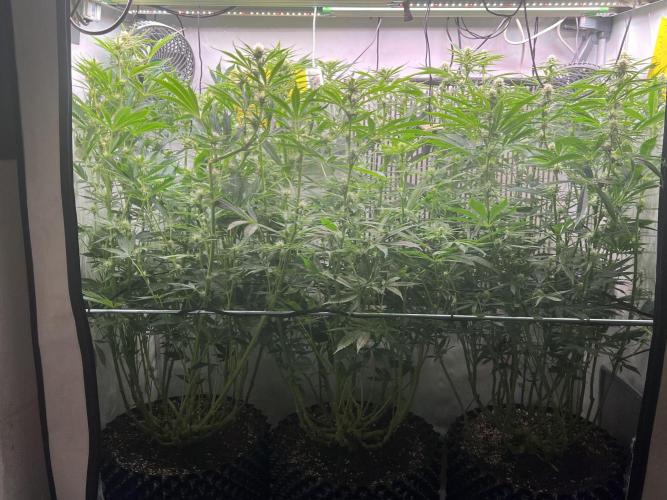
Based on the plants’ growth, it is evident that they have recovered from the last topping. The new side shoots are progressively gaining vigor. At this stage, regular intervention with LST is essential to establish and maintain a well-structured plant architecture. In today’s images, the plants are shown before and after LST. In addition, several leaves covering the shoots were removed so that energy is directed entirely toward shoot growth.
3 likes
comments
Share
Used techniques
LST
Technique
Topping
Technique
4
Week 4. Vegetation
9mo ago
1/15
7 cm
Height
18 hrs
Light Schedule
28 °C
Day Air Temp
6.3
pH
Weak
Smell
70 %
Air Humidity
27 °C
Solution Temp
0 °C
Substrate Temp
23 °C
Night Air Temp
0.27 liters
Pot Size
1.4 liters
Watering Volume
30 cm
Lamp Distance
750 PPM
CO₂ Level
Nutrients 1
CalMag Agent
0.264 mll
LegacyGrow Englischversion below
Deutsch:
Tag 22 Veg:
An den einstellungen zu VPD PPFD und PPM hat sich nichts verändert. Die Pflanzen regieren mit starkem Wachstum. Alle 2 Tage werden die Triebe mit äußerster Vorsicht waagerecht zum Boden ausgerichtet. Ziel der aktuellen Phase ist es den Rand des Topes mit minimalem Höhenwachstum zu erreichen.
Tag 26 Veg:
Alle 2 Tag werden die Damen durch ein vorsichtiges LST in form gebracht. Die beiden stärksten Triebe der Pflanzen wurden erneut getoppt. Es ist wichtig auf die Pflanze zu achten - triebe die bereits recht dünn erscheinen sollten nicht erneut getoppt werden.
Durch das rigorose Wachstum steigt auch die Transpirationsrate der Pflanzen. Entsprechend stieg die RLF% dauerhaft über 80%. Laut VPD ist bei einer Temp von 27-29,5 grad ein RLF% von ca. 63-73%. Eine Luftentfeuchter wurde eingebastelt und sorgt für die entsprechende RLF%.
----------------------------------------------------------------------------------------------------------------------------------------------
Day 22 – Vegetative Phase:
There have been no changes to the VPD, PPFD, or CO₂ (ppm) settings. The plants are responding with strong growth.
Every two days, the shoots are carefully guided horizontally toward the ground with great caution.
The goal of the current phase is to reach the edge of the pot while maintaining minimal vertical growth.
Day 26 – Vegetative Phase:
Every two days, the plants are shaped using careful LST. The two strongest shoots of each plant were topped again. It is important to closely observe the plants—shoots that already appear relatively thin should not be topped again.
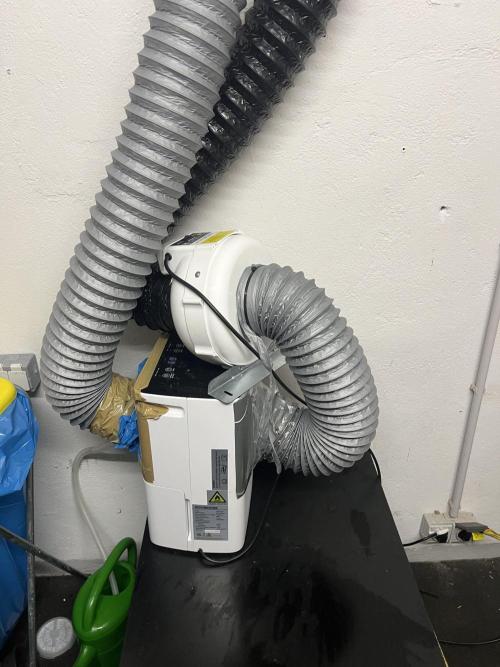
Due to the vigorous growth, the plants’ transpiration rate has increased. As a result, relative humidity consistently rose above 80%. According to VPD targets, at temperatures between 27 and 29.5 °C, an RH of approximately 63–73% is required. A dehumidifier was improvised and now ensures the appropriate relative humidity.
5 likes
comments
Share
Used techniques
LST
Technique
Topping
Technique
5
Week 5. Vegetation
9mo ago
1/12
8 cm
Height
18 hrs
Light Schedule
28 °C
Day Air Temp
6.3
pH
Weak
Smell
70 %
Air Humidity
27 °C
Solution Temp
0 °C
Substrate Temp
23 °C
Night Air Temp
0.27 liters
Pot Size
1.4 liters
Watering Volume
30 cm
Lamp Distance
750 PPM
CO₂ Level
Nutrients 1
CalMag Agent
0.264 mll
LegacyGrow Day 29 – Vegetative Phase:
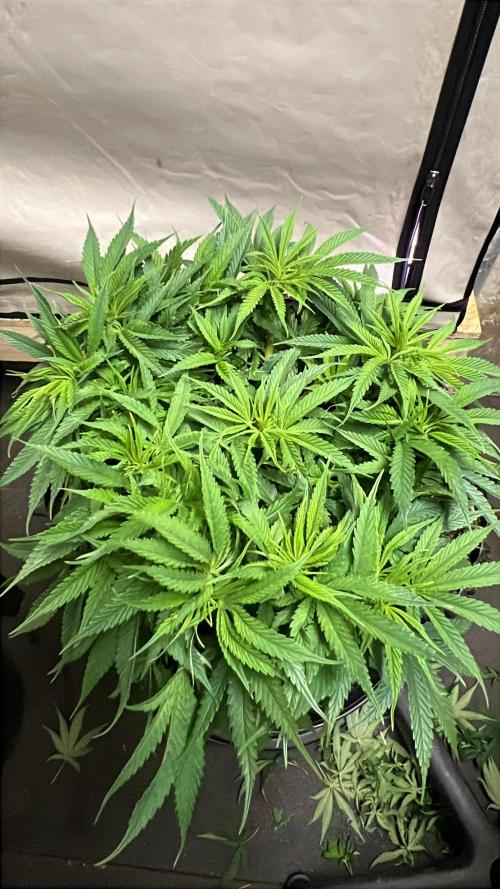
LST is repeated every two days. Most shoots have reached the edge of the pot. On average, there are now 16 main shoots per plant. Lagging nodes are removed during LST so that the plant does not waste energy producing biomass that would be removed later anyway.
Due to inattention and overly aggressive LST, a total of five shoots have broken so far (approximately 1.6 shoots per plant). As already noted last week, not all shoots are suitable for topping. The plant structure must be assessed daily, and decisions should be made accordingly.
Day 31 – Vegetative Phase:
The plan is moving toward transplanting the plants into the large 40-liter pots at the beginning of week 6 and then starting the SOG. Today, LST was performed again. Since there are already enough main shoots, no further topping is planned for now. If a shoot proves to be exceptionally vigorous, additional topping may be reconsidered. The large tent (120 × 60 × 200 cm) is already set up, and the drainage system has been installed. Wastewater is drained directly out of the tent as a preventive measure against fungus gnats and other pests that tend to establish themselves in standing water.
Day 33 – Vegetative Phase:
The plants are now placed in 40-liter pots filled with a substrate consisting of 80% All-Mix and 20% worm compost. Each pot was watered with approximately 10 liters, corresponding to about 25% of the total pot volume. To avoid dry spots within the substrate, water was already added during the mixing process. It takes some time for the tent climate to stabilize after transplanting; therefore, relative humidity and temperature are monitored regularly.
4 likes
comments
Share
Used techniques
LST
Technique
HST
Technique
Topping
Technique
Main-Lining
Technique
6
Week 6. Vegetation
9mo ago
1/10
15 cm
Height
18 hrs
Light Schedule
23 °C
Day Air Temp
6.3
pH
No Smell
Smell
65 %
Air Humidity
27 °C
Solution Temp
0 °C
Substrate Temp
23 °C
Night Air Temp
0.27 liters
Pot Size
1.4 liters
Watering Volume
30 cm
Lamp Distance
750 PPM
CO₂ Level
Nutrients 1
CalMag Agent
0.264 mll
LegacyGrow Day 36 – Vegetative Phase:
The transplant is still visibly causing stress to the ladies. The temperature difference is also clearly stressing them. The VPD needs to be adjusted, as the average air temperature has dropped from around 28.5 °C to approximately 22.5 °C. Leaf surface temperature averages about 20.5 °C, which requires relative humidity to be maintained at roughly 60–65%. Today, the ladies were fully watered with approximately 8.5 liters at a pH of 6.3 and supplemented with 0.5 ml/L Cal-Mag. Light LST was also applied today to round off plant care. The goal is to reach the edge of the pot again with healthy, stable plants.
Day 39 – Vegetative Phase:
The ladies are visibly recovering. The cooler nighttime temperatures have led to slight purple discoloration at the leaf tips and stems. As on nearly every second to third day, LST was performed again on day 39. Daytime temperatures range between 22–26 °C, while nighttime temperatures are between 19–21 °C.
There is not much to do at this stage — we are now waiting to initiate the SOG.
4 likes
comments
Share
Used techniques
LST
Technique
7
Week 7. Vegetation
8mo ago
1/9
15 cm
Height
18 hrs
Light Schedule
23 °C
Day Air Temp
6.3
pH
No Smell
Smell
65 %
Air Humidity
12 °C
Solution Temp
0 °C
Substrate Temp
19 °C
Night Air Temp
0.27 liters
Pot Size
1.4 liters
Watering Volume
30 cm
Lamp Distance
750 PPM
CO₂ Level
Nutrients 1
CalMag Agent
0.264 mll
LegacyGrow Englischversion below
Deutsch:
Tag 43 Veg:
Heute wurden die Ladies mit je ca. 9 Litern PH6.3 Wasser mit 1ml/L CalMag. Zusätzlich wurden präventiv Nemathoden gegeben.
Seit dem Letzen Update vor 4 Tagen. haben 2/3 Ladies den Rand des Topfes erreicht. Etwas LST rundet den heutigen Tag Ab. Es wird nu auf die 3te Pflanze gewartet - Danach wird der vertikale wuchs angestrebt.
Im großem Zelt habe ich ein Abflusssystem eingebaut um das Potential für Trauermücken gering zu halten. Das Wasser fließt durch Löcher in den Auffangschalen in eine schräge Rinne runter. Diese entleert sich durch den Boden mit 2 Silikonschläuchen. Ja, dazu habe ich das Zelt angebohrt - aber besser als stehendes Wasser oder händischen Abpumpen.
Da ich CO2 nutze habe ich mich für ein geschlossenes Lüftungssystem entschieden. Die Luft wird durch den Luftentfeuchter gezogen und zurück ins Zelt geleitet.
--------------------------------------------------------------------------------------------------------------------------------------------
Day 43 – Vegetative Phase:
Today, each plant received approximately 9 liters of water adjusted to pH 6.3 and supplemented with 1 ml/L Cal-Mag. In addition, nematodes were applied as a preventive measure. Since the last update four days ago, two out of three plants have reached the edge of the pot. Some additional LST completed today’s work. We are now waiting for the third plant to catch up — after that, vertical growth will be encouraged. In the large tent, a drainage system has been installed to reduce the risk of fungus gnats. Water flows through holes in the drip trays into a sloped channel, which then drains out of the tent through two silicone hoses installed through the floor. Yes, the tent was drilled for this modification — but it is preferable to standing water or manual pumping. Since CO₂ is being used, a closed ventilation system was chosen. Air is drawn through the dehumidifier and then recirculated back into the tent.
5 likes
comments
Share
Used techniques
LST
Technique
Main-Lining
Technique
8
Week 8. Vegetation
8mo ago
1/14
15 cm
Height
18 hrs
Light Schedule
23 °C
Day Air Temp
6.3
pH
Normal
Smell
60 %
Air Humidity
12 °C
Solution Temp
0 °C
Substrate Temp
19 °C
Night Air Temp
0.27 liters
Pot Size
1.4 liters
Watering Volume
30 cm
Lamp Distance
750 PPM
CO₂ Level
Nutrients 2
CalMag Agent
1 mll
Bio-Grow
2 mll
LegacyGrow Day 49 – Vegetative Phase:
All plants have reached the target — the edge of the pot. A heavy defoliation and removal of smaller shoots were carried out. This is intended to prevent the plants from investing excessive energy into biomass that would later be pruned anyway. A Pulse Zero and a soil moisture sensor have now been added to the setup. In preparation for the upcoming flowering phase, VPD is being increased toward a range of 1.0–1.2, primarily by lowering relative humidity. Once the plants have recovered from the stress, flowering will be initiated. During the stretch phase, a SCROG net will likely be installed.
Day 52 – Vegetative Phase:
We are fully on track — VPD is currently between 0.90 and 1.2, which is exactly the target range for the late vegetative phase as it approaches transition. The plants have also recovered well from LST. The strongest shoots were supercropped (bent). This brought the canopy back to an even height. Three ladybugs have moved into the tent as natural protectors — if more are found, they will also be welcomed in.
3 likes
2 comments
Share
Used techniques
LST
Technique
Main-Lining
Technique
Defoliation
Technique
ScrOG
Technique
9
Week 9. Flowering
8mo ago
1/7
30 cm
Height
12 hrs
Light Schedule
24 °C
Day Air Temp
6.3
pH
Normal
Smell
60 %
Air Humidity
12 °C
Solution Temp
0 °C
Substrate Temp
19 °C
Night Air Temp
40.01 liters
Pot Size
30 cm
Lamp Distance
750 PPM
CO₂ Level
Nutrients 1
CalMag Agent
1 mll
LegacyGrow Deutsch:
Tag 56 Grow
Tag 2 Blüte:
Viel Zeit ist vergangen, und die Ladies haben sich – bis auf einige gelbe Blattspitzen – von ihrem Stress und dem Training erholt.
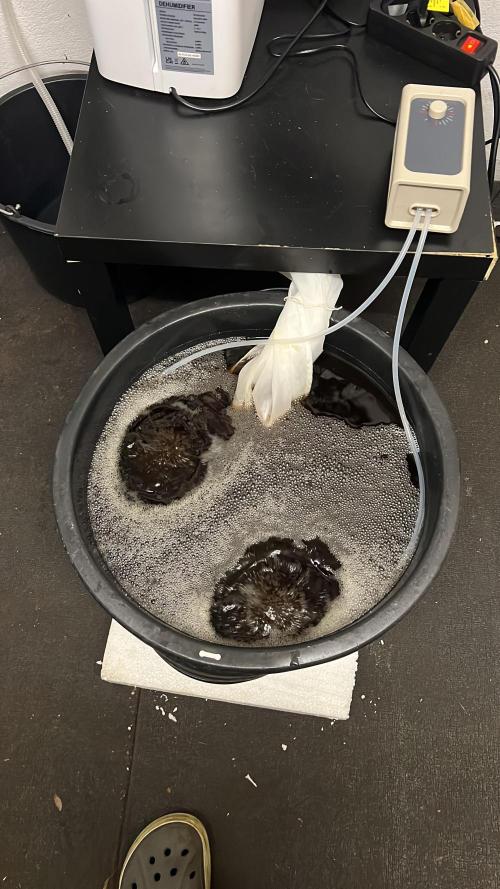
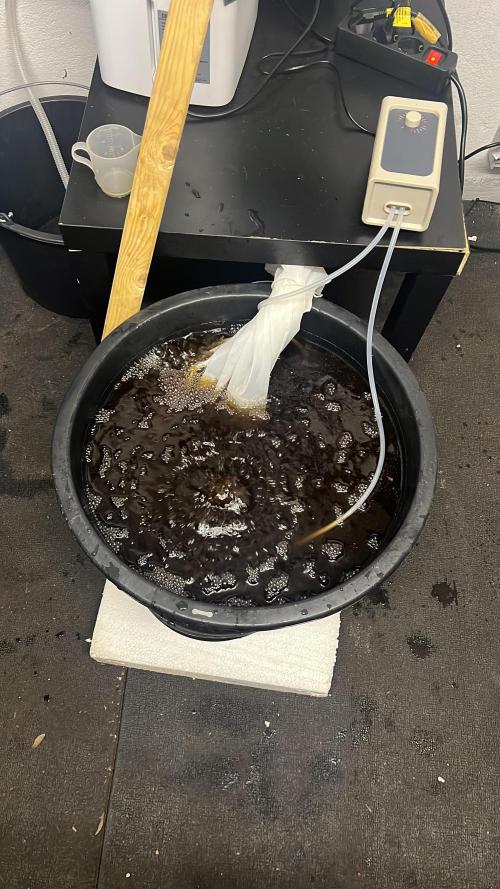
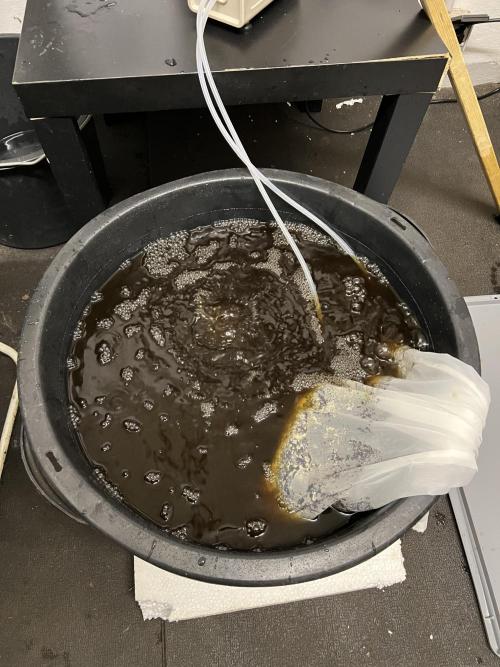
Am letzten Tag der Vegetationsphase wurde ein „Compost Tea“ angesetzt. Für 25 Liter wurden 125 ml Bio-Melasse, 250 ml Bodenhilfsstoff, 50 g Mykorrhiza-Granulat, 2 Liter Wurmhumus und 75 g Knochenpulver verwendet. Die Mischung wurde unter Sauerstoffzufuhr 24 Stunden lang belüftet. Die vermeintlichen Vorteile dieses Tees sind im Internet ausführlich beschrieben.
Der VPD wird in den Wochen der frühen Blüte weiterhin zwischen 1,0 und 1,2 gehalten. Das entspricht aktuell etwa 24 °C bei 61 % relativer Luftfeuchtigkeit. Der CO₂-Wert liegt zwischen 650 und 850 ppm. Das Licht wird während der Stretch-Phase schrittweise auf 100 % erhöht (aktuell 90 %, ca. 850 PPFD).
Da im Zelt noch Heizstäbe installiert sind, wird auf ein SCROG-Netz verzichtet.
Tag 59 Grow
Tag 5 Blüte:
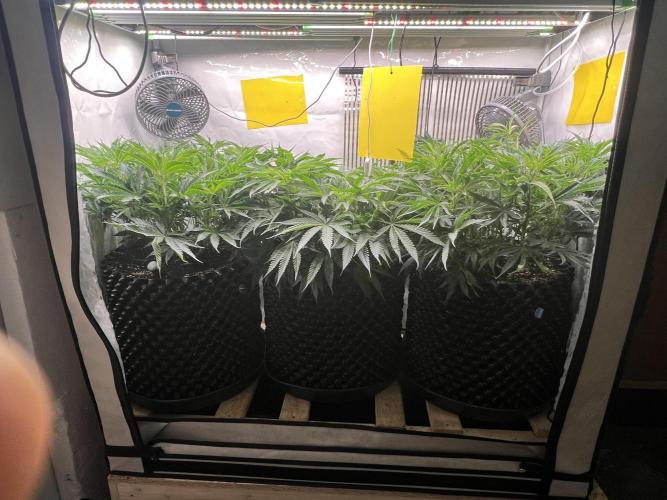
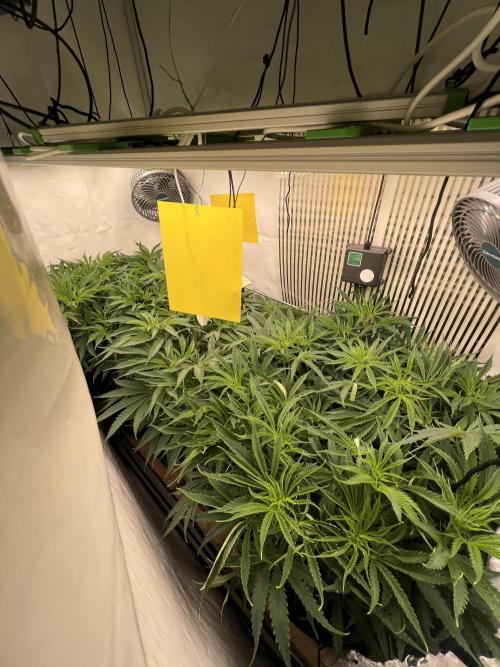
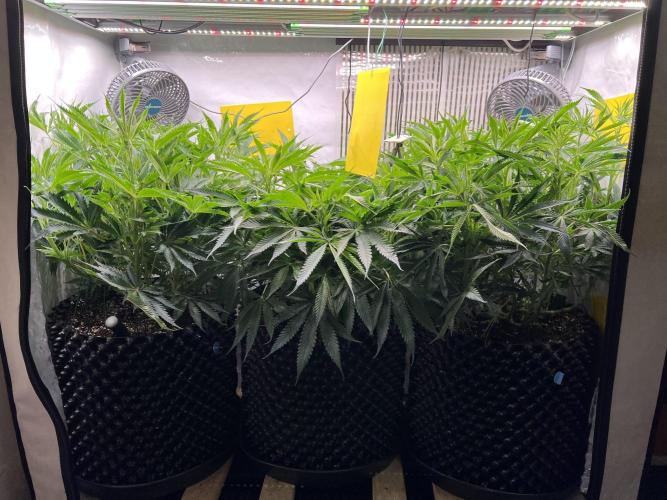
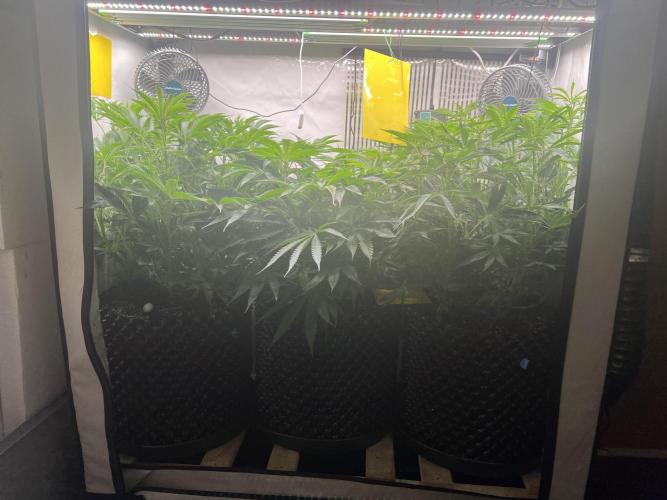
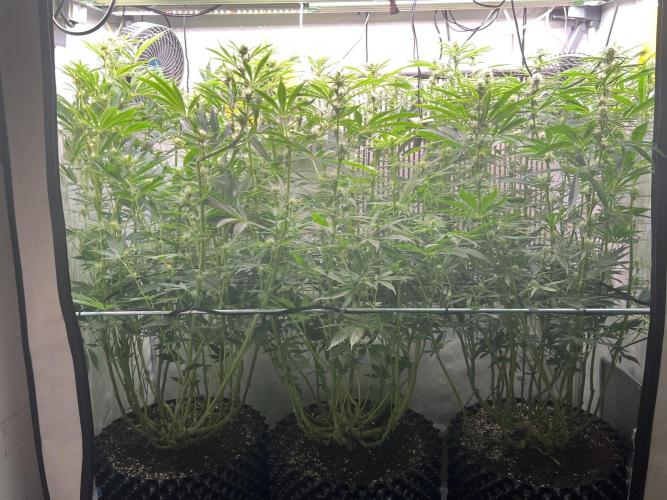
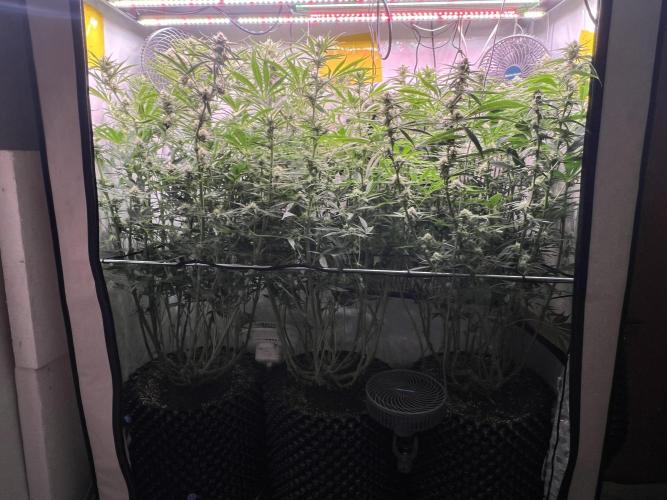
Unglaublich! ich musste die Lampe in den letzen Tagen insg. 15cm hocher stellen um die gewollten 30 cm Abstand einzuhalten. Den Unterschied sieht man auch deutlich auf den Bildern mit der Gelbtafel als Orientierungspunkt. Die Lampe ist mittlerweile auf 97% ca 900 ppfd - auch das CO2 wurde entsprechend auf 750-900 ppm erhöht. Da die Ladies sich augenscheinlich sehr über den "Compost-Tea" gefreut haben, habe ich erneut einen aufgesetzt. Das bekannte Rezept von Tag 2 wurde verwendet.
--------------------------------------------------------------------------------------------------------------------------------------------
Day 56 – Grow
Day 2 – Flowering Phase:
A significant amount of time has passed, and the plants have recovered from stress and training, except for a few yellow leaf tips.
On the last day of the vegetative phase, a compost tea was prepared. For 25 liters, 125 ml of organic molasses, 250 ml of soil conditioner, 50 g of mycorrhiza granules, 2 liters of worm castings, and 75 g of bone meal were used. The mixture was aerated with oxygen for 24 hours. The alleged benefits of this tea are widely described online.
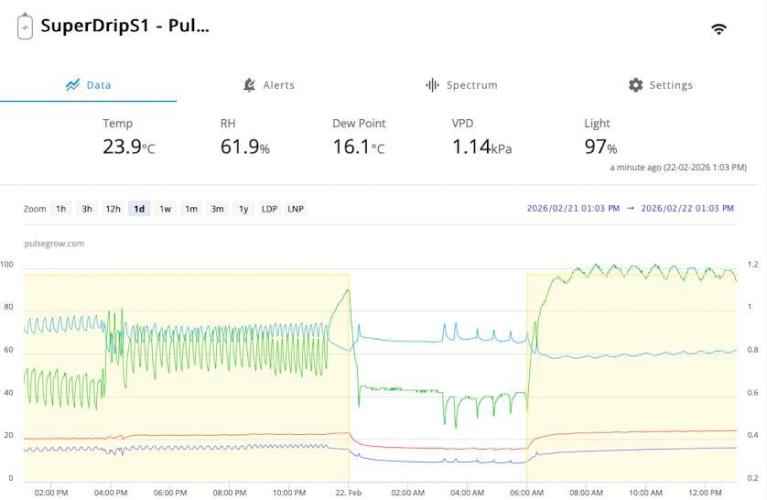
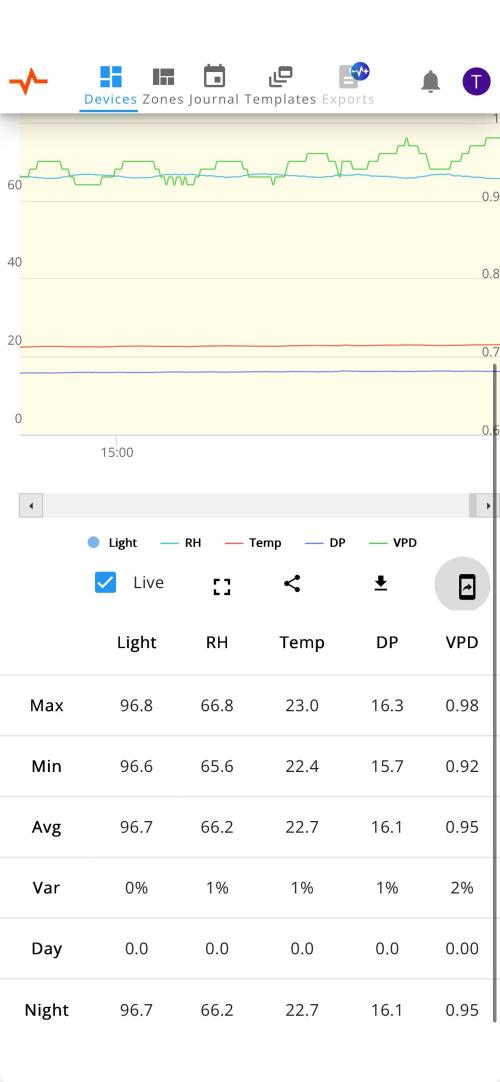
VPD will be maintained between 1.0 and 1.2 during the early flowering weeks. This currently corresponds to approximately 24 °C at 61% relative humidity. CO₂ levels are kept between 650 and 850 ppm. During the stretch phase, light intensity is gradually increased to 100% (currently 90%, approximately 850 PPFD).
Since heating rods are installed inside the tent, a SCROG net will not be used.
Day 59 – Grow
Day 5 – Flowering Phase:
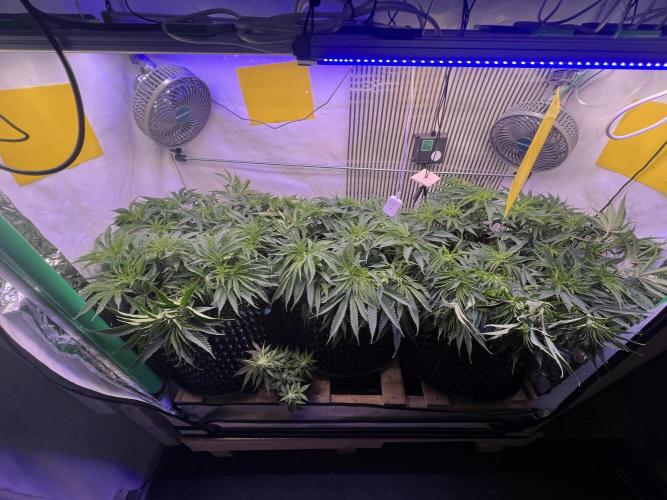
Incredible! Over the past few days, I had to raise the lamp by a total of 15 cm to maintain the desired 30 cm distance. The difference is also clearly visible in the photos, using the yellow sticky trap as a reference point. The lamp is now set to 97% (approximately 900 PPFD), and CO₂ has been increased accordingly to 750–900 ppm.
Since the plants appeared to respond very positively to the compost tea, another batch has been prepared. The same recipe used on day 2 was applied again.
4 likes
comments
Share
Used techniques
Main-Lining
Technique
10
Week 10. Flowering
8mo ago
1/10
65 cm
Height
12 hrs
Light Schedule
24 °C
Day Air Temp
6.3
pH
Normal
Smell
60 %
Air Humidity
12 °C
Solution Temp
0 °C
Substrate Temp
19 °C
Night Air Temp
40.01 liters
Pot Size
30 cm
Lamp Distance
850 PPM
CO₂ Level
Nutrients 3
Magnesium
1.5 mll
Calcium
1.5 mll
Bio-Heaven
3 mll
LegacyGrow Day 62 – Grow
Day 8 – Flowering Phase:
At the beginning of the second flowering week, the stretch phase is gradually slowing down. During yesterday’s watering with the compost tea, I forgot to adjust the pH value of the liquid. I only noticed this after about half of the pot had already been watered. However, today the plants show no visible reaction to any potential pH imbalance in the substrate.
At the end of this week, one final but thorough defoliation is planned. After that, the grow should run almost on autopilot toward the finish.
2 likes
comments
Share
11
Week 11. Flowering
7mo ago
1/6
75 cm
Height
12 hrs
Light Schedule
24 °C
Day Air Temp
6.3
pH
Strong
Smell
65 %
Air Humidity
12 °C
Solution Temp
0 °C
Substrate Temp
19 °C
Night Air Temp
40 liters
Pot Size
20 cm
Lamp Distance
850 PPM
CO₂ Level
Nutrients 3
Magnesium
1.5 mll
Calcium
1.5 mll
Bio-Heaven
3 mll
LegacyGrow Englisch version below
Tag 70 Grow:
Tag 15 Blüte:
Bis auf die RLF% läuft alles wie geplant. Nach dem Lollipopping schafft es der Entfeuchter nicht mehr unter 65% - entsprechend wurde die Umluft durch einen zusätzlichen Ventilator ergänzt.
Alle 2 Gießvorgänge bekommen die Ladies Composttea und jeden ersten Vorgang Wasser mit etwas angepasster Nährlösung.
Die Trauermücken breiten sich auch stark aus - Gestern wurden mit dem Tea auch Nemathoden gegossen - Zwar sind die Tierchen in der Blüte nicht mehr sooo schlimm (Vorallem für junge Pflanzen mit schwachen Wurzeln gefährlich) - aber Wer will schon Fliegen im Endprodukt.
Wie im Video zu sehen ist - habe ich die Stärksten Triebe der linken Pflanze ge-supercropped - der Strech hat gewonnen - das Zelt ist ausgereizt.
--------------------------------------------------------------------------------------------------------------------------------------------
Day 70 – Grow
Day 15 – Flowering Phase:
Except for relative humidity, everything is running as planned. After the lollipopping, the dehumidifier is no longer able to reduce RH below 65%, so air circulation was increased by adding another fan.
Every second watering the plants receive compost tea, while the first watering in the cycle is plain water with a slightly adjusted nutrient solution.
Fungus gnats have also been spreading significantly. Yesterday, nematodes were applied together with the tea. While these insects are not as problematic during the flowering stage (they are mainly dangerous for young plants with weak roots), no one wants flies in the final product.
As can be seen in the video, the strongest shoots of the left plant were supercropped. The stretch has won — the tent space has been fully utilized.
3 likes
2 comments
Share
Used techniques
Main-Lining
Technique
Defoliation
Technique
12
Week 12. Flowering
7mo ago
1/5
80 cm
Height
12 hrs
Light Schedule
24 °C
Day Air Temp
6.3
pH
Strong
Smell
65 %
Air Humidity
12 °C
Solution Temp
0 °C
Substrate Temp
19 °C
Night Air Temp
40 liters
Pot Size
10 cm
Lamp Distance
850 PPM
CO₂ Level
Nutrients 3
Magnesium
1.5 mll
Calcium
1.5 mll
Bio-Heaven
3 mll
LegacyGrow Englisch version below
Day 78 – Grow
Day 23 – Flowering Phase:
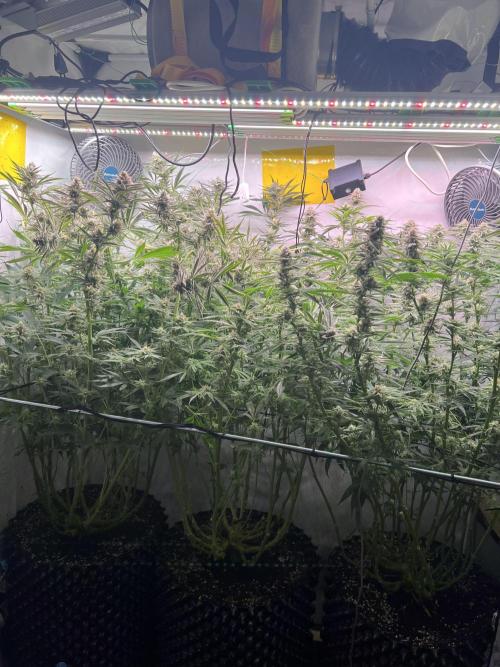
Watering is carried out regularly, and active measures are being taken against fungus gnats (neem oil and regular applications of nematodes), unfortunately with limited success so far. No other pests are visible.
During watering, leaves that block light from the buds or shade lower shoots are selectively removed.
2 likes
2 comments
Share
Used techniques
ScrOG
Technique
13
Week 13. Flowering
7mo ago
1/8
80 cm
Height
12 hrs
Light Schedule
24 °C
Day Air Temp
6.3
pH
Strong
Smell
65 %
Air Humidity
12 °C
Solution Temp
0 °C
Substrate Temp
19 °C
Night Air Temp
40 liters
Pot Size
10 cm
Lamp Distance
850 PPM
CO₂ Level
Nutrients 3
Magnesium
1.5 mll
Calcium
1.5 mll
Bio-Heaven
3 mll
LegacyGrow Tag 84 Grow:
Tag 29 Flowering:
Fungus gnats have decreased significantly. The dehumidifier is doing its best, but unfortunately it cannot reduce relative humidity below 62%, which is slightly too high for the flowering stage. Therefore, air circulation has been increased further, and two additional fans have been installed at soil level.
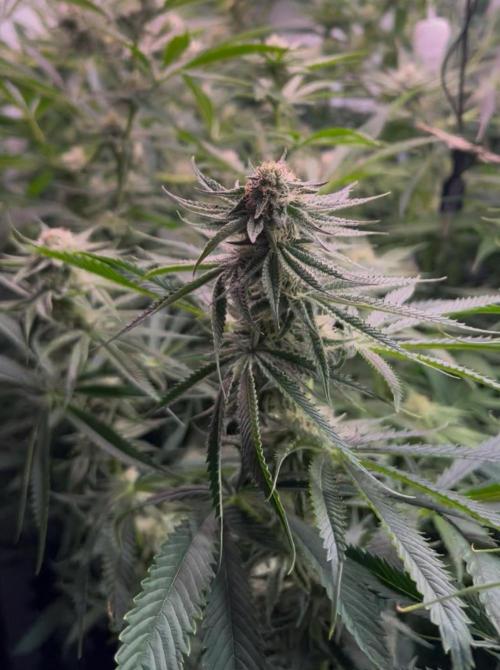
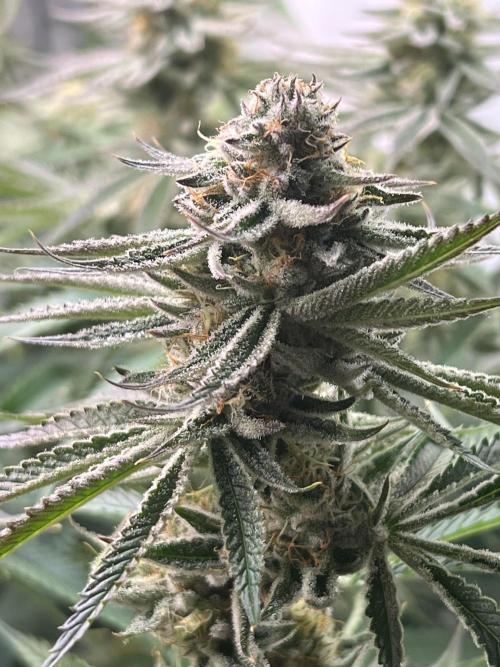
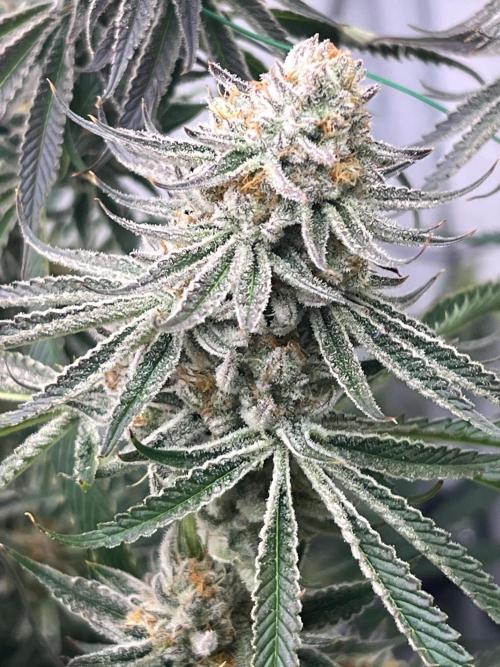
Every second watering consists of a compost tea brewed for 24 hours. The aroma is very sweet and fruity, with slight gassy notes. Trichome production is quite impressive.
Every one to two days, a few leaves are selectively removed that cast shade on the top buds — never more than 5–10 leaves at a time.
likes
1 comment
Share
14
Week 14. Flowering
7mo ago
1/11
80 cm
Height
12 hrs
Light Schedule
24 °C
Day Air Temp
6.3
pH
Strong
Smell
65 %
Air Humidity
12 °C
Solution Temp
0 °C
Substrate Temp
19 °C
Night Air Temp
40 liters
Pot Size
10 cm
Lamp Distance
850 PPM
CO₂ Level
Nutrients 2
Magnesium
1.5 mll
Calcium
1.5 mll
LegacyGrow English version below
Tag 91Grow:
Tag 36 Blüte:
Heute wurden erneut 25L gegossen mit weniger als 1L Drainage - Sie haben Durst! Wie immer waren nur ca 1,5ml Mag und Calc /L im 6,5PH Wasser. Ab ca Mitte der Blüte hebe ich den PH leicht an um die Nährstoffaufnahme von z.B. Mag zu fördern.
Der Geruch ist extrem Süßlich! Vor allem beim Entfernen größerer Blätter haut einen der Geruch förmlich um.
Sonst läuft der Grow recht Ereignislos weiter - es wird begonnen sich auf die Ernte vorzubereiten. Der Nachwuchs ist bereits im Anzuchtzelt.
Tag 93 Groow:
Tag 38 Blüte:
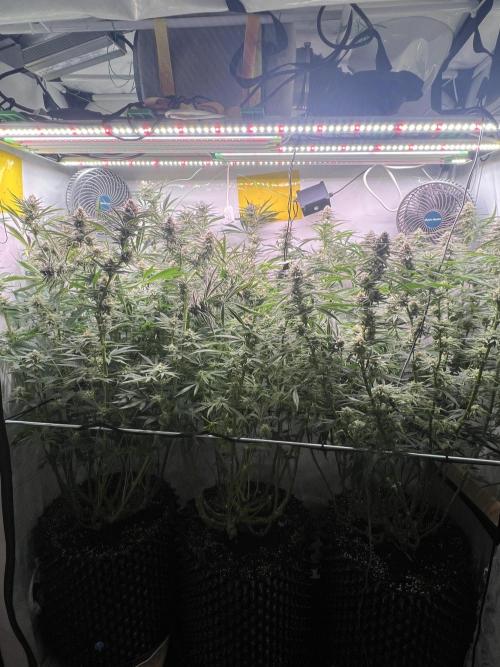
Heute gab es nochmal ein letztes HST in Form von Abschnitt vieler Laubblätter um mehr Licht an die Blüten in der Mitte zu bekommen. Der Unterschied ist deutlich zu sehen! Das soll auch diese Blüten bei der Reifung unterstützen.
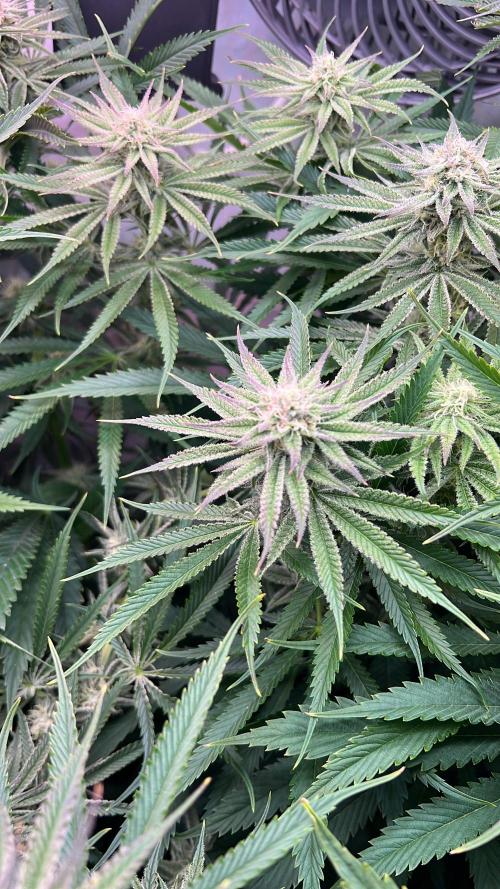
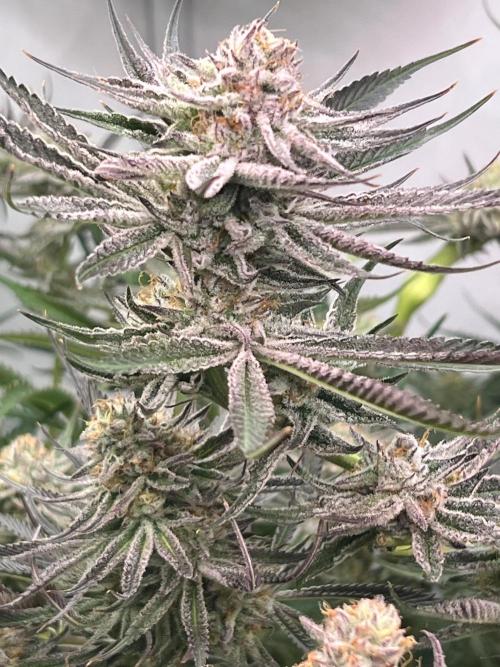
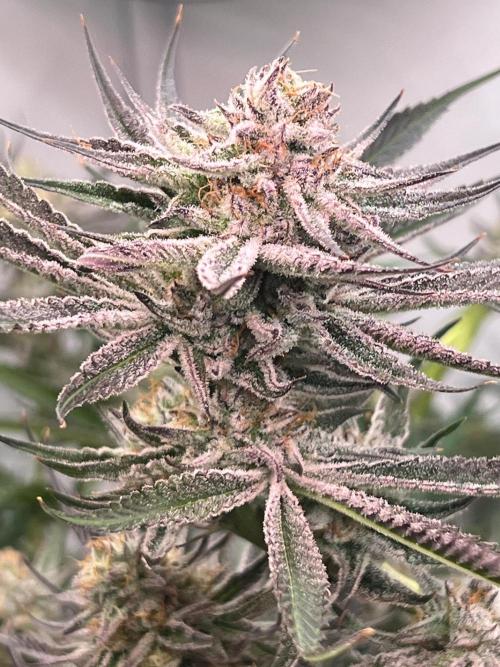
Man kann erkennen, das der Herbst langsam einzieht - schöne pinke Verfärbungen sind jetzt sichtbar.
--------------------------------------------------------------------------------------------------------------------------------------------
Day 91 – Grow
Day 36 – Flowering Phase:
Today, another 25 liters were applied, with less than 1 liter of runoff — they are thirsty. As usual, the water contained only about 1.5 ml/L of Cal-Mag at a pH of 6.5. From around mid-flowering onward, the pH is slightly increased to support nutrient uptake, for example magnesium.
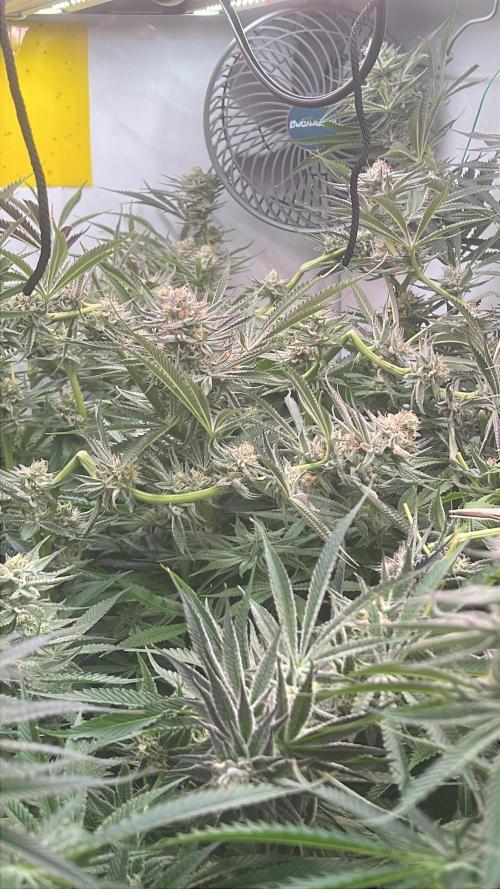
The smell is extremely sweet — especially when removing larger leaves, the aroma is very intense.
Otherwise, the grow is progressing without major events. Preparations for harvest have begun, and the next generation is already in the propagation tent.
Day 93 – Grow
Day 38 – Flowering Phase:
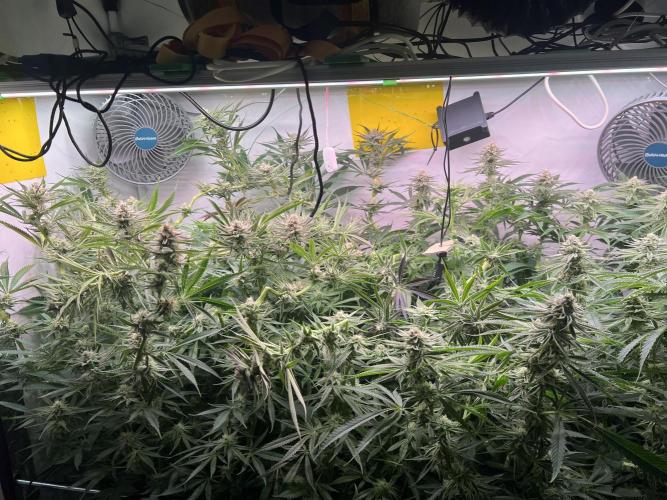
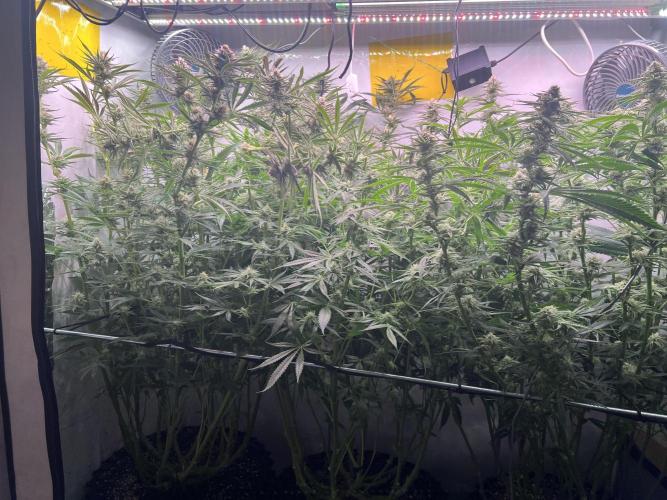
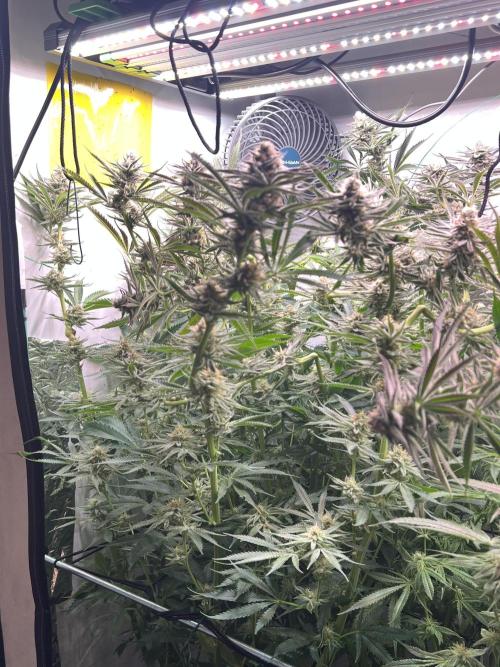
Today, a final HST was performed in the form of removing many fan leaves to allow more light to reach the buds in the middle. The difference is clearly visible. This should also support the maturation of these buds.
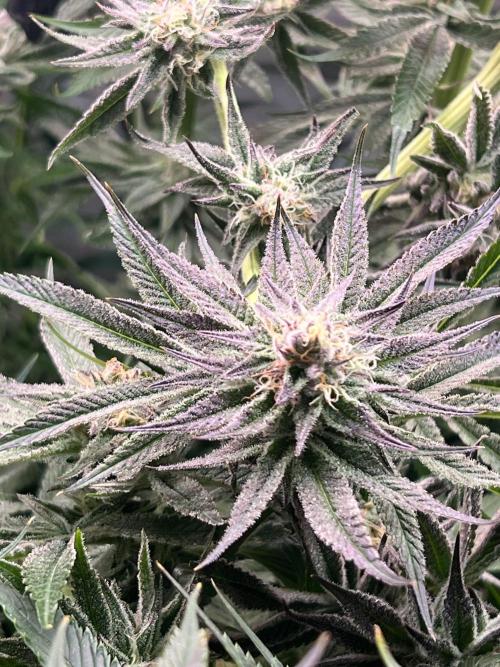
It is noticeable that “autumn” is slowly setting in — beautiful pink colorations are now becoming visible.