


Likes
Comments
Share

@sunshinegroww
Follow
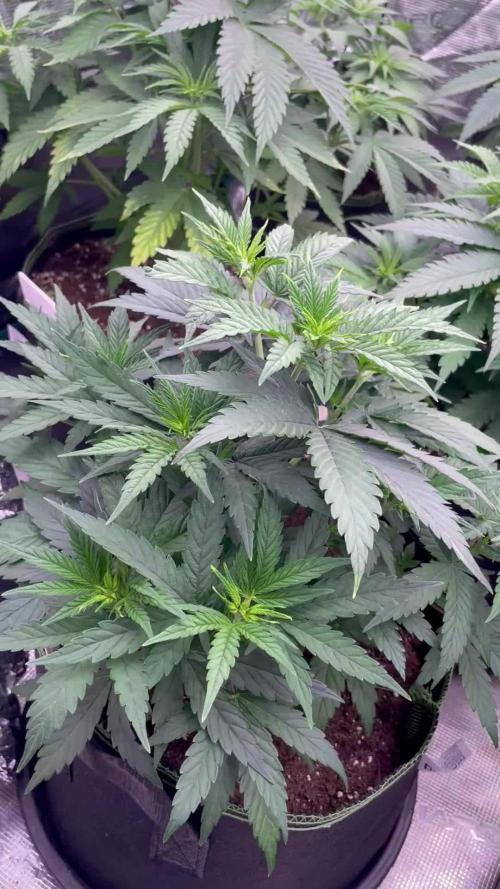
Looking great bushy and happy I will give her few more says and switch to 12/12 as she is in super happy stage,she had nothing but feed and water

Likes
21
Share


@darb35
Follow
Day 43 - Both girls are doing well, one stopped growing tall at around 68 cm, other one is still growing.
Hope this week they will start getting frosty (:

Likes
41
Share

@German_GrowLab
Follow
Einen wunderschönen guten Tag, liebe Grow-Community, und herzlich willkommen zur Woche 11 – Season Vol. 2 meines kleinen Outdoor-Projekts 2026.
Diese Woche versuche ich, es mal so semi-lang zu halten.
Die Pflanzen stehen trotz anhaltender Hitzewelle weiterhin wie eine Eins. 😁 Man merkt allerdings an der etwas niedrigeren Blattspannung, gerade zur Mittagszeit, wenn es teilweise knackige 40 °C sind, dass ihnen doch etwas warm ist und die Luftfeuchtigkeit etwas höher sein könnte. Aber so ist das harte Leben in der Wildnis.😅
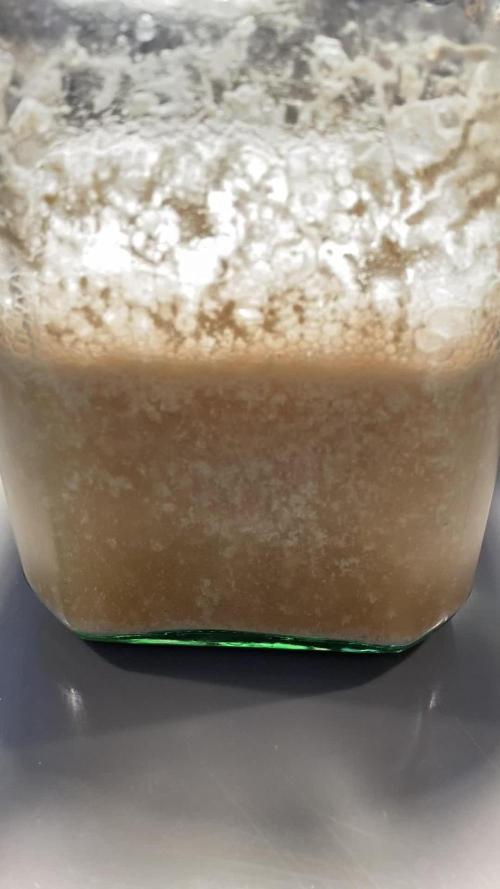
Des Weiteren habe ich wieder etwas in meiner KNF-Küche gezaubert, und zwar einen WSC (Water Soluble Calcium). Hierbei werden Eierschalen mit Apfelessig vermengt. Die Essigsäure löst über 7–10 Tage das Calcium aus den Eierschalen und wandelt es in pflanzenverfügbares Calciumacetat um. Das wird uns in der Blüte von Nutzen sein, wenn die Damen einen höheren Calciumbedarf haben. Durch das Wollastonit und die Austernschalen in der Erde habe ich zwar bereits mehrere Calciumquellen, allerdings decken diese eher den Grundbedarf und nicht den erhöhten Bedarf während der Blüte. Die Reaktion ist abgeschlossen, sobald sich keine Blasen mehr bilden. Ich bin mal gespannt, wie der Outcome am Ende ausfällt.
Um die Kleinen weiterhin zu stärken und für den späteren Herbst zu rüsten, bekommen sie weiterhin einmal pro Woche eine Monosilikat-Gabe. Zusätzlich gibt es alle zwei Wochen ein Foliar, bestehend aus Fulvic Acid, Humic Acid, Bittersalz und etwas Siapton. Damit sollten sie weiterhin bestens versorgt sein.
Wenn die Sonnenstunden ähnlich sind wie letztes Jahr, sollten die Kleinen Ende dieses Monats so langsam in die Blüte switchen. Dann beginnt die heiße Phase.💪
Nächstes Wochenende will ich die Ladys dann mal etwas ausdünnen und hier und da trainieren.
Bleibt also gespannt...
Soooo, das soll's für diese Woche gewesen sein. Nächste Woche soll es wieder eine gottlose Hitzewelle geben, also passt bitte auf euch und eure Lieben auf.
Euch ein schönes Wochenende und einen guten Start in die nächste Woche! 😊
Peace!



Likes
17
Share


@Loserofthemonth
Follow
Day 91-92 BK. WHITE DEATH decended on her neighbors. Mold showed up on one bud in 2 of the other plants in this tent, not on this plant but in plants on either side. Got some great advice from a grower that goes by m0use and thanks so much I followed your advice and am seeing no mold or damage. I removed the top that had the mold growing 2 inches below the affected spot there was nothing under or behind it or anywhere else that I could see so I must have caught it very early. Next I mixed 2 cups of spring water with 2 ounces of 3% hydrogen peroxide, then misted the whole grow until I had used it all. This was done at lights out I placed a fan in front of the tent opened the tent on all sides and let the fan dry her off before the lights came back on. When the lights came back on there were a few places at the back of the tent where I used a paper towel to dab some wet leaves then blow dried with no heat to be sure that section was dry, the blow dry was only a minute or 2. It worked plants looking great checked trichomes and they are all there and clear so mission accomplished. Again thanks to m0use for the help and I plan to start bud washing between chop and dry on all grows, I tried to reply to all answers on my grow questions but once again the techno caveman doesn't know how to do something simple. Copy and pasteing this on the other diaries... Yep that I can do. Ok happiness flush continues and starting to see some cannibal fade.
Day 97 BK. She is done. Finishing a week early probably due to never topping her and she never experienced transplant shock since she germinated in this pot..


Likes
8
Share


@Easygrower
Follow
Hello growers day 21 in the actual garden with blue monster it’s been an easy week not really much too do besides keeping her wet been very hot this week but she’s took it well only giving bio grow/bio bloom just waiting for the first pistols to show I am loving growing outside wish uk has weather like this all the time until next week be safe and happy growing ✌️

Likes
20
Share


@DreamIT
Follow
-Sponsored by:
🎆ANESIA SEEDS🎆-💡VIPARSPECTRA💡-💐GREEN BUZZ LIQUIDS💐-🛠️WEDRYER🛠️
🏁18/6 hello growerz, with today I start the resumption of diaries on GD. I have 13 new genetics in germination and as many diaries. I start by putting the seeds in water for 24 hours, after a day I will put the two seeds in two different jiffies, one with humic acid from greenhouseseeds and the other with just plain water. Get comfortable and follow the updates 😉👋🦄
19/6 The seeds were divided and placed in two different jiffies, one with humic acid and one with water only.
21/6 after another 24 hours in the dark the jiffies were moved under the lamp. let's start the dances!
23/6 nothing to report
24/6 still nothing to report
25/6 still no news
30/6 it was a really long wait, but the second one was finally born, just when I had lost hope. yeeeeee
__________________________________________
Personal advertising (contains affiliate links)
__________________________________________
🦄 The varieties of Anesia seeds all have an extremely high content of THC and cannabinoids. They were bred specifically for the effect and therefore find wide applications for medical purposes as well.
✅https://bit.ly/Anesiaseeds_
__________________________________________
Did you know that Green Buzz Liquids fertilizers are 100% vegan? A complete line of products ready to give the best to each of your plants! Visit the site and see my journals to see how they work 🦄
🤯 And with the code "dreami t" you will immediately receive a 15% discount on your purchases
✅https: //bit.ly/GreenBuzzLiquidsPro
__________________________________________
👀 Are you looking for a good lamp to start with? 👀
🌞Viparspectra has something more than the others, take a look at their site.
⏩ Use "GDVIP" for an extra discount on amazon or "DREAMIT3" for an extra 5 %% discount
👀 Search for it on Amazon
✅Amazon USA: https://amzn.to/30xSTVq
✅Amazon Canada: https://amzn.to/38udUVe
✅Viparspectra UE: bit.ly/ViparspectraUE
✅Viparspectra USA: bit.ly/ViparspectraUS
______________________________________________
🌈 Tired of blowing on your weed hoping it dries quickly? Check out the Wedryer website! You will find a well-made accessory that will help your weed dry in just 8-10 days without the annoying risk of finding mold or other annoyances! (no affiliate links)
✅https: //bit.ly/Wedryer_
______________________________________________
📷🥇Follow the best photos on Instagram 🥇📷
https://www.instagram.com/dreamit420/
Backup
https://www.instagram.com/dreamit4200/
🔻🔻Leave a comment with your opinion if you pass by here🔻🔻
🤟🦄💚 Thank you and good growth 💚🦄🤟

Processing
Likes
Comments
Share


@nbhnc
Follow
Fantastic internode development. Vigorous growth of fan leaves. Was forced to defoliate again. No signs of deficiencies.

Processing
Likes
3
Share


@DBanned
Follow
July 24, 2020
The phenotypes have been stretching as normal.
Some of them already passed the 30 in mark.
Some bottom leaves are turning yellow but we think it is normal for lower leaves to die.
We not only gave the plants Gaia green bloom amendments but also, we fertilized the plants with some Alaska morbloom 0-10-10. (Once every three weeks)
Water intake has been increasing. Now the plants are being water every other day. 10-14 liters for 10 plants.
Happy grow🤤🌱🌱🌱🌱!!!!
Likes
17
Share


@Naujas
Follow
This is my second growth in a suitcase, I got 30 grams of dry flowers from the first growth, but this growth together with FastBuds is obviously much better than the first one :) although the girl's leaves burn from the light, which is only 10-15 cm from the flowers, but the girl copes with it perfectly :) good luck to everyone.
Likes
Comments
Share


@Fat_Olsh_Farms
Follow
Came out looking beautiful purple and yielded alot. Will def be running again.

Likes
11
Share


@GTools
Follow
Final days before the cut! I'm starving the plant, by adding no nutrients. The chlorophyll in the remaining fan leaves has substantially dropped. The glitterying trichomes are densely packed and mostly cloudy.
By the beginning of next week, will be the day
Likes
27
Share


@LSchnabel
Follow
What an explosion in growth for week 5. Every day this plant is growing like crazy.
Had to trim up some lower foliage to allow better airflow. Tied down some more branches to even the canopy especially the main stem.
Rubbing the stem gives an amazing smell and can’t wait till it matures fully. Looking like this plant will be a great yield of everything keeps rocking like it has.
I’m feeding a worm castings compost tea spiked with Cultured Biologix EZ Tea Bloom to feed the microbes in the soil that are essential for trichome production. Also started feeding silicon to strengthen the stems and Trichomes.
Week 6 is going to be nuts with growth I can already tell.
Likes
19
Share


@adam_pawloski87
Follow
What a fun run this was ! These Ogreberrys finished up from 81 days to 102 days with nice hints of gassy , sour purple , sweetness and glistening with frost! These ladies will cure up for a month an will be ready to test out ! So much fun , I highly recommend this strain if your looking for some oooy gooohy resiny grape smelling nugs !

Processing
Likes
8
Share


Likes
4
Share


@HowtoBubatz
Follow
This plant is thriving in its 3rd week of vegetation—it’s growing very healthy and strong!🌱
I’ve applied some Light Stress Training (LST) to ensure all parts of the plant are receiving equal light exposure, and it’s responding beautifully.
Midway through the week, I noticed the first signs of flowering!
This plant is transitioning into bloom faster than expected, which is really exciting. It seems eager to show what it’s capable of.
Now, I’m looking forward to seeing how it handles the stretch phase—I can’t wait to watch it shoot up and develop further.😊
Processing
Likes
22
Share


@Silverback_Guerilla
Follow
12/31:
Two of them are doing well, but the 3rd is doomed I think. Glad I started an extra #11!
Today was the first day in which I fed them some Big Bloom and Boomerang along with humic acid, pH'd to 6.1.
1/3:
I've been letting them dry out a bit for the last two days. They've got roots coming out the bottoms now...I'll probably transplant them into 5 gallon fabric pots tomorrow or the next day.
I ordered a 4' 180w tube light with 578 LEDs..it has a 360 degree beam with 3000k and a bunch of 660nm. It's waterproof, so no worries about keeping it beneath my canopy to illuminate the lower branches and hopefully increase the density of those buds that never get much top-lighting.
Today, I mounted my two new 24w UVA LED lights (395-405nm) to my frame. I'll run them 6 hours a day from the time I put the plants into my closet, until harvest. It is my understanding that exposure to UVA, particularly during the vegetative stage, triggers many different plant defense hormones, which speed growth and can increase heartiness to withstand constant exposure to UVB without suffering as much cellular damage as usual.
I'm also ordering a 2' Solacure FlowerPower UVB (285nm-310nm) next week to use during flowering to stress the plants and increase trichome production.
1/4:
I did a few foliar feedings with big bloom and fulvic acid today.
1/5:
Weird...the one I thought would die, still hasn't. Her second set of leaves died, but the third is starting to grow?
Transplanting day. I dusted their roots with magic dust and transplanted them into 5 gallon pots today. I had some excellent compost with biochar and myco that I mixed into their soil, too. I watered them in with about 2 quarts each of their first taste of full strength veg nutes, plus mycorrhizal fungi, trichoderma, beneficial bacteria, and humic acid, then I sprayed them with biotabs boomboom spray when finished. The were moved into the closet under the quantum boards, UVA's, and a pair of Miracle LED blue bulbs. I'll start adding far-red spectra to the equation in the next few days.

Likes
18
Share


@prebiancagrower
Follow
...and here I am, at the end of this fantastic journey, with so much knowledge I have got in this process, including regarding myself! Fantastic!!
I harvested one week early because I got some issues with mold!
Thank you people for helping me when I got into some trouble hahaha
Love you all! :-)
Peace and freedom!

Likes
82
Share


@BigBadLion
Follow
Heeeey guys! 👋
Sorry for the very late update! I had so many things going on but now I can finally update the diary!
This is the last week before harvest and I kept an eye on my plants pretty much all the time! When I started to notice more amber trichomes were appearing I knew that my babies were finally ready! I just wanted a small amount of CBN, so probably I reached a good balance! Besides that I believe everything was quite relaxing and simple this week. Their smell was wonderful! I also trimmed by babies almost everyday, I kept removing the most ugly leaves to allow some of the lower buds to develop a little more this final week!
I stopped watering them 4 days before harvest and then I gave them one day of total darkness.
I hope you all enjoy the videos and photos!
Thanks!
Likes
19
Share


@Ieiogrow94
Follow
È stato un piacere coltivare questa genetica fantastica peccato per aver perso strain 2 causa ermafroditismo!!
Molto profumata e resinosa asciutta 12g ma in un vaso da 6,5l penso sia un ottimo risultato anche perchè i fiori sono compatti!!
Grazie @Barneys per la collaborazione e grazie a tutti voi per il supporto!
Ne vedremo delle belle!!
❤️🔥🌲

Likes
2
Share


@Shefman93
Follow
Buds are progressing....but not fat like my other grows, hopefully it will swell up and pack on load in the last week's of the grow.
