




@zenderman
Follow
13/3/26.day 36th from shedding the shell,beginning week of 6. was watered -3 liters water with 12 ml TERRA FLORES.
16/3/26 watered with 5l water, then big bud(2ml/1l).
19/3/26 watered 3l water with 10 ml TERRA FLORES.
This time I decided to grow it without training. I think it will be better for this indica-dominant variety. I hope it doesn't lead to supercropping.
I apply as much light as possible to prevent it from growing upwards.
P.S.this lady looks like a real bear!!!






@AustinRon
Follow
TH 1Q2025 - Week 4 - Bolt I
(ON Haze X Original Haze) X Northern Lights #2
“Todd’s Haze”
Objective
- 8 Female Plants, Topped ONCE @ Flip, 12” when topped
- Modified Sea of Green
Seeds Wet: 1139PM, 28.2.2025
Germinated: 2.3.2025
Flip: 21.3.2025
Harvest: 77 Days, DATE: 6.6.2025
_________________________________________
Weeks Summary:
- Photos indicate we’ve been overdriving our plants. Lime - Yellow Green, Stressed lowers. NOT Relaxed.
- Tue - EOW We’ll run moderate light, Low-Moderate Feed (EC: 1.1)
__
Fri Mar 28, 2025
TH 1Q25 8:B:1:1
All plants have lifted, with minor praying at least.

Applied Remaining Gallon of Root Steering solution. TODAY we switch to Rooted Leaf Medium @ 1.3 mS/cm.
At this point the Coco should be WELL BUFFERED with CalMag - Reducing Calcium to normal level, we should be able to run w/ NORMAL Calcium levels, no boots. We’ll see
We need
- more nitrogen evident in the plants
- to get from 351 - 750 µMol/m2/s
- To ramp EC from 1.2 - 1.6
When the girls are receptive . . .
__
Sat Mar 29, 2025
TH 1Q25 9:B:1:2

PRE-CUT Foliar of MOMs (15 Min before taking Cuts): [ 1, pt]
- Cal Mag Fuel: [ 2.5, ml]
- Lush Green: [ 0.625, ml]
- Resin Bloom: [ 2.5, ml]
Wrap Label below Top Node
Top to Node 3, Cut plunged in water
- [x] 8 Cuts, “Todd’s Haze”
- [x] 2 Cuts, Lemon Jeffery
Dip Tray
- Rooting Powder, Aloe Gel
- Top + 2 Nodes
Cuts to Rooting Cubes
- Cut 45° just below 2nd Node
- Gently Abrade cuticle of stem below 2nd Node
- Dip END in
- Rooting Powder
- Beauveria Bassiana
- Fresh Aloe Vera Gel
- Afix IN Prepped Rooting Cube - 1/4” from BOTTOM NOT THROUGH
- Place in Rooting Tray, Cover
“Cut Foliar Solution”
When All cuts in Dome, Foliar (1 pt) w/
- PCAL 1660: [ .25, g]
- KelPak: [ 1, ml]
- CalMag Fuel: [ 1, ml] # Acidification of PCAL 1660
- Photosynthesis Plus: [ .75, ml]
DAILY UNTIL ROOTED -
- [x] Verify Rooting Cubes are adequately hydrated
- [x] Light Foliar with Cut Solution
Take Cuts WHEN All Phenos are WELL into 6 Nodes
- When ALL Cultivars have At Least 6 Nodes:
- Top to 3
- Use Crown as Cut for Labeled Pheno
- [x] Prep Cut Dome
- [x] Pull Seedling Mat (78°F) for use UNDER Cut Dome
- [x] Rooting Prep
- [x] Rooting Powder
- [x] Beauveria Bassiana
- [x] FRESH Aloe Vera Gel
- [x] Root Riot Cubes MOISTENED / NOT WET
Cut Spray Solution
- [x] KelPak: [ 4, ml, gal]
- [x] PCAL1660, [ 2, g, gal]
- [x] Photosynthesis Plus, [ 6, ml, gal]
- [x] Check All Pots for Emergent Roots
Once we’ve roots at EACH pot - Switch to Normal Fertigation . . .
Fertigation: 1 Gal, EC: 1.2-3
- [x] Primer A&B: [ 5, ml]
- [x] CalMag Fuel: [ 2.5, ml]
- [x] Silica Skin: [ 2.5, ml]
- [x] Lush Green: [ 2, ml]
- [x] Root Anchor: [ 2, ml]
- [x] Peak Bloom: [ 2, ml]
- [x] Photosynthesis Plus: [ 6, ml]

__
Sun Mar 30, 2025
TH 1Q25 10:B:1:3
Fertigation: 1 Gal, EC: 1.2-3
- [x] Primer A&B: [ 5, ml]
- [x] CalMag Fuel: [ 2.5, ml]
- [x] Silica Skin: [ 2.5, ml]
- [x] Lush Green: [ 2, ml]
- [x] Root Anchor: [ 2, ml]
- [x] Peak Bloom: [ 2, ml]
- [x] Photosynthesis Plus: [ 6, ml]
- [x] TM-7 (µNutrients): [ 0.5, tsp] # Teabag Style Infusion

__
Mon Mar 31, 2025
TH 1Q25 11:B:1:4
Fertigation: 1 Gal, EC: 1.3
- [x] Primer A&B: [ 5, ml]
- [x] CalMag Fuel: [ 2.5, ml]
- [x] Silica Skin: [ 2.5, ml]
- [x] Lush Green: [ 2, ml]
- [x] Root Anchor: [ 2, ml]
- [x] Peak Bloom: [ 2, ml]
- [x] Photosynthesis Plus: [ 6, ml]
- [x] Quillaja 60 Powder: [scant]
IF Initial appearance at Lights on doesn’t suggest “Relaxed, supple,” we’ll run @ EC: 1.1 Until resolved . . .
__
Tue Apr 1, 2025
TH 1Q25 12:B:1:5
We’re Running Lowered Light. And reducing EC to 1.1 until we’ve plants that seem REALLY HAPPY.
Fertigation: 1 Gal, EC: 1.1
- [x] Primer A&B: [ 5, ml]
- [x] CalMag Fuel: [ 3.0, ml]
- [x] Silica Skin: [ 2, ml]
- [x] Lush Green: [ 2, ml]
- [x] Root Anchor: [ 2, ml]
- [x] Peak Bloom: [ 2, ml]
- [x] Photosynthesis Plus: [ 6, ml]
- [x] TM-7: [ 0.5, g]
- [x] Quillaja 60 Powder: [scant]
- [ ] 
__
Wed Apr 2, 2025
TH 1Q25 13:B:1:6
EC: 1.1
LightIntensity: [ 400, µMol/m2/s]
We only watered 220 / plant, about half of what we’ve been delivering.
Foliar: # 1 pt Spray Bottle @ Lights ON
- [x] Solar Rain: [ 2.5, ml]
- [x] Silica Skin: [ 2.5, ml]
- [x] Photosynthesis Plus: [ 1.5, ml]
- [x] Quillaja 60 Powder: [scant]
__
Thu Apr 3, 2025
TH 1Q25 14:B:1:7
EC: 1.3
LightIntensity: [ 401, µMol/m2/s]. # Staying low, waiting for plants to resolve
Fertigation: 1 Gal, EC: 1.3
- [x] Primer A&B: [ 5, ml]
- [x] CalMag Fuel: [ 2, ml]
- [x] Silica Skin: [ 2, ml]
- [x] Lush Green: [ 2, ml]
- [x] Root Anchor: [ 2, ml]
- [x] Peak Bloom: [ 2, ml]
- [x] Kelpak: [ 4, ml]
- [x] Photosynthesis Plus: [ 6, ml]
- [x] Quillaja 60 Powder: [scant]


@BudHaks
Follow
Apologies for not updating last week, I have just been really busy!
These last couple of weeks have been great - her growth is coming along very well. There are no signs of any deficiencies as of yet, what is your opinion!
In regards to defoliating and lollipopping - what growth would you suggest I get rid off?


@Afterglow
Follow
Всем привет!
Эта неделя началась с того, что мне пришлось удалить штук 20 веерных листьев, потому что растение перестало вмещаться в бокс. Правда к концу недели все вернулось на круги своя.
Полностью перешли на питание во время цветения.
Ко всему прочему начали болеть листья. Пока не разбирался что к чему, но есть подозрения на нехватку кальция и магния, так как я перестал их давать. Сегодня полил обильно Cal-Mag, посмотрим будет или не будет прогрессировать.
Стретч замедлился, но все еще продолжается. Даю 50000 люксов на верхушки растения, это примерно 90 ватт.
Та мутация о которой рассказывал ранее, где шишка начала расти прям из устья листа - все почти также, прогресса нет. Но вот обнаружилась другая мутация - полиплоидия.
Одни из основных веток, в самом начале, была не аккуратно загнута и получила легкий надлом. Этот самый надлом и запустил полиплоидную мутация. Я видел до этого, что листья и боковые ветки растут как-то не симметрично, но особого внимания не обращал. Единственное, что давно заметил, так интересный нарост у одной из больших веток - он какой-то продолговатый и сверху, а не по всему периметру. И вот вчера заметил, что одна из шишек растет не вверх, а вширь.
Стал внимательно изучать всю ветку и понял, что она сама по себе какая-то не симметричная: у основания ветки 3 листа, при чем расположены они на разных уровнях, шишки тоже растут не симметрично, ствол со странным не симметричным узором, а наверху шишка двойная. Кажется дальше шишка будет расширяться все больше и больше.
В общем каждый гровер рано или поздно сталкивается с какой-либо мутация. Я вот за раз столкнулся с двумя. Интересно будет понаблюдать что будет дальше.
Спасибо что заглянули.
Всем большой большой удачи и везения!




@GoodTimesOrganics
Follow
Hi liebe Community und Willkommen zurück im Sensi Seeds Wettbewerb! 💚
Chocolate Rainbow 🍫🌈
Nach der achten Wachstumswoche insgesamt ist nun die zweite Blütewoche auch schon wieder vorbei.
🌱(Wachstumstag 75 | 🌷Blüte Tag 21)
Da das Höhenwachstum bei diesem Strain generell moderat war, klingt der Stretch nun auch wie vermutet ab.
In der dritten Blütewoche hat die Pflzzear nur noch 3cm zugelegt und beginnt jetzt mit der vollen Blütenausbildung.
Die Trichome entwickeln sich allmählich und es sind schon schöne Harzansätze sichtbar.
Sie ist sehr schön Breit gefächert und dass auch mit super ausgeglichenen Höhenabständen.
Die Höhe liegt nun insgesamt bei knapp 82cm.
Alles ist nun auf Blüte getrimmt, diese Woche gab es nur Wasser.
Die Bedingungen im Growschrank sind für die Blütephase top!
Die Videos findet ihr nun auch bei Insta und YouTube!
________________________
🌡️ Temp: 26
🌚 Temp: 18°C bis 19°C
💧 RH: 58%
🌬️ VPD: 1,07 kPa
☀️ ppfd: 630 mpm




@Ultraviolet_
Follow
67 days since April 16th, 2026
We become aware at such times of man's wonderful ability to bring seemingly unrelated elements into harmonic balance, and receive a glimpse into a world where everything exists in conscious sympathetic attunement to everything else. When we listen to a piece of music that seems to strike a beautiful chord somewhere inside us, or view a painting that simply glows with harmonic awareness well executed, we probably do not spare much time to contemplate the wonderfully intricate combination of vibrations that our sensors make it possible for us to perceive. We tend to appreciate the relationship between the parts of something by an awareness of the harmony or dissonance of the whole. This ability enables us to say "what a beautiful house!" instead of "analysis has proven that this collection of building materials exhibits certain elements of harmonic proportion." While this ability to instinctively appreciate the beauty of true harmony has an important role to play in evolution, a more analytical understanding of the laws involved can be most useful. This is especially so if we wish to create works of art where each part exists in true harmony, not only with the other part of that particular whole, but with the universe within which the creator and the created exist.
Everything vibrates. From the most dense matter to the most subtle cosmic rays, everything which our senses allow our thoughts to become aware of, can be specified in terms of wavelength or frequency of vibration. These two terms define the same thing, but from different points of view.
The following are the approximate wavelengths of various energy carriers:
Cosmic rays 0.000,000,001 mm
Gamma rays 0.000,000,1 mm
X rays 0.000,500 mm
Ultraviolet rays 0.003 mm
Visible light 0.006 mm
Infrared 0.01 mm
Sound waves 1 meter
Radio waves 300 meters
Violet light 400 nm to 450 nm
Blue light 450 nm to 500 nm
Green light 500 nm to 570 nm
Yellow light 570 nm to 590 nm
Orange light 590 nm to 610 nm
Red light 610 to 700 nm
1 nanometer (nm) = 0.000,000,1 cm = 1/10,000,000 cm
If a guitar string is plucked and we hear a sound, it is not too difficult for the human mind to associate this sound with the vibration of the guitar string. With color it is quite different. It is difficult for us to conceive that the color of a substance is not an inherent property of the substance itself, but an indication picked up by our senses of that substance's ability to absorb or reflect the light which happens to be shining on it at that moment. Neither the matter nor the light is colored. What happens is that the brain learns to differentiate between the frequencies reflected or transmitted by the substance the eyes are focused on. The same thing happens with sound. When we say "Oh! Listen, they're playing my favorite song," what we really mean is: "My brain has stored within it a particular pattern of frequencies. I have compared the new information being received with this stored pattern and have deduced the answer that the two patterns are similar within certain specified tolerances." The 'pleasure' involved could have something to do with our running the pre-recorded pattern at the same time, in 'sympathy' with the new pattern as it is received.
The word sympathy describes very well our ability to appreciate color and sound. It also describes the reason behind certain elements of harmony. For instance, if a substance vibrating at 100 cycles per second (tone 1) is in the proximity of another substance vibrating at 200 cycles per second (tone 2), we could perceive, if we had the right equipment, a certain sympathetic relationship between the two.
We will see from this that there is a uniform doubling of the first tone seen in the second. At various points along the waves, the two are the same in amplitude. At other points, they are at opposite poles to each other. This doubled frequency has more points of similarity to the original than any other frequency except the original itself. If the equipment we had available for measuring these two frequencies was a soundboard amplifier and a pair of ears, then we would hear what would sound to us like one tone. If we had the opportunity to hear one at a time, we would hear that although they sound the same, one is higher in pitch than the other. This characteristic of 'the same but different in pitch', musicians have called the octave. Any two tones produced where one has exactly doubled the frequency of the other is called an octave. Speaking in ratios, an octave would appear then as the ratio 2:1 or 1:2, depending on whether we are talking of an octave up or down.
A single note produced by almost any instrument will contain more than one wavelength or frequency. It will have a dominant frequency, the wavelength of which we would call the note's 'fundamental' or 1st harmonic. It will also have a varying number of upper harmonics, gradually fading in intensity into infinity or silence.
Natural harmonics always have the same pattern of intervals between them. The interval between the 1st and 2nd harmonic is a perfect octave; between the 2nd and 3rd a perfect fifth; between the 3rd and 4th a perfect 4th; and so on, the intervals becoming smaller and smaller until they lose any relationship with the western 12 tone scale as it exists at the moment. Just as an octave has certain elements of sympathy with its fundamental, so some intervals have been noted to be more perfectly in sympathy with the fundamental than others. The ratio of the 'perfect 5th' or interval of 7 semitones, as it occurs in the harmonic series, is 3:2 or 2:3, while that of the 'perfect fourth" is 4:3 or 3:4. All the tones in the western 12 tone scale can be expressed in terms of the ratio between the upper tone and its fundamental. This would seem to be an ideal way of generating a scale from any given fundamental and several attempts have been made to do this, the Pythagorean system being probably the most well known. Although when working with a single tone instrument playing on its own, the Pythagorean formula works wonderfully well, if we had several instruments tuned this way together and asked them to play almost any western music, we would find that at times they sounded quite out of tune to each other.
The lack of flexibility of the various scale systems based on the harmonic series has led to what is known as the 'tempered' scale. This uses as its primary unit of interval the ratio of the octave or 2:1. It then proceeds to divide the interval between any fundamental and its upper octave into 12 smaller intervals by applying the ratio: two to the one-twelfth power, to one (21/12:1). This equals 1.059463094, so by multiplying any frequency by this number, we will obtain the tempered semitone next up from our fundamental. We will also find that any tone twelve semitones up from any other tone, in a scale generated in this way, will have exactly double the frequency.
If we took the note middle C on a piano and halved the wavelength, we would have the note C one octave above. If we halved this, we would have the C above, and so on. However, within about 6 octaves, we would find that although a 'sound' was being produced, no human ear could perceive it. If we kept on going, halving and producing upper octaves of our fundamental C, we would proceed through the infrared band, into the visible light spectrum. If we happened to be outside during the day, we would, for one octave only, see the note C with our eyes. The next octave above would already be in the ultraviolet band, and outside the eye's sensitivity range. If we can think of color as being an indication of a substance's vibratory rate or wavelength, we may begin to see a relationship that could exist between the color and sound spectrums.
The logical extension of what has so far been said is that there exists a scale in the color spectrum that corresponds exactly to the scale in the sound spectrum, each color tone being an octave of the equivalent note in the sound range.
This is not the end of the story but only the beginning. If we can for the moment accept that any wavelength in one band has upper and lower octave stretching out to infinity, then the next question is 'fine, but what shall we use as our fundamental? A particular color? A particular sound frequency?' The musicians among us will probably say 'A 440'. This means that the note A should vibrate at 440 Hertz, or 440 times per second. They would tell us that this is standard pitch has been adopted by most orchestras around the world; pianos are tuned to it, instruments are constructed to formulas based on it, and so to them it would probably seem the most appropriate place to begin. Some of these musicians may know of the battle that is still raging with regards to this being the standard, but few would know why A = 440 Hz was chosen except that it worked when it was set to be a suitable compromise between the many different pitches in use at the time.
432 Hz is said to be mathematically consistent with the patterns of the universe. Studies reveal that 432 Hz tuning vibrates with the universe’s golden mean PHI and unifies the properties of light, time, space, matter, gravity, and magnetism with biology, the DNA code, and consciousness. When our atoms and DNA start to resonate in harmony with the spiraling pattern of nature, our sense of connection to nature is said to be magnified.
Another interesting factor to consider is that the A=432 Hz tuning correlates with the color spectrum, while the A=440 Hz is off. Audiophiles have also stated that A = 432 Hz music seems to be non-local and can fill an entire room, whereas A=440 Hz can be perceived as directional or linear in sound propagation.
Once you adopt the idea that sound (or vibration in general) can have an equalizing and harmonizing effect (as well as a disturbing effect), the science of harmony can be applied to bring greater harmony into one's life or tune to specific energies. There is a form of absolute and relative harmony. Absolute harmony can, for example, be determined by the tuning of an instrument. The ancients tuned their instruments at an A of 432 Hz instead of 440 Hz - and for a good reason. There are plenty of music examples on the internet that you can listen to in order to establish the difference for yourself.
Attuning the instrument to 432 Hz results in a more relaxing sound, while 440 Hz slightly tenses up the body. This is because 440 Hz is out of tune with both macro and micro cosmos. On the contrary, 432 Hz is in tune. To give an example of how this is manifested microcosmically: our breath (0,3 Hz) and our pulse (1,2 Hz) relate to the frequency of the lower octave of an A of 432 Hz (108 Hz) as 1:360 and 1:90.
It is interesting to note that 432 Hz was the standard pitch of many old instruments and that it was only recently (19th and 20th century) the standard pitch was increased. This was done in order to be able to play for bigger audiences. Bigger audiences (more bodies) absorb more of the lower frequencies, so the higher pitch was more likely to “cut through”. One of the oldest instruments of the world is the bell ensemble of Yi Zeng (dated 423 BC), tuned to a standard F4 of 345 Hz, which gives an A= 432 Hz. The frequency of 345 Hz is that of the platonic year! Similarly, many old organs are tuned in A=432 as well; for example, St. Peter’s Capella Gregoriana, St. Peter’s Capella Giulia, S. Maria Maggiore in Rome.
Maria Renold’s book “Intervals Scales Tones and the Concert Pitch C=128 Hz” claims conclusive evidence that 440 Hz and raising concert pitch above scientific “C” Prime=128 Hz (Concert A=432 Hz) disassociates the connection of consciousness to the body and creates anti-social conditions in humanity.
The difference between concert pitch A=440 Hz and Concert A=432 Hz is only 8 cycles per second, but it is a perceptible difference of awareness in the human consciousness experience of the dream we share called existence.


@HomeGrownFamz
Follow
I went away for a week and forgot to switch the lights over to 12-12. They had an extra 5 days veg! Things are getting too big for my tent now! I’ll top it and see how it goes.


@Happygrowing
Follow
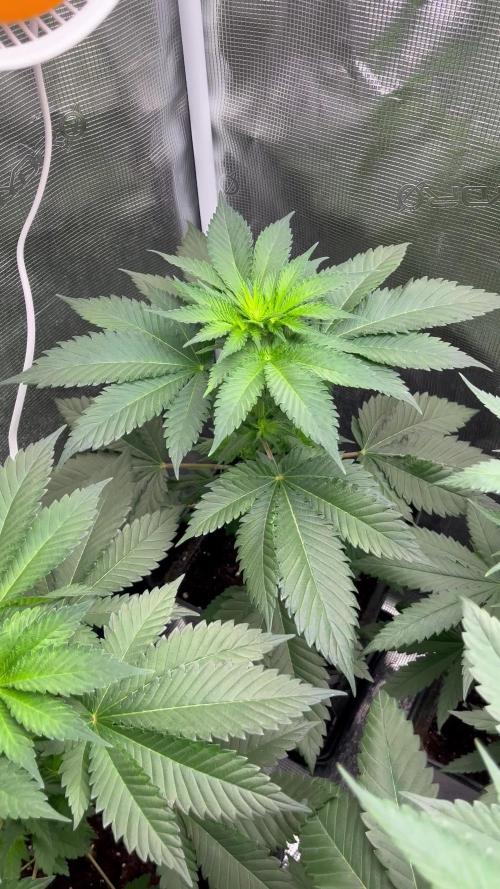
Cazzo è enorme!!
65 cm di diametro e mi occupa più di mezza tenda 1x1...
Che dire!!
Fantastica la sua crescita.
Già esplosiva dopo il topping...
Avevo visto che non aveva quasi ricevuto stress e avevo capito sin da subito che è una pianta fortissima, in piena salute e con grandi margini di grandezza/robustezza.
Questo fenotipo è chiaramente forte e resistente ha una dominanza sativa forse più della percentuale che scrivono...
Sono molto orgoglioso dei miei lavori ed esperimenti con le autofiorenti.
Non voglio fare stime di peso ma sicuramente sarà una pianta pesante.
Ho contato almeno 40 Budsites 😱😱😱



@eldruida_lamota
Follow
Vamos familia, actualizamos la primera semana de floración de estas NoName de Seedstockers.
La temperatura que estuvo entre los 24-26 grados y humedad dentro de los rangos correctos.
Esta semana cambiamos a 12 horas luz,12 horas de oscuridad, estiraron bien y ensancharon bastante también, el color es verde sano.
Se nota que los nutrientes de la marca Agrobeta hacen sus funciones.
- os dejo por aquí un CÓDIGO: Eldruida
Descuento para la tienda de MARS HYDRO.
https://www.mars-hydro.com
Hasta aquí todo, Buenos humos 💨💨💨


@HowtoBubatz
Follow
Defoliated again the leaves which were growing over Bud sites
The streching phase has begun. I am corious how tall the plant will go.


@Pjm70
Follow
She has started her bloom. She is growing so well.
This week I took off all her tie downs. Then 2 days later decided to tie her back down.
She has had steady tension on her branches. So when I released her, she tightened back up. With the ties on, there is little reason for defoliation, as of now.
She gained height, but nothing crazy. All her main top branches have always been pulled down to be side branches. Everything else was let to grow that came up the center. Really the side branches are the top of the canopy. Surprised I have not broke a branch.
8/26 2 gallons Fed 8 tablespoons Foxfarm Big Bloom, 15 MLS Tiger bloom and Foxfarm Open sesame 1/2 teaspoon.
8/30 Gallon and a half of tea. Cow and worm poop.
Every year I'm going to grow a photo in a different shape. This year I just wanted to see how many tops I could make.
Looking forward to next year's design. However not as much as I want to see what this voluptuous beauty produces.
Voluptuous seems to be very fitting for her. Love this plant, she has been very fun to grow. She also thought me a lot.
shorts_status_processing


@Buck5050
Follow
Everything is moving along.Found some slight yellowing inside the leaf cells. I raised the ph to 5.6 and will watch to see if that helps at all. I cut clones mid week.Took 3 off of each plant. I used rockwool and clonex gel and placed inside a humidity dome.We will see how that turns out. Nothing exciting after the clones were taken. Some defoliation to clean up the under canopy. The plants liked the leaf strip and reacted well. This is the last full week of veg. Will flip in a few days


@SmithNuggets
Follow
Flower tent is ac infinity 4x8 tent. With two spider farmer sf-4000. This tent has the exhale 360 co2 grow bag.
The nutrients are not what each plant receives. Each stage gets its appropriate nutrients.
I will be going back and trying to name each plant in the
2-7 feeding


@w00tGrow
Follow
Plant is looking good, budds are getting bigger and give sweet sweet aroma. I have not changed much for last 3 weeks, defolation here there only.


shorts_status_processing


@eldruida_lamota
Follow
Esa familia, ya actualizo, estas candy caramelo son una locura, solo hay que ver el color que tienen y la distancia que hay entre nudos.
Ya pasan 14 días desde que cambiamos el foco a 12/12, y pronto veremos cómo va escupiendo los brotes de las futuras flores.
Sigo controlando el PH que no supera el 6.5 , temperatura con un LED sin problema alguno, humedad entorno al 45%.
Poco más por aquí, no olvidéis que abrí más diarios con nuevos proyectos y cambiamos gama de nutrientes, para más, visitarlos.
Un saludo fumetillas, hasta la próxima semana.


@XII_XII_MrGreen
Follow
Man I can not wait to try this,, gonna take some samples so I can try it when we harvest next week 🙊
I've started flushing a couple days ago and they are really pushing out beautiful colors in they're late flower stage😍
My first experience with In house genetics 🧐 I have big and expectations, really hope it lives up to it😜
Have a nice week and enjoy the budporn 😉🤙🏼

shorts_status_processing


@CannabisAprendiz
Follow
Hola con esta semana ya quedamos al dia con el seguimiento ya que estaba atrasado en el tiempo. Se nota una producción de resina notable en esta genética que nos ha gustado mucho por su olor y estructura de las plantas .
hemos creado un video por cada una de las 14 plantas del seguimiento, hay varias muy llamativas que están "pre-seleccionadas" para mantener a futuro, el olor que se llega a sentir es muy florar y dulce, si tienen alguna pregunta no duden en preguntar saludos.
Hello with this week we are already up to date with the follow-up since I was late in time. There is a remarkable resin production in this genetics that we liked a lot for its smell and structure of plants.
We have created a video for each of the 14 floors of the follow-up, there are several very striking that are "pre-selected" to keep in the future, the smell you get to feel is very flowery and sweet, if you have any questions do not hesitate to Ask greetings.


@smokeycropping
Follow
- LAS PLANTAS ESPERANDO SU CORTE YA NO SE ALIMENTAN MAS QUE AGUA SU LAVADO A LAS DEMAS QUE QUEDAN
- NO SE VEN CARENCIAS NI EXCESOS
- el hps de 600 MANTIENE MI AMBIENTE SIN MAYORES INCONVENIENTES
- TRICOMAS YA CON UN 20 % AMBAR LISTAS PARA EL corte!!