



@tuzeus
Follow
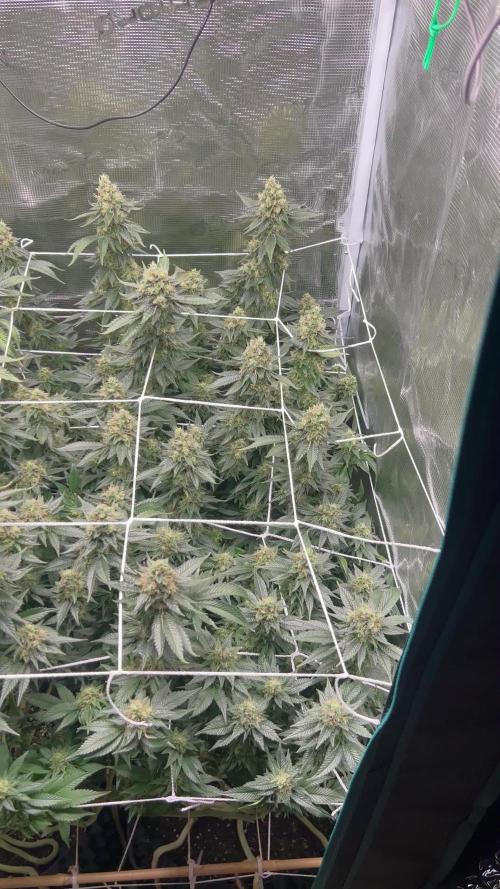
So this is the Start of week 9, today is day 57 of flower. Strain is supposed to have 8-9 weeks of flower. Before I started I was thinking of 10 weeks of flower. Let’s see how the week is going. I took some trichome shots but they are not ready yet. I’m thinking of 2-3 weeks left. I will use Athena fade for the last 2 weeks. Maybe I will change to that in the next week. I keep my humidifier running so I have a constant 40-45% of humidity, max 50. Cheers.




@LSchnabel
Follow
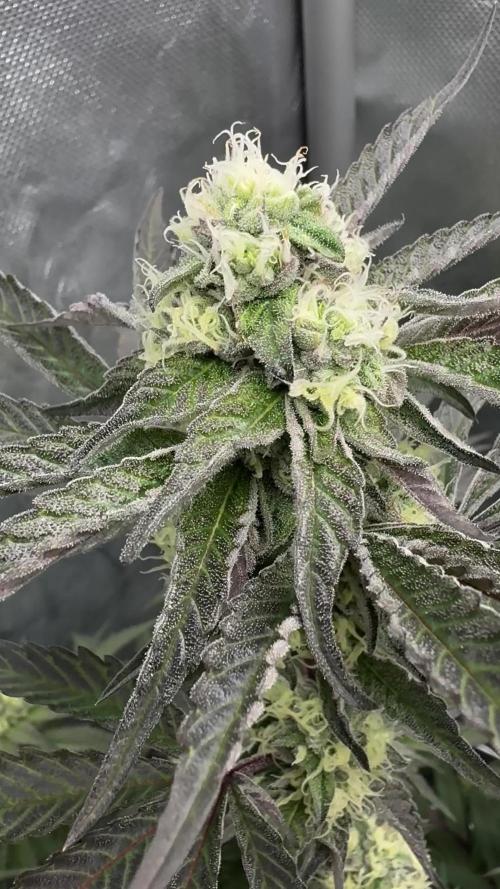
Looks of frost developing and loads of purple showing. Starting to pack on the mass. Been drinking up 1.2 gallons of water every 2 days now.
Major defoliation this week to trim back all the extra leaves. Compost tea was made and added Cultured Biologix EZ Tea Bloom to it.
This plant has had zero issues this far and is really trucking along.






@elementhc
Follow
The 2 GSC extreme and one of the GG4 got harvested this morning Dec 20th.
The rest are a week or two behind.





@Troy_McClure
Follow
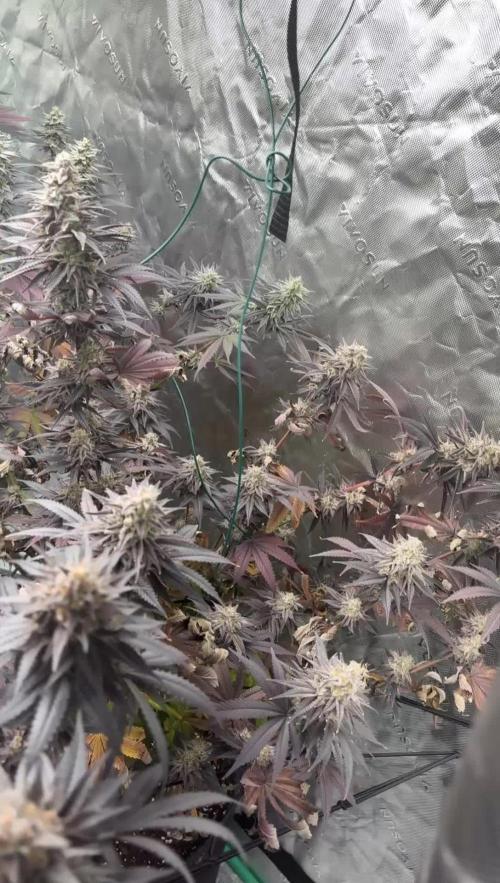
Its my first time I grew anything. It went very smooth even with a broken ankle. Strain took any and all abuse extremely well. SCROG, LST, Topping all went really well but i didn't have a great shape or structure in the SCROG. just tucked any open space without much planning. getting around the hard to reach places was super rough and neck/back/knee breaking. I struggled to get the proper wind on the leaves, or at least I could have lessened the wind burn. The clip on fans were good but annoying to place, and unreliable at holding their position because of tent negative pressure, their poor design and the space confinements. I left a lot of genetic potential as it was my first grow and I was not smooth. Overall very very happy with the 210+g at harvest, very happy with the flush results, and very happy with the harvest window I chose (2 weeks past guidelines but 1 week away from end of window (week 10 of flower).
I tried smoking the wet bud, it was disgusting and pointless. I tried basically every day the worst quality popcorn buds that had yet to dry, they were moving from disgusting to just flat out terrible, to not the worst, to just bad, and then finally after 2 weeks they didnt taste good but were just low quality bush. After week 1 of the cure the bud was neutral. and after 2 weeks of cure the bud was very smooth. Now into a full month of cure the bud tastes smooth and is nice. As far as smell goes, when I harvested it was pure jet fuel. It reeeeeeeaked like cleaning product, really diesel and extremely pungent. It would tickle inside your noise and feel like punch in the face. Now that its cured properly it lost a lot of that almsot burning pungent feel inside the noise and just smells like good weed aka gas.


@scooter112
Follow
Not very dense buds but stickier than hell with a great smell. Pretty much all that Mephisto says it is in their description.


@Canadian
Follow
I end up super cropping all the branches because they grow weight too big the good thing is that the plant has recover very well and starting to build up all those flowers.
I stopped recording their height at 71 inches but for sure if left alone she will continue to grow even more for now it looks like her flowering stretch has ended. I'm definitely looking forward to see how this girl is going to end up and at the end how much weight it is going to be able tohave.
thank you for reading I will continue to update have a happy grow.



@Easywalker
Follow
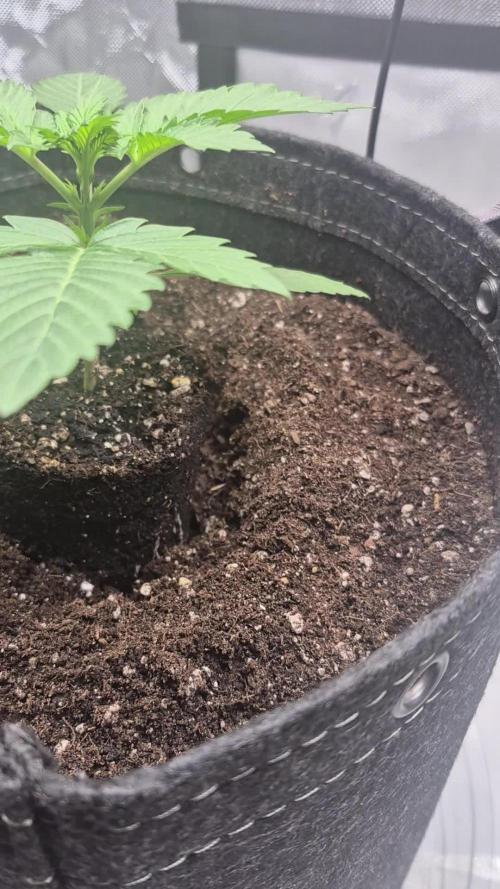
I was going to wait and post this weekend but f it. Just transplanted keeping it as simple as possible. Smell very faint. Her running mate is staying in the cup which is not doing her justice but its my first solo cup run gotta stick to it


@NLHydroponics
Follow
This week I started her LST and bent her top over as far as possible without snapping and locked her in place. I use soft wire "Gear Ties" sold in the hardware section of most places. I got mine at Home Depot. I highly recommend these for anyone serious about Lst.
I kept her in this position for about 4 days before adjusting placement and pulling the main top back down below the lower branches.
I have been maintaining the same feeding schedule "week 4 hydro" 3/4 str main nutrients, 1/2 str Open Seasame.
She started showing preflowers on me even though it's been in an 18/6 light cycle. So that's why OS and week 4 feeding was opted.
Even though the plant was technically 2 months old, she's only been fed and treated right for 2 weeks now. So week 7 from seed, I started at the week 3 schedule.


@KushManAdam420
Follow
Phone was out of action , will try and fill up the missing weeks , 3 plants have been harvested
All photos taken day 76


@MadeInGermany
Follow
Hey everyone :-).
The last plants were also placed in the bloom chamber kammer.
Everyone has made great progress this week 🙏🏻.
There is not much to say about this week, I think videos and pictures say more like words 🙈😎.
I wish you all a good start into the week :-) Stay healthy and let it grow 🙏🏻👍


@adam_pawloski87
Follow
It has been another great week for these Fastbuds ~ Wedding Cheesecake Autos!! Today is day 22 from seed and this upcoming week all 5 will be getting Tied down for LST ! All are getting same veg feed just but make sure if you are using rapid start your gonna have to mix in PH up in your feeds! Light is at same height and is at full power just letting the plants grow into it! Well hope you all enjoy, and please let me know if y’all have any questions I’ll be glad to answer! Bless y’all and stay tuned for next week! Peace y’all



@Ultraviolet_
Follow
Remember that, however you are played, or by whom, your soul is in your keeping alone. Even though those who presume to play you be kings or men of power, when you stand before God, you cannot say, 'But I was told by others to do thus,' or that virtue was not convenient at the time. This will not suffice. Remember that.
Day:18
84°F and 65% RH (VPD) for the vegetative stage. Approximately 1.15kPa(assuming leaf temperature is about 2°F cooler than the air), which falls right into the ideal vegetative sweet spot (0.8kPa to 1.2kPa). At 1.15kPa, plants can draw water and nutrients efficiently without risking stress or wilting. It keeps the leaf pores (stomata) open, allowing for ideal carbon dioxide intake and maximizing vegetative growth. VPD is determined by the leaf's temperature, not just the ambient air. Because leaves usually run 1° to 3°F cooler than room air under bright grow lights, my actual VPD will be slightly lower, closer to the 1.0kPa mark. As she transitions from vegetative growth to flowering, one can gradually lower the humidity (to around 45–60%) and drop temperatures slightly to prevent disease from settling inside dense buds when they appear.
Night:6
At 70°F and 60% relative humidity, Vapor Pressure Deficit (VPD) is 0.86 kPa. This is right on the cusp of whats optimal for the vegetative stage. During the nighttime, plants generally close their stomata and undergo cellular respiration rather than photosynthesis. Transpiration slows to a near stop, making VPD less critical at night than during the day. However, maintaining a nighttime VPD between 0.8 and 1.0 kPa is highly beneficial in that it ensures the air is dry enough to prevent powdery mildew or bud rot, but moist enough to keep the plant from undergoing unnecessary stress. This range keeps the environment comfortable for cellular processes and prevents large atmospheric swings. Keeping it all flowing.
(Not pushing them yet, these are photoperiods)
The optimal soil (root zone) temperature for cellular root respiration and nutrient uptake in cannabis is between 68F & 72F This narrow range balances biological energy production (cellular respiration) with the dissolved oxygen levels in the soil, maximizing plant growth and health. Warmer soils hold significantly less dissolved oxygen. When soil temperature exceeds 74F oxygen depletion occurs, inhibiting cellular respiration almost entirely, At 68-72F root cells generate optimal adenosine triphosphate (ATP) via respiration to power root-tip elongation and the active transport of water and nutrients.
Too Hot (Above 78F) Root respiration increases, demanding more oxygen, while the water's oxygen-carrying capacity drops. This creates a prime environment for anaerobic pathogens and Pythium (root rot).
Too Cold (Below 60F) Root metabolism and cellular respiration slow to a crawl. This severely impairs nutrient and water absorption, leading to yellowing, wilting, and phosphorus deficiencies.
A lot depends on whether it's automatic or photoperiod; with photoperiod, there is not as much of a need to push "hard" as the real countdown only begins once the flower is initiated. Automatics, on the other hand, the chronological "clock" begins ticking the moment the seed germinates. It is of critical importance that the seedling growth gets off to the races, understanding that early growth is like compound interest, which will pay off come harvest. This reality is why getting autoflowers "off to the races" early on yields such exponential benefits. The "compound interest" is directly related to the surface area of the leaves. Larger, faster-growing seedlings process more light and build bigger root networks early on, which translates into an explosion of vertical and lateral growth during their short vegetative window.
The margins for error are so thin with autoflowers; this early-stage momentum depends on several critical practices. Seedlings exposed to increased atmospheric CO2 levels early in life will develop at an increased rate. To effectively "extend" or optimize the capacity of Photosystem II (PSII) for increased photosynthetic efficiency. In standard oxygenic photosynthesis, Photosystem II (PSII) is naturally limited to the red-light spectrum, peaking at 680nm. Extending its light-harvesting capacity past 700nm into the far-red region requires bypassing the natural limits of standard chlorophyll a. Adding 730 nm (far-red) LEDs alongside standard red/blue lights has been shown to increase canopy photosynthesis by 20–30% in several crops by acting synergistically with shorter wavelengths. However, the limitation is that excessive, pure IR/Far-red light (without accompanying red light) can trigger the "shade avoidance response," causing plants to grow tall, weak, and spindly rather than robust. Utilizing infrared light (specifically the 700-750 nm far-red range) is a viable method to boost photosynthetic efficiency. It acts as a bridge to allow PSII to utilize a broader spectrum of light, breaking the traditional 700 nm barrier. UVR8-mediated signaling (often in conjunction with CRY proteins) triggers protective mechanisms that maintain the stability of the photosynthetic apparatus (including LHCII and reaction center proteins), thus ensuring that the efficiency of Photosystem II remains higher in UV-B-exposed plants compared to plants lacking this receptor. ΦPSII indictates the rate of electron transfer from water to plastoquinone, which drives the production of ATP and NADPH. There is a close link between ΦPSII and the true rate of CO2 fixation (Φ*co2).
ETR stands for Electron Transport Rate. It measures the speed at which electrons are moved through the thylakoid membranes in a plant's chloroplasts during the light-dependent reactions of photosynthesis. Infrared light (particularly Near-Infrared or NIR) improves cellular energy by interacting directly with the electron transport chain (ETC) in mitochondria. This process boosts adenosine triphosphate production, which acts as a metabolic coefficient multiplier by accelerating enzyme activity dramatically.
Extend then multiply.
Far-Red photons interact with plant photoreceptors to accelerate the plant’s biological "clock" or trigger a shade-avoidance response. Autoflowers don't use the plant's biological clock, although the IR will initiate a shade avoidance and make them stretchy. You can just add equal measures of 660nm-680nm to negate the shade avoidance effect. Replacing nights' "darkness" with a combination of IR+ and 660nm. Because autoflowers don't require a dark period to flower, many growers just blast them with light. 18/6 24/0. However, this ignores the plant's metabolic rhythms, where daytime photosynthesis (light reactions) must be perfectly balanced with nighttime carbon fixation and assimilation (Calvin cycle) to avoid bottlenecking plant development. Cellular respiration is a 24/7 process, but it can only function while the plant has the free oxidative capacity to do so. A 100% photosynthetically active leaf cannot perform cellular respiration. The viral trend of defoliation of every leaf that isn't "getting enough light" is of great detriment overall, putting 100% of the cellular respiratory "workload" and responsibility on the 0/4/6 hours of darkness in sub-optimal conditions for enzymatic activity. Photosynthesis captures nearly 100% of the initial energy as carbon, while cellular respiration is the process that unlocks 90% of that captured energy into usable ATP so the plant can use it. Respiration is considered only roughly 30% to 40% efficient. It captures enough of the potential energy in glucose to synthesize around 30 to 38 ATP molecules per glucose molecule. The remaining 60% to 70% of the energy in the sugar is not captured in ATP; instead, it naturally escapes into the environment as heat, which helps regulate plant temperature. In plants, the primary enzymes of the Electron Transport Chain (ETC) and the ATP synthase complexes are typically adapted to function optimally in warmer temperatures (roughly 77°F to 95°F, depending on the specific plant strain). As temperatures rise within this physiological range, molecular collisions increase, speeding up respiration and ATP production. The cannabis plant has a branched respiratory pathway. During heat or cold stress, plants activate Alternative Oxidase (AOX). AOX burns sugars to dissipate energy as heat rather than coupling it to ATP production. This pathway actually functions optimally at elevated temperatures to help protect the cell from the damaging build-up of Reactive Oxygen Species (ROS) during heat stress. Enzyme activity generally scales with heat; there is a strict biological limit. If canopy temperatures in a grow room exceed 104°F, the enzymes and their supporting lipid membranes lose stability. Not saying you need to go crazy, just optimize nights the same as we optimize days.
Phosphorus is the driving force behind early seedling development. It acts as the "energy hub" of the plant, directly driving cell division, robust root growth, and the creation of DNA. Without an adequate, easily accessible supply early on, the plant's overall growth potential and final yield can suffer permanently.


@DreamIT
Follow
🎃👹👽MONSTERCROPPING RED MANDARINE 👽👹🎃
____________________________________________________________________________________
💀 19.2
💀 20.2
💀 21.2
💀 22.2
💀 23.2 vacation week
💀 24.2
💀 25.2 ...
____________________________________________________________________________________________
📜👀 A look at the details of what I'm growing 👀📜
🍊💚 Red Mandarine F1 🍊💚 by 🌱🍭 Sweet Seeds 🍭🌱
📋 Details
⚧ Gender
▪️ Feminised
➰ Genes
▪️ 55% Indica / 45% Sativa
🎄 Genetics
▪️ Red Poison Auto (SWS39) хCalifornia Orange x Skunk hybrid)
🚜Harvest
▪️ 400 - 500 g / m²
🌷Flowering
▪️ 49 - 63 days
✨THC
▪️ 16%
✅CBD
▪️ 0,2%
🏡Room Type
▪️ Indoor
🌄Room Type
▪️ Outdoor
🕋Room Type
▪️ N/D
🎂Release Year
▪️ 2019
__________________________________________________________________________
👀📷🥇 Follow the best photos on Instagram 🥇📷👀
https://www.instagram.com/dreamit420/
🔻🔻🔻Leave a comment with your opinions if you pass by here🔻🔻🔻
🤟🤗💚Thanks and Enjoy growth 💚🤗🤟



@WhiteEdge
Follow
Flowering W1 D1
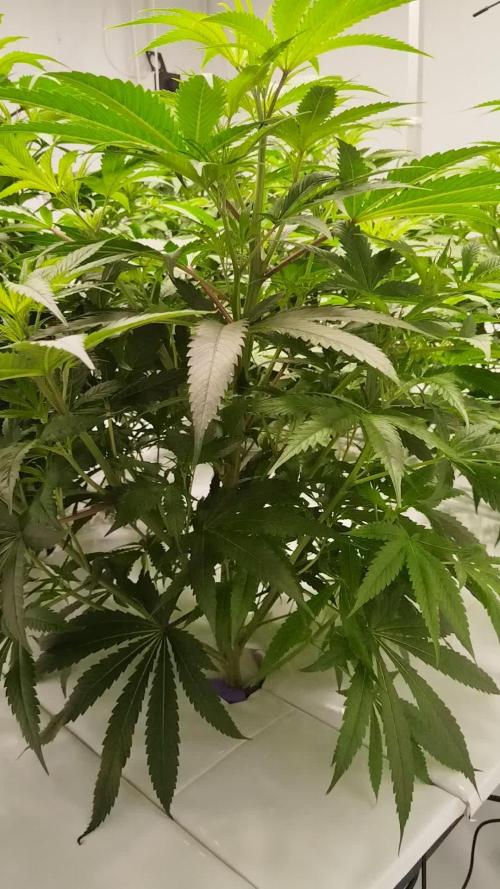
Girls moved into big tent, biggest girl is 60cm, smallest 53cm. Little to none transplant shock. Fast recovery
Girls are already oversize , i should put them earlier in flowering.
First days starting with same environment settings, later into week reducing watering frequency and night/day temperature differential.
Mix fresh nutrient solution with Athena Core + Bloom + Sio2 + HOCl @ 5.64ec - 5.75PH
Light intensity - 650 PPFD , Light distance - 55cm, DLI - 29, Light Interval 12/12
Day RH - 69/72%, Night RH - 67/70%,
Day Temperature - 28/29c, Night Temperature -24c/25c,
Leaf temperature 26/27c,
VPD Day - 0.8/1.0 , VPD Night 0.8/1.0
CO2 - 600+PPM
Nutrient Tank - 2.64EC, PH-5.70, Temperature - 18/20c, ORP-410/450mV
Day Misting - 20s ON/15min OFF + 1 x 2 minute long shot
Night Misting - 20s ON/30min OFF
Runoff - 20.00h - 2.54ec/5.75ph
Flowering W1 D2
Light intensity - 730 PPFD , Light distance - 60cm, DLI - 35, Light Interval 12/12
Day RH - 69/74%, Night RH - 66/79%,
Day Temperature - 27/28c, Night Temperature -25c/26c,
Leaf temperature 25/26c,
VPD Day - 0.6/0.7 , VPD Night 0.7/0.8
CO2 - 390+PPM
Nutrient Tank - 2.74EC, PH-5.99 Temperature - 19/21c, ORP-410/450mV
Day Misting - 25s ON/20min OFF + 2 x 5 minute long shot -
Night Misting - 25sON/30min OFF
10.00 r2750-6.01ph,
Flowering W1 D3
Athena Stack 0.1ml + 1 drop H4SiO2 - 150ml
Girls are grow 2-3cm in height from yesterday , think its going to be a problem with height and size after stretch.
Stop venting at night, dehumidifier doing the job done plus raise temperature in tent. Around 26c in night time.
Light intensity - 750 PPFD , Light distance - 60cm, DLI - 35, Light Interval 12/12
Day RH - 69/74%, Night RH - 66/79%,
Day Temperature - 27/28c, Night Temperature -25c/26c,
Leaf temperature 25/26c,
VPD Day - 0.9/1.0 , VPD Night 0.8/1.0
CO2 - 590+PPM
Nutrient Tank - 2.84EC, PH-5.98 Temperature - 19/20c, ORP-410/450mV - PERFECT 😇 for this stage!
Day Misting - 25s ON/20min OFF + 1 x 5 minute long shot
Night Misting - 25sON/30min OFF
10.00 r2880-5.95ph, 21.30 r2840/6.10ph
Flowering W1 D4
Light intensity - Max 850 PPFD , Light distance - 55cm, DLI - 35, Light Interval 12/12
Day RH - 69/74%, Night RH - 66/79%,
Day Temperature - 27/28c, Night Temperature -25c/26c,
Leaf temperature 25/26c,
VPD Day - 0.8/1.0 , VPD Night 0.7/1.0
CO2 - 400+PPM
Nutrient Tank - 2.84EC, PH-5.98 Temperature - 19/20c, ORP-410/450mV
Day Misting - 25s ON/20min OFF + 1 x 5 minute long shot
Night Misting - 25sON/30min OFF
Runoff - 10.00h r2910ec-6.02ph, 20.30h r2840ec/6.12ph
Flowering W1 D5
Middle girl is 65cm, 2-3cm growth per day so far.
Remove some bigger fan leaves from dominating branches and from the middle of the plants-main stem
Light intensity - Max 850 PPFD , Light distance - 55cm, DLI - 35, Light Interval 12/12
Day RH - 69/74%, Night RH - 66/79%,
Day Temperature - 27/28c, Night Temperature -25c/26c,
Leaf temperature 25/26c,
VPD Day - 0.8/1.0 , VPD Night 0.7/1.0
CO2 - 400+PPM
Nutrient Tank - 2.84EC, PH-5.98 Temperature - 19/20c, ORP-410/450mV
Day Misting - 25s ON/20min OFF + 1 x 5 minute long shot
Night Misting - 25sON/30min OFF
Runoff - 10.00 r2990/6.06PH, 16,00 r2880
Flowering W1 D6
Foliar feed - Athena Stack + H4SiO2 - 200ml
Lowering shot duration by 5s in day and night irrigation
Light intensity - Max 850 PPFD , Light distance - 55cm, DLI - 35, Light Interval 12/12, keeping light at same distance
Day RH - 69/74%, Night RH - 66/79%,
Day Temperature - 28/29c, Night Temperature -25c/26c,
Leaf temperature 25/26c,
VPD Day - 0.8/1.0 , VPD Night 0.9/1.0
CO2 - 400+PPM
Nutrient Tank - 2.84EC, PH-5.95 Temperature - 19/20c, ORP-410/450mV
Day Misting - 20s ON/20min OFF + 1 x 5 minute long shot - lowering shot duration
Night Misting - 20sON/30min OFF - lowering shot duration
Runoff - 10.00 r3120ec/6.06PH, 16,00 r2900ec
Flowering W1 D7
Middle girl 72cm, grow in height around 17cm in first week. Too much for first week of flowering. Need to stack this girls soon
Mix new nutrient tank - 2.99ec/5.75PH,
In night time temperatures drop to 21-22c, VPD is stable, lowering humidity at that moment....
15/20 - 15/30 + 1x5min, cascade irrigation
Light intensity - Max 750 PPFD , Light distance - 55cm, DLI - 35, Light Interval 12/12,
Day RH - 69/72%, Night RH - 62/69%,
Day Temperature - 28/29c, Night Temperature -21c/22c,
Leaf temperature 25/26c,
VPD Day - 0.8/1.0 , VPD Night 0.9/1.0
CO2 - 400+PPM
Nutrient Tank - 3.0EC, PH-5.95 Temperature - 19/20c, ORP-410/450mV
Day Misting - 15s ON/20min OFF + 1 x 5 minute long shot - lowering shot duration
Night Misting - 15sON/30min OFF - lowering shot duration
Runoff from last night, in the morning- 2910ec/5.95PH, in night time is probably even more



@Mrdub
Follow
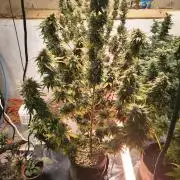
This girl is really stacking them colas fade starting to set in under canopy rockin lower colas are looking gourgous this girl can eat to she has to be feeding twice a day running 6.2 pH lights at 100 percent trichome coverage getting thick she gets recharge once a week then hit her with a carboload after to feed them microbes had to increase the cal mag cause she started spotting but looks like I fixed it starting get a piney smell to her trying to spread these branches apart cause they wanna grow up together but gonna fix that nice thick pistols starting to turn a fire orange so here's to another week of growing lfg
