Likes
Comments
Share


@undermink
Follow
Hmm this one looks thin and tall too.. I guess it's just my too small tent that makes some plants get thin instead of bushy.. But seeing two plants in this tent that have beeing topped getting thin and tall and the others getting all bushy is a bit strange. Maybe the topping was too late and they didn't like it?! My other White Diesel Haze does seem to like it... She is all bushy too


Likes
Comments
Share


@bigsmoke42069
Follow
1.28.26
Chop day
Removed big fan leaves.
put all 4 plants to dry at 60rh, 17c AC. Controlled by an inkbird controller connected to humidifier and exhaust fan with a fan in the tent for air circulation always turned on.
2.8.26
Finished trimming all the buds

Processing
Likes
43
Share


@DKBJJ
Follow
Defoliation complete. These ladies got a little spank this morning. But they always respond well after. They are ready to Flower now.
First long hours of lights off have commenced...I am counting up to 20 colas per plant on the 3 Cali OG Amnesia Haze X and 10-15 per plant on the Blue Cookies going into this.
This will only increase in the coming weeks due to defoliation that was just done.
I have been aggressively LST training and defoliating every day because of growth up to this point.

Likes
35
Share


@XperencdGmanXG
Follow
This girl is growing so nicely Ive decided to toss her outside and see how she does. Her FIM worked out nicely and she is growing many long branches.

Likes
4
Share


@CannaIGrow
Follow
Topped this girl this week. Growing pretty good so far. I’ll be potting up to 3 gal pots next week sometime. I also have a Bison Brew that I’ll be using sometime after transplant.
Likes
6
Share


@Roberts
Follow
Tangerine Band is doing okay. She is growing fast. I defoliated her some today. Thank you Exotic Seeds, Athena, and Spider Farmer. 🤜🏻🤛🏻🌱🌱🌱
Thank you grow diaries community for the 👇likes👇, follows, comments, and subscriptions on my YouTube channel👇.
❄️🌱🍻 Happy Growing 🌱🌱🌱
https://youtube.com/channel/UCAhN7yRzWLpcaRHhMIQ7X4g.

Likes
Comments
Share


@LegacyGrow
Follow
Englischversion below
Deutsch:
Tag 43 Veg:
Heute wurden die Ladies mit je ca. 9 Litern PH6.3 Wasser mit 1ml/L CalMag. Zusätzlich wurden präventiv Nemathoden gegeben.
Seit dem Letzen Update vor 4 Tagen. haben 2/3 Ladies den Rand des Topfes erreicht. Etwas LST rundet den heutigen Tag Ab. Es wird nu auf die 3te Pflanze gewartet - Danach wird der vertikale wuchs angestrebt.
Im großem Zelt habe ich ein Abflusssystem eingebaut um das Potential für Trauermücken gering zu halten. Das Wasser fließt durch Löcher in den Auffangschalen in eine schräge Rinne runter. Diese entleert sich durch den Boden mit 2 Silikonschläuchen. Ja, dazu habe ich das Zelt angebohrt - aber besser als stehendes Wasser oder händischen Abpumpen.
Da ich CO2 nutze habe ich mich für ein geschlossenes Lüftungssystem entschieden. Die Luft wird durch den Luftentfeuchter gezogen und zurück ins Zelt geleitet.
--------------------------------------------------------------------------------------------------------------------------------------------
Day 43 – Vegetative Phase:
Today, each plant received approximately 9 liters of water adjusted to pH 6.3 and supplemented with 1 ml/L Cal-Mag. In addition, nematodes were applied as a preventive measure.
Since the last update four days ago, two out of three plants have reached the edge of the pot. Some additional LST completed today’s work. We are now waiting for the third plant to catch up — after that, vertical growth will be encouraged.
In the large tent, a drainage system has been installed to reduce the risk of fungus gnats. Water flows through holes in the drip trays into a sloped channel, which then drains out of the tent through two silicone hoses installed through the floor. Yes, the tent was drilled for this modification — but it is preferable to standing water or manual pumping.
Since CO₂ is being used, a closed ventilation system was chosen. Air is drawn through the dehumidifier and then recirculated back into the tent.

Likes
12
Share


@R_Dank
Follow
Officially 2 weeks into flower..
The wedding cheese cake is looking faster than the guava jelly

Likes
8
Share


@GrownwithLED
Follow
Both Barbarian (=AK-47 x Barbara Bud) plants have developed well and carry hefty top buds on each side branch and also the main cola. The lower regions also carry buds, but those are a little more fluffy and not so big and dense as the top buds. In total the two plants harvested 91,3 grams. Every bud is COVERED IN TRICHOMES and the plants glisten in the light, they are FROSTY AS HELL! The plants have a STRONG AROMA now, which is sweet and peachy with hints of sandalwood. They smell ABSOLUTELY DELICIOUS and the dried weed carries the flavor of this aroma also in the smoke! VERY PEACHY! All in all I can only recommend this strain, its not the biggest yielder, but definitely delivers connoisseur grade weed. Hats off to Mat from House of the Great Gardener in Canada, he has made another GREAT cross and I hope he will release this variety soon! 👍😍😎.
Likes
Comments
Share

@frigo_camelo
Follow
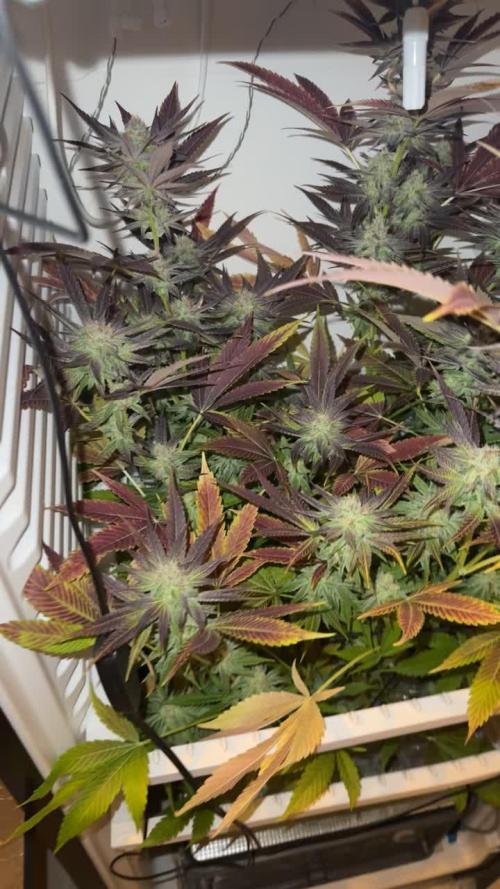
mid week 6 flower | really healthy plant | absolute pleasure | very small node distances | the cut looks exactly as advertised | now i will be gone for 2 weeks | i will close the water loop an install a drip ring | week 6,5 to 8,5 will be water only | lets see what will happen

Likes
42
Share


@420DeepGrow
Follow
Capitan Future es una genética que brilla por sí sola.
Su cosecha demostró cogollos densos y resinosos, con un perfil aromático sorprendente que combina notas cítricas, especiadas y un sutil toque dulce.
Los efectos son intensos 😵💫 y equilibrados, ofreciendo una experiencia que despierta la creatividad y, al mismo tiempo, invita a la relajación.
Es una variedad que destaca tanto en rendimiento como en calidad, posicionándose como una opción obligatoria para los cultivadores que buscan estabilidad, potencia 💪 y resultados de alta calidad en cada cosecha.

Likes
20
Share


@Loucifer512
Follow
Ok so I did a drip system on these plants for about a couple weeks took it out now half the plants want to be watered more then usuall and if not they start to droop other then that it’s fine hopefully they will do better when they get transplanted to 5 gallon pots


Likes
25
Share


@Ultraviolet
Follow
ANTHOCYANIN production is primarily controlled by the Cryptochrome (CR1) Photoreceptor ( !! UV and Blue Spectrums are primary drivers in the production of the pigment that replaces chlorophyll, isn't that awesome!
1. Diverse photoreceptors in plants
Many civilizations, including the sun god of ancient Egypt, thought that the blessings of sunlight were the source of life. In fact, the survival of all life, including humans, is supported by the photosynthesis of plants that capture solar energy. Plants that perform photosynthesis have no means of transportation except for some algae. Therefore, it is necessary to monitor various changes in the external environment and respond appropriately to the place to survive. Among various environmental information, light is especially important information for plants that perform photosynthesis.
In the process of evolution, plants acquired phytochrome, which mainly receives light in the red light region, and multiple blue light receptors, including his hytropin and phototropin, in order to sense the light environment. .. In addition to these, an ultraviolet light receptor named UVR8 was recently discovered. The latest image of the molecular structure and function of these various plant photoreceptors (Fig. 1), focusing on phytochrome and phototropin.
Figure 1
Ultraviolet-visible absorption spectra of phytochrome, cryptochrome, phototropin, and UVR8. The dashed line represents each bioactive absorption spectrum.
2. Phytochrome; red-far red photoreversible molecular switch
What is phytochrome?
Phytochrome is a photochromic photoreceptor, and has two absorption types, a red light absorption type Pr (absorption maximum wavelength of about 665 nm) and a far-red light absorption type Pfr (730 nm). Reversible light conversion between the two by red light and far-red light, respectively(Fig. 1A, solid line and broken line). In general, Pfr is the active form that causes a physiological response. With some exceptions, phytochrome can be said to function as a photoreversible molecular switch. The background of the discovery is as follows. There are some types of plants that require light for germination (light seed germination). From that study, it was found that germination was induced by red light, the effect was inhibited by subsequent far-red light irradiation, and this could be repeated, and the existence of photoreceptors that reversibly photoconvert was predicted. In 1959, its existence was confirmed by the absorption spectrum measurement of the yellow sprout tissue, and it was named phytochrome. Why does the plant have a sensor to distinguish between such red light and far-red light? There is no big difference between the red and far-red light regions in the open-field spectrum of sunlight, but the proportion of red light is greatly reduced due to the absorption of chloroplasts in the shade of plants. Similar changes in light quality occur in the evening sunlight. Plants perceive this difference in light quality as the ratio of Pr and Pfr, recognize the light environment, and respond to it.
Subsequent studies have revealed that it is responsible for various photomorphogenic reactions such as photoperiodic flowering induction, shade repellent, and deyellowing (greening). Furthermore, with the introduction of the model plant Arabidopsis thaliana (At) and the development of molecular biological analysis methods, research has progressed dramatically, and his five types of phytochromes (phyA-E) are present in Arabidopsis thaliana. all right. With the progress of the genome project, Fi’s tochrome-like photoreceptors were found in cyanobacteria, a photosynthetic prokaryotes other than plants. Furthermore, in non-photosynthetic bacteria, a homologue molecule called bacteriophytochrome photoreceptor (BphP) was found in Pseudomonas aeruginosa (Pa) and radiation-resistant bacteria (Deinococcus radiodurans, Dr).
Domain structure of phytochrome molecule
Phytochrome molecule can be roughly divided into N-terminal side and C-terminal side region. PAS (Per / Arndt / Sim: blue), GAF (cGMP phosphodiesterase / adenylyl cyclase / FhlA: green), PHY (phyto-chrome: purple) 3 in the N-terminal region of plant phytochrome (Fig. 2A) There are two domains and an N-terminal extension region (NTE: dark blue), and phytochromobilin (PΦB), which is one of the ring-opening tetrapyrroles, is thioether-bonded to the system stored in GAF as a chromophore. ing. PAS is a domain involved in the interaction between signal transduction-related proteins, and PHY is a phytochrome-specific domain. There are two PASs and her histidine kinase-related (HKR) domain (red) in the C-terminal region, but the histidine essential for kinase activity is not conserved.
3. Phototropin; photosynthetic efficiency optimized blue light receptor
What is phototropin?
Charles Darwin, who is famous for his theory of evolution, wrote in his book “The power of move-ment in plants” published in 1882 that plants bend toward blue light. Approximately 100 years later, the protein nph1 (nonphoto-tropic hypocotyl 1) encoded by one of the causative genes of Arabidopsis mutants causing phototropic abnormalities was identified as a blue photoreceptor. Later, another isotype npl1 was found and renamed phototropin 1 (phot1) and 2 (phot2), respectively. In addition to phototropism, phototropin is damaged by chloroplast photolocalization (chloroplasts move through the epidermal cells of the leaves and gather on the cell surface under appropriate light intensity for photosynthesis. As a photoreceptor for reactions such as escaping to the side of cells under dangerous strong light) and stomata (reactions that open stomata to optimize the uptake of carbon dioxide, which is the rate-determining process of photosynthetic reactions). It became clear that it worked. In this way, phototropin can be said to be a blue light receptor responsible for optimizing photosynthetic efficiency.
Domain structure and LOV photoreaction of phototropin molecule
Phototropin molecule has two photoreceptive domains (LOV1 and LOV2) called LOV (Light-Oxygen-Voltage sensing) on the N-terminal side, and serine / on the C-terminal side. It is a protein kinase that forms threonine kinase (STK) (Fig. 4Aa) and whose activity is regulated by light. LOV is one molecule as a chromophore, he binds FMN (flavin mononucleotide) non-covalently. The LOV forms an α/βfold, and the FMN is located on a β-sheet consisting of five antiparallel β-strands (Fig. 4B). The FMN in the ground state LOV shows the absorption spectrum of a typical oxidized flavin protein with a triplet oscillation structure and an absorption maximum wavelength of 450 nm, and is called D450 (Fig. 1C and Fig. 4E). After being excited to the singlet excited state by blue light, the FMN shifts to the triplet excited state (L660t *) due to intersystem crossing, and then the C4 (Fig. 4C) of the isoaroxazine ring of the FMN is conserved in the vicinity. It forms a transient accretionary prism with the tain (red part in Fig. 4B Eα) (S390I). When this cysteine is replaced with alanine (C / A substitution), the addition reaction does not occur. The effect of adduct formation propagates to the protein moiety, causing kinase activation (S390II). After that, the formed cysteine-flavin adduct spontaneously dissociates and returns to the original D450 (Fig. 4E, dark regression reaction).
Phototropin kinase activity control mechanism by LOV2
Why does phototropin have two LOVs? Atphot1 was found as a protein that is rapidly autophosphorylated when irradiated with blue light.
The effect of the above C / A substitution on this self-phosphorylation reaction and phototropism was investigated, and LOV2 is the main photomolecular switch in both self-phosphorylation and phototropism. It turns out that it functions as. After that, from experiments using artificial substrates, STK has a constitutive activity, LOV2 functions as an inhibitory domain of this activity, and the inhibition is eliminated by photoreaction, while LOV1 is kinase light. It was shown to modify the photosensitivity of the activation reaction. In addition to this, LOV1 was found to act as a dimerization site from the crystal structure and his SAXS. What kind of molecular mechanism does LOV2 use to photoregulate kinase activity? The following two modules play important roles in this intramolecular signal transduction.
Figure 4
(A) Domain structure of LOV photoreceptors. a: Phototropin b: Neochrome c: FKF1 family protein d: Aureochrome (B) Crystal structure of auto barley phot1 LOV2. (C) Structure of FMN isoaroxazine ring. (D) Schematic diagram of the functional domain and module of Arabidopsis thaliana phot1. L, A’α, and Jα represent linker, A’α helix, and Jα helix, respectively. (E) LOV photoreaction. (F) Molecular structure model (mesh) of the LOV2-STK sample (black line) containing A’α of phot2 obtained based on SAXS under dark (top) and under bright (bottom). The yellow, red, and green space-filled models represent the crystal structures of LOV2-Jα, protein kinase A N-lobe, and C-robe, respectively, and black represents FMN. See the text for details.
1) Jα. LOV2 C of oat phot1-to α immediately after the terminus
Rix (Jα) is present (Fig. 4D), which interacts with the β-sheet (Fig. 4B) that forms the FMN-bound scaffold of LOV2 in the dark, but unfolds and dissociates from the β-sheet with photoreaction. It was shown by NMR that it does. According to the crystal structure of LOV2-Jα, this Jα is located on the back surface of the β sheet and mainly has a hydrophobic interaction. The formation of S390II causes twisting of the isoaroxazine ring and protonation of N5 (Fig. 4C).
As a result, the glutamine side chain present on his Iβ strand (Fig. 4B) in the β-sheet rotates to form a hydrogen bond with this protonated N5. Jα interacts with this his Iβ strand, and these changes are thought to cause the unfold-ing of Jα and dissociation from the β-sheet described above. Experiments such as amino acid substitution of Iβ strands revealed that kinases exhibit constitutive activity when this interaction is eliminated, and that Jα plays an important role in photoactivation of kinases.
2) A’α / Aβ gap.
Recently, several results have been reported showing the involvement of amino acids near the A’α helix (Fig. 4D) located upstream of the N-terminal of LOV2 in kinase photoactivation. Therefore, he investigated the role of this A’α and its neighboring amino acids in kinase photoactivation, photoreaction, and Jα structural change for Atphot1. The LOV2-STK polypeptide (Fig. 4D, underlined in black) was used as a photocontrollable kinase for kinase activity analysis. As a result, it was found that the photoactivation of the kinase was abolished when amino acid substitution was introduced into the A’α / Aβ gap between A’α and Aβ of the LOV2 core. Interestingly, he had no effect on the structural changes in Jα examined on the peptide map due to the photoreaction of LOV2 or trypsin degradation. Therefore, the A’α / Aβ gap is considered to play an important role in intramolecular signal transduction after Jα.
Structural changes detected by SAXS
Structural changes of Jα have been detected by various biophysical methods other than NMR, but structural information on samples including up to STK is reported only by his results to his SAXS. Not. The SAXS measurement of the Atphot2 LOV2-STK polypeptide showed that the radius of inertia increased from 32.4 Å to 34.8 Å, and the molecular model (Fig. 4F) obtained by the ab initio modeling software GASBOR is that of LOV2 and STK. It was shown that the N lobes and C lobes lined up in tandem, and the relative position of LOV2 with respect to STK shifted by about 13 Å under light irradiation. The difference in the molecular model between the two is considered to reflect the structural changes that occur in the Jα and A’α / Aβ gaps mentioned above.
Two phototropins with different photosensitivity
In the phototropic reaction of Arabidopsis Arabidopsis, Arabidopsis responds to a very wide range of light intensities from 10–4 to 102 μmol photon / sec / m2. At that time, phot1 functions as an optical sensor in a wide range from low light to strong light, while phot2 reacts with light stronger than 1 μmol photon / sec / m2. What is the origin of these differences? As is well known, animal photoreceptors have a high photosensitivity due to the abundance of rhodopsin and the presence of biochemical amplification mechanisms. The exact abundance of phot1 and phot2 in vivo is unknown, but interesting results have been obtained in terms of amplification.
The light intensity dependence of the photoactivation of the LOV2-STK polypeptide used in the above kinase analysis was investigated.
It was found that phot1 was about 10 times more photosensitive than phot2. On the other hand, when the photochemical reactions of both were examined, it was found that the rate of the dark return reaction of phot1 was about 10 times slower than that of phot2. This result indicates that the longer the lifetime of S390II, which is in the kinase-activated state, the higher the photosensitivity of kinase activation. This correlation was further confirmed by extending the lifespan of her S390II with amino acid substitutions. This alone cannot explain the widespread differences in photosensitivity between phot1 and phot2, but it may explain some of them. Furthermore, it is necessary to investigate in detail protein modifications such as phosphorylation and the effects of phot interacting factors on photosensitivity.
Other LOV photoreceptors Among fern plants and green algae, phytochrome ɾphotosensory module (PSM) on the N-terminal side and chimera photoreceptor with full-length phototropin on the C-terminal side, neochrome (Fig. There are types with 4Ab). It has been reported that some neochromes play a role in chloroplast photolocalization as a red light receiver. It is considered that fern plants have such a chimera photoreceptor in order to survive in a habitat such as undergrowth in a jungle where only red light reaches.
In addition to this, plants have only one LOV domain, and three proteins involved in the degradation of photomorphogenesis-related proteins, FKF1 (Flavin-binding, Kelch repeat, F-box 1, ZTL (ZEITLUPE)), LKP2 ( There are LOV Kelch Protein2) (Fig. 4Ac) and aureochrome (Fig. 4Ad), which has a bZip domain on the N-terminal side of LOV and functions as a gene transcription factor.
4. Cryptochrome and UVR8
Cryptochrome is one of the blue photoreceptors and forms a superfamily with the DNA photoreceptor photolyase. It has FAD (flavin adenine dinucle-otide) as a chromophore and tetrahydrofolic acid, which is a condensing pigment. The ground state of FAD is considered to be the oxidized type, and the radical type (broken line in Fig. 1B) generated by blue light irradiation is considered to be the signaling state. The radical type also absorbs in the green to orange light region, and may widen the wavelength region of the plant morphogenesis reaction spectrum. Cryptochrome uses blue light to control physiological functions similar to phytochrome.
It was identified as a photoreceptor from one of the causative genes of UVR8 Arabidopsis thaliana, and the chromophore is absorbed in the UVB region by a Trp triad consisting of three tryptophans (Fig. 1D). It is involved in the biosynthesis of flavonoids and anthocyanins that function as UV scavengers in plants.
Conclusion
It is thought that plants have acquired various photoreceptors necessary for their survival during a long evolutionary process. The photoreceptors that cover the existing far-red light to UVB mentioned here are considered to be some of them. More and more diverse photoreceptor genes are conserved in cyanobacteria and marine plankton. By examining these, it is thought that the understanding of plant photoreceptors will be further deepened.

Likes
14
Share


@Blacksheep
Follow
Very good week. The new plants are 24 days old. That’s how they are supposed to look at that age! They will be much bigger plants than the others because all was dialed in for this new batch. With autos there can’t be anything off or they won’t really get to big (typically). The older plants 6-8 weeks old - will be excellent smoke still just not as big as they can get.
Start of week 9. The smaller plants are 31 days old. All looking very very good. I upped the cal/mag
The TD and LS will harvest in around 3weeks. I always run them close to 1-2 weeks past recommended. They really frost up and gain weight the last 2 weeks. Excited about the new plants. When they are dialed in I’ve gotten 3-7 Zips from each plant. Pretty amazing for soil grow. Hydro is faster in the beginning and sometimes the entire grow but soil when all on point can keep up with hydro (after a few weeks) and lots of time surpass hydro. Definitely in taste and terpenoids. Happy growing! Any comments appreciated. I love learning about this wonderful plant!


Likes
13
Share


@Arkain_Jenetics
Follow
Everything is going good. Some are showing some sort of deficiency . Lowered lights a little bit. Going to start watering every other day. One of the critical thunder autos is like 8 inches tall lol definitely breeding her.


Likes
16
Share


@ChewiesGrow420
Follow
Added Exhale c02 and top dressed in each pot with 1 tablespoon per gallon of growing medium my pots are 3.6. I added 3 tablespoons. It is my hopes that with adding the slow release dry amendments and once the c02 bag sarts growing my plants will finally grow. They are short but have 4 nodes at day 21. What is an exhale c02 bag? “The ExHale bag is a patented strain of mycelium that produces an abundance of CO2 without fruiting. This means that when our bag is activated, the mycelium grows, eating the substrate it comes with, giving off heaps of CO2 straight into your garden, and it does all this for 6 months - guaranteed!”
At day 25 I am not impressed with the size of these girls? Hope they hit a growth spurt soon? Their internodes are stacked very nicely.
At day 28 growth is very slow. Practically none existent since my top dressing at day 23. 2 plants have received a very minimal nutrient burn. As I do not have a soil ph tester? I will be watering with a ph of 6.0 rather than 6.5, hopefully that helps. ONWARD!
Likes
10
Share


@CrazyFlowers07
Follow
Ciao a tutti oggi 3/06/2022 è il primo giorno di vita della pianta ✌️🏼✌️🏼 Buon seguimento 😝😝
Likes
5
Share


@MyloGrow2019
Follow
Just at the end of week # 2 in bloom , LST training is going well and the canopy is pretty full , cooler outside temps allow me to use my co2 burner and they are all looking great with lots of bud sites and liking the nutrient balance, made new nuits today and it went from 1400 to 1150 in two feedings , one more week of stretch and then I will finish the under canopy cleanup and plan on a light defoliation at week 4 of bloom. The 8 Ball Kush is really showing great growth and it’s early on , should be some huge buds this crop , the Blue OG Kush is healthy , it’s my first time with it so I’m not sure what it grows like . Stay Tuned