


Likes
Comments
Share


@eldruida_lamota
Follow
Que pasa familia, seguimos confinados, pero a full, y miren estas green ak xL , están dándolo todo.
Ph controlado ya tenemos la limpieza de raíces y pronto cortaremos, no obstante, seguimos regulando la humedad la temperatura y sobre todo el ph que lo ajustamos en 6,5.
Tenemos una algo quemada por la sobre fertilización de las últimas semanas , aun así maduro bastante bien.
En estos tiempos malos, buenos humos para todos fumetillas

Likes
7
Share

@AcidBurn_41
Follow
03.09.25
BT#5
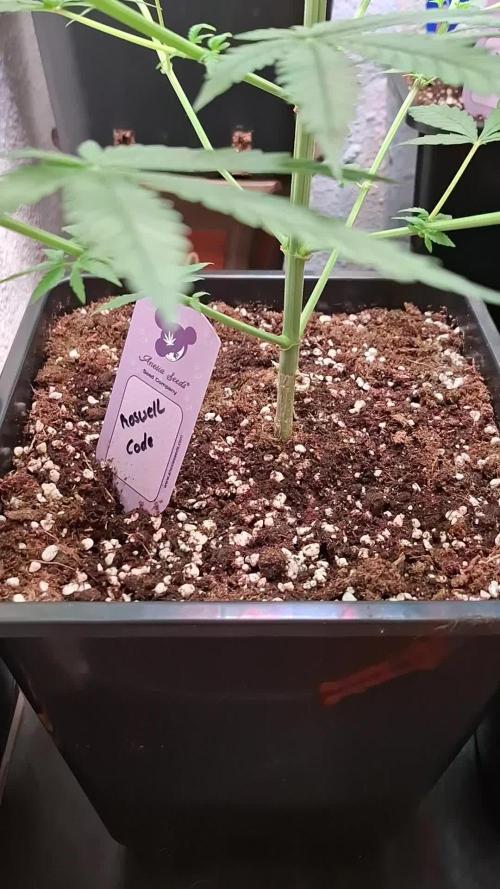
Servus liebe Growmie's alles fresh bei euch der Roswell Code geht es wunderbar voll in umgestellung auf die Blütephase.
Lasst es mich kurz sagen Super Performance, Sie macht sich sehr schön Ihre seiten Triebe sind da wollen Gas geben der strech wird bald beginnen.
Der Hesi TNT Complex wird langsam runter gefahren Hesi Blüh Complex geht mit an den Start.
Den PH wert habe ich von 6,7 auf 6,5 runter gefahren da jetzt primär andere Nährstoffe zur Verfügung stehen müssen.
Der Ph wert wird vor der Massephase der Buds wieder um 0,2 runter gefahren da beträgt er dann nur noch 6,3.
Jetzt muss Sie noch ein wenig Zeit brauchen bis dahin halte ich euch weiterhin auf den laufenden.
Bleibt alle Cool 😎 dont worry be Happy stay High and chill.
Danke für den halt mögen all eure Ladys Gesund und prächtig wachsen und euch mit schmackhaften Stuff versorgen 👌🍀
■■■■■■■■■■■■■■■■■■■■■■■■■
03.09.25 BT#5
Hello dear Growmie's all fresh with you the Roswell Code is doing wonderfully well in the transition to the flowering phase.
Let me say it briefly Super performance, she is already doing very well her side shoots are there want to give gas the stretch will start soon.
The Hesi TNT Complex is slowly being reduced and the Hesi Bloom Complex is also being added.
I have lowered the pH value from 6.7 to 6.5 as other nutrients must now primarily be available.
The pH value will be reduced again by 0.2 before the buds' mass phase, when it will only be 6.3.
Now she needs a little more time until then I will keep you up to date.
Stay cool 😎 dont worry be happy stay high and chill.
Thanks for the support, may all your ladies grow healthy and splendid and provide you with tasty stuff 👌🍀


Processing
Likes
16
Share


@Skunky
Follow
Alright. Back to autoflowers! 2x Dark Devil (first time growing it) and 2x Royal Creamatic (I just love that strain!)
Preparations I did yesterday:
- Took seeds out of fridge to prepare them for the new climate
- Prepared a bucket of water so it can sit for 12h
- Presoaked the medium with Root Complex so it already starts to 'work' and settle the ph
- Installed my DIY 4x 3,5W LED light fixture
___________________
DAY 1 - HAPPY NEW YEAR!!! 01.01.2018!!!
Dropped the seeds and covered them slightly with soil. Watered them a bit with Root Complex. Covered the pots with cellophane so the humudity stays high at around 99% RH.
___________________
DAY 6
Dark Devil (DD) 1 & 2 did pop out their heads yesterday morning.
Royal Creamatic (RC) popped out yesterday night
Royal Creamatic 2 is still doing its underground stuff. I hope it won't take too long...
Feeding Root Complex only. Water has been ph'd to 6,5.
I also switched on the blue leds from the Viparspectra to widen the light spectrum.
The small bulbs are 3,5W led lights, 4000K, 430 lm
Room temp: 24C, Humidity: around 75% when the tent is closed.


Likes
65
Share


@Roberts
Follow
Gold Sativa has been growing good. I did a solution change yesterday to bring the ppm down to 200 range. She is just trained, and ready for another week. I am growing her in a New Level Hydro bucket, under the Spider Farmer SE5000 light. Thank you Spider Farmer, New Level Hydro, and Quebec Seeds. 🌱🤜🤛🌱
Thank you grow diaries community for the 👇likes👇, follows, comments, and subscriptions on my YouTube channel👇. ❄️🌱🍻 Happy Growing 🌱🌱🌱
https://youtube.com/channel/UCAhN7yRzWLpcaRHhMIQ7X4g
SE5000
https://amzn.to/3qFpAML
Spider Farmer Official Website Links:
US&Worldwide: https://www.spider-farmer.com
UK: https://spiderfarmer.co.uk
CA: https://spiderfarmer.ca
EU: https://spiderfarmer.eu
AU: https://spiderfarmer.com.au
Coupon Code: saveurcash
Www.newlevelhydro.com
Www.hygrozyme.com

Likes
61
Share


@Dunk_Junk
Follow
Well she's chugging along this week. Just waiting for the trichomes to change from crystal clear.

Likes
17
Share


@420DeepGrow
Follow
Gracias al equipo de Zamnesia, Marshydro, XpertNutrients y Trolmaster sin ellos esto no sería posible.
💐🍁 Frosted Guava:
La Frosted Guava es una cepa índica dominante y súper resinosa, que es un cruce de la Guava y la Frosted Skywalker. Con unas características de cultivo muy versátiles, un aroma exótico y afrutado, y un subidón relajante y lúcido, la Frosted Guava es ideal para cualquier plantación de marihuana.
🌻🚀 Consigue aqui tus semillas:
Código Descuento 20%: ZAMMIGD2023
💡TS-3000 + TS-1000: se usaran dos de las lámparas de la serie TS de Marshydro, para cubrir todas las necesidades de las plantas durante el ciclo de cultivo, uso las dos lámparas en floracion para llegar a toda la carpa de 1.50 x 1.50 x 1.80.
https://marshydro.eu/products/mars-hydro-ts-3000-led-grow-light/
🏠 : Marshydro 1.50 x 1.50 x 1.80, carpa 100% estanca con ventanas laterales para llegar a todos los lugares durante el grow
https://marshydro.eu/products/diy-150x150x200cm-grow-tent-kit
🌬️💨 Marshydro 6inch + filtro carbon para evitar olores indeseables.
https://marshydro.eu/products/ifresh-smart-6inch-filter-kits/
🍣🍦🌴 Xpert Nutrients es una empresa especializada en la producción y comercialización de fertilizantes líquidos y tierras, que garantizan excelentes cosechas y un crecimiento activo para sus plantas durante todas las fases de cultivo.
Consigue aqui tus Nutrientes:
https://xpertnutrients.com/es/shop/
💻 Trolmaster Tent-X TCS-1 como controlador de luz, optimiza tu cultivo con la última tecnología del mercado, desde donde puedes controlar todos los parametros.
https://www.trolmaster.com/Products/Details/TCS-1
📆 Semana 5:
Comienzan a formarse los cogollos, las hojas se llenan de resina cada dia y el olor es bastante fuerte. Parece que ha terminado de estirar. Practico una defoliación intensa para airear los futuros cogollos y dejar mas espacio en el cuarto de cultivo.
Agrupo de nuevo las macetas en su lugar optimo para asi rellenar por completo la carpa @marshydro.
Me quedé algo corto de nutrientes pero estoy muy contento con los resultados, cada vez le voy encontrando mas su punto optimo. Siempre es mejor quedarse corto que pasarse.
Likes
12
Share


@AtomicOrgy
Follow
She's getting bigger, the colas are beautiful, but the lower buds are small. Are they going to grow more? How many more weeks to come? Honestly, I'm afraid the yield is going to be small. The way I consume cannabis, 50 grams aren't enough for a month...

Likes
17
Share


@Solarcradle
Follow
Highest center cola is 21" tall and rest of the canopy averages about 10"... LST included


Likes
4
Share


@NigelCake420
Follow
Wow... Very healthy plants... Going from seed to monsters in 22 days... 😁😁 Can't wait to see them flower..under the 400 hps... Topping and thinning the lower branches for a hst/sea of greenish 👍
Likes
14
Share

@All_our_small_plants
Follow
Bewässerung: 500 ml jeden 3 Tag in der Fünften Woche
pH-Wert: 6
EC-Wert: 1.8 mS/cm
Temperatur: 30ºC
Luftfeuchtigkeit: 55%
Schädlingsbekämpfung: im Moment haben wir keine Anzeichen das es was zu bekämpfen gibt, sobald die ersten Anzeichen da sind werden wir handeln :), aber zur Sicherheit haben wir wieder ein paar Raubmilben an die Pflanzen gehenkt.
PPFD: 600 µmol/m²/s
DLI: 38 mol/m²/Tag
Düngemittel: Sie bekommt CalMag von BioBizz zu Prävention. Ab Tag 8 haben wir angefangen sie mit einem Mineralischen NPK Dünger (NPK 7-3-5) zu Gießen .
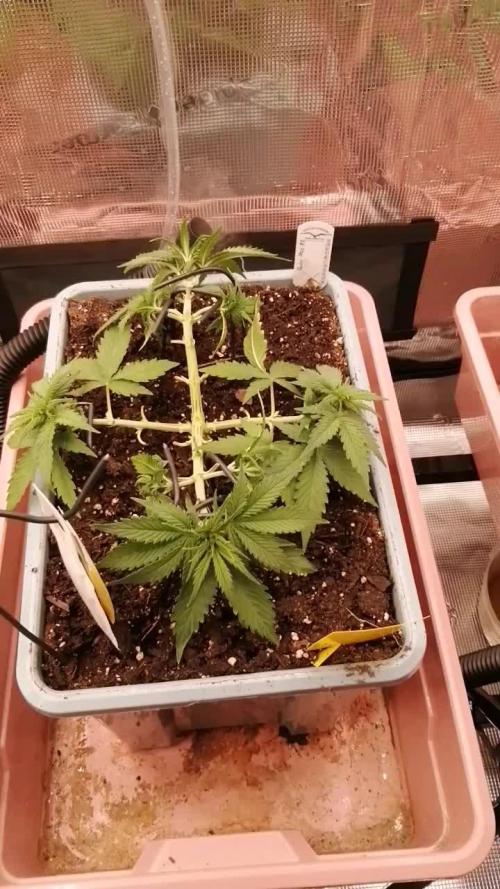
Besonderheiten: Wurde Getoppt und mit LST Trainiert
-Tag 28 Heute haben wir sie Stark entlaubt und LST angewendet, in den nächsten Tagen wird sie weiter Trainiert. Bis sie in die Vorblüte wechselt.
-Tag 30 Sie wurde Heute in einen der Großen Töpfe umgepflanzt und wird sich nun ein paar Tage erholen. Sie hat heute auch wieder eine Portion Wasser mit Dünger bekommen, Sie macht sie ganz gut :)
-Tag 31 auch sie wurde heute trainiert und entlaubt 😗

Likes
1
Share


@DrGL_Thumb
Follow
Girls doing well, clearly see all hit with hit substrate 😂 but ChemDawg is despite the hit battling n fast 😂
Likes
25
Share

@ChickenWing1024
Follow
AUTO BLACK OPIUM - Another amazing week - Loads of trichomes, colours are darkening and pistols are turning amber. The smell is ridiculous - The buds are sticky and I cant wait to smoke some.
AUTO GIRLS SCOUT COOKIES - She just keeps on growing larger and larger - did defoliation on her for the second time during pre flower stretch and it looks like I might have to do another.
AUTO SWEET REBEL - Removed this plant from the diary as it grew incredibly small but using it as a comparison to show off the Black Opium colours.

Likes
27
Share


@RDWCGrowing
Follow
6/13/2023
Week 10- Day 1 of Flower (Day 131 overall) (Day 70 of Flower)
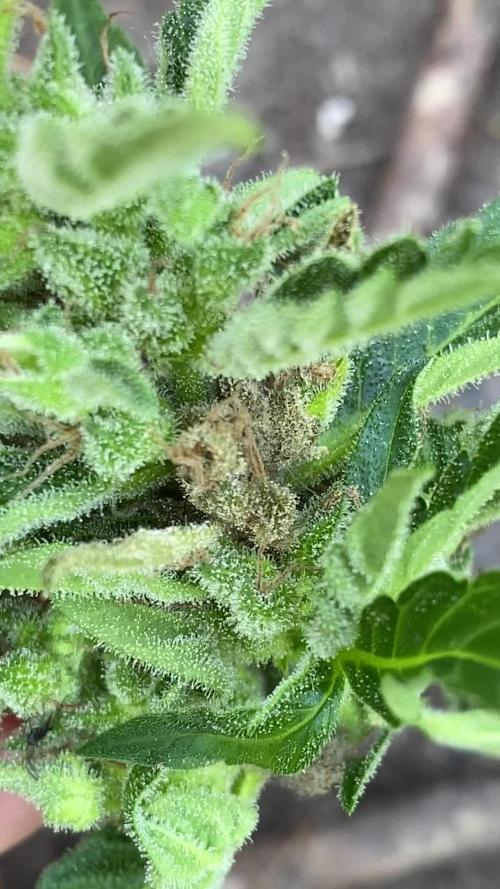
Auto Pilot Day 6.. Checked the Trichomes and the bud density and both are looking good.. Definitely needs a little more time for the Trichomes to be where I like, so based on my check I think we are still looking right around the end of the competition 22June to be done and ready for harvest. I do like that the fade is coming in the leaves nicely, so my chart I think is dropping off the Nitrogen exactly like it is supposed to.
6/14/2023
Week 10- Day 2 of Flower (Day 132 overall)
Auto Pilot Day 7.. Decided I would take some contrasting pics today with my light up to 100 and my light all the way on Dim. I hope you enjoy the pics.
6/15/2023
Week 10- Day 3 of Flower (Day 133 overall)
Auto Pilot Day 8.. Decided to take a look at the Trichome's today and Check to see where they are at and honestly if I might ho ahead and start my flush tomorrow and harvest on Sunday.
6/16/2023
Week 10- Day 4 of Flower (Day 134 overall) (Day 74 of Flower)
Today I pulled an Armageddon however instead of darkness they are going to get 48 hours of light. The reason why they are going to get light instead of dark is when I was taking out the netting a lot of the buds were so heavy they fell over and exposed some areas I really want to get some light to... so 48 hours of light at 40% while I watch what should be a beautiful final fade as the plant eats up the last Nutes. If anything goes wrong I can abort take the photos and cut so will pay really close attention to how it is looking over the next 48 hours.
Added 30 Gallons of PH only Water.
Reduced Lighting to 40% removed program time off. 48 hours of light.
6/17/2023
Week 10- Day 5 of Flower (Day 135 overall) (Day 75 of Flower)
I had someone tell me that a few growers had done as I did and Gone Armageddon on the plants. Filling it with PH only and said the plants did not respond well and they were taken out of the comp at the very end because they felt like the pictures just wouldn't come out right. Even though I did go Armageddon, The PPM is at 353PPM with the residue of what was left in the buckets after draining as well as what I am getting from the TAP so I think they are doing good but I am checking them every few hours to see how they seem to be doing and I think they are doing good still and are on track.
I also started prepping the area for the pics tomorrow
T-24 Hours until Chop
6/18/2023
Week 10- Day 6 of Flower (Day 136 overall) (Day 76 of Flower) (Harvest Day)
What a day.. what a day.. what a day.. as I was setting up and trying to figure out how I was going to get my pics #3 stems started breaking, it fell over and other stems broke.. So no really stunning competition photo for her, she had such a nice purple fade.. #2 stayed up in the Tent so that is the one I had to go with to submit for the contest. I wet trimmed them as they went into the tent and they took up three rows hanging in tent. I also decided I wanted to try some so I put a little in the freeze dryer for a 48 hour smoke test.. I will weigh it and add that to my total weight for the plants when it is all done.



Likes
9
Share


@Lifesgarden420
Follow
She is getting so dense and very sticky freaking covered in trichomes
Likes
1
Share


@SpartacaZ
Follow
Molto caldo e poco tempo a disposizione per stargli dietro ma sta dando lo stesso il meglio di se!!!!
Ringraziando divine seeds per i suoi semi divini!