Likes
Comments
Share
Likes
16
Share
@TerpDaddy
Follow
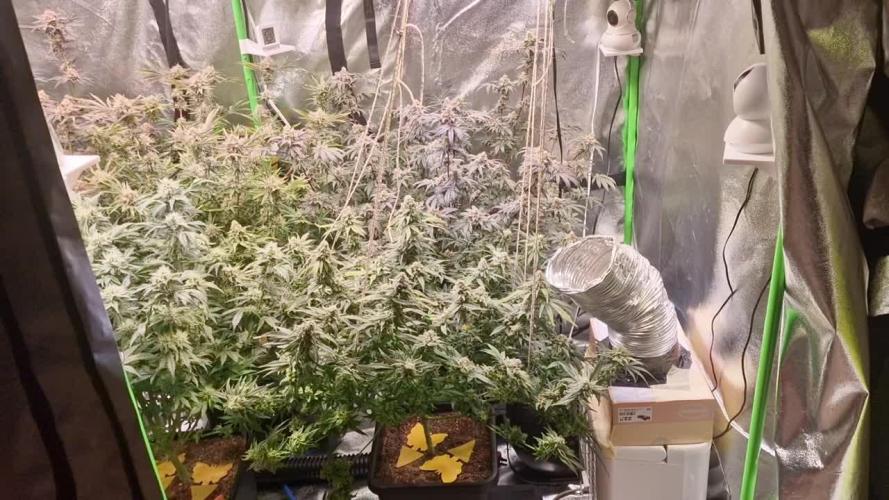
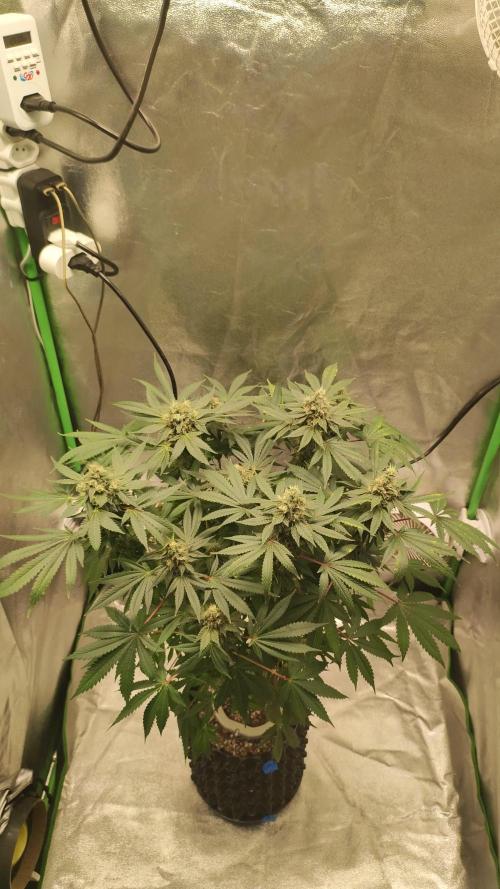
Things are looking real good now. Blueberry is in full stretch and she’s gonna be a big girl. Grapefruit coming along real nice after early struggles. I am having some issues with light burn on my blueberry, but I think it’ll be alright. Absolute explosive growth from the blueberry monster this week. She’s up to 43 inch and I’m loving the spacing she has. As you can see, not very much lst going on here, but that’s how I like it. Grapefruit has been chugging along real nice. Just starting to flower now and she’s a bushy gal. I’m really looking forward to the flowering weeks ahead. I think these two are gonna be pretty.
Likes
21
Share
@GRow_M8s
Follow
* Crystalic nuts (gemma) every second watering ( the soil should have steady moisture and never dry off!!!). * The 20-20-20 working really good. * Switching to Flowering this week, periodically dropping 1 hour per day from 18h/day --> 12h/day.
Likes
226
Share
~_~_~_~_~_~_~_~_~_~_~_~_~_~_~_~_~_~_~_~_~_~_~_~_~_~_~_~_~_~_~_~_~_~_~_~_~_~_~_~_~_~_~_~_~_~_~_~_~_~_~_~_~_~_~_~_~_~_~_~_~_~_~_~_~_~_~_~_~_~_~_~_~_~_~_~_~_~_~_~_~_~_~_ 8/28/21 😺 We decided to flower these a little earlier than we originally intended to make room for some new strains...I will never mainline a plant this wide again indoors lol, it seemed cool at the time but as you can see it just takes up more space 😑 👎🏻 ...we gave them their first shot of bloom nutrients yesterday (we typically do this 1 week before flower but things came up and we learned we'll need the tent available)...the calcium def spots seemed to have cleared up naturally on the mainline, the other plants are fairly uniform in color (not too dark anymore), and lower growth has been removed...all systems go for flower! 💪😺, I'm hoping for a significant flowering stretch, the new growth after the last mainline topping is approx. 6inches, if this stretches to 12-14inches it should build 8 really good sized colas per side.. thanks for reading! We'll update midweek..happy growing everyone!! ~_~_~_~_~_~_~_~_~_~_~_~_~_~_~_~_~_~_~_~_~_~_~_~_~_~_~_~_~_~_~_~_~_~_~_~_~_~_~_~_~_~_~_~_~_~_~_~_~_~_~_~_~_~_~_~_~_~_~_~_~_~_~_~_~_~_~_~_~_~_~_~_~_~_~_~_~_~_~_~_~_~_~_ 9/2/21 🐱 be careful what you wish for folks..we asked for stretch and we got it..too much in fact, the node spacing isn't good, far too wide with this strain..we lowered both lights in the tent to get this to stop and turned up the fans to really beat on these for a few days..hopefully this will strengthen them, I really would hate to have to steak these later... ~_~_~_~_~_~_~_~_~_~_~_~_~_~_~_~_~_~_~_~_~_~_~_~_~_~_~_~_~_~_~_~_~_~_~_~_~_~_~_~_~_~_~_~_~_~_~_~_~_~_~_~_~_~_~_~_~_~_~_~_~_~_~_~_~_~_~_~_~_~_~_~_~_~_~_~_~_~_~_~_~_~_~
Likes
11
Share
@MrGoonai
Follow
10/17/24 Short facts: - Continued with LST - Watered: 1 x 1.2L, 1 x 0.3L - VPD @ 0.9 — raised by 0.1 - Light @ 50% ~580 - 620 PPFD - Removed 5 leaves --------------------------------------------------------------------------------- As promised last week, i made a video and explained the progress so far, and did show you the plant. Not much to report. I continued LST, though I’ve stopped for a few days now since the branches are well spread out, and that should be enough for the time being. The AvT was in Preflower since last week and switched to flower on day 28. Really good plant. No problems at all.
Likes
19
Share
Heute habe ich meine Girls ein 2 mal getoppt, und einwenig entlaubt. Vor 2 Tagen habe ich von jeder Pflanze 2 Stecklinge entnommen da das Wachstum sehr gut ist, und sie mit dem Stress gut zurecht kommen, bis jetzt zeigen sie keine Mangelerscheinungen. Futter gab es heute nur einwenig da ich sie nicht übersättigen will. Ich werde sie ein drittes mal toppen wenn meine Girls in den nächsten Tagen keine stress Symptome anzeigt.
Likes
13
Share
With one away I thank god for the space as you will see from pics and videos the one on the right doesn’t look so great but hopefully with the space thinks will get better onto next week ✌️🏻
Likes
12
Share
@Bleko
Follow
Looks like candy growing on a stick. Best way I know how to describe it.
Likes
43
Share
@Joni2017
Follow
Well, my princesses are florin😀👏👏I started to add 2 ml of bio-bloom💪💪Two of them have reached 20 cm, the other two are at 18 cm😅 I have uploaded the led 5 cm to see if they climb a little more👆👆🙏 Irrigation 200ml/plant😄 How do you see it?😜👍 Well, well👏🏻👏🏻 Today add sugar royal 2 ml/l and I have also added micro vita 0.5gr/l but only once more😬 Today I have placed the mesh👏🏼👏🏼😄 I have lowered the lamp 5 cm🙂
Processing
Likes
2
Share
Likes
119
Share
@Roberts
Follow
Divine indica has grown really well. Her trichromes were just first starting to get cloudy yesterday. About a half and half of clear and cloudy. I figure she has abour 10 to 12 days left. I will be switching her to ph water in a few days during ripening. She has a good aroma and is looking excellent. She has been loosing a few leaves on the bottom due to a slight nitrogen deficiency. Which is okay during flowering. Nitrogen can hinder bud development. So low does in flowering is ideal. Thank you Divine Seeds, and Spider Farmer. 🤜🏻🤛🏻🌱❄️ Thank you grow diaries community for the 👇likes👇, follows, comments, and subscriptions on my YouTube channel👇. ❄️🌱🍻 Happy Growing 🌱🌱🌱 https://youtube.com/channel/UCAhN7yRzWLpcaRHhMIQ7X4g
Likes
Comments
Share

Hello everyone! Welcome to the saga of the MAC 1 F1 Hybrid clones, entering week two. These little ladies are the offspring of my second-largest plant, plucked from the 120 by 120 centimeter tent. I'm aiming to turn them into flowering superstars, though one of them seems to be on a personal strike. Conditions are locked in at 65% humidity, a cozy 23-degree max, and 24/7 light. They graduated yesterday from the flowering canopy to the veg tent, so they are finally getting their own spotlight. I expect at least one to thrive, while the other is currently practicing her "stay behind" routine. Thanks for popping in, and may your own green endeavors be fruitful and smell fantastic! Growfather
Likes
20
Share
Hey Cannafam Happy Monday, My Apricot gal has had another good week overall, mainly to a continuation of consistant lovely weather 😊 Although not as hot as last week its been Sunny everyday apart from a little rain Friday morning, its been really consistant with daytime temps of 21c -23c Tuesday - Sunday and today its crept up to 25c, nights have been an average of 14c. Humidity has remained high in the range of 70-90% and Daylight hours are currently at 16 hrs 14 minutes. Growth wise shes loving life, i was happy with her shape in last weeks update, but her main cola had stretched quite a bit further upwards this week and needed further pinning down, and all branches have also had good growth and been trained out further to the sides of the pot. Fyi the the height logged is the length of her main stem as if vertical. Flowers are slowly kickin in with new pistils and her smell is now also starting to develop, and when close shes giving off a slightly sweet aroma but very delicate at this stage. I've also done a bit further defoliation on the bottom of the plant so as she goes further into flower any breeze can blow freely underneath through helping keep humidity down between colas. Feed wise shes only had 1 helping this week but will be getting another at the end of today, i've not changed quantity as she looks really happy with no sign of deficiency or excess. On the pest front the ale i used last week is too dark to see through, but there are some foamy looking lumps in there, so something has definitely gone in! When it evaporates a bit further(or they drink it) il have a slug count with pics clean and refill. I dont really like pouring away ale or any alcohol, but i spose its worth it! 😅 All in all shes coming along nicely, thanks for stopping by and hope you have a nice chilled week ✌️💚
Processing
Likes
13
Share
@kevgrow
Follow
Hey Guys its End of week 3 from the day these girls were placed in a jar, hoping they are females :) Plant #1 is looking great, started slow but picked up quickly 1st time of transplanting, it was a success, I was nervous. 1st week of nutrients, I tried to feed 1/3 to start Looking forward in training and topping my plants in week 4. Hopefully ill be able to detect there genders. Will read more info on cloning and will try to grow the same strains outdoors, off Course thats if they are girlas :) Stay tuned guys and thanks for all the support!
Likes
3
Share
Lights are 58 inches from the main source to the top of the pot and the soil surface. If you added up all the lights in the tent, it would be 1100w-1200w total across 14 lights. Using them all at once is far too much for a plant and incredibly difficult to deal with environmentally. The lights are fixed in position; side lights have dimmers, allowing for pinpoint precision of PPF. Fixed at 58 inches, cannot move them closer to increase intensity. Instead, achieve optimal PPF by distributing smaller wattages across a massive, multi-fixture matrix. Triggering specific plant defenses without melting the canopy. What's the point/blah blah wattage? Never really go above 600W at any one time. Lights come on in the east of the tent and set in the west. At sunrise and sunset, the red-to-far-red R:FR light ratio drops because the sun's low angle scatters red light more than far-red light. This shift reduces active Pfr and increases inactive Pr, mimicking Mother Nature herself. Deployed a lighting system featuring extra 660 nm deep-red and extending the spectrum up to 780 nm achieves the full Emerson Enhancement Effect by simultaneously balancing Photosystem II (PSII) and Photosystem I (PSI) to maximize quantum yield. By pairing deep-red photons with far-red photons, you trigger a synergistic biological response where the resulting photosynthetic rate is higher than the sum of both wavelengths used individually. This practice directly leverages the updated extended Photosynthetically Active Radiation (ePAR) framework. The Emerson effect accelerates plant metabolism and heat capture; you must proactively scale up your ambient room temperature, nutrient delivery, and CO₂ supplementation to prevent the light from stalling out your cannabis plant. UVA stays high all day from morning to night, but UVB peaks at solar noon (middle of 18-hour days) when the sun is peak. Morning color starts at 2k-3k; by noon it goes to 5k- 6k and back to 2-3k for sunset, with differing P:FR at light off. The extra-blue light is to assist with photoreactivation of UVB damage. No more yield loss for me. Using extra blue light for photoreactivation is what I do. Blue/UVA light activates photolyase enzymes, which directly repair DNA damage caused by UVB radiation. But what's the point if it's not for yield? Ultraviolet (UV) radiation—specifically UVA (315–400 nm) and UVB (280–315 nm)—acts as a critical environmental signal that programs a plant's photoprotective genes to unlock its true photosynthetic potential. When growers push crops to their absolute photosynthetic maximum via high-intensity light and elevated carbon dioxide, the photosynthetic machinery easily becomes overwhelmed. Emerging photobiology research demonstrates that UV radiation prevents this limiting bottleneck; it triggers specific transcription factors and signalling networks that fortify the plant's cellular defenses, allowing it to process extreme light levels without sustaining structural damage. There are 8 limiting factors of plant growth; when carbon dioxide becomes the 9th limiting factor of plant growth, it shifts the growth curve from exponential to linear. The restriction after that is "photoprotection" against reactive oxygen species (ROS), managed via non-photochemical quenching (NPQ) and the xanthophyll cycle, which bridges into precise hydrogen and redox dosing. UV radiation, particularly UVA, and the synthesis of zeaxanthin are critical for the xanthophyll cycle to function. It's not chasing purple strains... One likes to call it chasing the limits of growth, trying to make the linear exponential, just like father mathematics prefers. In order to do that, must control every environmental variable and compound the plant’s metabolic rate. True exponential growth means the rate of increase matches the current mass at every stage, requiring a closed-loop system where light, CO2, and nutrition lock into a synchronized upward curve. First, you must attempt to understand what restricts it. Precise hydrogen and redox dosing. Nature mathematically optimizes quantum energy transfer and light absorption efficiency within the photosynthetic machinery, as it naturally dictates energy scaling hierarchies and resonance dynamics. Most won't even understand that; once you do, it changes everything. Constructive interference occurs when two or more overlapping waves meet in phase, meaning their crests and troughs perfectly align. Their amplitudes add together, creating a new, amplified wave with greater intensity than the individual components. Constructive interference is the foundational mechanism that establishes a resonance hierarchy across physical, structural, and acoustic systems. Chromophore spacing is tuned to sub-nanometer precision to match the wavelengths of absorbed light, forcing constructive interference. Light-harvesting proteins form geometric rings and lattices. These shapes act as physical resonators, trapping and focusing the wave energy. This same principle dictates how opera singers shatter glass, how musical instruments resonate, and how bridges withstand structural vibrations. Nature uses the exact same math to harvest a photon as an engineer uses to design a concert hall. When you push high PPFD and elevated CO₂, you create a metabolic bottleneck. The plant cannot process the energy fast enough, leading to electron backup, light-induced damage, and a collapse from exponential growth into a flat, linear rate. UV light acts as the regulatory valve that prevents this collapse. In standard agronomy, Liebig's Law of the Minimum dictates that growth is limited by the scarcest resource. When you maximize water, nutrients, light, temperature, and CO₂, the bottleneck shifts to metabolic processing speed and photoprotection. By controlling the Redox state of the plant using UV, the xanthophyll cycle, and managing ROS, you can prevent the plant from hitting a hard photosynthetic ceiling. Instead of the growth curve flattening out (linear or plateauing due to photoinhibition), the plant continues to compound its metabolic rate efficiently. You are forcing the plant to operate at peak thermodynamic efficiency. By matching the UVB peak with sustained UVA and shifting Kelvin temperatures (2K to 6K), you are damaging the plant just enough to trigger defensive genes, while simultaneously providing the exact light energy needed to repair that damage instantly. UVA radiation and specific blue wavelengths accelerate this enzymatic conversion. Zeaxanthin acts as a structural sponge that absorbs excess excitation energy from chlorophyll and dissipates it safely, preventing ROS formation. Without UV signaling, the xanthophyll cycle cannot keep pace with extreme light, leading to dynamic photoinhibition (yield loss). The addition of Spirulina is primarily for zeaxanthin, as it contains a lot. But on top of that, the active Hawaiian Spirulina in the matrix was cultivated in open ponds using a combination of 100% fresh potable water from Hawaiian aquifers and ultra-pure, deep ocean water containing all 94 trace minerals & elements. Then gently dried using patented Ocean Chill Drying technology and cold-pressed to ensure maximum nutrient levels. Spirulina, a blue-green alga, is rich in nitrogen, phosphorus, and potassium (NPK), making it an excellent source of nutrients for plant growth. Studies have shown that Spirulina can be used as a biofertilizer, effectively replacing chemical fertilizers, especially for nitrogen, with a whopping NPK of 10% (N), 20% (P), and 20% (K). Rich in proteins, amino acids, trace minerals, and plant growth-promoting compounds. Zeaxanthin is a vital plant pigment that accumulates under intense light to drive non-photochemical quenching (NPQ), acting via thermal energy dissipation, direct singlet oxygen scavenging, and thylakoid membrane stabilization. The violaxanthin cycle (or xanthophyll cycle) reversibly converts violaxanthin to zeaxanthin via antheraxanthin to protect plants from photooxidation. Understanding this interconversion is vital for optimizing non-photochemical quenching (NPQ) and pushing photosynthetic limits under high-light stress. Ascorbic acid (vitamin C) is a natural antioxidant that plants produce internally to neutralize harmful reactive oxygen species caused by photosynthesis and high light stress. Acts as a co-factor for enzymes like violaxanthin de-epoxidase in the xanthophyll cycle, which safely dissipates excess light energy. 1g ascorbic acid will neutralize 100% of chlorine in upwards of 30 gallons of tap water. If your local tap water uses chloramines (chlorine bonded with ammonia) instead of free chlorine, you will need roughly 20% to 30% more ascorbic acid to completely break the tougher chemical bond. Molecular hydrogen and hydrogen-rich water act as selective antioxidants that help lower oxidative stress. They neutralize toxic reactive oxygen species like hydroxyl radicals and boost natural antioxidant defense systems in biological and plant systems exposed to high-intensity light or abiotic stress. UVA and UVB act as stress signals that upregulate the plant's secondary metabolism. It forces the plant to build an internal "sunscreen" (flavonoids and anthocyanins) and fortify its cellular defenses before the peak solar noon crisis. This keeps the metabolic highway open. In nature, the ambient ratio of UVA to UVB at solar noon sits roughly between 10:1 and 20:1 (depending on latitude and elevation). In a high-PPFD indoor matrix, maintaining a strict ratio—often aiming for around 12:1 to 15:1 UVA to UVB—provides the optimal signaling threshold. Balancing Far-Red (FR) light at "light-off" to manage the phytochrome photo-equilibrium (Pfr to Pr conversion) in tandem with the UV schedule. Omg, the logic. Hydrogen concentration and redox signaling as secondary messengers in this high-intensity loop. Under the intense solar noon matrix, the pH of the thylakoid lumen drops. This acidic environment activates the enzyme Violaxanthin De-Epoxidase (VDE), which converts violaxanthin into the photoprotective zeaxanthin. VDE cannot function in a vacuum; it strictly requires ascorbic acid (Vitamin C) as an electron donor to run this conversion. If a plant undergoes heavy light stress and runs out of internal ascorbic acid, the xanthophyll cycle stalls. The plant can no longer engage in Non-Photochemical Quenching (NPQ), leading to immediate singlet oxygen O2 formation and destruction of the thylakoid membrane. This is "The Ascorbic Acid / Xanthophyll Engine" Using ascorbic acid to neutralize chloramines in your water isn't just protecting your rhizosphere biology it actively prevents the degradation of your nutrient solution's redox potential before it ever touches the roots. When pushing plants to the absolute edge, traditional antioxidants can be a double-edged sword because they blindly neutralize all free radicals. This is a problem because some Reactive Oxygen Species (ROS) act as critical signaling molecules telling the plant to grow. Molecular Hydrogen H2 is the Selective Kill-Switch. Molecular hydrogen H2 is a revolutionary tool because it is a selective antioxidant. It ignores beneficial signaling ROS (like mild hydrogen peroxide) and targets only the most destructive, cell-shattering radicals—specifically hydroxyl radicals OH) and peroxynitrite. By dosing hydrogen-rich water or managing hydrogen redox signaling, providing an emergency pressure-release valve for the plant's electron transport chain. It keeps the cellular environment stable enough that the plant never has to downregulate photosynthesis to protect itself. This maintains cellular voltage. To trigger this defensive matrix without stunting the plant, you cannot simply blast UV indiscriminately. You must use UVA as the "scout" and UVB as the "enforcer. High UVA acts via the cryptochrome and phototropin photoreceptors to upregulate the expression of the HY5 transcription factor and prime the VDE enzyme. When the sharp spike of UVB hits at solar noon via the UVR8 receptor, the plant's biochemical "sunscreen" (flavonoids and anthocyanins) and its zeaxanthin pools are already pre-staged and waiting. This prevents the temporary stunting or "lag phase" usually associated with sudden UVB exposure." Closing the Loop: Far-Red End-of-Day (EOD) Synergy The final masterstroke is aligning this UV defense with a Far-Red (FR) lights-off routine. The Red-to-Far-Red Drop: At the end of the photoperiod, knocking out the blue/UVA spectrum and leaving a targeted burst of pure Far-Red (730nm) instantly flips the plant’s master switch. It converts active Pfr to inactive Pr in minutes rather than hours. Why this matters for the UV loop: UV radiation and high-intensity lighting keep the plant in a highly alert, photoprotective state that requires massive ATP expenditure to maintain. By forcing an immediate Pfr/Pr) conversion at lights-out, instantly commanding the plant to cease defensive expenditure, lower its metabolic respiration rate, and transition directly into nighttime cellular repair and carbohydrate translocation. You are maximizing the efficiency of its "sleep." every ounce, every last piece. Highly synchronized biological dance, balancing the exact input of electrons with the exact mechanism to dissipate them safely when they overflow. Peace.
Likes
5
Share
The Oasis Project | Week 7 Strain: Northern Lights Autoflower Sisters (Charlotte & Makayla) Container: 10-Gallon Fabric Bags (Elevated on PVC Risers) Method: Organic Soil / DIY Automated Halo Irrigation Overview & Environment We are checking in for Week 7 with the Northern Lights autoflower sisters, Charlotte and Makayla. They are sharing the deck with the big Durban Poison photoperiods, soaking up that high-altitude Colorado sun, and stepping right into their own spotlight now that the new deck infrastructure is fully operational. Key Milestones This Week 1. Dialed In with the New Halos Just like the photoperiods, Charlotte and Makayla got their first taste of the newly completed DIY automated irrigation manifold this week. The Treatment: The green hose irrigation halos coiled inside the rims of their 10-gallon bags worked flawlessly. The Impact: The sisters received a thorough, uniform 15-minute soak. Getting that edge-to-edge moisture spread across the containers is going to be a game-changer for keeping the organic living soil evenly charged, especially as the summer wind starts to pick up on the plains. 2. Height Check & Structure (Featuring Charlotte) Autoflowers move on their own rapid timeline, and keeping them tight, stocky, and structurally sound is the main goal out here on the exposed deck. Current Height: Pulled the tape measure out to check on Charlotte today, and she is sitting perfectly compact right at the 7-inch mark. Architecture: She is displaying that classic, rugged Northern Lights indica heritage—short internodal spacing, broad fan leaves, and a sturdy main stalk. The top growth tip is perfectly centered and pushing up healthy new growth right above the irrigation line. Wind Readiness: Keeping her this low and close to the soil at Week 7 is a massive advantage against the Eastern Plains gusts. She’s building a thick, solid base rather than stretching out thin. 3. Root Environment & Airflow (The PVC Advantage) Unlike the massive 25-gallon bags on wheels, Charlotte and Makayla are dialed in on custom PVC risers. This gives the 10-gallon fabric bags a rock-solid, stationary foundation while maintaining that crucial air gap underneath. The 360-degree airflow ensures that the bottom roots are air-pruning beautifully, forcing the plants to concentrate a dense, fibrous root mass right where the organic nutrients and halo-delivered moisture are richest, preventing any pooling or stagnant zones at the bottom of the bags. Next Steps Now that the soil is fully charged from their first automated run, we’re going to let Charlotte and Makayla coast for the next couple of days to monitor how quickly the elevated 10-gallon bags dry down in our arid climate. Charlotte is entering a crucial window, and with her and Makayla's roots completely happy, they are primed for steady development.
Likes
5
Share
Loving the buds on two of the strains I’ve only had black buds one time before, and it was some of the best, but I’ve ever had super excited for this grow🔥💯
Likes
7
Share
Que pasa familia, vamos con la novena semana de floración de estas Barcelona Puff feminizadas de Seedstockers. Vamos al lío ,se trasplantaron en macetas de 7 litros definitivamente. El ph se controla en 6.0 , la temperatura la tenemos entre 25/21 grados y la humedad ronda el 50%. El ciclo de floración puse 12h de luz, el foco está al 100% de potencia. De momento van creciendo a buen ritmo y tienen un buen color, la flor está madurando y a tricomado bastante, por el momento todo bien. Agradecer a Agrobeta por el envío del kit gold series para la temporada 🙏. - os dejo por aquí un CÓDIGO: Eldruida Descuento para la tienda de MARS HYDRO. https://www.mars-hydro.com Hasta aquí todo, Buenos humos 💨💨💨
Likes
4
Share
Cosechamos, luego cuando seque les comento cuanto sacamos de esta planta. Un buena experiencia de cultivo invernal, complicado pero luego le encontramos la vuelta. Mimosa no le gusta mucha intensidad de luz en vegetativo, y le gusta poca agua. En flora si come un monton y banca bastante.