


Likes
Comments
Share


@Samsemilla
Follow
Die Blüten schwellen weiter an und so langsam kommt auch etwas Farbe ins Spiel.
In dieser Woche hat sich einiges getan.
Leider wird das Wetter "relativ" nass/kalt.
Es bleibt spannend...

Likes
120
Share


@DogDoctorOfficial
Follow
The Harvest Prelude:
After a patient wait and 48 hours of darkness, the moment arrived. The Tropical Tangie Lego Ninja, standing proudly like a silent guardian, was ready for the grand harvest. The sound of each cut echoed through the grow space, reminiscent of felling a mighty tree. The compact structure of the buds was awe-inspiring, a testament to the ninja's disciplined growth.
The Lego Ninja, like a stoic warrior, was then hung upside down, beginning a two-week drying ritual. Maintaining an ambient temperature of around 21°C and a relative humidity of 60%, this slow-drying process allowed the buds to retain their essence, preserving the symphony of terpenes and cannabinoids.
The trimming phase unfolded like a fragrant masterpiece. Each bud, adorned with a glistening layer of resin, transformed the trimming process into a sensory delight. The zesty aroma of oranges enveloped the room, a tangible expression of the tropical lineage. The compact buds made every snip a careful dance, revealing an abundance of frosty trichomes.
The moment of reckoning arrived with the scale's unveiling. The Tropical Tangie Lego Ninja, from a single plant, bestowed upon me 309 grams of dried medicine. Each gram was a treasure trove of cannabinoids, a promise of euphoria and relief. The sheer compactness of the buds translated into a concentrated potency that left me in awe.
In parallel, the clones, nurtured with equal care, showcased a fascinating divergence. A twist in the tale unfolded as the intense oranges of the mother transitioned into vibrant tangerines. This unique expression, I believe, was a testament to the clones weathering a summer heatwave differently, bringing forth a distinct personality.
The clones, resilient and generous, gifted me a bountiful 549 grams of pure joy. This now my keeper of the garden, an embodiment of the Lego Ninja's legacy. The harvest dance, though familiar, carried the nuances of tangerine zest, a refreshing twist that left me eager to explore its intricacies.
Both harvests shared a common thread—their resinous abundance. The trim bin, akin to a treasure chest, gleamed with golden trichomes and fragrant joy. Sticky fingers became a badge of honor, a tangible connection to the resinous richness that filled the room.
Shout Outs:
No harvest report is complete without expressions of gratitude. A special nod to @DutchPassion_Official for crafting the genetic marvel that is the Tropical Tangie Lego Ninja. Their expertise paved the way for this epic journey, and I tip my hat in acknowledgment.
In conclusion:
As the dust settles on this epic harvest saga, my heart brims with happiness and excitement. The Tropical Tangie Lego Ninja has proven itself not just as a plant but as a living masterpiece. Stay tuned for the smoke report, where we delve into the true essence of this botanical ninja's legacy. Until then, fellow cultivators, may your gardens flourish, and your harvests be as bountiful as the joy they bring.
As always thank you all for stopping by, for the love and for it all , this journey of mine wold just not be the same without you guys, the love and support is very much appreciated and i fell honored and blessed with you all in my life<3 <3 <3
#aptus #aptusplanttech #aptusgang #aptusfamily #aptustrueplantscience #inbalancewithnature #trueplantscience
With true love comes happiness <3 <3 <3 Always believe in your self and always do things expecting nothing and with an open heart , be a giver and the universe will give back to you in ways you could not even imagine so <3 <3 <3
Friendly reminder all you see here is pure research and for educational purposes only
<3 <3 <3 Growers Love To you All <3 <3 <3
P.S- I must extend my sincerest apologies for the missing video reports. Regrettably, Grow Diaries is still facing some technical issues that are preventing me from uploading them. Rest assured, as soon as the situation is resolved, I'll share those videos to give you an even closer look at this fascinating journey. or in my case apparently GD dont let me do uploads over 100mb with is super small file if you working and editing videos , doing my best here to upload them all but GD is not making my life easy on this <3 <3 <3

Processing
Likes
23
Share


@eldruida_lamota
Follow
Ya en la recta final familia, están apuntito, solo unos días más.
Nuestras lemon kush ya recibieron su lavado de raíces , están sin productos ya solo AGUA.
Controlamos de todas formas el Ph igual y que no baje por debajo de 6,2.
Bestiales estás flores , un olor muy característico con tonalidades cítricas que recuerdan al limón.
Todo un clásico en verdad.
Estos ejemplares carecen de brazos laterales, son óptimas para un SOG desde semilla, pudiendo llenar 16 plantas en metro cuadrado.

Likes
16
Share


@Dunk_Junk
Follow
Wow she's grown loads this week.
22cm vertical growth.
Flowering going full steam ahead!! 😎 💪

Likes
77
Share


@Bread_n_Buds
Follow
For the last day of the year we treat ourselves to the story of a special little girl.
Her name is Biscotti, her name already says it all about the potential of this young girl born in Holland with this beautiful Italian Strain Name, she is precious and full of style since conception. She looks like she was designed by Pininfarina who smokes joints.
It's a bit as if Gianni Versace had dressed her, extravagant, provocative, truly flamboyant, if you have the patience to look at the thousand photos that I made clear that I literally couldn't stop taking. It's a journey I don't want to leave, especially when I'm in the middle of it. terpenes, please leave me there!
She grew up quietly, with her small internodal distance you could see that she was beautiful even without flowers, but it was when she flowered that she truly gave her best. Already from the first weeks of flowering you can understand very very well that the girl has a bright color and she threw resin very early thanks to Power Buds, Sugar Royal and Green Sensation in my opinion.
The flowers have an imposing shape, they really are beautiful little purple beasts just in the dry room, for a few days soon we will do an initial test and then we will wait to taste it without too much fresh taste.
I’m about sure to have rated 10 stars the strain and all feeding 5 stars but i found the strain rated 9 stars and the feeding 4, not sure but almost sure.
I often get sad when I cut it, I'm too sad to cut it, I always think I'll smoke it and everything, but it's so beautiful that it makes my heart ache to cut it. It's her life cycle, otherwise she would rot for goodness sake, it's a joke but I really have a moment of shock in her heart.
She'll move on to the first vaporized one I guess.
Technique used - She was worked with a. single topping cut but leaving the two branches lower than the cut, thus obtaining 4 main branches with the relative branches. I also did a bit of LST at the beginning but having space problems then I decided not to let it expand too much. Flowers are beautiful beasts for truly yummi.
Fertilizers - We have to make a special mention of Plagron I wrote a review in this diary which only partially explains how good this line of fertilizers is. I feel like I saw with my own eyes the changes in the plants when I gave the additives, I really saw the plants push in resin and everything. For more information read the review, I don't like to be repetitive, I don't write the quantities, they are also in the diary and in any case very similar to those recommended by the manufacturer. Never exceed this with any fertilizer and always flush.
Light and home - The light was provided by MarsHydro and the home as well, it is the SP 3000, a piece that is not of the latest generation but which I love for its length of around 110 cm which you can understand how it covers me super well, the 120 wide wide grow room cm, 60cm deep and 180cm high, always supplied by them with a better than average covering by a lot and fantastic windows from which to spy on the girls. I really love accessory holders that hang either inside or outside the growbox. top brand now leader.
There are many photos like my passion for this wonderful plant, look at as many as you want but if you have the patience to get to the end there are various super crop terpenes, beautiful and big like Porcini Mushrooms.
Love you "BISCOTTI IS BETTER THAN COOKIES"
Recommend this strain to everyone, go out and shout it in the streets, Biscotti is the most beautiful in the situation.
https://www.zamnesia.io/it/9484-zamnesia-seeds-biscotti.html
Plagron is a guarantee in feeding your little ones, I have been using it for many years until recently I thought that basic fertilizers were enough to make the little ones grow then I put the Green Sensation and I completely changed my mind.
https://plagron.com/en
I have started a series of experiments using stimulating frequencies for plants, I am trying something from the next round we will use it fixed.
Music of the week Radio Nula from Slovenia https://radionula.com/
Music of the week Music for Plants 432 hz https://www.youtube.com/watch?v=3EZqEvMoS3w
"I can see the light"
https://marshydro.eu/negozio/?lang=it


Likes
28
Share


@GanjaGecko
Follow
Die Woche 4 der Blüte ist rum und die Ladys duften einfach hervorragend💚 allen vorraus die GorillaZkittlez, wahrscheinlich auch die, die zuerst fertig sein wird. Gefolgt von der StrawberryBanana, die auch schon schöne Buds entwickelt. Die "letzte" im Bunde ist die GorillaAuto, allerdings sieht sie so aus als würde bei ihr am Ende am meisten bei rumkommen.
Bei der StrawberryBanana musste ich mittlerweile zwei Triebe entfernen auf denen Mehltau zu sehen war. Sie ist auf jeden Fall die empfindlichste von allen. Blätter waren bisher nur wenige befallen. Die wurden aber auch direkt entfernt. Ich bin mittlerweile über die gesunden Teile der Triebe und den Blättern mit Neemöl rüber und hab dabei so gut es ging die Knospen verdeckt. Bisher gab es keine neuen Anzeichen von Mehltau. Die StrawberryBanana braucht also etwas mehr Aufmerksamkeit.
Die GorillaZkittlez kommt sehr gut mit milden und feuchten Tagen zurecht und entwickelt sich sehr schnell. Ich denke das sie in ca 2 Wochen bereit zu Ernte sein könnte. Sie riecht auf jeden Fall schon zauberhaft.
Zu große Fanleaves und Blätter die Triebspitzen verdeckt haben werden bei allen Ladys regelmäßig entfernt. Ein minimales Lollipopping haben die Ladys auch bekommen.
Düngen/Gießen:
Tag 43/22F gab es zum Wasser nur 2ml/L StickyFingers und 1ml/L PowerBuds zum Wasser und etwas ph- um auf einen ph-Wert von 6.7 zu kommen.
________________________
Durch immer wieder mal Regen und recht mäßigen Tagestemperaturen von 18-22°C musste recht wenig gegessen werden. Ich hebe bei allen Ladys die Töpfe an und entscheide beim Gießen wieviel jede Pflanze braucht.
Tag 47/26F war recht warm und alle Ladys brauchten wieder ordentlich zu trinken. Hier gab es zusätzlich auf 5L Wasser: 1ml GreenSensation, 4ml PowerBuds, 3ml PureZym von Plagron, 4ml BioBloom von BioBizz als klein BloomBooster und 10ml StickyFingers von XpertNutrients.
Tag48/27F gab es durch langsam wärmere Temperaturen wieder etwas zu trinken. Diesmal gab es auf 5L Gießlösung 4g BioEnhancer von GreenHouseFeeding, 4ml PowerBuds von Plagron.
____________________________
Möge uns die kommende Woche mit viel Sonnenschein begleiten💚🍀
Likes
13
Share


@MARLEYtheDAWG
Follow
Purple queen #1 and the watermelon are much further ahead than the rest I think, crazy to see both purples looking so different.
I did some Defoliation to most of the plants as it was getting really crowded in the tent, they seemed to love it and you can see all the new budding sites.
Wish I had more space to play with the plants as I think I was a bit gredy doing 6, I've learnt so much over this time I've loved it.
I love waking and up going to check on the progress 😌 💚 I cannot wait to smoke my own plants which I grew and know exactly how it's been grown 😝

Likes
16
Share


@CannaReaper
Follow
11-05
Looking great, smelling great, and a putting on the weight like a good girl! I think I'll hit them(or maybe just one) with a light dose of powder Kool Bloom this week to prepare for the full dose the 7th and 8th week of bloom.
11-08
So I believe I messed up 😣😕😔. At some point when I was writing down my recipe for my feedings so I didn't forget, I accidentally wrote the wrong number down for the Jack's Hydro, I put a 16 when it should've been a 12,and I just realized it a few days ago. That would account for the some of the minor issues I've been seeing. I should have seen it sooner! All I can do now is feed them right, and hope it doesn't have any negative effects.
11-11
Going into week 7 of flower and things are great. The 2 girls are coming along nice, smell great and looking through a magnifier are almost done, about a week or so left.

Likes
8
Share


@Tango_Hotel_Charlie
Follow
Easy grow, was Concerned at first about leaf shape, I thlught issues at first, but seems to be a crinkle leaf pheno. Its goddang chop day on this mammy.

Likes
7
Share


@jojopfoh
Follow
Responding well to the bloom nutrients. it is so wide and tall now. I will defoliate and LST this week. She is just exploding. I did some defoliation, removed lower buds and added more stakes to open her up. Her bud stacking is remarkable
Likes
20
Share

@PhinolaGreen
Follow
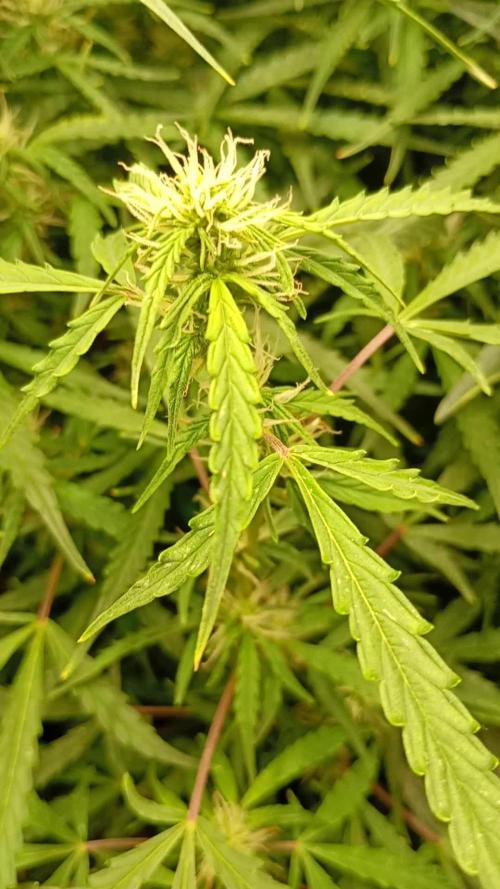
11. Woche
Hmm Chaos Cake Auto Anesia Seeds wächst einfach weiter 🤷🏻♂️
Dachte ja die würde sich langsam mal auf die weitere Ausreifung der Bloom aber Pustekuchen, die denkt sich seit dem Lollipopping: jetzt erst Recht 😌😅

Likes
1
Share

@FarithAriasFajardo
Follow
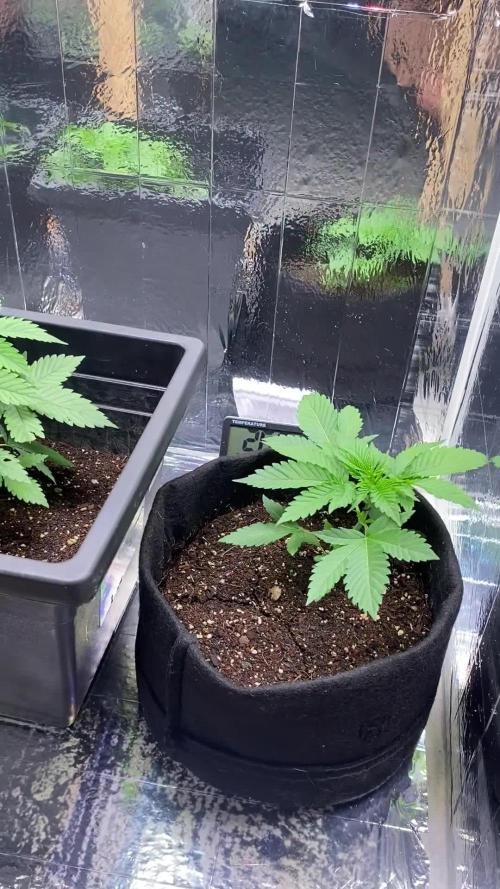
El registro corresponden a los dias 28, 30 de abril y 2,3,4 de mayo Despues de realizar corte apical y algo de lst junto defoliación leve. Hasta ahora las plantas van muy bien, creciendo muy bonitas y con fuerza. Tratando de llevar todo de la mejor manera ya pude ajustar algo el set donde tengo mis planta y cada vez más contento con estos resultados! Ya hoy la white widow ibl cumple 30 dias desde germinada y la zinfandel 23.


Likes
12
Share


@Learntogrow818
Follow
Going into flower like now I think..🤔 Lol, yes it’s flower time already.🤭

Likes
5
Share

@BEM_Genetix
Follow
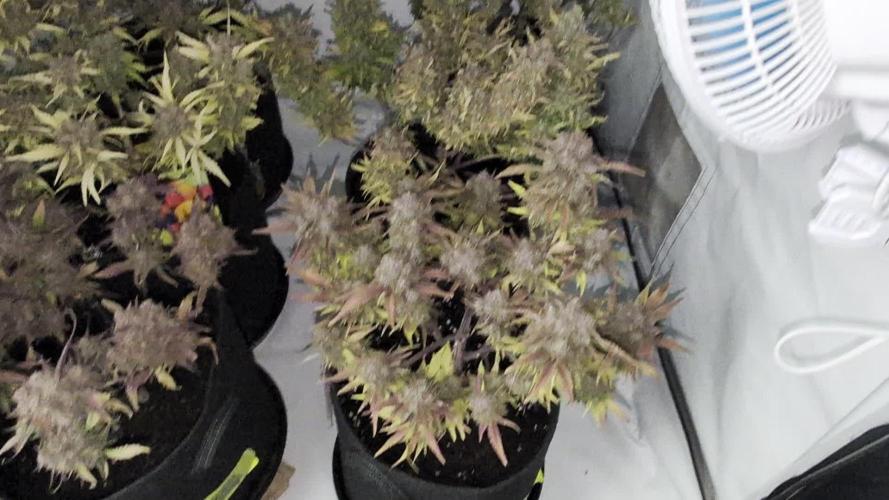
Nur noch ein paar Tage und die herrlich duftenden Ladys können geerntet werden
Wir geben ab jetzt bei jedem Grießvorgang weniger Wasser und werden die letzten 7 Tage gar nicht mehr gießen und sie vor der Ernte für 48 Stunden im Dunkeln stehen lassen.
Getrocknet wird mit dryferm bags und klassisch aufgegangen um zu sehen wie groß der Unterschied am Ende ist.
Wir haben uns ein Zelt für die veg besorgt und auch schon den nächsten Run gestartet. Eigentlich wollten wir Photos machen, um aber die Abstände zwischen den künftigen ernten so gering wie möglich zu halten, haben wir uns dazu entschieden noch einen Auto Run zu machen, bevor wir wieder mit Fotos starten. Auch wenn ich schon sehr Lust auf die Lemon Cherry runtz von Fastbuds hätte, muss die süße halt noch warten.
Wir sehen uns die Tage mit dem letzten Update vor der Ernte
Just a few more days and these wonderfully fragrant ladies can be harvested! From now on, we'll be using less water with each drying cycle and won't water them at all for the last 7 days. We'll also leave them in the dark for 48 hours before harvesting. We'll be drying them in Dryferm bags and using the traditional method to see how big the difference is in the end. We've got a tent for the veg and have already started the next run. We originally wanted to take photos, but to keep the intervals between future harvests as short as possible, we've decided to do another auto-run before taking pictures again. Even though I'm really craving the Lemon Cherry Runtz from Fastbuds, the sweet stuff will just have to wait. See you in a few days with the last update before harvest!
Likes
45
Share


@MadeInGermany
Follow
Info:
Unfortunately, I had to find out that my account is used for fake pages in social media.
I am only active here on growdiaries.
I am not on facebook instagram twitter etc All accounts except this one are fake.
Flowering day 21
since the time
change to 12/12 h.
Hi everyone :-) .
She has developed really well this week. it grows super in height 😀.
I am very curious how it will develop.
It was poured twice with 1.2 l per watering.
Otherwise the tent was cleaned as usual and everything checked.
Stay healthy 🙏🏻
You can buy this Strain and Nutrients at :
https://greenhouseseeds.nl/
☝️🏼☝️🏼☝️🏼☝️🏼☝️🏼☝️🏼☝️🏼☝️🏼☝️🏼☝️🏼☝️🏼☝️🏼
Green House Seeds Company Cup Clone 🏆
Type:
Wonder Pie
☝️🏼
Genetics:
Wedding Cake x OG Kush
👍😍
Vega lamp: 2 x Todogrow Led
Quantum Board 100 W
💡
Flower Lamp : 2 x Todogrow Led
Cxb 3590 COB 3500 K 205 W
💡💡☝️🏼
Earth: Canna Coco
☝️🏼
Fertilizer: Bio Grow Feeding ( GHSC ) , Enhancer ( GHSC ) , Bio Bloom ( GHSC)
☝️🏼🌱
Water: Osmosis water mixed with normal water (24 hours stale that the chlorine evaporates) to 0.2 EC. Add Cal / Mag to 0.4 Ec Ph with Organic Ph - to 5.8


Processing
Likes
6
Share


@ganjaman24
Follow
It smells of nothing but diesel n a very pungent Kush smell the berries nor mango scent hasn’t quite poked thru yet but it definitely smells of quality bud in the veg closet ha may need to upgrade my carbon filter. Gonna move these ladies at the end of the week. Thanks for tuning in!


Likes
107
Share


@Tropicannibis_Todd
Follow
ALRIGHTY THEN GROWMIES 😎
👉SHES PRETTY MUCH A BEAST , FROSTY AS HELL AND CANT WAIT TO CURE THEM UP AND GET SMOKEN 👈
👉I would recommend Shes had this incredible Berry aroma throughout her flowering 👈
Was a blast to grow thanks for hanging in there and following me on my journey👊
I GOT MULTIPLE DIARIES ON THE GO 😱 please check them out 😎
👉THANKS FOR TAKING THE TIME TO GO OVER MY DIARIES 👈
👉NutriNPK NUTRIENTS USED FOR FEEDING 👈
👉www.nutrinpk.com right now get 10% off using SPRING2022👈
