


Likes
Comments
Share

@RockoCalenberg
Follow
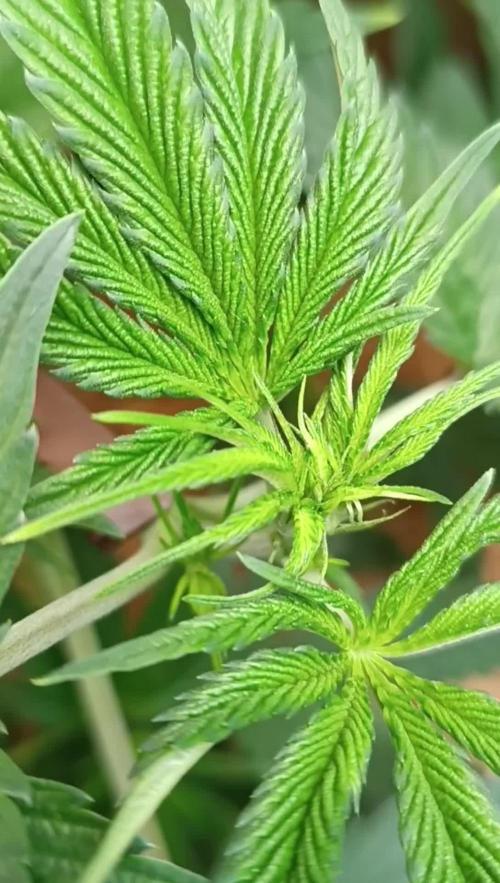
Tag 35 – gut eingegroovt, jetzt wird Struktur sichtbar
Nach dem Umtopfen haben sich inzwischen alle drei gut gefangen und merklich stabilisiert. Der Wechsel in die großen Töpfe wurde insgesamt ordentlich verkraftet, gerade auch in Kombination mit der Mikrobengabe nach dem Umtopfen. Man sieht, dass sie das gut angenommen haben und jetzt wieder sauber durchstarten.
Größenmäßig liegen wir aktuell so bei rund 29–30 cm, wobei Chicken & Waffles klar die Nase vorn hat und aktuell den Spitzenreiter stellt.
Chicken & Waffles geht im Moment am meisten ab. Sehr robust, wächst zügig weiter und zeigt eine kompakte, aber gleichzeitig angenehm luftige Struktur mit guten Internodienabständen. Macht insgesamt den stabilsten Eindruck im Feld.
Fruit Bomb Punch bleibt dagegen die empfindlichste. Das Toppen und die „heiße“ Erde wirken immer noch leicht nach, auch wenn sie natürlich weiterläuft. Sie braucht einfach länger, um sich komplett einzugrooven. Auch auf Training reagiert sie aktuell eher zurückhaltend und wirkt insgesamt sensibler als die anderen.
Strawberry AK läuft dafür unauffällig, aber auf einem richtig starken Niveau mit. Sehr kompakt, schöne Struktur und insgesamt ein sehr sauberer, stabiler Wuchs. Bin ich aktuell echt zufrieden mit.
Unterm Strich wird jetzt immer deutlicher, wie unterschiedlich die drei Kandidaten ticken: von sensibel bis robust, von kompakt bis luftig. Genau das macht den Run gerade spannend.
Der Terp-Test läuft – am Ende entscheidet das Glas. 🌱
🇬🇧 Day 35 – settling in, structure is starting to show
After the transplant, all three plants have recovered well and clearly stabilized. Moving into the bigger pots was handled nicely overall, especially in combination with the microbial watering afterwards. You can see they responded well and are now picking up momentum again.
Height-wise, they’re currently around 29–30 cm, with Chicken & Waffles clearly taking the lead as the current front runner.
Chicken & Waffles is pushing the hardest right now. Very robust, growing fast, with a compact yet nicely airy structure and good internodal spacing. Overall, it looks like the strongest and most stable plant in the run at the moment.
Fruit Bomb Punch remains the most sensitive one. The topping and the “hot” soil are still slightly affecting her, even though she keeps progressing. She just needs a bit more time to fully settle in. She’s also reacting more cautiously to training and overall feels more delicate compared to the others.
Strawberry AK is running quietly but on a very strong level. Very compact, great structure, and overall a clean, stable growth pattern. Really happy with her at this stage.
All in all, the differences between the three are becoming more and more obvious: from sensitive to robust, from compact to airy. That’s exactly what makes this run interesting.
The terp test is on – in the end, the jar decides. 🌱



Likes
8
Share

@JoLatto
Follow
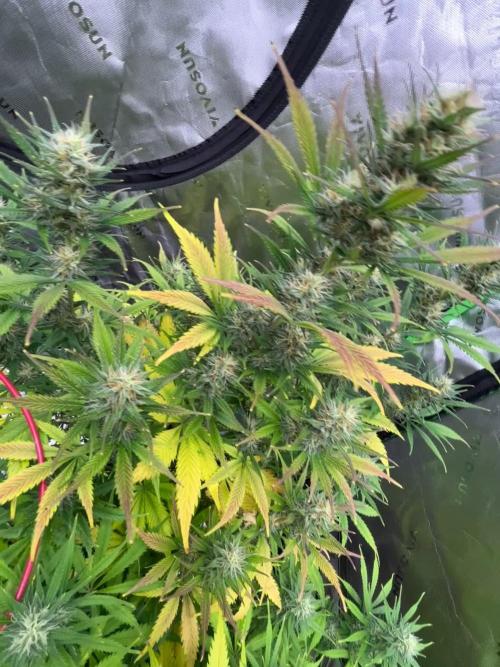
Week 9 - Apple Strudel Auto 2-3 weeks left these autos are bigger than anything I’ve grew. Buds Are super frosty and extremely Gassy. To be honest wasn’t even gonna go with this strain but something just kept telling me go with it. Terps are Freshly Baked Apple Pie Gas is coming in extremely heavy. I’ll update next week good luck everyone!

Likes
7
Share

@GrowX420
Follow
30.06.26Ein neuer Start 💚
Einmal kurz zur Genetik, es handelt sich um 3 Seeds der Banana Cherry Cookies von FastBuds, THC Gehalt um die 30% vom Samen bisschen Ernte ca 8 Wochen.
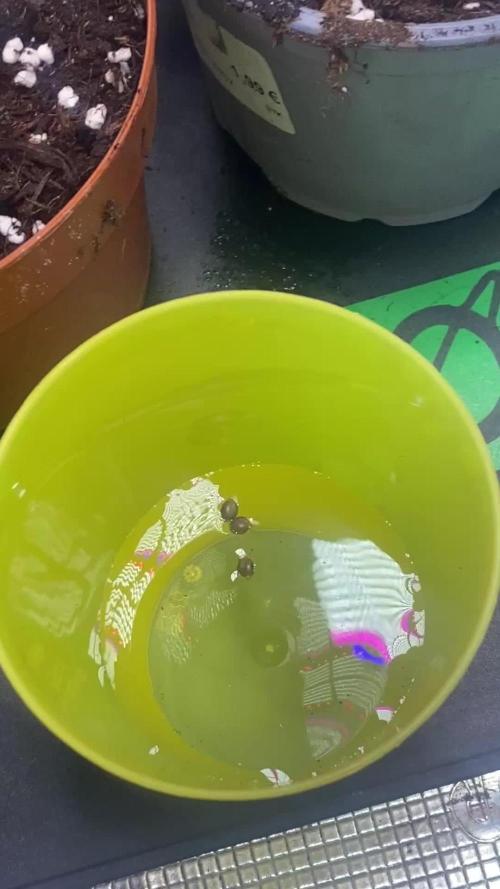
Zur Keimung selbst, die Samen habe ich erstmal für 18-20std in ein Becher Wasser aufquellen lassen. Die Seeds danach in ein 1-2 cm tiefen Loch verbuddelt, Deckel drauf damit die Luftfeuchtigkeit ca bei 90% liegt. Jetzt erstmal paar Tage abwarten, Updates folgen 💚
Happy Growing🔥
Zu den Infos:
Gießwasser:
PH-Wert:
Nährstoffe/Dünger:
Luftfeuchtigkeit: ca 90%
Temperatur im Zelt: 27grad
Lichtdauer:
PPFD:
EQUIPMENT:
Licht: 2x Jackson Nemesis 200w
Rohrventilator: S&P TD 350 silent.
Aktivkohlefilter: Can-lite 300
Zelt: Spider Farmer 120x120x200
Luftbefeuchter: Spider Farmer 6L.
Likes
124
Share


@MiyaguiOkPolilla
Follow
Hola gente!!
Vaya semanita por favor... Unos calores de no creer con 37 Cº, humedad relativa extrema de hasta el 83% y poco viento... Ella está interesada en recibir un poco más de agua, pero no le daremos más de lo que necesita... No quiero arruinar los nutrientes y la vida de su sustrato así que la riego lentamente con sistema de goteo.
El fermento de guano de murciélago, palomas, conejo y cabra ya está listo. Tiene un agradable compuesto de melazas, microorganismos de Top Crop, Agrobacterias y almidones además de una buena dosis de humus de lombriz... Huele muy peculiar, ni feo ni agradable, como a levaduras...
Lo comenzamos a agregar en dosis de 1 litro a 25 litros de agua pura de lluvia para riego por goteo. Esta semana ella recibirá goteo permanente hasta acabar con la solución. Creo que los 25 litros durarán unos 10 días aproximadamente. (Podría variar según la necesidad del sustrato)
Estamos preparando además un top dress de composta, humus y trichoderma para cuando comience la temporada de floración ya que es a mi parecer la forma más eficiente de prevención contra hongos no deseados 🤞
Aplicaciones foliares permanentes cada 3 días intercalando una vez delta 9 y otra vez jabón potásico, aceite de neem y cola de caballo para mantener plagas a raya y también dar ese impulso al inicio de la floración que al parecer está funcionando más que bien.
Luego de todo esto, ella hoy toma un descanso previo al riego intenso que se viene.
Quiero dar mucho más con este cultivo y desearles a todos un gran camino de aprendizaje y agradecimiento 🙏🌿🌞🏄♂️
IRIE!

Likes
Comments
Share


Likes
8
Share

@Sobreruedas
Follow
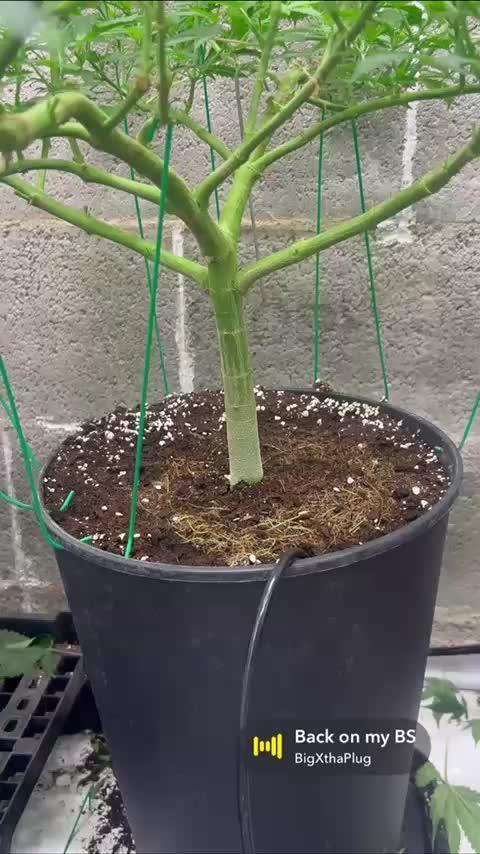
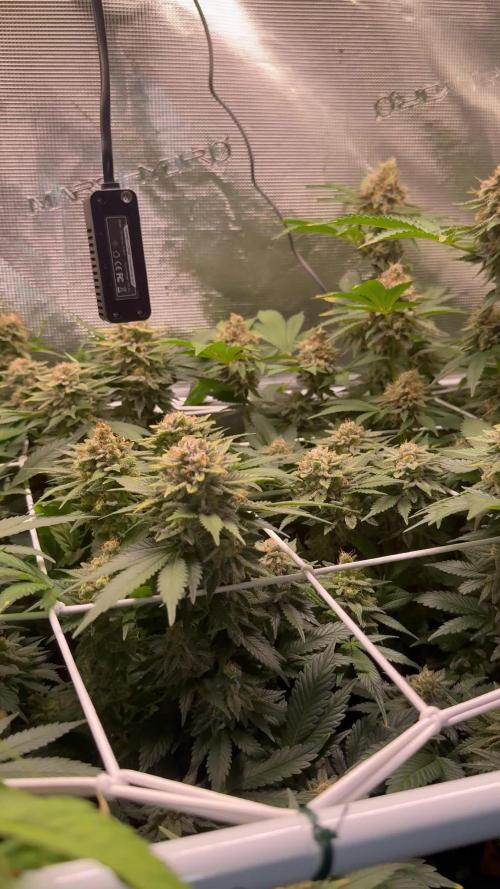
This week everything continues to progress smoothly with no major changes.
I slightly reduced the LED intensity, and the plant is now receiving around 650–700 PPFD to keep the environment balanced during flowering.
For now, I’m just maintaining stable conditions and letting the flowers continue developing 🌸💪

Likes
2
Share

@Organic473
Follow
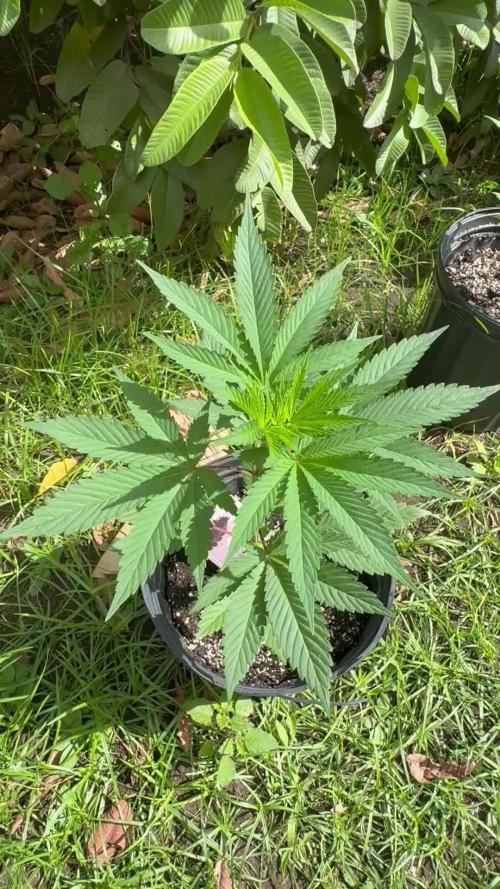
This girl already has a sweet smell without flowers
I’m thinking this is one of my new favorite strain to grow I need to buy some more seeds. She grows very vigorous also.

Likes
113
Share


@DankyMoon
Follow
shez settled down... just a bit past the highest the bulbs can go.... and started a lil bulkin... might have to take her down early due to thingz beyond my control.. so hope she bulkz up quick.. seemz like i got the extra tall pheno lol.. shez over 12 timez the height of her pot and the side branchez are all the way up there too.. shes drinking at a steady pace and i give her water to slightly run off every other day now alongside her normal feed.. we'll see how this goez😎
Likes
2
Share


@BabyBilly
Follow
Last the buds matured nicely. Quite a sweet, candy grape funky gas terp. The buds are very dense and heavy. Colas are palm sized and I’m happy with the 10% amber. Chopped er down.
Buds are crazy dense and hard. 4 plants and I harvested 3 lbs and 11oz’s! not bad.
Tastes like candy grape gas/skunk.

Likes
1
Share


@Farad9650
Follow
The endgame ph was messed up and the plant severely suffered from algae and possible overwatering. The Spanish moon was also damaged.
Processing
Likes
3
Share


@CityFarmer
Follow
Hello everyone,
Not much to say about these girls. This week I started giving them some nutrients so lets see how they turn out now...
See you guys next week.. 🤘🤘👊👊👊
Likes
3
Share


@Willy_Balls
Follow
Two very resistant phenos. It was my first go with rockwool. Definitely going to use it again.

Likes
7
Share


@DaddyPrime2
Follow
2/12/25
top dressed with 2 tsp grow 1 tsp microbe and 2 tsp bloom.
this genetic is always sooo freaking frosty. shes already starting to frost up on the fan leaves.
finally looking like shes in flower. it took her awhile to get started i feel like compared to past grows/ other Cultivars.
2/18/25
she has a very nice and even structure to her. a bunch of tops that are 3-5 node top colas with a nice disconnected set of buds after an inch two space between the nodes.
frosty gassy and fairly large considering pot size.

Likes
7
Share


@EyeMKing
Follow
**5/2**
So I've been absent from the log for about a week, I'm sorry to those that check up on my grows. It wont happen again promise lol. Well it looks like the NL and Chem are suffering from N toxicity and possibly a Cal/Mag deficiency, where the PL has signs of Cal/Mag deficiency as well. I will be adding just a bit more this week each feed. I usually do a nutes and Cal/Mag feed then a water and Cal/Mag feed. Chemdawg is stacking up the trichomes on each nug site and shes at day 51, smells kinda citrusy. The Northern Lights is at day 52 and in last place in terms of flower only a small amount of trichomes on 1 or 2 nugs. Where as the Purple Lemonade is at day 46 and these nugs are getting CHUNKY while also putting out trichomes, with a slight rub she gives off a strong fruity/berry aroma.
**5/7**
Looks like Northern Lights is a slow girl, I'm not mad just my impatient self wanting to see her in her glory. Ahh the Chemdawg is packing on some weight and looks very chunky, shes smelling sweet too. Well I didnt get the desirable purple pheno Purple Lemonade seems more towards the Lemonade side, but she has many great golf ball like nugs that are still growing.
Likes
2
Share

@BLAZED
Follow
Week 3 (27-11 to 3-12)
What's good everyone?
We started this week off with removing the 2 bottom shoots.
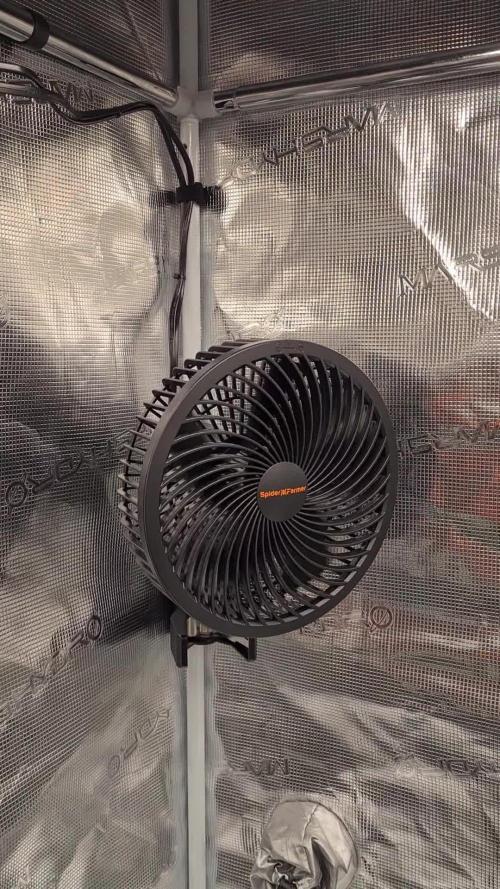
The next day Santa came early 😁 Got 2 new clip fans and the AC5 Power strip from Spider Farmer.
The power strip has 5 outlets you can control in the app, they can be turned on based on a time cycle, humidity or temps.
It comes with a sensor that monitors light, temperature, and humidity.
And a soil sensor that monitors soil moisture (VWC), temperature, and electrical conductivity (EC).
It also has a light adapter to connect 2 lights, that can be controlled in the app aswell.
The app shows the current VPD, i try to keep this around 1.0
In the middle of the week we topped her aswell.
The next day we increased the light intensity from 30% to 35%.
LUX: 13.000/13.500 to LUX: 15.000/15.500
This week's growing conditions were 17.9°C to 22.4°C with a humidity of 55.5% to 67.6% and watered 2 times with 0.5L.
See you next week!

Likes
5
Share


@RastaRick
Follow
Starting to see some real good growth. Everyone is looking real gree. I think next week calls for a session of LST. Still only using water with BioTabs. Not issues. Tenet is pretty hot at 27C and dry at 27%rh... Ruff but it's what I got

Likes
5
Share


@pzwags420
Follow
On week 5 of actual flowering the plants are coming along nicely and HSC GSC is looking the best so far but its still early :) WW is slow to start flowering just small amount of pistils so far small buds looks more like week 3 or 4 as far as flowering progression.


Likes
15
Share


@Njanne
Follow
The moment we have all been waiting for... the summer outdoor flowering photos... enjoy :)
These are already in their third week of flowering by now.
Started the season off with a difficult start... I put them outdoors while the says were still too short. The plants all started to follower, but then as the solstice approached they all converted back into veg and grew like crazy. I was sure my entire grow was fukd...
Now we are well into August which is solid flowering for Ontario growers in zone 5.


