


Likes
33
Share


@GreenHobbit
Follow
Woche 7
Meine Schwiegermutter hat das Gießen übernommen und ich habe mein Leben unter der ägyptischen Sonne genossen.

Royal Haze Automatic · Royal Queen Seeds

Dos Si Dos Auto · Barney's Farm

Lemon Wonder Automatic · Zamnesia Seeds
Blue Cheese F1 automatic · Zamnesia Seeds
Northern Light Automatic · Royal Queen Seeds
Skywalker OG Auto · Barney's Farm
Pink Rozay Automatic · Zamnesia Seeds
Purple Haze Automatic · Zamnesia Seeds


Likes
26
Share


@Probation2Propagation
Follow
Pheno 1: strong natural tart cherries with a slight candy
Pheno 2: loud cherry candy
Pheno 3: cherry fun dip
Pheno 4: cherries mashed with earthiness
Pheno 5: the strongest cherry pheno I’ve ever smelt. Just loud cherries in your face.
I kept pheno 3 and 5. I pressed both into rosin and the terps were insane it smelt like I worked a double at the marischino cherry factory. The terps on 3 were cherries on the inhale with a candy fun dip exhale (absolutely up my alley). Pheno 5 was the most in your face cherry I’ve ever tasted. It was straight cherries throughout the inhale exhale with a slight tart/candy on the back end. I have found my cherry phenos for my future business. Thank you for riding this journey with me. Harvest results on my YouTube channel link in my bio!

Likes
9
Share


@Murica887
Follow
Week 12 - Feb 26 - Mar 4 - Final week
Feb 26 Day 78 - Watering
6.5 in - 6.6 recovery
76 ppm in - 409 recovery
Feb 27 - day 79
I would really like to chop it this week but not too many amber spots yet.
Mar 02 Day 82 - Watering
6.4 in - 6.5 recovery
76 ppm in - 214 recovery

Likes
15
Share


@Chupus
Follow
I use these fertilizers not for the first time, the whole grove was successful, without any problems. the tree did not hurt, and there was no shortage of fertilizers. organic fertilizers are very good for the earth

Likes
32
Share


@Platinouuu
Follow
No han habido muchos cambios en cuanto a la nutricion. Añadimos un poco de Recharge, agua y estare añadiendo un producto para engordar las flores. Los mantengo al tanto, buenos humos!

Likes
79
Share


@DudeGrowsWeed
Follow
This is your Captain speaking, Mexican Airlines flight 420 is making its final decent for landing. Please place your seat backs and tray tables in their upright and locked position. 😀
She's in full flush mode now, and will be harvested this weekend. The smell is overwhelming and lovely, a very fruity aroma. Can't wait to smoke this one!👍


Likes
17
Share


@Naujas
Follow
This is my second growth in a suitcase, I got 30 grams of dry flowers from the first growth, but this growth together with FastBuds is obviously much better than the first one :) although the girl's leaves burn from the light, which is only 10-15 cm from the flowers, but the girl copes with it perfectly :) good luck to everyone.
Likes
6
Share


@Kush_T_Big_Nugz
Follow
This week I transplanted all of them and started lst training. Of all 3 strains I’ve got going, gummy buns defo has the best vigour and structure on nearly all of them.
Likes
188
Share


@CBD_Sweden
Follow
2018-04-03. Week 22, day 3.
This is one of my most beautiful girl in this growroom right now.
She is massive and very impressing to look at and the size stuns you every time you see her live in the garden.
The flowers/buds is getting bigger and 4 of the main colas is stacking up and is 50 cm long each with flowers.
And all the others is doing the same.
This plant amazes me every day by her presence in the room.
She smells like a extremely strong lemon cleaning spray, and when your face is close to the flowers it almost burns in your face like acid.
I have never had a strain that smells so sharp and strong like this.
Added a lot of pics and a video.
Strain information.
Early Amnesia CBD is a marijuana seed with which our breeders have excelled themselves. They have created a cannabis strain with typically Sativa yielding properties and flavours that, on this occasion, come accompanied by a fast growth and a moderate effect. A major achievement we’re incredibly proud of!
Being a CBD-rich marijuana seed, Early Amnesia CBD provides users and growers with the chance to enjoy the nº1 cannabis genetics in Dutch coffee shops with a more bearable effect.
Early Amnesia CBD grows faster than Original Amnesia and Amnesia CBD, reducing the flowering period a week, or even 10 days, without it being detrimental to the yield, taste and scent of the Amnesia lineage. The result of crossing an Original Amnesia with an autoflowering plant from our CBD Auto elite line couldn't be other than a cannabis jewel noted for her overall traits and amazingly short flowering time.
Morphology
This specimen is clearly a Sativa-dominant hybrid. She turns into a strong, large and branchy plant in just a few weeks. When it comes to her leaves, they’re big, with fleshy, long and jagged leaflets.
Yield
Belonging to this legendary dynasty, Early Amnesia CBD is, as expected, a highly productive plant. Growing her means obtaining dream crops full of delicious resinous buds. A real treat for the senses.
Cultivation
Early Amnesia CBD needs to be provided with more light and nutrients than other strains to thrive. If we do so, it will flower in just 60 days from the moment the photoperiod is switched to a 12-12 schedule indoors. When cultivating outdoors, she’ll be ready for harvest at the beginning of October, in some 10 days before Original Amnesia.
Flavour and aroma
The taste and scent of Early Amnesia CBD are mostly citric, accompanied not only by the delicious blend of fruits and lemon typically found in the Amnesia family but also by the amazing orangey nuances that characterise our CBD elite line.
Effect
Apart from her fast-flowering properties, this is what distinguishes an Early Amnesia CBD from the other Amnesia genetics. Her CBD content being so high, she's far from causing memory loss or psychedelic reactions, unlike the Original Amnesia. The effects of Early Amnesia CBD are delightfully cerebrally stimulating and take you on a really nice inspirational journey. With Early Amnesia CBD, there is no risk of memory loss, but you’re likely to spend the whole afternoon laughing or creating.
Suitable for Indoors and outdoors
Sex Feminized
Genotype 65% Sativa/ 35% Indica
Cross Original Amnesia x CBD AutoFem
Indoor flowering time 60 days
Outdoor harvest time Late September – early October
Indoor yield 600 g/m2
Outdoor yield Up to 1500 g/plant
Outdoor height Up to 3.5 m
THC 9.5%
CBD 11%
THC/CBD Ratio 1:1
Likes
31
Share


@Dunk_Junk
Follow
She grew well this week. Another 11cm.
Day 42 - I trimmed off about 6 large fan leaves to give lower bud sites some light.
This is her last week of 20/4 veg.


Processing
Likes
19
Share


@CannabisAprendiz
Follow
Esta es una genética de un olor muy fuerte y pesado se siente intenso desde la vegetación , es una variedad muy resinosa con unos colores morados hermosos , probando las flores cuando terminó el secado y ahora curando las flores se siente un sabor terroso , al principio no me gusto ya que nunca había probado este , pero después al seguir fumando se siente un sabor final muy agradable.
Esta genética se conservará para futuros cruces y experimentar algo nuevo.
muy conforme con la producción de cada clon

Likes
9
Share

@Phaleg
Follow
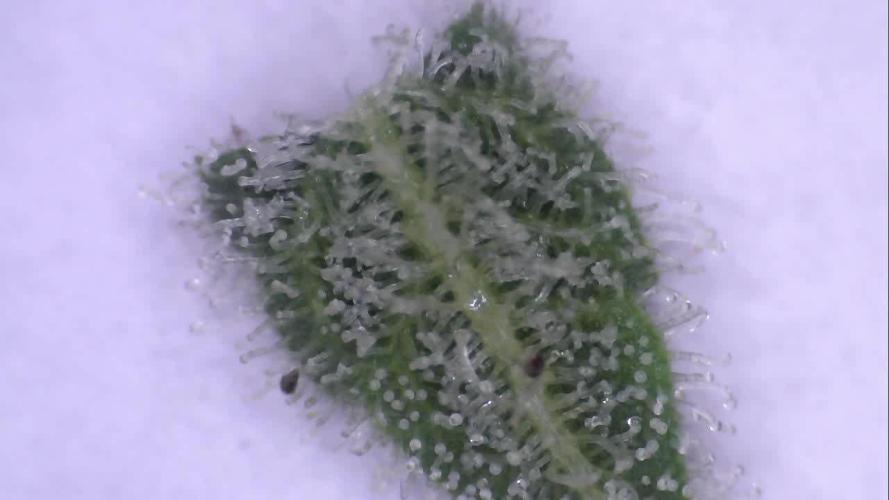
Today was the day, unfortunately about a week in advance because of an infestation of Mites that reached the buds of all 4 plants left.
After reasoning, interrogating AI and watching a video, I had to harvest in advance and I decided to do a washing with H2O2 as per this video explanation of Jorge Cervantes, available at this link (https://youtu.be/S7jE7qzfgQs?si=eC6klOXkWz9eBJO3).
I am providing photos and video also of this step I made.
Likes
20
Share


@Ultraviolet
Follow
Not particularly growing for speed or any dedicated reason this time round, just adding water and a abundande of positivity, gotta admit I do like the autoseed logo. Off we go again into the magical forest.
(Arthrospira platensis) cultivated in high-alkaline, mineral-rich water in Kailua-Kona, Hawaii. It is renowned for having a higher nutrient content, including more carotenoids and essential fats, compared to other spirulina brands. It is frequently cited as a "complete food" due to its dense concentration of proteins, vitamins, minerals, and pigments.
The nutritional profile of standard dried Spirulina platensis biomass. 3kg of spirulina powder has an approximate NPK ratio of 10-2-1 (or 10% Nitrogen, 2% Phosphorus, and 1% Potassium).
Here is the breakdown of the nutrient content for 3kg of powder:
Nitrogen (N): ~300g (10% of total mass)
Phosphorus (P): ~60g (roughly 2% of total mass)
Potassium (K): ~30g (roughly 1% of total mass)
3kg of spirulina powder is more than enough nitrogen for 4 cannabis plants in a 100-gallon pot—in fact, it is likely excessive and could cause severe nutrient burn or toxicity if not properly managed. Spirulina has a very high protein content (46% to 63% dry weight), which translates to a significant nitrogen source. It is often described as a 5-1-1 NPK fertilizer.
3kg (3000g) of powder in 100 gallons means 30g per gallon. General organic recommendations for potent amendments (like frass) are often around 1–3 tablespoons per gallon. 30g of powder is roughly 2-3 tablespoons, making this a very high-strength application rate if added all at once. Balance this with calcium/magnesium, and organic nutrient delivery in soil growing can lead to deficiencies in these nutrients.
Not all of that 100 gallon is used, so figuring out precise measurements was ballpark, but there is about 10kg of engineered biochar in that pot. Mostly in the top half. Ideally, I'd have 25kg in a full active 100-gallon, but......... don't mess with something that is not broken. Roots do not utilize the entire 100 gallons. This has been a couple of years of trial and error, mostly error. The amount of cations you can add in grams depends entirely on the specific cation exchange capacity (CEC) of your biochar and the type of cation being added. Biochar CEC values vary widely, typically ranging from 4 to over 300cmolc/kg. Multiple Biochars in use, ranging upwards of 100cmolc/km.
Different cations have different atomic weights
Potassium K+ 39.1g/mol.
Calcium Ca2+ 40.1g/mol.
Magnesium Mg2+ 24.3g/mol.
Nitrogen NH4+ 18.04g/mol.
You get more nitrogen bang for your buck. It all depends on the CEC of the biochar you use, but brrrrrrrrrr roughly I'm looking at 500-600 grams worth of elemental cation exchange capacity, give or take. That's just for the biochar alone. Elemental cation exchange capacity refers to the ability of materials—such as soil, minerals, and biochar to adsorb, hold, and release positively charged ions Ca2+, Mg2+, K+, Na+, Al3+, and Zn2+. This capacity is a critical measure of nutrient availability in soil and energy density in electrochemical systems.
Added calmag 2:1 to complement spirulina.
Calcium (Ca): Approximately 150g - 300g of elemental calcium.
Magnesium (Mg): Approximately 75g - 150g of elemental magnesium.
So long as pH stays in 6.3 to 6.7 ish, the plant will unlock hydrogen. Plants will be able to cycle CEC for their own needs. Hydrogen ion pumping (proton pumping) is a fundamental mechanism used by plant roots to facilitate the cycling of nutrients within a medium's Cation Exchange Capacity (CEC), directly increasing nutrient availability. A growing medium's Cation Exchange Capacity (CEC) does not contribute directly to Electrical Conductivity (EC). CEC represents potential nutrient storage, while EC represents active nutrients in the water/soil solution. A medium with a high CEC can hold many nutrients, but if there is no water present, the EC will be low.
98% of plant nutrient uptake comes directly from the soil solution.
2% of nutrient uptake is directly from soil particles.
Nutrients held on exchange sites (CEC) are not directly measured by EC until they are released into the soil solution through exchange with other ions (e.g., hydrogen ions from roots or fertilizer).
Plants source the H+ ions (protons) used in cation exchange primarily by exuding carbon sugars into the rhizosphere, then microorganisms perform root respiration, which reacts with soil water to form carbonic acid H2CO3 that dissociates into H+ and bicarbonate. Roots also actively pump out H+ ions directly to acidify the rhizosphere, plants trade hydrogen produced through metabolism for essential nutrients held by the soil.
In plant cells, the H+ (protons) used in proton pumping across the plasma membrane come primarily from the cytoplasm (cytosol). The protons are derived from internal cellular sources, including metabolic processes that release H+, and the regulation of intracellular pH homeostasis.
Distilled water is highly useful in managing the electrical conductivity (EC) of a growing medium by allowing for precise control over nutrient concentration and assisting in the mobilization of nutrients from the cation exchange capacity (CEC) into the active, plant-available nutrient solution.
Just add water & positive energy.
Potential hydrogen. pH. + - , potential charge balance for hydrogen.
So long as there is adequate oxygen in the soil and air and water moves at a decent interval, its practically impossible for the pH to skew in a soil that is taking in oxygen and releasing CO2 and nitrogen, I say practically, but meh, even with plenty of oxygen, the process of converting ammonium NH4+ to nitrate NO3- by bacteria releases hydrogen ions H+, which directly causes acidification (lowering pH). While water movement is necessary, consistent water moving through the soil can leach away basic cations Ca2+, Mg2+, K+, Na+, leaving behind acidic hydrogen and aluminum ions, causing pH to drop, especially in humid regions. High levels of CO2 in the soil (from intense respiration) dissolve in soil water to create carbonic acid, H2CO3, which lowers the pH. (barometric pumping removes that possibility) The pH in a cannabis cultivation environment, particularly in hydroponic or soilless setups, will often naturally drift towards acidic (lower pH) over time. Understand how to know when to lime the pH back up. Complex but critical. Once I understood this it helped ease the pain of understanding pH.
Base saturation directly reflects the percentage of CEC occupied by base cations. Generally, as base saturation increases, soil pH increases because fewer acidic cations, H+ and Al3,+ are present on the soil colloid surfaces.
At a pH of 7 or higher, the soil colloids are saturated with base cations, resulting in a base saturation of 90+%.
While many sources include Sodium Na+ as a base cation, some calculations focused specifically on plant nutrients (like in some nutrient management contexts) may focus solely on the "Big 3": Ca2+, Mg2+, and K+. However, in soil science and CEC (Cation Exchange Capacity) measurements, sodium is usually included in the definition of total base cations, making it the "Big 4" base cations.
At a pH around 5.5, soils often have a 45–55% base saturation, while a soil with a pH between 6.5 and 6.8 generally has an 80–90% base saturation.
Base saturation is considered a reliable, albeit complex, indicator of soil fertility and the degree of soil weathering, acting as a crucial metric in soil classification and management.
Once you take full control of the pH, so long as there is oxygen, and one keeps tabs on base saturation levels. Its near impossible for anything to go wrong. All you are essentially doing is adding water and waiting for any sign of deficiency. Not so much growing as eliminating the possibilities of things going sideways. Can't over or under water, can't skew pH, can't go anaerobic. Everything runs in optimal cycles, watering every 2 to 3 days or as required, depending on the rate of combined ET. A little warmer, a little drier, but never short on water. All the nutrients are already there in the medium, we still focus on the water, just not adding salts, but to mobilize nutrients held in the Cation Exchange Capacity (CEC) and move them into the active soil solution for plant uptake, the best supplements to add to water are fulvic acid, humic acid, or seaweed/kelp extract. Liquid solutions with high concentrations of essential trace elements. Distilled water has no alkalinity or minerals to help buffer or release nutrients. Adding these supplements turns the "empty" water into an active agent that forces nutrients off the CEC colloids into the solution for plant uptake.
When to water? When Electrical Conductivity of soil gets low. No water, no conductivity.

Likes
11
Share


@goeser
Follow
More details and photos are coming when all buds are dried in about 6-7 days00
Likes
8
Share


@jaydee702
Follow
Bubba cheesecake Grow is going well in the tiny pot ..She is doing alot Better than i expected in such a small pot the roots are maxed out in ther e and starting to push the first spam container up and away from the reivor container the tapoot is still bigger than my finger .She has an estimated three weeks to go till Harvest. th buds are starting to get stickyand smell fruity so far

Likes
81
Share


@Hou_Stone
Follow
unfortunately I had trouble doing my LST and a branch broke while trying to fight against the tension.
I changed my tent this week, the lamp and the Mars Hydro extractor convinced me that it was good gear so I took the tent in + 😀
Pulling all the branches with ropes is way too much work... I think I'll just pull the 2 main branches down and add a scrog net next week.
-----------------------------------------------------------------------------
-Water: tap water (280ppm). I add 0.7g/L of Grow mineral powder and 0.2g/L of Calcium to reach 820ppm and I adjust the ph to 5.8
-Daytime temperature: 29°C
-Night temperature: 25°C
-Humidity: 45-75%
-Lamp: Mars Hydro FC3000. intensity 60% at 40cm from the top leaves
-Room: Mars Hydro 100x100x180cm
-Extractor: Mars hydro 402 CFM Max. power 2/10
-Substrate : 70% coco, 25% perlite, 5% vermiculite.
Processing
Likes
13
Share


@UK420hydrogrow
Follow
ok so i have now switched these babies from 18/6 to 12/12 so officially now on there first week of flower will keep u updated with pics and vids of the grow and its progress