


Likes
Comments
Share

@CheeRz
Follow
🌿 VEG WEEK 3: AK-47 XL | Divine Seeds
🌱 VEGETATIVE PROGRESS
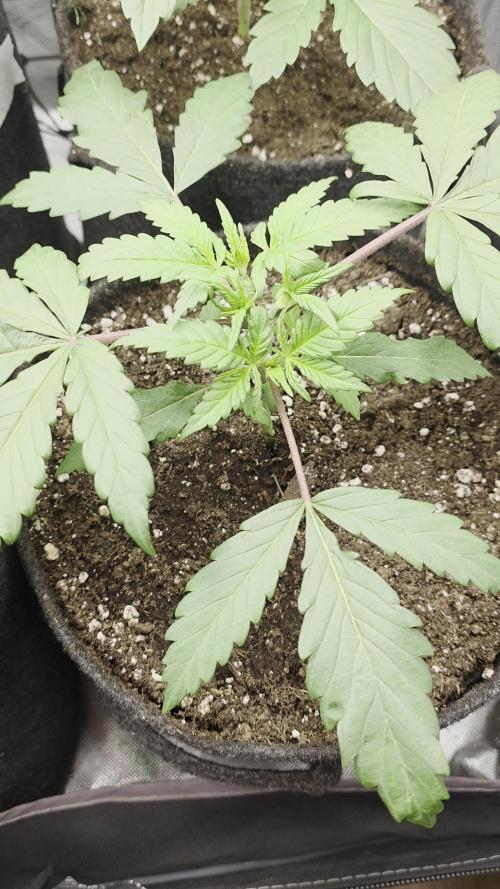
We have reached Week 3, and the plant is showing massive structural development. The biggest move this week was topping the plant to break apical dominance and promote a more horizontal, bushy growth pattern.
The recovery has been seamless. The secondary branches are already pushing out with high energy, taking advantage of the redirected growth hormones. The main stem has thickened up significantly, and the fan leaves are broad and healthy, indicating that the plant is thriving despite the high-stress training. The canopy is starting to fill out nicely, setting the stage for a more productive structure. 📈
💧 NUTRIENT FEEDING & WATERING
Still following the established feeding routine. The plant’s metabolic rate is clearly increasing as it develops more growth points.
Current Feeding Schedule (per Liter):
Root-Juice: 2.0 ml/l
Acti-Vera: 1.0 ml/l
Calmag: 0.5 ml/l
Parameters:
pH: 6.5
RH: 65%
VPD: 0.94 kPa
CO2: 600 ppm
Temperature: 23°C
💭 GROWER'S NOTE
Topping was a success. By removing the main tip, I’m encouraging the side shoots to catch up, which will eventually lead to a more even canopy. The node spacing remains incredibly tight, so I’m expecting a very dense plant. These Divine Seeds genetics are handling the training like a champ—no stalling, just straight growth. 🚀

Likes
6
Share


@Trichom420CZ
Follow
Maybe next defoil at this week, i will see.
Watering up on 4 L two times at week.
Lights downgrade on 90%

Likes
8
Share


@LieutenantKushman
Follow
I’ve been a little busy with school and haven’t been able to update the grow. this video is from day 39 in flower. The smell is amazing and very pungent. My whole place would reek if I didn’t have the carbon filter

Likes
41
Share


@PrairieFrostGrow
Follow
********** Week 2 of flower, Days 8 to 14 - Sept 26 to Oct 2/20 ***********
It has been an exciting week with finding a crack in a main stem and started plus we added new supplemental nutrients to the feed as well. These girls are starting to push out some frost now as well. Overall, they are a little more squat than the other girls in the same tent but these girls are looking awesome. Buds are setting and starting to stack more as well😃 Pretty solid growth and bud sites for week 2 flower.
Her leaf tips have been up and she is happy........she is happy all the time other than the first half hour of waking up😃👍 Very nice little girls to grow so far. The branching is certainly a little more lateral/horizontal than other strains I have grown. Could be that I was a little more aggressive with topping and tying down and they simply didn’t need it. She is not a long lanky strain and is making nice little bush shapes. She won’t have many colas but should be thick guys. C471 should be fewer and thicker while C472 will have a couple more colas but likely the main ones won’t be as thick as C471.......time will tell🧐
On Sept 28 I found a crack and had to do some repairs. Cream 471 was worse off the Gorilla Girl 4 with her cracked stem. GG4 was caught early enough that she didn’t separate much at the base. Looks to be as though I have caused the issue by topping the main stem a little too low😢 Coming back though now and when she was tied together and looked after she is bouncing back, its crazy how these plants can heal themselves😀💪👍 Took the tips from fellow growers and decided to try and fabric something with some cushion so that the straps holding the branches together don't cut into the branches. Needed another tool of the trade.......DYNAVAP to calm the nerves😀 because the grow has been going well and this set back has me pissed off as it is grower error😡 Seems to have worked out pretty well though and will keep our fingers crossed that the end result will be a frostier girl👊🤞
Switching the PK booster at the end of the week to Big Bud and started to add Rezin from Green Planet. Not much for Bud Factor X left so will run with Terpinator and Rezin as a replcement.
2nd layer of SCROG netting added early in the week, Sept 27/20. They are pushing out a good amount of leaves now and stretching so need to provide that added support for down the road.
IPM spray again this week, last opportunity, with Plant Therapy. There has been something in the tent and I think I have killed them. One more shot though to make sure and before there are too many bud sites. Love this product!!!!!! Works so well at getting rid of thrips and mites.
Little more detail........
Sept 26/20, Day 8
- Little heavier feed as they have not been watered for two days
- 4L - CalMag @ 2ml, Sensi Bloom, B52, Bud Candy, Bud Ignitor @ 1ml
- 830ppm and 5.7pH
- will start to let the pH rise bit now over next couple of weeks
Sept 27/20, Day 9
- 2nd SCROG layer added.
Sept 28/20, Day 10
- more microbes today
- 4 L - Microbial Mass @ 1.5ml, CalMag @ 1ml
- 290ppm and 6.3pH
- pH was a little high but left it...wasn't moving and then boom,,,,,,,oh well.
- Good amount of runoff today.
Sept 30/20, Day 12
- Heavier feeding today
- 5L - CalMag, Vitathrive, Rezin @ 2ml Rhino Skin, Bud Candy, B52, Sensi Bloom @ 1ml.
- repaired the cracked stem a little better tonight......was not sure how this girl will work out. Crack is fairly substantial.
- Try and keep the paper towels wet now so the humidity is high around the wound.
- Should have left a little more branch from the node above when cutting the top.
Oct 1/20, Day 13
- Switching PK booster today to Big Bud......these two girls are past bud ignitor.....already stacking.
- 3L - CalMag, Sensi Bloom, B52, Bud Candy, Big Bud @ 1ml
- 665ppm and 5.9pH
- IPM spray tonight again with Plant Therapy. Think I have seen some bug damage on Cream 47 girls.
That takes us to the end of week 11 in growth and week 2 of flower. Time will go quick now that we are off and running. Will be done feeding by early week 7. Want a good flush and leeching on these girls to get all the nutes out. I have been missing it by a few days on the last few auto runs and want this photo run to be better as I have a better track of weeks and when she will be done..........should be done by the end of week 9, about 7 more weeks.
Cheers Growmies and have a great week. Thanks very much to Mr_Motalovah and spacecadet55 for sharing your comments on cracking the main stems. Should be avoidable next time and appreciate the knowledge🙏👍 Nice strain Sweet Seeds.......these girls have my curiosity and can’t wait for the smells to start more as well!!!!👍🙏

Likes
4
Share


@pzwags420
Follow
On day 1 week 4 flower the girls are bulking up smelling great and some pistils are turning orange. The trichomes are still mostly clear with some milky trichomes starting. On day 3 one of my blumats had a runaway I believe from fertilizer sediment all I can do this late in the game is to lower the flow rate and hope that will solve the problem. It is strange that this is the same blumat that flooded when I went on vacation earlier on in the grow. I will inspect the blumat closer when I finish the grow. I tightened the carrot down 1.5 carrots. Except for the minor flood the girls are doing very well, even though they are too close to my grow lights :). On day 6 almost all the buds are starting to have a second growth spurt with some small white pistils showing, the trichome concentration is visibly growing and I expect to harvest the girls between week 8 and 9 of flower.
Likes
13
Share


@ChitownCannaChica
Follow
Probably another 2-4 weeks on this solo auto. Has been given a total of 7 dynomyco feedings total. Seems to have a positive effect on the quality. Solos are hard to do, and compared to another side/by/side solo, this one is doing better…
✌️💚🌿💨

Likes
19
Share


@absolutgrow
Follow
Dear Grow Community,
I'm reporting back with the third week of my Northern light grows. All 5 plants have grown very nicely and enjoy the climate and the fertilizer. As with the RG plants I will start LST in the 4th week and keep you up to date.
Best wishes
absolute growth

Likes
2
Share


@HighZenBerg
Follow
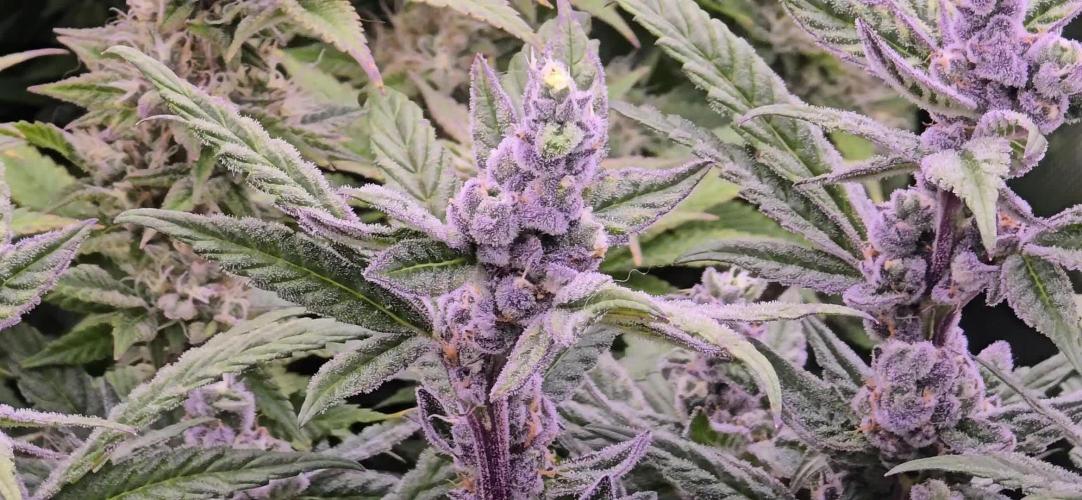
Start of week 3. Weather conditions got better, less clouds and more sun seem to be good for the plants.
06/13/2020 -day 15- duck #1 still seems to have some problem. She grows but has a lighter greenish-yellowish color compared with her sister. Also the leafs have strange curls. I got a hint to remove the bio tabs and only give water. Maybe that will do the trick
06/16/2020 -day 18- finally a visible progress in growth. Duck #1 got back to a more natural green (thanks to a hint from Fusion 👍). Because of heavy rain, I got enough water for the two ladies
06/19/2020 -day 21- end of week 3, the ladies grew very good and got nice new leafs. So far, it really looks very decent an not like cannabis at all. Although they seem to be small in comparison with other diaries. This weeks weather was often cloudy with a lack of sun. Temperatures were between 25 C at day and 18 C at night. All in all I am happy that they seem to be healthy and growing. Looking forward to the progress in week 4.
Keep in Touch !
Cheers
HighZenBerg





Likes
113
Share


@PEAKYPLANTERS
Follow
the growth of my girls is slowed down, due to the techniques of hst ..... in return my tops are becoming dense and robust.
we will see some beautiful ones
see you around friends

Likes
99
Share


@BudXs
Follow
The temperature is dirty!!!!
Cant keep it below thirty
what the trich July?, like this it hard to keep em purdy
I got the lights cranked down low
I got the fan on high, bro
But sunny days and constant rays are making me go psycho.
Got that chin held hi tho
Xs aint gon cry, no
Soon my only worry will be: "from which jar of hydro?"


Likes
9
Share


@NicoKh
Follow
so normal grown, i've made her some LST technique for a while and respond perfectly, nothing to complain, she wa so strong , if i do it again i'll do topping or fim for sure


Likes
95
Share


@DogDoctorOfficial
Follow
Day 54 from seed and the canopy games began, i gave them all some defoliation and instal first net, also started to do some low stress training to guide them out.
Day 54 and i had to bring to this side of the tent my little Kushi with is from my other diares but she had no space there, so i moved her next to the competition side 😁😝 I’m also making a water system, i will keep doing the watering manually, but with the help from a “auto/manual” system.
Day 54 CS have 2 very distinct phenotipes, a normal one with an amazing black pepper smell with a garlic touch and an old school candy smell mixed within, the other one, with i think is a rare one for the chocolate skunk, is smeling amazingly amazing 😅 she as fruit in it like tangerine and orange, and shes sweet and so but so strong smells, im in love with her, and she stretches more them the other 2 also, she provably will b the keeper from the CS department.
Day 54 and I topped CS1 lets see how she reacts 😆🤞💚
Day 54 and TP1 and TP2 are amazing, this girls are so strong and resistant, they are fast growers and they look like winners to me, both of them , caps off to @sweetseeds for such a good job on the genetics department, keep it up guys 🙌🙌🙌🙌🙌🙌🙌
Day 55 and my water system is ready for testing 😅 i know i should test before its all in, but its a non stop live i have so no time , always beliving 😅🤞💚 tomorrow we will know if it works or not 😆😁
Week 8 day 3 and I finally got the water system working and running properly, I’m still plugging in snd out , but this will make my life so much easier, withs results in more free time to dedicate my girls.
Tested my run out today and came out with ec over 2.0 meaning next watering mb the 2 nexts ones will be just ph water with regulator and some enzymes. I will keep testing 😆 as for the rest they all look amazing and I’m pretty happy with both genetics , this sad the Tropicanas are way more stable comparing with the chocolates, but still very early in the run 😝😅💚
Little battle between Topicanna Poisen from @sweetseeds vs Chocolate Skunk from @00Seeds (just for fun)
TP = Tropicana Poison
CS = Chocolate Skunk
Light Lumatek Zeus 465W compact pro at 75%
All i grow is medecine for myself, nothing to sell, dont even ask !!!!
Stay safe and do it with love for the love ❤️ 🙏
💚Growers Love to you all 💚

Likes
13
Share


@Crwfz1
Follow
Everything going ok about done but just cant get ph low enough so flushing and shell be dome by end of this week
Likes
7
Share


@Sunstonedgrows
Follow
Well the pas week has been a lot! We had some dehydration issues, did some defolitation, and additional LST to prep for flower. Starting today, this plant has been kicked into the flower tent and will be starting its journey!
Before we went to flower, I gave this guy 1tbsp of Dr. Earth tomato blend. Over the next week or so we'll be switching to Dr. Earth flower girl.
Cheers til next time!
-Dj Sunstone


Processing
Likes
41
Share


@Wicked_Stix
Follow
This auto ghost of is at day 21 and she has been growing like crazy since she broke the surface. She has the potential to be a real work of art if I can keep her happy. I upped the maxigro to .5 tsp per gallon and started them on a little armor si so they can build some strong branches. Still running them on 24 hour light and 24 hour irrigation. They are going to stay under the blurple lights for a few more weeks until I can get them in the big room under the quantum boards. I'm hoping they will flower around 4 weeks but my autos seem to enjoy staying in veg so we will see what happens.


