


Likes
Comments
Share


@Ciscohash
Follow
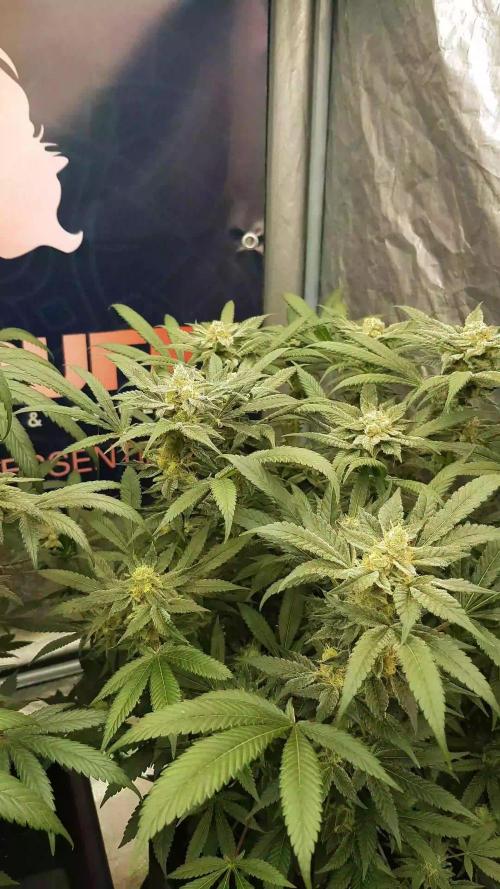
Esta semana fue genial las plantas crecieron todas muy parejas..teniendo por ahora mucha homogeneidad en el tamaño y forma de las plantas



Likes
57
Share


@ATLien415
Follow
🙏 Big thanks to Plagron and Zamnesia for putting on the Eternity Grow Cup 2025. This kind of platform means a lot to the community. The chance to push our grows, test out new techniques, and connect with other cultivators from all over has been inspiring. Appreciate the love and effort that went into making this event happen! Hope everyone enjoyed looking over my shoulder on this grow and best of luck to all participants!
REVIEW - Runtz (fem., photo.) from Zamnesia: ⬛⬛⬛⬛⬛⬛⬛⬛⬜⬜
The seeds from Zamnesia germinated rapidly, rooted strongly, went wild in veg, and produced an ample amount of high-quality medicinal flower. The diary speaks for itself on that front so this space will be more of a phenotype review. The plants were labelled A, B, and C from left to right respectively in photos. A and B were the 'clasicaly-appearing' sativa-esque leaves while C was the more 'indica-appearing' phenotype. Although A and B appear the same qualitatively, they did produce substantially different amounts of flower (despite their DLI being near max out for the entire tent footprint without supplementing CO2, so I do not think just being in the middle attributed to this). Past their different yields, A and B also have vastly different profiles. A is a classic gelato/ice cream cooler/Z terps, and my personal favorite of the plants (wish I had taken a clone of this one instead). B is the most on point for what I think of with Runtz, classic Z terps but with a slight tropical/rotten/sweetness to it. C had the misfortune of being ready to chop a little earlier than the other girls so her profile is mostly just spicey kush now. I did observe intersex flower sites but given the entire context of the diary and how the plants performed, I have to assume it was user error. No pollination observed in any of the flowers, as zero additional intersex sites occurred. The distinction between A, B and C is what I would expect from a typical F1 cannabis seed. I do not enjoy growing from seed much but these girls were manageable. Add to that the relative stability of the genetics for a Runtz recreation, and well, these are good quality beans for a great price. Not only is Zamnesia responsive and available, their confidence speaks volumes. How many vendors would have an in-house Runtz, knowing how much of a genetic-gravity-well it is in, and be confident enough to let ~200 randos grow it and show it?
REVIEW - Green Sensation from Plagron: ⬛⬛⬛⬛⬛⬛⬛⬛⬜⬜
I enjoyed using the green sensation, the NPK values on it make it versatile in application and a power-house in flower. I can't say I noticed anything better or dramatically improved, although comparing to Heavy 16 and asking for a marked improvement is big ask in my opinion. What I was able to do was seamlessly integrate the Green Sensation into my current routine. The additive stayed homogenous, was easily introduced into solutions with no adverse impact to the water contents or pH. Most importantly, the plants enjoyed the additive and it did accomplish the main goal of being able to wane off your primary line. In this respect, by using Green Sensation I was able to save resources by lowering my Heavy 16 inputs across the board approximately 50% and supplementing with Plagron's Green Sensation.

Likes
Comments
Share

@Hydroaccess
Follow
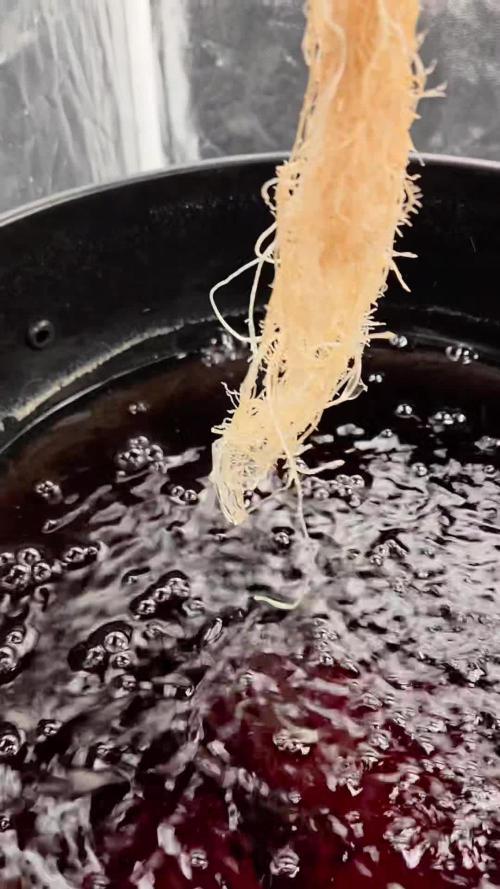
La Jack Herer Auto sigue evolucionando con mucha fuerza. El sistema radicular está explotando, mostrando unas raíces impecables, gruesas y de un blanco que confirma la salud de la planta. El follaje se ve saludable. Los parámetros en el tanque se mantienen estables como un reloj: pH en 5.8 y la EC controlada en 450 ppm. Con la dieta de CalMag, Hesi Crecimiento y Hypro-shield, la asimilación va bien y el crecimiento no se detiene.
Likes
37
Share


@RFarm21
Follow
Ola growmies!
O gráfico dos nutrientes corresponde à alimentação do gorila real # 1 (a mais desenvolvida) foram misturados em 2,5L de água. (25/07/2021).
Alimentação Royal Cheese 1 e 2 (4L): E.C 0.63 /pH 6.3
BioGrow - 3ml; BioBloom - 1.5ml; TopMax - 4 ml ; BioHeaven - 3 ml; Activera - 3ml; CalMag - 0.5 ml
---------------------------------------------------------------------------------------------------------------
Alimentação Royal Gorilla 2 (adicionei pela primeira vez o BioBloom) (2L): E.C 0,60 /pH 6.3
BioGrow - 1.5 ml; BioBloom - 0.5 ml; TopMax - 0.8ml; BioHeaven - 1.5 ml; Activera - 1.5 ml; CalMag - 1.5ml - meti mais que nas outras por causa da sua aparencia estranha, não sei o que fazer para melhora-la..
27/07/2021 - Quebrei outro ramo sem querer da RGorilla #2, o ramo era fraco mas tinha uma folha grande.
27/07/2021 - Retirei algumas folhas secas e amarelas, especialmente na Royal Gorilla 1 e na Royal Cheese 2
---------------------------------------------------------------------------------------------------------------------
29/07/2021 - Alimentação Royal Gorilla #1 (2,5L): E.C = 1,02 ; pH - 6.3
- BioGrow - 2,8ml ; BioBloom - 2ml; TopMax - 2,5ml; BioHeaven - 3ml; Activera - 2ml; Calmag - 0,6ml
Alimentação Royal Cheese 1 e 2 (4L): E.C = 0,84; pH = 6,2 :
BioGrow - 4ml; BioBloom - 2,5ml; Topmax - 5ml; BioHeaven - 4ml; Activera - 4ml; calmag - 0,7ml
Alimentação Royal Gorilla #2 (2L): E.C = 0,80; pH = 6,2
BioGrow - 1,8ml; BioBloom - 1ml; TMax - 1,5ml; BioHeaven - 2ml; Activera - 2ml; Calmag - 1,5ml
-------------------------------------------------------------------------------------------------------------
31/07/2021 - Tirei algumas cabeças pequenas que nao iam desenvolver e tirei mais umas folhas amarelas das quatro. (as mais secas)

Likes
4
Share


@pzwags420
Follow
week 3 flower is going great. I increased my UVA lights to 8 hrs on. Gsc and Blueberry have decent bud-lets already on day 17. OG kush has preflowers. waiting on Blueberry muffin to show pre fowers should be soon. At the end of week 3 GSC and Blueberry are doing the best and starting to get more trichomes. Im waiting on OG kush And Blueberry Muffin to really get going!


Likes
16
Share


@GreeneScene
Follow
This week a few different things happened .
1. After I flushed to remedy all purple stems Runtz & Zkittlez developed deformed leaf sets. The runts leaf set didn’t form on 1 side of the vein. The Zkittlez formed leaf sets with a missing finger . Instead of the being 5 fingers on the 3rd set there were 4 fingers .
2. Day #10 plants looked really sad & droopy the leaves of my plants where pointing downward & the 1st set of serrated leaves began to yellow .
3. To rectify the “super soil” dropping the PH of the water I fed the girls I purchased some PH UP & experimented with a few cups of my soil & found if I put in water at 9.5PH the “Super Soil” balanced out at 6.5 . My tap water PH is about 7.5 with a 200ppm (yes , yes, I know , tell me about it) if I put regular tap water in my soil drops it to a 5.1 -5.3 which led to the purple stems in the 1st week. Granted I’m kinda working backwards to work with what I have in order to utilize my investments it’s a means to an end I suppose BUT I AM OPEN TO SENSIBLE THOUGHT OUT ADVICE THANKS.
4. Day #11 I transplanted all the girls into full strength super soil . If I hadn’t had to flush i could have held out another week tops in my solo cups . I could have gotten to atleast the 6th maybe 7th node before transplanting into full strength soil. Currently I’m at the 4th node & noticing slight canoeing of the leaves .
This is my first grow in this “supersoil” also my 1st time mixing my own amendments to make said “supersoil” so for the time being I’ll just keep an eye on it & hope the plant establishes quickly enough to be able to consume the quantities of nutrients in this soil THUS my generous generous use of Mykos .
Today makes 2 weeks for Runtz & #1 GDP the the remaining 4 are at day #13.
I’m still hoping by day 16 I can start LST’ing .
All but 1 or 2 of the girls have began growing secondary shoots along the nodes so I’m getting more an more excited .
I’m just envisioning the plants I want to have until it comes to fruition. I am by no means an expert I’m not even a reasonably decent grower . Out of the 3 runs I’ve done so far only one produced smokable poor quality buds . Each time spawning more research & a tweak to the setup .
THIS TIME I AM CALM COOL & COLLECTED as I’ve ever been & have my eyes set on a lofty yield of high quality buds I’m aiming to get a QP p/plant but honestly I want to push them to get a HP p/plant . Which sounds like I’m in Narnia NeverLand with such high expectations .. I’ll just shoot for the starts & if I land on the moon instead I’ll be happy with that as long as the end results in me being high .
Week 2 in the books 📚

Likes
91
Share


@Greenwolvesfarmer
Follow
Mientras iban pasando los días estás plantitas lindas de a poco se formaban , defoliacion en el 1er y 2do nodo , quedando firmes el 3ro , 4to y 5to nodo ....pronto tendrán una estructura más estable y firme , aún estamos con el Haluro metálico , ya es cosa de tiempo para la renovación !
Siempre agradecido del padre Sol y madre tierra por su bondad y abundancia , te amo ...
#evaseeds #lemonkingevaseeds #greenvolesfarmer #growdiaries


Likes
11
Share


@thevaporino
Follow
12/12/23: Pasan a crecimiento directas a macetas de 11 litros:
Sustrato All-Mix de Biobizz preparado con Great White Granular 1 y Guano Powder de Guanokalong
1 de 1 de Thomas Breader
2 de 2 Critical + de Dinafem
3 de 3 Peyote Forum de Seedsman
1 de 2 Sour Gummy de Dr. Undergrow
1 de 2 de Double Cookies de BSF Seeds
18/12/23: Segundo riego , primero con fertilizante de crecimiento de Bio Bizz , 1 ml por Litro : 6 Litros
19/12/23: Introduzco el humidificador en el cultivo


Likes
89
Share


@Njanne
Follow
The nights are cold now, and the days are not warming up the way they used to... I think we are ready to harvest. Ripening is slowing down. I'll give her a day or two more and then I'll do the chop! Stay tuned for the harvest reports.


Likes
76
Share


@Canna96
Follow
Hey now, this week went pretty good, she is stretching but not too much, she went from 28 to 34 inches, but the past couple days she seems to be slowing down with vertical growth. I started the transition today over to bloom nutrients, so I gave her half Veg and half Bloom nutes today, and I will have her all the way switched over by the end of the week. I figure I will probably get a couple more inches which would put her at 3 foot tall. I am definitely seeing pistils start to form all over her. I have been defoliating her about every other day, but I will stop this week and pretty much let her do her thing. I now have her running under a Mars Hydro 300 watt, and a Vipar Spectra 240 watt light. My planl was to fill a 4X4 with a single main-lined plant, and she has almost done that as she is touching the walls on all four sides. There are pretty many tops on her, so hopefully they turn into alot of flower but I will find out soon. I hope everyone had a nice weekend, stay safe, and Blaze On!

Likes
11
Share

@weedismybestfriend
Follow
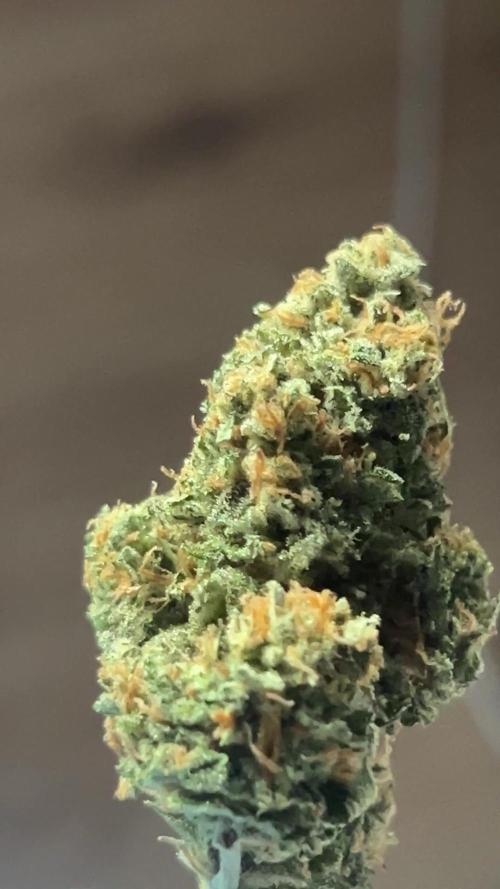
Another adventure has come to an end. The smell is amazing — I’ll let you know about the taste in 2–3 weeks. Thanks everyone.
More pictures coming soon
Likes
20
Share


@CityFarmer
Follow
Hello everyone,
Been busy but I shoot a little video for yall to see, also if growing is something you guys intended to do, I suggest you guys get yourselves a Digital Microscope or a jewlers loop.
I just got myself a Digital Microscope for under $20.00 on Walmart.com, I got me a cheap one to start with so I can learn how to use it properly. But for under $20.00 this one brings 8 led lights, a adjustable mount, comes with 3 different connection choices build in, magnifies from 50-1000x, can take pictures and also videos and my favorite part, it connects right to my mobile device, you download and install a Google app and your ready to go, ill work with it and add pictures next week...
See you guys soon 👊👊👊

Likes
18
Share


@as_smas_ter
Follow
So my microscopic camera came on the weekend after checking the trichomes to my surprise i was advised to harvest asap due to have some amber already. they were receiving full nutes up until 4 days ago. since then I've been flushing. i was still receiving high runoff ec readings after 2 days of flush so have since put around 30 litres of water through each plant all now have ec of around 0.3/0.4. thinking of doing the same tomorrow to wash last of the nutes out then will put them into 48hrs of darkness before chopping unless anyone can advise me different?
Likes
5
Share

@Smev1337
Follow
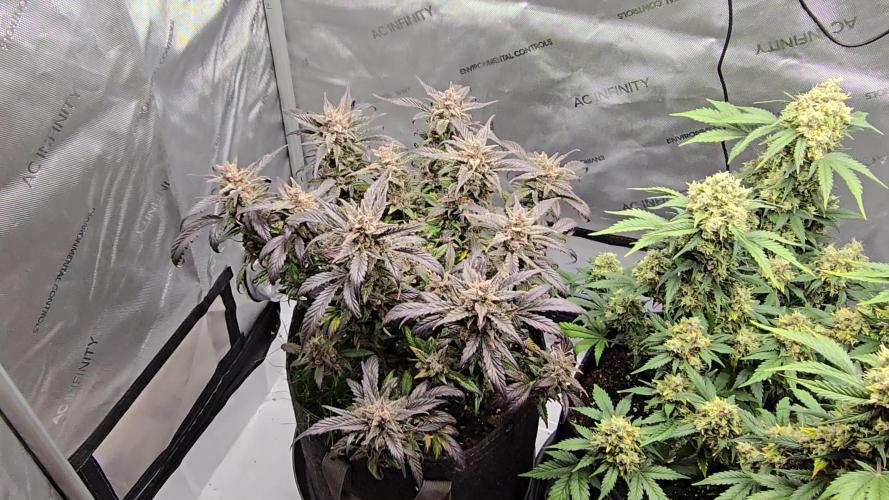
hey guys! this week is starting off with one plant missing because she got already ready to get harvested because i saw some bananas forming and it was just the time to cut her down but her sister is still there and going strong 💪😎 she is really doing great and looking so good! and i think for her she will be ready next week to be cut down for harvest and drying, i am planning on pressing most of the plant into rosin because i started to smoke some self made rosin vapes which i really enjoy 😊 anyways! happy growing all!✌️💚😎