


Likes
Comments
Share

@Growfather2
Follow
Hello everyone,
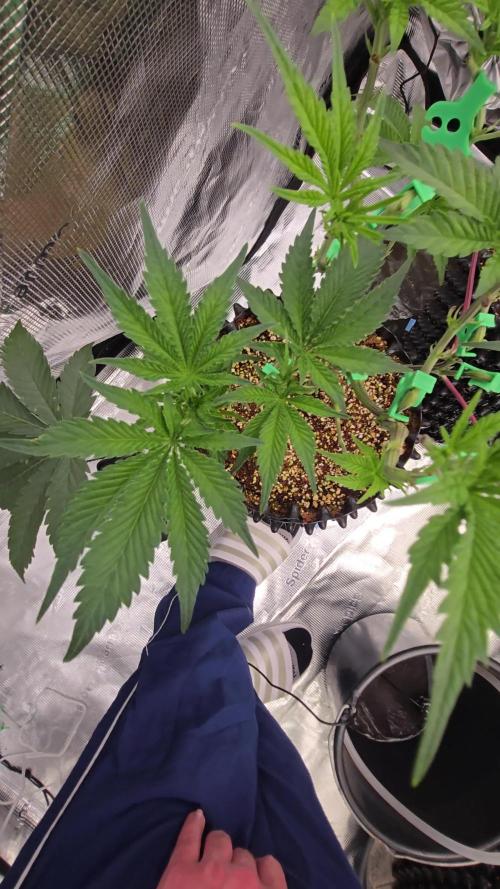
One hour ago the peyote cookies experienced for the first time total darkness and are officially in flower mode.
I vegged the plant for 7 weeks and am a little bit disappointed, they didn't stretch much and the main stem is to the thin side, but it is what it is.
Thanks for stopping by and have a nice day.
Growfather




Likes
Comments
Share


Likes
74
Share


@Hou_Stone
Follow
Bonne journée tout le monde 💚
❄️❄️❄️❄️❄️❄️❄️❄️❄️❄️❄️❄️
Intensité de la FC3000: 90%
Ventilation : Extracteur mars hydro 6 pouces avec filtre à charbon puissance : 4/10 (24h/24h) + 3 ventilateurs à l'intérieur ( ON 8/24h). ils s'activent à un horaire différent.
Arrosage : Environ tout les 4-6 jours avec 1.5L d'eau. (+ 1gr de bioenhancer/L eau un arrosage sur 2)
Température & humidité : NUIT : 16°C & 70% / JOUR : 23°C & 50%
Mon instagram 🌱❤️️
https://www.instagram.com/hou_stone420/

Likes
14
Share


@HELLFIRE424
Follow
So far it looks like I have control of the nute burn looking at the fan leave not burning/changing anymore. Started finish but started at 5pm and my led goes off at 6pm. I kept flushing till 6:20om but stopped due to the fear of the ladies herming, revegging, or anything that would cause my ladies to start off week 7 on a slow/bad start. Defoiling a little but mostly real bad burned fan leave because I believe your ladies will continue to try and repair them which pulls energy from bud developement. Flushed on 6/1/22 and ended on 6/2/22 all 3 ladies ppm is under 200 so I can make sure they have enough to ripen and fatten up. On week 8, I will do a ice flush and then 2-3 days of darkness while they freeze. Checked trichomes on 6-5-22 and some show maybe 10-20% on some colas. Will harvest all 3 on 6-12-22 probably in the morning which I seen and heard it is better because at a certain time in the day marijuana plants let out moisture and you want to keep as much of that as possible.n


Likes
71
Share


@Nor_Cal_Kannabliss
Follow
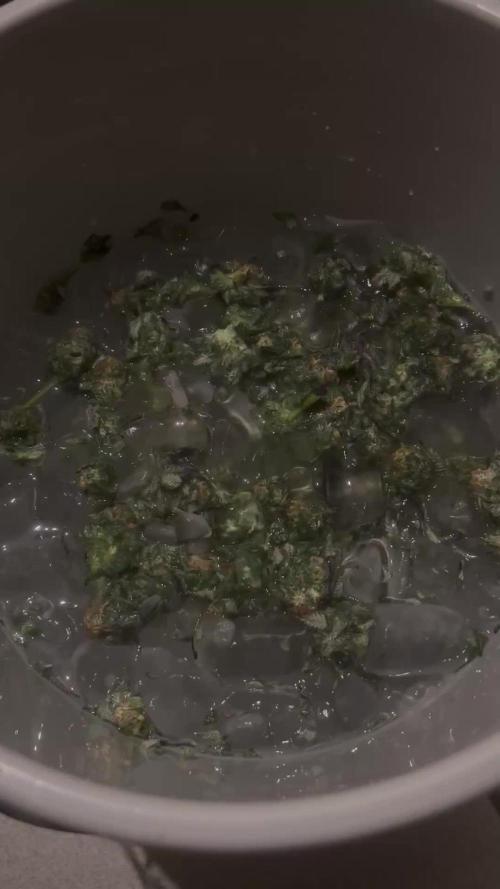
So these Cream Cookies were really easy to grow! Almost too easy that I neglected them for a week or so and then found two of them covered in Aphids. We tried everything we could to save #1 & #2 but It was a battle that we eventual lost. They are in a bag in the freezer getting ready to be bubble hash. #3 to my awe and surprise has survived through thick and thin. Good and Bad. And will be my only smokeable "flower" from this run. That said I will run these again but inside in a controlled environment as it seems my FastBud Girls were prone to the aphids and caterpillars.
Reguardless I'm super impressed with the structure and just look of the plant overall. Can't wait to smoke #3!!!
The frozen bag of hash weighs in at 203g and includes the mutant #3 smoothie auto from my other diary which also was overrun with aphids. *Will update with dry numbers*



Likes
62
Share


@MeaCulpa
Follow
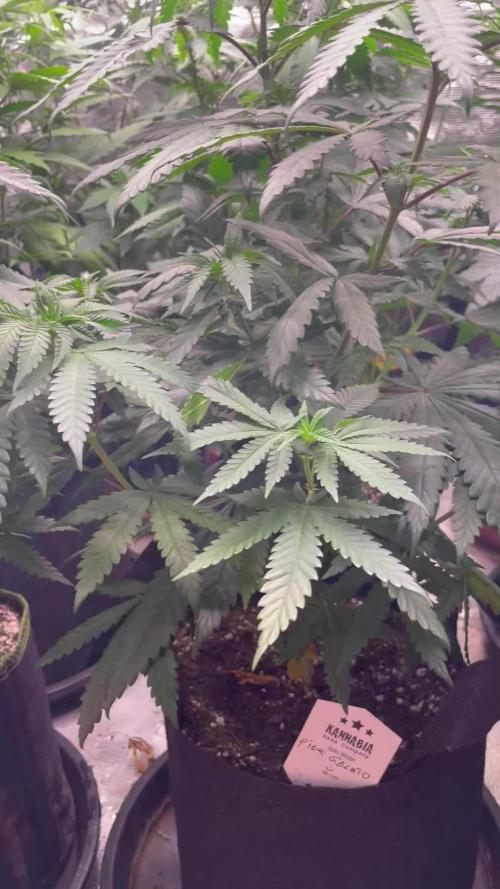
OK, Ich habe den Kampf gegen meine Trauermücken aufgenommen..... und direkt sieht es aus, wie im Militär-Lazaret.
Ich habe 3.000.000 Nematoden (Steinernema feltiae) auf ca. 2.5L Wasser (ph 6.2) der Erde zugeführt.
Die Blätter mit einer Neem- und Rapsölmischung besprüht. Damit die Erde das nicht aufnimmt gibt es weisse Laken für die Patienten.😂
Ich habe keine Ahnung, ob es funktioniert. Mal sehen.
Ansonsten gefallen mir meine Babies echt gut.

Likes
38
Share


@Aedaone
Follow
This week started of good except for ph and iron. I'm phing feed and water to 6 but my naturally 7.6 ph water is raising ph. I've realized my water and organic soil don't have iron in them. It's keeping these from greening up properly. I do have blood meal in the soil but not enough. I'll be adding an iron supplement next week when it arrives. Until then I'm going to feed a little masses and blood meal with the ph water. I've had a difficult learning curve switching from coco and salts to organic and soil. #2 got topped on day 1. I'm going to clone this top so I'll have this plant for the future.
Likes
3
Share


@Ganjagardenner
Follow
This week we saw an incredible ammoubt if growth thanks to the beautiful sun we’ve had. I had to cover her over with a tarpaulin to give some shade at the highest points of the day as she was having some heat stress issues. Had the chance to give to do really Useful LST. As you can see in the pics the canopy has opened up well. Looking forward to seeing how she goes. Also this morning I noticed there are some pistils this means we are now entering flowering stage so I will begin to add some biobizz bloom and a little extra fish mix. During the first weeks of flowering all plants usually have a growth spurt! Autoflower a may only be a week or two but photoperiods can go upto 5weeks.
Likes
20
Share


@DeepRootGrows
Follow
Let’s just say for what I got out of this plant, I’m extremely pleased. This plant was put through a lot of stress and never really skipped a beat. I stunted the growth early on in the seedling stage, I then decided mid veg state that I wanted to do coco coir instead of DWC bucket, which then slowed it down a few days, then during my first time doin any training to a plant I snapped the main node off slowing it down again. My cat then one day got into my tent when it was down while I went to use the restroom, and ended up digging out an entire side of the pots and roots. I truly thought this was the end of this plants life, I decided to just let it go and hopefully I could maybe get some small stuff to make some butter with or something. She bounced back from even the cat attack and produced something very great.
All in all this was really fun to grow, she was resilient as hell and would love to try this strain again with no hiccups down the road in the near future.
Lastly, thank you to everyone who has liked or commented on this journal. I hope to see and hear from you on my other diaries. I look forward to the feedback y’all leave me. 🤙🏼

Likes
16
Share


@osmrducks
Follow
Day 50: Girls are looking great! 💪 A couple of them are a little further along than the others. Pistils are starting to change colors. PPM's going in are higher than runoff PPM. No change in the PH. In at 6.5 and out at 6.5.... Still have some rust spots. Still thinking that I need to dial in my light distance/intensity.
Day 51: Got one girl that the issue of rust spots is not going away. Not getting worse, but just will not leave. Other than that they are still bulking up and looking beautiful. Can't wait to start checking the tric's! Using AN Big Bud for a couple feeds and MOAB for a couple of feeds. Have been feeding every water as my output PPM's are less than what is going in. Will keep this cycle until needed to flush or an issue occurs..
Day 52: No new updates. They still look basically the same as 5 minutes ago when I checked em!! 😂😂
Day 53: Went ahead and ran 2 gallons of PH'd water through them. This rust spot issue is driving me crazy!!! Will just use PH'd water for a day or 2 and hope that it stops!
Day 54: Well, no new spots that I see. Probably too early to tell, but I feel better about it :)
Day 55: No new updates today. Watered with Recharge.
Day 56: The girls look wonderful and smell the same. Gave them a good defoliation today as they were extremely bushy! Thanks, B for the pointers!! 👊

Likes
19
Share


@MrWolfe
Follow
Day 56 starting flush then another round. No washing machine in the next round.:(
Rotten cookies 8 had 2 stamen that came out of a bract so possible hermaphrodite there. That's why we hunt, number 6 is frosty as heck and 1 and 4 have the craziest bud structure I've seen so far


Likes
2
Share


@aquaMan
Follow
The Tropicanas are forming some nice Buds.
This week the change to Plagron Nutrition and a higher EC was made. Plants are constantly beeing defoliated due to little space :D
Likes
5
Share


@LittleBigTrees
Follow
I've defoliated a few leaves, they are starting to show viable trichomes now.


Likes
29
Share


@Growin_strong
Follow
Cold most of the week. I ran lights 24hrs last few days so temps wouldn't dip below 60. Punch 3.0 may be showing a little stress from all of it. Looking good so far.
Video is from Saturday - I normally use the vipar alone for veg, I added the UFO for heat for a couple of days. I expected it to be too much light for seedlings but they are taking it fine so far. I will see if I see a difference in growth from blue to red side.


