Likes
Comments
Share
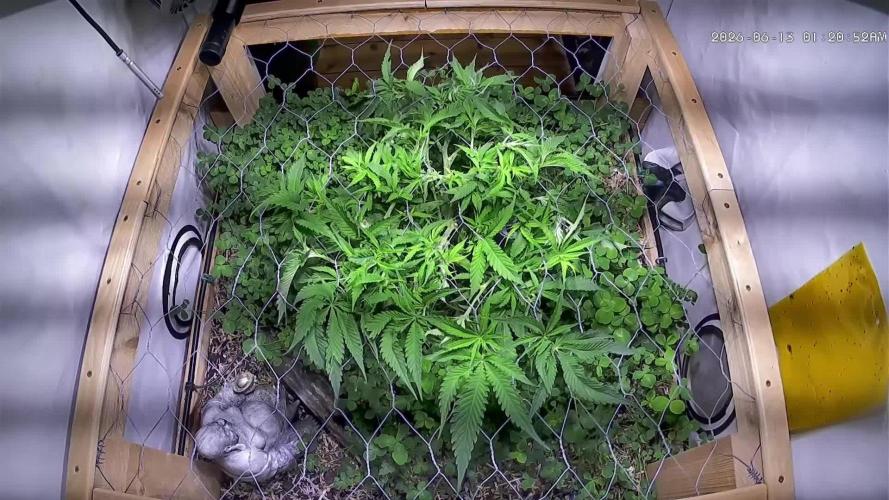
The grow is accelerating fast now. All three plants responded very well to LST and the canopy is becoming much more even. One plant exploded in vertical growth compared to the others, so I raised the smaller pots slightly to level the canopy. The larger plant had to be restrained with well-placed ties. Maybe I should have been more aggressive with the initial LST, or perhaps it’s also a genetic trait? Now it’s just a matter of letting flowering rock’n’roll 🤘🏻😎
Likes
1
Share
@Ogchemst
Follow
She's a nice big bush i wonder what I'm going to pull off of her... there's so many bud sizes i don't know which one to look at they are all beautiful. The strategy i took kinda payed off a got a big bush with alot of bud sizes topping and keeping just 2 main is interesting... I love playing around with those plants they are amazing Anyway we got a deficiency so I'm burping up the cal mag and a +b let's see what it brings us next week. Day 19 bloom update, we are at 90cm... that's with topping and lst and this is a little bit crazy this og kush I taking over the tent...
Likes
82
Share
Hey guys! Here's the 3rd week of flower! 😻 This week I trimmed my babies (just a little, about 8 leaves or less each plant). Some leaves were healthy but were blocking a lot of light from the flowers and tucking them wasn't doing the job anymore. Besides that Boomer stretched out a lot (which also worried me as I didn't want my babies to go wild on me. I LSTed some of them hoping that would fix the issue). Where I live has been getting somewhat cold at night and I fear that might be doing something to my babies (I hope to be wrong). Besides that the flowers are getting bigger everyday and some are even starting to show some trichomes (I think looks cute!). The pistils are also getting bigger and the smell is stronger now (it was already strong). Near the end of the week I saw Falco's leaves were getting yellow and I suspect it is nitrogen deficiency... and what's causing it is probably some residues at the end of the pot (so I might need to flush her) or maybe I just need to feed her more nutes). Keep in mind she used to be quite small during veg and only in the end she grew enough to be transplanted to a bigger pot. Maybe she's just special? This week you'll see less timelapses compared to last week... I forgot to take photos for about 3 days 😅 but at least there are some! I hope you'll enjoy what I'm sharing! Thanks for reading! 👋
Likes
6
Share
@MaxWax
Follow
It was a chaotic weekend. After a wild night, I topped the small plant on Saturday morning. I was too drunk and forgot to take pictures, but everything else went smoothly 😅 The big one is getting harvested tomorrow. I ran a 48h FlashClean and turned the lights off for the last 24h with ice water. I have to harvest tomorrow night because I'm leaving for a two-week vacation this Friday. Otherwise, I wouldn't have flushed her this early and would have harvested later 😬?😀
Likes
21
Share
Day 56 This plant looks fairly healthy overall, with a dense and compact structure. The canopy has filled out well, showing tight node spacing and several potential tops developing. Leaves are mostly a solid green, though some lower foliage is beginning to fade and yellow slightly, which may point to early nutrient demand or reduced light penetration. The plant’s posture isn’t fully upright – leaves show a bit of droop, which could indicate mild watering stress. Growth appears steady but not particularly vigorous; the plant seems stable, though not pushing out rapid new shoots at this stage. Main focus going forward will be on watering rhythm and nutrient balance. Allowing the medium to dry back a little more between irrigations should help with root health. A small nutritional adjustment might also support deeper green color and stronger new growth.
Processing
Likes
13
Share
@Andres
Follow
cloudy days with 14 c min and 19 c max. Its flowering has been slow compared to other newspapers. The smell is already strong and continues to feed organically. She is flowering in 2 parts. I made an apical cut. at the same time there was also a light that gave only the upper part of it. the lower part is already in the last part and the upper part is just in flowering
Processing
Likes
19
Share
@Ferenc
Follow
Okay, so water intake 300ml per plant per day, the same 600W LED and 12/12 light schedule. Fertilization continues on the same days basically every day one day bat guano and then Epsom salt. Day 67: Getting nice I just removed the rubber bands from plants that helped to spread the stamps. Day 68: They are getting stinky 😜 Day 70: Zkittlez looks like I don't know pistils arevgettign brownish and just checked the trichomes and they are milky but it is too early and hardly have flowers on it. Should take more time and of course more buds... Day 71: I ordered some BioBizz Organic staff I will start feeding them from the 11th week on Monday.
Likes
11
Share
Stretching lovely, look really healthy, added a new bigger rotating fan but other than that pretty much the same, just plodding along nicely, roll on next week 😀
Likes
3
Share
Tito's Living Soil Blueprint: Why You Can’t Treat Organics Like a Synthetic Hydro System. When transitioning from synthetic hydroponics to true organic cultivation, many growers bring their old habits with them. It is a common pitfall: pulling out pH pens, measuring runoff, and liquid-feeding heavy doses of organic nutrients as if the medium were sterile coco or rockwool. But living soil operates on an entirely different set of rules. To achieve the true potential of an organic garden, we must stop treating the soil as a mere holding tank for liquid chemicals and start viewing it as a self-sustaining biological engine. This will be a breakdown of why treating organic soil like a synthetic system fails, and how to shift ones methodology to unlock the true power of the soil food web. Pouring massive amounts of raw elements into a living system all at once is the biological equivalent of force-feeding a newborn a massive takeout meal and expecting them to digest it instantly. In an optimal system, soil should never be breaking down more than roughly 5% of its total composition as organic matter at any given time. The math is simple: more intense chemical and biological reactions equal more physical heat. If the root zone temperature creeps even remotely over 72°F, oxygen hypoxia sets in, drastically reducing plant growth. Organic rhizospheres and biological nutrient delivery require significantly more oxygen to maintain efficient parameters for growth—a reality that is drastically different from a pure synthetic approach where a complex rhizosphere is virtually non-existent. The fundamental blueprint of organic growing relies on Cation Exchange Capacity (CEC). The goal is to build a medium with so much CEC that it can store massive amounts of excess nutrients safely. This provides the necessary buffering capacity to handle large biological reactions, a process typically managed in the time period between grows. Once the soil is fully loaded and stabilized, the rhizosphere maintains its own pH balance, allowing the plant to dynamically feed itself directly from its massive, built-in storage of CEC. Treating Living Soil Like Coco creates a runoff-runaway trap. Applying a massive overdose of raw organic materials releases too many nutrients at once, leading to completely uncontrolled pH skewing. Running a synthetic-style management setup while simultaneously dumping organic inputs into the container does not make it an "organic" grow. Trying to judge a metric like pH after letting it run completely out of control with multiple simultaneous amendments is an uphill battle. Each input possesses unique chemical properties that drastically alter atomic decay chains and, consequently, pH. Without an adequate structural buffer, the medium experiences unpredictable swings. Put simply, the sheer volume of inputs rapidly outpaces the soil's built-in buffering capacity. Constantly reading the pH and Electrical Conductivity (EC) of input and output water in an organic soil is not true organic cultivation; it is just a synthetic indoor environment layout utilizing organic ingredients. This presents a distinct misunderstanding of how these two opposing approaches need to be separated. One cannot simply measure EC and pH to heavy runoff in a soil designed to store cations and expect to keep accurate tabs. Even when using 100% organic certified ingredients, liquid feeds, and compost teas, the underlying methodology matters most. Measuring runoff pH and EC treats an organic soil system like a synthetic coco or rockwool grow. In a high-CEC organic soil, a runoff reading is highly inaccurate. A soaring runoff reading of 8.0 is often just the water physically washing past raw amendments on its way out of the pot. It does not mean the actual root interface is locked out; it simply indicates that the soil ran out of immediate storage capacity for those heavy inputs. Synthetic growing relies entirely on direct nutrient delivery. Chemical salts are poured over the root system, the plant absorbs what it needs through basic osmotic pressure, and the excess is flushed away. True organic growing, however, relies on biological cycling. An organic soil should never be watered to heavy runoff, because doing so actively washes away the beneficial microbes, soluble humic acids, and organic buffers that the soil life works so hard to create to protect the root zone. Applying inputs as an immediate, massive overload of raw elements causes chaotic chemical spikes. Dumping heavy amendments directly into a big pot mid-grow triggers unpredictable reactions. In a true living soil system, amendments are added in tiny, balanced amounts long before the plant ever meets the dirt. This deliberate timeline allows the soil’s Cation Exchange Capacity to naturally "park" and buffer those nutrients. When inputs outpace the soil's ability to buffer them, the system breaks down, and the runoff pH screams. When faced with a fluctuating pH meter, a common reactive impulse is to throw agricultural sulfur at the problem. This is a classic example of trying to react mechanically to a digital number rather than letting the soil chemistry work. Elemental sulfur does not lower pH on contact. Soil microbes must first digest it and convert it into sulfuric acid. Because this biological process takes weeks or even months, adding it mid-problem yields no immediate change. This leads to the temptation to add even more. Weeks down the line, the cumulative sulfur will finally convert, causing the pH to crash violently and fry the root system. As a general rule, avoid using sulfur as a corrective knee-jerk reaction. If it is used at all, it should be applied strictly 2 to 3 weeks prior to flower as a precise, one-off addition to assist with Isopentenyl pyrophosphate synthesis. If a soil matrix is truly experiencing a severe alkaline lockout at a pH of 8.0, the new leaves at the very top of the plant will tell you directly by turning bright yellow while the veins stay dark green—the classic signature of alkaline drift and iron chlorosis. The solution is simple: put the pH meter away. Stop watering to heavy runoff. Only apply enough water to evenly moisten the soil matrix, and let natural inputs do their job to feed the microbes and naturally buffer the root zone. Electrical Conductivity (EC) dictates plant water and nutrient availability by altering the soil solution's osmotic potential. This potential controls whether a plant can efficiently pull water into its roots or if it will actually lose water to the surrounding soil. If a grower cannot control the rate of what is going in (the rate of nutrient release) and cannot control the rate of what is going out (the plant's dynamic growth), the immediate medium's EC deviates. When EC deviates, osmotic potential goes with it, disrupting bulk flow and the entire vascular transport system of the plant. Synthetic nutrient delivery relies on precise input measurements and an incredibly tight management of the wet-dry cycle to prevent the constant, violent spiking of EC caused by excess moisture loss. Reducing EC to a mere measurement of "food in and food out" oversimplifies its true function. It acts as a balance of electrical conductance that must be maintained to regulate the flow of water. Failing to acknowledge this is a severe disservice to the beauty and potential of a true rhizophagy cycle in all its respiratory glory. True organic cultivation does not actually begin until biological cycling is actively linked to hydrogen exudation from the roots. The vast majority of modern cultivation advice leaves growers completely in the dark regarding these biological mechanics. This is a product of market capitalism rather than basic chemistry. There are significantly lower profit margins for hydroponic companies when a grower uses ten times fewer mass consumables and relies on little more than water from seed to harvest. By shifting focus away from "feeding the straw" and moving it toward nurturing the near-infinite soil food web, the plant regains absolute autonomy over its own rhizophagy cycle. It begins regulating its own nutrient intake dynamically, without a single digital EC pen in sight. This allows the grower to focus entirely on optimizing the macro-environment rather than micromanaging the root zone. The cultivation medium can be reused indefinitely so long as you can prevent a buildup of carbon and nitrogen in the soil; cover that in a later week. To achieve a truly organic system that unlocks this rhizophagy cycle, the cultivation approach must shift entirely from feeding the plant directly to feeding the soil microbiome. Because the modern gardening community is heavily guided by synthetic methodologies, the subtle nuances and variations of this biological process are rarely highlighted. The hydroponic industry is fundamentally built on a recurring revenue model of bottled minerals, flush agents, and sterile mediums. Conversely, a self-sustaining living soil system requires minimal external inputs after its initial build. This shifts the grower's role from a rigid chemical manager to a biological custodian. Because managing biology requires observing subtle environmental factors—like consistent soil moisture, oxygenation, and temperature—rather than reading a digital screen, commercial entities scaled for automated, synthetic delivery often dismiss it as unpredictable. When the soil food web is fully unlocked, the plant takes the driver's seat, operating with a level of systemic efficiency that synthetic nutrient lines simply cannot replicate. In the commercial cultivation landscape, corporate structures are legally bound to protect shareholder interests and recurring profit margins, which often prioritize the sale of bottled consumables over the promotion of self-sustaining agricultural practices. Under modern industrial cultivation models, biology is too often treated as secondary to business. By stepping away from the meters, understanding Cation Exchange Capacity, and feeding the microbiome instead of the roots, you break free from the chemical cycle—allowing nature to do what it has perfected over millions of years. "When I was a child, I spoke as a child, I understood as a child, I thought as a child; but when I became a man, I put away childish things"
Likes
70
Share
All feeds with nutes use either a whole ratio or combination of "Veg Mix" and "Bloom Mix"concentrates DILUTED in water until a total ppm of add in is reached using a (Total Dissolved Solids)TDS Meter measured in PPM (parts per million). The "Veg Mix" concentrate will eventually be added in smaller ratios and "Bloom Mix" concentrate what will eventually replace the "Veg Mix" concentrate entirely with the ppm and ratios listed when I feed. Veg mix recipe is on week 3. Bloom Mix recipe is on week 5. Day 49 VPD is okay now - temps at 75F RH also now at 65% with ILVent at 50% = VPD of 1.04 - ppfd also same as yesterday mostly 480 to 490 around the ring with 510 and 520 in the center Took ph readings as well - 3 readings 6.43, 6.48, and 6.37 to avg 6.426 Which is good because she's starting to show signs of stress after the topping and defoliation from a couple days ago. The leaves are starting to curl at the tips and the bronze color stripping is happening again - however this time seems to be a slower progression so Im hoping that having the correct ph this time will help while she's re-routing her resources. I 'did notice also that the growth tips seem to be growing at a slower rate than before - I think she's at her limit in colas and the roots are having to find more space to spread, may even be too big for the 5 gallon pot. I have no plans to change her out just yet, but will monitor. Soil is drier today - so I will be watering tomorrow with de-chlorinated water at 6.4ph Day 50 VPD was good at 74/64 with the tent open while I feed that I left it open for a bit and took time in feeding and cleaning - after all that still good at 74F/61%RH/50%ILV ppfd was checked after water and setting back - same as yesterday as most of the newest growth is still coming from the new colas - most seem to be adjusting 1 at a time in each split but both are showing growth now on all cuts. Started feed by making new ph buffer solutions, calibrating/testing both meters. The have about a .15 variance between the two. Checked weight and made 1.5 gallons of feed. started at 228ppm added 450ppm veg and 150ppm bloom for a total of 833ppm feed/epsom salt - splashed h2o2 and ph'd to about 6.4- I fed via watering can and spray and fed the whole amount slowly since I was feeding until bottom drip and she took it all before starting to bottom drip. Afterwords I let her drain (about a quart came out) and checked ppm from runoff at 2500 (telling me she's okay but isnt eating as much as before her topping yet) ph is a mystery - I show 3 readings from top level of 6.62, 6.57, and 6.57 for an avg 6.586 but 2 separate readings from 2 meters (4 readings total) on the bottom runoff showed 5.3 and 5.6 then confirmed later. I expected a variance since the wood ash probably stuck to the top side of the soil - but I didnt expect that much of a difference. I will monitor but honestly dont know what I should do, if anything other than watch. made a video of the fan movements and runoff drip Day 51 What I am calling "stress burn" is progressing as expected. I am monitoring the ph from the top as I did before, but again, not much I can do other than over water, so I'll just watch for now and compare rate of spread until she fixes her resource pathways. It seemed to take about a week to clear up after the ash treatment last time, so I am on day 3 of 7 for now with no treatment. Looking for a spurt of new growth to show and then I'll know she's better. Adjusted the lights to accommodate a week 6 level of 500 to 600 ppfd - that means I can raise the lights to the top of the tent and increase power. So now set at 3 tick up and 37 inches from the soil or 26" from the plant top. Now her ppfd reads about 540 on both of the center colas and 500 to 510 on the surrounding ring. Adjusting lights meant I had to adjust the fans up to medium power and re-directed them to blow at the edges of the pot; made a video. VPD is steady, but still warmer than typical (only by a couple degrees nothing too much) 76F/61%RH/50%ILV for 1.15 kpa on room VPD Day 52 VPD is higher now that I have the lights to the top of my tent and the fans on the lights blowing down at the pot. I moved the IL Vent to the top sucking out with the motor and vent outside the tent now. I also opened two lower air holes with my heater set for fan on the opposite side of the tent than the vent. Currently, I am at a max of 1.2 room VPD and ranging down to 1.0 so I'll take it until it does something else. 74F/65% RH/75%ILV - I will monitor to ensure it's stable. ppfd is same as yesterday as there's little growth still. Spots are still progressing on the oldest leaves at the same rate as before - however the newest leaves are not showing signs yet, so I will continue to monitor. Day 53 ppfd was a little changed today, showing that there's growth coming back now. lowest on outer ring was 500 with most at 520 and 530 highest, center colas were tested at 540 and 560ppfd. VPD was stable as I watched it most of the day since I made changes yesterday. Temps were 74 to 76 and RH was 61% to 68%. ILV was set to 33% with the bottom heater on fan to draw in air. lockout continues on the oldest fan leaves at the last top nodes. New growth is already marked in a couple of spots. I have about 6 gallons of tap water burning off chlorine now and will use about 2 gallons to flush at 8ph. I plan to dunk this weekend with feed so this will allow time to dry out and hopefully reset the ph and lower my ppm readings at the lower part of the pot before then. Day 54 Took Control pics measured VPD and ppfd Lights are at the top of the tent and second tick from highest power level. Lights to soil is 37 inches and lights to plant is 12 inches shorter so 25 inches leaves to light. currently ranging 530 to 550 around the ring and 575/580 ppfd at center (after feed and replaced). Moving the lights (day 51) made the tent hotter so I changed my ILVent to suck out at the top and fresh air in at the bottom - I have been fighting to keep temps under 78 managed to hit 74 to 75 with the heater being set just to fan for the bottom air vents- I did also raise humidity to a setting of 65% a day before moving the lights, so Im hitting 61 to 68% between power cycles on the humidifier. Overall Tent VPD is 1.0 to 1.2 as max. Took controls for feed. Weight 16lbs 11oz. tested and calibrated 2 meters and took 4 ph readings of 6.55, 6.77, 6.53, 6.85 to avg 6.675. from top of soil (last runoff measured 5.6 and 5.3 on two meters) prepared 2 gallons of feed at 500 ppm over tap. (burned chlorine off overnight) starting ppm was 217 - added 75/25 veg/bloom ratio. ph balanced to 7.8 and 7.63 on separate meters (rinsed and retested to be sure got 7.79 and 7.63 again) I used 4 knitting needles in the soil about 3 inches from the plant center. Poured feed water over the needles until it pooled slightly on top of the soil, I then pulled the needle out a little to allow the water to drain into the holes better. I did this in 8 different spots. As soon as she started dripping water from the bottom I poured a little on the leaves and then moved the plant to another drip pan to finish pouring the rest over the top of the soil without dripping any over the sides. Took videos of the drip and waited 10 min before putting her on another clean drip pan and back in the tent. Runoff from second drip pan was measured twice at 5.8ph and 2410 ppm - and first pan 5.85 and 2670ppm (expected higher ppm since I moved perlite on the bottom with the needles) Defoliated the oldest leaves before lights out. Day 55 She mostly looks like she appreciated the clippings and ph balance from yesterday - slower progression of the lockout issue and largest new growth since topping day. So speaking of new growth, I plan to use LST in the next few days to set these colas in what will hopefully be their last bind around the ring. VPD is steady at 75F to 77F and RH is between 63 and 68%. My ILV have been set to 33% and the lower fan blowing rather than heat. top soil ph was measured with 3 readings, on a tested and calibrated meter. 6.47, 6.7, 7.12 to avg 6.763 (kinda wild in those readings so I double checked them all twice and got the same in each hole)
Processing
Likes
8
Share
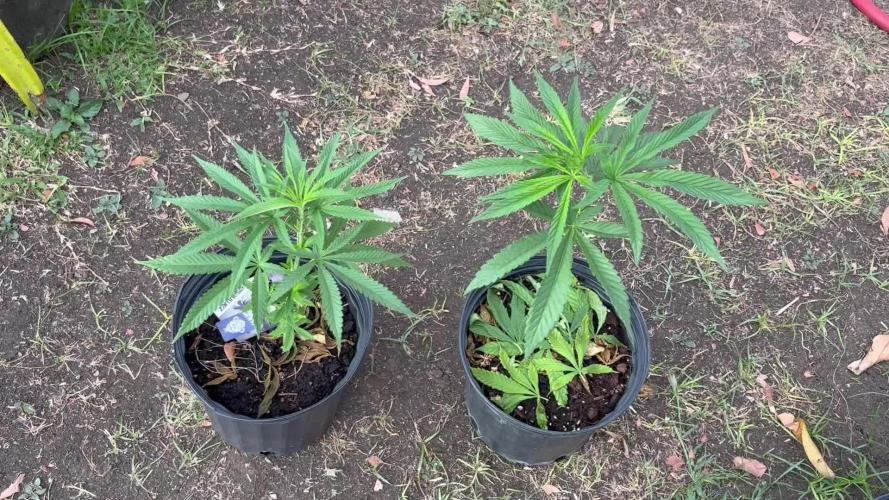
Weird growth on the leaves of one of my plants. Looks healthy otherwise. White widow is beginning to pop out for life.
Likes
12
Share
Harvest has gone well PE 1 after 72 days and PE 2 after 67 days harvested PE 2 earlier by a week to see if there was a difference in taste or high compares to PE 1. Drying had begun will update further with weights once dried. Day 79 - PE 2 dried beautifully lovely tropical aroma coming from her, PE 1 will need more curing as Budds were denser. PE 1 - 30g PE 2 - 28.5g
Likes
28
Share
@Regenwurm
Follow
In dieser Woche wurden die Ladies einmal entlaubt und normal gegossen! Klimabedingungen sind gut, (Ich habe den Abstand etwas vergrößert auf 40 cm und fahre jetzt bei 100% um den korrekten ppfd wert zu haben und etwas mehr Wärme rein zu geben ) und die Blütebildung ist in vollem Gange …. Das Wachstum war diese Woche sehr gering…1-2 cm! Diese Woche gibt es das letzte mal Enzyme und der EC Wert steigt auf ca. 2.1 . 1 Pflanze (die kleinere) hat deutlich zugenommen und hat jetzt die gleiche Größe, die Blütenbildung ist jedoch leicht versetzt, so ca. 1 Woche zurück ! Tage der Keimungsphase = 5 Tage. Tage in Wachstum = 21 Tage Tage in der Blüte= 28 Tage Gesamtzeit= 54 Tage Wachstum h = ca. 2 cm 2 mal in dieser Woche mit Purolyt Mischung 1:25 besprüht Lichtstärke: 100 % PPFD: ca. 720 umol Lichtabstand: 40 cm Std Tag/Nacht: 18/12 Temperatur Tag: ca. 25,0 Grad RLF Tag: 60% Temperatur Nacht: 21 Grad RLF Nacht: ca. 60 % VPD Wert: ca. 0,9 PH Wert Wasser/Düngelösung: 5,8 EC Wert: 2,1 Ventilator Oszillation: Stufe 1 Befeuchter: an Entfeuchter: an Zusätzlicher Entfeuchter: 1 Stk. außerhalb vom Zelt im Raum Bewässerung: 6* bewässert mit Wasser/Dünger mit den o.g. Mengen Purolyt Besprühung: 2 mal Controlling: Grow Control Dünger: Plagron Coco Licht: Pro Emit Vollspektrum Abluft: EC Carbon Active 750 m3
Likes
19
Share
@valiotoro
Follow
Hello everyone 😎 Week 3 of flower for the Banana Purple Punch auto from Fast Buds 💥 She grew fast with a beautiful green color,for the nutrient 4ml/L terra bloom & 1ml/L power buds from Plagron Mars Hydro SP-6500 70% Have a nice day 😋
Likes
96
Share
harvested her long ago , forgot to do anHarvestreport i
Likes
38
Share
So my struggles are finally paying off my girls went into flower!!! Northern lights- did some low stress training to bring main cola down away from light. Added some vinegar in bowls and shot glasses to grow tent to control these flying knats(which bite). Pineapple auto- she's in flower I'm just concerned with all the lower leaf issue's that it's going to affect buds. I've over watered this plant which started the leaf issue's at like 3 weeks. At week 4 I trimmed all the fan leaves off which put it in stress almost haulting all growth for a week. Oh and the knats! I will never use walmart soil again for my grows or house plants. The neem oil has really knocked alot of them out. So the leaf burn and star leaves began at week 5 and it was the only feeding i gave my plants with cal mag and within 2 days the throwing star leaves and burning began.. not sure if it was the cal mag or the knats being so bad at that time. But thru all of it this plant has been a fighter!! You can see in pics the new growth and bud sights are healthy so I hope she fights all the way to the end! I would like to thank Growdiaires and it's community for the opportunity to help and share with others. I appreciate all help, views, likes, comments and support. We all share a common interest and knowledge is power! Thanks again till next week.
Likes
9
Share
@rownz
Follow
EC Wert müsste etwas korrigiert werden mit CaLMAg, Entlaubung wurde durchgeführt, wuchs ist gleichmäßig bis auf eine AH die ich nachträglich als Steckling bekommen habe.
Processing
Likes
41
Share
@Enki_Weed
Follow
As you can see, all our plants are very well. Yesterday we gave them fertilizer for the first time. We add 1ml BioGrow, 1ml BioBloom, 1,5ml Heaven, 1ml Top-Max and 1ml Activera on 1 Liter water and gave 250ml of these mixture to every plant. Thanks for your comments 😄
Likes
7
Share
@Papabro2k
Follow
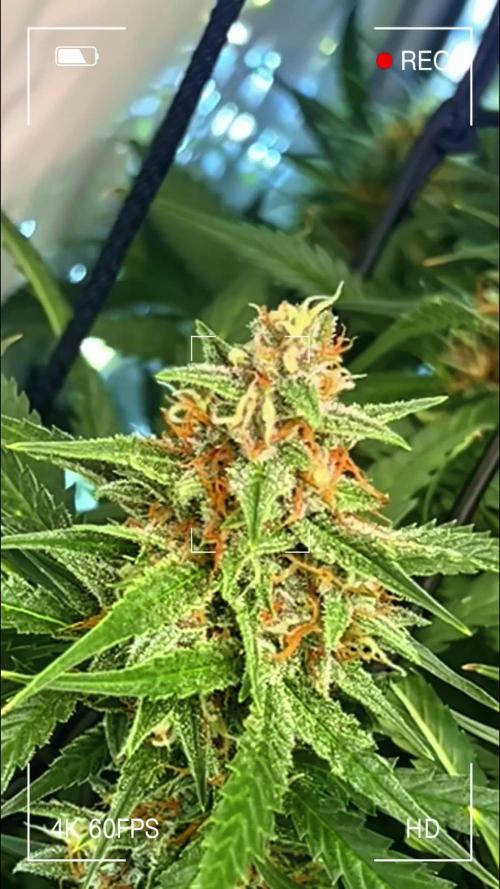
This plant was left in the corner and never had too much attention the toot system was not so good But! It’s very nice and dense with a potent smell of lime can’t wait to try. For sure Dutch passion is one of the best breeders I’ve used .. happy growing
Likes
156
Share
@StarLorr
Follow
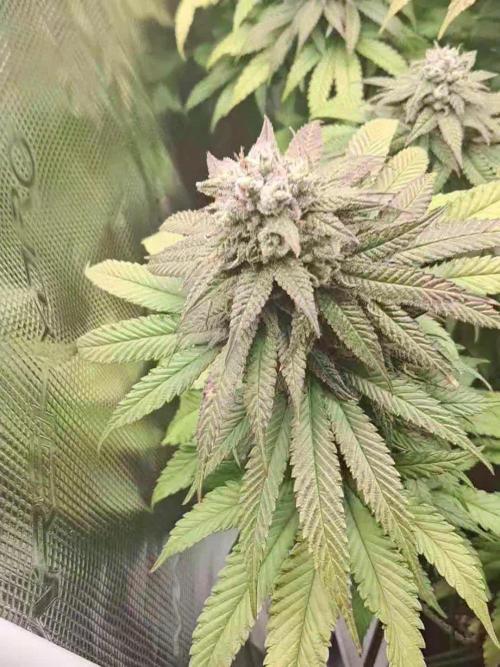
Helloing 👋🏻friends and visitors. Welclone to my Clone diary🙃 Both Clones are doing fantastic! Some leaves are changing colour from green to burgundish underneath and dark green on top. Some top buds have so much frost on them that I mistakenly thought it was mold😳😅 all is good though 😉 ______________________________ Feeding: Tue 12Dec: 3L each w/nuts pH'd 6.5 Fri 15Dec : 3L each w/nuts pH'd 6.5 Mon18Dec:2L each water only pH'd 6.5 _______________________________ Thanks for stopping by, likes and comments are appreciated 👊🏻😎 Keep on growin! Keep on tokin!!! 😙💨💨💨💨💨