


Likes
Comments
Share
@Vems1337
Follow
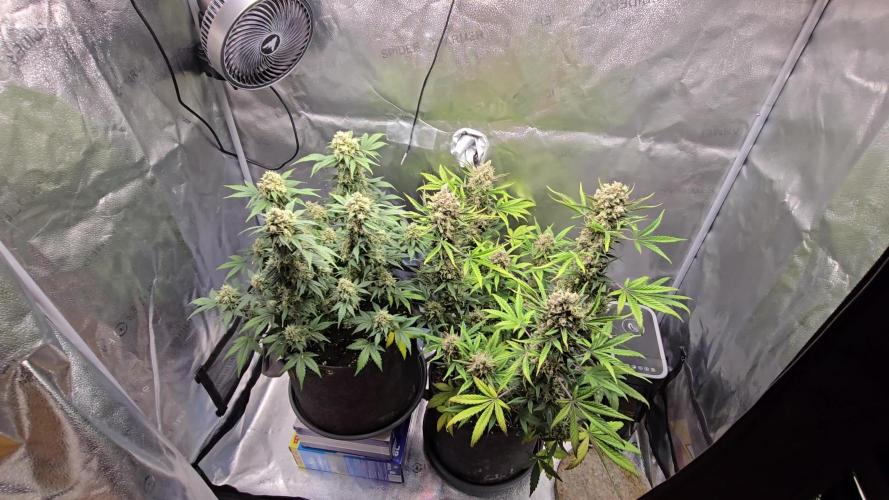
hey all! so this week starts off kinda hot haha because the temperatures outside are 35°C and my boxes are trying the best not to go above 26°C and its still hot tho and the whole room is getting also hot which is a nightmare haha but anyways we are in late stage flowering and it should not bother us at all! 😎 both ladys are going good in bud size, there is a little bit of foxtailing because of the heat but that is also fine. happy growing all! 😎💚✌️


Likes
29
Share


@GrownwithLED
Follow
The single plant I grew harvested only 45 gram and was therefore the plant with the lowest yield out of my HOMEBOX tent. The SUPER LEMON HAZE grew very healthy with dark green colored leaves and developed very dense nugs with lots of trichomes in flowering. She has a STRONG HAZE AROMA all thru the cycle...simply smelling DELICIOUS!


Likes
3
Share


@TGriner420
Follow
This week went by fast! They're growing really fast and always hungry! They're getting ready for the flower stage and entering Bloom. They're getting 2L of H20 per day that's pH at 6.8. I water 2x a day! I turn them on at 6am and give them 1L of H20 at 9am that way they're awake and 1L of H2O at 9pm that way they're split. I feed my nutrients at the 9am watering. I pH my nutrient mix somewhere between 5.8 and 6.2. I also have amended the soil with Soil Recharge and that's once a week as well as the Fish Shit and The Stash Blend. Then, I always flush with only pH H20 the day after any nutrient mix. Overall, the plants are healthy and I'm waiting to see how they turn out!
Processing
Likes
5
Share


@Mr_nugs_lover_David
Follow
The 2 seeds have germinated within 58 hours, immediately planted them. Let's grow another beutiful strain from Gea!

Processing
Likes
93
Share


@Ferenc
Follow
Week 6th started. I will add each plant 100 ml water 2x a day so 400ml altogether. I still always spray the topsoil also. The same fertilization method will be done, Monday, Wednesday, Friday 2x 100ml acacia honey and bat guano water mix for each plant. I changed their places so Purple Punch is the left side now and the Gelato Cookie D'ohpe placed to the right. I always rotate them to get equal light. Last day of the 6th week. Gelato Cookie D'ohpe doubled its height. I decided to make the Purple Punch flower but it is not autoflower I separated it for 36 hours darkness and then I will give 14 hours darkness and 10 hours light the first 7 days. So every night I will put it in the tent with the other one and remove in the morning to be in darkness. I also need to reset the timers. End of this week Gelato Cookie D'ohpe is 65 cm, Purple Punch is 35cm.


Likes
2
Share


@BONGAPPETREATS
Follow
What’s up y’all!!??
Week 8 deserved a video !!!
The colas / bud sites are fattening up and starting to put on weight. I was concerned with the lower sites but they seem to be producing slowly but surely.
I defoliate large fan leaves and make sure I keep the lower branches tied to the fabric pot to get as much light as they can.
The plant is becoming sticky and the smell is getting more prominent. I turned up the air filter to help with the smell.
Week 9 is approaching and we getting closer and closer to blowing our very first home grown bud!


Likes
28
Share


@m0use
Follow
SPONSORED DIARY===SPONSORED DIARY===SPONSORED DIARY
Plants are doing well this week. Have some continued signs of thrips damaging some of the leaves. Will need to teat them and kill em all off if possible. The thrips are also outdoors on some of my plants, I feel they came from the bagged promix I got or they overwintered and travelled indoors.
Light was a bit to strong at 100% when i grew taller, turned it down to 80%ish now till it starts to blooms. currently at 45cm hang height,
Tent is having some issues with cooling down, even running the extractor is not doing much, so I prop the door open at the top and it helps vent it out. Maybe because of the vents the air is not circulating though and just travelling up one side of the tent, IDK. its a waste to run it past setting 5 on a 2x2 so the door will stay propped indefinitely. Still no smells unless I'm rubbing them, no signs of flower just yet, temped to top or LST but I think I'm going to let them go as is and get a good gauge on how they grow and yield.
SPONSORED DIARY===SPONSORED DIARY===SPONSORED DIARY
Big shout out to @SpiderFarmer for supplying the 2x2x5 Grow tent and The SF1000 100w LED light.
I will be uploading all relevant photos of the products in the next week when they arrive, maybe do a little unboxing video. Who knows.
A 2nd big shout out to Dr.Seeds for supplying the 3x5pac of seeds I will only be featuring two of the three strains in two separate diaries.
You the users will get to decide what ones I grow. I have setup a Grow Question on each diary to vote for your strain of choice for that diary.
https://growdiaries.com/grow-questions/47600-drseeds-1-vote-what-i-grow "Diary #1"
https://growdiaries.com/grow-questions/47600-drseeds-1-vote-what-i-grow "Diary #2"
Cast your vote for each diary.
Thought I would add in the relevant links if you wanted to read up on any of the products that will be officially featured in this grow.
https://www.spider-farmer.com/
https://growdiaries.com/grow-lights/spider-farmer (+) https://www.spider-farmer.com/products/sf-1000-led-grow-light/
https://growdiaries.com/grow-tents/spider-farmer (+) https://www.spider-farmer.com/products/sf-2-x2-indoor-grow-tent-hydroponic-home-plant-reflective-aluminum-oxford-cloth/
https://drseeds.net/
https://growdiaries.com/seedbank/dr-seeds
(+)
https://drseeds.net/product/granddaddy-purple-autoflowering-cannabis-seeds/ (+) https://growdiaries.com/seedbank/dr-seeds/granddaddy-purple [Photoperiod not Autoflowering]
https://drseeds.net/product/60-day-wonder-autoflowering-cannabis-seeds/ (+) https://growdiaries.com/seedbank/dr-seeds/60-day-wonder-autoflowering

Processing
Likes
2
Share


@Kindbot
Follow
Kindbot has been taking care of this grow since these were tiny clones. This is the most recent grow by the device we are developing called Kindbot. Kindbot has fully documented and controlled this grow since they were small clones. Follow our journey here and on kindbot.io. We are also on instagram- @kindbot and twitter- @Kindbot_io :D. We look forward to sharing what Kindbot can do!

Likes
1
Share

@nijuana
Follow
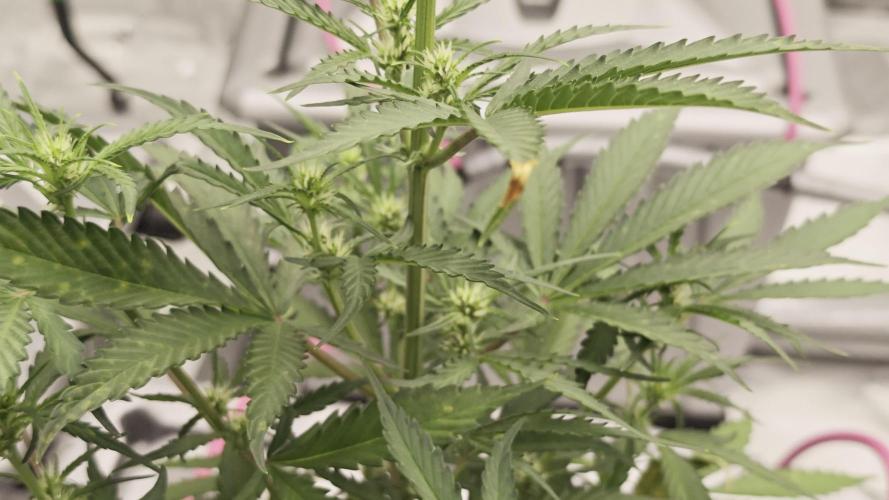
Had some potassium/phosphorus deficiences due to the switching from veg to flower so fast ^^

Likes
3
Share

@PatriciaGant
Follow
Dane, We all should help one another.
Human beings are like that.
We should live by each other’s happiness - not by each other’s misery.
We don’t want to hate and despise one another, share the Joint.
And mother earth is rich and can provide for everyone.
We can Grow enough Happiness, In this paradise, there is room for everyone.
We only exist to bring joy into the world and The way of life can be free and beautiful,
but we have lost the way.
Grow High and Give the world A smile.
At the end we own nothing more then all our memories, lets make them amazing for everyone,
nothing to lose only everything to win.
for those who come after, right.
A last kiss goodby, a second one, softer and long as a sign, that you are woth it.
That Everyone worth, who loved and given.
Enought Hippie Talk, now have a nice day and an even better grow, thx for watching by.
((From Seed 🌱
week report:
and more pollensacks i hope that was the last one and she doesent go crazy with bananas
Likes
26
Share


@Mrs_Larimar
Follow
2022-11-13
The Plant looks happy and Green,
she gets Daily aSolution packed with beneficals and nutes
like listed
small Flowers appear
website for for my Fertilisers:
https://greenbuzzliquids.com/en/shop/
Code: mrs_larimar
Breeder Info:
👉Black Sugar is an indica dominant hybrid of Black Domina, L. A. OG and Critical.
It has kept the medicinal properties of L. A OG, a good flowering rate on the Black Domina lineage,
and the compact size of the classic Critical strain. With its small growth, the strain produces large yields
of up to 600gr/m2 on bushy branches. The buds are very dense and stinky.
Black Sugar has a high THC level. The variety has a fruity citrus aroma. Dense smoke gives the effect of relaxation and body buzz.
Good for Smoking before going to bed. It can become one of your favorite Seedsman strain
Genetics Black Domina x L.A OG x Critical
Harvest 450 - 500 g/m²
Flowering 50 - 55 days
THC 20.0%
CBD 1.0%
Likes
10
Share


@GoldenWeedGrower
Follow
📅 D8 - 22/08
📜 Ready for pot, I will move her tomorrow
✍️ 0.3 EC
♒ 6 pH
🌊 0.2 L
📏 2 cm
📅 D9 - 23/08
📜 Pot Time
✍️ 0.5 EC
♒ 6.3 pH
🌊 4 L (moved in the pot)
📏 2 cm
📅 D10 - 24/08
📜 pH raise a lot. Keep attention
✍️ 0.5 EC
♒ 6.3 pH
🌊 4 L
📏 3 cm
📅 D11 - 25/08
📜 First true leaves
✍️ 0.5 EC
♒ 6.1 pH
🌊 4 L
📏 3.5 cm
📅 D12 - 26/08
📜 -
✍️ 0.7 EC
♒ 6.2 pH
🌊 6 L (added 2 L)
📏 3.5 cm
📅 D13 - 27/08
📜 -
✍️ 0.7 EC
♒ 6.2 pH
🌊 5.8 L
📏 3.5 cm
📅 D14 - 28/08
📜 So far so good. EC stable and pH raising. Medium watering.
✍️ 0.7 EC
♒ 6.2 pH
🌊 5.8 L
📏 4.5 cm


Likes
26
Share


@gottagrowsometime
Follow
Welcome: thanks for dropping by. Drop a like so I know you came so I can view your diaries, if you what to of course.
Was able to go full steam ahead with this 1. And apply the 3 recommend nutrients to be used for seedlings.
La Calavera is the exact same formula as Voodoo Juice. How can this be you ask..(As it would be copyright), well it would be if it wasn't for the fact that these ppl, (Terra Power), are the ones who own and hold the pattens to voodoo juice, tarantula and Piranha, which made AN famous. They decided to break away and all the formulas they made for AN over the years they taken 90% of them and used modern day research with autos/ruderails in mind. Their base nutes alone will blow you away. Have a look at their claims. Led-grower.eu/terra-power/.
As for the plant, new strain, new nutes, new whole entire set up with a 90% controlled environment, I say 90% cause I'm waiting to get the air exchange and AC installed in my grow room. Soon it'll be 100% be able to bring temp up as high as 28c and as low as 17c. Atm I can control RH. I can bring it up to 70 by just closing my door/tent windows and then by adding a damp towel and after a few days of the grow room door closed the RH will go up to 70+% and I'll only open the door every couple hours to swap out air until my air exchanger is installed. I can get the RH as low as 35% with a full tent 30 with 1 or 2 plants. So, hoping this time I can grow top A grade bud, as the last stuff was nice my 1st harvest was C grade weed. Was still half decent though. The others were B grade for sure. Hoping this time with the money I'm going to be putting in electricity it's goman be A grade. As I'll be looking at nearly 1kwh every 2hrs. That's 7e a day when the dehuimifier will be running when in flower. But as I'm vegging everything in a 70x70 with 1 light I'll get 4-5 wks for only having to pay 80cents a day. And I'll have great high RH. And as soon as some start to flower they'll be put in the 150x150 and I'll bring the RH in the room down but it'll still stay high in the 70x70 once I have the windows sealed up. If I can't get the RH below 45-55% for pre flower I'll have lots of room in the 150x150 to put the dehumidifier in and bring down the tents RH while keeping the Rooms RH high for the small tent. I'll just run the intake fan for the 150x150 from outside the grow room up in to the attic which the RH is 50% so air intake from the room will be too high for the big tent to use.
30/4/22 Veg started: first signs of life popped up today. Going to keep em on root stims and enzymes for now. Haven't fed since planted so will water with .1 300ppm today. All the EC comes from La Sirena. Makes
Will just sit back for now and let em do their thing hopefully in 48hrs will have some leafs or shell pushing up. She's growing straight up. So for now, it's just watching for any signs, (such as browning of the stem, bent stems and any early on diseases if any will hamper the plants formation of her 1st 2 fan leafs. You wanna see them no later than 24-48hrs after she pops her head up out of the ground).
1/5/22 VD 2 really at to coming on. Went from .5 to nearly 3cm.
4/5/22 Growing really well. Her first 3 days she put on 7cm her 3rd she put on 4cm of them 7. She hasn't grown up today but her face has filled out, another 2 days I reckon before she splits.
6/5/22 So, it's begun. I've created a negative pressure environment, 1st time, let's see if it makes an impact. On wk 3 onwards I'll be running the intake extraction for 5mins every 30mins and I'll have 2 co2 bags up. If the RH becomes a problem or temp I'll put the extraction/intake back on 100% of the time. The extraction fan/intake is set at a ratio of 2 to 1. (100% extraction 50% intake) making a negative pressure environment, best way to show you have done this, the walls in your tent should bow in lightly
Same Day. Okay, so this my last update. Going to run fans the same right up until flower and then I'll be sealing up my tent and adding 2 co2 bags. And will be adding a dehuimifier and setting at 45% And it checks every 30mins and if it's gone up it'll turn back on and bring down to 45 or set RH, so no co2 will escape. The temp will be bordering 30-33c and then when they go into their rest window they'll be transferred to to a negative pressure environment with low temps and 45-50%RH. I'll only be able to do this for the 3 weeks of pre flower. And maybe some more, it depends how hard the dehuimifier will be working, but i want dense buds and only way to improve that is by introducing Co2 and then a negative pressure cold environment for terps. Then I'll be putting them back into full negative pressure environment and the Co2 will be useless, again all depends how it's gonna affect my bottom line. That and I only have 2 intake fans. I'll be going into detail about my Co2 adventures the week before I'll be prepping them to be able to withstand high temps, so I'll gradually bring up the temps the last wk of veg 28c max and that way when I push it to 30-32c in pre flower she won't stress as much in the high temps as they'll be in a sealed tent for 18hrs in 30-32c I'll have the dehuimifier in the sealed tent and will be set at 45% And will keep it in that range for all of pre flower and then I'll put it back on to negative pressure environment 21c in the dark window and after all plants come out of pre flower Co2 will be left in the tent but will be useless without a sealed tent/grow room.
Thanks for reading, this will be the last update for this week other than pics.
gottagrowsometime
Likes
22
Share

@Sundancers
Follow
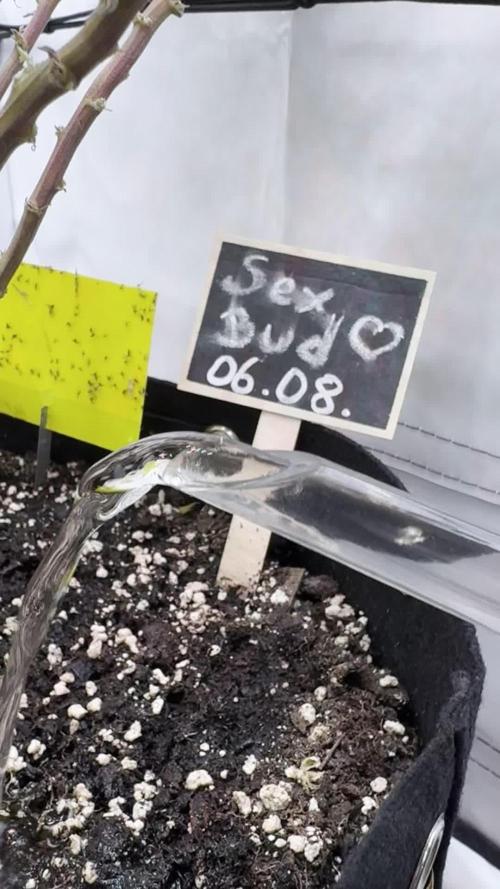
Einfach schön zuszusehen, wie die Sex Bud an Masse zulegt. Die Farben überaschen jedes Mal wenn man das Zelt öffnet. Der Geruch wird langsam merklich stärker.
Wir haben die ersten braunen Trichome entdeckt. D.h. wir gehen in den Endspurt.
👽

Likes
49
Share


@masterofsmeagol
Follow
6/9 I can't believe it but I had faith. The transplant yesterday LOOKED like it was fucked. I cleaned it up though and left it outside. This morning it was standing straight up. Both transplants were! I put tarps up to block the wind tunnel between buildings. It's still overcast and rainy. Sun isn't supposed to come out for a couple poke days. Chance of thubder storms tomorrow but I'm going to try to get everyone in their forever homes today. Or at least most of them. I plan to light dep a few right in the 3 gallon. I'm sure I'll be updating this after I get some work done.
UPDATE: I WENT OVER AND GOT THREE MORE TRANSPLANTED. THAT MEANS FIVE ARE OUTSIDE IN THE CAGE. TWO 10TH PLANET, 2 BLUEBERRY CHEESE AND A LITTLE PURPLE PUNCH. THE 3 GALLON POTS WERE RELATIVELY HEAVY SO I PICKED THE LIGHTER ONES TO TRANSPLANT. I LEFT THE ORHER TWO 10TH'S IN THE GARAGE WITH THE DOOR OPEN WITH THE REMAINING PLANTS. I ALSO ADDED WIND BREAKS AND SUPPORTS TO EVERYTHING. I WANTED TO GET EVERUTHING DONE TODAY BUT THERE MAY BE A THUNDER STORM SO IF I DONT GET IT DONE ITS NOT A BIG DEAL AND ILL FINISH TOMORROW. TRANSPLANTS WENT SMOOTH. I THINK THEY'LL GO EVEN SMOOTHER IF THEY DRY OUT A BIT. STILL HAVE THE 50 AND 40'S TO FILL. Took a bunch of videos but the don't want to load. I'll have to try tomorrow or later tonight.
UPDATE: I TOOK TONS OF PICTURES AND VIDEOS BUT THEY DONT WANT TO SEEM TO UPLOAD. IVE GOT SIX IN THERE FINAL HOMES OUTDOORS 20s and 30 gallon smart pots. Still have massive plants but I'm going to out those in the 50 and the 40. I'll finish this shit up tomorrow and get all the girls in their forever homes and if I don't have room for some I was planning on doing a light dep anyway so that will work out good. I learned a lot and transplanting went a lot smoother todsy than before. I feel really proud of myself. The last Transplant I did break a few leaves off that I didn't notice but whatever. I used tomato cages for suppirt on two and bamboo poles and string on the others. I'll add the vertical trellis as they grow. I'm proud of myself.
6/10 I got a lot done yesterday. Six are outside already. Two are in 20s in the garage. I'm planning on transplanting the rest today or tomorrow. I'll update later. Accidently uploaded lots of stuff on the wrong week. UPDATE: I TRANSPLANTED THAT SUPER TALL PURPLE PUNCH THAT I DIDNT TOP OR HST AT ALL INTO A 40 GALLON TUB. ROOTS WERE DRY AND THIS TIME IT ACTUALLY LOOKED LIKE THEY FELL AWAY. THE PLANT HOWEVER STAYED STANDINGVUP FINE. I THINK THIS PHENO IS GOING TO BE A TOUGH ONE. LOOKS GOOD LIKE AN HOUR LATER. I HAD THE 50 READY TO TRANSPLANT THIS MONSTER BLUEBERRY CHEESE I FIMed BUT THE POTS WERE SUPER HEAVY AND I FIGURED I NEEDED TO SLOW DOWN AND THINK. WE HAVE THUNDER STORMS COMING TONIGHT. TOMORROW IS GOOD. I MAY TRY TO FINISH UP TONIGHT BUT WE SHALL SEE. THE GOOD THING WITH DOING IT A FEW AT A TIME IS THAT IF SOMETHING HAPPENS OUTSIDE IVE STILL GOT A CROP INSIDE LOL. WHAT IM PLANNING TO DO IS EITHER LIGHT DEP THAT BIG BLUEBERRY CHEESE OR PUT IT IN THE FIFTY BUT IM PLANNING TO LIGHT 3 RIGHT IN THEIR 3 GALLON CONTAINERS. HAVENT DECUDED FOR SURE BUT IM THINKING THATS WHATS GOING TO HAPPEN.......of course videos won't upload and the ones that do are old videos. Damn. I need to sharpen my computer skills....and my growing skills. Especially transplanting. I suck at transplanting. I decided not to out all my eggs in one basket and left the 10th planet amd Blue berry cheese in the 20s in the garage. I pulled them out for light further but I'm ousting them back a little tonight. That way I'll have a back up if something catastrophic happens. I doubt it but better safe than sorry. I'm proud of what I've accomplished thus far. I've successfully uploaded my 1 minute plus video several times but it won't appear. Oh well. I'll try to load the videos tomorrow I guess. Just started raining. Just a light rain. Probably what fresh transplants like.
6/11 BEAUTIFUL outside. Today is the day. Most is done and I'll add the supports as trellis as they grow. This new grow space gets about twice as much sun as my old spot. The tar stops the burrowing insects. I'm getting everything out today. I just need to decide if I'm going to light dep that MASSIVE blueberry cheese or bite the bullet and put it in the fifty. Maybe I'll try to get some help from my cousin. Plants withstood the thunderstorm like Champs. I'll update as the day goes on. I planned better this year so I SHOULDN'T have an unmanageable jungle. UPDATE: WATERED THE 3 PLANTS LEFT IN THE 3 GALLONS (1 10th PLANET WITH GREAT BRANCH STRUCTURE AND TWO PURPLE PUNCH THAT WERE THE SMALLER ONES. IM GOING TO LIGHT DEP THEM. EVERYTHING IS OUTSIDE NOW IN A MIX OF 1/3 FOX FARM OCEAN FOREST, HAPPY FROG AND ROOTS ORGANIC 707 IN EQUAL PARTS. TRANSPLANTED WITH MYKOS. EVERYTHING IS OUTSIDE NOW. FINALLY DECIDED TO GET The MONSTER BLUE CHEESE I FIMed INTO ITS FOREVER HOME A 50 FALLON POT. IT WAS TGE EASIEST BEST TRANSPLANT OF THEM ALL. JUST LIKE AETTING A POT IN THE WHOLE. I DONT EVEN THINK THE PLANT NOTICED. ONE OF THE PURPLE PUNCHES HAD ROOTS OB ONE OF ITS LEAVES WHEN I LOOKED BUTVIT WAS STILL STANDING UO STEAIGHT. I KNOW SOME OF THE PLANTS LOOK DROOPY BUT WEVE HAD SEVERAL DAYS OF RAIN AND A MASDIVE THUNDER STORM. I BROUGHT OUT THE EARLIER TRANSPLANTS AS WELL. THEY ARE OUT OF THE SHOCK. WIND IS PRETTY HIGH BUT I DONT WANT TO ADD MORE TARPS. I THINK THINGS ARE SECURED GOOD ENOUGH FOR NOW. IM SUPER STOKED THAT TRANSPLANT WENT SO GOOD! Went back at 7:30pm. Some plants have a little bit of transplant shock and a little bit of burn but it's negligible considering they've been through a thunderstorm with pouring rain and extremely high winds. That blueberry cheese in the 50 transplanted so easy and still looks like it didn't even know the difference. I'll start light dep once I get a plan. Plants are recovering nicely but should something happen to one I could replace it. I'm interested in the light dep though and I've got a pretty good idea how to start.
6/12 The plants that had a little transplant shock are coming out of it. We had a thunderstorm and pouring rain the day of some of the transplants. Wasn't forecasted. High winds moved the plants around a bunch bit they are tough as hell. Everything is out now. Suppisedcto have showers the next few days. I'm putting together a feeding schedule abd setting up a spit to start light dep on the three plants I decided to flower early. The cage now gets twice as much sun as before. This is going to be a good year.
Went back over and plants are perking up and doing even better everytime I see them. I took a video but it might not upload until tomorrow. I may start a new diary for the light dep. I have a few places I'm thinking to use for light dep. I need to make a solid plan before I start so maybe a day or two. Trying to upload again but I doubt it.
6/13 Had a rushed morning but I watered the plants in the 3 gallons as they were dry. I had added more soil to a couple of the bags. The top soil is startingvtj dry out but the plants look good and we are supposed to get rain so I don't really want to water if it's going to be raining. I think I've found my light dep spot and schedule. I'll update after I do something.
WENT BACK OVER AND SPRAYED A LITTLE BIT OF WATER ON THE EXTREMELY DRY TOPSOIL THAT I HAD TOPPED SOME OF THE PLANTS OFF WITH. SHITTY THING IS THAT WAS ADDED AFTER THE THUNDER STORM SO IT MAKES IT HARDER TO JUSTE THE PLANTS WATERING NEEDS. I CAN TELL THAT ONE OFCTHE FIRST TEANSPLANTS IS STILL HOLDING WATER. I MEAN WE GOT A DOWNPOUR AND I DONT WABT TO WATER IF WE'RE GOING TO BE GETTING RAIN ANYWAY. IM GOING TO LOOK BACK OVER THE DIARY. THATS ONE GREAT THING ABOUT THESE. YOU CAN GO BACK AND CHECK YOUR WORK.
6/14 Glad I held off watering. It's raining today. Just showers. We haven't gotten any of that extreme wind we usually do. I have the plants supported but I still worry. Definitely more than I should. Plants are still doing good and acclimating to there homes. I have not started the light dep with the 3 gallons but I think I've found my spot. Once I start it will just be staying consistent putt8ng them in and out. I need to train them anyway. I have some research to do and a joint to smoke so I'll update later.


Likes
7
Share


@DrewbieDoobieNoobie
Follow
week 3 of flower looks like they are hungry. Last week I Lolly popped the bottom 1/3 of the plants for air flow and to push the energy to the tops. I have a theory that the potassium is low in the media due to flowering I was going to wait till the 4th week of flower to give them a topdressing. but I think I will mix some PK booster in the next watering and fertigate the pots from the top, so the plants have immediate access to the PK for flowering.
let me know what you think after watching the video image section.
take care for now,