Likes
Comments
Share
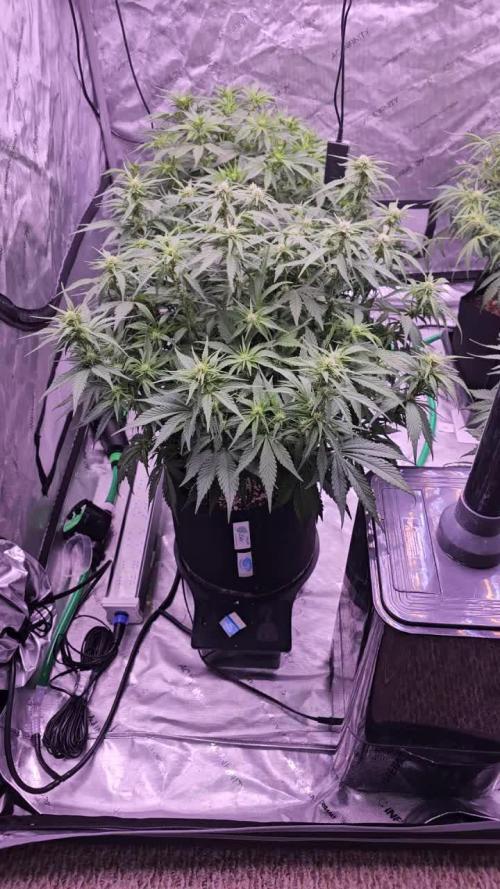
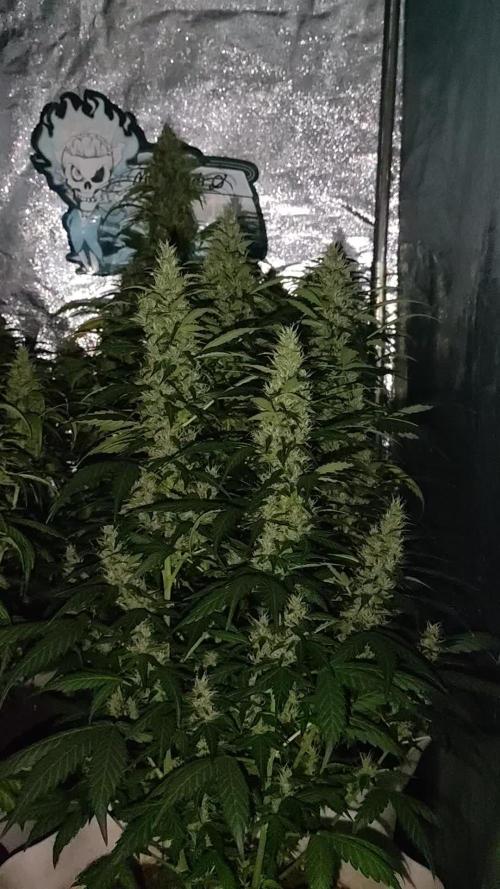
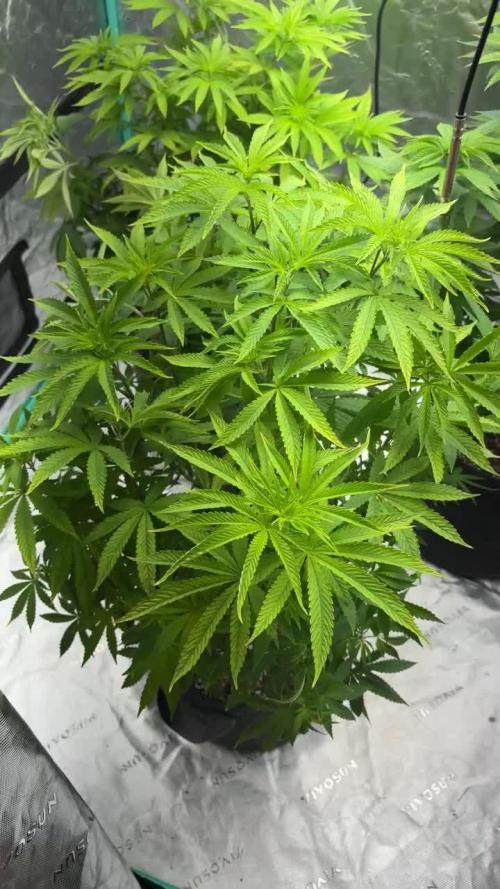
Left N1 to grow for 2 more weeks with cotton berry plants as they need around 2 more weeks as well. All other plants are big with loads of buds. This seed line is super good
Likes
17
Share
@Nicogreen
Follow
Sindsygt godt ramt af mig ❤️ ❤️ ❤️ 0.1 minus grader i nat. I morges 6.8 grader. kl 7dansk tid. Og kl Ca 13. 39.8 grader. Lige nu kl 1645 dansk tid. 23.4. 😉
Likes
6
Share
I watered with dechlorinated ph adjusted water when the soil was dry and decided to harvest on day 80. I harvested on day 80 and now the plants are hanging upside down in my tent. My inline fan is running on 25% and I got a fan running on the lowest setting on the bottom of the tent, so I doesnt blow on the buds directly.
Likes
2
Share
@TTerpz
Follow
Start of week 7 flower (day 42) 9/13/25 Watered: 9/14/25
Likes
19
Share
Ok this was my first grow and I made mistakes. -forgot to buffer coco - nutrient burn -started the manlining to early - probably worried to much about every stage these plants. -ended up with fungus gnats And probably appt more I can’t rmeber in the moment. But i learned so much from all of my mistakes and spent so much time researching and seeing in real time how these plants react and grow. I did do some experimentation just a normal top with one blue dream. I topped twice one another blue dream and did a 3 times topped on all the blue dreams and I see why you should at least top three times the eight main colas and spread out the plant I see some of the buds on the one I only topped once not matured at all because there was minimal light other buds were growing so fat it suffocated it basically. I could have probably defoliated and manliness better but ayy. Beginners wil make Mistakes and I’m happy with what came out of these girls. Not excited for trim hail but I am at the same time 😅😅
Likes
10
Share
@Sadhus
Follow
Rempotage en 13 litres après quelques signes de feuilles jaunes sur certaines , plante charnue trapue a feuilles large , ormi quelque feuilles cramé sur certaines les 7 sont jolies bientôt la floraison et j'ai hâte de voir sa! 100% organic et au naturel zero stress no topping no lst #kannabia #madamegrow #trolmaster
Likes
7
Share
Very happy with this week girls are drinking over a litre every 2 /3 days New led lights Very happy so far with performances
Likes
30
Share
@3lementa1
Follow
I've been lollipopping the plant. Things are looking and smelling good. I'm trying to maximize the vertical space of my grow room and I think I'm almost at the right height. I've been keeping the light going at 75% (of 1000w) instead of 50%, which apparently I can get away with in the winter.
Likes
18
Share
Die Plants wurden umgetopft und sind unter der grossen lampe gekommen, haben etwas stress anzeichen was normal beim umtopfen ist ,ansonsten sehen sie gut aus .
Processing
Likes
55
Share
@PharmaZ
Follow
July 27th Day 30 - 💧Fed 1L If above program 5.8EC last top feed before turn on auto pots. _______________________ July 28th Day 31 - 💧10pm mixed up 20L in the res. Turned on autopots filled up the trays made sure everything was working. Turned off the supply of water. ——— 1am noticeable decrease in water in the trays..
Likes
4
Share
SPEEDY BOOM 💥 AUTO/ KANNABIA WEEK #10 Overall Week #4 Flower This week no issues she's not the biggest plant but she's growing in extremely hot conditions and she's doing fine. This lady is ready to grow she's easy to grow she doesn't need much besides light and water. Stay Growing!! Kannabia.com SPEEDY BOOM 💥 AUTO
Likes
19
Share
Yellow butterfly came to see me the other day; that was nice. Starting to show signs of stress on the odd leaf, localized isolated blips, blemishes, who said growing up was going to be easy! Smaller leaves have less surface area for stomata to occupy, so the stomata are packed more densely to maintain adequate gas exchange. Smaller leaves might have higher stomatal density to compensate for their smaller size, potentially maximizing carbon uptake and minimizing water loss. Environmental conditions like light intensity and water availability can influence stomatal density, and these factors can affect leaf size as well. Leaf development involves cell division and expansion, and stomatal differentiation is sensitive to these processes. In essence, the smaller leaf size can lead to a higher stomatal density due to the constraints of available space and the need to optimize gas exchange for photosynthesis and transpiration. In the long term, UV-B radiation can lead to more complex changes in stomatal morphology, including effects on both stomatal density and size, potentially impacting carbon sequestration and water use. In essence, UV-B can be a double-edged sword for stomata: It can induce stomatal closure and potentially reduce stomatal size, but it may also trigger an increase in stomatal density as a compensatory mechanism. It is generally more efficient for gas exchange to have smaller leaves with a higher stomatal density, rather than large leaves with lower stomatal density. This is because smaller stomata can facilitate faster gas exchange due to shorter diffusion pathways, even though they may have the same total pore area as fewer, larger stomata. Leaf size tends to decrease in colder climates to reduce heat loss, while larger leaves are more common in warmer, humid environments. Plants in arid regions often develop smaller leaves with a thicker cuticle and/or hairs to minimize water loss through transpiration. Conversely, plants in wet environments may have larger leaves and drip tips to facilitate water runoff. Leaf size and shape can vary based on light availability. For example, leaves in shaded areas may be larger and thinner to maximize light absorption. Leaf mass per area (LMA) can be higher in stressful environments with limited nutrients, indicating a greater investment in structural components for protection and critical resource conservation. Wind speed, humidity, and soil conditions can also influence leaf morphology, leading to variations in leaf shape, size, and surface characteristics. Small leaves: Reduce water loss in arid or cold climates. Environmental conditions significantly affect gene expression in plants. Plants are sessile organisms, meaning they cannot move to escape unfavorable conditions, so they rely on gene expression to adapt to their surroundings. Environmental factors like light, temperature, water, and nutrient availability can trigger changes in gene expression, allowing plants to respond to and survive in diverse environments. Depending on the environment a young seedling encounters, the developmental program following seed germination could be skotomorphogenesis in the dark or photomorphogenesis in the light. Light signals are interpreted by a repertoire of photoreceptors followed by sophisticated gene expression networks, eventually resulting in developmental changes. The expression and functions of photoreceptors and key signaling molecules are highly coordinated and regulated at multiple levels of the central dogma in molecular biology. Light activates gene expression through the actions of positive transcriptional regulators and the relaxation of chromatin by histone acetylation. Small regulatory RNAs help attenuate the expression of light-responsive genes. Alternative splicing, protein phosphorylation/dephosphorylation, the formation of diverse transcriptional complexes, and selective protein degradation all contribute to proteome diversity and change the functions of individual proteins. Photomorphogenesis, the light-driven developmental changes in plants, significantly impacts gene expression. It involves a cascade of events where light signals, perceived by photoreceptors, trigger changes in gene expression patterns, ultimately leading to the development of a plant in response to its light environment. Genes are expressed, not dictated! While having the potential to encode proteins, genes are not automatically and constantly active. Instead, their expression (the process of turning them into proteins) is carefully regulated by the cell, responding to internal and external signals. This means that genes can be "turned on" or "turned off," and the level of expression can be adjusted, depending on the cell's needs and the surrounding environment. In plants, genes are not simply "on" or "off" but rather their expression is carefully regulated based on various factors, including the cell type, developmental stage, and environmental conditions. This means that while all cells in a plant contain the same genetic information (the same genes), different cells will express different subsets of those genes at different times. This regulation is crucial for the proper functioning and development of the plant. When a green plant is exposed to red light, much of the red light is absorbed, but some is also reflected back. The reflected red light, along with any blue light reflected from other parts of the plant, can be perceived by our eyes as purple. Carotenoids absorb light in blue-green region of the visible spectrum, complementing chlorophyll's absorption in the red region. They safeguard the photosynthetic machinery from excessive light by activating singlet oxygen, an oxidant formed during photosynthesis. Carotenoids also quench triplet chlorophyll, which can negatively affect photosynthesis, and scavenge reactive oxygen species (ROS) that can damage cellular proteins. Additionally, carotenoid derivatives signal plant development and responses to environmental cues. They serve as precursors for the biosynthesis of phytohormones such as abscisic acid () and strigolactones (SLs). These pigments are responsible for the orange, red, and yellow hues of fruits and vegetables, while acting as free scavengers to protect plants during photosynthesis. Singlet oxygen (¹O₂) is an electronically excited state of molecular oxygen (O₂). Singlet oxygen is produced as a byproduct during photosynthesis, primarily within the photosystem II (PSII) reaction center and light-harvesting antenna complex. This occurs when excess energy from excited chlorophyll molecules is transferred to molecular oxygen. While singlet oxygen can cause oxidative damage, plants have mechanisms to manage its production and mitigate its harmful effects. Singlet oxygen (¹O₂) is considered a reactive oxygen species (ROS). It's a form of oxygen with higher energy and reactivity compared to the more common triplet oxygen found in its ground state. Singlet oxygen is generated both in biological systems, such as during photosynthesis in plants, and in cellular processes, and through chemical and photochemical reactions. While singlet oxygen is a ROS, it's important to note that it differs from other ROS like superoxide (O₂⁻), hydrogen peroxide (H₂O₂), and hydroxyl radicals (OH) in its formation, reactivity, and specific biological roles. Non-photochemical quenching (NPQ) protects plants from damage caused by reactive oxygen species (ROS) by dissipating excess light energy as heat. This process reduces the overexcitation of photosynthetic pigments, which can lead to the production of ROS, thus mitigating the potential for photodamage. Zeaxanthin, a carotenoid pigment, plays a crucial role in photoprotection in plants by both enhancing non-photochemical quenching (NPQ) and scavenging reactive oxygen species (ROS). In high-light conditions, zeaxanthin is synthesized from violaxanthin through the xanthophyll cycle, and this zeaxanthin then facilitates heat dissipation of excess light energy (NPQ) and quenches harmful ROS. The Issue of Singlet Oxygen!! ROS Formation: Blue light, with its higher energy photons, can promote the formation of reactive oxygen species (ROS), including singlet oxygen, within the plant. Potential Damage: High levels of ROS can damage cellular components, including proteins, lipids, and DNA, potentially impacting plant health and productivity. Balancing Act: A balanced spectrum of light, including both blue and red light, is crucial for mitigating the harmful effects of excessive blue light and promoting optimal plant growth and stress tolerance. The Importance of Red Light: Red light (especially far-red) can help to mitigate the negative effects of excessive blue light by: Balancing the Photoreceptor Response: Red light can influence the activity of photoreceptors like phytochrome, which are involved in regulating plant responses to different light wavelengths. Enhancing Antioxidant Production: Red and blue light can stimulate the production of antioxidants, which help to neutralize ROS and protect the plant from oxidative damage. Optimizing Photosynthesis: Red light is efficiently used in photosynthesis, and its combination with blue light can lead to increased photosynthetic efficiency and biomass production. In controlled environments like greenhouses and vertical farms, optimizing the ratio of blue and red light is a key strategy for promoting healthy plant growth and yield. Understanding the interplay between blue light signaling, ROS production, and antioxidant defense mechanisms can inform breeding programs and biotechnological interventions aimed at improving plant stress resistance. In summary, while blue light is essential for plant development and photosynthesis, it's crucial to balance it with other light wavelengths, particularly red light, to prevent excessive ROS formation and promote overall plant health. Oxidative damage in plants occurs when there's an imbalance between the production of reactive oxygen species (ROS) and the plant's ability to neutralize them, leading to cellular damage. This imbalance, known as oxidative stress, can result from various environmental stressors, affecting plant growth, development, and overall productivity. Causes of Oxidative Damage: Abiotic stresses: These include extreme temperatures (heat and cold), drought, salinity, heavy metal toxicity, and excessive light. Biotic stresses: Pathogen attacks and insect infestations can also trigger oxidative stress. Metabolic processes: Normal cellular activities, particularly in chloroplasts, mitochondria, and peroxisomes, can generate ROS as byproducts. Certain chlorophyll biosynthesis intermediates can produce singlet oxygen (1O2), a potent ROS, leading to oxidative damage. ROS can damage lipids (lipid peroxidation), proteins, carbohydrates, and nucleic acids (DNA). Oxidative stress can compromise the integrity of cell membranes, affecting their function and permeability. Oxidative damage can interfere with essential cellular functions, including photosynthesis, respiration, and signal transduction. In severe cases, oxidative stress can trigger programmed cell death (apoptosis). Oxidative damage can lead to stunted growth, reduced biomass, and lower crop yields. Plants have evolved intricate antioxidant defense systems to counteract oxidative stress. These include: Enzymes like superoxide dismutase (SOD), catalase (CAT), and various peroxidases scavenge ROS and neutralize their damaging effects. Antioxidant molecules like glutathione, ascorbic acid (vitamin C), C60 fullerene, and carotenoids directly neutralize ROS. Developing plant varieties with gene expression focused on enhanced antioxidant capacity and stress tolerance is crucial. Optimizing irrigation, fertilization, and other management practices can help minimize stress and oxidative damage. Applying antioxidant compounds or elicitors can help plants cope with oxidative stress. Introducing genes for enhanced antioxidant enzymes or stress-related proteins over generations. Phytohormones, also known as plant hormones, are a group of naturally occurring organic compounds that regulate plant growth, development, and various physiological processes. The five major classes of phytohormones are: auxins, gibberellins, cytokinins, ethylene, and abscisic acid. In addition to these, other phytohormones like brassinosteroids, jasmonates, and salicylates also play significant roles. Here's a breakdown of the key phytohormones: Auxins: Primarily involved in cell elongation, root initiation, and apical dominance. Gibberellins: Promote stem elongation, seed germination, and flowering. Cytokinins: Stimulate cell division and differentiation, and delay leaf senescence. Ethylene: Regulates fruit ripening, leaf abscission, and senescence. Abscisic acid (ABA): Plays a role in seed dormancy, stomatal closure, and stress responses. Brassinosteroids: Involved in cell elongation, division, and stress responses. Jasmonates: Regulate plant defense against pathogens and herbivores, as well as other processes. Salicylic acid: Plays a role in plant defense against pathogens. 1. Red and Far-Red Light (Phytochromes): Red light: Primarily activates the phytochrome system, converting it to its active form (Pfr), which promotes processes like stem elongation and flowering. Far-red light: Inhibits the phytochrome system by converting the active Pfr form back to the inactive Pr form. This can trigger shade avoidance responses and inhibit germination. Phytohormones: Red and far-red light regulate phytohormones like auxin and gibberellins, which are involved in stem elongation and other growth processes. 2. Blue Light (Cryptochromes and Phototropins): Blue light: Activates cryptochromes and phototropins, which are involved in various processes like stomatal opening, seedling de-etiolation, and phototropism (growth towards light). Phytohormones: Blue light affects auxin levels, influencing stem growth, and also impacts other phytohormones involved in these processes. Example: Blue light can promote vegetative growth and can interact with red light to promote flowering. 3. UV-B Light (UV-B Receptors): UV-B light: Perceived by UVR8 receptors, it can affect plant growth and development and has roles in stress responses, like UV protection. Phytohormones: UV-B light can influence phytohormones involved in stress responses, potentially affecting growth and development. 4. Other Colors: Green light: Plants are generally less sensitive to green light, as chlorophyll reflects it. Other wavelengths: While less studied, other wavelengths can also influence plant growth and development through interactions with different photoreceptors and phytohormones. Key Points: Cross-Signaling: Plants often experience a mix of light wavelengths, leading to complex interactions between different photoreceptors and phytohormones. Species Variability: The precise effects of light color on phytohormones can vary between different plant species. Hormonal Interactions: Phytohormones don't act in isolation; their interactions and interplay with other phytohormones and environmental signals are critical for plant responses. The spectral ratio of light (the composition of different colors of light) significantly influences a plant's hormonal balance. Different wavelengths of light are perceived by specific photoreceptors in plants, which in turn regulate the production and activity of various plant hormones (phytohormones). These hormones then control a wide range of developmental processes.
Likes
175
Share
Day 29 Flower (Day 71) Woohoo! First day of week five of flower and an easy day at that. I just gave the right girl 3 liters of pH 6.2 water and took some pics. I'm still experimenting with bud photography. This time with a tripod but still no additional lights. I also need to take the pics when the lights are off as the flowers look funky under the LEDs. The right girl is slowly starting to bulk up, but the left girl is lagging. That is no wonder, though, considering that she has had much less light due to those space issues. Also, there's a huge quality difference between the lights in each tent. So I'm looking forward to comparing the bud quality that each tent will generate. Day 30 Flower (Day 72) It slipped my mind, but it's been over two weeks since I gave the girls nematodes to get rid of the gnats. As always, the nemos did their job quickly and effectively, and I haven't seen any gnats since. However, to ensure that they stayed gone, I did a second treatment today, mixed up 10 million nemos into 6 liters of water, and gave each girl half at pH 6.6. Day 31 Flower (Day 73) Chill day. I just gave the right girl 3 liters of pH 6.5 water and cut some clones from her. She is deep in flower so I'll try to monster-crop her. Never tried that before but have heard that it creates some really bushy plants. As she already is bushy I'm curious to see how bushy a monster-cropped clone of her will be. She had a few low branches that I left during lollipopping for this reason and I cut four of them with a sterile razor blade, then scraped the lower part of the stem and dipped them in Clonex. They're now sitting in the window with a small LED spot to make sure that they have enough light to re-veg. Day 32 Flower (Day 74) I know that I got a new tent for my left girl only a few days ago, but I decided to upgrade to give her a bit more space. I went to my local grow store today and picked up a tent made by the same company as my main tent (UndrCovrLab). This new tent is also made specifically for my wardrobe, maximizing the available space. I went from a tiny 40x40 cm tent to a "massive" 75x45 cm tent. Still very small but almost 2x bigger. Woohoo! The left girl was squeezed into the 40x40 tent for so long that I had to use some LST to spread her out and increase light penetration now when she has some more breathing room. Speaking of lights, my small ViparSpectra is a bit underpowered now in this larger space, so now I have to consider upgrading that as well. The simplest solution would be to get another ViparSpectra, and while this little light has been performing well, it lacks UV diodes. I'll look around for options. We have gotten hit by a heatwave here, so now my tents are sweltering. The main tent reached 36 degrees C today at one point :/ Oh well, I cannot do much about it except hope that the heat doesn't stress out the girls too severely. The girls are very thirsty in this heat though, and I gave each 4.5 liters of pH 6.5 water. Day 33 Flower (Day 75) All I did today was to give the right girl 3 liters of pH 5.9 water. A bit low as I used too much pH down and then was too lazy to fix it. Day 34 Flower (Day 76) No idea what happened, but an army of fungus gnats invaded my right girl. It's only four days ago since I watered her with Nematodes against gnats, and there were no gnats at all then. A few days later, it is gnat central in my main tent (the left girl in the other tent has no gnats). It's almost like I didn't give nemos to the plant but instead gave her gnats. Weird as the nemos have always worked great in the past. Now I need to start fighting these annoying little shits. Sigh. I'll give nemos another go, and if they don't work, then I'll use some sand. Worst case scenario, I'll use Neem oil, but I really don't want to go that far. I gave each girl 3 liters of pH 6.5 water, and that was it for today. Day 35 Flower (Day 77) The last day of the fifth week of flower and all is (pretty well) well in the tents. The left girl is 103 cm tall (6 cm increase in a week), and she is lagging quite a bit behind the right girl. She is healthy and quite sticky to the touch, but the flowers still have a lot of fattening up to do. I hope that will speed up now when she has a bit more room to spread out so the light can penetrate the canopy deeper. Getting a more powerful light would also help. When in doubt, add more photons! Someone who doesn't need more photons, though, is the right girl. The top bud has been burnt slightly, and there's light bleaching on a couple of colas as well as on a few fan leaves. I removed the driver from one of the lights and raised the light a bit higher. Every centimeter counts when you're running out of space! The right girl increased another 3 cm this week and is now 123 cm tall. I hope that is it as I'm now completely out of room. The gnat army in my main tent is still going strong. So strong that they have now sent out a small expeditionary force to my small tent and started to colonize the area. Sigh. I Will hit the girls in a day or two with nemos, but today I just put up some yellow sticky traps and gave the right girl 3 liters of pH 6.5 water.
Likes
19
Share
@Tommy716
Follow
The buds are really packing in the weight and resins. There so heavy the head buds are starting to drop. Switched to overdrive and cut all other nutes in half. They are holding up well. No stress signs at all. It's looking like they want a few more weeks of flowering. I'm watching them and listening to the signs they show.Everything is going great. Can't wait to taste these lovely ladies.
Likes
4
Share
Ultimaaa semana!! O eso quiero esperar jaja No ha sido facil, y la mimosa no le gusta compartir el espacio con geneticas mas grandes! Una planta que come mucho y no pude dar con la tecla para su mayor bienestar. Sin dudas voy a volver a cultivarla, tiene un olor muy frutal con toque a gas(diesel) al menos yo le siento. Tratamos de bajar ec en esta semana y ya comenzamos a lavar con flawless que viene cargadita.
Likes
Comments
Share
Likes
9
Share
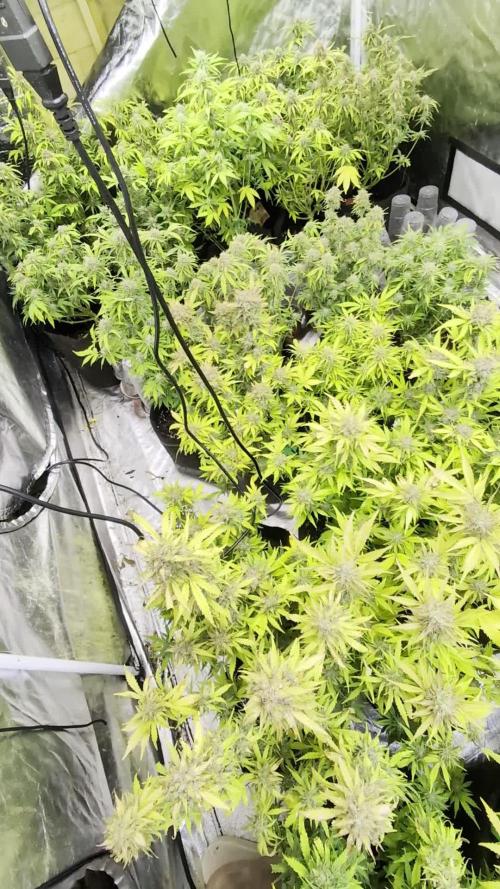
Week 9: Still coasting, but on the last day of this week the plants showed some major signs of being both thirsty and wanting some more nutrients. Not only were some leaves dried and shriveled, but others were limp and some new leaves started showing slight loss of green. I'm attributing this to our delay in watering the plants this week and it being time for another round of 444. This will be their last full Veg fertilizing, before we flip. In 3/4 weeks we will feed half strength 444, half strength 284, another round of bloom boost, some recharge for the soil and we will hope for the biggest, densest, dankest mugs possible! Idk how I forgot to mention but at this point our babies are mothers! We let some of the branches get a little longer than we should before snipping and voila.. an opportunity for a new plant and maintained genetics. A little behind on the scrog net, getting 2 plants out this tent, and feeding extra silica.. but I think our babies are gonna push through.
Likes
16
Share
@Weedinho
Follow
Love this strain. Récord for my personal production per plant 🙌🏻
Likes
Comments
Share