


Likes
Comments
Share

@Borberad
Follow
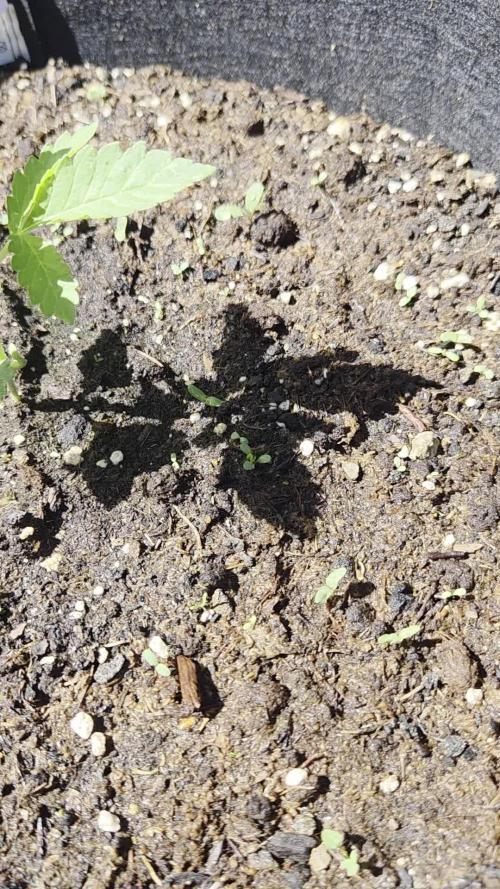
Woche 3
Nachdem die Mädels einen sauberen Start hingelegt haben und sich in der Sonne und an der frischen Luft etwas gestreckt haben geht's zurück ins Keimzelt und dann zu Ende der Wich endlich ins Zuhause für die Veggi.



Likes
13
Share


@cookingwithninja
Follow
Week 9 day 1 video pheno.
Gonna chop this week
Week 9 day 7 well chop this weekend so on week 10 Day 1-2. Just waiting on a light to reveg one.
Everything is magic
Likes
2
Share

@TheOhioGrowRoom
Follow
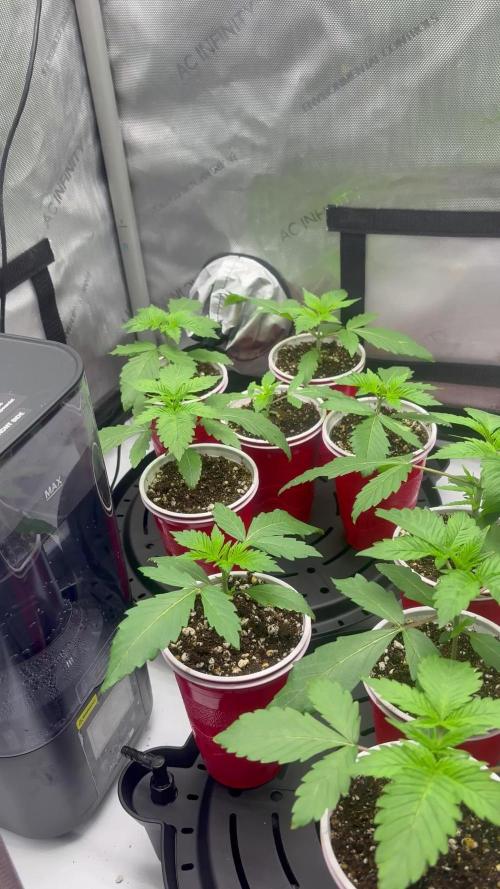
Once the soil got (somewhat) dry I gave them more recharge (5ml per gal) Ph’d to 6.0

Likes
6
Share


@GanjaGecko
Follow
Rückblickend war zwei mal düngen mit 100% ein wenig zu viel. Die Blattspitzen waren hier und da etwas mitgenommen. Es wird wohl in Zukunft auf zwei mal die Woche mit 75% hinauslaufen und mal gucken ob die Ladys das besser verkraften. Das erste PH-Messgerät was den Wert nicht korrekt angezeigt hat war letztendlich nicht die große Hilfe. Das passiert in Zukunft auch nicht mehr. Aus den kleinen Fehlern konnte man doch recht viel mitnehmen :)
Trotzdem haben die Ladys alles gut überstanden und haben einfach riesig viel Spaß gemacht.
Processing
Likes
84
Share


@Hempire
Follow
Easy grow and good advices from this site ! Thanks to your site, we can see other growers who are growing the same strain and its interesting to see different way of doing ! Thanks Growdiaries for this site and all this mix of knowledge : 1:0000


Likes
34
Share


@Southwest_budders21
Follow
Candyman is now Day 22 of flower!
The smells are beautiful 2 smell more gassy and one smells more lemon now. They are drinking a lot every 2 days now, I've took a lot of leaves off and lower bud spots to give the tops more energy the finish line is fast approaching now and I can't wait 😍
Day 26 of flower and they are stinking they smell like gassy shit 🤣 but my last run of skywalker did that and was unreal smoke, so 🤞🏻
Update: Day 78, Day 28 of flower! It's the start of week 4 today and the colours are starting to change 😍 smelling and getting frosty by the day now. Really can't wait to try these girls out ✌️🏻
Processing
Likes
10
Share


Likes
Comments
Share
@jeffreymiller
Follow
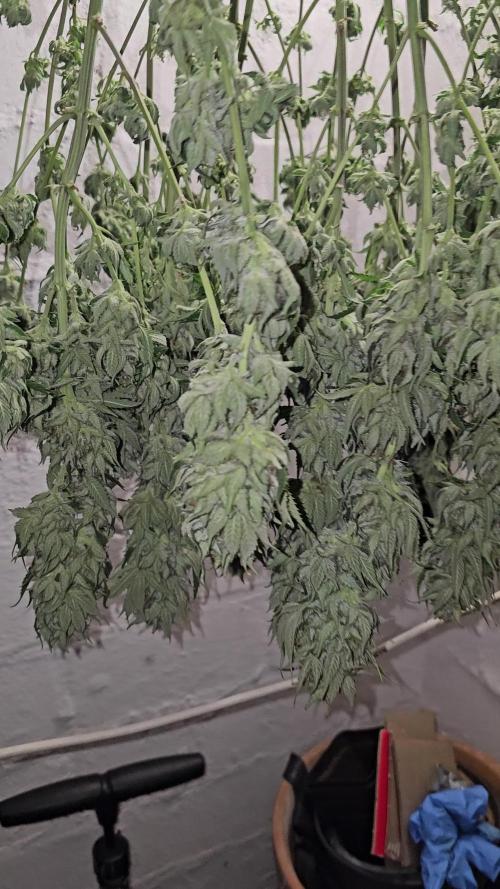
I enjoyed the Plant so much and I definitely not forget it.
Was the last winter grow

Likes
6
Share


@TGriner420
Follow
This week I transplanted the Lemon Cherry Cookie Auto's into their final pots in their final tents. Then placed Root Organics Formula 707 Soil (1.5gal) 50% and Root Organics Original Formula Soil 50% (1 gal) into the pot up to just about the codlydone leaves. Then I fertilized with Advanced Hydroponics MaxiGrow at a rate of .5 tsp per gal. Then I used Dr. Earth's Bone Meal, Blood Meal, Earthworm Castings, HomeGrown 4-6-3, and All Purpose 2-2-2. Then I fertilized with Real Growers Soil Recharge at a rate of 0.5tsp per gal. Lastly I fertilized with GrowersHouse The Stash Blend at a rate of 0.5tsp per gal.Then I placed coffee grounds and egg shells on the top dressing around the root zone and then watered them with h20 that was 66°, and a pH of 7.0 due to soil being the medium. The daily fertilized solution that I watered with was 68°, 6.2ph, ppm of 720, and EC of 1440. Overall their growing great and their heavy humidity desiring plants!

Likes
165
Share


@Tropicannibis_Todd
Follow
💩Holy Crap Growmies We Are Back💩
So what do you say we have some fun 👈 We got some EXOTIC SEEDS 👉 👻👻👻MONSTERMASH👻👻👻 😛
Well my friends we are just at the 35 day mark and as you can see shes doing great 👈
👉 So now i felt i need to start training her over to maximize her growth by doing some LST 👈 Just noticed she's starting to preflower 😛 Hedgehogs incoming 👈
Lights being readjusted and chart updated .........👍
👉I used NutriNPK for nutrients for my grows and welcome anyone to give them a try .👈
👉 www.nutrinpk.com 👈
NutriNPK Cal MAG 14-0-14
NutriNPK Grow 28-14-14
NutriNPK Bloom 8-20-30
NutriNPK Bloom Booster 0-52-34
I GOT MULTIPLE DIARIES ON THE GO 😱 please check them out 😎
👉THANKS FOR TAKING THE TIME TO GO OVER MY DIARIES 👈

Likes
3
Share

@ElCapitol
Follow
Doubled in size in a week, nice shape to her and deep green leaves. Only thing to note is she has put pistols out already, I thought it would be in vegetive stage longer. She needs to fill out some before flowering. This could be normal for autos I don't know, perhaps someone can say?
Nice strong genetics.


Likes
Comments
Share


@SGCFarms
Follow
Day 17, and she’s starting to show sugars from the top down. I can’t wait for a smell to develop, but when I did smell something during the first opening of the tent it smells something fruity. She’s drinking at least 4 gallons a day at this point.

Likes
10
Share


@Shefman93
Follow
I transplanted into the final pot, 20 gallons. I am affording a gallon of medium per week of plant growth. This will be a 20 week grow. This has been a very relaxing grow as I don't have to see about multiple plants at once.

Likes
21
Share


@Bak2Blk
Follow
The plants are doing well. Got the tent up. They've nearly doubled in size even though you can't really tell from the pics. They're bushy so a defoliation will be coming soon. I've topped them twice, all but GDP3 aka Elle. She seemed weaker than the other plants and kept growing out misshapen leaves, so I only topped that one once. Overall tho they're doing well. I think I'm getting to the point where the nutes in the FoxFarm soil have been depleted and it's time to start giving them nutes in their watering. We'll see. I'm happy. 😍


Likes
24
Share


@3lementa1
Follow
This is the 8th week. Thursday will be 9 weeks of 12/12. Some trichs are amber. They just added a good bunch of girth over the past few days, but most of the pistils are red now. The rest of them have been dropping leaves consistenly but the canopy remains full so they must be putting out more leaves.
I just flushed to 80% runoff and found out that I had 1200ppm. I just got an ec meter but my last reading said closer to 600 so idk what happened there.
I flushed until I had runoff ppm of about 150. Now they're back in the grow tent. I don't want to keep assaulting them with my microscope. I think they're ready. Just gonna let them settle another day or two to dry out a bit.
I took one small branch off the small Wedding Cake plant on Thursday and I've just been watching it dry on my counter. It's been 5 days and the stem snaps but still leaves a fiber connecting. I put it into a small jar with a 64RH thing. I just want to try it. It already smells amazing.
The leaves on the big CBD Blue Shark plant are going really yellow and some other colours are starting to come out as well.
The buds all fattened up and got more frosty again. I was worried they were foxtailing but they got more calyxes underneath the peaks and have been making more of a pyramid shape. They're really close to peak. Harvest day will be March 17 or 18.
March 17 1023pm chopped and hung after lights off all day. RH was 65% before I chopped and 50% after I closed the window and cut the plants off the saturated pots. I did a wet trim to prevent mold. The buds are sticky af. Gonna hang them to dry for 7-9 days before curing in jars :)
March 18 : checked the RH when I woke up and it's chilling at 45% 😎
March 19 : just checked to see how they were drying. There are seeds in every plant. RIP
I'll update when I put them in jars and again a few weeks later for final review. Overall it was a good grow despite the rocky start and a good introduction to the mainline technique and my new grow space. Next grow I should have everything pretty well dialed in.
March 23
They were hanging for 3 days. Rh was around 45, then spiked to 65 overnight when I forgot to turn the fans back on. Temp was high at around 26.they felt wet after 2 days, and bone dry after 4 days. The stems still didn't snap but I put them in jars anyway. A day later, jar RH was 50%. I burped all the jars and there was a smell from the new jars. I took all the weed out, washed out the jars, and did a dry trim on the weed.
One of the Wedding Cake plants must have gone hermie. I didn't see any bananas and didn't even realize there were seeds until the very end. The seed pods looked just like calyxes while the plants were growing. Many of the nugs are unusable. Under the sugar leaves are just layers and layers of seeds. Some weren't hit that badly. The CBD Blue Shark is much better off but still has some seeds.
I'm trying to stay positive. It's a bit of a shock though. I'm anxious to try the finished product. If the flowers at least taste good and have a good effect, all is not lost.
Processing
Likes
Comments
Share


@eastcoasthomegrows
Follow
Temperatures ran very high during week 2, I had to invest in a closed loop ac system so I wouldn't lose any Co2 through ventilation. The plant itself is showing signs of heat stress but is beginning to get its legs. The stem is extremely week at the soil line, I'm hoping some strong air movement will fix that problem in no time.
Likes
35
Share


@SAC87
Follow
Day 56
I did a flush at the end of the week with double the cal mag and Epsom. Hopefully I can get this leaf condition turned around. I think flushing will help as the runoff was on the higher side, the main stem is purpling and leaves showing signs of cal mag deficiency. Hopefully I can get this under control before it all goes to shit.
I’m just on cruise control, hoping to make it to the end haha.
Happy Growing 🌱
Likes
16
Share


@Le_Che
Follow
5 Fullgas féminisés de chez Green House Seeds 400w hps ampoule Phillips Green Powers 30% de bleue en plus, black box silver 80 x 80 x 1,80 intracteur winflex 125mm 185m3/h extracteur winflex 125 mm 220/280m3/h ventilateur clip 16 w, un ventilateur clip oscillant 20w, 2 filet scrog 8x8
Aussi on as ajouté le Trichoderma harzanium qui préviens des apparitions de moisissures comme le botrytis, on en as mis au millieu de nos pots, on met toutes les chances de notre côté !
Je tiens aussi à préciser que j’active les graines en les laissant 4 à 8h dans un verre d’eau au bon ph, et ensuite les mets dans des serviettes humide pour la germination, je n’ai pas encore eu de graine qui n’ont pas germé avec cette méthode, je met une toute petite pincée de trhichoderma dans les serviette vraiment très très peu pour stimuler les racines rapidement.