




@GoldenWeedGrower
Follow
📅 26/05/26
🗓️ D085 (B7 / D1)
🌡️ 1.2
💨 1600
💧 -
🥗 -
⚗️ 1.9
🔬 4.3
🛠️ -
📋 -
📅 27/05/26
🗓️ D086 (B7 / D2)
🌡️ 1.2
💨 1200
💧 1L
🥗 -
⚗️ 2
🔬 4.3
🛠️ -
📋 -
📅 28/05/26
🗓️ D087 (B7 / D3)
🌡️ 1.2
💨 1200
💧 1L
🥗 -
⚗️ 2
🔬 4.3
🛠️ -
📋 -
📅 29/05/26
🗓️ D088 (B7 / D4)
🌡️ 1.4
💨 1500
💧 1L
🥗 -
⚗️ 1.9
🔬 5.5 (added pH+)
🛠️ -
📋 -
📅 30/05/26
🗓️ D089 (B7 / D5)
🌡️ 1.4
💨 1500
💧 1L
🥗 -
⚗️ 1.9
🔬 5.8 (added pH+)
🛠️ -
📋 -
📅 31/05/26
🗓️ D090 (B7 / D6)
🌡️ 1.4
💨 1500
💧 1L
🥗 -
⚗️ 1.9
🔬 5.6
🛠️ -
📋 -
📅 01/06/26
🗓️ D091 (B7 / D7)
🌡️ 1.4
💨 1500
💧 1L
🥗 -
⚗️ 1.7
🔬 5.8
🛠️ -
📋 -
=============================================================
Legend:
📅 DATE
🗓️ DAY (StageWeek / Day)
🌡️ VPD
💨 CO2
💧 WATER ADDED
🥗 FOOD ADDED
⚗️ EC
🔬PH (adjustements)
🛠️ ACTIONS
📋 NOTES
📅🗓️🌡️💨💧🥗⚗️🔬🛠️📋


@Mamaweed
Follow
Last week with fertilizer
Purplematic is Beautiful
Strong buds
Trichomes are almost ready !


@OB-GYN-Kenobi
Follow
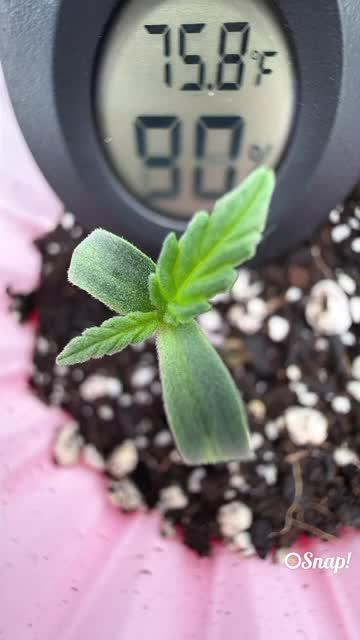
This is being grown side-by-side with my LTP bag seed (see the separate diary for that). I've also got that other Chemdawg seedling going, and only one spot in the 7 gallon pot, so we'll see when it comes time to transplant who wins.
That said, things aren't looking great here. After needing considerable help emerging from the seed husk, this Chemdawg has been growing lopsided, with a strong side and a weak side. She's also started doing the Lean. I managed to repair that - first with a bit of drinking straw, then by just filling up the cup with more soil - but this is not the best showing out of the gate.
Her second node is looking a bit more normal, hopefully she'll grow out of her weirdness.
Tent stats:
- Lights: started the week around 220 PPFD, ramped to 300 by end of week.
- Temps: seedling heat mat kept in the mid-80s (30 C).
- Humidity: VPD has been set to 0.6 kPa.



@DogDoctorOfficial
Follow
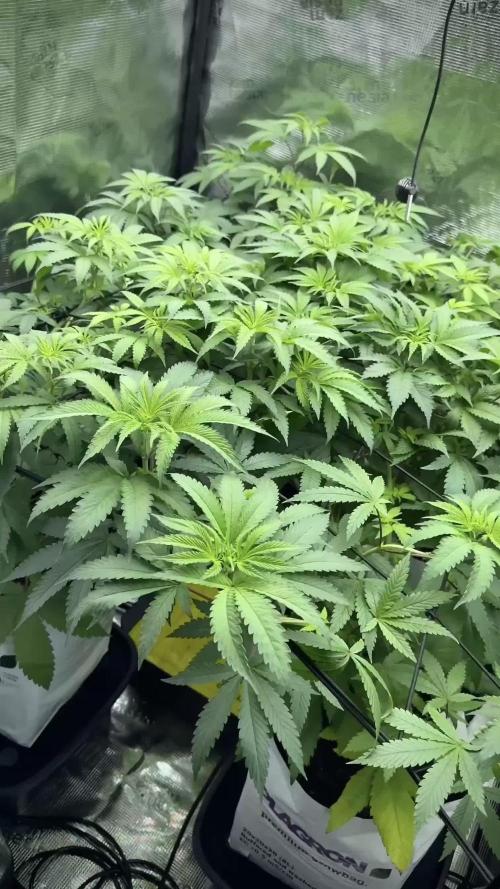
🥒 Project Blue Tent – Week 7
Pickle Lemon Haze F1 – Pheno B (Folder 14B)
Hello everyone, and welcome back to another chapter of Project Blue Tent! 💙🌱
If you're discovering this diary for the first time, welcome aboard!
Project Blue Tent follows four individual plants, each documented in its own dedicated diary from seed all the way to harvest. Every plant shares the exact same environment, lighting, irrigation, nutrition and training strategy, allowing us to observe how each phenotype develops its own personality while keeping the growing conditions as consistent as possible.
Today we're checking in with Pickle Lemon Haze F1 – Plant B.
And this week marks another important milestone.
The canopy is full.
The structure is ready.
And we're preparing these beautiful ladies for their transition into flowering.
────────────────────────
🌱 Week Seven – The Canopy Is Complete
Looking across the Blue Tent this week, it's becoming increasingly difficult to distinguish the four plants from above.
The SCROG has done exactly what we wanted it to do.
Instead of four individual plants growing vertically, we now have one remarkably even canopy spreading across the available space.
Plant B has been particularly well suited to this process.
From the beginning, she's shown a natural tendency to grow outward rather than constantly trying to reach upward. Her compact structure, strong side branching and excellent response to training have allowed her to fill her section of the screen beautifully.
After lowering and tightening the SCROG net, all four plants are now sitting at approximately 60 cm.
At this point we're no longer trying to gain height.
We're managing the surface we've created.
Every branch has found its place.
Every available section of the screen has been used.
And now it's time to prepare that canopy for what comes next.
────────────────────────
🕸️ SCROG – From Training to Flowering
For anyone joining this diary without having followed the previous weeks, SCROG stands for Screen of Green.
The purpose of the screen is to guide branches horizontally instead of allowing a few dominant tops to grow significantly taller than everything around them.
As branches reach the screen, they're gently guided into neighbouring openings.
This spreads the future flowering sites across a wider area and creates a much more uniform canopy.
It's not about forcing the plant into an unnatural shape.
It's about taking the growth the plant is already producing and distributing it more efficiently across the available space.
And after several weeks of doing exactly that, the mission has essentially been completed.
The screen is full.
The canopy is even.
Now we move into the cleanup phase.
────────────────────────
✂️ Defoliation – Preparing the Plants for Flower
This week's biggest job is defoliation.
And because this technique is often misunderstood, it's worth explaining what we're actually doing.
Defoliation isn't about stripping a plant of every leaf.
Leaves are essential to the plant. They capture light and support photosynthesis, so removing healthy foliage without a reason isn't the objective.
Instead, we're performing a deliberate canopy cleanup.
After weeks of vigorous vegetative growth and SCROG training, the interior of the plants has become extremely dense.
Leaves overlap.
Branches cross through one another.
Some areas are heavily shaded.
And airflow through the middle of the canopy becomes increasingly important.
So we're selectively removing foliage from areas where the density has become excessive.
We're opening the interior.
Creating more space between branches.
Improving airflow.
Improving visibility.
And creating a cleaner structure for the flowering cycle.
The objective isn't:
"Remove as many leaves as possible."
It's:
"Remove what is no longer helping the structure we're trying to build."
That's a very important difference.
────────────────────────
🌬️ Why Defoliate Before the Flip?
Timing is everything.
A significant defoliation is a form of stress. Even when performed correctly, the plant needs some time to adjust to the loss of foliage and return to its normal growth rhythm.
That's why we're doing this before flowering, rather than waiting until we're already well into the bloom cycle.
Right now the plants are still running an 18/6 vegetative schedule.
They have time to recover.
We can perform the cleanup.
We can watch how they respond.
We can allow fresh growth to resume.
And then we can flip the lights once the plants have settled again.
I don't want to ask the plants to deal with a major cleanup at the same time they're dealing with the physiological transition into flowering.
Instead, we're following a simple sequence:
Build the canopy.
Fill the screen.
Clean the canopy.
Recover.
Flip.
The goal is to enter flowering with healthy plants and a well-organised structure.
────────────────────────
🌿 Pickle Lemon Haze F1 – Plant B
Plant B continues showing exactly the personality we've come to know throughout this project.
She's balanced.
She's compact.
She's incredibly branchy.
And she seems perfectly happy growing sideways.
While Plant A has always shown a little more vertical ambition, Plant B has naturally concentrated her energy into lateral growth and secondary branching.
That has made her particularly enjoyable to work with under the SCROG.
Her stems have continued thickening nicely, her internodal spacing remains compact, and her foliage has developed that rich green colour we've been looking for.
The recovery from topping is now nothing more than a memory.
She's completely moved on from that stage and has spent the last few weeks concentrating on building the framework that will eventually support her flowering sites.
Looking at her now, it's easy to see how much the plant has changed.
She's no longer simply a young vegetative plant.
She's become a properly structured little bush with a full section of the canopy to her name.
And now we're preparing her for the next chapter.
────────────────────────
🥥 Feeding – Staying With What Works
The nutrient recipe remains unchanged this week.
Current feeding:
• Plagron Hydro A — 1.9 ml/L
• Plagron Hydro B — 1.9 ml/L
• Plagron Hydro Roots — 1 ml/L
Current pH:
5.8
Current EC:
1.92 mS/cm
The plants continue showing excellent colour and vigorous growth, so I don't see a reason to change the recipe simply because we're approaching flowering.
Sometimes consistency is the better decision.
We'll see how the plants respond after defoliation, and depending on their recovery and appetite, we may increase the nutrient strength next week.
For now, however, they're telling me exactly what I want to hear.
Healthy colour.
Strong growth.
Good leaf posture.
And no obvious signs that they're asking for anything different.
So...
Nothing changes.
────────────────────────
💧 Drip Irrigation – Keeping the Roots Consistent
The Mars Hydro automatic drip irrigation and drainage system continues to perform beautifully.
Each plant is receiving approximately 1.2 litres of nutrient solution per 24 hours, delivered through the automated drip system.
The slow and consistent irrigation keeps the coco supplied with fresh nutrient solution while the automatic drainage system removes the resulting runoff.
This is particularly valuable in a project like this.
Four plants are sharing the same environment.
The same nutrient recipe.
The same lighting.
The same irrigation schedule.
That consistency helps us keep another major variable under control.
And as the plants become larger, the benefit becomes even more obvious.
The irrigation system simply keeps doing its job every day.
No rushing around with watering cans.
No trying to remember which plant received what.
Just consistent irrigation while I concentrate on observing the plants themselves.
It's one of those systems that doesn't necessarily demand attention when it's working properly.
And honestly...
That's exactly how I like it.
────────────────────────
🌡️ Blue Tent Environment
The environmental conditions have remained very stable as we approach the transition into flowering.
This week's average conditions were:
• 🌡️ Day Temperature: 28°C
• 🌙 Night Temperature: 25°C
• 💧 Relative Humidity: 65%
• 🥥 Substrate Temperature: 24°C
• 💦 Nutrient Solution Temperature: 18°C
• ⚗️ pH: 5.8
• ⚡ EC: 1.92 mS/cm
• 💨 CO₂: approximately 450 ppm
• 💡 Light Schedule: 18/6
• 💧 Irrigation: approximately 1.2 L/plant/24h
• ? Pot Size: 8 L
• 📏 Height: approximately 60 cm
At this stage, stability is more important than constantly changing numbers.
The plants are healthy.
The canopy is full.
The roots are receiving consistent irrigation.
And the current nutrient strength is producing beautiful growth.
So we're staying the course.
────────────────────────
🌿 A Full Canopy Means a Different Kind of Work
One of the interesting things about reaching this stage is that the work changes completely.
Earlier in the grow, the challenge was getting the plants to occupy the space.
Now the challenge is managing everything they've produced.
When the canopy was still developing, every new branch was welcome.
Now we have to start asking different questions.
Does this leaf contribute enough?
Is this area too crowded?
Can air move through here?
Is this branch getting enough light?
Is this part of the plant going to benefit from remaining in the canopy?
That's what good canopy management is really about.
It's not simply growing as much as possible.
It's deciding what growth deserves to remain part of the final structure.
And Plant B has given us plenty to work with.
────────────────────────
Recovery Before Flowering
Once the defoliation is complete, the most important thing we can do is give the plants time.
No unnecessary additional stress.
No rushing.
No immediately piling another major intervention on top of the first one.
The plants need time to rebalance after the cleanup.
We'll watch the new growth.
We'll monitor their posture and overall appearance.
We'll keep the environment stable.
And we'll let them recover.
Once they're settled again, we'll be ready to move forward.
This is why the timing of the defoliation matters so much.
We're not trying to make the plants do everything at once.
We're preparing them step by step.
────────────────────────
👀 Looking Ahead
The next few days should be particularly interesting.
The SCROG has been filled.
The canopy has been cleaned.
The plants now have room to breathe.
And we're approaching the moment we've been working toward for weeks.
The nutrient recipe will remain unchanged for now, although we may increase it once we see how the plants respond after defoliation.
The irrigation continues at approximately 1.2 litres per plant per day.
The environment remains stable.
And most importantly...
We're not rushing the flip.
We'll allow the plants to recover properly first.
Then, when they're ready...
We flower.
🌸
────────────────────────
💙 Thank You
A huge thank you to Zamnesia for making Project Blue Tent possible and for providing these outstanding Pickle Lemon Haze F1 genetics.
A heartfelt thank you to Plagron for the Premium Growbags and Hydro nutrient line that continue supporting this beautiful growth.
A special thank you to Phytonaut for the LED lighting helping us maintain such a consistent and beautifully structured canopy throughout the Blue Tent.
And a massive thank you to Mars Hydro for the automatic drip irrigation and drainage system that continues bringing consistency and simplicity to the daily routine.
Thank you to GrowDiaries for providing growers around the world with a place to document their journeys, exchange knowledge and inspire one another.
And finally...
Thank you to everyone following Project Blue Tent.
Whether you've been here since germination, recently discovered this diary, leave comments every week or simply enjoy watching these four sisters develop...
Your support genuinely means the world to me. 💙
Plant B has spent the last several weeks quietly building herself into one beautiful, compact and incredibly well-structured phenotype.
Now the canopy is ready.
The cleanup is complete.
All that's left is to give her time to recover...
And then see what she can do.
Until next time...
Growers Love, happy growing, and take care everyone! 🌱💙


@Mz876
Follow
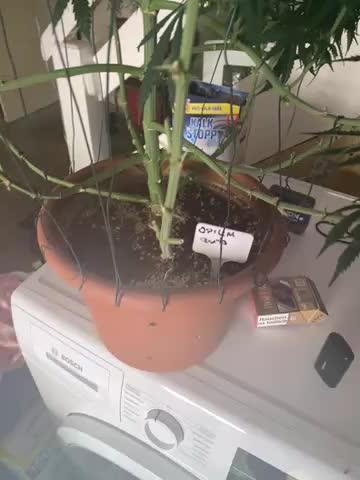
Week 6 of flower about another 2 to 3 weeks to go . Buds are forming Nicely but I’ve been a little heavy on the nutrients so I’m trying to remedy that .





@PineappleMuffinMan
Follow
The thing I love about this strain is how little the largest branches stretch and how much the lower branches come up to the main level. With some diligent training I was able to get probably the most dense and even canopy I’ve ever accomplished. Can’t wait to see how this progresses through flower.





@Growfather1
Follow
Growfather1 Hello everyone!
Welcome to week 7 of the MAC1 F1 hybrid clone saga (Part 3).
She is officially entering week seven and everything is good! To support her explosive growth, I’ve officially raised her menu—bumping the nutrients up from 2 ml to 2.8 to 3.5 ml per liter of reverse osmosis water, to be precise.
On the training front, I decided to give her another round of defoliation and topped her in multiple places. At this rate, she's going to start looking less like a bush and more like a carefully sculpted bonsai masterpiece. Let's see how she bounces back and looks next week!
Her environment is still exactly in check—temperatures and humidity are holding steady just like last week and the week before that.
The big news is that she is getting way too big for her boots. Literally. She is absolutely screaming for a transplant to a bigger pot, and it absolutely must happen within the next seven days unless I want her roots staging a prison break. I'm pretty sure she's currently plotting her escape from her current container as we speak, so wish me luck on the upcoming moving day!
For the rest, there is nothing much to report.
Thank you for stopping by and have a good one!
Regards,
Growfather


@MicroHidroGrow
Follow
Día 43
La variedad Tropicana no engordó nada. Los cogollos son flacos. Muy firmes y llenos de resina. Pero son chiquitos. Incluso en la que hice ni corte ni LST. Así que será algún tema del fenotipo. La Polaris al vontrario, tiene cogollos grandes y está demorando un poco más que la Tropicana. De todos modos, se ve que las dos están sacando muchos tricomas. Haber vuelto a usar EMRO hizo una diferencia enorme en el resto de solución que queda en el depósito al finalizar la semana. Con EMRO sale transparente. Sin EMRO sale llena de restos de raíces. Y con sólo 1ml/L. Ahora le puse 2ml/L, ya que la próxima semana es el lavado, así que ya que está que li pie bien a fondo. Incluso pensé en usar EMRO este lavado cómo experimentación. Así que posiblemente haga eso. Seguramente tenga que cortar una antes que la otra. Pero también lo voy a ir viendo.


@HashCakes
Follow
Many signs of flower but calling this week veg.
This has been such a simple grow. Very light food and water intake. Keeps the res nice and stable. I just raise the lights a couple inches every few days. For topping, alternate between 100% solution and plain water too keep my PPMs up.


@Roberts
Follow
Alaskan Purple Auto is growing great under the Medic Grow Mini Sun-2. She got a solution change today that is geared towards blooming. She also had a selective defoliation done to make sure cola sites are getting good light. She has been stacking, and getting ready to start bulking soon. Everything is looking good. She did start to show some potassium deficiency is why I changed the solution. It was also due. 🤞🏻 I didn't juice her too much on the change. Thank you Seedsman, and Medic Grow. 🤜🏻🤛🏻🌱🌱🌱
Thank you grow diaries community for the 👇likes👇, follows, comments, and subscriptions on my YouTube channel👇. ❄️🌱🍻
Happy Growing 🌱🌱🌱
https://youtube.com/channel/UCAhN7yRzWLpcaRHhMIQ7X4g
