


Likes
Comments
Share

@gse314
Follow
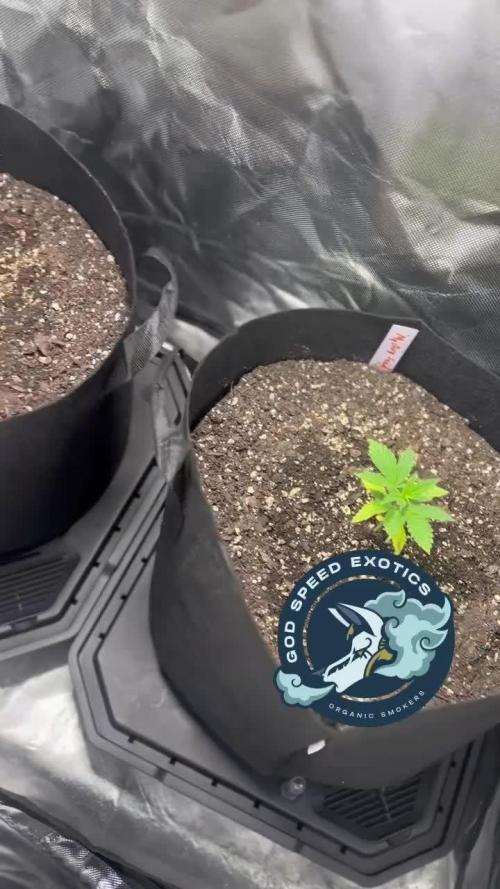
I was a few days late on transplanting, I will be taking a clone from these also this will be my first time❤️🔥


Likes
14
Share


@Quintall
Follow
Die unteren Blätter Sterben langsam ab bzw färben sich gelb. Kanns kaum abwarten...

Likes
52
Share


@blazin_skywalker
Follow
This week I began to introduce the California Lightworks UVB bar to supplement my Solar System 550 LED. I initiated use by beginning with a 30 minutes on time in the middle of my day cycle. I have since been increasing by 30 minutes each day.
The color fade that's going on is absolutely stunning, but what even gets me even MORE excited is that the candy smell is getting stronger than ever!
Maz is my keeper pheno and front runner for any fun breeding projects in the future.
I also shared my stress-test side project I had going on behind the scenes to put these genetics through some stress in an attempt to test the stability of these genetics. I am blown away at how resilient these clones were! I am also excited to see that even under harsh conditions, the natural structure of my prize pheno is strong af 💪 💪 💪.
It was fun a little project 💜☺️🌱
Likes
174
Share


@Roberts
Follow
Well 85.9 grams of goodness. Has a great smell and flavor. Very head heavy smoke. If you like high thc or even fruity buds this is a good one to grow. If anyone is interested in any fast buds strains my affiliate link is
https://myfastbuds.com/?a_aid=60910eaff2419
If anyone is interested in a Viparspectra light I can send you to a affiliate link, and look for discounts though my affiliate program as well. Please direct messages me for more information please.
Thank you grow diaries community for the likes, follows, and subscriptions on my YouTube channel. I really appreciate the support. 🌱🌱🌱 happy growing 🍓🍌🍓🍌🍓🍌🍓🍌
Likes
111
Share


@Teamdirtbag2
Follow
Lollipop lollipop, oh lollipop lollipop...lollipop.
So I have worked my ass off ... again... I have lollipoped every branch.... I know week 4 /5 wtf .... I know stupid... but it is to combat the PM.... I'm fucking trying everything..... thank God I harvested that Critical Kush because I'm smoking it roughly dried.... and that really helps me forget about how I fucked this bitch up. But honestly she smells wonderful. So it's just colas. She I almost hollow on the inside... I got more at the top but .... I might be done... the K excess continues.... I have flushed probably 200+ gallons over 2 weeks time.. and she doesn't respond.... I believe the roots in the pot are different from the roots that have entered the ground underneath. Leading to my problem. 4 weeks left max .... I want to harvest early.....

Likes
14
Share


@TheDankofScotland
Follow
Ready to flip into flower in 3 days , this Friday just letting the terminator get into the plants system before the flip and letting the plants spring back after A defoliation before the transition into flower , planning on using canna A + B , terpinator , massive bloom and PK - 13/14 together
Likes
15
Share


@Bread_n_Buds
Follow
Now we've reached day 34.
We are now in flowering, we are guiltily carrying with us a bit of vegetative over fertilization but we are sure that we have worked well and that the flowers will not be compromised.
The good news is that the plants are exceptionally vigorous and practically do not need fertilizer in the vegetative phase, and it seems to me to be excellent quality.
We wait to see the flowers and you will see...
Our Wurlz F1 per mea culpa mea culèa mea grandissima culpa shows some signs of overfeeding, the famous yellow tips of the leaves. Let's be clear, this is minor and is due to the fact that these genetics are so good that they need very little or no fertilizer in the vegetative phase. Then if you already have fertilized soil, forget about growing guys, another pro!
I gave the recommended doses even a little less to tell the truth of both Aptus and Plagron and the plants more or less all have these small signs of over. LITTLE guys, wait until the end to save if you feel like it, or at least I recommend it.
To fix this little thing we go to flush with pH 6.2 and only give Aptus Regulator which should rebalance the plant and soil before delicately moving on to fertilizers for flowering.
Site Description
ZAMNESIA SEEDS - WURLZ F1 HYBRID AUTOMATIC: EFFECTS TO LEAVE YOUR HEAD IN A WHIRL!
As the end product of combining Runtz with Watermelon Candy, Wurlz F1 hybrid Automatic showcases a reliable, uniform, and, above all, easy growing experience. The resulting buds offer mind-blowing flavors and soothing effects, making Wurlz F1 Automatic more than worthy of being on your radar.
GROWING WURLZ F1 HYBRID AUTOMATIC
As an autoflowering strain, it takes just 9–10 weeks for Wurlz F1 Automatic to move from germination to harvest. Fortunately, there's very little required other than a bit of maintenance along the way. This is partly due to the F1 genetics that make this strain robust and uniform, resulting in plants that reach a similar height and provide a similar (large) yield. Moreover, Wurlz F1 Automatic is highly resistant to disease, pests, and other ailments.
Reaching heights of about 65–80cm, Wurlz F1 Automatic is not an overbearing plant and can fit into smaller spaces with zero fuss. Once ready to yield, growers have the potential to see a return in the region of 450–500g/m² indoors and 50–150g/plant outdoors.
AROMAS, FLAVORS, AND EFFECTS OF WURLZ F1 HYBRID AUTOMATIC
Now we've reached day 34.
We are now in flowering, we are guiltily carrying with us a bit of vegetative over fertilization but we are sure that we have worked well and that the flowers will not be compromised.
The good news is that the plants are exceptionally vigorous and practically do not need fertilizer in the vegetative phase, and it seems to me to be excellent quality.
We wait to see the flowers and you will see...
Fertilization for flowering has started again otherwise there is a risk of going from excess to deficiency.
Site Description
ZAMNESIA SEEDS - WURLZ F1 HYBRID AUTOMATIC: EFFECTS TO LEAVE YOUR HEAD IN A WHIRL!
As the end product of combining Runtz with Watermelon Candy, Wurlz F1 hybrid Automatic showcases a reliable, uniform, and, above all, easy growing experience. The resulting buds offer mind-blowing flavors and soothing effects, making Wurlz F1 Automatic more than worthy of being on your radar.
GROWING WURLZ F1 HYBRID AUTOMATIC
As an autoflowering strain, it takes just 9–10 weeks for Wurlz F1 Automatic to move from germination to harvest. Fortunately, there's very little required other than a bit of maintenance along the way. This is partly due to the F1 genetics that make this strain robust and uniform, resulting in plants that reach a similar height and provide a similar (large) yield. Moreover, Wurlz F1 Automatic is highly resistant to disease, pests, and other ailments.
Reaching heights of about 65–80cm, Wurlz F1 Automatic is not an overbearing plant and can fit into smaller spaces with zero fuss. Once ready to yield, growers have the potential to see a return in the region of 450–500g/m² indoors and 50–150g/plant outdoors.
AROMAS, FLAVORS, AND EFFECTS OF WURLZ F1 HYBRID AUTOMATIC
After Wurlz F1 Hybrid Automatic wows you with its easygoing growing experience, the best is yet to come: the smoke test. Teeming with terpenes, this cultivar offers a fruity and candy-like flavor tinged with just a little bit of pine for good measure. In terms of effects, Wurlz F1 Automatic is bolstered by 24% THC and a finely tuned array of cannabinoids, making for a soothing, physically relaxing, and, in larger amounts, couch-locking high. So settle in with some of your favorite friends, snacks, and movies; this is relaxation at its finest.
As for fertilizers, I'm doing a small comparison experiment to finish off the fertilizers I had at home, it's not 100% indicative, it's only on two specimens but given the stable genetics I decided to try to compare the results of Plagron Vs Aptus , both excellent brands which they will certainly produce beautiful plants which are already of excellent stable genetics. In the next few weeks the comparison will be more evident now the seedlings are still very small and just potted.
So seeds of all brands, in addition to these great F1 Hybrids and the entire Zamnesia line, fertilizers and everything related to the world of cannabis, you should buy them from the best online store in the sector
www.zamnesia.io

Likes
11
Share


@biggreens420
Follow
girl scout crack was a monster to grow she grew well and easily tripled in size during stretch the light issue could have had something to do with it did think she was going to turn out poor but she surprised us and filled in pretty well and buds formed well would recommend to anyone to try as iv also seen a few different phenos of this strain thanks for reading happy growing guys
Likes
16
Share


@Ultraviolet
Follow
Seedling managing 93F 30%RH, around 20 DLI. Vpd is in the 3's. No I don't recommend.
Signum Magnum.
"A great sign appeared in the sky
a woman clothed with the sun
with the moon under her feet
and on her head a crown of twelve stars.
Sing ye to the Lord a new canticle:
because He has done wonderful things.
Glory to the Father, and to the Son, and to the Holy Spirit
As it was in the beginning, and now, and ever shall be, world without end."
The plant nutrient nitrogen exists in forms with both positive and negative charges. Ammonium (NH4+)(immobile in soil)(Cation) has a positive charge, while nitrate (NO3-) (highly mobile in soil)(Anion)has a negative charge. Nitrogen is unique among plant nutrients in that it can exist in both positively charged (ammonium, NH₄⁺) and negatively charged (nitrate, NO₃⁻) forms in the soil. This makes it a special nutrient. In that it is responsible for providing balance for reactionary trade offs when it comes to ph. Because ph itself in the medium will always slowly drift towards acidicity, such is nature. 80% of nitrogen should be nitrate and no more than 20% ammoniacal nitrogen.
Ca, mg, and K are the big 3 cations related to soil composition, pH & base saturation.
When nitrogen is in the form of ammonium, it can compete with calcium, magnesium, and potassium for absorption sites in the plant root. This competition can lead to a reduction in the uptake of these other essential nutrients. Nitrogen, particularly in its nitrate form (NO3-), can increase soil acidity, which can also affect the availability of calcium, magnesium, and potassium. The form of nitrogen applied (ammonium vs. nitrate) can influence its interactions with other nutrients. Ammonium nitrogen can have a more pronounced negative effect on the uptake of calcium, magnesium, and potassium compared to nitrate nitrogen.
Common forms of ammonium nitrogen include ammonium ion (NH4+), urea, and ammonium compounds like ammonium nitrate, ammonium sulfate, and ammonium phosphate.
Common forms of nitrate nitrogen include potassium nitrate (KNO3), sodium nitrate (NaNO3), calcium nitrate (Ca(NO3)2), and ammonium nitrate (NH4NO3).
Phosphorus is an essential plant nutrient, and its availability in the soil is strongly linked to the presence of oxygen. Plants primarily absorb phosphorus as phosphate (PO4), and oxygen is a key component of this molecule. Furthermore, the availability of phosphorus in the soil can be impacted by factors like soil aeration and temperature, which in turn affect the oxygen supply to the roots.
Phosphorus uptake in plants is most critical during the early stages of growth, particularly within the first few weeks of plant development.
Young plants actively growing tissues have a high demand for phosphorus. They may absorb up to 75% of their total phosphorus requirements within the first few weeks of vegetative growth, with up to 51% of uptake happening overnight, primarily in the first few hours or early nightfall.
⑨Anaerobic root respiration, or respiration without oxygen, is detrimental to plants because it's less efficient and produces toxic byproducts, leading to reduced energy production, nutrient uptake issues, and ultimately, root damage and plant stress.
⑨Anaerobic respiration, unlike aerobic respiration, doesn't utilize oxygen as the final electron acceptor in the electron transport chain. This results in a significant drop in the amount of energy (ATP) produced, which is necessary for various plant functions, including growth, nutrient uptake, and maintenance of cellular processes.
⑨In the absence of oxygen, plants produce byproducts like ethanol and lactic acid during anaerobic fermentation. These byproducts can be toxic to the roots and inhibit their function,
⑨When oxygen is depleted in a medium, the pH tends to decrease (become more acidic) due to the production of metabolic byproducts. This is particularly relevant in biological systems where aerobic respiration relies on oxygen as the final electron acceptor.
⑨When oxygen is scarce, plants may switch to anaerobic respiration. This process produces carbon dioxide (CO2) as a byproduct.
⑨CO2 dissolves in water to form carbonic acid (H2CO3). This acid lowers the pH of the medium, making it more acidic.
⑨Anaerobic conditions can impair a plant's ability to regulate its internal pH, leading to a drop in cytoplasmic pH and potentially cellular acidosis.
⑨The change in pH can also affect the availability of certain nutrients to the plant, as pH influences the solubility of micronutrients like iron, manganese, zinc, copper, and boron.
⑨The lack of oxygen in the plant medium leads to a decrease in pH due to the production of carbon dioxide during anaerobic respiration and impaired pH regulation within the plant.
In plant cells, cellular acidosis, a drop in the internal pH of the cytosol, is a significant stress response, particularly during conditions like flooding or hypoxia. This acidification can be triggered by a decrease in oxygen levels, leading to the production of metabolic byproducts like lactic acid and CO2. The plant's ability to tolerate and recover from these conditions depends on its cellular mechanisms to regulate pH and mitigate the effects of acidosis. When plants are subjected to low oxygen environments, such as those experienced during flooding, anaerobic metabolism, which produces lactic acid and ethanol, becomes the primary source of energy. This can lead to a build-up of these acidic metabolites in the cytosol, causing a drop in pH.
OXYGEN
Atomic oxygen (single oxygen atom, O) is the lightest form of oxygen, as it has the lowest mass of the oxygen molecules. Oxygen also exists as a diatomic molecule (O2) and an allotrope called ozone (O3), which have higher masses due to the number of oxygen atoms combined.
Atomic Oxygen (O):
This refers to a single oxygen atom, which is the most fundamental form of oxygen.
Molecular Oxygen (O2):
This is the common form of oxygen we breathe, consisting of two oxygen atoms bonded together.
Ozone (O3):
This is an allotrope of oxygen, meaning it's a different form of the same element, consisting of three oxygen atoms bonded together.
Since atomic oxygen has the fewest oxygen atoms, it naturally has the lowest mass compared to O2 or O3.
Ozone (O3) Lifespan:
Ozone has a relatively long lifespan in the stratosphere, particularly at lower altitudes. For example, at 32 km in the middle latitudes during spring, ozone has a lifetime of about 2 months.
Oxygen (O) Lifespan:
Atomic oxygen, on the other hand, has a much shorter lifespan. At the same altitude, its lifetime is about 4/100ths of a second.
Ozone-Oxygen Cycle:
The ozone-oxygen cycle involves the rapid exchange between atomic oxygen (O) and ozone (O3). UV radiation can split molecular oxygen (O2) into atomic oxygen (O), which then reacts with O2 to form ozone (O3). Ozone can also be photolyzed by UV radiation, creating atomic oxygen again, which can then react with O3 to reform O2.
Dominant Form:
The partitioning of odd oxygen (Ox) between ozone and atomic oxygen favors ozone in the lower stratosphere. This means that a much larger proportion of odd oxygen exists as ozone than as atomic oxygen, especially in the lower stratosphere.
Recombination:
Atomic oxygen has a high energy and reactivity. When it encounters another oxygen atom, they can combine to form O2. This process releases energy, contributing to the heating of the atmosphere.
Ozone Formation:
Atomic oxygen can also react with molecular oxygen (O2) to form ozone (O3). Ozone plays a significant role in absorbing harmful UV radiation.
Other Reactions:
Atomic oxygen can react with various other molecules in the atmosphere, like nitrogen (N2), water (H2O), and carbon dioxide (CO2), forming different compounds.
UV light below 240nm (peak 185nm) creates ozone (O₃) through a process called photolysis, where UV light breaks down dioxygen molecules (O₂) into single atomic oxygen atoms (O). These single oxygen atoms then react with other oxygen molecules to form ozone (O₃). Specifically, UV-C light with wavelengths shorter than 240 nm can cause this photolysis.
UV light with wavelengths between 240-280 nm, (peak 254 nm) breaks down ozone (O₃) into dioxygen molecules (O₂) and atomic oxygen atoms (O). 280nm does not have the energy potential to break apart the stable bond of (O₂) into enough (O) to make (O₃)
At ground level, atomic oxygen (single oxygen atoms) has a very short lifespan. This is because it's highly reactive and quickly combines with other molecules to form stable diatomic oxygen (O2) or other compounds. While the exact timeframe varies depending on the specific circumstances, its lifespan is typically measured in nanoseconds or picoseconds.


Likes
1
Share

@Fyno_TH
Follow
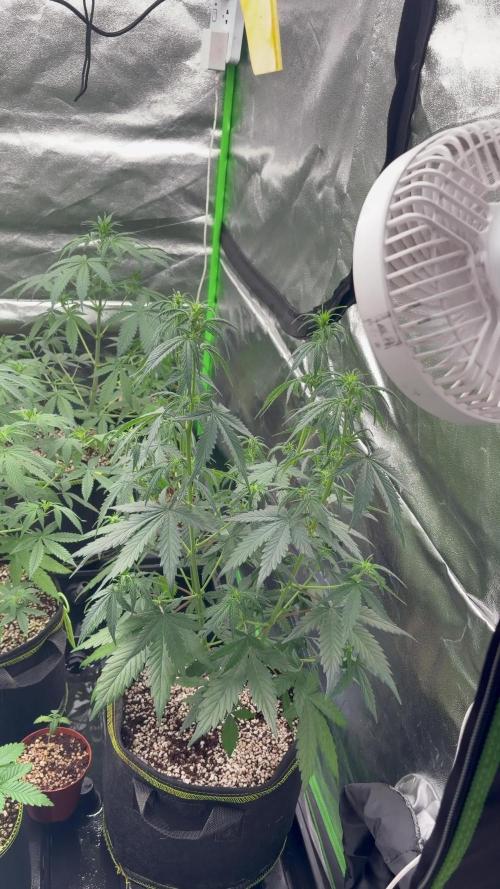
Some strains are hitting their limit—slight nute burn detected. Dialing back the ppm.
Likes
7
Share


@GrowGuy97
Follow
Not exactly sure what day this plant is on but she is a monster! Getting very close to harvest time will probably chop her in the next week or so have been flushing for about a week now. Thanks for following & happy growing friends!✌️🏼🙏🏼🌱
Likes
47
Share

@Miketama
Follow
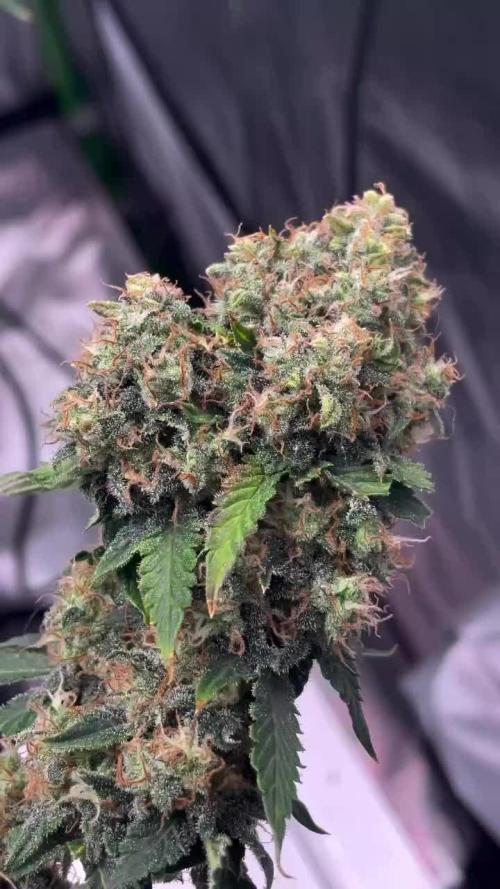
Harvest day! Cut her down at day 73 from seed. 170g wet off one plant, not a heavy yielder, but this particular pheno just grew that way. Buds are super compact, stacked calyxes, minimal sugar leaves, honestly a pleasure to trim. Smell is floral but complex and hard to pin down, not a typical profile. Can’t wait to see what she’s like after cure. ✂️🌸
Likes
7
Share


@GreenQueenz420
Follow
Planted directly into soil using Roots Organic Formula 707. Fabric 5 gal pot will not be transplanting it’s in is final home. Favorite germination method is directly planting into soil and keeping soil moist.



Likes
6
Share


@Daniel_Tri95
Follow
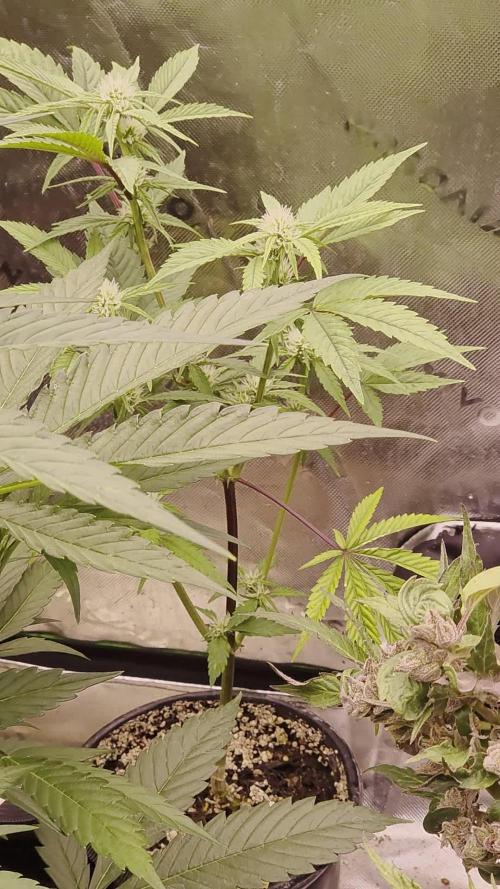
this wedding cheesecake ff is the healthiest plant i have grown with massive fan leaves these two girls have been in bloom for 1 week can’t wait for the buds to start forming
Likes
38
Share


@FrulaFrulaki
Follow
This week was a bit stressful. I was trying to identify the nutrient excess/deficiency. I think i narrowed it down to calcium deficiency, but these symptoms could also be a side effect of potassium excess (but what I gathered from my research, there is a very slim chance of this). Anyway I started to add CalMag to my regular waterings and they're showing some correction. I'll probablly water them with water, CalMag and lower than recommended amounts of nutrients for a day or two just to make sure. I had them on a 12/12 light cycle for 4-5 days, they've streched and risen up, which was what I wanted. They now on a 16/8 cycle.

Likes
18
Share


@birdmountain
Follow
Es ist vorbei, jetzt wird geerntet. Zwei sehr unterschiedliche Phänotypen werden sehr bald im Vaporisator auf ihren Geschmack, Duft und Wirkung getestet werden. Auch wenn die kleinere der beiden Pflanzen vielleicht noch etwas länger hätte stehen können. Es war kein Platz mehr im Zelt und der oberste Bud der großen Runtz fing an zu verbrennen. Für ein SOG halte ich solch unterschiedliche Phänotypen nicht geeignet, anders sieht es allerdings mit Stecklingen von ihnen aus. Insgesamt unkomplizierte Pflanzen, nur die Thripsen bekam ich nie vollständig in den Griff. Dies war mein erster Indoor Grow und ich stelle fest, daß meine Grow Box nur Platz für eine Pflanze hat wenn es eine Schönheitskönigin werden soll. Immerhin habe ich es noch geschafft eine paar schöne Blattverfärbungen an der größeren Pflanze zu erreichen. Auf den Bildern kann man das wilde, ungestüme gut erkennen.
Danke an Zamnesia, dass ich diesen Strain ausprobieren konnte! Ich habe ja noch ein paar Samen für weitere Grows.
Vielen Dank auch an Plagron für den Blütendünger. Das solch dicke Blütenkolben möglich sind hätte ich vor diesem grow nicht geglaubt.
Ich wünsche allen anderen Teilnehmern dieses Contests einen erfolgreichen Abschluss und eine gute Ernte!
P.S. Wenn ich mir so in der Verößerung die Frostigkeit der Buds ansehe, wird mir etwas Bange...
---
It's over, now it's time to harvest. Two very different phenotypes will soon be tested in the vaporizer for their taste, aroma and effect. Even if the smaller of the two plants could perhaps have stood a little longer. There was no more room in the tent and the top bud of the large Runtz started to burn. I don't think such different phenotypes are suitable for a SOG, but the situation is different with cuttings from them. All in all, uncomplicated plants, but I never got the thrips completely under control. This was my first indoor grow and I realize that my grow box only has room for one plant if it is to be a beauty queen. At least I managed to get some nice leaf coloration on the larger plant. You can see the wild, impetuous growth in the pictures.
Thanks to Zamnesia for letting me try this strain! I still have a few seeds for further grows.
Many thanks also to Plagron for the flower fertilizer. I would never have believed that such thick flower bulbs were possible before this grow.
I wish all the other participants in this contest a successful conclusion and a good harvest!
P.S. When I look at the frostiness of the buds as they grow, I get a bit scared...
Likes
15
Share


Likes
20
Share


@amazingautoflowers
Follow
Hello Fellow Growers,
Sorry to be posting week 8 during week 9 but it is what it is. All these pics and the video were shot on Saturday the 6th, the last day of week 8.
They have actually recovered fairly well once they got a good feeding. No dought I lost some critical grow time. But from where they were heading to where they are today, was a pretty big rebound. If you watch the video (3 minutes), I explain the error of my ways. But I did learn something.
The shorter, bushier of the 2 is finishing fast. You can see the amber in some of the Thricomes. The taller is several days to a week behind. The Trichomes are pretty much all milky and I don't want this one to go quite as far.
From here out is it flush time. Should have some hanging plants to show by Saturday. Best to all!!
So Week 9 is going to be harvest week. A bit earlier than it should be but I am sure I caused them to speed up since they were stressed, to say the least. The buds are really sticky, smell great and pretty strong now and especially in the taller plant the buds have taken on the Zkittle colors.