


Likes
8
Share


@Chubbs
Follow
420 Fastbuds week 4
Cherry Cola Auto
What up grow fam. Hopefully your grows are going amazing. This week has been awesome with the girls going in the flower stage. Showing preflower sites all over the place. I did add 1tsp/gal of some Calimagic from GH. It seemed to stop the rust spots from getting worse. One of them is an absolute mess showing signs of all kind of bad. I thought it was over watered but still a little uncertain. Will toss the dice and keep up the same routine and see what happens.
All in all Happy Growing.

Likes
Comments
Share


@Skinnytalls420
Follow
So 3rd time and so happy again this is the best auto I’ve ever grown I think that’s about 50 chemdawg seeds I’ve planted and it always comes out the same very strong genetics this has
Likes
2
Share


@BucketHathead
Follow
1/23/23
Well everything’s in flower now so I’m changing the journal to flower in the perpetual garden. Added humidifier.
I top dressed everything w buildasoil top dress and build a bloom. Watering everything w the Q watering agent as well. It’s all taking off beautifully.
I tossed a buncha lady bugs in there to help w the thrips. Also got spinosad but not sure if I can use it now with the lady bugs. We’ll see how it goes this week.
Mandarin cookie
Doing well, bushing out and up more. Stopped lst bc it’s getting very bushy and I need to defoliate. But waiting until there’s more stretch bc it’s a small little bush and I don’t want to take away too many fan leaves bc they have thrips. Would rather allow for more light to be absorbed.
Head knock
Looking like the best one after it was the safest! So much flower so many trichs. Fan leaves are all sorts of colors. It’s really poppin off. I defóliate da but so the lower flowers could pop through and they’re really colorful. I’d grow this guy again for sure. Might actually see it there are anymore clones avail.
Headknock 2
We got big in veg. Defoliated a bit and got it to a great place before moving to flower tent. But ultimately I’m ready to flip it even if it’s kinda smaller than I’d want. Probably need a stronger light in veg tent to keep them up to par when moving to flower. Pre bloomed and moved to flower. Haven’t seen any trichs but it’s only been in flower since Sunday.
Secret scone
Finally looking like it’s supposed to with happy buds and flowers coming along. Thrips really. Did some damage to this guy and he went thru it with all the mishaps since September. Finally looking good.
Sabowaka
Tepremental little bitch. Starting to show trichs. Gave it too much water and it was sitting next to humidifier tube so old growth was not looking too hot. Cutting back in water bc he wonders drink fast enough. As
Barnyard apples
Got massive in veg just like headknock. Really happy with it and can’t wait to see how it flowers over the next month.


Likes
2
Share

@420abbybox
Follow
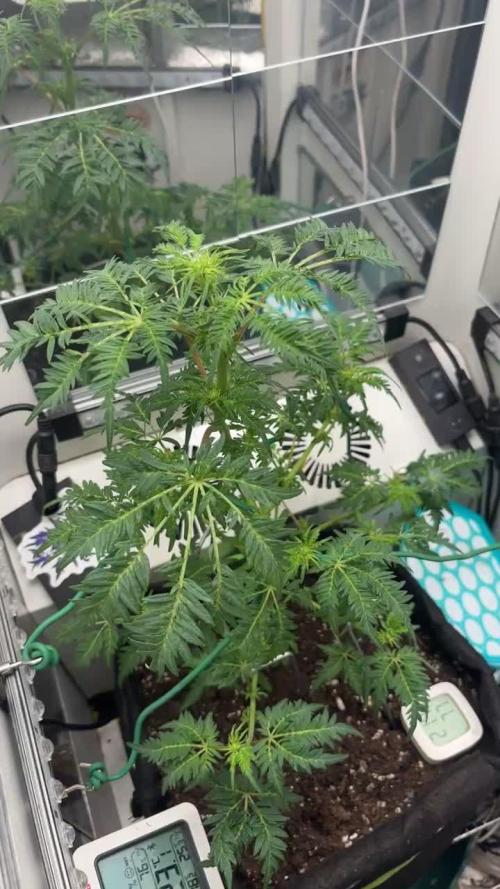
Frostys purple freak has started to stretch upwards with the side branches also stretching outwards with the development of white pistols on each node and side branches

Likes
19
Share


@Mzsnoop2001
Follow
Está semana se siente bastante el aroma de whithe widow y blue moby, mientras que moby Dick sano y viene en viaje entrando en flora. Me quedé sin medidor de ph y sufren un desvalance de ph, más que nada ww pero ya lo voy a solucionar! Muchas Gracias por ver! Acepto críticas y concejos.


Likes
7
Share


@agustinnnv
Follow
Buenos dias a todos. Es la primera vez que cultivo, en este caso es una Sour Compassion CBD. Esta planta fue un esqueje que me regaló un amigo. Cuando me lo dio estaba espigado en un vaso de plástico con 1 mes de vida. La pase a una maceta "Mad Rocket" de 16L. La hice vegetar 2 meses y luego la pase a florar el 8 de Marzo. Tuvo 111 días de vida y 71 días de floración. Con respecto a la fertilización que aparece, hace referencia a toda la vida de la planta. Saludos cannabicos
Processing
Likes
2
Share


@BigNate89
Follow
So I flipped the switch we're now on 12/12 and the stretch is kicking in big time. Plants are very lush growth is aggressive and just simply explosive!! Keep following for the upcoming flower show!!


Likes
4
Share

@FireAntTheGrower
Follow
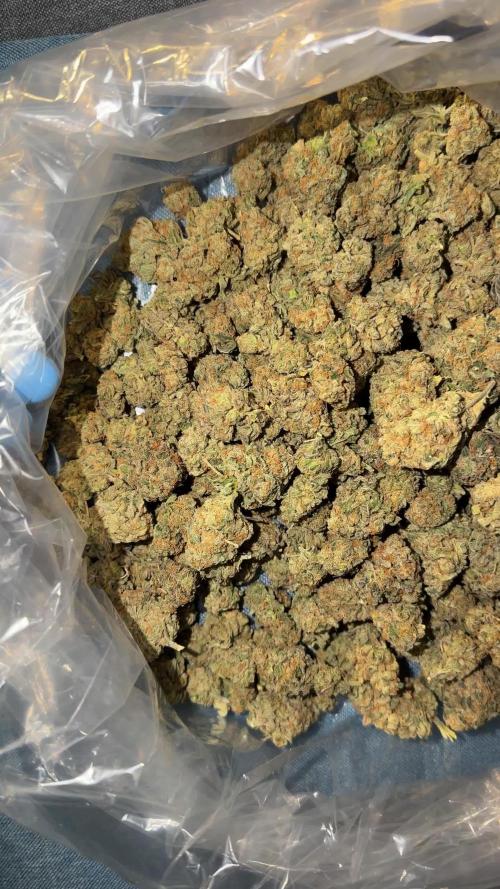
Wrapping Up DQ she has been fun growing. Giving gassy… can’t note much till I smoke a tester. On last day cure cycle. 4 days dry and 4 days cure… happen to fall on 4/20 today, happy 420 stay green and uplifting:)


Processing
Likes
7
Share


@NorthernFrostCannabis
Follow
Everything is looking OK. I did a mid-flush I didn't care much for but other then that the flowers are swelling up nicely and filling out. I'm hoping to go to 70 days. This is day 37! Any question, please don't hesitate to ask!
Likes
14
Share


@GreenhouseGrower
Follow
Looks like a sunny week this week, have taken the lowest branches off the ones that appeared at the first node. Rearranged greenhouse so plant gets direct sunlight’s from 8:30-18:30 each day


Likes
4
Share


@Fatbudz
Follow
week 11
75 days
according to the breeder this strain has 7-8 weeks of flowering.
with the possible stress that the plant has suffered maybe it has slowed down its growth a little. but since I'm not impatient and I have time is not a problem.
I like to let it mature on point so I let it roll for another three weeks.
As for the sample I took a week before... it was on a good track. I could already feel some notes and aroma but deep down. very heavy and harsh smoke, to remember that there was no flush or cure, just dry.
Now its waiting for the whole plant dry. 🤞🙏
Likes
16
Share


@AestheticGenetics
Follow
4/9/25
This plant is beyond frosty. Stacking up super nicely. Seems like she will yeild quite a bit.
My only gripe is that she has like no smell at all.
Using the foil as a soil cover is working quite nicely. the top soil is getting filled with roots quite well.
Top dressed 1tsp of Bloom
1tsp microbe charge
1tsp bloom

Likes
25
Share


@m0use
Follow
This is it, the time is here to chop the plants.
It looks like two of them could go a bit more, like a week or two, but if I do that then the other ones that are complete around 3-4 of them will be over ripe and they are already fox tailing a bit and not a huge fan of that. I have seen some clear winners in the tent for the self judged mini contest I have going on. Its going to take some time to judge them fully as I'll want a min 1month cure on some of thees strains.
Found some weird growth inside the boom+ product on the last feed, dumped it out and then when removing the label for recycling it noticed there was a weird [A] under the label, I don't know what this means, the product was fine when I opened it so this was a my problem but the [A] is a mystery.
Little photo and video flyby of the tent, tomorrow is chop and dry.


Likes
23
Share


@Zuppler
Follow
👸🏼**Grow Report by Zuppler - Week 2 Flowering Phase** 👸🏼
Aye yo, Zuppler checkin' in with the week 2 update from the garden. We deep in this flower stage now, and the ladies are flexin' heavy. We hittin' ‘em with that monkey formula from Advanced Nutrients – you know, that real fire mix – and it’s got them lookin' strong as a pitbull on steroids, no lie.
We runnin’ on straight osmosis water too, keepin’ it clean as a whistle, no extra BS in the mix. pH game locked down, always in that sweet spot, and the girls are drinkin' it up like a hot summer day down in Miami. Roots be spreadin' out nice, no signs of stress, they lovin' the setup.
Buds are startin’ to stack up, slow but sure. Ain't much frost yet, but I can already tell we about to be drippin' soon. Nodes are tight like a fresh taper fade, and internodes ain’t stretchin’ too wild – just the way we like it.
Them leaves stay green as a gator's hide – no burn, no spots, just straight up healthy growth. They dancin' under the lights like it’s a party, and with that 12/12 cycle locked in, the energy’s flowin’ like good vibes at a block party. Everything solid so far, no issues.
Yo, we keep it patient, ‘cause this the marathon, not a sprint. Week 3 comin' up, and that’s when we expect to see them trichomes really startin’ to come through. Stay strapped in, 'cause it’s only gettin’ better from here.
Zuppler out. Keep it G!


Likes
3
Share


@Oldwied
Follow
Day 24
- Topped above the 3rd node
- Removed the 1st node
- Tried out my new diy foggphonic cloner
Day 27
- clone looks not brilliant but it still alive, we will see
- LST goes on
- watering 1,5 L with 2 millionen sf nematoden
Day 30
Topped the lower branches