


Likes
Comments
Share

@GreenEldritchGardens
Follow
Extreme gas.
Sharp fuel.
Cat piss.
Permanent marker funk?
The fragrance is no longer a whisper.
It a proclamation.
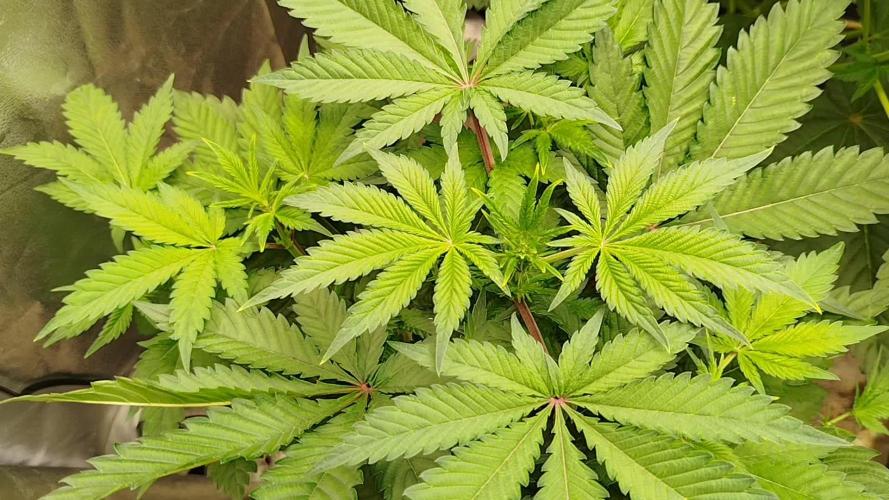
Plant #1 — The Fat One — has entered a phase of growth so aggressive that even the ancient watchers of the garden might pause in admiration. Reaching an astonishing height of 75 centimeters, it has become a living monument of stem, leaf, and emerging floral intent.
The stretch has been extraordinary.
What was once merely the largest specimen now dominates through both mass and elevation. Thick branches spread outward like the limbs of an ancient forest god, while enormous leaves continue to harvest the artificial starlight with relentless efficiency.
Plant #2 — The Battered One — remains close behind, pursuing a different but equally impressive destiny. Though it has not reached the towering height of its larger rival, its structure has become astonishingly dense. Branches emerge from every available space, weaving together into a bushy labyrinth of foliage and future flowering sites.
Where Plant #1 seeks the sky, Plant #2 seeks dominion.
Plant #5 — The Red One.
For the first time since its selection, signs of struggle have become difficult to ignore.
Overshadowed by its larger siblings, it finds itself competing beneath an increasingly crowded canopy. Its leaves have taken on a lighter green coloration, whispering of deficiencies and unmet needs. Though still alive and developing, its growth has slowed compared to the dominant pair.
Likes
12
Share


@Livewire99
Follow
This week I assembled the new 48x48x80 Mars Hydro tent and installed the new FOHSE Aries 600W LED light. I set the dim to 75%, but after two days, it was clearly too much, especially for 20 hours per day. I will dim it way down and shorten the hours until the plants appear to be doing better.


Likes
3
Share


@ghostgrowerz
Follow
01 Ciclo - Gorilla Glue 4# - Crazy Seeds https://www.crazyseeds.shop/shop/produto.php?id=1767e5279709beee97b48c6c28fa9904fc644bcc
GENÉTICA: CHEM SISTER × SOUR DUBB × CHOCOLATE DIESEL
1 - Na decima quarta semana, foi realizada poda das plantas, que denderam 222 G antes da secagem. E 50 G após a secagem.
2 - Iniciada a secagem no dia 27/05/2023 9 Dias (Coloquei os buds de cabeça pra baixo em varais, dentro do grow, mantendo a ventilação. No primeiro dia deixei o desumidificador)
3 - Iniciada a cura no dia 05/06/2023 (Adicionei os buds em potes de vidro em ambiente escuro e fechado)
4 - Após 15 dias de cura iniciados os experimentos. Mas após 1 mês ficou melhor ainda.
Equipamentos/Acessórios:
Luzes: Quantum Board Quattro https://www.armariogrow.com.br/quantum-board-quattro
Grow: Estufa Probox Basic 60 60x60x160
Vaso: Air Pots 7L
Termo Higrômetro: AcuRite
Umidificador: Difusor De Ar Elétrico Mini Umidificador
Desumidificador : Drysec
*Fertilizantes Utilizados*
Vega: Flowermind/Blend - https://www.flowermind.co/
Flora: Biobloom biobizz / top max biobizz - https://www.biobizz.com/
Experiencia: Acredito que cometi algumas falhas que diminuiram a renda total, mas a brisa e o sabor foi uma das minhas melhores experiencias. Esse foi o meu primeiro cultivo indoor, havia tentado cultivar apenas uma vez no outdoor uma pineaple que foi boa, porém rendeu muito pouco e sem comparações com a gorilla glue. No segundo Ciclo estou iniciando a GMO da BSF, agradeço a todos pela visita.

Likes
2
Share


@Foxbud420
Follow
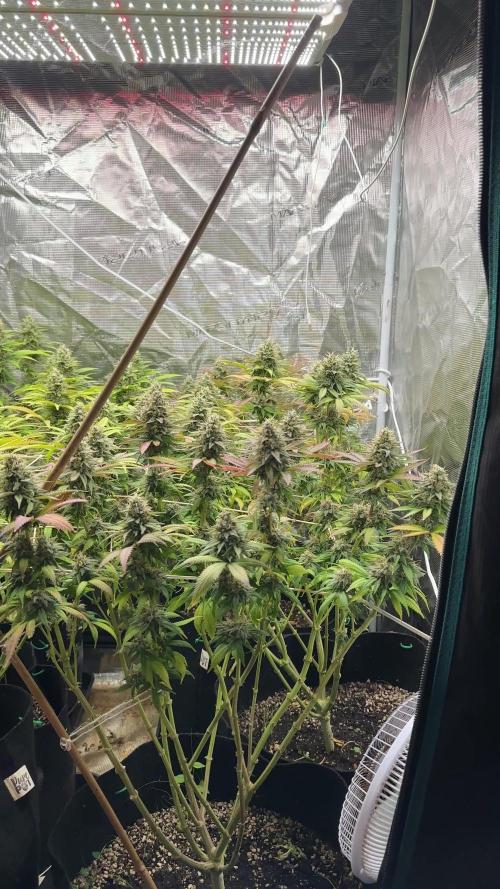
First watering without nutrients.
The cold temps are bad. The buds are small, could be more.
But im happy no mold or fungi.



Likes
18
Share


@Italianganya88
Follow
Die Plants wurden umgetopft und sind unter der grossen lampe gekommen, haben etwas stress anzeichen was normal beim umtopfen ist ,ansonsten sehen sie gut aus .

Likes
7
Share

@Patras19
Follow
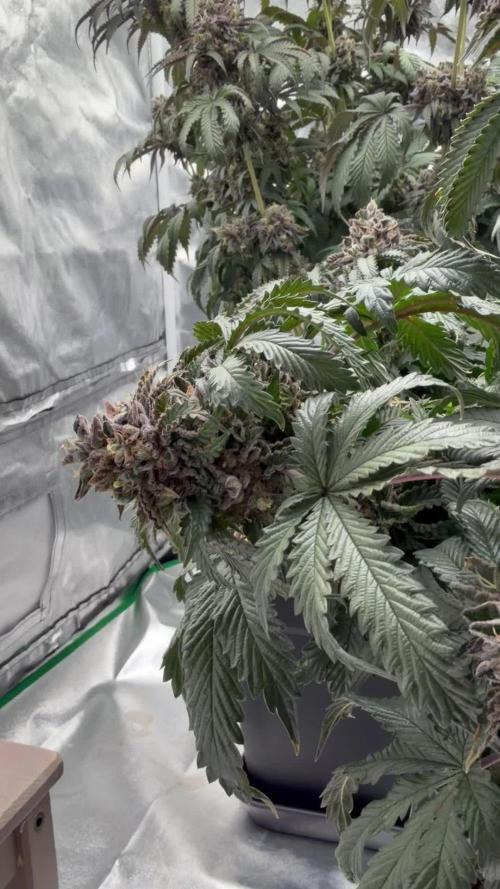
Čusan tak proběhl sekec mazec. Mam rad spíše energii model tak jsem to sklidil bych řekl tak akorad. Na nějaký kouř tam bude za me spokojenost. Je cítit taková sladká zem, hodně intenzivní. Těším se mega na ochtnávku


Likes
19
Share


@UnorthadoxDude
Follow
So the final week was week ten, and onyl just a few days in. I will be interested to see how this dries and cures out.
I will be back in six weeks with a proper smoke report.

Likes
Comments
Share


Likes
Comments
Share


@ISCA_Abi_In_Da_HOoD
Follow
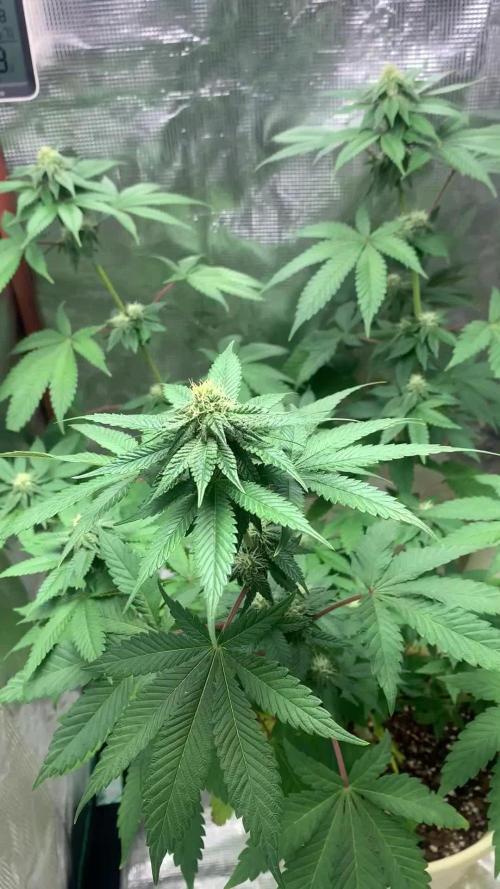
hello we are in the second week of growth I have just planted them in new cups which are a little less than 1 l.
I started using root growth fertilizers and a little microbial.
For the moment they seem to like it so we will continue to fatten them once a week and in the meantime we will use the silicate from T.A. I thank sweet seed I thank everyone who has followed me since the beginning. thank you see you very soon kisses 🍋
Likes
82
Share


@WhiteEdge
Follow
12.03.2024
Continue into week two. Target EC is the same for this week
Girls looking great. One Purple Lemonade fall into bucket! That lid is not cut with precision😏 Put some plastic to hold till now
Clean tanks and filters with h2o2+vinegar acid +bleach
Replace all filters
Mix new batch with 2ml AN connoisseur AB + Big Bud Powder + Silica - total 20l @
Donne one pass off long misting 2m
TrolMaster Tent-X arrived! Setup and registration done in seconds. Finding best placement ...
700 PPFD @ center, VPD 1.0, RH 53-56% day, RH 45-48% night, Temp Night-20c, Day-25/26c, Leaf temperature 23c, Light distance 60-65cm, CO2 750+ppm
540w@70cm distance
NT-Nutrient Tank - PH -5.9, EC -1.15, Temp-21c
14.03.2024
Top up tank with 10l off 1.2EC solution - 2ml AN Connoisseur A+B + 3g Big Bud @ 18l (1.16EC)
Replace all filters
Before top up, nutrient solution in tank is 0.86, after adding 1.2EC new mix is 1.03
PH is slightly rising, normal when EC is drooping
Girls grow nicely, no deficiencies, this week is start off stretchy faze.
Remove some big and bottom levees
PAR map 800max/600min PPFD, VPD 1.0-1.1, RH 50-54%, Temp Night-21-22c, Day-25/26c, Leaf temperature 23c, Light distance 60cm, CO2 750+ppm
580w@60cm distance
50s ON time 20min OFF time Day Time
50s Off time 30min OFF time Night Time
NT-Nutrient Tank - PH -5.92-5.99, EC -0.89-1.0, Temp-20-22c
15.03.2024
Position TrolMaster Tent-X Box on tent and connect to internet. Temperature ,Light and humidity sensor is great, I lake that all sensors and connector boxes are on RJ connectors
Great and fast install, registration and connections off all cables, censors and light! Like ability to expand system with Aqua-X and Hydro-X for irrigation ,PH/ EC/Temp monitoring off nutrient tank
Controlling solenoid valves and pump will be SUPERB!!! Recycling type off timer are great for Aero misting!
With Inkbird equipment i have issues that all connections are permanent and if you have longer cables....😡
HLG Scorpion Diablo LED light is connect via LMA-14 light adapter ! Wow i can control dimming and timing off my light via Wi-Fi😀😊😎👏🙏🙌
PAR map 800max/600min PPFD, VPD 1.0-1.1, RH 50-54%, Temp Night-21-22c, Day-25/26c, Leaf temperature 23c, Light distance 60cm, CO2 750+ppm
HLG Scorpion Diablo@83%
580w@60cm distance
50s ON time 20min OFF time Day Time
50s Off time 30min OFF time Night Time
NT-Nutrient Tank - PH -5.95-5.99, EC -0.89-1.1, Temp-20-22c
16.03.2024
Top up tank with 15l off 1.2EC solution - 2ml AN Connoisseur A+B + 3g Big Bud @ 18l (1.16EC)
Replace all filters, still everything in pristine condition after every changing, nutrient solution in tank looking and smell fresh and clean.
Reducing humidity in night time below 50% , humidifier rise temperature to 22-23c at night
Day RH is 53%, in first two hours keeping temps and humidity lower to reduce deferential form night time to 1-2c
Don't want to have more than 10-15cm off stretch in next week
Girls drink more water and nutrients every day, think around 10-12l per day
Managing EC strength with adding slightly higher nutrients solution when top up tank. Overall its around 0.9-1.0EC for most of the time
PH is stabile , slowly rise in small increments. Need to adjust @ 6.2 to 5.9 every two-three days. Probably i will leave it to swing even more.
Diablo is at 80% power @ 45-55cm from top canopy, 900+PPFD in center, lowest corners get 650+
PAR map 920max/650min PPFD, VPD -1.1, DRH 50-54%, NRH48-50%, Temp Night-21-22c, Temp Day-25/26c, Leaf temperature 23c, Light distance 45cm, CO2 750+ppm
HLG Scorpion Diablo@80%
580w@45cm distance
50s ON time 20min OFF time Day Time
50s Off time 30min OFF time Night Time
NT-Nutrient Tank - PH -5.95-5.99, EC -0.89-1.1, Temp-20-22c
17.03.2024
Top up tank with 10l - 1.2EC solution - 1.8ml AN Connoisseur A+B + 3g Big Bud @ 18l (1.16EC)
Replace all filters, install one new. Total 5 mash filters + 2 disc filters
Remove some large fan leaves from all girls. Nothing crazy. Next week is final BIG defoliation and pruning
Clean room benches a little bit after defoliation.
Whole week all girls are doing great , no sign off any kind off stress or deficiencies. Superb fast growth.
Stretching is more apparent in the end off this week. Next week is going to be madness!
18.03.2024
Raise light 10cm , adjusting to canopy level..
HLG Scorpion Diablo@83%, Set sunrise/sunset dimming @ 30min - TrolMaster Tent-X
PAR map 890max/650min PPFD, VPD -1.1, DRH 50-54%, NRH48-50%, NT-21-22c, DT-25/26c, Leaf temperature 23c, Light distance 45cm, CO2 750+ppm
Week 2 off Flowering in Summary
100l off RO water
190ml+190ml AN connoisseur A+B, 15g Big Bud Powder
70kW electricity in total for light, Pumps and AC Infinity Fans. 58kW for Light + 8kW Dehumidification + AC Infinity ventilation
Week start @ 1.14EC, nutrient strength. Strength dropping every day by 0.1-0.2. Topping up tank with 1.2EC solution bring back strength to 0.9-1.0EC
Start using AN Big Bud powder for day two off this week. For next slowly reducing Nitrogen and add more Big Bud. Next week start @ 1.2EC
Girls look superb all time, Wedding Cheesecake is going to be a biggest strain in this run. Two off them are gigantic plants, third one is little smaller.
Tropicana Cookies is short and bushy with lots off side branching. Need good defoliation next week . Purple Lemonade is also huge , all three girls
Flowering going nicely, obvious sign off formation off bud sites, pistils have shown an all girls.
PH was stabile and move from 5.85 min to 6.2 max. Swing all week without chasing perfect number.
Light distance start at 65cm from canopy finish week at 45-50cm , PPFD levels around 800-940 in center, trough whole week
Temperature vary slightly from 23c at start off day to 26c max at some points. AC Infinity T6 extracting fan program in AUTO to kick in @ 26c
Night temps around 21-23c, dehumidifier start to work at night time to bring down humidity, trying also to minimize Day/Night temperature differential for this week also
Continue in next week at same environment settings and light strength..
Processing
Likes
4
Share


@XoticGROW666
Follow
DAY 28 of Flowering 🌼🌸
Stacking & frosting ❄️🌲
Sweeter havy Spicy nutty ice cream terps 🍦🍨🥜🌶️

Likes
4
Share


@m0use
Follow
***Sponsored Grow*** = Medic || https://medicgrow.com || Grow = ***Sponsored Grow***
First ever CBG Grow, all thanks to @SeedStockersOfficial / @Seedstockers
I asked them for some sample seeds ages ago and they responded in kind, they let me pick out a few strains and sent some others, this was one of the ones I picked.
I also received from them their CBD 1:1 Silver Lime Haze Auto, CBD Northern Lights, Blackberry Gum Auto & O.G. Kush Auto, really looking forward to the sliver lime haze and blackberry gum. Might grow these ones out door this year for fun, autos seem to do better then photoperiods for me on my deck.
As of now I've scarified the seed, soaked in water for 20hr then moved to paper towel till a 1mm or less tap root was showing then planted in the medium.
This grow has a lot of new things happening. its my first attempt at indoor growing using dry crystal fertilizers, the brand of nutrients I'm using is Lotus. It was also a gift from another user @SanderanderS as shipping to them would have been astronomical for the stuff they wanted. I have noticed some weird things like boated packaging, off gassing and weird consistency with the nutrient line up so far and been in contact with the reps online about it, They said everything is normal and not to worry.
Another new thing with this grow is how it will be grown under the new LED's by Medic Grow. They will be under two of their MINI-SUN 2 240W LED grow lights using their V1 Spectrum, Its good from seed to harvest. You can find more information about this in the foot note.
Just going to wait for another week till It pops up and will update as follows. Watered in with PH of 6.2 and a EC of 0.6 or 340ppm 500 scale.
This is part of a 5 part diary in conjunction with medic grow led lights, in the beginning it was to be 6 plants but one of the selected strains died out and its replacement/backup seeds also failed. Sorry to say Humboldt Seeds Raspberry Diesel was a big flop all 3 seed did not meet my expectations, really wanted to try that one it looked nice. Can add that to the failed 4 seeds of Seedsman Cookies Chill :(
***Sponsored Grow***
Official Website:
https://medicgrow.com/
+
https://seedstockers.com/
Facebook:
https://www.facebook.com/medicgrowled
+
https://www.facebook.com/SeedstockersBarcelona/
Twitter:
https://twitter.com/medicgrow
+
https://twitter.com/seedstockersb
Instagram:
https://www.instagram.com/medicgrow420/
+
https://www.instagram.com/seedstockers_seeds
YouTube:
https://www.youtube.com/channel/UCNmiY4F9z94u-8eGj7R1CSQ
+
https://www.youtube.com/channel/UC4GiFYrIWeNtwtXjcivCmfw
Growdiaries:
https://growdiaries.com/grower/medicgrowled
https://growdiaries.com/grow-lights/medic-grow
+
https://growdiaries.com/grower/seedstockersofficial
https://growdiaries.com/seedbank/seedstockers

Likes
10
Share


@Dunk_Junk
Follow
Looking gorgeous this week!
Really frosty.
I'm thinking she's got another week to go. 💪
Likes
27
Share


@Major
Follow
the yellowing of the leaves has started on the plans I continue to rinse and think and hope to harvest the coming WE my last rinse was done on Sunday now I am waiting for the leaves to be completely empty of nutrients to optimize the taste of the weed good grow everyone 👏👏👏👏😃😃


Likes
23
Share


@Sators
Follow
🌱Day 30. Flower start showing some nutrients deficiency. I will drop down ph level and have a look how it is work.💚
🌱Day 32.💚
🌱Day 34.💚

Likes
293
Share


@Ju_Bps
Follow
Hello growmies 👩🌾👨🌾🌲🌲,
👋 Girls still happy, I'm very happy and lucky with this beatifull , the smell is 🤪 💜💜😋😋
Will start flush next week
💧 Give water each 2/3 day
2 l Water + Bloom + Green Sensation + Sugar Royal (3.5 + 1 + 1 ml/l)
PH @6
💡Mars Hydro - FC 3000
50% 13 cm
Mars Hydro Fan kit
Setting 9
Have a good week and see you next week 👋
Thanks community for follow, likes, comments, always a pleasure 👩🌾👨🌾❤️🌲
Mars Hydro - Smart FC3000 300W Samsung LM301B LED Grow Light💡💡
https://www.mars-hydro.com/fc-3000-samsung-lm301b-led-grow-light
Mars Hydro - 6 Inch Inline Fan And Carbon Filter Combo With Thermostat Controller 💨💨
https://www.mars-hydro.com/6-inch-inline-duct-fan-and-carbon-filter-combo-with-thermostat-controller
Fast Buds - Gorilla Cookies FF🌲🌲
https://2fast4buds.com/us/seeds/gorilla-cookies-fast-flowering