
Likes
Comments
Share
@Roots420
Follow
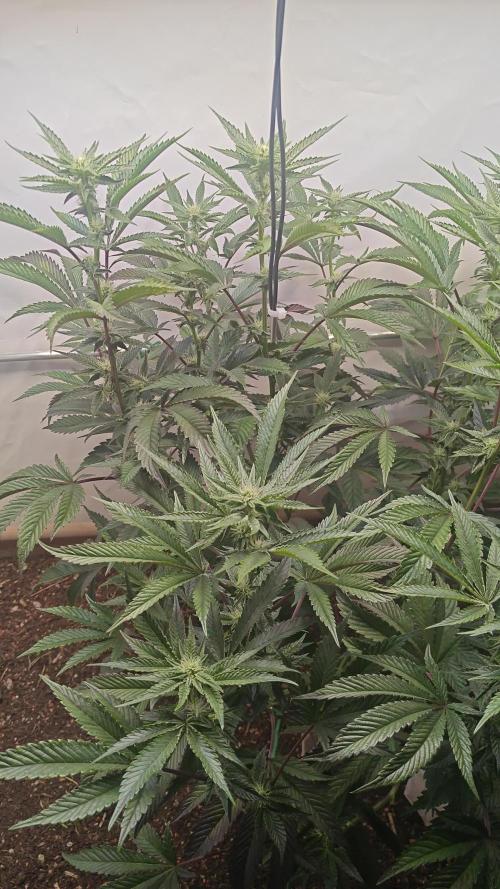
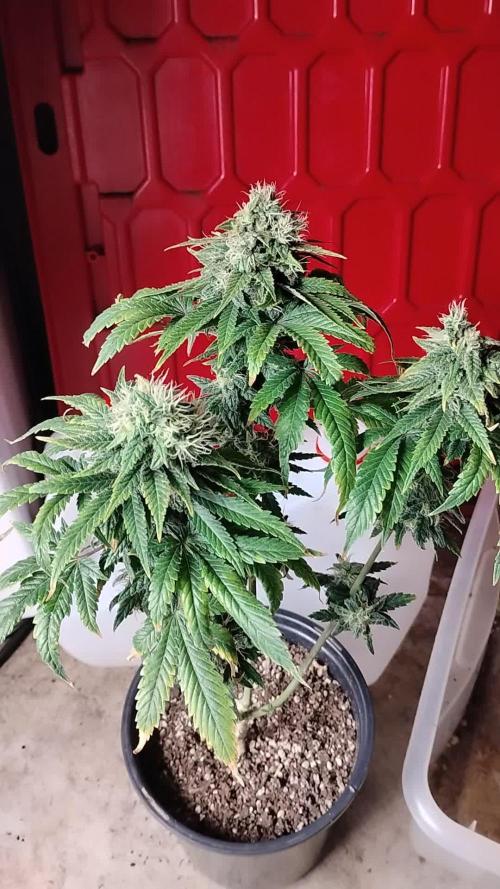
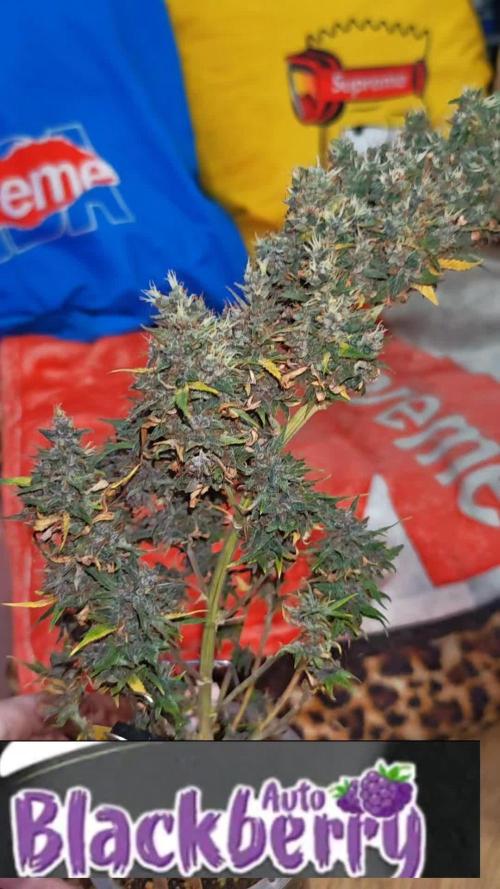
Permanent 🖍️ & Blackberry 🍇 🤤🤤🤤
Likes
3
Share
Essa semente da Mandarim Cream Auto da Puro Instinto está se desenvolvendo muito bem e veloz. Talvez tenha um lapso no registro inicial da planta , mas k mais importante mesmo é quando ela entrar na floração.
Likes
24
Share
@nonick123
Follow
Bienvenidos al diario de Purple Lemonade Auto por FastBuds Día -4 (02/05): Se coloca la semilla en tubo de ensayo con 15 ml de agua (EC 0,5) + 3 gotas agua oxigenada (H2O2) en un lugar oscuro a 25 ºC durante 48 horas Día -2 (04/05): Se prepara una maceta (11L) con 8,8 Litros (80%) de sustrato PRO-MIX HP BACILLUS+MYCORRHIZAE + 2,2 Litros de Insect Frass (20%) + 110 gramos de Earth Vibes Super Soil (10 g/L substrato) Se mezcla con el agua del 1er riego (EC 0,4) la parte proporcional de la probeta de microorganismos y se riega muy lentamente hasta percolación profunda Se hace un agujero de 1 cm de profundidad, se coloca la semilla al azar en el agujero, se tapa con un poco de sustrato y se humedece ligeramente con agua en spray Se coloca parte superior botella en la zona de germinación para mantener humedad relativa alta Se introduce en el armario con la lampara ENCENDIDA para mantener la temperatura 20-21 ºC en las horas nocturnas Día -1 (05/05): Se intuye que la semilla empieza a romper el top del sustrato! NO LA TOQUES! 😡🤣 💦Nutrients by Lurpe Solutions - www.lurpenaturalsolutions.com 🌱Substrate PRO-MIX HP BACILLUS + MYCORRHIZAE - www.pthorticulture.com/en/products/pro-mix-hp-biostimulant-plus-mycorrhizae
Likes
12
Share
early cut pinepple ... bloom with some problems the low leaves fall as if in nitrogen deficiency but it does not seem possible ... could be the ph but I always measure it and it turns out 5.5-6.5 ... can you help me? in your opinion, how do things proceed? I put in bloom too early?
Likes
10
Share
@SamDo
Follow
Week 28 – Flowering Week 6 This week clearly places the Pineapple Upside Down in the final stretch of its flowering cycle. We are getting close to the end, and expectations regarding yield are now realistic. The plant produced a large number of small buds that never fully developed, which was anticipated considering the difficulties encountered earlier in the grow. Despite this, the run is not a total loss. There will still be material worth harvesting: the best tops will be kept as flower, while lower-quality buds and popcorn will likely be processed later. Trichome development confirms that we are approaching maturity, with most trichomes now appearing cloudy. This indicates that the plant is nearing its harvest window. Nutrition Nutrition was slightly adjusted this week to better match the late flowering stage. Base nutrients were gently reduced: Bloom A and Bloom B were lowered from 2.0 ml/L to 1.5 ml/L. At the same time, PK was increased from 2.5 ml/L to 3.0 ml/L. In practice, part of what was removed from Bloom A and Bloom B was deliberately reallocated to PK. The intention is to support final bud maturation and density, while limiting unnecessary nitrogen intake at this advanced stage of flowering. Nutrition will remain as-is for this week. Starting next week, feeding will be stopped to allow the plant to finish maturing naturally before harvest. Environment & Light Light intensity was intentionally not increased. PPFD remains around 800–900, which is more than sufficient at this stage and helps avoid excess heat in the grow space. No major interventions are planned from here. The strategy is simple: maintain stable conditions, observe closely, and let the plant finish its cycle without stress. See you next week, and take care.
Likes
26
Share
* Actualizo 2 dias antes para cuadrar diarios. Gracias al equipo de Seedsman y XpertNutrients sin ellos esto no sería posible. 💐🍁 Bubba Cheescake: Bubba Cheesecake es un cruce de Bubba Kush anterior al 98 con Cheese Cake (Wedding Cake x Exodus Cheese). Se trata de un híbrido 70% índica con muy buenos rendimientos, alto en THC y bajo en CBD. Bubba Cheesecake prospera en interiores y exteriores. En interior se aconseja un corto periodo de crecimiento vegetativo debido a la cantidad de estiramiento que presentan las plantas. Las plantas pueden crecer hasta una altura de 250 a 350 cm. cuando se deja crecer naturalmente al aire libre. En interior, la floración dura entre 60 y 65 días, con rendimientos entre buenos y altos, de 400 a 550 gr/m2. Las plantas de exterior son capaces de producir entre 700 - 800 gr. peso seco. En las latitudes norteñas, en exterior, los productores pueden esperar cosechar a principios de octubre. Los cogollos son grandes y duros como piedras. Las plantas maduras muestran atractivos colores púrpuras y azules y brillan con una resina pegajosa que cubrirá las manos del cultivador si no tiene cuidado. El componente Wedding Cake agrega dulzura al sabor del regaliz y el aroma es terroso y musgoso. La producción de THC es muy alta con un nivel bajo de CBD. El efecto es intensamente narcótico, fuerte y duradero. 🌻🚀 Consigue aqui tus semillas: 🍣🍦🌴 Xpert Nutrients es una empresa especializada en la producción y comercialización de fertilizantes líquidos y tierras, que garantizan excelentes cosechas y un crecimiento activo para sus plantas durante todas las fases de cultivo. Consigue aqui tus Nutrientes: https://xpertnutrients.com/es/shop/ 📆 Semana 4: Continuamos la etapa de vegetación, ella se desarrolla muy bien 😎, comienza el buen tiempo, temperaturas agradables para todos. Esta semana se aplica una solución de trichodermas para una mejor adaptación aunque realmente va genial. Se mantiene 1/3 de nutrientes Master Root y Master Grow
Likes
10
Share
Day 64 my baby is going really well by now, she s been running fast until now and I think that’s enough with fertiliser. From today o start my flush, I will give today my last dose of regulator and from next irrigation just on controlled water until the end of maturation, I want this baby to eat everything . day 65 started flushing. ph controlled water at 6.0 i think 20 more days at max before m Day 68 First check with micro today. The baby looks already milky and amber on the top buds but the rest of the plant is still transparent. I’ll wait at least until this weekend for a re check maybe I’ll cut her in two rounds. As I be been watching a lot with micro I noticed so many dust and other stuff on the buds so I think I’ll wash her in water. Today watered ph 6. Let’s see! 🌱🔥🌱🔥🌱🔥🔥
Likes
1
Share
@Pokerdud
Follow
Die Pflanze hatte etwas Hitze Stress und Wassermangel aber wird sich denke ich gut erholen. Sonst die Buds sehen sehr gut aus und werden immer größer und kompakter bzw. schließen sich gut zusammen. Heute ca. beginnt die 6 Blüten Woche.
Likes
14
Share
@tuzeus
Follow
This is maybe the last week. Trichomes are milky but also clear, I’m still waiting for the amber. Even though I don’t want much amber. Maybe I will chop this weekend, I’ll decide in the next days. I fucked up a bit with the light. I see some foxtailing even though it’s not really concerning. I changed to the Athena fade to eliminate nitrogen. I’m expecting way more fade in the next days. The end is near. Cheers.
Likes
8
Share
Day51: flowers are getting bigger, leaves tips are still under control. The environment is getting hotter and hotter due to the heatwave but the plants are holding on. Day55: i was not home for 3 days but the plants were fine, just thirsty, hot and with some gnats due to being closed for so long.
Likes
3
Share
@Qaggy
Follow
Gave them all a defol as they was getting to bushy at the bottom. They all look great apart from number 3. I can’t seem to perk her up. Tried straight water for a week, ph is 6.3. Then tried her with nutes but nothing’s making her happy. Think she’s just 1 of them doom and gloom girls, we all have known them haha.
Likes
1
Share
@EUROGROW
Follow
Hey there, first time growing anything. Let's see how this works out ! So I started to germinate the seedlings 1 week prior to Video. I Haven't fed them any nutrients yet and the LED light was running only 250w. Right now everything looks healthy and is growing by the day. It even seems that one of my SBP Seedling has formed some sort of Tri-Leaf mutation. As mentioned, this is my first grow so if you feel like i'm doing anything backwards PLEASE Let me know ! Peace yo !
Likes
20
Share
Dernière semaine de Finition impeccable a 2ml/L. Les trichromes sont à 45% laiteux 50%transparent 5% Ambrés.
Likes
6
Share
@Habosabin
Follow
20220403.progressing aok
Likes
4
Share
@Papaganja
Follow
Wie immer in meinem Garten alles tiptop keine Beschwerden von mir!!!!! DANKR FÜRS BETRACHTEN MEINER ARBEIT 😍😘
Likes
12
Share
@DBQush
Follow
Dear diary, Week 10 total and week 1 of flower is behind us. Will just be making sure all tops are exposed and somewhat in the right place as I let them stretch for about 21 days before some defoliation. 🌸🌸🌸🌸🌸🌸🌸🌸🌸🌸 ⏰ Day 67: Feeding was given in the evening with a solution of 1.87ms and pH of 5.6. During this feeding, I guided most of the tops into their designated positions within the net, ensuring they are adequately spread out to receive optimal light. I also checked the runoff, which measured 2.3ms, but considering the extra dissolved salts from full draining and collection that would be higher that it really is, I will aim to bring it back to the desired range of 1.65-1.7ms to be sure. ⏰ Day 68: In the evening, the plants were fed with a solution of 1.64ms at a pH of 5.8. ⏰ Day 69: Evening feeding consisted of a solution with 1.66ms strength and a pH of 5.9. I also took the opportunity to confirm that the lights were positioned at a 48cm distance from the canopy. Additionally, I'm testing the exhaust system by venting it outside the room. Currently, the relative humidity (RH) ranges from 53-55% during lights-off and 58-60% during lights-on, while the temperatures remain around 18°C with lights off and 23.5°C with lights on. These conditions fall within the desired vPD (vapor pressure deficit) range of 0.95-1.2. ⏰ Day 70: Feeding was carried out in the evening using a solution with a strength of 1.66ms and a pH of 5.9. To enhance air circulation, I added a fan at the top of the tent. Furthermore, I checked the light intensity, which measured around 760-780ppfd. ⏰ Day 71: During the evening feeding, the plants received a solution with a strength of 1.64ms and a pH of 6.4. The RH levels range from 55-65% as the girls get more bushy, while temperatures vary between 23-18°C, depending on whether the lights are on or off. ⏰ Day 72: Evening feeding included a solution with 1.64ms strength and a pH of 6.4. ⏰ Day 73: The plants were fed with a solution having a strength of 1.66ms and a pH of 6.0. As indicated by the feeding schedule, the A+B mix was increased to 3.5ml/l. I also ensured that the lights were positioned approximately 50cm above the canopy and set to 90% intensity to provide additional heat.
Likes
42
Share
Thank you. Gave her a cocktail to help with stress. Added 1st net for lateral support, not so much now, but for later. Blue light is absorbed by photoreceptor proteins called phototropins, which trigger a hormonal response that causes cells on the shaded side to elongate, making the plant bend toward the light. Try and fill this side a little. She is quite big already, just needs to find her stride again after the undue torture. The mind is constantly working and producing, just like a factory. It's not just a passive recipient of information but an active producer of ideas, attitudes, and beliefs. The "ingredients" in this factory are the information you consume, such as books, conversations, and the media you engage with. The "products" are your thoughts, beliefs, and actions. The quality of the ingredients directly influences the quality of the output. To guard the door of your mind means to be selective about what you allow in. It involves actively choosing to consume positive and constructive information while filtering out negativity and harmful influences. If you don't guard your mind, others can "dump" whatever they want into it, leading to undesirable results in your life. You must take responsibility for the inputs to ensure you produce the outcomes you desire. 5 apex stems with 20-30 mini cola, let them develop a little, with the apical dominance shattered, all those 20-30 will all compete with each other as soon as that stretch is initiated. Key to a good stretch is making sure the plant is cycling efficiently, with large ATP conversions occurring lights out. For now, I'm keeping light intensity high. A plant will slow its vertical growth in very high light intensities, leading to a more compact form with thicker stems and leaves. This response is a protective mechanism against light stress, which can damage the photosynthetic apparatus and lead to symptoms like leaf scorching, yellowing, and brittleness. Instead of growing taller, the plant invests its energy into creating a more robust, stress-tolerant structure. Providing plants with necessary antioxidants helps protect the photosynthetic apparatus by scavenging reactive oxygen species (ROS) that cause damage from excess light. UV light exposure can impact the xanthophyll cycle by either enhancing its photoprotective role or causing damage, depending on the intensity and type of UV radiation. UV exposure can trigger the synthesis of more xanthophyll cycle pigments to increase the plant's capacity to dissipate excess energy, but it can also cause direct damage, particularly to Photosystem II, and may lead to a decrease in the de-epoxidation state (DEPS ratio) which indicates a reduced capacity to dissipate excess energy. Plants can respond to UV stress by increasing the synthesis of xanthophyll cycle pigments, such as violaxanthin and zeaxanthin, to improve their photoprotective capacity. UV-induced changes in xanthophyll cycle pigments can be linked to a plant's overall tolerance to high radiation stress. The xanthophyll cycle helps protect against photoinhibition, which is especially important when the plant is exposed to high levels of both UV and visible light. High doses of UV radiation can directly damage photosynthetic components, including the proteins, lipids, and pigments in the thylakoid membranes. Exposure to UV radiation can have a mixed effect on the de-epoxidation state (DEPS ratio) of the xanthophyll cycle pigments. In some cases, UV can inhibit the conversion of violaxanthin to zeaxanthin, resulting in a lower DEPS ratio and a reduced capacity for energy dissipation. However, the total pool of xanthophyll cycle pigments may increase, and this enhanced pool size could provide a greater potential for photoprotection despite a lower DEPS ratio. The xanthophyll cycle works alongside other mechanisms, such as the accumulation of flavonoids (UV screens), to protect the plant from UV-induced damage. Blue light repairs 100% UV-induced damage in plants through a process called photoreactivation, which uses a light-dependent enzyme called photolyase. This enzyme uses energy from blue and UV-A light to directly reverse the damaging pyrimidine dimers in the DNA caused by UV-B radiation, a key mechanism for maintaining the plant's genetic integrity. After carbon, light, water, temperature, and nutrients, the limiting factor of a plant's growth is often its own internal factors or the amount of a key ingredient. Chlorophyll concentration is one such factor, as the amount of this pigment limits how much light can be captured for photosynthesis. Other factors include chloroplast number, respiration rate, and the concentration of carbon dioxide in the atmosphere, as plants are often in a CO2-deficient condition. 60x60x18=64800seconds x 700 = 45,360,000moles. 45DLI Exposure to 165 µW/cm² of ultraviolet-B (UV-B) light for 3600 seconds = 1 hour, a extremely high, acute dose triggering stress responses and protective mechanisms. . The plant's photoreceptor protein, UVR8, senses the UV-B radiation. This triggers a signaling cascade that activates specific genes to protect the plant from damage. In response to the UV-B signal, the plant ramps up the biosynthesis of protective compounds like flavonoids, phenolic acids, and anthocyanins. These compounds absorb UV radiation and accumulate in the epidermal layers of leaves to shield inner photosynthetic tissues. The plant may increase leaf thickness or deposit more cuticular wax, creating a physical barrier to the radiation. The plant will produce more enzymatic and non-enzymatic antioxidants to neutralize the reactive oxygen species (ROS) produced by the UV-B radiation. The plant activates enzymes, including photolyases, to repair DNA damage caused by the UV-B. These repair mechanisms are critical for preventing permanent genetic mutations. While protective measures are activated, a high dose delivered over a short period can cause stress that overwhelms the plant's defenses. Photosynthesis is highly sensitive to UV-B. A high dose can inactivate Photosystem II (PSII), damage thylakoid membranes within the chloroplasts, and reduce chlorophyll content, which lowers the plant's overall photosynthetic capacity. Despite repair mechanisms, high UV-B doses can inflict persistent damage on the plant's DNA. The overproduction of reactive oxygen species can cause oxidative stress, leading to the oxidation of lipids and proteins and disrupting cellular function. I am playing in the enchanted forest.
Likes
33
Share
@Rollex420
Follow
Day 28 Last day of the third week she has finally been moved outside for like 7-8 days now. Plus it looks like it's starting to bloom too! Just yesterday I noticed these little white pistils that can be seen in the video I uploaded.. Unfortunately at the beginning of the month she didn’t have an easy life.., there were many days of rain and wind.. so I had to shelter my little plant under a roof in these days. Now it would seem that for the rest of the following weeks there is a good climate with sunny days!☀️ So I hope the plant is able to start its flowering phase safely. I'll upload more posts on the next days😊💚