


Likes
Comments
Share

@RooftopFarmer
Follow
Guava Sundae – Week 5 (Fast Buds Outdoor 2026)
Another week of fantastic weather! Guava Sundae is getting tons of direct sunshine every day and is being fed regularly. She’s really soaking it all up.
As you can see in the pictures, she’s still growing a bit crooked and it hasn’t straightened out yet. The good news is she seems to be doing really well regardless.
I upgraded her support with better sticks this week to keep her stable. She’s now over 15 cm tall with a beautiful, vibrant green color.

Likes
53
Share


@cheetah844
Follow
32 Site Bubble Cloner:
Amnesia Lemon 2/5 (2 swollen look like roots will start)
Blackberry Gum 3/5 (2 swollen look like roots will start)
Gelato 4/5 (1 swollen look like roots will start)
Gold Leaf 4/5 (0 swollen look like roots will start)
Sherbert 4/6 (1 swollen look like roots will start)
Zkittlez 5/6 (1 swollen look like roots will start)
*Amnesia Lemon, Blackberry Gum & Sherbet strains have the fewest with roots. Amnesia Lemon are kinda droopy & don't have many with roots either. Blackberry Gum many really don't have roots only a couple with roots barely starting but have healthy looking leaves. Sherbert always looks sad/droopy leaves but has roots but not tons of roots.*
*Gold Leaf's were the first to show roots & many have nice long root systems. Gelato's has nice root systems as well. Zkittlez was a little slower to start but picking up now with some roots.*
6 Site Bubble Cloner: *still too early to tell - only 2 days old*
Gold Leaf /2
Sherbert /2
Zkittlez /2
*There are several clones that have full root systems that can be transplanted into soil*
Likes
262
Share


@Ju_Bps
Follow
Hello my friends 👨🌾🌲,
All was fine this week, Harvest look more and more close, I think between 1 or 2 weeks.
I started to stop a fertilizer, I've given a last time water + rqs tabs + sugar royal this start week. After that only Water.
2.5l/plant each 2/3 days PH@6
And will start my flush this new week.
Sorry not many pics this week, I was a bit busy, so just pics from today (the principal 😁)
Have a good week my friends,
Thanks for supporting, like, com, follow, it's really much appreciated 😊👍💪😘
See you next week.

Likes
Comments
Share


@babaweed
Follow
The plant grows very vigorously and relentlessly. He developed a large central top, which has an intoxicating scent of fruit. If you touch it, it's full of resin. Another week or two then it will be cut and hung, I gave the last dose of fertilizer knows now only water


Likes
57
Share


@DogDoctorOfficial
Follow
behold the epic conclusion of my Medusa F1 odyssey! Week 11 brings us face to face with an absolute masterpiece – our mighty Medusa in all her glory. She has blossomed into a cannabis goddess, and I can't help but feel a mix of pride and hilarity.
So, picture this: with scissors in hand and a grin on my face, I bravely took the plunge and performed the cosmic haircut of the century. I snipped the entire girl, leaving her looking like a botanical version of a cool, upside-down pineapple cake! It was a sight to behold, and I couldn't help but laugh at the quirky transformation.
With our Medusa delicately suspended upside down, she's now getting ready for her final act of drying. It's like she's doing an acrobatic performance, waving her buds at us from above. Who knew cannabis cultivation could be so entertaining!
In all seriousness, though, our Medusa's buds are absolutely mesmerizing. They've reached their peak density and glisten with an abundance of trichomes. The colors are a true botanical wonder, like a vibrant firework display against a night sky.
Speaking of trichomes, I continue my daily trichome investigation with the precision of a detective. Each day, I observe those tiny resinous diamonds, searching for the magical moment when they're just right – cloudy with a hint of amber.
And the aroma, oh the aroma! Terpenes fill the air with an intoxicating fragrance that makes my nose dance with joy. If only we could bottle this cosmic perfume!
Before I conclude, I must extend my heartfelt gratitude once again to Royal Queen Seeds. Their Medusa F1 genetics have granted us this cannabis goddess, and I can't thank them enough for this delightful journey.
As we prepare for the final chapter, drying and curing our Medusa to perfection, I invite you all to join me in celebrating the whimsy and wonder of cannabis cultivation. Let's cherish this upside-down adventure, savor the captivating colors, and delight in the celestial magic of our Medusa F1.
As always thank you all for stopping by and for supporting me on this journey, i am super passion about growing and fell blessed to have you all with me on this new journey <3 <3 <3
Genetics - RQS MEDUSA F1
Ligth - LUMATEK ZEUS 465 COMPACT PRO
Food - APTUS HOLLAND
All info and full product details can be find in can find @
https://www.royalqueenseeds.com
https://aptus-holland.com/
https://autopot.co.uk/
https://lumatek-lighting.com/
With true love comes happiness <3<3<3 Always believe in your self and always do things expecting nothing and with an open heart , be a giver and the universe will give back to you in ways you could not even imagine so <3<3<3
<3 <3 <3 Growers love to you all <3 <3 <3
Medusa F1
Medusa is a true F1 hybrid created from pure, inbred cannabis lines. She boasts uniform grow traits, mouthwatering aromas and flavours, and plenty of potency. If you're looking to bring stable, elongated plants into your room, tent, or garden, look no further. Mouthwatering Aromas, High Potency, and Mid-Size Plants
Though she won't turn you to stone like the mythical goddess after which she's named, Medusa F1 is bound to get you plenty stoned in her own special way. Combining genetics from inbred lines deriving from Sugar Magnolia, a thick and sweet indica, and American Beauty, a fast, fruity hybrid loved for its well-balanced, positive high, the result is an autoflowering F1 variety that produces fresh flavours, a unique cannabinoid profile, and large yields.
A very aromatic cultivar with a vibrant concentration of terpenes bearing notes of fresh mint alongside an upfront peppery kick, backed up by hints of fresh fruit, berries, and tangy fuel. Her thick, frosty flowers consistently produce high levels of THC and CBG, as well as high concentrations of myrcene, ocimene, farnesene, and caryophyllene. As a result, Medusa F1 has strong effects that relax and stone the body from head to toe (brought on by particularly high concentrations of myrcene and farnesene) while motivating the mind with an uplifting, creative, and motivating kick (thanks to high concentrations of ocimene).
Medusa F1 seeds produce elongated autoflowering plants with long, strong branches and well-spaced internodes. Plants regularly grow up to 80–85cm tall and boast a fast flowering time of just 42–45 days (72 days from germination to harvest). Thanks to her genetics, Medusa F1 produces plenty of thick flowers with big, swollen calyxes that make for very easy trimming. Medusa F1 is very stable, handling stress and unfavourable growing conditions with ease, though she is somewhat susceptible to Botrytis, so make sure to keep tabs on the humidity in your grow room/garden
Likes
48
Share


@AsNoriu
Follow
Day 36. One more heavy training session. Girls drink every day a liter at least, have to water them every 2-3 days and its good !! They got second wave of food , lost almost all oldest fan leaves and i think ill drop my plank to 80 g and will flower them next week.
Still never cracked is it better to clear bottoms before flip or with first wave of defoliation during flower. This time i'll lolipop them in flower.
In middle of last week found some mold on one leave - no waiting and hesitation - Biobizz LeafCoat applied ! Now can't find even smallest issue in them , pure perfectness !!!
Still think 10 girls is too much for my setup to bush them out, but i just can't throw away any plant ;))))
Damn - lesson for life !! Leave branches alone after watering !!! Itchy fingers and smallest plant have only 7 proper branches left, thought to move one a bit ... ;)))
Girls respond to training and food amazingly - late eves video is a proof !
Day 41. They just fly, thickness of branches is just amazing, leaves regrow faster than i pull them ;))) Today all girls will get bottoms cleaned and heavily defoliated, all tops will be HST'ed and i have power cut next tuesday, so monday - lights out for 24 hours of darkness, wednesday - flower starts !
Had to reposition them and bring in one more drain tray. Attack scheme still 2-3-3-2 ;)))
All Blue Dreams hated it, loads of supercroping, one stem split, but it looks like all is finalised for flowering !
Girls got Great White Mycorrhizae tea. Next pure water, later Molasses and only then updated feed, Root Juice out, Bloom and Heaven 2x , all plans and changes ...
Happy Growing !

Processing
Likes
22
Share


@eldruida_lamota
Follow
Que pasa familia, actualizo la primera semana de floración de estas critical a granel.
Hace una semana cambié el fotoperiodo a 12/12, y muy pronto se verán cómo se forman estas flores.
.
La humedad esta al 50% la temperatura está entre 21/24 grados , y como siempre el ph , ya que es de lo más importante,está en 5,8/6,0.
.
AgroBeta:
0,5 ml x L Flowering black line , vía radicular.
0,3 ml x L Tucán , vía radicular.
0,8 ml x L Génesis, vía radicular.
0,1 ml x L Betazyme, vía radicular.
0,2 ml x L Flash Root , vía radicular.
0,05 ml x L Gold Joker, vía radicular.
0,2 ml x L Silver, vía radicular.
.
Hasta aquí todo gente, espero que os vaya molando , un saludo y buenos humos fumetillas💨💨💨.


Likes
29
Share


@UKFieldNinja
Follow
Only my second grow, need to write down everything i do, light change, feed day, water day etc etc...instead of guessing and forgetting...



Likes
1
Share

@GrowingGoodGreen
Follow
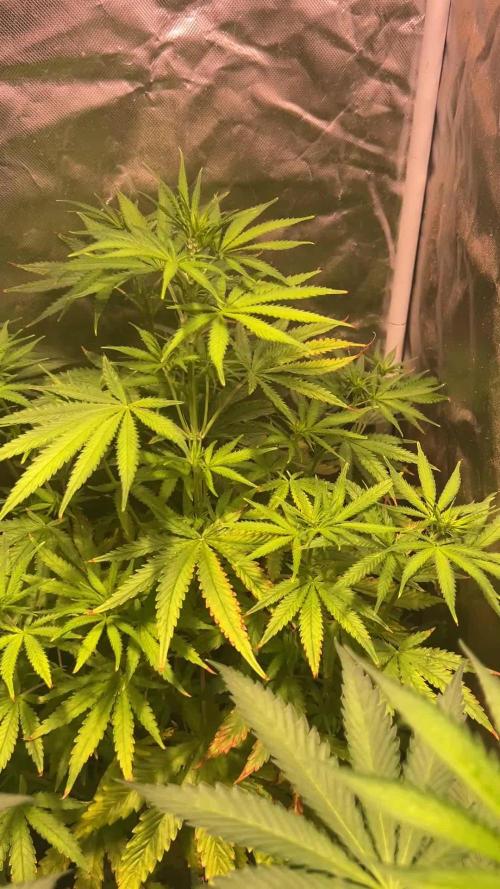
My CMH bulb needed replacing. It was flickering green and dim when I looked. Maybe the downside of using self watering bases because you don’t check as often. CMH are getting hard to find in Canada
Likes
22
Share


@WolverineGreens
Follow
All cut and hanging. I don't weigh wet buds will have pics and weights soon as its all dried pre and post final trim.
If I woulda left it a little longer I coulda brought out much more color but even so there are purples and reds and 10 different color greens.
Headband might have taken the award for density away from the enemy's dream. The headband and critical purp both had some purple. Can't wait to smoke em all. Happy to get the first filled to capacity run in my room fully set up and anxious to start the next.


Likes
27
Share


@adam_pawloski87
Follow
Over all was an amazing grow, super sticky dense nugs with smell of berries, highly recommended for everyone!!



Likes
20
Share

@Flavors
Follow
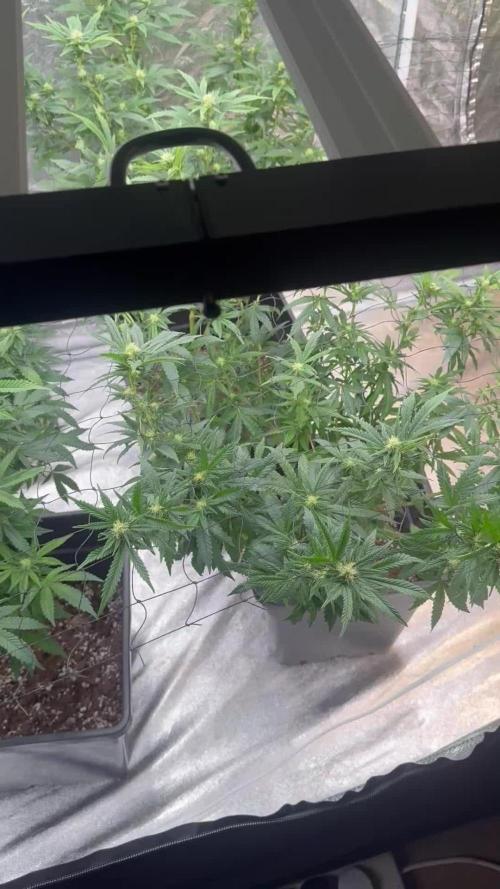
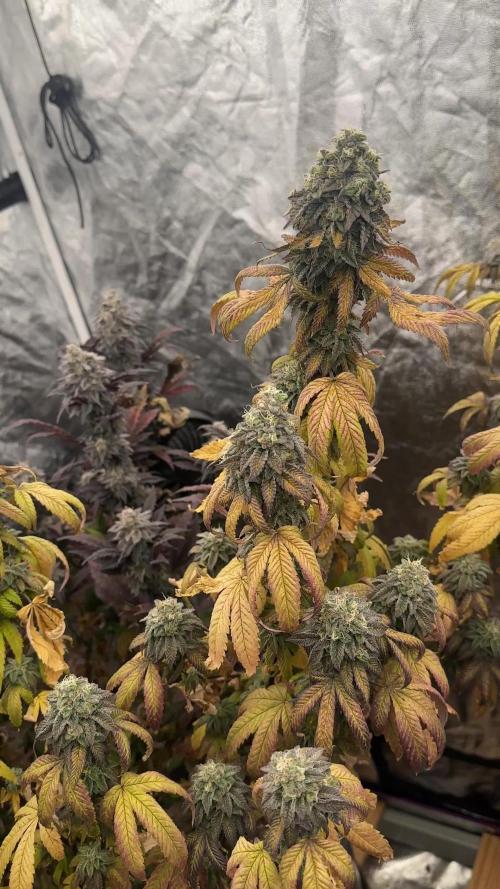
🌸 Week 25 Update (Early Flower – Pistils Arriving!)
This week marks the official start of the show — pistils are popping and both plants are settling beautifully into early flower 🔥🌸.Red Hot Violet is stretching with confidence now. Node spacing is ideal, and those early white pistils are lighting up each site like tiny fireworks 💜✨. Her structure is going to pay off big as she starts stacking.Amaretto Sour is smelling sweeter each day — that lemon-blueberry aroma is getting louder 🍋

Likes
300
Share

@Ju_Bps
Follow
Hello growmies 👩🌾👨🌾🌲🌲,
👋 The babies growing good, finaly to transplant them 😁.
Soil
2l pot
Coco Ball
Plagron Lightmix
Previous leaves have been burned by the lamp, in the middle week a friend have been harvested,
So I've setup the babies on the left side with light off,
Since look really better and new leaves look healthy 💚
Starting Grow nutes
💧 Give water each 2/3 day
And vaporise plant with water + Plagron Roots (1ml/l)
0.25 l Water + Roots + Grow (1 + 2 ml/l)
0.25 l Water + Roots + Grow (1 + 2.5 ml/l)
0.3 l Water + Roots + Grow (1 + 3 ml/l)
PH@6
💡Mars Hydro - FC 3000
50% 80 cm
Mars Hydro Fan kit
Setting 8
Have a good week and see you next week 👋
Thanks community for follow, likes, comments, always a pleasure 👩🌾👨🌾❤️🌲
Mars Hydro - Smart FC3000 300W Samsung LM301B LED Grow Light💡💡
https://www.mars-hydro.com/fc-3000-samsung-lm301b-led-grow-light
Mars Hydro - 6 Inch Inline Fan And Carbon Filter Combo With Thermostat Controller 💨💨
https://www.mars-hydro.com/6-inch-inline-duct-fan-and-carbon-filter-combo-with-thermostat-controller
Fast Buds - Tropicana Cookies FF🌲🌲
https://2fast4buds.com/us/seeds/tropicana-cookies-fast-flowering
Likes
Comments
Share

@DmbTexasRanger
Follow
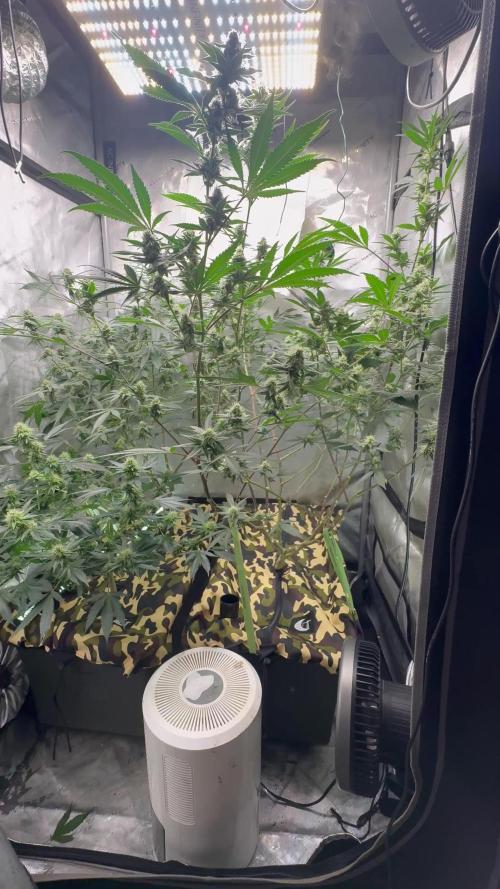
Amazing smell for this early on. Impressed with the difficult to grow blueberry lobster


Likes
2
Share


Processing
Likes
34
Share


@LockDownGrow
Follow
My first time making alcohol tintcure
Using the c1 ,
Hold on tight gonna be a trip
