


Processing
Likes
Comments
Share


Likes
2
Share


@TTerpz
Follow
Start of week 6!!
One more week until flip
All pits have been brought back up to ph range in the 6s


Likes
77
Share


@Roberts
Follow
FBT2309 is doing well, and is starting to get her bloom on. She is looking good. I defoliated some leaves in the center and likely will a few more in days to come. Just making sure the main bud sites are open to light and air better. The Medic Grow Mini Sun-2 works great in my space. The Gen1:11 nutrition is a good organo-mineral fertilizer. I have had some great tasting flower with it. Thank you Gen1:11, Medic Grow, and Fast Buds. 🤜🏻🤛🏻🌱🌱🌱
Thank you grow diaries community for the 👇likes👇, follows, comments, and subscriptions on my YouTube channel👇. ❄️🌱🍻
Happy Growing 🌱🌱🌱
https://youtube.com/channel/UCAhN7yRzWLpcaRHhMIQ7X4g
If anyone needs to purchase fastbuds here is a link for my affiliate program
https://myfastbuds.com/?a_aid=60910eaff2419

Likes
2
Share


Likes
2
Share


@High_Grade_Dadli
Follow
So far so good transplant to a 15 gal...good thing I didn't wait till nxt week...top soil sink to the bottom and was hand for the roots to get tru
Likes
422
Share


@Crashoverite
Follow
Hi all,
Welcome to my 🍌💜👊 week update.
Thank you so much for your all support on this bananas journey 💜💚💜💚
Week 12
Jan 1 - Jan 7
I am so happy seeing how my girls are developing. All it's going great. 2 waterings of 8ltr on 03/01 no runoff and second on 06/01 9.5ltr! Runoffs PH at 6.2. Purchased larger dehumidifier and installed on 03/01 instantly humidity decreaseed from 55-59 to 50-55 on avg. and at night from 62-69 to 54-60. Light from 01/01 on max power output 110 watts. Nutes slightly adjusted. Buds on both girls gaining size, weight. Trichomes on Athena mostly milky and clear with only very few ambers. Xena mostly 50/50 clear and milky,
They are smelling gorgeously, not sure if I should smoke or eat them first.
Next week will still feed with nutes and keep an eye on trichomes development but it seems that girls are not in a hurry at all. That's okay me neither 😁
Stay tuned for next week entry very soon!
Peace and love brothers and sisters ✌️💚
Links
https://2fast4buds.com/seeds/banana-purple-punch-auto
https://plagron.com
https://www.biobizz.com/
https://fishheadfarms.com/
Likes
29
Share


@MadeInGermany
Follow
Info:
Unfortunately, I had to find out that my account is used for fake pages in social media.
I am only active here on growdiaries.
I am not on facebook instagram twitter etc All accounts except this one are fake.
Hi everyone :-) .
The clone is developing well and has beautiful roots.
This week it was poured once because it doesn't need much.
It was also topped once.
Otherwise everything was cleaned and checked.
Have fun and stay healthy 🙏🏻
You can buy this Nutrients at :
https://greenbuzzliquids.com/en/shop/
With the discount code: Made_in_Germany you get a discount of 15% on all products from an order value of 100 euros.
You can buy this Strain at :
https://www.amsterdamgenetics.com/product/kosher-tangie-kush/
Type:
Kosher Tangie Kush
☝️🏼
Genetics:
Kosher Kush
X
Tangie
👍
Vega lamp:
2 x Todogrow Led
Quantum Board 100 W
💡
Bloom Lamp :
2 x Todogrow Led
Cxb 3590 COB 3500 K 205W
💡💡☝️🏼
Soil :
Canna Coco Professional +
Nutrients :
Green Buzz Liquids :
Organic Grow Liquid
Organic Bloom Liquid
Organic more PK
More Roots
Fast Buds
Humic Acid Plus
Growzyme Big Fruits
Clean Fruits
Cal / Mag
Organic Ph - Pulver
☝️🏼🌱
Water: Osmosis water mixed with normal water (24 hours stale that the chlorine evaporates) to 0.2 EC. Add Cal / Mag to 0.4 Ec Ph with Organic Ph - to 5.8


Likes
12
Share

@moe_mr_x
Follow
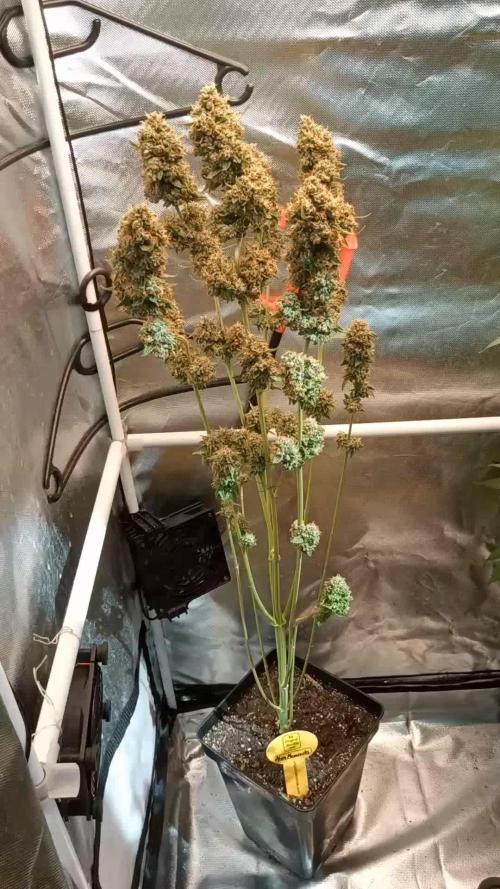
Tag 94, mitte der 10.Blütewoche und die Lady ist absolut bereit zur Ernte. Ein fantastischer Duft und eine fabelhafte Blüten Entwicklung. Die Trichome sind der Wahnsinn und zu ca. 35-40% bernsteinfarbend. Eine schöne Zeit ist nun vorbei, aber es hat sich mega total gelohnt.

Likes
23
Share


@RazzleMatazzle
Follow
This week, I started using Plagron Green Sensation. Independently of that, the plant began to show slight deficiency symptoms in its foliage. The leaves became increasingly pale, and the tips started to discolor. As far as I understand, one of the components of Green Sensation is potassium. Since then, the plants have been doing significantly better. Growth has also increased considerably. However, the pre-flowering phase is still progressing slowly.Runtz has been an amazing genetic so far. The leaves look absolutely fantastic—healthy and large.Currently, the plant has reached a height of 75 cm, which is quite a lot by my standards, despite the high PPFD values of 600-700 µmol.
Likes
245
Share


@Nor_Cal_Kannabliss
Follow
July 26th : Nothing tonight was gonna do a video but well we realized we had to prepare for something.
July 27th : The Lemongrass got the chop. Now Only the Early Girl OG, and the Notorious T.H.C. Remain. Lots of wet hand trimming.. Gonna try something with the trimmings and larf.
July 28th : Hooked up the washer got the bags and buckets set.. Turned my small amount of larf and trim into a small amount of bubble hash. I'm just glad the first try was a success. Now i'm prepared for the big run!!😁
July 29th : Welp Early Girl O.G. Hybrid got the cut. Leaving only you guessed it.. The Notorious T.H.C. to finish in the tent. More pics of the girls inside the tent tomorrow.. Hoping all the room helps them really fill out.. 💪
July 30th : Letting the Notorious Finish up!
July 31st : Just about there..... So stinky in the tent now.. yum...
Aug 1st : Last pictures of the tent this run.. Was a super fun amazing journey that I can't wait to get started all over again! New 5x5 tent, new light.. Boy are we going to have fun!!! 🙌 Will post harvest info soon. Unfortunately found out today that my scale isn't working so we will be ordering another. Hopefully it comes soon. This means I won't be able to measure the wet weight. But i'll for sure get the dry numbers..
Aug 22nd : Finalizing the Diary.
Lemongrass harvest weights.
Wet : Scale was broke (n/a). Dry and Cured : (196 g. or 6.9 oz from the two plants) p.s. these were done first and we may have broken into the jars quite a bit 😁
Early Girl O.G. harvest weights.
Wet : Scale was broke (n/a). Dry and Cured : (125 g. Or 4.4 oz from two plants)

Likes
7
Share


@SzkolaZiola
Follow
Third week over, stretch is done.
They are beautiful. All seem like 1 pheno or very close to one another.
Two of them smell like strawberry milkshake 😍 For real. It's insane. Third has no distinctive smell so far.
Did a little defoliation where it was needed. I still plan to clean more legs but did not have time. 😴 Will do it in a day or two though.
So far so good. I have clones of each lady so I can multiplicate it if RNG gods have been good to me and I got some fire pheno. Will see 💪
Processing
Likes
5
Share


@pegonter
Follow
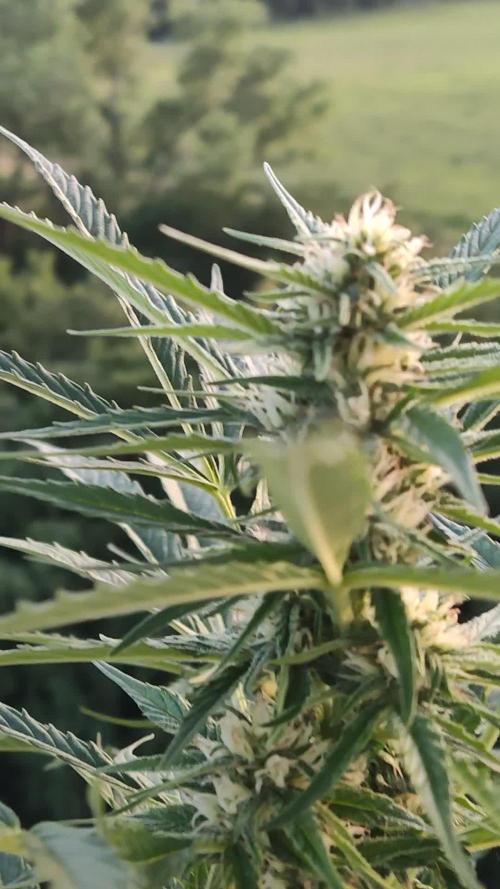
Planta cresceu em repouso nas últimas duas semanas e voltarei a praticar o LST na próxima semana.
Planta está crescendo em um grow com outras 4 plantas em estado vegetativo e uma em revegetativo.
todas as outras 4 plantas da mesma semente não germinaram.


Likes
4
Share

@GoldenWeedGrower
Follow
📅 07/04/26
🗓️ D036 (V5 / D1)
🌡️ 1.2
💨 1000
💧 30L (New Setup)
🥗 4 ml for mains , 2 ml for additives
⚗️ 1.2
🔬 6.2 (pH- added)
🛠️ Transplant
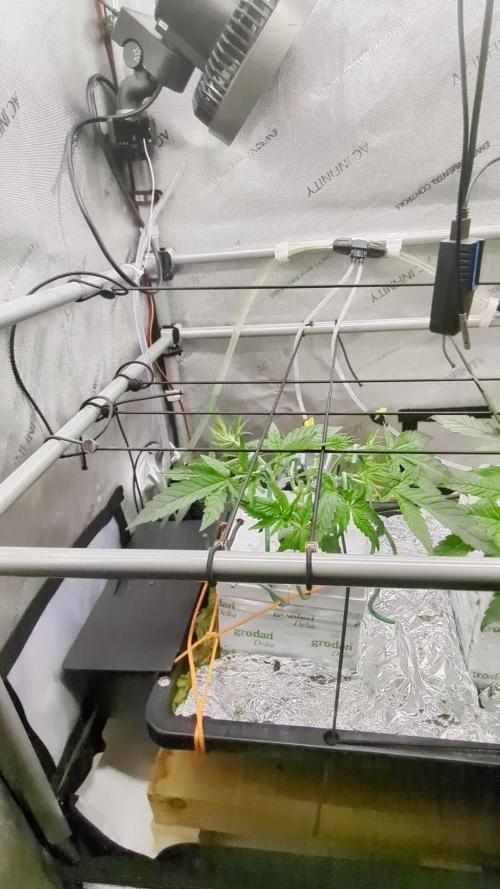
📋 New home, more space and a new setup with Aqualoop custom made DWC System
📅 08/04/26
🗓️ D037 (V5 / D2)
🌡️ 1.2
💨 1000
💧 -
🥗 -
⚗️ 1.2
🔬 6.0 (pH- added)
🛠️ Added Scrog Net and finished setup
📋 First day in the new home. Made a nice video of Aqualoop DWC System
📅 09/04/26
🗓️ D038 (V5 / D3)
🌡️ 1.2
💨 1200
💧 -
🥗 -
⚗️ 1.2
🔬 6.0 (pH- added)
🛠️ Defolation made. Flipped today to 12-12
📋 Flowering stage is coming
📅 10/04/26
🗓️ D039 (V5 / D4)
🌡️ 1.2
💨 1200
💧 -
🥗 -
⚗️ 1.4
🔬 6.0 (pH- added)
🛠️ Started LST
📋 -
📅 11/04/26
🗓️ D040 (V5 / D5)
🌡️ 1.1
💨 1300
💧 -
🥗 -
⚗️ 1.2
🔬 6.0 (pH- added)
🛠️ Fixed a problem with filters
📋 -
📅 12/04/26
🗓️ D041 (V5 / D6)
🌡️ 1.0
💨 1300
💧 -
🥗 -
⚗️ 1.2
🔬 6.0
🛠️ -
📋 A couple of clones rooted. Lemon Cherry Gelato is the first and Bruce Banner the second. I need to choose the mother based on rooting and mother performance. We will see...
📅 13/04/26
🗓️ D042 (V5 / D7)
🌡️ 1.0
💨 1300
💧 -
🥗 -
⚗️ 1.1
🔬 6.0
🛠️ Clones of Lemon and BB transplanted each one in a new rockwool cube
📋 -
==============================================================
Legend:
📅 DATE
🗓️ DAY (StageWeek / Day)
🌡️ VPD
💨 CO2
💧 WATER ADDED
🥗 FOOD ADDED
⚗️ EC
🔬PH (adjustements)
🛠️ ACTIONS
📋 NOTES
📅🗓️🌡️💨💧🥗⚗️🔬🛠️📋

Likes
42
Share


@GanjaReaper
Follow
This week i only gave them 2 feedings, one only water and one with Enzym+ because last week I gave them lots of nutrients.
I did that because they asked for it and could take it but in the other hand it was really hot so alot of feeding got evaporated
which can result in a salty/old nutes medium.
So with that in mind i let the enzymen do their work(cleaning and re-using nutrients) while making sure that i lower the EC in my pots down again
because right now the weather this week is like 20-23 degrees with alot of rain, because of that, the plants don't drink up/evaporate that fast as they do when its hotter.
Meaning i can't give as much water as they used to, so the EC in the pots will stay higher.
A high EC is not a smart thing to have, plants will get a higher change of shutdowns, can even get diffiencies because of that.
And the last thing a grower wants to have is heavy pots for lots of days LOL.
ps, I should consider making 2 different buckets of feeding because my criticalkushes are still not showing signs of preflowering.
To be honnest i'm not completely happy about the critical kush strain because the breeder promised a 100% Indica strain, which in my opinion is not.
It is just another hybrid and a really slow one.
pss, I will lower my EC in the comming weeks because I want my buds to get bigger and in later stages I will raise my EC again to make them compact,smelly,tasty,frosty,
With high EC, you get compact,smelly,frosty,tasty but small buds, with low ec you get big but fluffy ones and not that frosty.
This doesn't count for Autoflowers since they need way less ec...
I did this many times with inside grows, we will see how it goes outside with these two strains.


Likes
6
Share


@I_Identify_As_A_Dan
Follow
Week 6 For Space Panda by Atlasseeds,
End of week 6 for this cultivar, after the transplant the new growth fixed right up👌
This Strain has got some crazy root vigour was only 3 days since being transplanted.

Likes
12
Share


@SoulGrownBotanicals
Follow
Trying some new nutes now and compared to the mother plant I think I notice a difference lol. She's getting frosty and showing off some nice colors.

Likes
4
Share


@DRO420
Follow
2nd trellis net up , scog is spread nicely. Switching to Bloom formula . Defoliated everything below the first net. Started 12 / 12 light cycle