Likes
Comments
Share
@Aleks555
Follow
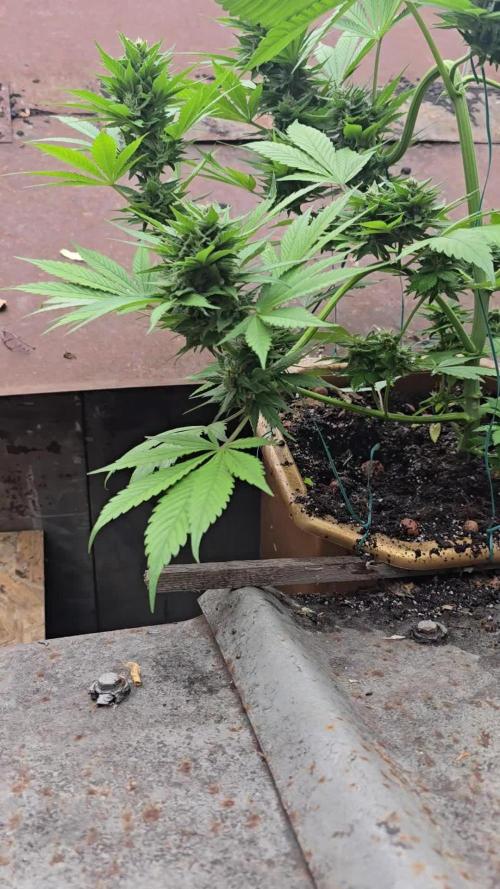
Week 9 and everything is going well. Even though the weather hasn't been very sunny and we've mostly had cloudy days and plenty of rain, our beauty keeps growing. The trichomes have started turning cloudy, and we can already see some amber ones appearing. We're going to wait until about 50% of them are amber before harvesting. We picked a small bud to dry and test at this stage so we can compare the effect, and then we'll try it again when the plant reaches around 50% amber trichomes. The finish line is getting closer! đŸŒ±đŸ’š
Likes
6
Share
@Rinna
Follow
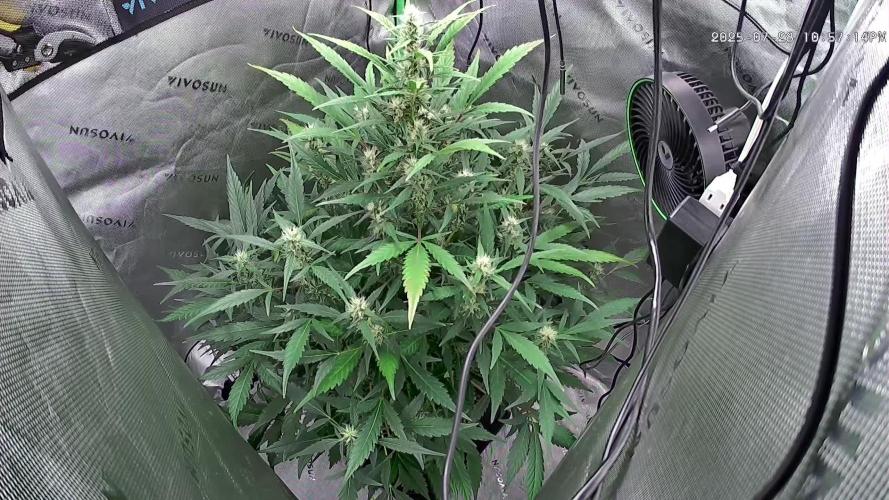
It was a ride! My first ever indoor grow and I’m very pleased with how I filled up the tent, with autoflowers. The buds are looking dense so I’m guessing around 100 grams in dry buds đŸ‘ŒđŸ»
Likes
8
Share
@Naarx
Follow
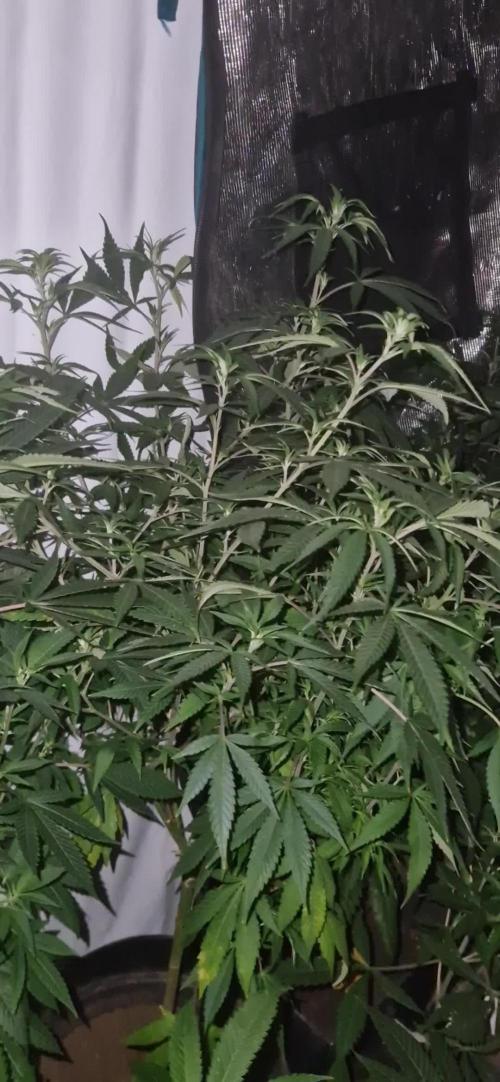
Getting to end of 3rd week getting ready for defoliation
Likes
10
Share
Voltage, also known as electric pressure, electric tension, or (electric) potential difference, is the difference in electric potential between two points. In a static electric field, it corresponds to the work needed per unit of charge to move a test charge between the two points. In the International System of Units (SI), the derived unit for voltage is named volt. The voltage between points can be caused by the build-up of electric charge (e.g., a capacitor), and from an electromotive force (e.g., electromagnetic induction in generators, inductors, and transformers). On a macroscopic scale, a potential difference can be caused by electrochemical processes (e.g., cells and batteries), the pressure-induced piezoelectric effect, and the thermoelectric effect. Since it is the difference in electric potential, it is a physical scalar quantity. A voltmeter can be used to measure the voltage between two points in a system. Often a common reference potential such as the ground of the system is used as one of the points. A voltage can represent either a source of energy or the loss, dissipation, or storage of energy. Dropping the temps will slightly raise the humidity, air holds less % water the colder it is. Lights on 25-35rh% the same water content will spike to 50rh% + at night just by dropping the temps. At night all the juice photosynthesis has been storing up is mashed and mixed up to make all the goodies we need for bud, water is used to transport all these things everywhere, like little solvent transport devices, once a nutrient/protein has been delivered to destination the plant needs to get rid of all this excess water molecules it was using to transport. The only solution at night is to spit it back out into the air at night. During the peak of flower, this can catch a grower unaware, with a 4x4 full tent it can be a challenge to control all that moisture exhaust overnight especially if you're really pushing the limits. We live in a water world, above or below, our misconception is we live on dry land, we don't live in less watery conditions than above or below. We fit into a very narrow band of moisture that just so happens to be full of lots of air and everything else required for life. Got my first full whiff of the smell of purple lemonade, always surprises me how accurately the smell fits names, the dominant terpenes in the Purple Lemonade weed strain are carene, linalool, limonene, and myrcene. Carene gives this strain its sweet, citrus flavor and some woody notes, whereas the linalool I recognize so well from Granddaddy Purp. Myrcene has been shown to have sedative qualities while bringing musky, earthy elements to the flavor profile. Trichome production started to ramp up, and the plant that grew taller/closer to UV showed noticeably thicker coatings. The taller plant shows slight yellowing of lower leaves, and the smaller plant is green and lush but the buds are slightly less progressed, interesting. I super-cropped the main stem of the tall one just over a week ago (clean). I expected it to be the one slightly behind in development. The plant has roughly 10-15% "Total resources" that it keeps in case emergencies arise. Reserves if you will. My rationale behind breaking anything goes hand in hand with slowing things down as production is lost due to the time it takes to repair damage. I recall watching a YouTube video, where a curly hair gentleman would super crop in a manner to damage but not disrupt using a twisting method, using fingers and thumbs placing them close together one goes clockwise other counter clock this varies a lot depending on the thickness of stem but what you wait for is a tiny snap, it may take several rolls to weaken if walls are tough I found. No snapping or bending of the stem, you want just to fracture it but not puncture this way the xylem and phloem channels remain flowing,the damage is repaired almost instantly and the 10-15% is dispatched with very little repair time. Everything in the general vicinity of the stress will now grow stronger so as to prevent further similar damage. This is why I had expected the tall one to lag behind in development once I had cropped it but low and behold it worked and the tall one has slightly more developed buds. The effects of birdsong on plant life may at first glance be far-fetched. Nigh on ten years ago an article appeared in Nexus Magazine on the discovery or invention of a method of growing plants using bird sounds. Christopher Bird and Peter Tompkins describe the development of Dan Carlson’s Sonic Bloom in their book The Secret Life of Plants. Many others have, it seems, recognized the role of birdsong in the growth of plants, and influenced or directly helped Carlson to develop his invention. Dan Carlson’s desire to see that no one need be hungry through shortage of food sought to understand the optimum growth of plants. He discovered that plants also feed from ‘the top down’ as well as the roots. Underneath all leaves are pores called stomata which open to take in nutrients and moisture from the air. Carlson’s observation that the more bird life there is on the farm, the more abundant is plant life, has been echoed by farmers throughout history, except in modern times. Where there is little bird life, plants are stunted, and dwarfed. Nature has the birds sing at dawn and dusk, which dilates the stomata, and so feeds the plants. One can immediately see the importance of trees. The development of Sonic Bloom was to create birdsong, which is played to the plants, while a foliar nutrient is sprayed onto the plants at the same time as they are being stimulated by the sound, to enhance their growth. This method produced fantastic results in the amount of abundantly nutritious produce from one plant, often in poor soils and in drought conditions. Carlson showed that the breathing leaves of plants are the source of the nutrient intake for growth. This of course is also true for humans—the breath is food. We shall discourse on this on another occasion. Plants transfer nutrients to the soil via this breathing, and Carlson showed that his plants improved the soil and helped earthworms proliferate. The secret of Sonic Bloom was the development of the music of the same frequency as the dawn chorus of the birds. With the help of a Minneapolis music teacher, Michael Holtz, a cassette was prepared. It seems that both birds and plants found Indian melodies called ragas delightfully suitable. This is actually quite profound, although the American farmers, especially women, who had to endure this music whilst it was played to the plants, found it irritating. Holtz found the “Spring” movement of Vivaldi’s The Four Seasons appropriate and concludes: “I realized that Vivaldi, in his day, must have known all about birdsong, which he tried to imitate in his long violin passages. Holtz, it is related by the authors Bird and Tompkins, also realized that the violin music dominant in “Spring” reflected Johann Sebastian Bach’s violin sonatas broadcast by the Ottawa University researchers to a wheat field, which had obtained remarkable crops with 66 percent greater yield than average, with larger and heavier seeds. Accordingly, Holtz selected Bach’s E-major concerto for violin for inclusion on the tape. “I chose that particular concerto,” explained Holtz, “because it has many repetitions but varying notes. Bach was such a musical genius he could change his harmonic rhythm at nearly every other beat, with his chords going from E to B to G-sharp and so on, whereas Vivaldi would frequently keep to one chord for as long as four measures. That is why Bach is considered the greatest composer that ever lived. I chose Bach’s string concerto, rather than his more popular organ music, because the timbre of the violin, and its harmonic structure, is far richer than that of the organ. Birdsong has long been loved but also studied with reference to the musical scale and harmonics. As Holtz deepened his study he said, “I began to feel that God had created the birds for more than just freely flying about and warbling. Their very singing must somehow be intimately linked to the mysteries of seed germination and plant growth. The spring season down on the farms is much more silent than ever before. DDT killed off many birds and others never seem to have taken their place. Who knows what magical effect a bird like the wood thrush might have on its environment, singing three separate notes all at the same time, warbling two of them and sustaining the others. Tree and bird life are essential to Earth's existence, which Carlson, Holtz, and others have shown, but indeed others see and feel. “Plants”, says Steiner, “can only be understood when considered in connection with all that is circling, weaving, and living around them. In spring and autumn, when swallows produce vibrations as they flock in a body of air, causing currents with their wing beats, these and birdsong, have a powerful effect on the flowering and fruiting of plants. Remove the winged creatures, Steiner warns, and there would be stunting of vegetation. Nothing more needs to be added here. It has been said that you cannot hurt the humblest creature or disturb the smallest pebble without your action having a reaction upon something else...You cannot think of an evil thought, no matter how private, without it having an effect upon somebody else. Whatsoever you do in life sets up some form of resonance. When I say the morning chorus of the birds awakens the earth I mean that the characteristic song of the birds sets in motion a series of vibrations which react upon other forms of life. Remember, the soil of the earth is full of living microorganisms. The plants are also living organisms. You, yourselves, are living organisms. Now, this is the beauty and wonder of it all—when one aspect of nature has been moved into a state of resonance it immediately relays its vibrational motion to something else. So when I say the dawn chorus awakens the earth I literally mean what I say. I do not suggest that the earth would come to a standstill without the bird song, but I do mean that life on earth would be sluggish and ineffectual without that first instigating outburst of vibrational power poured forth at just the right pitch and tone to set off a chain effect. I know some of you will say, what happens in those parts of the world where there are no birds? Well, what does happen? Very little, I assure you. The hot deserts and the polar regions where there are few, if any, birds are not renowned for their wonders of nature. It is as though they are asleep. Nothing grows, few things live. Little resonates and there is a great stillness over everything. You see, that outburst of sound just before dawn is like the little lever that works the bigger lever which turns the wheel which moves the machine
and so on. Never underestimate small things. Animals are blessed with instantaneous and unthought-out wisdom. They are in direct contact with God and they act and live as though they are fully aware of it. Men are also in contact with God, but most of them act as though they have never heard of God because they are largely veiled from their divine center by their own thinking minds of which they are so proud.
Likes
25
Share
After thinking about it for quite a while, I decided to take the risk and give her one more week to show her full potential. The trichomes continue to mature and the aroma keeps getting richer, making the wait even more exciting. The buds are getting so heavy now that some branches are starting to lean into the net. Without it, I'm pretty sure a few of them would either bend over or even snap under their own weight. Now it's all about keeping a close eye on everything and hoping the extra patience pays off.
Likes
4
Share
@Artemis
Follow
I decided to mainline my plants this week. I've never done HST, but I felt confident and I'm extremely happy with the results. I also gave each plant a litre of Multifeed because I noticed some leaf necrosis and yellowing which I believe is a bit of nutrient deficiency.
Likes
1
Share
I say 56grams but I smoked like a quarter of the plant by the time it all was dry lol. But this shit stinks. In the dry tent I thought it was moldy and was gonna throw it out I couldn't see mold but God fucking damn it was giving off this strong ill call it odor. Lol my wife said it smelled like loud cheesy bud. Now in jars it smells cheeeeesssyyy af with alot of earthy undertones but not like too dry earthy if you know you know smokes great gets me higher than a mother and made some great butter usedbin cookies and something unknown yet lol. Check my sideways plant out lol
Likes
10
Share
And here we go into flowering week seven. The buds are looking impressive by now. I feel like they're starting to bulk up - hopefully, those internodal gaps fill in nicely. Temperature and humidity are stable. I aim for 25°C during the day, and at night, it drops to around 21.5–22°C. Humidity stays between 45–50%. I could probably lower it further, but that would make things too hot, so I trust my airflow and ventilation instead. On day 70, I noticed a couple of leaves showing early ‘autumn colors.’ I’m curious how much longer this will take. Plagron additives like Sugar Royale, Power Buds, and Green Sensation are said to accelerate ripening. DNA Genetics suggests 9–10 weeks of flowering, so it’s getting exciting. Amber trichomes are a must for this Kush diva! 😉 Some parts of the plant seem to be purpling! That’s interesting since nights aren’t particularly cold. Could it be phosphate-related? Light stress? Just the strain? The smell is changing more and more towards citrus - like a ‘sharp, earthy lemon.’ It almost reminds me of a wood polish! 😄 I'm gradually removing any drying leaves at the bottom, but other than that, there’s not much to do - just watering, keeping an eye on temp and humidity, and relaxing. See you soon!
Likes
70
Share
All feeds with nutes use either a whole ratio or combination of "Veg Mix" and "Bloom Mix"concentrates DILUTED in water until a total ppm of add in is reached using a (Total Dissolved Solids)TDS Meter measured in PPM (parts per million). The "Veg Mix" concentrate will eventually be added in smaller ratios and "Bloom Mix" concentrate what will eventually replace the "Veg Mix" concentrate entirely with the ppm and ratios listed when I feed. Veg mix recipe is on week 3. Bloom Mix recipe is on week 5. Day 77/7 PPFD is between 470 and 700 again with little vertical growth after all the HST/LST over last few days. I used 15 minutes of UV mid day with 15 minutes (30 total) IR before and after main light timers. VPD was better today with 73F/55%RH/40%ILV Turning off the humidifier was the key this time. All in all she looks fine for the day, I am hoping to get the new tent up tomorrow and will see if I can get her to fully stretch out again to allow each cola enough space to bulk with light and wind Day 78/8 Tent conditions improved today because I was able to fix the sizing issue - I now have a Spider Farmer Pro-Grade Grow Tent, 48"x48"x80" VPD is harder to get the humidity down in so I may have to put in a second de-humidifier or open another vent port, currently I have a 6" ILV pulling against a 4" open air vent hole. I would have tinkered with it a bit more but I was getting close to lights out so I left it. VPD for most of the day was 74F/55%RH/40%ILV in the Mars Hydro Tent. I current have 68F/65%RH/40%ILV for overnight. Lights are about the same as yesterday with 80% power I am getting 470 to 700 ppfd from 42" from soil to light and since the plant is about 20" that gives her about 22" leaves to light. Im currently using the same 2x4 Bloom Plus LED light centered in the tent but I have another 2x4 Bloom Plus scheduled for delivery on Monday or Tuesday. - She had 20 minutes of UV and 30 minutes total of IR (15/15) I am hoping this allows her to spread out and receive full light/air on each cola - So I also placed 2 more fans in the tent at plant level to help circulate the air better. Day 79/9 PPFD was little changed since yesterday as was vertical growth (I think she's trying to spread back out again.) - ppfd was between 480 and 710 with 25 minutes of UV and 30 of IR (18/18) VPD was a struggle to get under 60 - I now have 2 de-humidifiers in teh tent witht the ILV set to kick up anytime she hits 62%RH. Mostly though I was able to get it down to 55 to 61 - Temps are easier to control with 4 fans and the ILV triggers. Day 80/10 VPD was 74 to 77F today with humidity still pushing 62% with 2 humidifiers today when the tent was closed. Otherwise I was able to reduce the humidity to 35 to 45% with the door open long enough (in MN fall with temps are around 30s) So I had my door open for a bit today because I installed my second Bloom Plus XP2500 LED lights today and had to reroute most of the wires. PPFD after completion ranged from 550 at lowest to 750 - I only did 20 minutes of UV since yesterday was her first day at 20. I also increased the IR to 30/30 with 15 before and after lights on/off - so a total of 1 hr total at lights on/off Feels dry so I plan to feed tomorrow morning with about 3 gallons of 6.3ph de-chlorinated tap water feed in a 10:90 ratio of Veg/Bloom mix Day 81/11 I fed her today with 3 gallons of 6.4ph de-chlorinated tap water with a 25:75 ratio of Veg/Bloom mix at 500ppm. Runoff showed a ph of 6.5 and 1750 ppm. VPD was more stable today after I opened another open air vent hole on another side of the side. 76F/55%RH with ILV on auto when needed. PPFD ranged from 550 to 750 again with the lights at about 42 and she's now 34x28wide x22 tall, so about 20 inches from lights. Still only hit her with 20minutes of UV and an hour of IR with 30/30 at main light schedule with 15/15 before and after. Day 83/13 Almost two weeks since flip. Turning the lights down yesterday seemed to help, little to no new burn progression on those identified yesterday and new growth with no new burn. Will continue to monitor. Nute transfer seems to also slowed progression with the leaves only turning brown where they yellowed before and little to no new yellowing. VPD doing better as well - I turned the heat down just slightly so now avg temps are about 73 - 75F and humidity under 59%RH with the OLV set to auto for limit controls PPFD most unchanged after I started the day with a little LST on the center cola that was getting ahead of the rest. I also released teh last branch being tied - now all colas are simply help by the tomato rings. Once it was leveled PPFD was 750 at highest and about 550 for the lowest.
Likes
12
Share
English: I decided to switch to 12/12 after week 6. The risk of the plants becoming too big for the tent was too great for me. Since switching to 12/12, I have also reduced the amount of water and am trying to push the EC in the substrate further in the 3.5-5 direction. I am still giving the full dose of Grow A & B and will continue to do so until week 3 or 4, depending on how they develop. I will also increase the PPFD from 500 to 900 within the first 3 weeks of flowering. Everything seems to be working well so far, the ladies are growing and also got their next defoliation at the end of the 1st week of flowering, as it was getting very dense. New updates coming next week :) Deutsch: Ich habe mich doch dazu entschieden nach Woche 6 auf 12/12 zu switchen. Das Risiko, dass die Pflanzen zu groß fĂŒr das Zelt werden, war mir zu groß. Seit dem Switch auf 12/12 habe ich auch die Wassermenge reduziert und versuche dadurch den EC im Substrat weiter in die 3.5-5 Richtung zu pushen. Ich gebe weiterhin die volle Dosis Grow A & B und werde das auch weiter bis Woche 3 oder 4 tun, je nachdem wie sie sich entwickeln. Außerdem werde ich auch den PPFD Wert innerhalb der ersten 3 BlĂŒtewochen von 500 auf 900 hochfahren. Scheint so weit auch alles gut zu funktionieren, die Ladys wachsen und haben am Ende der 1. BlĂŒtewoche auch ihre nĂ€chste Defoliation bekommen, da es doch langsam sehr dicht wurde. NĂ€chste Woche kommen neue Updates :)
Likes
6
Share
@IQuSX
Follow
Finally he woke up! cheers let's break records! let's see what happens this week, everyone is waiting for him and translation 12/12
 2023 and SWEET ZZ, coming soon.
Likes
13
Share
@BB_UK
Follow
A great week for these autos! I’ve slowly increased the feed as I go and they’re loving the environment! I was doing better last time but this is the things with autos they run in their own fashion! Just spring into action when ready different phenos and characteristics which change late sometimes! But proved the comparison by not using dynomyco this time (only in the photos) shows the difference in the early stages!
Likes
8
Share
@Bam91
Follow
Seconda settimana di solo acqua, sono al 78 giorno e la pianta continua a fare crescere nuove gemme nella cola principale, Ăš la mia prima coltivazione e sono completamente inesperto, ho fatto germinare il seme in un panno umido, messo in un bicchiere e dopo 2 settimane circa lo ho travasato in un vaso da 6l con del terriccio comprato al discount e ( 6 uova marce ) non ho utilizzato nessun fertilizzante per la fase vegetativa e innaffiato con acqua del rubinetto. Dopo la 5 settimana sono spuntati i primi peletti bianchi e allora ho utilizzato Easy Bloom boster fioritura di RQS per altre 4/5 settimane, poi ho comprato un misuratore di pH digitale scoprendo che il pH dell'acqua era superiore al 7,5 adesso utilizzo del succo di limone per abbassare il pH fino al 6,2. La pianta non ha mai sofferto nulla Ăš sempre stata forte e mi ha sorpreso nella resa, cime sempre piĂč grosse e profumate. Adesso perĂČ non so quando tagliare e come, stavo pensando che ormai Ăš giunto il momento
Likes
12
Share
Day 64: Second Grow We’re now in the fifth week of the flowering stage, and the buds are getting thicker by the day. We’ve decided to order a microscope to keep a closer eye on the trichome development. Additionally, we’re considering ordering CANNAZYM, a nutrient that could help our buds grow even bigger and healthier. Here’s to another week of growth and progress!!
Likes
7
Share
Likes
8
Share
@SkunkyDog
Follow
Hallo zusammen đŸ€™. Sie wĂ€chst richtig schön in der 🌞 hoffentlich bleibt das Wetter so die nĂ€chsten 10 Wochen đŸ€ȘđŸ€™
Likes
7
Share
@Shinobi
Follow
Nevidel som ich 2 tĂœĆŸdneđŸ€ȘđŸ€ȘveÄŸkĂ© bĂșrky daĆŸde vyzerali pripravenĂ©.trichomy mliečne90%hnedĂ© blizny.pre mƈa vĂœbornĂ©.mier
Likes
13
Share
@rainman
Follow
Last days before harvest, can't wait to smoke her. Day 88 - Last day before harvest, very excited. I will turn down lights about 1 AM, and harvest at about 2 PM. Day 89 will be a harvest day. Peace.