


Likes
Comments
Share


@JakeTheButcher
Follow
Frosty...the stretch came to a halt thankfully. I've got a few top buds that show some bleaching from being so close to my lights. The buds, fan leaves and sugar leaves are looking very frosty and feel super sticky. The humidity finally became uncontrollable with just the dehumidifier and I kicked on the 8,000btu air conditioner. I was going to start to bring the temps down anyway so timing was great as spring sets upon the midwest United States.

Likes
15
Share


@The_Wanderer
Follow
To grow the Balochistan cannabis is the most intimate and deeply personally affecting. The plants exude a strange energy, like they are somehow more sentient beings than just a plant. When I touch them I almost expect them to be warm. They just seem more alive, more vibrant in energy than other cannabis. These plants are a class of unique beautiful warriors.
Great results using only a bottle of Neudorff Biotrissol Kräuter Dünger from the local garden center at Hellweg. Neudorff has always made good products for plants and I highly recommend it. You shouldn't be paying 2, 3 times more something marketed for cannabis. It's just another plant in the plant kingdom. I would assume that using this same Neudorff product on some commercial genetics intended for the mass market would not give similar results because those genetics tend to be weaker hybrids that require more nutrients, more water, and are easily overdosed, and are very sensitive. The Balochistan is a landrace that is rugged, a survivor of harsh desert climates and poorish soil that has sand and clay, and not much rainfall. It's like the wild wolf compared to poodles, pugs, collies, and labradors of the commercial cannabis. It costs less to grow this in nutrients and water, the pest and pathogen resistance is way better, the potency and yield is much better than what's widely available from the mass market seed suppliers. This is a more ecologically friendly choice. Quality begins with the seed... and so does saving money! Let's get back to mindful grows instead of hyped up mediocrity. The obvious difference and superiority has made it the most demanded genetics I have.
I'll edit in some more dried bud photos information, smoke report later. It gets pretty deep from here. I dont have time now. So check back in a day or two.
Likes
75
Share

@Tower84
Follow
🇩🇪 Woche 10 – Mentha de Croco (Terpyz) 🌿🌳
Die beiden Mentha de Croco legen weiterhin beeindruckend zu und haben diese Woche die 1-Meter-Marke deutlich überschritten 🚀🔥. Mit aktuell 104 cm und 107 cm Höhe entwickeln sie sich prächtig und zeigen eine enorme Wuchskraft.
Besonders faszinierend wird die Blattmorphologie: Die charakteristischen, farnartigen Blätter werden immer ausgeprägter und verleihen den Pflanzen ein einzigartiges Erscheinungsbild 🌿✨. Sie sind mittlerweile echte Hingucker im Garten und unterscheiden sich deutlich von klassischen Cannabissorten.
Das Wetter hat in der vergangenen Woche nur bedingt mitgespielt. Durch die vielen Niederschläge ☔ musste ich aber praktisch nicht gießen , sodass die Pflanzen vollständig vom Regenwasser profitieren konnten. Die Farbe bleibt sattgrün und die Vitalität ist unverändert hervorragend 💚.
Letzte Woche gab es eine Gabe eines selbst hergestellten Pflanzenferments, verdünnt mit 10 ml auf 1 Liter Wasser 🌱. Das Ferment wurde aus Ackerschachtelhalm und frischen Brennnesseln hergestellt und anschließend mit Zucker, Melasse, Honig, EM-1 und selbst hergestellten LABs angesetzt. Nach zehn Tagen Fermentation wurde es filtriert und kühl gelagert. Ziel ist es, die Mikrobiologie und Pflanzengesundheit auf natürliche Weise zu unterstützen 🌍🔬.
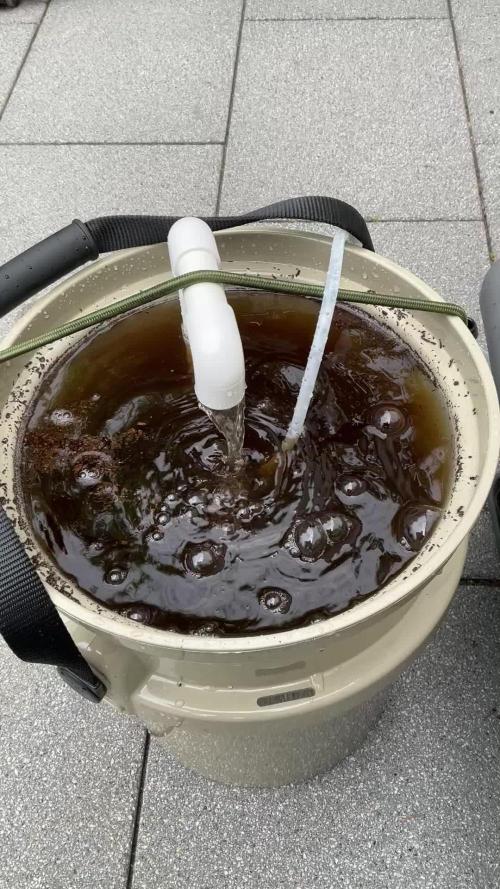
Heute wird außerdem wieder ein frischer Komposttee angesetzt, um das Bodenleben weiter zu fördern und die Living-Soil-Prozesse aktiv zu halten.
Insgesamt entwickeln sich beide Pflanzen hervorragend. Wenn sie dieses Tempo beibehalten, werden sie ihrem Ruf als „kleine Bäume“ mehr als gerecht 🌳😄.
⸻
🇬🇧 Week 10 – Mentha de Croco (Terpyz) 🌿🌳
The two Mentha de Croco plants continue their impressive progress and have now clearly passed the one-meter mark 🚀🔥. Standing at 104 cm and 107 cm, both plants are thriving and showing remarkable vigor.
One of the most fascinating aspects is their leaf morphology. The distinctive fern-like leaves are becoming more pronounced every week, giving the plants a truly unique appearance 🌿✨. They stand out beautifully and look very different from traditional cannabis varieties.
Weather conditions were not ideal this past week. But Heavy rainfall ☔ meant there was no need for additional watering, allowing the plants to benefit entirely from natural rainwater. Their foliage remains deep green and overall vitality is excellent 💚.
Last week, the plants received an application of a homemade fermented plant extract diluted at 10 ml per liter of water 🌱. The ferment was made from horsetail and fresh nettles, enriched with raw sugar, molasses, honey, EM-1, and homemade LAB cultures. After a 10-day fermentation period, it was filtered and stored in the refrigerator. The goal is to naturally support plant health and soil biology 🌍🔬.
Today, a fresh batch of compost tea is being brewed to further stimulate microbial activity and keep the living soil ecosystem thriving.
Overall, both plants are performing exceptionally well. If they continue at this pace, they will truly earn their title as “small trees” by the end of the season 🌳😄
::


Likes
3
Share


@FrostyBudzzz
Follow
Just switched her 😎💚🔥
Picking leaves daily stopped now until day 21 for heavy defoliation 🙏🏽😊💚🔥

Likes
26
Share


@Char23
Follow
Deceded to cut! Perhaps a little prematurely but I was seeing cloudy and some amber so decided to pull the trigger. First grow and all so hopefully only up from here!
Not much to note apart from the buds fattening up and further fading in the leaves as expected.
I dropped the temp a bit and they spent their final 48 hours in darkness. Literally just going off what I have read and I will have nothing to compare this to as this is my first grow!
Very happy with what i see and I am now hanging the plants whole. I am expecting some nice clean smoke as these were flushed for their final 3 weeks.
Hoping for a 7-10 day dry and then into jars for curing after trimming over screens
Will update harvest for all 3 plants once this stage is complete with dry weights.
Thanks to all that have commented and I will be planting 4 mephisto seeds from a mystery pack once the tent is free.

Likes
7
Share


@IAmTheMoravianGrower
Follow
Hello growers ✌️ She looks nice but she needs more space. 😏 In the week, I'll probably move her somewhere. But I don't know where. 😏
Fertilization
16.6.2019
Fish Mix – 2ml/l
Root Juice – 3ml/l


Processing
Likes
15
Share


@Siriuz
Follow
Alright guys, I'm back
First I thought she wasn't going to make it but then she started developing even better so we've got her already blooming guys!
We started adding floranova bloom but we keep adding floranova grow for the veggie stage, we will increase bloom nutes soon
We continue applying LST plus some watering every so often to keep her moist and wet but never super wet just chill
Depending on your lights wattage you could need more or less water you will have to figure it out yourself but for me is 600ml per 24 hrs morning and night time usually I keep the very well hydrated and they have been showing off for good!!!

Likes
4
Share


@DaisyNabis
Follow
preventivo de la semana al dia, desintale humificador para preparar a mis bellas para su trasplante a maceta definitiva, esta oportunidad no hare podas bajas solo algunas defoliacion

Likes
13
Share


@Krautbauern
Follow
Flowers are growing great. All the plants have been given 2 small shovels of compost. The compost was mixed into the soil on top.
Likes
4
Share


@TegridyCal
Follow
Now we are at exceptional levels. The plant is very florid, healthy with large leaves and large and resistant branches, the trunk is really scary, I hope everything promises super branches. In my opinion the topping is true that slows down the harvest but because it slows down the forging and the plant manages to grow very well when it starts. We are using for the protection of Neem oil + potassium soap at the right doses plus a nutritious foliar Lord Grow that protects, nourishes from from Co2 via leaf.


Likes
12
Share


@GREENPHOENIX6262
Follow
* Week 6 Flower Mimosa (1 -2) - 10/8*
Both Mimosa's are near harvest about a week left, Lotus CarboFlush will begin this week.
Mimosa (1) - 38 Inches - Mimosa (2) - 28 Inches.
Trichomes have set in - Pulled off trellis net this week
* Pre-Harvest set-up - 10/15*
Both plants have been cut down and are drying out accordingly (Day -1)
Dry time will be 9-14 days - Dry temps are 60% Humidity - 62 degrees F.
Likes
24
Share


@GrowGuy97
Follow
Day 21 - Ladies are looking nice & healthy! Everything seems to be going great, one is still growing a little slow but all in all extremely happy with this grow so far! Thanks for following & happy growing friends!✌️🏼🌱
Day 22 - They are really starting to take off now😍😍
Day 23 - not sure if it’s the pheno type or the nutrient but the plant that is getting the Technaflora Nutrients is starting to get a little bigger🤷♂️🏼
Day 24 - Babies are really starting to take off😍😍 got my New420GuySeed gear in today as well👍🏼🙏🏼
Day 25 - Starting to really grow now, the smaller of the 3 I starting mainlining today to do another comparison at harvest time!
Day 26 - Another good day of growth! Thank you for following & happy growing friends!🌱✌️🏼
Day 27 - End of the week & these ladies just keep looking better & better😍

Likes
3
Share


@French__flair
Follow
Suivre les conseils semaine 1.
Une fois que les plantes ont colonisées le pot de 1L, les rempoter dans des pots de 3L (qu'on va arroser avec 3L). Cela doit prendre 4 à 7 jours en moyenne.
Surveiller l'aspect des plantes, les pointes des feuilles. Observer le haut et le bas. La couleur de la plante doit être uniforme entre chaque partie sinon c'est qu'elle a un manque ou un excès. Le plus souvent étant donné les engrais complet que nous utilisons il s'agit d'un excès. Dans ce cas il suffira simplement de faire un arrosage à l'eau au lieu de l'engrais et de reprendre les engrais à plus faible dose.
Les tiges sont un bonne indicateur de la santé des plantes, hors génétique spécifique, elles doivent être verte et tendre, pas dur.
On continue la FIM et la taille de certaines feuilles qui peuvent être gênante.
Processing
Likes
25
Share


@FriendlyNeighbor
Follow
Day 41
Green Gelato is stacking up the buds... just a awsome strain already took some clones will put them under veg again when mommy is ready for the cut =)
I need to water tomorrow I think Green Gelato is thirsty!
Fruit Spirit going its way im really exited for the yield will see how this will go....
Sweet ZZ finally showing some nice trichome production and she starts to smell lovely.
Im very happy with my grow I hope after this harvest I will never buy weed ever again!
shoutout to Royal Queen Seeds for those awsome genetics favorite breeder company atm!
Likes
3
Share


@Hieronymice
Follow
(This week has pics from weeks 2 and 3 because I couldn’t edit past weeks and had more photos. Future weeks will be correct)
LST is well underway - pulling the main stalks back from the light to keep the canopy flat.
The glueberry is growing much larger/faster than the amnesia haze. The glueberry is also showing some copper tips so we may skip the nutrients for the next watering and see how that develops.
The glueberry is 20 cm from the light but still no signs of heat stress (from what I can tel) despite the hot weather.

Likes
7
Share

@Emerald_Gardens
Follow
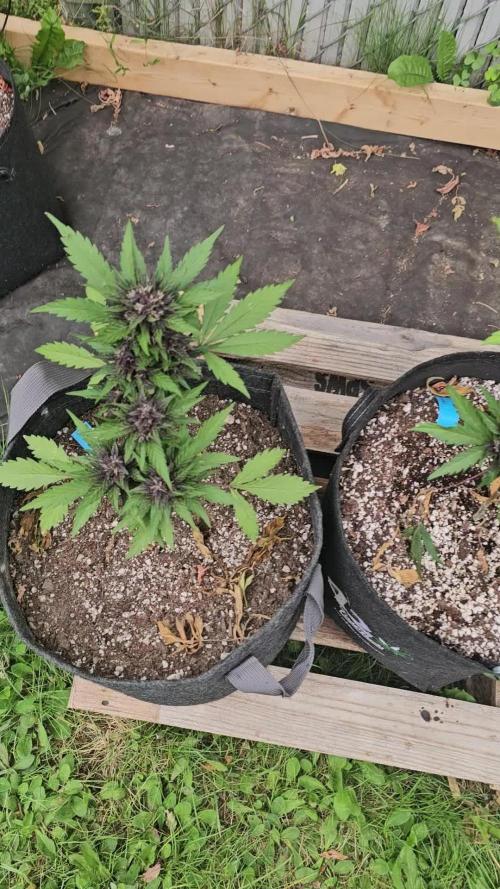
No real changes to organic nutrients, training, or watering. Making sure the soil doesn't go 100% dry to keep the microbes alive and noticing the buds densing up nicely. Smell is absolutely amazing. Overall the grow has been pretty hands off, as you would expect from a organic grow. I do not notice a difference in smell or size between the organic vs green planet purple lemonade grow. Keep in mind the plants were exposed to extremely high stress levels early on, due to my dog flipping the plants over a few times. This lead to stunted growth as you can see by the overall size.


Likes
2
Share

@DogDoctorOfficial
Follow
🌸 Week 9 – Opening the Door for the Flowers
Blueberry Muffin has always had an interesting personality in this tent.
She's not the tallest plant.
She's not the largest plant.
But she's been quietly building herself into a compact flowering machine.
And that's exactly why I decided that a little selective defoliation was appropriate this week.
We're not trying to strip her.
We're not trying to make her naked.
We're simply opening some space.
A few leaves here.
A little overlap there.
Removing foliage that is no longer helping the structure we're trying to maintain.
The goal is simple:
More breathing room.
Better light movement.
Better airflow.
Less unnecessary congestion.
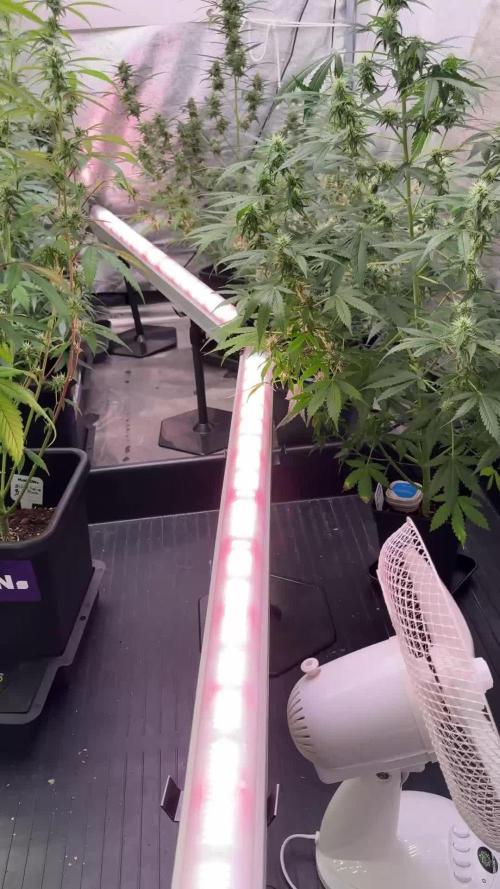
And when you have twelve different plants sharing the same room, sometimes opening one plant slightly also helps the environment around her.
That's the beauty of working with the whole garden rather than looking at each plant in isolation.
✂️ Defoliation – It's About Purpose, Not Punishment
I've talked about this before, but this week is a perfect opportunity to repeat it.
Defoliation isn't about removing leaves because leaves are somehow "bad."
They're not.
Healthy leaves are incredibly valuable.
They're photosynthetic organs.
They're producing the energy the plant uses to grow and develop.
So when I remove a leaf, I want to have a reason.
Maybe it's heavily overlapping another leaf.
Maybe it's sitting inside an increasingly congested section of the canopy.
Maybe it's shading a developing flower while contributing relatively little to the structure.
Maybe removing it creates a much better pathway for air.
And sometimes...
it's simply part of cleaning the plant.
That's the approach we're taking with Blueberry Muffin.
Selective. Intentional. Moderate.
We're not trying to win a defoliation competition.
We're trying to create a healthier, more manageable flowering plant.
💨 Airflow Becomes More Important as Flowers Develop
This is where the timing becomes particularly interesting.
As the plant gets deeper into flower, the canopy naturally becomes more complicated.
Flowers get larger.
Leaves overlap.
Branches carry more biomass.
And spaces that were wide open earlier in the grow can gradually become pockets of dense vegetation.
That's not automatically a problem.
But it's something worth managing.
One of the reasons I wanted to open Blueberry Muffin a little more this week was simply to maintain air movement through the plant.
Good airflow doesn't mean blasting the flowers with a hurricane.
It means avoiding stagnant pockets of humid air trapped inside dense vegetation.
And as we move further into flowering, that's increasingly important.
Because nobody wants to discover a problem after flowers have already become dense.
Prevention is much easier than trying to fix a problem later.
💧 Helping the Room Breathe
There's another interesting side effect to opening the canopy.
The plants are collectively producing and moving a lot of moisture through transpiration.
When twelve plants are sharing a relatively enclosed environment, the canopy itself becomes a major part of the room's microclimate.
Opening congested areas gives moving air more pathways through the plants.
That can help reduce pockets of trapped humidity around the foliage.
And when the canopy breathes better, the whole room benefits.
Again, this isn't about expecting defoliation to magically control room humidity.
The ventilation system is still doing the heavy lifting.
But good canopy management can make the environment easier to manage.
And that's exactly what we're looking for.
💡 Every Photon Has Somewhere to Go
Blueberry Muffin is also at an interesting size.
She's approximately 75 cm tall.
That's not a huge plant.
And because she's relatively compact, I want to make sure the available light isn't unnecessarily intercepted by layers of foliage sitting on top of other foliage.
Yes, she has support from the under-canopy and inner-canopy lighting strategy.
And that's fantastic.
But additional lighting doesn't mean we should deliberately create unnecessary barriers between the light and the flowers.
If we can open a section naturally and allow more photons to travel through the canopy, why not?
We're not trying to expose every square centimetre of the plant.
We're simply making the canopy a little more efficient.
Sometimes the best lighting upgrade is simply...
removing something that doesn't need to be in the way.
🌸 The Flowers Are Taking Over Now
And this is where the photographs become particularly exciting.
The flowers are becoming increasingly obvious throughout the plant.
The white pistils are still doing a lot of the visual talking, but the individual flowering sites are gaining structure and substance.
She's moving away from that early-flower appearance where everything is basically a collection of little pistil-covered points.
Now we're beginning to see the plant building actual floral mass.
The branches are carrying their flowers with confidence.
The canopy has become more compact.
And the whole plant feels like she's entering another chapter.
This is the stage where I stop being interested in how much she's going to stretch...
and become much more interested in how much she's going to stack.
? The Blueberry Muffin Personality
One thing I really appreciate about this phenotype is how different she looks when compared with some of the other genetics in the tent.
She's not trying to dominate.
She isn't the tallest.
She doesn't have the most dramatic structure.
But she's developing her own little architecture.
And that's what this entire 8×8 Adventure is about.
Twelve genetics.
One room.
One general environment.
And twelve completely different answers.
Blueberry Muffin's answer seems to be:
"Give me some time."
And now she's starting to show us why.
💚 Nutrition – Staying the Course
There's no reason to reinvent the feeding programme this week.
We're keeping nutrition essentially unchanged.
Current feeding remains:
Terra Bloom — 2.2 ml/L
Pure Zym — 1 ml/L
Power Buds — 1 ml/L
Sugar Royal — 1 ml/L
pH Plus / Lemon Kick — as required
The plant continues receiving the same flowering nutrition rather than reacting to every small visual change with another adjustment.
That's important.
We made a structural intervention this week.
We don't need to simultaneously start changing everything else.
One change at a time makes the plant much easier to read.
🌡️ The Room Has Changed
And this week we do have a small but interesting environmental change.
The daytime temperature remains around:
29°C
But the night temperature is now approximately:
26°C
Last week we were around 25.6°C, so the difference isn't dramatic, but the overall night temperature is slightly warmer.
That means our day/night temperature differential is now smaller.
We're also sitting around:
RH: 60%
Solution temperature: 25°C
Root-zone/substrate temperature: 25°C
CO₂: ~693 ppm
Light schedule: 12/12
Watering: ~1.3 L per plant / 24h
Container: 15 L
And I actually like observing these little changes.
The room doesn't have to remain frozen in time.
What matters is understanding what changed and watching how the plants respond.
At this stage, with flowers getting denser, keeping the canopy open and maintaining good air movement becomes even more valuable.
🌙 Day vs Night – The Difference Matters
One of the things I enjoy about documenting these numbers is that they tell us more than a single temperature reading.
We're running approximately:
29°C during the day → 26°C at night.
That's only about a 3°C difference.
Earlier in the run, the difference was a little larger.
As the room changes, so does the relationship between temperature, humidity, transpiration and plant development.
And this is why I don't like looking at temperature or humidity as isolated numbers.
The plant doesn't experience "29°C."
It experiences:
temperature + humidity + light + airflow + root-zone conditions + CO₂ + time of day.
Everything interacts.
And right now, I'm happy with what the room is showing us.
We're watching it.
We're measuring it.
And we're adjusting when necessary rather than reacting to every little fluctuation.
🔬 One More Reason I Like This Defoliation
There's something else happening here that I think is easy to overlook.
Cleaning the plant isn't only about what remains.
It's also about what we can see afterward.
Once some of the unnecessary foliage is removed, I can see the flowering structure much more clearly.
I can see which branches are developing strongly.
I can see where flowers are stacking.
I can see where the canopy remains dense.
And I can see what might need attention later.
In other words...
defoliation also improves observation.
And for this project, observation is half the fun.
🔮 Looking Ahead
From here, I want to keep things relatively simple.
No unnecessary training.
No dramatic interventions.
No chasing numbers just because they're numbers.
We'll continue watching the flowers develop, monitoring the canopy and paying attention to how she responds to the cleanup.
The next stage should increasingly be about:
🌸 flower stacking
🌸 calyx development
🌸 increasing resin production
🌸 increasing flower density
🌸 maintaining airflow
🌸 keeping the environment stable
The framework is already there.
Now we're entering the part of the journey where patience becomes more important than intervention.
We've done our job.
Now...
let Blueberry Muffin do hers.
💭 Final Thoughts – Making Space for What's Coming
I think this week is a really good example of how I like to grow.
We didn't defoliate because someone told us:
"Week 9 means defoliation."
We did it because the plant changed.
She's becoming more compact.
She's developing more flowers.
The canopy is getting denser.
She isn't a particularly tall plant, so making the available photons work efficiently matters.
And with twelve plants sharing the same room, keeping air moving through the garden matters too.
So we opened her up.
Not dramatically.
Not aggressively.
Just enough.
And now she looks cleaner, more open and easier to read.
That's what I wanted.
Not a naked plant.
A better-organised plant.
And honestly...
she looks fantastic.
Blueberry Muffin may not have started this journey as the plant that immediately grabbed everyone's attention.
But she's slowly becoming one of those phenotypes where you look back at the earlier photographs and think:
"Oh... now I see what she was doing."
She's been building toward this.
And now she's starting to show it.
?🌸🔥
🙏 Thank You
A huge thank you once again to Zamnesia for giving us the opportunity to explore these genetics, Plagron for supporting the garden throughout the journey, Future of Grow for providing the light that powers this experiment, Lumiflora for bringing additional light into the inner and lower canopy, TrolMaster for helping maintain environmental stability, and of course everyone following this 8×8 Adventure on GrowDiaries.
Every week gives us another little lesson.
Sometimes it's about nutrition.
Sometimes it's about environment.
Sometimes it's about genetics.
And sometimes...
it's simply about knowing when to take a few leaves away and give the plant a little more room to breathe.
Blueberry Muffin is entering another chapter now.
The canopy is open.
The flowers are developing.
The room is stable.
And there's still plenty of story left to write.
Until next week...
Growers Love and happy growing! 🌱💚?