




@CheeRz
Follow
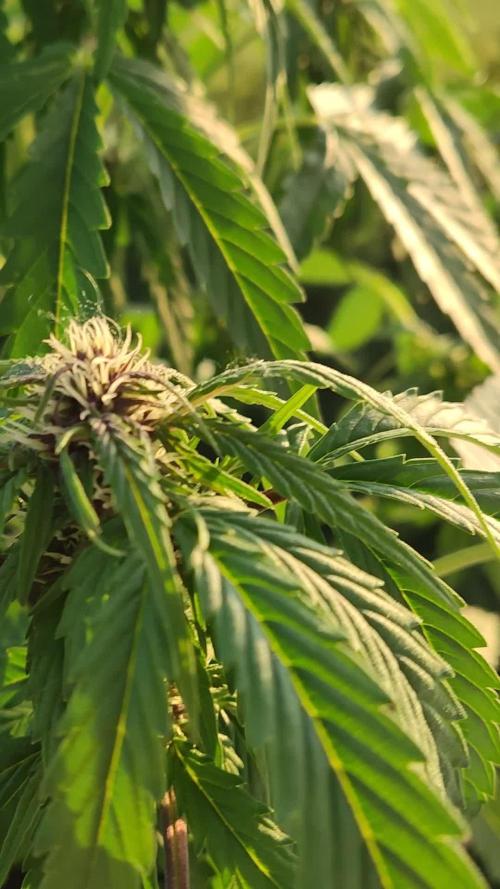
Unfortunately I can't post as many pictures this week because I'm on vacation. Of course the ladies will still be well taken care of. 💚💚💚


shorts_status_processing


@Barcelona_Farmers710
Follow
Buenas Farmers!
Otra semana más y pasaremos a Flora, esperando a ver si podemos obtener nuevo equipo de @todoGrowled para llevar el verano más llevadero... Después de recuperase de las Plagas empieza coger buen color esto.🍁


@GreenHobbit
Follow
Laughing Buddha – Wochenbericht #21 | Blütewoche 6
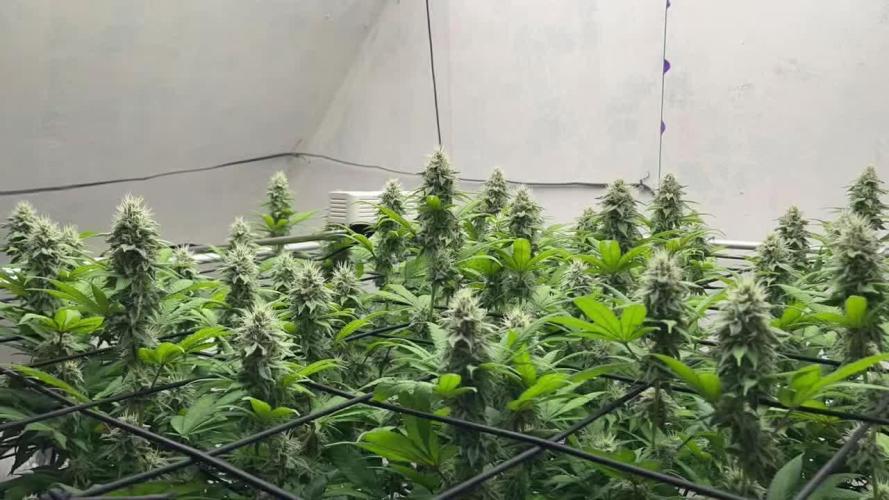
Blütewoche 6 ist geschafft und trotz der bekannten Blattprobleme entwickelt sich die Laughing Buddha bei den Blüten weiterhin richtig stark.
Der Unterschied zur vergangenen Woche wird besonders im Zeitraffer deutlich. Ohne die Dunkelphasen lässt sich die Entwicklung diesmal sehr schön verfolgen: Die einzelnen Buds haben sichtbar an Masse gewonnen, mehrere Blütenstände beginnen immer stärker zusammenzuwachsen und die größeren Colas werden zunehmend kompakt. Gleichzeitig produziert sie weiterhin sehr viele frische, helle Blütenfäden – hier ist also noch lange nicht Schluss.
Auch die Harzproduktion macht richtig Spaß. Die Zuckerblätter sind inzwischen stark mit Trichomen überzogen und einige Buds sehen schon jetzt ordentlich „frostig“ aus. ❄️
🍃 Blattentwicklung
Weniger schön bleibt der Zustand des Laubes. Die bereits vorhandene Aufhellung ist weiterhin deutlich sichtbar und an einigen Blättern haben die nekrotischen bzw. rostfarbenen Stellen zugenommen.
Nachdem in der vergangenen Woche bereits verschiedene mögliche Ursachen überprüft und die Bedingungen angepasst wurden, möchte ich momentan nicht mit weiteren großen Veränderungen reagieren. Boden-pH und EC waren bei der Kontrolle unauffällig. Gleichzeitig wurden die zuvor sehr hohen Temperaturen bzw. der hohe VPD entschärft und der Abstand bzw. die Lichtbelastung angepasst.
Die alten Schäden werden natürlich nicht verschwinden. Entscheidend ist jetzt, ob sich die weitere Verschlechterung verlangsamen bzw. stoppen lässt. Trotz des angeschlagenen Laubes zeigt die sichtbare Entwicklung der Blüten momentan jedenfalls, dass die Pflanze weiterhin ordentlich arbeitet.
💧 Bewässerung
Zwischendurch wurde überwiegend Regenwasser verwendet, da kein vorbereitetes Leitungswasser zur Verfügung stand. Künftig werde ich wieder hauptsächlich Leitungswasser verwenden und eventuell einen Teil Regenwasser beimischen, um die hohe Kalkbelastung meines Leitungswassers etwas abzumildern.
Nach dem versehentlichen Verschieben eines Bodensensors wurde dieser außerdem wieder korrekt eingesetzt. Dadurch waren die vorherigen Feuchtigkeitswerte teilweise irreführend – nach dem erneuten Einsetzen zeigte der Sensor wieder plausible Werte.
💡 Licht & Technik
Diese Woche gab es noch zwei kleine technische Geschichten. 😅
Einmal wurde das Licht morgens manuell eingeschaltet, damit ich vor der Arbeit gießen konnte. Abends habe ich leider zu spät daran gedacht, sodass sie an diesem Tag ungefähr 13 statt 12 Stunden Licht bekommen hat. Ein einmaliger Ausrutscher – danach ging es wieder normal mit 12/12 weiter.
Außerdem hatte der Spider-Farmer-Controller seit einiger Zeit seine Netzwerkverbindung verloren. Lokal funktionierte die Steuerung weiterhin, in der App wurden allerdings keine aktuellen Daten mehr übertragen. Ich habe den Controller schließlich auf Werkseinstellungen zurückgesetzt und sämtliche Geräte neu verbunden – seitdem funktioniert wieder alles wie vorgesehen. 👍
🌸 Fazit Blütewoche 6
Die Blattgesundheit bleibt ganz klar der Punkt, den ich in den kommenden Wochen am genauesten beobachten werde. Dafür gibt es nichts schönzureden: Für die noch verbleibende Blütezeit hätte ich natürlich lieber deutlich mehr gesundes, sattgrünes Laub.
Auf der anderen Seite steht eine Blütenentwicklung, mit der ich wirklich zufrieden bin. Die Buds haben innerhalb dieser Woche sichtbar zugelegt, die Harzproduktion läuft auf Hochtouren und über die gesamte Fläche stehen inzwischen zahlreiche ordentliche Colas.
BW6 war damit eine etwas widersprüchliche Woche: oben werden die Buds immer schöner, darunter macht mir das Laub weiterhin Sorgen. 😅
Jetzt heißt es möglichst stabile Bedingungen halten, genau beobachten und ihr die Ruhe geben, ihre Arbeit zu machen.
Auf in Blütewoche 7. 🌿✌️


@Randomjcb
Follow
Really started to fill out now most branches are supported with fishing line cant wait to see wat comes off it defo one of my new fav strains


@Roberts
Follow
I am starting a auto moon rock. I will be growing her in 3 gallons of perlite. My 1 gal one was nice, and I am curious to it on a bigger scale. Figured this may be neat upon finishing. 🤞🏻 for a great grow. Thank you Medic Grow, and Divine Seeds. 🤜🏻🤛🏻🌱🌱🌱
Thank you grow diaries community for the 👇likes👇, follows, comments, and subscriptions on my YouTube channel👇. ❄️🌱🍻
Happy Growing 🌱🌱🌱
https://youtube.com/channel/UCAhN7yRzWLpcaRHhMIQ7X4g


@JayBane
Follow
Day 58 - Started on making a natural intake box
Day 59 - Isolated and sealed the natural intake box + added beter sealing on grow cabin doors & cabin
Day 60 - Semi-automated intake.


@FourTwenty_Plants
Follow
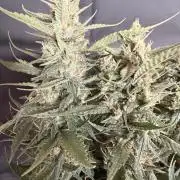
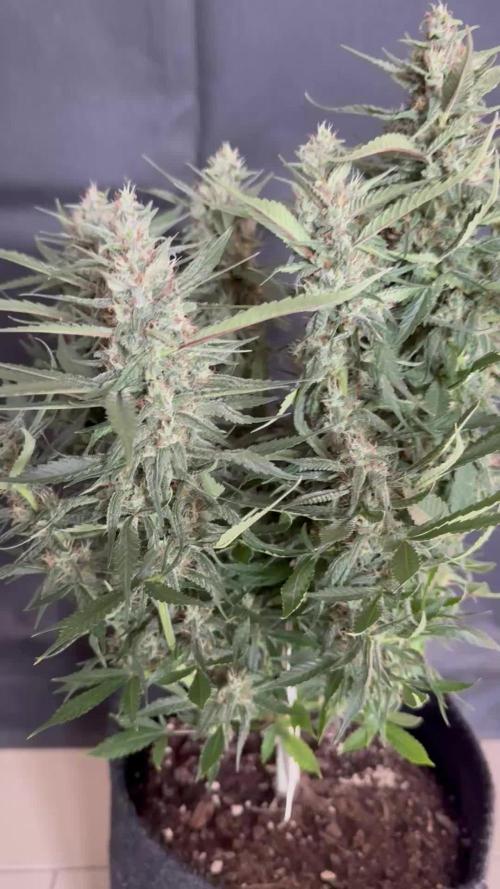
They are happily growing had some problems with powdery mildew but got kinda rid of that atleast thats what I hope
Date: 4.9.2024

@DE_BW
Follow
Not much work was needed this week — the Strawberry Gorilla continues to develop beautifully on her own. The buds are stacking very nicely along the branches and are steadily gaining both size and density. Trichome production is also progressing well, giving the flowers an increasingly frosty appearance.
I’m starting to see some slight signs of heat-induced foxtailing on a few tops, but nothing dramatic or concerning at this point. Overall, the plant still looks very healthy and productive.
For now, there’s not much left to do besides keeping an eye on her and letting those buds continue to bulk up.


shorts_status_processing


@FromSierra
Follow
Topped the MK ultra. I think it is needing to be watered more. The leaves on both GC and MK looked a little papery. Gave them a little more water yesterday and some today. Will be transplanting the DP babies soon in to bigger pots.




@Ultraviolet
Follow
Thank you. Gave her a cocktail to help with stress. Added 1st net for lateral support, not so much now, but for later. Blue light is absorbed by photoreceptor proteins called phototropins, which trigger a hormonal response that causes cells on the shaded side to elongate, making the plant bend toward the light. Try and fill this side a little. She is quite big already, just needs to find her stride again after the undue torture.
The mind is constantly working and producing, just like a factory. It's not just a passive recipient of information but an active producer of ideas, attitudes, and beliefs. The "ingredients" in this factory are the information you consume, such as books, conversations, and the media you engage with. The "products" are your thoughts, beliefs, and actions. The quality of the ingredients directly influences the quality of the output. To guard the door of your mind means to be selective about what you allow in. It involves actively choosing to consume positive and constructive information while filtering out negativity and harmful influences. If you don't guard your mind, others can "dump" whatever they want into it, leading to undesirable results in your life. You must take responsibility for the inputs to ensure you produce the outcomes you desire.
5 apex stems with 20-30 mini cola, let them develop a little, with the apical dominance shattered, all those 20-30 will all compete with each other as soon as that stretch is initiated. Key to a good stretch is making sure the plant is cycling efficiently, with large ATP conversions occurring lights out.
For now, I'm keeping light intensity high. A plant will slow its vertical growth in very high light intensities, leading to a more compact form with thicker stems and leaves. This response is a protective mechanism against light stress, which can damage the photosynthetic apparatus and lead to symptoms like leaf scorching, yellowing, and brittleness. Instead of growing taller, the plant invests its energy into creating a more robust, stress-tolerant structure.
Providing plants with necessary antioxidants helps protect the photosynthetic apparatus by scavenging reactive oxygen species (ROS) that cause damage from excess light.
UV light exposure can impact the xanthophyll cycle by either enhancing its photoprotective role or causing damage, depending on the intensity and type of UV radiation. UV exposure can trigger the synthesis of more xanthophyll cycle pigments to increase the plant's capacity to dissipate excess energy, but it can also cause direct damage, particularly to Photosystem II, and may lead to a decrease in the de-epoxidation state (DEPS ratio) which indicates a reduced capacity to dissipate excess energy.
Plants can respond to UV stress by increasing the synthesis of xanthophyll cycle pigments, such as violaxanthin and zeaxanthin, to improve their photoprotective capacity. UV-induced changes in xanthophyll cycle pigments can be linked to a plant's overall tolerance to high radiation stress. The xanthophyll cycle helps protect against photoinhibition, which is especially important when the plant is exposed to high levels of both UV and visible light. High doses of UV radiation can directly damage photosynthetic components, including the proteins, lipids, and pigments in the thylakoid membranes. Exposure to UV radiation can have a mixed effect on the de-epoxidation state (DEPS ratio) of the xanthophyll cycle pigments. In some cases, UV can inhibit the conversion of violaxanthin to zeaxanthin, resulting in a lower DEPS ratio and a reduced capacity for energy dissipation. However, the total pool of xanthophyll cycle pigments may increase, and this enhanced pool size could provide a greater potential for photoprotection despite a lower DEPS ratio.
The xanthophyll cycle works alongside other mechanisms, such as the accumulation of flavonoids (UV screens), to protect the plant from UV-induced damage.
Blue light repairs 100% UV-induced damage in plants through a process called photoreactivation, which uses a light-dependent enzyme called photolyase. This enzyme uses energy from blue and UV-A light to directly reverse the damaging pyrimidine dimers in the DNA caused by UV-B radiation, a key mechanism for maintaining the plant's genetic integrity.
After carbon, light, water, temperature, and nutrients, the limiting factor of a plant's growth is often its own internal factors or the amount of a key ingredient. Chlorophyll concentration is one such factor, as the amount of this pigment limits how much light can be captured for photosynthesis. Other factors include chloroplast number, respiration rate, and the concentration of carbon dioxide in the atmosphere, as plants are often in a CO2-deficient condition.
60x60x18=64800seconds x 700 = 45,360,000moles. 45DLI
Exposure to 165 µW/cm² of ultraviolet-B (UV-B) light for 3600 seconds = 1 hour, a extremely high, acute dose triggering stress responses and protective mechanisms.
.
The plant's photoreceptor protein, UVR8, senses the UV-B radiation. This triggers a signaling cascade that activates specific genes to protect the plant from damage. In response to the UV-B signal, the plant ramps up the biosynthesis of protective compounds like flavonoids, phenolic acids, and anthocyanins. These compounds absorb UV radiation and accumulate in the epidermal layers of leaves to shield inner photosynthetic tissues. The plant may increase leaf thickness or deposit more cuticular wax, creating a physical barrier to the radiation. The plant will produce more enzymatic and non-enzymatic antioxidants to neutralize the reactive oxygen species (ROS) produced by the UV-B radiation. The plant activates enzymes, including photolyases, to repair DNA damage caused by the UV-B. These repair mechanisms are critical for preventing permanent genetic mutations.
While protective measures are activated, a high dose delivered over a short period can cause stress that overwhelms the plant's defenses.
Photosynthesis is highly sensitive to UV-B. A high dose can inactivate Photosystem II (PSII), damage thylakoid membranes within the chloroplasts, and reduce chlorophyll content, which lowers the plant's overall photosynthetic capacity. Despite repair mechanisms, high UV-B doses can inflict persistent damage on the plant's DNA. The overproduction of reactive oxygen species can cause oxidative stress, leading to the oxidation of lipids and proteins and disrupting cellular function.
I am playing in the enchanted forest.


shorts_status_processing



@IslandTerps
Follow
Strain: Fast Buds – Gorilla Melon
Grow Type: Indoor
Pot Size: 5 Gallon
Medium: Peat Moss & Perlite
Nutrient Line: Athena (Bloom)
Week 16 – Chop Time
Chop time ✂️🌿
She finished beautifully. Frostyyy up from top to bottom and looking absolutely gorgeoussss This run was smooth from start to finish no issues, no stress, just solid growth
Really happy with how she turned out and can’t wait to dry her out and see how she smokes.
Feeding
Flushed — no nutrients.
Indoor Climate Conditions
🌡️ Temperature: 18–26°C
💧 Humidity: 45–55%
📈 VPD: ~1.3–1.8 kPa
See y’all next week for dried buds!
Use code ISLANDT for 15% off your next Fast Buds order 🌿🔥