


Processing
Likes
Comments
Share


@andyandy
Follow
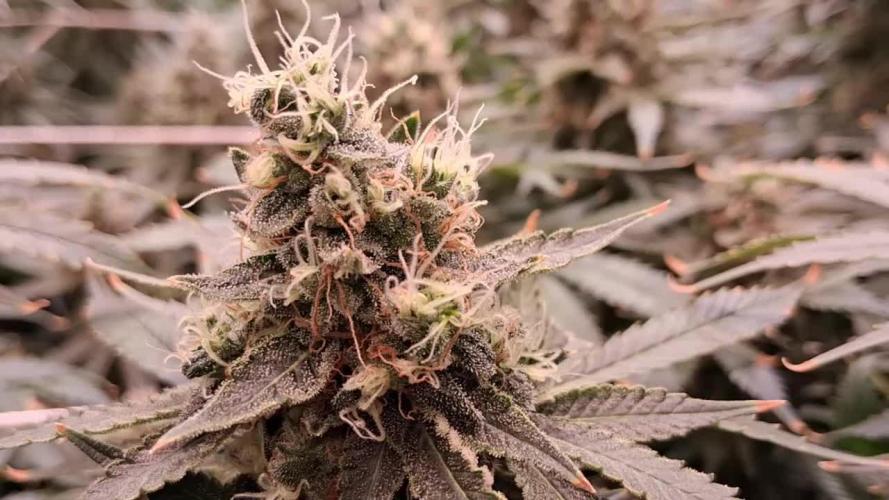
Week 5 started off a bit rough. Continuing to over nute the plant babies, I realised I should flush and step back a little.
The flush helped a lot. I keep the plants outside on days where the weather was good, and put them back inside to maintain 20/4 light schedule.
I defoliated a large fan leaves at the bottom of the plants, as well as any of the yellowing leaves. This, coupled with the flushing, really seemed to perk them up. I trained some more of the branches and tucked away fan leaves blocking bud sites.
All 5 plants are flowering, with B#2 (the untopped one), leading the charge with a solid main cola.
I'm surprised by how little they stretched, but perhaps that has something to do with me nuking them with fertiliser at a critical point. Eh.


Likes
3
Share

@blaze454
Follow
Flush is on!!
A little late on Flush Trikes are already getting cloudy.
Have to take off more small stems off budd area to keep with the bigger buds instead of so many.
Looking good, Not super stinky but it is a super clean smell.
Tasted a few testers and it is super smooth even full of nutes. Doesnt seem super power but we are not at full term yet or bigger buds.
Cant wait for another three weeks when it is dry. then 3 months when it iss prime!!!
Likes
16
Share


@bsplayerone
Follow
Between the recent temps and the lack of light I think she having issues taking off. I’m going to hold off on nutes until I see a little more progress. The humidity has been up, so at least there’s that. Looks like I’m in for a fight with this one

Likes
4
Share


@Boscaglia
Follow
Moved the SCROG net up a bit as I'm running out of bending space and the plant growth seems to have slowed down.
Removed more leafs under canopy.
Pulled the light up a bit.
Increased the watering a bit as the soil is starting to dry up almost daily.
So far so good with the overall plant health, let's see in the coming weeks what issues start to pop up :D I removed the fly traps because they were starting to touch the plants but I will likely have to add another one in some better position.
Likes
8
Share


@Geili_Seili_fireinfireout
Follow
Start woche 2 in flow. Jetzt geben sie richtig gas👌😋
Werd das nächstemal dünger auf flow umstellen.🤔 mal schaun.....
Die vitalsten und saubersten stecklinge gibts wie immer hier bei ROOTS-FARMS. If you know you know.....tumi getestet


Likes
2
Share


@CannaIGrow
Follow
Topped this girl this week, she’s growing pretty good. Very nice looking plant to my eye.
Likes
27
Share


@DeepRootsGrowTrees
Follow
GELATO-K BY KANNABIA
Week #21 Mar.29-Apr.5th
Week #10 Flower
Checked trichomes they are about 60% clear 40% milky so this was the last week for feeding. Stay Growing!! Thank you for taking a look at the diary!!

Likes
13
Share


@CanarianGrow92
Follow
Week 2 flowering for the girls!
We already see the streching, some plants are a little smaller but i will put a support under the pot if they continue smaller, we want to have a quite even canopy.
We also removed some lower branches.

Likes
126
Share


@Th3L0rAx
Follow
So week 9, devils #1 and #2 are scheduled to be harvested on Wednesday 5/9, last flush was 5/4/2019. The purple fade is quite a spectacle, Devil #2 is definitely a green pheno and absolutely refuses to turn purple but smells and looks fantastic. I’m hoping to beat the 44g per average at 400g/m2. Devil #1 looks to be heaviest of all the girls hoping to break 2oz with that one.
Still paying close attention to #3 her foxtailing is kinda of a bummer but looking at other diaries it looks to be a trait found in some devils.
Devil # 4 is still chugging along throwing tons of new pistils and still a couple of weeks away. She just got her 2nd to last feed (75% nutes) most likely but time will tell.
For my trim mostly thinking I’ll do a dry trim to try an protect the buds as much as possible 5-10 days hang dry and into the mason jars for a long slow cure hopefully.
I still update with devil #3 and #4 until they get the chop. Photos updated every 2 days or so most likely a video of the girls coming down on 3/9-3/10, stay tuned!
Devils #1 and 2 had all their fan leaves removed today may wait a few days to give the lowers time to fatten but both will be harvested by Friday.

Likes
52
Share


@WhiteEdge
Follow
12.03.2024
Continue into week two. Target EC is the same for this week
Girls looking great
Clean tanks and filters with h2o2+vinegar acid +bleach
Replace all filters
Mix new batch with 2ml AN connoisseur AB + Silica @ 1% H2o2 - total 30l
Donne one pass off long misting 2m
700 PPFD @ center, VPD 1.0, RH 53-56% day, RH 45-48% night, Temp Night-20c, Day-25/26c, Leaf temperature 23c, Light distance 60-65cm, CO2 750+ppm
560w@60cm distance
NT-Nutrient Tank - PH -5.9, EC -1.15, Temp-21c
13.03.2024
Top up tank with 10l off 1.2EC solution - 2ml AN Connoisseur A+B + 3g Big Bud @ 18l (1.16EC)
Replace all filters
Before top up, nutrient solution in tank was 0.84, after adding 1.2EC new mix is 1.03
PH is slightly rising, normal when EC is drooping
Girls grow nicely, no deficiencies, this week is start off stretchy faze
Remove some big and bottom leves
PAR 800 PPFD, VPD 1.0-1.1, RH 50-54%, Temp Night-21-22c, Day-25/26c, Leaf temperature 23c, Light distance 60cm, CO2 750+ppm
580w@60cm distance
50s ON time 20min OFF time Day Time
50s Off time 30min OFF time Night Time
NT-Nutrient Tank - PH -5.92-5.99, EC -0.89-1.0, Temp-20-22c
14.03.2024
Position TrolMaster Tent-X Box on tent and connect to internet. Temperature ,Light and humidity sensor is great, I lake that all sensors and connector boxes are on RJ connectors
Great and fast install, registration and connections off all cables, censors and light! Like ability to expand system with Aqua-X and Hydor-X for irrigation ,PH/ EC/Temp monitoring off nutrient tank
Controlling solenoid valves and pump will be SUPERB!!! Recycling type off timer are great for Aero misting!
With Inkbird equipment i have issues that all connections are permanent and if you have longer cables....😡
HLG Scorpion Diablo LED light is connect via LMA-14 light adapter ! Wow i can control dimming and timing off my light via Wi-Fi😀😊😎👏🙏🙌
PAR map 800max/600min PPFD, VPD 1.0-1.1, RH 50-54%, Temp Night-21-22c, Day-25/26c, Leaf temperature 23c, Light distance 60cm, CO2 750+ppm
HLG Scorpion Diablo@83%
580w@60cm distance
50s ON time 20min OFF time Day Time
50s Off time 30min OFF time Night Time
NT-Nutrient Tank - PH -5.95-5.99, EC -0.89-1.1, Temp-20-22c
15.03.2024
Top up tank with 15l off 1.2EC solution - 2ml AN Connoisseur A+B + 3g Big Bud @ 18l (1.16EC)
Replace all filters, still everything in pristine condition after every changing, nutrient solution in tank looking and smell fresh and clean.
Reducing humidity in night time below 50% , humidifier rise temperature to 22-23c at night
Day RH is 53%, in first two hours keeping temps and humidity lower to reduce deferential form night time to 1-2c
Don't want to have more than 10-15cm off stretch in next week
Girls drink more water and nutrients every day, think around 10-12l per day
Managing EC strength with adding slightly higher nutrients solution when top up tank. Overall its around 0.9-1.0EC for most of the time
PH is stabile , slowly rise in small increments. Need to adjust @ 6.2 to 5.9 every two-three days. Probably i will leave it to swing even more.
Diablo is at 80% power @ 45-55cm from top canopy, 900+PPFD in center, lowest corners get 650+
PAR map 920max/650min PPFD, VPD -1.1, DRH 50-54%, NRH48-50%, Temp Night-21-22c, Temp Day-25/26c, Leaf temperature 23c, Light distance 45cm, CO2 750+ppm
HLG Scorpion Diablo@80%
580w@45cm distance
50s ON time 20min OFF time Day Time
50s Off time 30min OFF time Night Time
NT-Nutrient Tank - PH -5.95-5.99, EC -0.89-1.1, Temp-20-22c
17.03.2024
Top up tank with 10l - 1.2EC solution - 1.8ml AN Connoisseur A+B + 3g Big Bud @ 18l (1.16EC)
Replace all filters, install one new. Total 5 mash filters + 2 disc filters
Remove some large fan leaves from all girls. Nothing crazy. Next week is final BIG defoliation and pruning
Clean room benches a little bit after defoliation.
Whole week all girls are doing great , no sign off any kind off stress or deficiencies. Superb fast growth.
Stretching is more apparent in the end off this week. Next week is going to be madness!
18.03.2024
Raise light 10cm , adjusting to canopy level..
HLG Scorpion Diablo@83%, Set sunrise/sunset dimming @ 30min - TrolMaster Tent-X
PAR map 890max/650min PPFD, VPD -1.1, DRH 50-54%, NRH48-50%, NT-21-22c, DT-25/26c, Leaf temperature 23c, Light distance 45cm, CO2 750+ppm
Week 2 off Flowering in Summary
100l off RO water
190ml+190ml AN connoisseur A+B, 15g Big Bud Powder
70kW electricity in total for light, Pumps and AC Infinity Fans. 58kW for Light + 8kW Dehumidification + AC Infinity ventilation
Week start @ 1.14EC, nutrient strength. Strength dropping every day by 0.1-0.2. Topping up tank with 1.2EC solution bring back strength to 0.9-1.0EC
Start using AN Big Bud powder for day two off this week. For next slowly reducing Nitrogen and add more Big Bud. Next week start @ 1.2EC
Girls look superb all time, Tropicana Cookies is short and bushy with lots off side branching. Need good defoliation next week .
Flowering going nicely, obvious sign off formation off bud sites, pistils have shown an all girls.
PH was stabile and move from 5.85 min to 6.2 max. Swing all week without chasing perfect number.
Light distance start at 65cm from canopy finish week at 45-50cm , PPFD levels around 800-940 in center, trough whole week
Temperature vary slightly from 23c at start off day to 26c max at some points. AC Infinity T6 extracting fan program in AUTO to kick in @ 26c
Night temps around 21-23c, dehumidifier start to work at night time to bring down humidity, trying also to minimize Day/Night temperature differential for this week also
Continue in next week at same environment settings and light strength..
Likes
1
Share

@RooftopFarmer
Follow
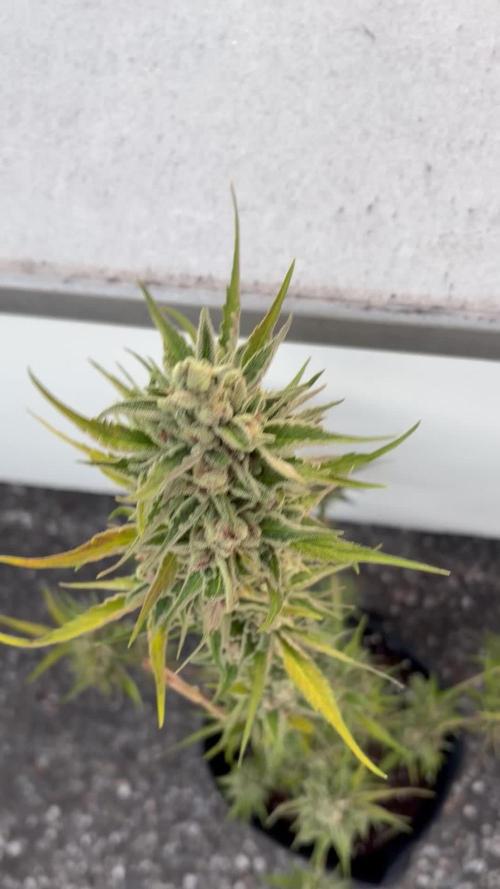
Banana Guava – Week 11 (Fast Buds Outdoor 2026)
Banana Guava is nearly ready. She mainly showed a lot of dried out leaves, so I removed most of them (defoliation).
She smells amazing and very strong.
Likes
2
Share


@RogarGreen
Follow
Erste Woche, nach 48 Stunden auf dem Papiertuch sind die Babys geschlüpft und wurden in 1,5L Töpfe gepflanzt.


Processing
Likes
5
Share


@O_GrowTom
Follow
WEEK☆7 J•1 Premier jour de la semaine, les branches latérales rattrapent bientôt la tête centrale. J'attends encore que ça se développe avant de penser à la floraison.@++
WEEK☆7 J•4 La progression continue, j'ai commencé un peu à défolier le bas du plant. J'attends encore pour la floraison.

Likes
15
Share


@SweetheartOG
Follow
Girls doing well but have run into some calcium deficiency which will hopefully be fixed soon.
Likes
21
Share

@Borberad
Follow
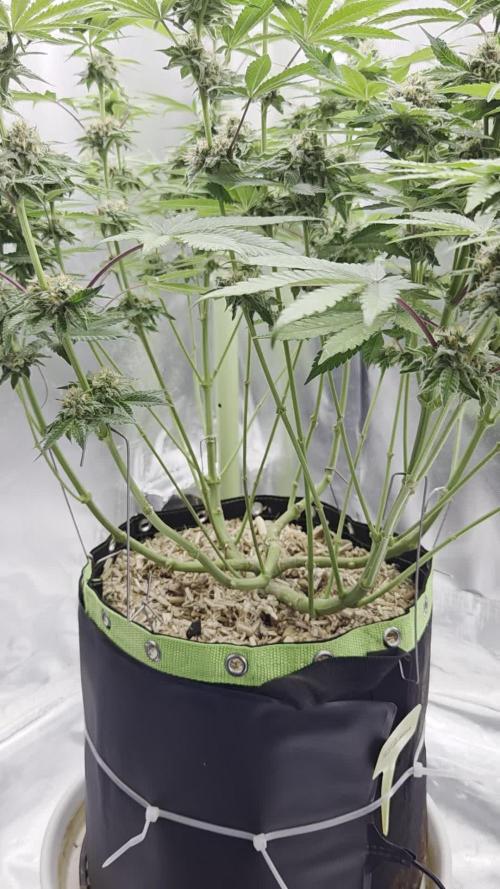
Woche 12
Solangsam wird sie bunt und es es deutet sich an das sie aus dem Soil nicht mehr viel rausholt. Da sie noch gut 20 bis 30 Tage stehen soll gibt es zur Unterstützung etwas Hesi Boost und ab und an etwas Plagron Green Sensation.


Likes
151
Share


@PapaNugs
Follow
These three girls got transplanted today into their five gallon fabric pots. They were looking hungry so decided to do it early. I normally wait till 3.5 to 4 weeks. They were added to my custom mix of coco with perlite and added amendments, worm castings, and purple cow soil. Watered first with dechlorinated tap water and next with added mycos and cal mag.
