Likes
Comments
Share
@smoker420
Follow
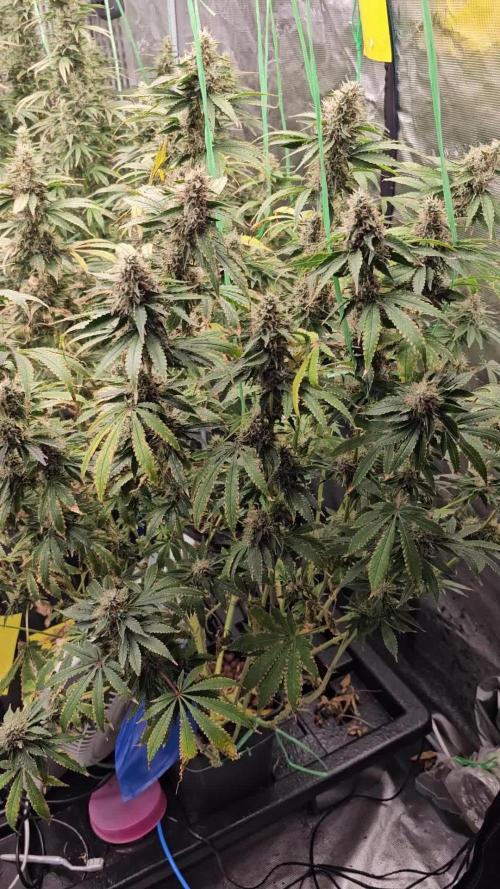
She flowered fast and efficiently the high is really strong more towards the indika side but still has good balance the terps are like dark summer berrys mixed with gas and spice sticky to the touch and shes easy to take cuttings from 👌🔥
Likes
8
Share
@Theia
Follow
The tropicana cherry is a magnificent plant. Its stocky and stout with really great node space. I love how solid she is and i just see such a good foundation for stretch. A really explosive week of growth. I pushed PPFD up to 310umols. Dimmers are at 60% which is drawing 224w plus 18w of DRRB. I have alos started Emerson effect ... Another The Emerson effect is triggered by the simultaneous exposure of plants to light in the deep red and far-red spectra Deep Red 660 nm /Far-Red 700 nm . A bit of boring science that explains why you need both far red and deep red in order to trigger Emerson. The effect occurs because photosynthesis is driven by two distinct pigment systems working in series:Photosystem II (PSII): Absorbs energy most efficiently at shorter wavelengths (higher frequencies), like 680 nm (441 THz). Photosystem I (PSI): Absorbs energy most efficiently at longer wavelengths (lower frequencies), specifically 700 nm (428 THz). When you provide only the higher frequency (deep red), PSI becomes a bottleneck. When you provide only the lower frequency (far-red), PSII is not sufficiently excited to provide electrons. Providing both frequencies simultaneously allows both systems to work at peak efficiency, resulting in a rate of photosynthesis that is greater than the sum of the two lights used individually. To understand the Emerson Effect, think of photosynthesis not as a single engine, but as a two-stage assembly line. What is the Emerson Effect? Discovered by Robert Emerson in 1957, this phenomenon shows that plants perform photosynthesis much more efficiently when they are hit by two specific types of light at the same time: Deep Red (660 nm) and Far-Red (700+ nm). If you give a plant only Far-Red light, photosynthesis is very slow. If you give it only Deep Red, it's better but still limited. However, when you give it both at once, the total rate of photosynthesis is significantly higher than if you just added the two results together (1+1=3). What is Happening? (The "Assembly Line") Inside the plant's chloroplasts, there are two "workstations" called Photosystem II (PSII) and Photosystem I (PSI). They work in series, meaning the first one must pass "parts" to the second one. PSII (The First Station): This station is tuned to catch Deep Red light (660 nm). It harvests electrons from water. PSI (The Second Station): This station is tuned to catch Far-Red light (700 nm). It takes the electrons from the first station and uses them to create energy (ATP and NADPH). The Problem: If you only provide Deep Red light, the first station works fast, but the second station can't keep up because it isn't being "powered" efficiently by that specific frequency. This creates a traffic jam of electrons. The Solution: By adding Far-Red light, you power up the second station. It now "pulls" the electrons from the first station much faster, clearing the traffic jam and making the whole assembly line run at full speed. The Benefits for The Grow Because i am using the Biotabs water-only method, my plants already have a steady supply of organic nutrients. Implementing the Emerson Effect offers several distinct advantages: Increased Biomass: Because the "engine" is running faster, the plant produces more sugars and carbohydrates, leading to heavier fruits or flowers. Faster Finishing: Plants often reach maturity sooner because they have more surplus energy to complete their life cycle. Better Light Penetration: Far-Red light is very good at passing through the upper leaves. This "wakes up" the lower parts of the plant that would otherwise be shaded, allowing the whole plant to contribute to growth. Enhanced Secondary Metabolites: In many crops, this synergistic light can stimulate the production of terpenes and antioxidants, improving the "quality" (smell, taste, and potency) of the final harvest. The "Sunrise/Sunset" Trick I am using 4x Invisible sun Far red/Deep red bars,they use high-quality Samsung LH351H (660nm Deep Red) and specific Far-Red (730nm) diodes for 10–15 minutes at the start or end of the light cycle. This mimics the natural shift in light at sunrise and sunset, "waking up" the photosystems or signaling the plant to go into "sleep mode" faster, which can further optimize the flowering cycle. Enviromentally i am chasing a VPD of about 1,1kpa. My room seem to sit nicely at lights on at 24c with no real drama and a little help from a 220W greenhouse bar radiator. Its using abot 4kw/h a day atm because my room is attached to the side of my house and its been -5c.. I have had to add some humidity as its also very dry atm. Im aiming for RH of 65% with my 24c but it is more around the 62s.. VPD is crucial and is the focus for this grow for me. The autopots and Biotabs make it so easy ican really just focus on perfect enviroment. A VPD of 1.0–1.2 kPa provides enough "atmospheric pull" to move calcium and magnesium up from the roots, which is critical for the rapid cell division happening now.. Plants will be flipped on Saturday which is their week 5 as im a bit behind.. As this happens i will push PPFD upto 4-500umols. by week 2 of flower. Thats the plan anyway..
Likes
2
Share
Likes
6
Share
Another smooth week form how it looks should really remember to do this week to week but busy
Likes
57
Share
@GreenISR
Follow
10.1.19 day 1 Wow that was fast for the sex sight . 11.1.19 day 2 Fix the lst for even spred . 12.1.19 day 3 The smell is amazing and the big leaf's AF . 14.1.19 day 5 Some purple color apear . 15.1.19 day 6 Did some leafs remove . 16.1.19 day 7 end of the week What a grate week ,starting to get some buds 😇😇😇found that im not giving much water as she needs .
Likes
61
Share
@Comfrey
Follow
Die Blüten wurden zur Hälfte nass getrimmt. Die Trocknung erfolgte im Growzelt mit Ventilator und Abluft bei einer Temperatur von 22 Grad Celsius und einer Luftfeuchtigkeit von ca. 56 Prozent über 7-9 Tage. Bei der täglichen Kontrolle habe ich wenige Blüten gefunden, die ich entsorgen musste. Sie braucht schon etwas Aufmerksamkeit, die Shaman. Anschließend wurden die Blüten trocken weiter getrimmt und zum Aushärten mit Boveda 62% in Schnappdeckelgläsern bei 20 Grad in einem Eichenschrank gelagert. Das Endprodukt und ein abschließender Konsumreport folgen. Ich bin ziemlich happy! 💚
Likes
6
Share
Likes
20
Share
It is getting real bushy in there and i have some thirsty plants. Tent is getting pretty packed and the stretch is on. I might have to water almost everyday, I suspect them to be on the edge of rootbound. Should have went with 14 liter pots or might even 18. Smell is amazing and they are starting to get sticky when i pick fan leaves. Defoliation is coming at the end of next week tho. But it is really bushy i have been picking tons of leaves so far. Tempted to strip them sooner than 21 days into flower but we will see.
Likes
459
Share
@Ju_Bps
Follow
Hello my friends 👨‍🌾👩‍🌾, I've transplanted the girls in 11l pot today, did a topping + defoliation. The girls started to be really unhappy. I continue my training for the scrog. In the 11l pot, in the down, Plagron Batmix, on the top Plagrin light mix. It will be the definitive pots. 💦 I give water each 2 or 3 days 500 ml/plant Water + Rhizo + Terra vega Water + Rhizo + Cannazym After Transplanting 0.95 l/plant Water + Rhizo PH@6 I've down lamp to 90% Thanks community for follow, likes, comments, always a pleasure 👩‍🌾👨‍🌾❤️🌲 See you next week 👊👊 Mars Hydro - TS 1000 https://www.mars-hydro.com/ts-1000-led-grow-light Mars Hydro - FC3000 https://www.mars-hydro.com/fc-3000-samsung-lm301b-led-grow-light Mars Hydro - SP3000 https://www.mars-hydro.com/sp-3000-samsung-lm301b-greenhouse-led-grow-light The High Chameleon - Vannila T https://www.thehighchameleon.com/shop/vanilla-t-5
Likes
12
Share
Que pasa familia, vamos con la novena semana de floración de estas Gorilla Girl F1 de Sweetseeds. Vamos al lío, las plantas se trasplantaron a macetas de 7 litros. El ph se controla en 6.5, la temperatura la tenemos entre 24/21 grados y la humedad ronda el 50%. El ciclo de crecimiento puse 12h de luz, el foco está al 50% de potencia. Me gustaría estar más encima este cultivo pero la salud me está impidiendo un poco este 100% con el proyecto. - os dejo por aquí un CÓDIGO: Eldruida Descuento para la tienda de MARS HYDRO. https://www.mars-hydro.com Hasta aquí todo, Buenos humos 💨💨💨
Likes
233
Share
🐶 🐕 🐶 🐕 🐶 🐕 🐶 🐕 🐶 So this diary is dedicated to my Big Boy Midnite 🐶 Due to his age and trouble with his hips , he needs a little help so I will be making him special CBD and CBG Treats .... So keep in mind that I will be doing a Bubble Hash Water Extraction with the SDR and CBG once that's done and dried I will be Decarbing it by then placing it on a sheet of parchment paper and placing in over at 220 degrees F for 20 to 25 min to fully decarb it . Get ready for a paw-some treat that your furry friend will go nuts for! These peanut butter CBD or CBG treats are made with wholesome ingredients like flour, rolled oats, and natural peanut butter. Perfect for a special treat or a relaxing snack, your pet will love these bite-sized delights! Ingredients: • 2 cups of flour • 1 cup of rolled oats • 1/2 cup of natural peanut butter • 1/4 cup of water or beef and or chicken broth • 2 teaspoons of decarbed CBD or CBG Instructions: • Preheat your oven to 350°F. • In a large mixing bowl, mix together the flour, rolled oats, and natural peanut butter. • Add in the water and or broth and the CBD or CBG, and continue to mix until well combined. • Roll out the mixture to about 1/2 to 5/8 inch thickness on a lightly floured surface. • Cut the mixture into bite-sized treats using a cookie cutter. • Place the treats on a baking sheet lined with parchment paper. • Bake for 20 minutes, or until lightly golden brown. Allow the treats to cool completely before serving to your pet. Who says bacon is just for humans? These CBD or CBG treats are made with a yummy mix of flour, rolled oats, and cooked bacon. Your pet will love the taste and the benefits of CBD or CBG in each bite. Ingredients: • 2 cups of flour • 1 cup of rolled oats • 1/2 cup of cooked bacon • 1/4 cup of water or Chicken and Beef Broth • 2 teaspoons of decarbed CBD or CBG  Instructions: • Preheat your oven to 350°F. • In a large mixing bowl, mix together the flour, rolled oats, and cooked bacon be sure to grind up the bacon. • Add in the water and or broth as well as the CBD or CBG, and continue to mix until well combined. • Roll out the mixture to about 1/2 or 5/8 inch thickness on a lightly floured surface. • Cut the mixture into bite-sized treats using a cookie cutter. • Place the treats on a baking sheet lined with parchment paper. • Bake for 20 minutes, or until lightly golden brown. Allow the treats to cool completely before serving to your pet. Happy Growing And Happy Smoking and for all the Puppies out there Happy Snacking 😊 Side Note , I will be adding future pictures and video of the process of making the cookies as well as letting everyone know how it helped Midnite 🐶 Plus I will also give it a go and give my thoughts on the terps and the effects ... 👉Soil Provided by ProMix.ca 👉Nutrients Provided by Agrogardens 👉Lighting Provided by MarsHydro.ca 👉Seeds Provided by Kannabia Seeds ...
Likes
24
Share
@Philhsy
Follow
Monster yield of sticky bud, took 12 weeks from seed, but took over a whole 1.2m tent, lot of maintnwnce so happy its harveat day. Used simple nutrients, foxtailed a little in the end, but slmost every bud in the net weigh around 100g Each, plus whats remaining on the plant
Likes
Comments
Share
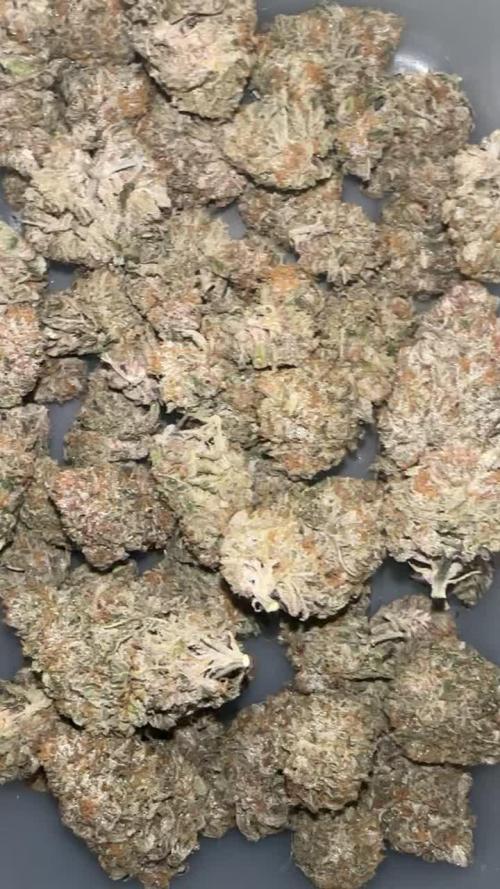
Black Diamond Auto — Pheno B 🌱💎 Week 1 Vegetation | Another Plant That Refuses to Wait Hello GrowDiaries family! 👋🌱 Welcome back to the second phenotype of Black Diamond Auto. After documenting Pheno A, I was curious to see whether her sister would follow a similar path or begin revealing a completely different personality. By the end of Week 1, the answer was becoming quite clear. While every plant develops at its own pace, this girl appears just as eager to get moving as her sister. In fact, looking through the week’s progression, Black Diamond Auto Pheno B showed some of the fastest early development in the entire garden. And for a plant growing under a 12/12-from-seed schedule, that’s always fun to watch. ⸻ The Start of the Journey Like the rest of this project, this phenotype was transplanted directly into her final container from the very beginning. The objective remains simple: Allow the root system to establish itself without requiring additional transplants later in life. By minimizing root disturbance during the earliest stages, the plant can focus entirely on growth and development rather than recovering from unnecessary stress. As always, the substrate used was Plagron Lightmix, chosen for its gentle nutrient charge and excellent structure for young plants. ⸻ Environmental Conditions Environmental conditions remained identical to the rest of the garden: 🌡️ Day temperature: 27°C 🌙 Night temperature: 25°C 💧 Relative humidity: 55% ⚡ Light schedule: 12/12 from seed 💨 Gentle airflow 🌱 Plagron nutrient program 💡 Future Of Grow Black Series LED lighting The objective remains creating a stable environment where genetics can express themselves naturally without environmental stress influencing development. ⸻ Early Development From the first photographs onward, Pheno B displayed excellent vigor. The seedling emerged cleanly, established itself quickly, and immediately began building leaf surface. Throughout the week, growth remained steady and consistent. Internodal spacing stayed compact. Leaf color remained healthy. Stem development looked strong. And perhaps most noticeably, this plant wasted very little time transitioning from seedling growth into active vegetative development. Every new set of photographs showed visible progress. ⸻ A Plant in a Hurry One of the most interesting observations this week was the speed at which new growth appeared. Just like her sister, this phenotype seems determined to move quickly. By the end of the week, the plant had already developed impressively large leaves relative to its age. Looking at the overhead photographs, the structure is beginning to spread outward while simultaneously pushing new growth from the center. The overall appearance is vigorous, energetic, and highly efficient. For a plant only one week into vegetation, she already looks eager to start building her future canopy. ⸻ Comparing the Two Phenotypes Although both Black Diamond phenotypes appear vigorous, subtle differences are already becoming visible. Pheno A showed slightly more unusual early leaf development before rapidly accelerating. Pheno B appears a little more symmetrical and organized in her structure while maintaining the same impressive pace of growth. At this stage, both phenotypes are performing extremely well. Whether these small differences remain or disappear over time is something we’ll continue monitoring throughout the run. ⸻ Why Autos Often Move Faster One interesting observation throughout this project has been the difference between some of the autoflowers and the photoperiod cultivars. Several of the autos, including this Black Diamond phenotype, appear to be developing slightly faster during these earliest stages. This isn’t unusual. Autoflowers have evolved with a relatively short life cycle and often prioritize rapid early establishment. Because they do not depend on a photoperiod change to begin flowering, many autos spend very little time deciding what to do. They simply start growing. And this phenotype seems determined to prove that point. ⸻ First Impressions So far, Black Diamond Auto Pheno B has been a pleasure to watch. Healthy color. Strong structure. Excellent vigor. Large leaf development for her age. And a growth rate that places her among the most energetic young plants in the room. At only one week into vegetation, she’s already showing the kind of momentum that makes future updates exciting. ⸻ Looking Ahead The first week has provided a strong foundation. Now the real fun begins. Over the coming weeks we’ll continue following both Black Diamond phenotypes as they develop under the 12/12-from-seed project, documenting structure, growth patterns, and any unique characteristics they choose to reveal. For now, Pheno B appears to have one message: “No time to waste.” Huge thanks to Zamnesia Seeds for the genetics, Plagron for the substrate and nutrition, Future Of Grow for the lighting, and everyone following along on another seed-to-harvest adventure. Grower’s Love everyone. 🌱💚
Likes
6
Share
finish week 3 star the week 4 i give next watering 9ml for every nutrients for 4 liters of water and the next watering at 28 days will be 10ml by 4 liters of water they drink 12 liters of nut every weeks 4 time 3 liters for the 7 gallons pot the 5 gallon pot 7 liters a weeks same for the other one
Likes
Comments
Share
Week 6 (1.4.26--1.11.26) took photos on 1.8.26 1.8.26 put on a trellis net over 1x1 for support of big buds
Likes
5
Share
One week of flower and the fan leaves are growing back fast. I will defoliate again in around a weeks time. I started giving them green sensation, sugar royal, and power buds this week to see if there's any chasms from starting wrong week 3-4.
Likes
6
Share
6.18.25. 7th week of flower and buds look good just not much of them. 7 th week flower started on 6.16.25. Starting this week I have begun to lower strength of nutrient solution and getting her ready for harvest! Thank you for checking out grow! Have a grow time all the time!!
Likes
29
Share
I decided it's harvest time for this amazing lady.. Cos she lived on balcony I don't know yet about her ready to use weigh but I gues around 40g dry. Will see in about a week 🙏🌱👀 So I will chop her, and make she ready for drying in RQS hemp dryer. Now I know for a myself that yes u can easily grow half in growbox and flowering outside if needed, 😉 When more ongoing I will update 🙏💚🌱 Happy growing 🙏🌱💚
Likes
8
Share
@chrizzle
Follow
slowly upping the PK13/14 and started adding Vitasol and X-cel.