Likes
Comments
Share
@cangrowz
Follow
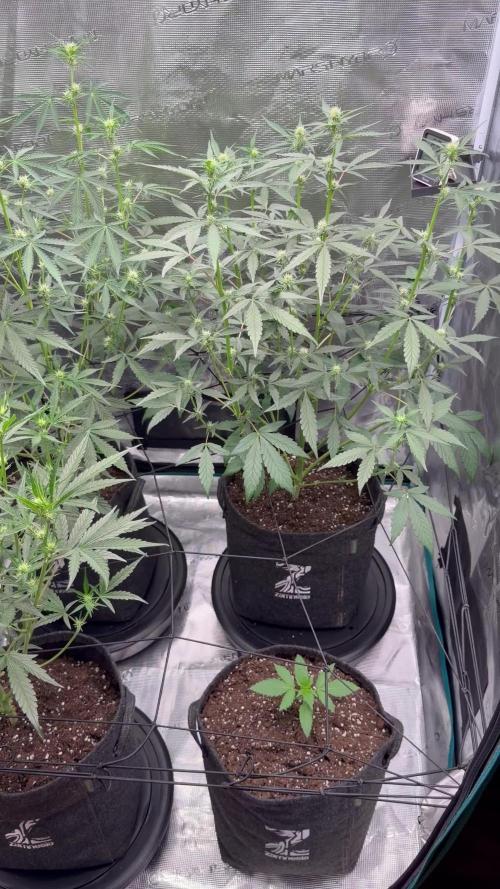
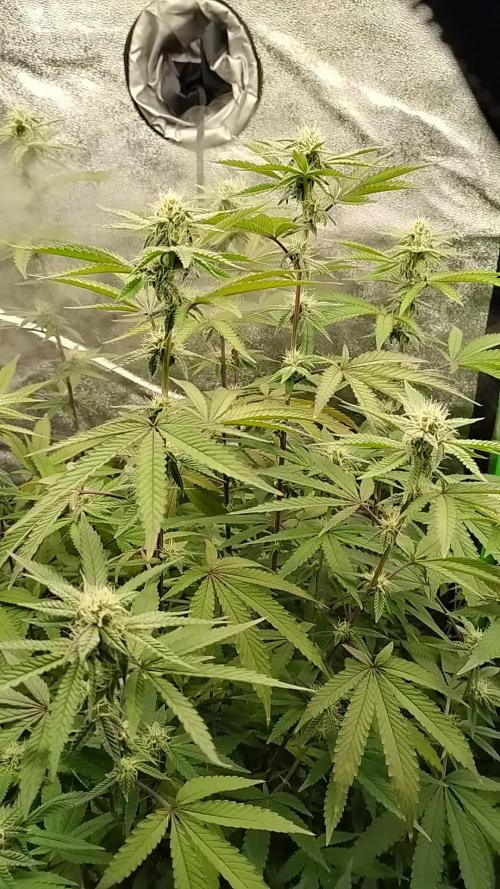
frosted guava ❄️ 🌱 Anfang Woche 5/10 🌱 Die drei Frosted Guava legen weiterhin ordentlich an Wachstum zu und entwickeln sich genau in die Richtung, die ich mir vorgestellt habe. Mittlerweile ist die Lampe bereits auf die maximale Höhe eingestellt, da die Pflanzen den verfügbaren Platz immer mehr ausnutzen. Es macht einfach Spaß zu sehen, wie kräftig und gesund sie sich Woche für Woche weiterentwickeln. Langsam beginnt jetzt die spannende Phase des Grows: Die Blüte startet und die ersten weißen Blütenstempel zeigen sich an allen drei Pflanzen. Damit ist der Übergang von der Wachstumsphase in die Blüte offiziell eingeläutet. Ich bin gespannt, wie sie sich in den kommenden Wochen strecken und wie sich die Buds entwickeln werden. Auch das Klima spielt momentan wieder gut mit. Nachdem es zwischenzeitlich deutlich wärmer war, liegen die Temperaturen aktuell wieder bei etwa 20 bis 28 °C. Gerade für den Blütestart sind diese Bedingungen deutlich angenehmer, wodurch die Pflanzen hoffentlich ihr volles Potenzial ausschöpfen können. Diese Woche habe ich außerdem im unteren Bereich ein paar kleinere Triebe entfernt, die ohnehin kaum Licht bekommen hätten. Zusätzlich mussten einige große Blätter weichen, die andere Pflanzenteile unnötig beschattet haben. So kann das Licht besser bis in die unteren Bereiche gelangen und die Luftzirkulation wird ebenfalls verbessert. Ab sofort bekommen die drei außerdem den Blütedünger von Advanced Nutrients, um sie optimal durch die kommenden Wochen der Blüte zu begleiten. Jetzt heißt es weiterhin beobachten, pflegen und den Pflanzen beim täglichen Wachsen zusehen. Vielen Dank, dass ihr wieder vorbeigeschaut habt und meinen Grow begleitet. Happy Growing Growmies! 🌱?💚
Likes
20
Share
This was a real fun strain !! Definitely do it over and over again ! Thank you Fastbuds!! I’m not sure of the weight yet ,I have them hanging low an slow for 12- 14 days to try then will be trim , cure , the fun stuff!✌️Peace, love, and Positive Vibes to y’all cheers 🔥😤💨💨💨💨🤙 I will be letting know the final weight soon as it’s done drying!
Processing
Likes
4
Share
So I was really happy to have the opportunity to grow this strain I have my clones are ready My next grow will be sour headband and GDP they are all in veg
Likes
2
Share
For most crops, a slightly acidic soil pH between 6.0 and 6.8 is ideal because it optimizes nutrient availability. When soil pH rises above 7.0 (alkaline), the concentration of hydrogen ions H+ drops significantly, and they are replaced by calcium, magnesium, or sodium ions on the clay colloid exchange sites. To naturally lower alkaline soil pH, you can add organic matter (carbon-rich materials), which produces weak organic acids as it decomposes. Maintaining this slightly acidic range stimulates a highly active, diverse microbial community; these microbes decompose organic matter and release carbon dioxide CO2, which plants absorb through their roots and leaves to boost photosynthesis and sugar production. Furthermore, the added organic carbon acts like a sponge, drastically improving the soil's water-holding capacity. While soil biological activity does involve cellular electron transport, electrical conductivity (EC) in soil is actually a measure of dissolved mineral salts, not a voltage carried by individual microbes. Soil microorganisms secrete organic acids and chelate metallic and non-metallic minerals, transforming locked-up inorganic compounds into bioavailable organic complexes. Unlike harsh synthetic fertilizers that can dehydrate soil life in high concentrations, these naturally chelated nutrients safely nourish the plant, creating a thriving, self-sustaining ecosystem where plants can efficiently synthesize their own food. Metal-based: Could include elements like iron, manganese, copper, or zinc, which are essential nutrients for plants but can exist in forms not readily accessible. Non-metal-based: Examples like calcium carbonate, phosphate, or sulfur are also important for plant growth and potentially serve as building blocks for the organic salt. Chelation in a plant medium is a chemical process where a chelating agent, a negatively charged organic compound, binds to positively charged metal ions, like iron, zinc, and manganese. This forms a stable, soluble complex that protects the micronutrient from becoming unavailable to the plant in the soil or solution. The chelate complex is then more easily absorbed by the plant's roots, preventing nutrient deficiency, improving nutrient uptake, and enhancing plant growth. Chelation is similar to how microorganisms create organic salts, as both involve using organic molecules to bind with metal ions, but chelation specifically forms ring-like structures, or chelates, while the "organic salts" of microorganisms primarily refer to metal-complexed low molecular weight organic acids like gluconic acid. Microorganisms use this process to solubilize soil phosphates by chelating cations such as iron (Fe) and calcium (Ca), increasing their availability. Added sugars stimulate soil microbial activity, but directly applying sugar, especially in viscous form, can be tricky to dilute. Adding to the soil is generally not a beneficial practice for the plant itself and is not a substitute for fertilizer. While beneficial microbes can be encouraged by the sugar, harmful ones may also be stimulated, and the added sugar is a poor source of essential plant nutrients. Sugar in soil acts as a food source for microbes, but its effects on plants vary significantly with the sugar's form and concentration: simple sugars like glucose can quickly boost microbial activity and nutrient release. But scavenge A LOT of oxygen in the process, precious oxygen. Overly high concentrations of any sugar can attract pests, cause root rot by disrupting osmotic balance, and lead to detrimental fungal growth. If you are one who likes warm tropical high rh, dead already. Beneficial, absolutely, but only to those who don't run out of oxygen. Blackstrap is mostly glucose, iirc regular molasses is mostly sucrose. Sugars, especially sucrose, act as signaling molecules that interact with plant hormones and regulate gene expression, which are critical for triggering the floral transition. When sucrose is added to the growth medium significantly influences its effect on floral transition. Probably wouldn't bother with blackstrap given its higher glucose content. Microbes in the soil consume the sugar and, in the process, draw nitrogen from the soil, which is the same nutrient the plant needs. Glucose is not an oxygen scavenger itself, but it acts as a substrate for the glucose oxidase (GOx) enzyme, effectively removing oxygen from a system. Regular molasses (powdered if you can), as soon as she flips to flower or a week before, the wrong form of sugar can delay flower, or worse. Wrong quantity, not great either. The timing of sucrose application is crucial. It was more complicated than I gave it credit for, that's for sure. When a medium's carbon-to-nitrogen (C:N) ratio reaches 24:1, it signifies an optimal balance for soil microbes to thrive, leading to efficient decomposition and nutrient cycling. At this ratio, soil microorganisms have enough nitrogen for their metabolic needs, allowing them to break down organic matter and release vital nutrients like phosphorus and zinc for plants. Exceeding this ratio results in slower decomposition and nitrogen immobilization, while a ratio below 24:1 leads to faster breakdown and excess nitrogen availability. Carbon and nitrogen are two elements in soils and are required by most biology for energy. Carbon and nitrogen occur in the soil as both organic and inorganic forms. The inorganic carbon in the soil has minimal effect on soil biochemical activity, whereas the organic forms of carbon are essential for biological activity. Inorganic carbon in the soil is primarily present as carbonates, whereas organic carbon is present in many forms, including live and dead plant materials and microorganisms; some are more labile and therefore can be easily decomposed, such as sugars, amino acids, and root exudates, while others are more recalcitrant, such as lignin, humin, and humic acids. Soil nitrogen is mostly present in organic forms (usually more than 95 % of the total soil nitrogen), but also in inorganic forms, such as nitrate and ammonium. Soil biology prefers a certain ratio of carbon to nitrogen (C:N). Amino acids make up proteins and are one of the nitrogen-containing compounds in the soil that are essential for biological energy. The C:N ratio of soil microbes is about 10:1, whereas the preferred C:N ratio of their food is 24:1 (USDA Natural Resource Conservation Service 2011). Soil bacteria (3-10:1 C:N ratio) generally have a lower C:N ratio than soil fungi (4-18:1 C:N ratio) (Hoorman & Islam 2010; Zhang and Elser 2017). It is also important to mention that the ratio of carbon to other nutrients, such as sulfur (S) and phosphorous (P) also are relevant to determine net mineralization/immobilization. For example, plant material with C:S ratio smaller than 200:1 will promote mineralization of sulfate, while C:S ratio higher than 400:1 will promote immobilization (Scherer 2001). In soil science and microbiology, the C:S ratio helps determine whether sulfur will be released (mineralized) or tied up (immobilized) by microorganisms. A carbon-to-sulfur (C:S) ratio smaller than 200:1 promotes the mineralization of sulfate, when the C:S ratio is low, it indicates that the organic matter decomposing in the soil is rich in sulfur relative to carbon. Microorganisms require both carbon and sulfur for their metabolic processes. With an excess of sulfur, microbes take what they need and release the surplus sulfur into the soil as plant-available sulfate A carbon-to-sulfur (C:S) ratio higher than 400:1 will promote the immobilization of sulfur from the soil. This occurs because when high-carbon, low-sulfur materials (like sawdust) are added to soil, microbes consume the carbon and pull sulfur from the soil to meet their nutritional needs, temporarily making it unavailable to plants. 200:1 C:S 400:1: In this range, both mineralization and immobilization can occur simultaneously, making the net availability of sulfur less predictable. This dynamic is similar to how the carbon-to-nitrogen (C:N) ratio regulates the availability of nitrogen in soil. Just as microbes need a certain amount of nitrogen to process carbon, they also require a balanced amount of sulfur. Both mineralization and immobilization are driven by the metabolic needs of the soil's microbial population. Sulfur is crucial for protein synthesis. A balanced ratio is particularly important in relation to nitrogen (N), as plants need adequate sulfur to efficiently use nitrogen. A severely imbalanced C:S ratio can hinder the efficient use of nitrogen, as seen in trials where adding nitrogen without balancing sulfur levels actually lowered crop yields. Maintaining a balanced carbon-to-sulfur (C:S) ratio is highly beneficial for plant growth, but this happens indirectly by regulating soil microbial activity. Unlike the C:N ratio, which is widely discussed for its direct effect on nutrient availability, the C:S ratio determines whether sulfur in the soil's organic matter is released (mineralized) or temporarily locked up (immobilized). Glucose will hinder oxygenation more than sucrose in a solution because glucose is consumed faster and has a higher oxygen demand, leading to a more rapid decrease in oxygen levels. When cells respire, they use oxygen to break down glucose, and this process requires more oxygen for glucose than for sucrose because sucrose must first be broken down into glucose and fructose before it can be metabolized. In a growth medium, glucose is a more immediate and universal signaling molecule for unicellular and multicellular organisms because it is directly used for energy and triggers a rapid gene expression response. In contrast, sucrose primarily acts as a signaling molecule in plants to regulate specific developmental processes by being transported or broken down, which can be a more complex and slower signaling process. Critical stuff.
Likes
77
Share
@Roberts
Follow
FBT 2309 is growing really good. I just changed her to ph water yesterday, to start her flush week. She is loaded with trichromes, and has a very nice aroma. Which is a sweet berry fruity smell. Everything is looking great. Next update will be the harvest. Thank you Fast Buds, Gen1:11, and Medic Grow. 🤜🏻🤛🏻🌱🌱🌱 Thank you grow diaries community for the 👇likes👇, follows, comments, and subscriptions on my YouTube channel👇. ❄️🌱🍻 Happy Growing 🌱🌱🌱 https://youtube.com/channel/UCAhN7yRzWLpcaRHhMIQ7X4g If anyone needs to purchase fastbuds here is a link for my affiliate program https://myfastbuds.com/?a_aid=60910eaff2419
Likes
249
Share
A big hello to all the cannabis growing gardeners...and all the other visitors that came across my grow journal. I'm a little bit late with starting this grow because the plants will finish around end of december or so, so i'm basically counting on a warm december :) It was supposed to start earlier, and I did germinate 11 seeds last month but only three of the lot sprouted out, it was totally my fault and i did abort that grow so we could start with a clean slate and at least four plants....so here we are ;) All three Do-Si-Dos seeds popped after 36 hours in a glass of water and after planting them in rockwool cubes all of them sprouted. My original plan was to grow Kalini Asia and all of the Kalini Asia seeds popped after 36 hours in a glass of water, but thanks to my thick awkward fingers the little seedlings were manhandled by my big hands and non of them came out from the rockwool cubes...my fingers are killers to most of my little sprouts :/ Sorry for that Zamnesia. We were gifted Do-Si-Dos and Kalini Asia seeds by Patricia from Zamnesia 🙏 Thank you Zamnesia, for giving me the opportunity to try out your stock. It's the first time we get to grow a Zamnesia cultivar. https://www.zamnesia.com/uk/7686-zamnesia-seeds-do-si-dos.html https://www.zamnesia.com/uk/5165-zamnesia-seeds-kalini-asia-feminized.html This whole grow's main sponsor is Spider Farmer and as such I added a video of unpacking one of the parcels I got from SF. Here are the links for people interested in the Spider Farmer products that are presented in the videos: https://www.spider-farmer.com/products/spider-farmer-30w-uv-led-grow-light-bar/ https://www.spider-farmer.com/products/spider-farmer-30x-60x-jewelers-loupe-magnifier-for-led-light/ A big thank you to Jessie and the whole Spider Farmer crew for supporting my effort to grow the best cannabis I can. Let's get this started already! Thank you for your visit, please leave a like and hope to see you beck here in about a week.
Likes
4
Share
First week for our apricot from fastbuds 420 We are using the whole feeding schedule from Xpert Nutrients!! Lets see the results from this amazing nutrients!!! We are using 7 liter pots and doing some defoliation and lollipop the next weeks
Likes
10
Share
APRICOT GORILLA AUTO / GANJA FARMER HARVEST WEEK This lady produces golf sized trichome covered buds that had a sweet aroma to her. She's a nice smooth smoke not heavy at all light notes with this lady. Thank you for stopping by and taking a look it's much appreciated!! THANK YOU GANJA FARMER!! APRICOT GORILLA AUTO / GANJA FARMER
Likes
6
Share
Recap.. Medium: Coco and Leca mix in 1L grow bags transitioning to 5L bag Lighting: Greenhouse light by day, 600W LED by night Nutrients: EHG Micro & Grow, Biodyne, CalMag pellets, Phytha tonic, diluted fish tank water Training: Starting early LST Plants are now entering Week 5 of veg and responding well to the environment. The roots are well established in the 1L bags, and new growth is looking lush and vibrant. Started light LST to encourage lateral branching and even canopy development. They're drinking more now, so I’m adjusting watering frequency accordingly and alternating between fish tank water + Biodyne and a mild EHG Grow mix. Sprayed Neudosan as a preventative measure against spider mites picked up on Blue Cheese. No signs of pests or stress so far on the Supercheese clones. CalMag pellets are helping maintain strong leaf development and overall vigor. Planning to up-pot soon if growth continues at this rate. Everything’s on track – healthy, bushy, and ready to explode with growth in the coming weeks. 📸: Close-up of the canopy, LST in progress 🌱 Vibes: Green and clean
Likes
23
Share
@Athos_GD
Follow
Strain was easy to grow. Had some herms but since I only have 2 plants I was able to pinch the balls off. Buds have no seeds and are a strong smoke. Really hits the lungs.
Likes
6
Share
Likes
109
Share
I saw a fly in the tent about 10 days ago. The larvae of these flies feed on the roots of the plant. I first watered it with diluted hydrogen peroxide. then i flushed. now the ladies are fine. 🤓🌱🤓👍👍
Likes
14
Share
@Fildjoni
Follow
24.10 Aaand here we are in new flower week, plants look good, stucking up buds, middle one realy nice, other two need some time more, but today they are not thursty, no watering, wish them best 🙏🏻🤞🏻 In few days coming 1 more fan and dehumidyfier for tent and room becuse i got lot of trouble with that, hope it will come soon so i dont have problems in this stage when they flower, temperature is good always between 22-27 (night-day) Thats all from me for today 25.10 They are still not dry, does someone had same Situation in some part of flowering? They stopped grow before one week for sure, do dont know what to think!?🤔 Stucking upp 26.10 Watering with 0.8 l pro plant with nutrients with cal-mag, stucking good Dehumidifier arrived today and one more ventilator, hope it will help me to Control situation in tent, wish them luck 🙏🏻🤞🏻😊 27.10 Lokiin good, again 0.7l with nutrients and cal mag, ph 6.25 Humidity is lower for 10% but i also have fight in apartment with moist, so iam wating few days so other dehumidifaier can do the job in room also, temperature is good, new ventilator also work full gas so i hope they Will conitinue progres normaly and good 👍🏻🙏🏻🤞🏻 28.10 They look every day better and better, iam happy, still have some time to bi ticker all over, wish them luck Big gave 1.3l with cal mag,ph 6.3 Other two, half liter only from same bottel 👋🏻😁😬 Sprayed with neem oil, today they saw first time sun light🙈 29.10 Watering 1.3 l big other two not so thursty aprox. 0.8-1l with nutrients and cal mag, ph 6.4 They geting ticker 30.10 Watering 1l each with nutrients and cal mag, ph 6.3 Aaaand its end of week 3, hope new week will bring bigger buds and nicest colors , wish them luck🙏🏻👌🏻
Likes
2
Share
@kissrubb
Follow
Buenas, buenas estamos en la semana 1 de floracion y las plantas comienzan ha estirarse y a mostrar su sexo, hemos aplicado diferentes tecnicas para maximizar la malla de scrog
Likes
8
Share
@KannaKoom
Follow
7/14-7/21: This week I was out of town but implemented the self watering bases and the plant really took to it. My buddy came over and watered and took a few pictures for me, and I was able to get some pictures with my good camera when I was home fore the day on 7/19. I wish I could have been here to see it, but this week there was some serious growth and she stretched so much. The main cola leave tips got a little burnt but nothing to be concerned about.
Likes
7
Share
Whew, I am a few days late in posting but I have been MIA. Glad to be back to my plants and gardening. My faithful follower @hindugod even reached out to me to see why I was late in posting my pictures. A Disney Vacation was good for me but not so much for my plants. I also left my husband and two livestock in charge of feeding and protecting my plants from the elements of nature. Miss Dosido continues to dance and grow!! She is dancing her way to 30 inches tall!! And, she had begun to flower. Take a look at the magnified flowering picture!! Our weather has been kinda crazy and hellish- as in HOT- and her leaves are getting burned on the edges even though I have a pool umbrella protecting her from the direct sun. It has been quite hot this past week, but hopefully we will get a break in the weather. Please continue to enjoy my diary and let's chat it up friends.
Likes
5
Share
@PapaTerps
Follow
Black Lobster - Cipher Genetics Week 6 Bloom 🌸 The changes in her bulking are becoming less noticeable as the days go on, so this means her bulk phase is coming to an end. She has developed medium sized flower that is completely covered in trichomes, she's incredibly sticky and her gassy blueberry scent lingers on you for a good few minutes after you brush up on her! Her pistils are turning amber and her colouring is becoming more deep green with dark purple tips, the sugar coating of trichomes (she is 100% bred for hash/rosin) makes it look like something from outer space! She's really beautiful! 😍 Temperatures have started to drop now, which is perfect timing for these girls as they all have about 3-4 weeks of scheduled bloom left. ✂️ I've removed her lowest most side stems that were too far behind the canopy, they will only cause problems and use up energy that could go upward. Other than that, she is in great health 👍🏻 💧 Watered every three days with 5L of RO water, nutrients were mixed individually, in order and then finally pH'd to 6.3. I've altered her nutrients to meet her needs for late phase of bloom. 💡 PPFD: ~900 ♒ VPD: 1.46kPa 🌱 Days from seed: 102 🌸 Days in Bloom: 41