


Likes
Comments
Share


Likes
18
Share


Likes
10
Share


@40Plug
Follow
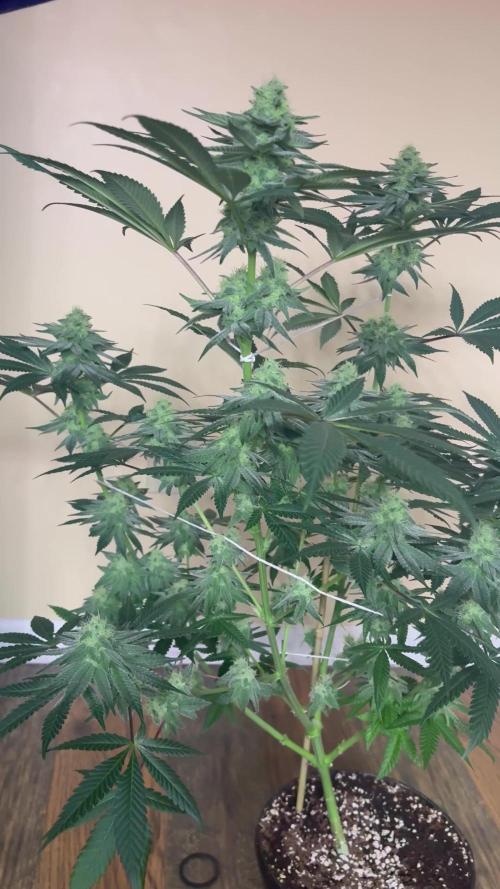
Wow! Look at these amazing two plants. They both turned a bit purple.
The smell is insane.
Belive me or not but my entire room smells like a sweet ice cream restaurant. 😍
I had given this week only PH adjusted water and darkness for two days before harvest.
Going to dry for like 7-10 days and then curing for another month or so.
I will upload more pictures of the dried buds when the time comes

Likes
9
Share


@Krautbauern
Follow
those nugs are getting bigger and bigger each day. They‘re just soaking up the fertilzers. We have to water them every second day 2l per plant

Likes
3
Share

@ohcibi
Follow
Update June 4th
Another 3 liters fed today. As expected, this week is full of LST and scrogging only, but it’s going very well. The prep work I’m doing now is basically what I did in the first week(s) of flower in the last grow, so the foundation for flipping will be much better prepared this time. Maintenance on Taktlo$$ is even getting a tad bit simpler.
Flipping is expected on Sunday. I’ll just keep the same week marker for simplicity, even if I could flip earlier.
Update June 1st
Fed a full 3 liters again. Those plants are chugging like hell. Prolly just more developed overall from double the feeding since the start.
Maintenance on Royal Gorilla is still more demanding than Dynamite Diesel, but Takti is fully recovered from the extra topping. Scrogging is all that’s left now.
Update May 31st
FVW - Final veggie week. I’m not sure yet whether I will wait the entire week before flipping. I have no plans of further topping, so I might flip around Wednesday or something already. Strong feeding and light made this third of three Royal gorillas seeds grow like Ken. Very bushy and super large leaves. Stay tuned!

Likes
131
Share


@GERGrowDesigns
Follow
Harvest Time of Fast Version B Strain and Welcome to :
-Designers Club -
Special Thanks to John for hopping through my Messages to Join The SSSC/DP Photo C8ntest
The Project was Supported by Narcos Seeds to give the Strain the Perfect lifespan it could Deserve .
Light used for The Contest Grow :
Tenty Pro x4 200w in a space of
60x60 Homebox Ambiente Tent.
Preparation Before Harvest :
5 Days without Feeding / 2 Days of them Complete in the Dark .
Enough Talk from me , just Enjoy youre Seats and be a part of The Designers Club .
Good Luck to Everybody and Keep up Growing !
Likes
16
Share


@Oldwied
Follow
I am super happy with the harvest.
Unfortunately, the grow was not a brilliant performance. But MimosaEvo is always a great choice.

Likes
25
Share


@pifflestikkz
Follow
Day 36
08/08/24 Thursday
Feed today using de-chlorinated tap water pH 6 with Plagron PK13-14.
Showing her pre stretch and pistils 😍
Day 38
10/08/24 Saturday
De-chlorinated tap water pH 6 today again with calmag.
400ml with run off now.
I will update pictures and videos tonight ✌️💚
Day 39
11/08/24 Sunday
De-chlorinated tap water pH 6 today again with calmag.
400ml with little run off.
Pistils forming in bunches now seeing beginning of bud formations 😍
Day 40
12/08/24 Monday
Feed today, it was warm again so they drank the whole 300ml each so I have topped up another 150ml to see run off to prevent salt build up.
All thriving 😍✌️💚
Video uodate


Likes
6
Share


@MG2009
Follow
10/10/2020
Seven days and she been doing great!, lots of new pistils flowering is definitely in full swing. The three tbls of blood meal should be almost gone will top dress next week but no more blood meal.
Lights on 68°F (morning) humidity is 58% gonna work on lowering it a bit more for remaining flower time. Defoliated some bigger fan leaves they were shadowing some buds. (See last video)
These pictures were at beginning of the day and leaves look a little wilted but after 4 liters of water and between
5%-10% run off my medium holds a lot of water she is drinking about a liter a day maybe more?
Likes
19
Share


@adam_pawloski87
Follow
Let’s Go Day 67 from seed !! So this week went real great! 2 Ogreberrys an Bruce Banner started getting flushed! The rest will follow up and start flush next week ! Today the 3 will continue getting flushed while the 3 others get there dose of nutrients, PHd at 6.5! Let’s grow lil ladies let’s grow!!! You all have an amazing productive day as well as a a great safe week !! Peace love and positive vibes to y’all Cheers 😶🌫️💨💨💨💨🤙🏻If there’s any questions please ask, I’ll be opened up to answer at best of my knowledge! Thank you all have a dank day !!


Likes
52
Share


@Salokin
Follow
The High intensity was to strong (clearly my fault) in the beginning which stunted her overall stretch, she however still delivered super dense, terpene and trichome loaded buds.

Likes
27
Share

@cangrowz
Follow
🍪🍨 Biscotti x Gelato - Ernte 🍨🍪
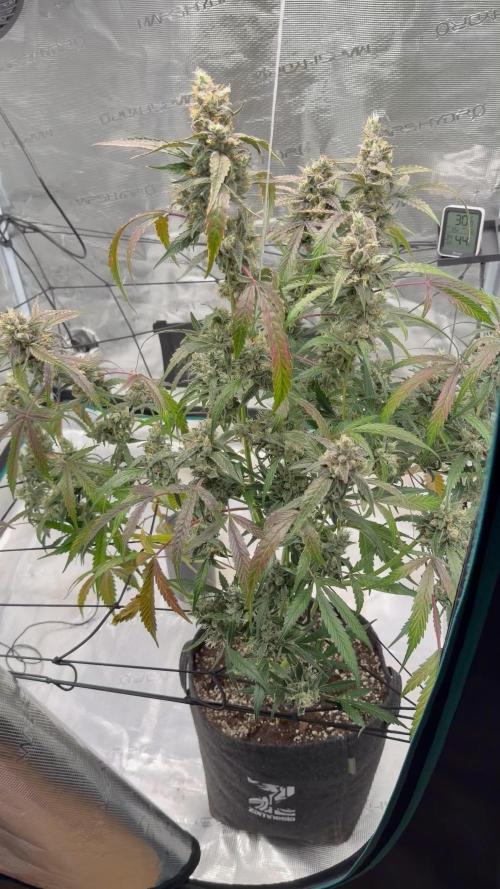
Heute ist es soweit: Die Biscotti x Gelato wurde nach ihrer langen Blütezeit geerntet. 🎉
Der Grow war definitiv eine interessante Erfahrung. Gerade durch das LST und SCROG hat sich die Entwicklung etwas länger gezogen als ursprünglich erwartet, dafür konnte die Pflanze zum Ende hin nochmal ordentlich zulegen. Die Buds haben sich bis zuletzt sehr schön entwickelt und waren zum Erntezeitpunkt richtig dicht mit Trichomen überzogen.
Besonders auffällig war die enorme Klebrigkeit der Buds. Schon beim Ernten waren sie richtig harzig und haben einen intensiven, sehr angenehmen Geruch verbreitet. Genau dieser starke Duft zusammen mit dem frostigen Erscheinungsbild hat am Ende nochmal gezeigt, dass sich das Warten definitiv gelohnt hat. 🍪🍨
Jetzt geht es für die Ernte erstmal in die Trocknungsphase. Anschließend folgt natürlich noch das Curing, bevor ich die Biscotti x Gelato endgültig beurteilen kann. Auf das finale Ergebnis bin ich daher besonders gespannt. 😎
Alles in allem bin ich mit dem gesamten Grow sehr zufrieden. Die Biscotti x Gelato hat zum Schluss nochmal richtig abgeliefert und verabschiedet sich mit ordentlich Harz und einem fantastischen Aroma. 💚
Grow abgeschlossen jetzt heißt es warten auf das finale Ergebnis!
Happy Growing Growmies 🌱?
Likes
68
Share


@Teamdirtbag2
Follow
Making holes.... Farmageddon is here. 15 plants....
5 - Kush Mints
4 - Sundae Driver
1 - Tangerine Slurpee
2 - Ice Cream Cake
2 - 818 Headband
1 - Platinum Alien Orange Cookies
Six plants are going into the ground.. 😈 I hope??
Likes
2
Share


@TheGourmetWeed
Follow
In general I'm very happy growing this strain. The germination rate was 100%, all 3 sprouted, even though one ended up dying after some weeks. My fault here, she grew upside down and when I
moved her she didn't reacted well.
The growing conditions were initially a little unstable as I couldn't find the right balance between temperature and RH, having the latter one constantly too low, making me buy an humidifier to keep the level higher. Well, too high in the lights off period, and when distracted could reach up to 99% RH, which isn't good. Again, lesson learned for the next grow.
Maybe I've defoliated the plant a little too much and that might have also affected the crop a little.
When it comes to feeding, didn't use so much plain water, the feeding were nutrient based all the time. Not sure if this had any negative effects in the plant.
Was fun to train the plant and I learnt a lot about topping. To be fair, I don't know if this was what affected her final crop or if I stunned her in the last defoliation. Quite inclined for that option..
After all this, finish with this amount of bud is ok and positive lessons were taken for the coming grows.
Overall I think I made a few beginner mistakes that affected the plant growth and flower, but again, having no pests, plagues, or any diseases was already a very good accomplishment and I'm really looking forward to start the next grow, and enjoy the smoke from this little one after drying and curing.
As it was the first diary ever, was very fun to do it, and helped a lot controlling crucial parts of the growth. Definitely will keep posting here my future grows.
Thank you all for following this diary, for the likes, all comments and answers to my questions. Without your feedback wouldn't have got this far.
Smoke report will follow when the bud is ready, now is hanging and drying.
Thank you all

Likes
6
Share


@GuerillaGorilla
Follow
17 sept
Maroc was chopped this week.
The girl suffered from the endles rain we had last 10 days, enevitably she got mould.
Not fully ripe, another week would have been best. Still some nice trichs and i will probably end up making hashish from this one.
As do all off the female seed strains this year. The combination of early flower and the september rain this year took its toll.
Biggest buds were harvested on wednesday and rest of plant saturday.
Drying now in less than ideal conditions. Fingers crossed.
Hoping for better weather for the weeks to come. Lemon kush and the others really needs some more sunshine to finish




Processing
Likes
5
Share


@Highdro
Follow
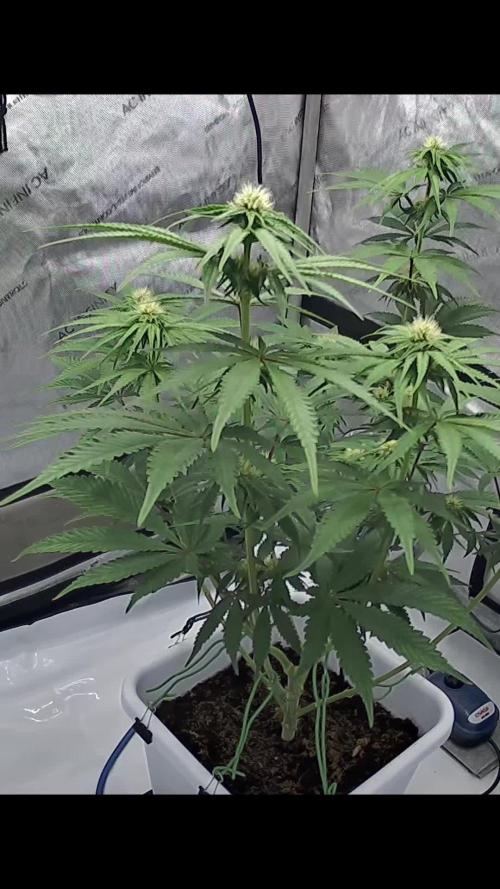
I started getting new growth from the tops of my colas. I thought this might of been down to raising the light up 10cm but it might of been down to high light intensity so I also moved one abit further away from the other to try and help.
The pictures in the dark and videos was around 4minutes before the lights came on as all my photos are over exposed.
Next to this plant I have an experiment with pink kush and zombie kush using the light given of from this grow.


Likes
31
Share

@Pheno_Minds
Follow
📋 Nach 16 Wochen Gesamtlaufzeit ist heute der Tag der Ernte für die Mimosa x Orange Punch von Barneys Farm gekommen. Die Pflanzen stehen voll im Harz und haben ihr biologisches Ziel erreicht. Ich beende den Run punktgenau und bereite alles für die Trocknung vor. Die Genetik hat über die gesamte Zeit eine beeindruckende Stabilität gezeigt und liefert jetzt zum Abschluss genau das optische Bild, das man von einer Top-Sorte erwartet.
🌡️ Die klimatischen Bedingungen in der Zielgeraden waren stabil und auf den Punkt. Der CO2-Wert lag im Schnitt bei 736 ppm, was den Pflanzen geholfen hat, die Blütenmasse bis zum letzten Tag kompakt zu halten. Maßnahmen gab es diese Woche außer der Kontrolle der Werte keine mehr, die Pflanzen haben nur noch ihr restliches Wasser verbraucht.
📸 Ein Blick auf die Fotos zeigt den hervorragenden Zustand der Buds. Die Blütenstruktur ist extrem dicht und zeigt die typische kompakte Form mit leichten Ausstülpungen an den Spitzen. Die Harzproduktion ist massiv, die Trichome überziehen nicht nur die Blüten, sondern auch die Zuckerblätter wie eine dichte Schicht aus Puderzucker. Farblich hat die Pflanze ein wunderschönes Spektrum von tiefem Violett bis fast Schwarz in den Blättern entwickelt, was einen starken Kontrast zu den hellen, harzigen Blüten bildet. Die Stempel sind fast vollständig braun und zurückgezogen, was das Ende des Reifeprozesses markiert. In der Nahaufnahme sieht man, dass die Trichomköpfe perfekt milchig mit ersten bernsteinfarbenen Einschlägen sind.
✂️ Jetzt geht es in den Trockenraum. Die Buds sind beim Zerlegen extrem klebrig und verströmen ein schweres Aroma von Zitrusfrüchten und süßem Treibstoff. Die Dichte der Blüten ist beeindruckend, da gibt nichts nach, wenn man sie leicht zusammendrückt. Die nächsten Tage verbringen sie bei kühlen Temperaturen und kontrollierter Luftfeuchtigkeit, bevor es ans Curen geht. Ich bin sehr zufrieden mit dem Harzbesatz und der allgemeinen Vitalität bis zum letzten Tag. Das Ergebnis im Glas wird sicher ein Genuss.
Likes
45
Share


@masterofsmeagol
Follow
8/21, 8/22 TOASTED TOFFY WAS TREATED WITH PLANT DOCTOR ON THE 22nd. It's been a few days of rainy dreary weather. This morning I went over and did some MORE defoliation on the toasted toffy trying to get all infected leaves off. I then used the rest of the k bicarb on the gmo in the middle. I haven't seen hardly any pm. So that seems to be working. However I don't want septoria to spread through my garden either. Hopfully the plant doctor will take care of the problem. If not I'll get something different. I can make a diy Dr. Zymes or I could just go to the store and buy something specific like trichodermia. The weather has been a fungus nirvana. The conditions couldn't have been anymore perfect for mold development. I'm super impressed with the k bicarb treating the pm. I took tons of pictures yesterday but I've been sick and couldn't upload them. I still need to sanitize and put my supports up. I'll keep this updated with what I'm doing.
UPDATE: AFTER UNCKES FUNERAL I WATERED THE SHERB PIE THAT I DIDNT LAST TIME AND THEN I FED. I DIDNT FEED THE TOASTED TOFFY DUE TO IT BEING TREATED WITH PLANT DOCTOR. EVERYTHING GOT A QRT THE 50GAL GOT MORE. TWO GALLONS TOTAL USED. I NOTÌCED SOME SLIGHT PM ON THE GMO IN THE MIDDLE. IT WOULD BE TIME TO TREAT AGAIN ANYWAY. I PLAN ON WATERING TOMORROW AND TREATING THIS PLANT AGAIN. IM HESITANT TO UsE PLANT DOCTOR (do to feeding tonight) RIGHT OFF SO ILL PROBABLY USE YHE K BICARD. IT WORKS GOOD. I SHOULDNT HAVE FED THAT PLANT SO I COULD APPLY THE PLANT DOCTOR INSTEAD. THAT SEEMS TO BE WORKING REALLY WELL. LAST TIME I USED IT WAS ON FUSARIUM AND THATS JUST A LOSING BATTLE. DID A QIICK VIDEO ILL UPLOAD TOMORROW.
8/23 I HAD A CRISIS SITUATION AND I FUCKED UP THE DIARY. I THINK I JUST DIDN'T RECORD WHAT I DID ON THIS DAY.
8/24 I checked the bags and they were heavy. I watered the sherb pie today as it missed the last watering. Everything but the toasted toffy got fed yesterday. I noticed some slight pm on the middle GMO that I've been treating with k bicarb. Just a couple leaves. Looks like a couple spots I missed. I was going to apply it again but I dodnt have time. I'll be back over soon and I'll treat it and do the defoliation needed. Maybe I'll even sanitize and get support up. Since I fed yesterday I don't want to use the plant doctor for a few more days. I'm thinking of treating everything with it. I need to read and see when the next application for toasted toffy is due. Things are really starting to flower. Once I get the work done I may add beastie bloom to my nute line up. I think I'll do another k-bicarb app on the plant with pm. It's doing a good job. Since the l bicarb I don't see any pm. I should've held off feeding it so I could've used plant doctor. I'm monitoring toasted toffy and if it keeps working good I'll treat everything preventatively.
WENT BACK OVER AROUND 11:30 BECAUSE IT HAD CLIMBED INTO THE UPPER 80'S. AS I SUSPECTED THE PLANTS NEEDED WATER. THEY COULDVE WAITED UNTIL TONIGHT BUT UNFORTUNATELY I HAvE TO DO THINGS WHEN IM ABLE TOO. EVERYTHING GOT A GALLON EXCEPT THE GMO IN THE MIDDLE IN THE 30, THAT GOT 1.5. SHERB PIE GOT IT YESTERDAY AND ISNT FLOWERING AS VIGEROUS SO IT USES LESS WATER. BEFORE WATERING I WENT THROUGH THE ENTIRE GARDEN AND DEFOLIATED WHAT NEEDED TO BE DEFOLIATED. I HAVE A FEW SMALL LIMBS I SHOULD PRUNE BUT THAT STUFF MAKES GOOD HASH MATERIAL AND ACTUALLY ADDS UP. I NOTICED A LITTLE BIT OF PM ON THE GMO I TREATED. Just a couple spots on a couple leaves and I removed them. I MIXED UP K BICARB AND ILL APPLY IN THE MORNING. I WANTED TO USE PLANT DOCTOR BUT SEEING THAT I FED ILL WAIT. ID LIKE TO GIVE THEM ALL PLANT DOCTOR AS A PREVENTATIVE. SUPPOSABLY IT STIMULATES AN IMMUNE RESPONSE WITHIN THE PLANT WHICH FIGHTS THE PATHOGENS THEN LEAVES POTASSIUM AND PHOSPHORUS BEHIND AFTER 4 DAYS FOR THE PLANT TO USE. I THINK ITS GETTING CLOSE TO TREATING THE TOASTED TOFFY AGAIN. ILL HAVE TO LOOK. I TOOK A VIDEO BUT ILL HAVE TO UPLOAD IT it.
8/25 I know the diary is fucked up. But I know I watered yesterday. Except the sherb pie. I didn't check the weight bit did a bunch of defoliation. I made another half gallon of k bicarb with a drop of dawn and sprayed all the gmos. I only saw a COUPLE spots with pm on them and I removed them. Still though I wanted to make sure it doesn't get out of control. I should've checked the weight of the sherb pie but I'm sure it's fine.. I took a video but I can't upload it yet.
WENT BACK OVER AROUND TWO. IT WAS A BLISTERING HOT DAY IN THE 80'S. THE BAGS WERE DRY. THEY HAD A LITTLE WRIGHT TO THEM AND MOST SOME LEAVES WERE PRAYING. SOME WERE STARTING TO DROOP THOUGH. I WATERED EVERYTHING A GALLON EXCEPT THE SHERB PIE I GOT THIS MORNING. I gave the gmo in the 30 1.5. THE EVENT HORIZON IN THE MIDDLE COULDVE WAITED UNTIL MORNING BUT AT LEAST I CAN KEEP TRACK OF IT EASIER THIS. MAYBE I SHOULD GIVE THE 50 MORE WATER AT A TIME. IM GETTING YELLOW LEAVES. I THINK ITS PROBABKY SENESCENCE. ITS ABOUT THE SAME TIME EVERY YEAR I START LOSING SOME LEAVES. IT SEEMS TO BE JUST THE SHERB PIE AND THE BIG ONE IN THE 50. THAT PLANT HAS QUARTER SIZE BUDS ON IT THOUGH. ITS AMAZIBG HOW MUCH THE WATER INTAKE CHANGES WHEN ITS 60 OR UPPER 50S WITH HIGH HUMIDITY TO WHEN ITS IN THE 80S ALMOST 90. I HOPE IM NOT WATERING TO OFTEN. ITS BEEN COLD AT NIGHT. IN THE 50S. THE EVENT HORIZON HAS TURNED A NICE PURPLE ON MANY LEAVES. THE GMO'S AND SHERB PIE ALSO ARE TURNING PURPLE AND OTHER FALL COLORS. I SAW WHAT LOOKED LIKE SEPTORIA SPOTS CRAWLING UP KY EVENT HORIZON IN THE BACK. IN GOING TO TREAT IT WITH PLANT DOCTOR TOMORROW.
8/26 Rainy day. I noticed some septoria on the toasted toffy climbing a bottom branch. But it is time to reapply plant doctor. I saw a couple spots on the event horizon and I treated it today with 1/4 gallon of 2tsp per gallon plant doctor. I sprayed the leaves then I used the rest on the soil. The k bicarb is still keeping any pm at bay. I haven't seen a spot. I hope the plant doctor helps the event hotlrizon. I'm not even sure if it has it but I want to be cautious. I'm thinking of treating them all with plant doctor. I'm also going to use beastie bloom on some of the more advanced plants. I wasn't expecting it to rain but it wasn't for at least a couple hours after I sprayed. I ran another support line across the cage. I need to lst both event horizons and defoliate the sherb pie. It's weird but it seems like EVERY day I go over the flowers are bigger! I see birds darting out when I approach. Maybe that's why i haven't been finding pillars. I found ONE hairy one this week trying to escape to the soil on a string. I got him though. We'll see how it goes. If not I have other options for treatments if needed. That plant in the 10 is HUGE. I'm suprised it got that big in 10gals! Trying to upload videos but they are LONG so I don't know if they

Likes
65
Share


@Polaskis
Follow
Well hello there 👋 thanks for stopping by and joining this journey of my White Widow grow! 💯
So to begin the week I was thinking....should I screw with this lovely girl or shouldn't I....?!?!?!
Weeelllllllllll..... I just could not resist and dove right in lmao!!!
Now in the new pictures for the week I really hope I've done my research and try and look for documentation about "LEAF LINING" and I am pretty sure there has been no terminology about it so I'm sure there will be critics and I look forward to your knowledge towards this training method for similarities....💯 MOVING ON 🤦♂️
Alright here we go.... so the beginning of the week I measured her at 8inchs. She grew a good 2.5 inches in 5 days so I had to top this girl because of height issues in the tent. I ultimately feel this was the absolute best thing for my height and the plant! 💯 and I 100% do not want to kick her early!!!! Now she's grown an 1inch since topping her 2 days ago and the prizes inside are flourishing and are growing like wild fire 🔥 🔥🔥 What until you see them 🤯
So what I have done to the inside this week is what I like to call "LEAF LINING" I basically pin the shoots created by the fan leaves to the actual fan leaf itself!!!! I know right 🤯 This has proven to be very effective which you can see the length of the shoots themselves. (some are 3.5inchs long) The stock of the fan leaves provide a straight path for growth outward! Its truly fascinating! (PLEASE LET ME KNOW IF THIS HAS TERMINOLOGY OR NOT)
Ok so I have introduced a new idea to the grow! Adding a Ring of 4 rows of wire that are attached in a circle to the top of the self-wick pot. I have fastened it using Zip ties as I did for the "LEAF LINING" 👈🤪 This was introduced for when those shoots grow out with the fan leaves as the fan leaf can no longer be of support at some point. Cant wait for that to happen. This is going be a wild ride growmies and growmettes!!!!
I will continue to show you guys and gals thorough pictures of my training methods moving forward cause I think your going to start to see growers use this method 🤞
Thanks for stopping by and I really appreciate the love and support that comes from the great community of growers on grow diaries!!! Love you all!!! 👊 hey guys and gals! Posted alittlw video so you can get to know me 😆