Likes
Comments
Share

@Salokin
Follow
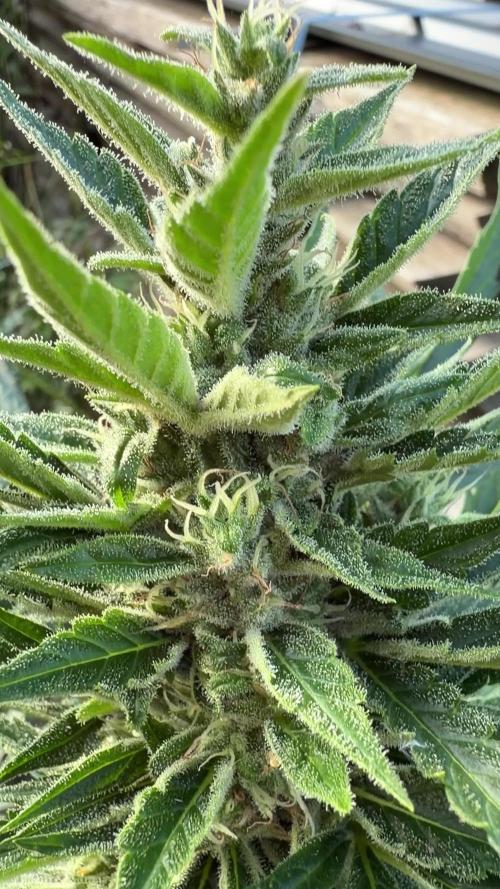
Week 9 | LSD Auto | Flowering
Still holding at 100cm — the stretch is done and the plant is putting all her energy into bud development now. She's the tallest and most advanced of the whole outdoor lineup, and the close-ups this week show why: trichome coverage is building up across every surface, and you can see the buds starting to bulk up in earnest. The smell is strong and getting stronger.
Conditions have settled into a comfortable rhythm — 25°C during the day, 18°C at night, 60% humidity. Natural daylight down to 16 hours and the shortening days are pushing her further into flower. Watering staying at 3L per day, pH 6.2, EC stepped up to 1.4 mS/cm. Nutrient stack unchanged: CANNA Aqua Flores A+B at 3 ml/l each, CalMag Agent at 0.9 ml/l, Aptus Regulator at 0.1 ml/l, Plagron Green Sensation at 0.5 ml/l.
Getting closer. Updates every Sunday. Stay tuned.

Likes
35
Share


@Canadian
Follow
This girl has been just cruising through looking beautiful and being easy to raise and take care of is a really nice exotic genetic to have in your garden thank you for reading I will continue to update a happy grow.

Likes
10
Share


@CanadianFillmore
Follow
Gotta get the Glueberry OG to the finish line! Flushing has begun, she's incredibly sticky, buds are very dense and heavy, branches bending and twisting like crazy! Smells like glue/fuel and she's heavy on OG Kush growth characteristics, in comparison to my previous OG kush grows. Only a few amber trichomes, she's 60-70% cloudy.
Thanks for watching! 👽🌳

Likes
9
Share


@CannabisRelated
Follow
Time sure goes by quick, It is already week 6. I sure hope they chunk up near the end :P
Plant "2" has a really strong creamy/doughy smell, plant "1" has like no smell so far.
Moved a clip on fan to blow on the ballast of the LED, and have a oscillating fan down below, which got the temps down a few degrees,
and the plants seem to be enjoying it.
Gave it a top dressing of nutrients last week, so I should not need to add any more, and just keep watering as normal, with a little bit of epsom salt like every 3rd watering.

Likes
3
Share


@tontodedoverdee
Follow
15/2
So the plant it's growing much faster, i keep bend the top branch every 24H without any big sign of stress maybe also because she been trained since her first week, I've also start to bend on the side some sides branches trying to give a good canopy and space to the plant, from this week I've also start giving some green sensation from Plagron and i can already notice a good amount of pre flowers and sweet smelly tops

Likes
4
Share

@BombBuds
Follow
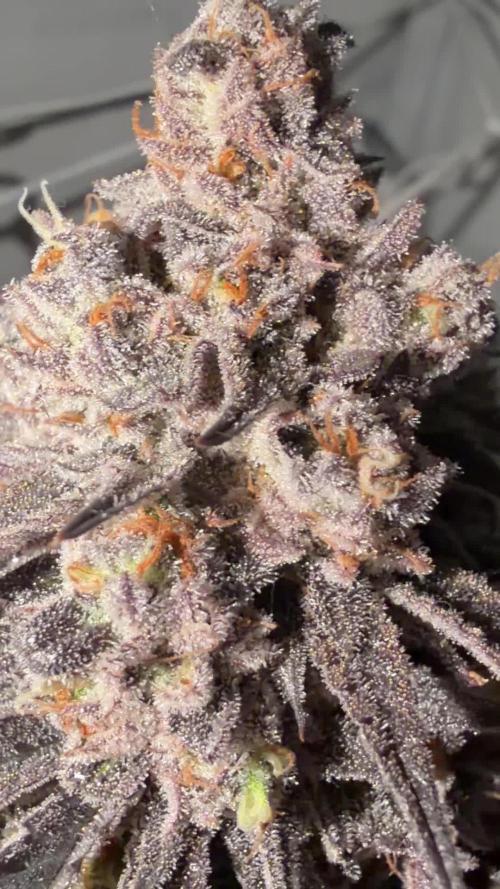
Das war’s!
Außer den vereinzelten Samen die ich in der seifuku gefunden habe bin ich sehr zufrieden wie alles gelaufen ist!


Likes
178
Share


@NuggetPawn
Follow
Probably the smoothest week since the start, I think that this pheno is a light feeder compared to Strawberry Lemonade in DWC, still running EC at 0.9 max and they’re doing fine, will be increasing the EC in a few days time to around 1.2, last thing I want is lockout during the stretch!
Roots are pretty darn big, the bottom right plant is growing well again now although she has probably lost a week or two on the rest of the pack, I’ll try to train plants close to her away so she can get a decent share of light.
Flipping them to 12/12 today so the long march to harvest starts now.
Dates on the time lapse are unfortunately the dates I uploaded to the app, not necessarily when the pic was taken, but it gives a good enough steer on progress and how long it has taken.
Take care all!


Likes
15
Share


@Waveform
Follow
Day 33: What an amazing height and bud gain in just 3 days! Lady #1 is 67 cm tall now, her sister a tad smaller. Both still have a great color, and I dared to cur away just the lowest branches and leaves that do not look like they could gain height in time. Really enjoying this strain so far!
At the end of their day, they are a bit dropping leaves, so clearly no hunger for more light. The impressive growth speed continued on their buds: Tallest lady at 70 cm now.
Their next morning shows growth is still at an impressive 5 cm/day as lady #1 with her leaves erected again stretches now 72, the maximum of my previous growth. Pulled the lights as close as possible to the ceiling and hope they won’t make it much more than 1 m. I activated the Sansi 30 W folded wings LED to give them somewhat of a morning and evening light and to add some more light to their overlapping center branches in the middle of "their" day. Sadly that’s causing some interference to the timelapse videos, but I can’t say they’re perfect if it wouldn’t.
Watching the timelapse video of day 34, I have the feeling the additional light rather irritates them. Maybe the interference is not only visible for electronic eyes. I’ll keep it off next day for comparisons.
Day 35 shows stretch speed has reduced indeed and they seem to be concentrating on leaf and bud growth instead. 75 cm, so we are currently at "only" 3 cm/day. Watered them with a HPE/Bud growth mix again last night, about 1 l each.
Well, forget my words about reduced growth. After they recovered during the night, we are at 77 cm for lady #1.
Which measured at 78 with hanging leaves in their day’s evening. I must have missed a day number – day 36 concludes their 5th week. I gave them another 2 l of fertilised water each and will lave them for the weekend again.
Video shows that growth concentrates now more on leaf and bud development than on gaining height. So I guess my 160 cm tent will be sufficient. For a moment I was worried, but it looks like stretch is over. Anyway, time to rearrange the camera next week. Leaves are running out of focus.

Likes
8
Share


@Plumbcat19
Follow
I am finding it difficult to get my camera to take photos and videos with the proper colour hence the double videos! It is unreal how thicc these are getting!! They smell wonderful! The other two plants are starting to show a bit more of their red/purple colours too! Noticing a bit of potassium stress from feeding but since they are nearly finished (I STILL CANNOT BELIEVE THAT!) I am only going to pull back a bit. They just need to survive another 14-21 days by the looks of them!
Likes
32
Share


@BigBadLion
Follow
Hey guys! Week 8 for the plant or week 3 of flower! 😍
And holy cow, these girls are growing fast, specially my baby that's on the front. And in fact, since they are so developed I decided to add some PK supplements slightly earlier and see how things go!
On top of that both girls seem to have slightly different phenotypes, one of them is slowly turning purple while the other one is getting purplier leaves and trichomes, which I believe looks beautiful.
I also defoliated and worked on the LST again, I need the lower buds to develop as well!
Anyway, I hope you all enjoy the photos and see you all next week! 😊

Likes
Comments
Share

@Kushnchesseplz
Follow
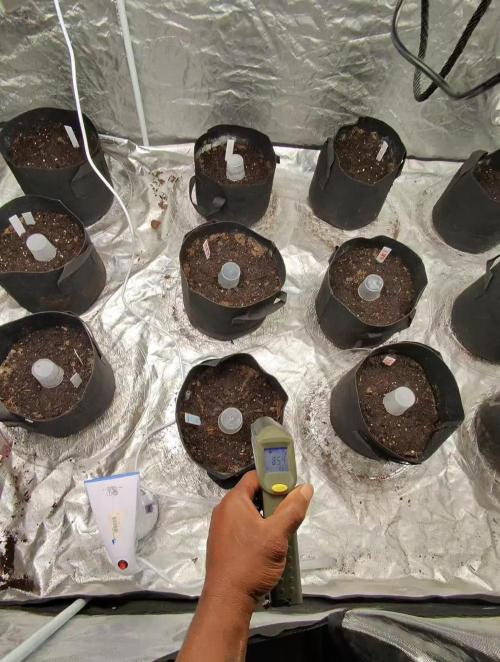
1 to 2 day for the seeds to pop. Some sprouted in 1-2 days after germination. Temp 85-90 fahrenheit. 85 to 90 humidity

Likes
42
Share


@Ukfarmer420
Follow
Hi guys
Within 48 hours all 3 broke the soil, just waiting on the blackberry moonrock to make a appearance.
Not much to say at the moment but ill keep you updated on the blackberry moonrock from tastebud genetics.
Happy growing gang 💚💪👌
Hey guys so the blackberry moonrock from tastebuds has decided to pop out the soil today 😀 so 4 out of 4 the freebie was a late starter lol.
Its ment to be a 33% thc indica so hopefully i can hit the high 20z.
Happy growing guys 💚👌


Likes
45
Share


@Ultraviolet
Follow
2nd net is up. Early bud formations are promising. holding up to the extremes pretty well, some leaves taking minor damage, but overall, she is holding up, gave her 1 night at 50F see how she would react, stressful. Not advised as it messes with her metabolism, but I want to see if it triggers any anthocyanin response. Love to see her purp up but no signs yet.
Homework.
If Rubisco activity is impaired and it cannot properly function or regenerate its substrate, the plant's leaves are likely to turn a pale green or
lime green, a condition known as chlorosis. Essentially, Rubisco activity is highly regulated and susceptible to various environmental and metabolic factors that can cause it to become inhibited, leading to an apparent failure in RuBP regeneration due to a lack of consumption.
Rubisco regeneration is intrinsically linked to nitrogen supply because Rubisco is a major sink for nitrogen in plants, typically accounting for 15% to over 25% of total leaf nitrogen. The regeneration phase itself consumes nitrogen through the synthesis of the Rubisco enzyme and associated proteins (like Rubisco activase), and overall nitrogen status heavily influences the efficiency of RuBP regeneration. RuBisCO is a very large enzyme that constitutes a significant proportion (up to 50%) of leaf soluble protein and requires large investments in nitrogen. Insufficient nitrogen supply limits the plant's ability to produce adequate amounts of RuBisCO, thereby limiting the overall capacity for photosynthesis and carbon fixation. Maintaining the optimal, slightly alkaline pH is crucial for the proper function and regeneration of Rubisco. Deviations in either direction (too high or too low) disrupt the enzyme's structure, activation state, and interaction with its substrates, leading to decreased activity and impaired RuBP regeneration. (LIME GREEN CHLOROSIS)
Structural Component: Nitrogen is an essential building block for all proteins, and the sheer abundance of the Rubisco protein makes it the single largest storage of nitrogen in the leaf.
Synthesis and Activity: Adequate nitrogen supply is crucial for the synthesis and maintenance of sufficient Rubisco enzyme and Rubisco activase (Rca), the regulatory protein responsible for maintaining Rubisco's active state. Nitrogen deficiency leads to a decrease in the content and activity of both Rubisco and Rca, which in turn limits the maximum carboxylation rate, Vmax, and the rate of RuBP regeneration Jmax, thus reducing overall photosynthetic capacity.
Nitrogen Storage and Remobilization: Rubisco can act as a temporary nitrogen storage protein, which is degraded to remobilize nitrogen to other growing parts of the plant, especially under conditions of nitrogen deficiency or senescence.
Nitrogen Use Efficiency (NUE): The allocation of nitrogen to Rubisco is a key determinant of a plant's photosynthetic nitrogen use efficiency (PNUE). In high-nitrogen conditions, plants may accumulate a surplus of Rubisco, which may not be fully activated, leading to a lower PNUE. Optimizing the amount and activity of Rubisco relative to nitrogen availability is a target for improving crop NUE.
Photorespiration and Nitrogen Metabolism: Nitrogen metabolism is also linked to the photorespiration pathway (which competes with carboxylation at the Rubisco active site), particularly in the reassimilation of ammonia released during the process.
To increase RuBisCO regeneration, which refers to the process of forming the CO2 acceptor molecule Ribulose-1,5-bisphosphate (RuBP) during photosynthesis, the primary methods involve optimizing the levels and activity of Rubisco activase (Rca) and enhancing the performance of other Calvin-Benson-Bassham (CBB) cycle enzymes.
Biochemical and Environmental Approaches:
Optimize Rubisco Activase (Rca) activity: Rca is a crucial chaperone protein that removes inhibitory sugar phosphates, such as CA1P (2-carboxy-D-arabinitol 1-phosphate), from the Rubisco active site, thus maintaining its catalytic competence.
•Ensure optimal light conditions: Rca is light-activated via the chloroplast's redox status. Adequate light intensity ensures Rca can effectively maintain Rubisco in its active, carbamylated state.
•Maintain optimal temperature: Rca is highly temperature-sensitive and can become unstable at moderately high temperatures (e.g., above 35°C/95F° in many C3 plants), which decreases its ability to activate Rubisco. Maintaining temperatures within the optimal range for a specific plant species is important.
•Optimize Mg2+ concentration: Mg2+ is a key cofactor for both Rubisco carbamylation and Rca activity. In the light, Mg2+ concentration in the chloroplast stroma increases, promoting activation.
•Manage ATP/ADP ratio: Rca activity depends on ATP hydrolysis and is inhibited by ADP. Conditions that maintain a high ATP/ADP ratio in the chloroplast stroma favor Rca activity.
Enhance Calvin-Benson-Bassham (CBB) cycle enzyme activity: The overall rate of RuBP regeneration can be limited by other enzymes in the cycle.
•Increase SBPase activity: Sedoheptulose-1,7-bisphosphatase (SBPase) is a key regulatory enzyme in the regeneration pathway, and increasing its activity can enhance RuBP regeneration and overall photosynthesis.
•Optimize other enzymes: Overexpression of other CBB cycle enzymes such as fructose-1,6-bisphosphate aldolase (FBA) and triose phosphate isomerase (TPI) can also help to balance the metabolic flux and improve RuBP regeneration capacity.
Magnesium ions, Mg2+, are specifically required for Rubisco activation because the cation plays a critical structural and chemical role in forming the active site: A specific lysine residue in the active site must be carbamylated by a CO2 molecule to activate the enzyme. The resulting negatively charged carbamyl group then facilitates the binding of the positively charged Mg2+ion. While other divalent metal ions like Mn2+ can bind to Rubisco, they alter the enzyme's substrate specificity and lead to dramatically lower activity or a higher rate of the non-productive oxygenation reaction compared to Mg2+, making them biologically unfavorable in the context of efficient carbon fixation. The concentration of Mg2+ in the chloroplast stroma naturally increases in the light due to ion potential balancing during ATP synthesis, providing a physiological mechanism to ensure the enzyme is activated when photosynthesis is possible. At the center of the porphyrin ring, nestled within its nitrogen atoms, is a Magnesium ion (Mg2+). This magnesium ion is crucial for the function of chlorophyll, and without it, the pigment cannot effectively capture and transfer light energy.
Mg acts as a cofactor: Mg2+ binds to Rubisco after an activator CO2 molecule, forming a catalytically competent complex (Enzyme-CO2-Mg2+). High light + CO2) increases demand: Under high light (60 DLI is a very high intensity, potentially saturating) and high CO2, the plant's capacity for photosynthesis is high, and thus the demand for activated Rubisco and the necessary Mg2+ cofactor increases. Mg deficiency becomes limiting: If Mg2+ is deficient under these conditions, the higher levels of Rubisco and Rubisco activase produced cannot be fully activated, leading to lower photosynthetic rates and potential photo-oxidative damage.
Optimal range: Studies show that adequate Mg2+ application can enhance Rubisco activation and stabilize net photosynthetic rates under stress conditions, but the required concentration is specific to the experimental setup.
Monitoring is key: The most effective approach in a controlled environment is to monitor the plant's physiological responses e.g., leaf Mg2+ concentration, photosynthetic rate, Rubisco activation state, and adjust the nutrient solution/fertilizer to maintain adequate levels, rather than supplementing a fixed "extra" amount.
In practice, this means ensuring that Mg2+ is not a limiting factor in the plant's standard nutrient solution when pushing the limits with high light and CO2.
Applying Mg2+ through foliar spray is beneficial to Rubisco regeneration, particularly in alleviating the negative effects of magnesium (Mg) deficiency and high-temperature stress (HTS). While Mg can be leached from soil, within the plant it is considered a mobile nutrient, particularly in the phloem. Foliar-applied Mg is quickly absorbed by the leaves and can be translocate to other plant parts, including new growth and sink organs.
Foliar application of: NATURES VERY OWN MgSO4 @ 15.0g L-1 in a spray bottle.
Foliar sprays are often recommended as a rapid rescue measure for existing deficiencies or as a supplement during critical growth stages, when demand for Mg is high. Application in the early morning or late evening can improve absorption and prevent leaf burn.
The starting point [of creativity] is curiosity: pondering why the default exists in the first place. We’re driven to question defaults when we experience vuja de, the opposite of déjà vu. Déjà vu occurs when we encounter something new, but it feels as if we’ve seen it before. Vuja de is the reverse—we face something familiar, but we see it with a fresh perspective that enables us to gain new insights into old problems. Come walk in the enchanted forest.
Likes
8
Share


@ChitownCannaChica
Follow
Watering her daily! Super frosty nugs! Happy with this little ladies result! She’s doing great all things considered about the 8.5 oz can she is in!

Likes
4
Share


@Pot_Portraits
Follow
Another week another part of progress, wedding gelato is doing great, the shape is how I want it and now she just needs to put on weight.
All going as planned, super happy with the living soil from Sonnenerde like always !
Likes
12
Share


@GREENPHOENIX6262
Follow
*Early Flower 09/10*
(2) Fastbuds - Mimosa Cake Auto
Aggressive LST was applied for even light coverage.
Smaller-Lagging budsites and bigger fan leaves under net have been removed.
Slight increase in nutrient feeds, thus far 0 signals of deficiencies.
*Mid week update - 09/13*
Both plants have grown approximately 6 inches in height
Early flowering continuing to progress accordingly
Half a gallon increase in water feed (Nutes included)
*End of week recap 09/16*
Mimosa Cake (Auto) - Both in week flowering accordingly
Small increase on nute feeds - Moderate increase in filtered plain water feed (1.5 gallons )
*SEE END OF WEEK RECAP VIDEO*