


Likes
Comments
Share

@lolasher
Follow
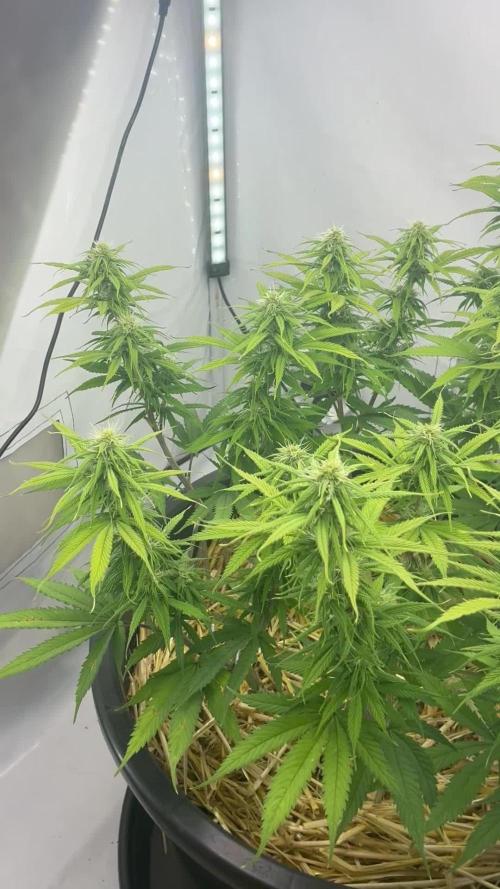
Mir gefällt es nicht, dass die Pflanze verhältnismäßig hell wird, obwohl das in anderen Berichten häufig ähnlich bei diesem Strain aussieht. Mal gucken, wie sich das entwickelt.
Habe trotzdem einige Vorsichtsmaßnahmen getroffen. Gab ausnahmsweise mal etwas CalMag dazu und noch mal nen ordentlichen Komposttee.
Kann es evtl auch an der neuen Lampe liegen? Die AC Infinity hat ja auch mehr Bumms - wobei ich das ehrlich gesagt nicht ganz glaube, da ich sie auf 80% und 40cm Abstand laufen lasse…
Vermutlich dreh ich nur durch :-)
Die Buda entwickeln sich soweit gut.
Jeder Ast hat super eng anliegende Blüten - bin gespannt, wie sich das optisch entwickelt.
Inzwischen wächst da nichts mehr wirklich. In der letzten Woche zogen fast nur die kleineren Triebe nach und bilden jetzt ein fast ebenes Blütendach - gefällt mir gut!
Wie letzte Woche erwähnt, hätte der Stretch aber gerne größer ausfallen dürfen.

Likes
8
Share


@Aleks555
Follow
Test FBA 2503 – 42Fast Buds
68 days from seed — and we’ve reached the final stage: harvest time!
Although the plant didn’t grow very big, it truly impressed us — the buds are dense, large (as big as a fist!), and absolutely drenched in sticky resin. The pinkish hue of the buds gives this beauty an extra touch of elegance — she looks stunning! But the most striking thing is the smell. It’s incredibly strong, sharp, and long-lasting. Our girl has a seriously intense chemical scent — it fills the entire grow tent instantly and lingers for hours. Not for the faint of heart!
From the beginning, we focused on giving her everything she needed: a well-balanced substrate, a stable environment, and, of course, proper nutrition.
Huge thanks to Xpert Nutrients for their powerful line of fertilizers — they played a key role in helping this plant reach its full potential, delivering impressive trichome production, vibrant colors, and strong structure.
And special thanks to 42Fast Buds for the opportunity to test this unique and powerful autoflower — it’s been an amazing experience!
Harvest results coming soon — stay tuned!
Likes
3
Share


@AestheticGenetics
Follow
5/6/25 the trichomes on this plant are spectacular and special. The cameras not picking it up very well but they shine so freaking bright. brighter than other strains. She also has a very unique smell. The breeder mentioned that thesr equatorial photo periods that show autoflower traits have a unique high as well and i wonder if thats due to the unique smell/ terpenes shes
Likes
10
Share


@Martymar021208
Follow
These girls are becoming very vigorous in their growth cycle I defoliated last week and the lady's bounced back so quick in under a week. Everything is looking extremely healthy and I can't say enough about this new light of mine definitely glad for this investment.Mars hydro fc 4800 har been everything I expected plus some. The plants are thriving and seem to love this lotus nutrients. Will be taking clones next week. Very happy with ethos genetics, so much so I went out and bought 4 more strains from them planet of the grapes, 10th planet, booberry muffin, and banana hammock just started a run on all but 10th planet follow my other diary for the next weeks to come for new grow. As you can see the front right plant of mine is a little behind but hopefully will se her catch up a little this week.

Likes
26
Share


@GrowGuy97
Follow
Day 56 ladies are really starting to get some massive buds, tent smells amazing! I can’t wait to see what this harvest looks like😍😍
Thanks for following & make sure to check back for daily updates friends! Happy growing✌️🏼🌱


Likes
16
Share


@Willy_Balls
Follow
Last days before chop. Limiting watering and reducing temp really boosted maturing. They ripened fast this last week.
I’m glad o made it in time.
Next update chop.


Likes
2
Share

@Aslanko
Follow
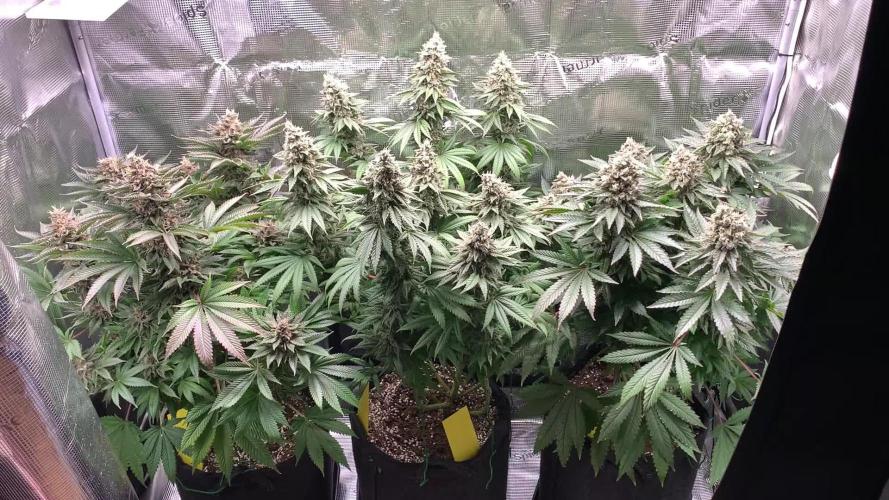
Day 58 Flower 🌿🔥
We’re getting close to the finish line and the buds are looking better every day. They are still putting on a bit more weight, getting denser, and resin production is now really noticeable.
A large portion of the pistils are already turning orange, especially on the left plant, which seems to be the fastest finisher. The smell is currently sweet and fruity, but with some interesting cheesy notes — kind of like parmesan cheese with grape wine 😁
The last feeding with nutrients has been done and from now on it’s only plain water until harvest. Right now the main goal is just keeping the environment stable and letting the plants finish naturally.
Environment:
* 25–27 °C day / ~20 °C night
* 45–55 % RH
Really looking forward to harvest ✂️🌱
_
58. den květu 🌿🔥
Blížíme se do finiše a květy vypadají každý den lépe. Palice ještě lehce nabírají na objemu, tvrdnou a produkce pryskyřice je už opravdu výrazná.
Velká část pestíků už začíná být zrzavá, hlavně na rostlině vlevo, která dozrává nejrychleji. Vůně je momentálně krásně sladká a ovocná, ale zároveň má zvláštní „cheesy“ tóny – trochu jako kombinace parmazánu a hroznového vína 😁
Proběhla poslední zálivka s hnojivy a teď už pojedu jen čistou vodu až do sklizně. Snažím se hlavně udržovat stabilní prostředí a nechat rostliny v klidu dojet do finiše.
Prostředí:
* 25–27 °C den / ~20 °C noc
* 45–55 % RH
Těším se na harvest ✂️🌱

Likes
35
Share


@Canadian
Follow
From beginning to end this girl has been a pleasure to grow I will update the last information taste high and final bag appeal Thank you for reading have a happygrow. Updating this girl smokes as exotic as she looks she has a fruity almost perfume smell to it and the high last at least for 3 hours or more very strong but not overpowering allows you to enjoy friends and activity with no problems I must be honest this is a very impressive plant with incredibly large yield . Density is typical for a hybrid but it’s such a remarkable colour and smell +the high that is a must Try for any cannabis grower sweet seeds definitely score a very rare plant here AAAAA+
Cannabis grower
Likes
Comments
Share

@Anon73
Follow
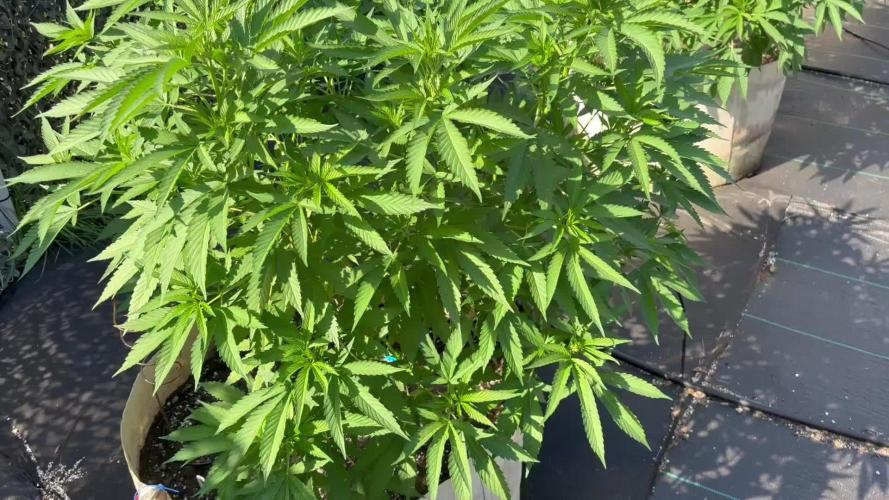
Week 5 and the plants are bursting out now.
I am very pleased with the electroculture, seems like the bugs do not want to touch the plants.

Likes
3
Share


@JunoCheesecake
Follow
This week the Jack Herer has exploded.
The branches have become dense, swollen buds with lots of pistils that are turning orange.
The smell has become much more intense and citrusy, however, I think it is further along that it should be.
So far this seedling is growing nicely. I hope it continues like this
Likes
91
Share


@CANNASIM
Follow
GENERAL COMMENT.
This week ran nicely for the two girls, of course one is going slower than the other.
RQS STRESS KILLER AUTO.
Super happy with the results so far, she grew nice size buds, in the surrounding and a big fat main cola, just beautiful.
As we are entering the last week, of last tree days, I choose to lollipop and take do a pre harvest defoliation, the reasons for that is mould and rot, I started to become insecure because she didn’t have airflow and as i was flushing humidity started to raise, all good, and now just approaching harvest!
Flushing with flawless finish and tap water.


Likes
Comments
Share


@PopsFarm
Follow
Flowering day 6- Lemon Tree Fast 🍋🌳💨 from @silentseedsofficial / @silentseedsofficialhq @silentseedsbackupofficial
The soil from @promixgrowers_global / @promixgrowers_eur is simply the best I’ve had so far, root production you can only wish for with minimal effort, simply brilliant 🤩
LED: @future_of_grow
(Black Series 600watt + 2x Boost 30Watt UVA + UVB + IR 110cm)
Soil: @promixgrowers_global / @promixgrowers_eur / @promixgrowers_unfiltered / @promixmitch / @promix_tory
Tent: @phantom.products (150x150x215)
1 of 4 plants / the last 2 Fotos and the Video are the complet grow with other genetics.
Thank you to everyone who follows and supports my work 🙏🏻💚
This means a lot to me and you should know you are a part of it and only with you all this is possible, you are the best community 😎

Likes
34
Share


@HomeGrowHeaven
Follow
First day in 12/12 cycle💡 for the ladies after 44 days in veg💪🏻😊🌱🍀
The compost tea is still brewing nicely and will finally be used in the next 1-2 hours, after about 24 hours of brewing

Likes
16
Share


@BB_UK
Follow
Greeeeeat week! Dynomyco has truly helped this Girly to get off to an amazing start and gave her the force to gain thick stems and more branches! It could also be the addition of Co2 in the grow area! I also give her a diluted foliar feed of formulex as she goes through the day as I have a very low humidity for that week but I can bring it up now as I don’t need it so low in my home! (Was drying other plants)


Likes
8
Share

@DimJesus
Follow
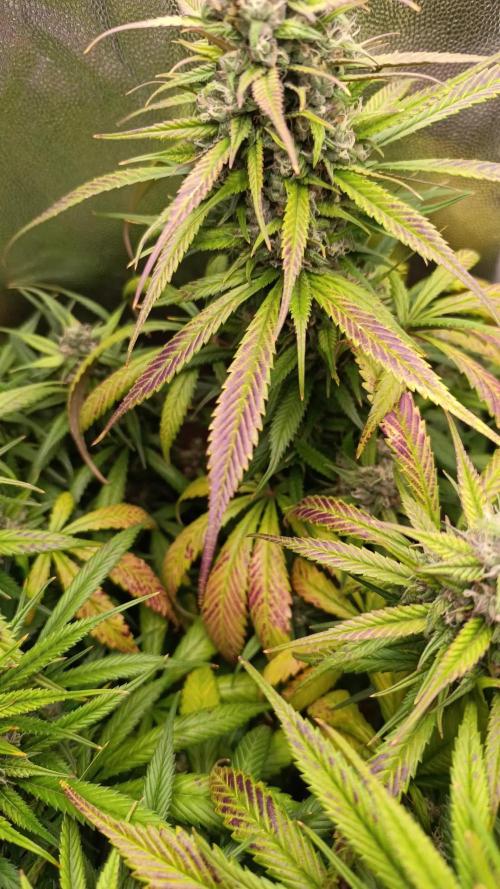
Frosty meu objetivo era coher elas a partir do dia 25 de abril mas elas vai ficar pronta antes, já tem bastantes tricomas brancos e alguns âmbar mas esses estão nas sugar leaves e não nos buds. Tive que amarrar uma delas pq os galhos estavam dobrando muito para os lados, é a que tá mais gordinha, tem uma com buds mais alongados e a outra com buds mais consistentes e bonitos só que menores. Diminui a quantidade de ferts e planejo fertilizar até o último momento já que algumas folhas indicam que elas tá consumindo o N que restou nelas. A temperatura deu uma diminuída e isso tá ajudando a produção de tricomas mas acho que a humildade tá alta para a floração, fica entre 60% 70%. Gostei dos ferts da Remo mas não consegui o mesmo resultado que tive com advanced nutrients e olha que eu nunca usei a linha completa e com Remo tô usando a linha completa, enfim, vale a pena investir na advanced mesmo com a diferença absurda de preço.
Ansioso pela colheita 🌱💚
Likes
8
Share


@MoneyGrows
Follow
Same nutes . Colors are in . The cereal killer is here !! 🔪 great grow and even better genetics ! Can’t wait to dry . Chopping after 24 hours darkness
Likes
8
Share

@KnightRider
Follow
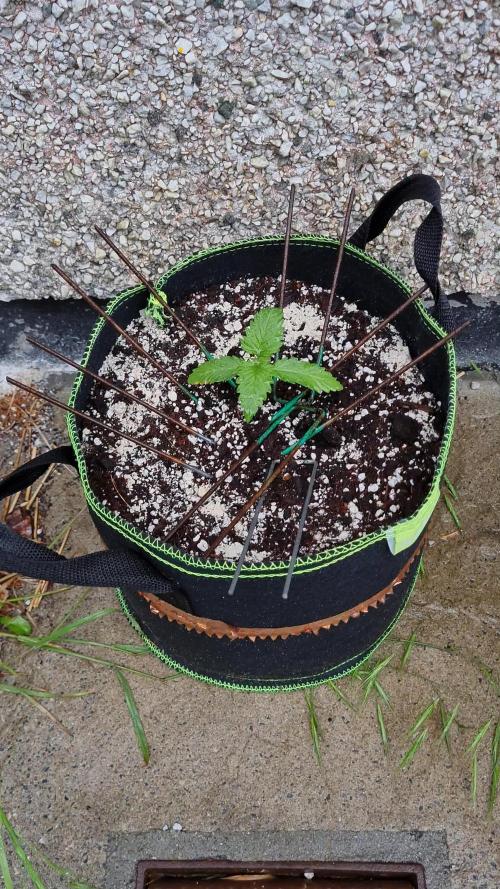
Hey Cannafam Happy Monday 😊
Its been a pretty good week for my gal, we started the week with really hot weather for May, with temps of 30c daytime and 18c at night, the tempratures have slowly tapered off daily by a couple of degrees each day and by Thursday - Saturday we were looking at 22c daytime 14c nightime.
The days have been solid sunshine with humidity about 55 until today when its been raining all day, current temp is 17c and humidity has shot up to 97. Daylight is currently at 16 hours 7 minutes currently.
With all the Sun this week shes had good solid growth and is just starting her 3rd set of true leaves and is looking nice and healthy 😊 No feed again this week just great white with every watering.
I have had a slight issue this week when the wind blew the diamatous earth onto a couple of leaves, i've now learnt from this that it actually breaches the leaves cell walls and causes damage, in the picture showing this it looks like nute burn or potassium deficiency but i observed the effect a short time after and gave her a very gentle finger tip wash. Im now thinking of putting the powder around the pot but thats not much good when raining. On the squirrel front the turf pins are working, i know this as both pots were side by side and my little friend tried to dig up my other grow!
The weathers looking a bit more unsettled for the next week but with her solid start hopefully she should be ok.
Thats all from me for now, thanks for stopping by 😊✌️
Likes
2
Share


@High_Grade_Dadli
Follow
#1 is the one that had most growth in the the lower branches the week before she is still doing well being that she is in the same condition
#2 I moved her to a different location running extra light and with the lst....she took off now she's the one with the most growth
Till nxt time #happy growing
Likes
8
Share


@GoosengrowerUK
Follow
Hey growmies hope everyone is good missed last week as I wasn't well but anywho update on them girls the video is from Tuesday 7th July and the pictures from today unfortunately had to chop the smallest fadiest plant of the Lemon Meringue Auto from Tastebuds Genetics as a lower top succome to botryitis 13 days early (I got rid of the affected top and chopped the rest down to small buds and thoroughly washed the rest with fresh water) 95%milky - 5% amber so this one is going to be melow not all is lost so happy growing peeps stay humble and as high as humanly possible! 👊💚
