Likes
Comments
Share
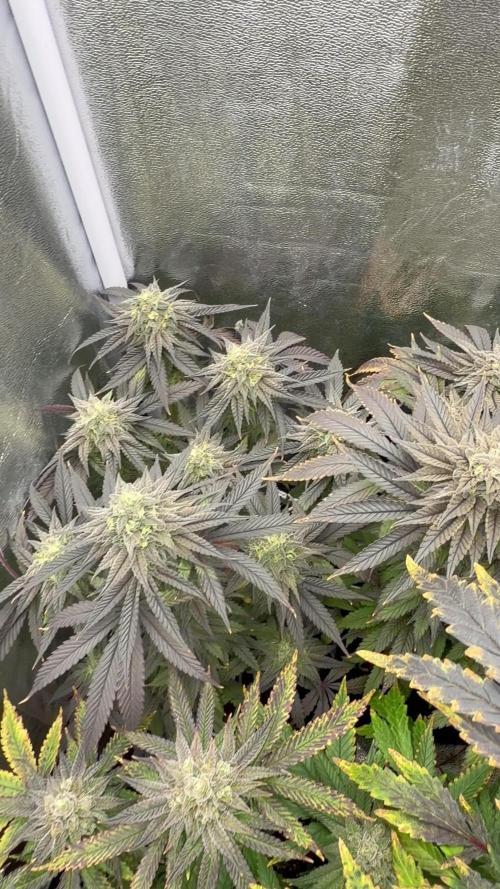
Week 7/ We’re switching to plain water. For the ladies, I’d say the trichomes are about 50% cloudy on the Frosted and Kush Purple, while the Sticky has a lower percentage of cloudy trichomes since she’ll be the last one we’ll harvest. I’ll harvest early. I’m fine with the effects either way for the plants concerned 12/12 switches : 12/06/2026 Back: Frosted Grape Front left: Purple Cookie Front right: Stick Berry Watering remains moderate: ~600 mL for the larger plants and ~300 mL for the smaller ones, with 1 L being the maximum applied so far.
Likes
52
Share
You don't become confident by shouting affirmations in the mirror, but by having a stack of undeniable proof that you are who you say you are, outwork your self-doubt. Nitrogen fixation is a chemical process by which molecular nitrogen (N2), which has a strong triple covalent bond, is converted into ammonia (NH3) or related nitrogenous compounds, typically in soil or aquatic systems but also in industry. The nitrogen in air is molecular dinitrogen, a relatively nonreactive molecule that is metabolically useless to all but a few microorganisms. Biological nitrogen fixation or diazotrophy is an important microbe-mediated process that converts dinitrogen (N2) gas to ammonia (NH3) using the nitrogenase protein complex (Nif).[2][3] Nitrogen fixation is essential to life because fixed inorganic nitrogen compounds are required for the biosynthesis of all nitrogen-containing organic compounds, such as amino acids and proteins, nucleoside triphosphates and nucleic acids. As part of the nitrogen cycle, it is essential for agriculture and the manufacture of fertilizer. It is also, indirectly, relevant to the manufacture of all nitrogen chemical compounds, which include some explosives, pharmaceuticals, and dyes. Nitrogen fixation is carried out naturally in soil by microorganisms termed diazotrophs that include bacteria, such as Azotobacter, and archaea. Some nitrogen-fixing bacteria have symbiotic relationships with plant groups, especially legumes.[4] Looser non-symbiotic relationships between diazotrophs and plants are often referred to as associative, as seen in nitrogen fixation on rice roots. Nitrogen fixation occurs between some termites and fungi.[5] It occurs naturally in the air by means of NOx production by lightning.[6][7] All biological reactions involving the process of nitrogen fixation are catalyzed by enzymes called nitrogenases.[8] These enzymes contain iron, often with a second metal, usually molybdenum but sometimes vanadium. Green clover (Fixation) White clover (Fixation) Red Clover. (Fixation) Yellow Clover. (Fixation, deeper roots) Sweet Thai Basil. (Terpenes) Italian Basil. (Terpenes) Chamomile.(Oil production) Borage.(Pest attraction taste) Lavender.(Pest attraction smell) Marigold(Pest attraction visual) Mycorrhizae are beneficial associations between mycorrhizal fungi and a plant’s root system. Mycorrhizal fungi spores germinate in the soil, creating filaments (hyphae) that penetrate the root cells, thus establishing a symbiotic relationship. This collaboration leads to the development of both intra-radical and extra-radical networks of filaments, enabling efficient exploration of the soil for enhanced access to nutrients and water. Consequently, these vital resources are transferred to the plant, resulting in numerous benefits for crop cultivation. Various mycorrhizal products are available in diverse formulations (powder, granular, and liquid), concentrations, and qualities. Ongoing advancements in products, technologies, and research are reshaping our understanding of mycorrhizae. Despite these positive developments, certain misconceptions persist. In the following discussion, we aim to clarify the truths and dispel the myths surrounding mycorrhizae products. MYTH #1 A HIGHER NUMBER OF MYCORRHIZAE SPECIES MEANS BETTER RESULTS. Contrary to common belief, having a higher number of mycorrhizae species in a product does not translate to better results; in fact, it often yields the opposite outcome. A plant can sustain only one association with a particular mycorrhizal fungi species. Introducing multiple species creates competition among them, which is not advantageous for the plant. The initial colonizer does not ensure the highest success; instead, it gains precedence. It is recommended to select a product with a concentrated presence of a single mycorrhizae species known for its effective performance, rather than opting for a product with multiple species at lower concentrations. MYTH #2 ECTOMYCORRHIZAE ARE EFFECTIVE FOR CANNABIS PLANTS. Although ectomycorrhizae can colonize five to ten percent of plant species, cannabis is not among them. Ectomycorrhizae do not penetrate the root cells; instead, they develop around the roots and on the exterior. For cannabis plants, it is essential to seek out endomycorrhizae. Endomycorrhizae are capable of colonizing 70% to 90% of plant species, including cannabis. Unlike ectomycorrhizae, endomycorrhizae penetrate the root cells, forming structures like arbuscules for the exchange of nutrients and water with the plant. MYTH #3 WHOLE INOCULANT (PROPAGULES) PERFORM BETTER THAN ONLY VIABLE SPORES. The propagule count specified on most mycorrhizae products indicates the presence of spores (viable and unviable), hyphae, and root fragments. However, it is crucial to note that only viable spores, those with the capacity to germinate, can successfully colonize a plant’s root system. Spores are to mycorrhizal fungi what seeds are to cannabis plants—a fundamental component enabling fungi reproduction. Consequently, even if a mycorrhizal product boasts millions of propagules, its effectiveness hinges on the presence of viable spores. Without viable spores, the product will not contribute to plant development. Therefore, the genuine value of a mycorrhizal inoculant lies in the quantity of viable spores it contains, as only viable spores can efficiently initiate symbiosis. MYTH #4 ALL METHODS OF APPLICATION YIELD IDENTICAL RESULTS. To establish the symbiosis, mycorrhizal fungi spores must be close to the plant roots. The optimal recommendation is to directly apply mycorrhizal inoculant to the roots, either in powder, granular or slurry form. This method ensures maximum proximity between the spores and the roots, facilitating a rapid establishment of symbiosis. Particularly with crops like cannabis, which have a short growing cycle, employing this technique is the most effective way to obtain optimal benefits. Alternatively, techniques such as blending the inoculant with the soil are effective, but there may be a delay in the establishment of symbiosis. This is because the roots need to grow and come into contact with the dispersed spores throughout the growing media. MYTH #5 MYCORRHIZAE CAN ONLY BE GROWN ON LIVING PLANTS. While the predominant method for commercially producing mycorrhizae involves growing them on the root systems of living plants (in vivo production), it is not the exclusive nor the optimal technique. In fact, this production approach has notable drawbacks that the “root organ culture” method just does not have (in vitro production). In vitro production occurs in meticulously controlled, aseptic laboratory conditions, allowing for the consistent generation of products that are viable, highly concentrated, species-specific, and free from pathogens. Achieving such precision and quality is impossible when relying on the cultivation of mycorrhizal fungi on plants exposed to external conditions. In conclusion, it is crucial to take all these factors into consideration when choosing the appropriate product for your crop to fully harness the wide array of benefits provided by a high-quality mycorrhizal product. STRONGER PLANT – Stress resistance. FASTER GROWTH – Improve plant structure and shorter veg time. INCREASE YIELD – Overall more biomass. IMPROVED QUALITY – Increase cannabinoids and terpenes content.
Likes
37
Share
@Kazzy420
Follow
So Woche 6 hat angefangen und meine Dame ist immer noch nicht wirklich in der Blüte . Sie hat auch immer mal wider kleiner wachstumsstops drin 🤨🤔 Habe die Bewässerung nochmal angepasst und jetzt mal sehen . Habe bis jetzt kein strain gehabt wo die seitlichen Triebe größer sind als die Königin 🤔 Kann mir jemand sagen ob das normal ist bei manchen Sorten ?! Ps: an Sonsten ist alles Paletti 🙌🏾🤩 Blätter zeigen auch keiner Lei Erkrankungen an Mal sehen was die Woche mit sich bringt . Happy grow allen 🌱💚🤩👊🏽
Likes
6
Share
@BossHogg6
Follow
The temps are higher now because of the house being around 77 degrees. The humidity is staying low. Wondering if I should start flushing to start getting ready for harvest.
Likes
4
Share
Fastbuds seeds LSD-25 auto #2 Only using spring water for first week and spraying with foop mist every night. Going to be using foop nutrients with Humboldts secret cal/mag and nectar for the gods ph up and down. Here we go!
Likes
4
Share
Nanners. Pollen sacs are coming in. So exiting. Plants teach you patience. And constant growth.. stick to the program. Stick to the goal. Plant Smells like a if you melted candy and put them in a trashcan in the summer heat. I only 3 times so far. Got alot of nitrogen going on but it should slow down eventually
Likes
15
Share
Heute ist es soweit! Bräuchten evtl noch knapp eine woche. Aber hab schon neue bestellt und das ne woche zu früh🙈😅😅🤷‍♂️ Also chop chop😅😅 Diesen geilen cut gibts wie immer vital und virus frei bei ROOTS-FARMS. The best you can get
Likes
12
Share
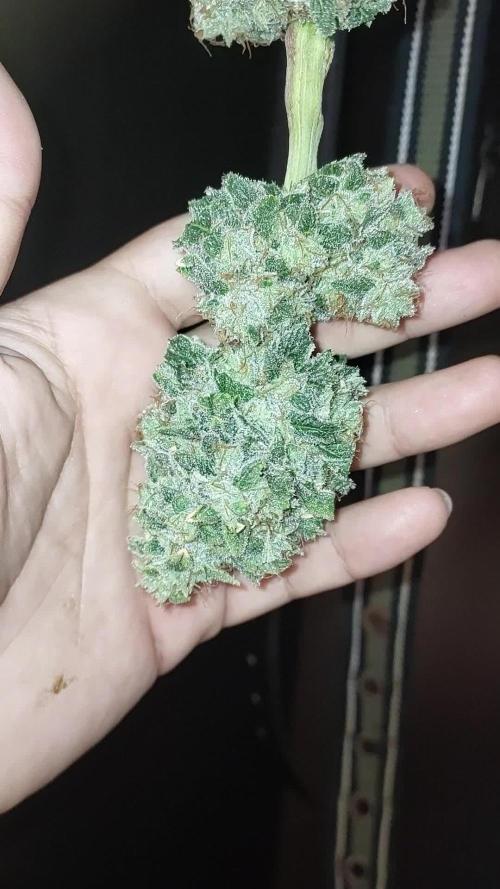
So close to being done. I'm going to holds out for another few days. Trichomes are still mostly cloudy. I want a more sleep assistant and pain reliever effects. The purple is really starting to show. I fertigate or water them 2 to 3 times a day. I have been using a Kleanse formula from Cyco Platinum nutrients in the middle of the day. Feed in the morning and right before lights off. EC in is close to the same as the EC of the runoff. pH of run off is right around 6. Smells incredible, so much more floral smelling than the last grow. I would say it is because of the biocanna bioboost supplement. I didn't use that one as much they last grow. It's expensive, but I think it's worth it. It's basically fermented molasses.
Likes
1
Share
Day 36 week 5 22.01.2020 Plant is doing great but atm the grow rate is slowing down a bit or maybe it’s just me !!! I did cut her down quite a bit and that’s maybe why , other then that strong thick branches and a low profile like I wanted !! She’s ready to go into the bloom box as soon as I free up some space there what should be in a few days to a week !! She’s getting 2 best spot under lamp but still a prime spot I would say So from now it’s getting interesting so stay tuned
Likes
1
Share
Likes
16
Share
@nijuana
Follow
I'm mitigate from this experience , the grow was not optimal why ? Maybe because my main thing is not to grow auto flower but femenised , the #3 was hermaphrodite plant ...
Likes
16
Share
@Raizativa
Follow
250ml c/u 0.5 Micorizas @colectivo 1ml Calmag @biobizz 1ml Bio Grow 1ml Bio Heaven Riego día 21 250ml c/u 1ml calmag
Likes
19
Share
Hoy fue la peor semana del cultivo y de mi experiencia cultivando, siendo el tercer día de la semana 5 se me desprendió el ventilador en el indoor y se me cae sobre una planta quebrando la punta principal (blue moby). día siguiente queriendo doblar el tallo principal lo arranque literal, ahora está en un mal estado, en comparación a la blue moby que recupero. Leo criticas y concejos! Bh
Likes
77
Share
@ctm_dzagi
Follow
Dynamics starts to gain momentum Slightly straightened, poured compote With a metal stick кemoved all the shoots from the branches there is no point wasting resources on them You can speed up the filling of the pot from the top by lowering the light, but then the root will not have time to fill the pot, so just wait I refresh the bend every day Сut the side light to the maximum, turned off the sink, it's too cold at night at the end of the week, work began on preparing for the replacement by the middle row
Likes
36
Share
@GYOweed
Follow
Wow its good i pruned all the fan leaves at flip. Hit it cytokinins week ago to stop stretch both low ppm drench and foliar later. Lucky i still have room to shorten light hanger to raise lights. Keeping it 13/11 but now I'll introduce far red led initiator now before dark perdiod. Then 12 12 week 4 and add UV cfl.
Likes
9
Share
This week i topped the plant at the 4-5th node Check out YouTube video SuperSmoker for more!
Likes
19
Share
Finally some progress, maybe now we can start picking up the pace, eh? She's got this weird spiraling growth going on, as if she is a knot coming undone, or like a tornado.
Likes
67
Share
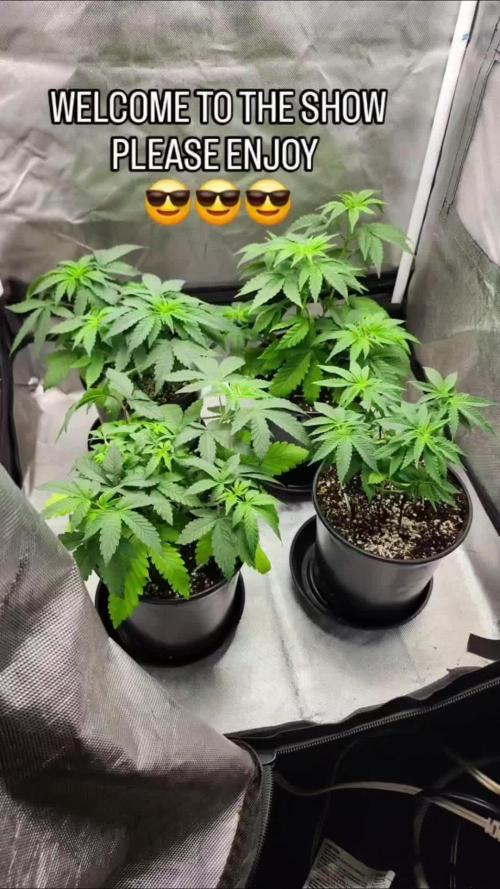
Day 10: The plants and the leafs grew a bit in size, they are still focusing on rooting. Added some veg nutrients today to the feeding schedule, because I saw some green spots, not to confuse with full green leafs, which is normal with new leafs and young plants or in later stage a (n)itrogen deficiency. No this indicates that they need just a little bit nutrients. Normaly this would not be the case with normal soil(it has nutrients in it for the first weeks), but again it can happen with cocos as a soil. The leafs on the pictures are like that because the lights are off + the humidifier makes the leafs wet which results in it getting heavy😝. Will update again this week, Enjoy for now 🙏