


Likes
Comments
Share

@GERGrowDesigns
Follow
-I am Back soon-
Hope youre doing Great all 🙏
See ya -GGD
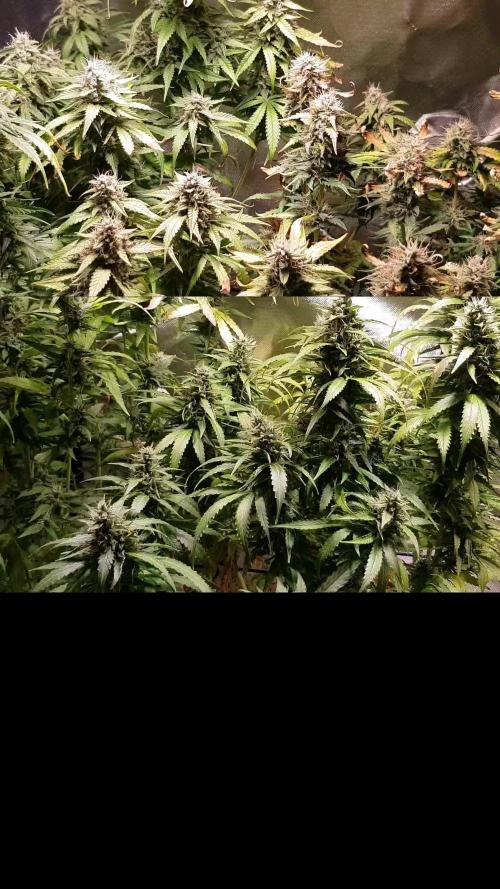
Theyre Almost Died completly over my Holidays between last Veg Week and the First two Flower weeks.
Happy how they Recovered and Growing Flowers aswell in theyre automatic Livespan

Likes
2
Share


@Solv7
Follow
Harvest on day 72 for this Northern Lights auto by Seedsman. Yield was not a priority as I messed up my watering schedule. Overall pretty happy with this plant, buds are super dense and sticky, great citrus smell when you break up the buds, tastes really smooth and also sweet. Lovely night time smoke. Great strain by Seedsman!

Likes
13
Share


@cookingwithninja
Follow
Week 9 day 1 video pheno.
Gonna chop this week
Week 9 day 7 well chop this weekend so on week 10 Day 1-2. Just waiting on a light to reveg one.
Everything is magic
Likes
2
Share


@BigGGrows
Follow
I had to bring her back inside this week. She was still growing in the greenhouse, but stuck in preflower. She was getting taller and taller with no budlets in sight. Hhmmm i wonder???
You guessed right, SHE IS A PHOTO PERIOD!
FXCK! so i had to take my Zkittles that was in preflower outside earlier than i wanted, in order to make room for this huge lemonberry haze that i had to start 12-12 on. Three days of 12-12 is starting to give me pistols....so she IS NOT an auto. She is still GROWING, and the 2 main tops are getting close to the leds. I had to tie her down using pipe cleaners and the tent frame. I sure do hope she doesn't get to much taller. I don't want the leds to burn her up, as i cannot raise them anymore. The LEDS are zip tied directly to the tent support frame and the support lines have been double looped to half their original hanging length. There is not much more i can do but start tying her down to the tent poles. THIS GIRL IS GOING TO BE A MONSTER YALL! Stay tuned! Other than the inconvenience of it being a photo, if i can pull this off with the limited space i have, she should yield HEAVY.


Likes
8
Share

@420DeepGrow
Follow
📆 Semana 7
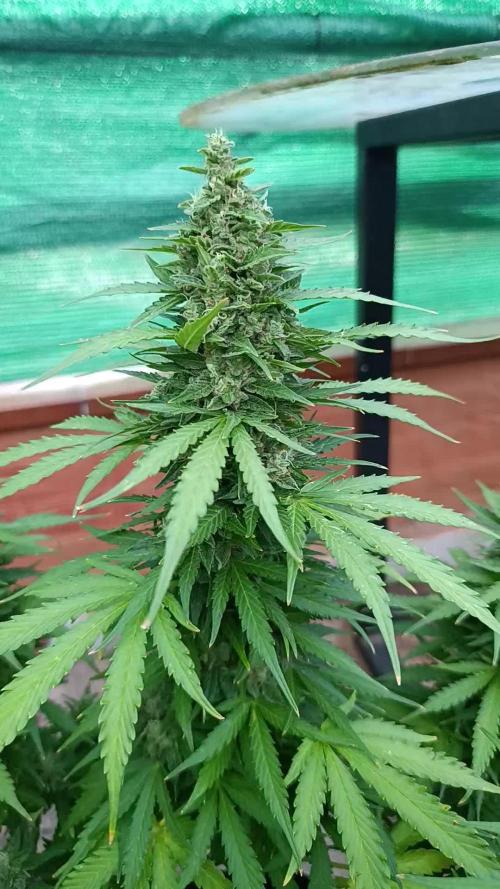
La floración entra en su fase final. Los cogollos alcanzan un gran nivel de compactación y la producción de resina se encuentra en su punto más alto. La mayoría de los pistilos comienzan a oscurecerse y el intenso aroma ácido termina de definirse, mostrando todo su potencial.
⚡ EC: 1.4–1.6
💧 pH: 6.2–6.5
🌡️ Agua: 18–22°C
🌫️ Humedad: 35–40%
☀️ Luz: Fotoperiodo natural, abundante sol directo
🔥 Nota: Es momento de reducir ligeramente la nutrición y observar la evolución de los tricomas para planificar el lavado de raíces y elegir el punto óptimo de cosecha.
Seguimos creciendo fuerte 💪!
Likes
21
Share


@Bak2Blk
Follow
The remaining girls are doing great. They stink so badly tho... Like a mix of feet and citrus 🤣🤣 I've sense turned on my exhaust system.
5/2/2023: So I've added more pics... the girls are still doing great so not much to report. I just can't wait til this grow is done and I can cut them down. I love saving $$ by growing my own shit... 😄

Likes
6
Share


@GoldenWeedGrower
Follow
Legend
Timestamp: 📅
EC - pH: ⚗️
Temp - Hum: 🌡️
Water: 🌊
Food: 🍗
pH Correction: 💧
Actions: 💼
Thoughts: 🧠
Events: 🚀
Media: 🎬
D: DAY, G: GERMINATION, V: VEGETATIVE, B: BLOOMING, R: RIPENING, D: DRYING, C: CURING
______________
📅 D22/V18 - 07/05/24
⚗️ EC: 0.7 pH: 5.3
🌡️ T: 22 °C H: 50%
🌊
🍗
💧
💼
🧠
🚀
🎬 1 TL video
______________
📅 D23/V19 - 08/05/24
⚗️ EC: 0.7 pH: 5.3
🌡️ T: 22 °C H: 50%
🌊
🍗
💧
💼 Topping and LST
🧠
🚀
🎬 1 TL video of grow and one of the topping
______________
📅 D24/V20 - 09/05/24
⚗️ EC: 0.9 pH: 5.4
🌡️ T: 19 °C H: 50%
🌊
🍗
💧
💼
🧠
🚀
🎬 1 TL video
______________
📅 D25/V21 - 10/05/24
⚗️ EC: 0.9 pH: 5.4
🌡️ T: 19 °C H: 50%
🌊 12 L
🍗 Calmag, Grow A-B, B52, Hydroguard, Rhino Skin, Bud Candy
💧
💼
🧠
🚀
🎬 1 TL video
______________
📅 D26/V22 - 11/05/24
⚗️ EC: 0.9 pH: 5.4
🌡️ T: 19 °C H: 50%
🌊
🍗
💧
💼
🧠
🚀 Out of Home
🎬 1 TL video
______________
📅 D27/V23 - 12/05/24
⚗️ EC: 1.0 pH: 5.3
🌡️ T: 20°C H: 50%
🌊
🍗
💧
💼
🧠
🚀 Out of Home
🎬 1 TL video
______________
📅 D28/V24 - 13/05/24
⚗️ EC: 1.0 pH: 5.2
🌡️ T: 20°C H: 50%
🌊
🍗
💧
💼
🧠
🚀 Out of Home
🎬

Likes
3
Share


@MicroHidroGrow
Follow
Día 22. Se empieza a notar el más el estiramiento. Recién empiezan a aparecer algunos pistilos blancos. Por lo visto si es bastante sativa, y va a demorar más que las 10 semanas que se pronostican. De todos modos eso me hace cambiar un poco la rutina de nutrientes y voy a ver si opto por hacer algún agregado. Anteriormente no pude ter knar el diarko debido a una mudanza, pero combinando esta receta con big bud obtuve muy buenos resultados. De todos modos para el engorde me regalaron un nutriente apto para hidroponia que se fabrica en México y tengo entendido que da buenos resultados. Así que vamos a probar la combinación y ver resultados. Ya usaré el overdrive más adelante.


Likes
10
Share


@Yolka
Follow
It is a very strong plant.
It's just a monster. The branches are pretty big, it's still growing.... fuck... stop please :))
Still watering just water and some stimulants.
Sugars are showing up and I think it's a very good result of the blooming time.
Touching the flower with my hand, the smell is amazing, as my "perfumer" says - "I want a perfume like that".

Likes
23
Share


@GrowGuy97
Follow
Everything seems to be going ok, 2 of the 5 are a little behind as far as how fast they are getting buds
Update buds are getting much more frosty
Processing
Likes
37
Share


@MG2009
Follow
08/29/2018
Been a hot week but the girls don't seem to mind,90s in the day 82° at night and sticky,muggy weather. Their leaves all pointing ☝️,lets me know they are happy ☺️ .watered with plain water they were pretty dry pots weight was very light. Will feed and water in in morning sleep well and medicated😎
08/31/2018
Just a note today #1 is very green compared to the other 4 plants, could be potted plants running low on nitrogen? My soil has plenty according to soil test. I know last year's crop in soil was pale like other 4 plants, maybe biochar is helping soil retain it's nutes better? Year 2 for biochar, first year could have tied up some nutes....hmmm?
Ps
Last feeding today Fox farms big bloom at heavy feeder dose 1/2 cup per gallon, should see nice gains this week! 🙏🙏🙏.
Pss.
G GTH #4 loosing her smells, #3 smells of Skunk and coffee ☕,#2 minty chlorophyll orange,#1 menthal,skunky but very lite scent.
Should I pollinate a branch of each? Oh my God the pressure! Do I have enough pollen? Oh sorry for rambling on just smoked lemon sour diesel and thoughts very racy😀
Got to garden see you next week
😎😎😎😎😎😎😎😎😎😎😎😎😎
Likes
12
Share


@Chamed33
Follow
Second time flushing it.. I’m also running out of time before harvest I should’ve been flushing it a week earlier.. she’ll be ready in 2 days for chop
Likes
66
Share


@LoveGrowWeed
Follow
Today is day 9 from germination.
There was one watering on the 7th day, half a liter for each plant.
4 ml/l BioBizz Root-Juice
Also on the 8th day there was spraying from a pulverizer with the composition:
1 ml/l BioBizz Fish-Mix
1 ml/l BioBizz Acti-Vera
At first it was very hot, the sheets were crumpled, the peak temperature was 31 degrees Celsius. Now everything is fine with the temperature, during the day 25-26, at night 20-21.
___
upd 11 day veg
adding water to the humidifier
I also added an organic CO2 generator to the box.
So far everything is going well. There are plants a little more, there are a little less. The largest and smallest are in the photo.
I'm not sure I'll post another post before February 14, so happy valentine's day, love your girls =)
_____
UPD 13.02
Something I have already lost in the days. Therefore, we will consider the 1st day of the veg in the diary on February 1. Go.
Today is February 13 - 13th day of veg.
I have a humidity of 20%, so the humidifier lasts less than a day to maintain a humidity of ~60.
So we had
- Humidifier WiFi xiaomi.
- Sonoff WiFi relay.
- Pump for mini fountains.
Because I am a lazy creature, I am too lazy to go to the plants every day and pour water into the humidifier.
So, when the humidifier runs out of water, it sends a signal to the phone that it has turned off.
When I see such a message, I open the ewlink, click on the pump button, the wi-fi relay turns on the pump for 4 minutes (full tank 5-6 minutes), after 4 minutes it automatically turns off (sonoff relay setting). Details in the video.
Was watering 1 liter per plant
Biobizz FishMix - 1 mll
BioBizz Acti-Vera - 1mall
__________________________
Upd
14.02 - I wanted to make a fim, it turned out to be a top. Oh well, don't worry =)

Likes
14
Share


@BillMonroe
Follow
It's about week 6 I guess, I don't know.
Pheno 1: 2 short ones with great smelling medium sized buds. Fast
Pheno 2: looks like a nice producer, very frosty, nice growth, keeping an eye on this one. Slowest of the bunch but not a slow plant by any means
Pheno 3: woah, THC bomb! The frostiest plant in the house. Also seems like a fast one
Great smells
Quite excited for these awesome plants from Zambeza!
Catch you before harvest time for some nicer pictures

Likes
18
Share

@Hempcules
Follow
WEEK 17
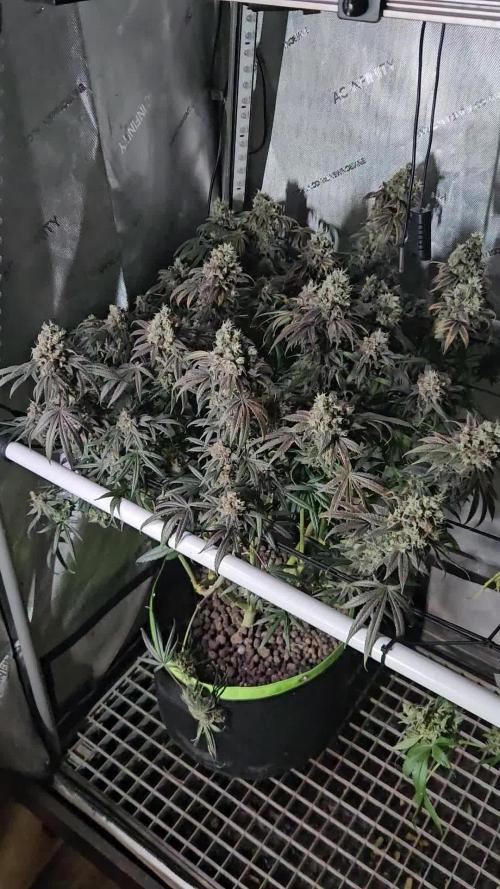
It’s coming to an end with this grow. I’ve already reduced the nutrients over the course of the week and I think I’ll be able to harvest soon. At the moment, a few amber-colored trichomes can already be seen.
The buds have become thick and firm by now and are covered in plenty of resin.
Now it’s entering the final phase, and I’m already looking forward to the harvest.
PPFD: 1000µmol/m²/s
Water: 2x water 1x nutrient solution
Vpd: 1,8Kpa

Likes
52
Share


@Salokin
Follow
Hi Growmies,this was the last week of nutes she’s getting. Feels like I completely misjudged how far she is along, as it seems like she has started the ripening process. Ph and ec was in line the whole time, once the leaves started fading i thought that I have a lock out or sth, so I fed canna flush for a day and continued with a fresh reservoir as per my regular feeding schedule, To no avail, as she continues to fade, even after. Not a Biggy, as the trichomes are definitely all far enough along to harvest her after the next week of flushing.
Thanks for stepping by and until next week :)

Likes
29
Share


@Myrcene_Dream
Follow
-Pretty close to being done but trichomes are not ready yet. I usually like about 70% cloudy and 30% amber.
Likes
86
Share

@THcHunteR23
Follow
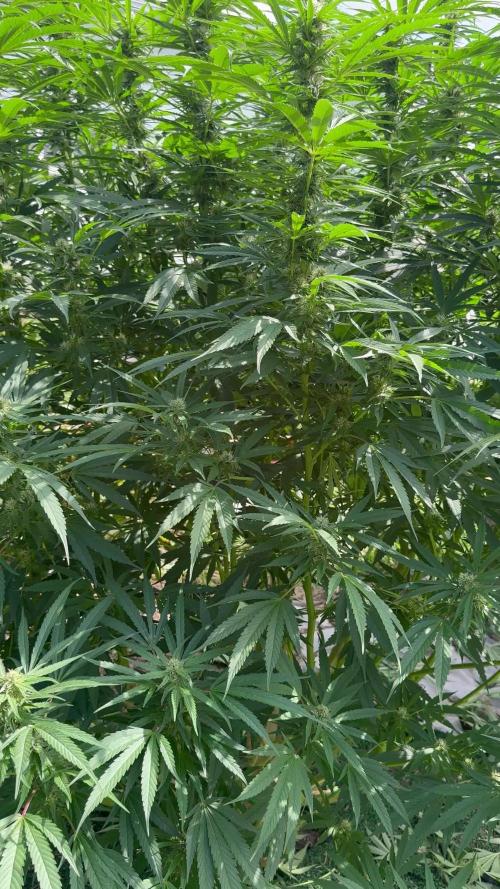
Dernière défoliation Et encore WoW si vous pouviez sentir cette douceur crémeuse et sucrée 🤤🤤 🧡🧡Kannabia🔥🔥😍

Likes
27
Share


@Smokepurple137
Follow
Looking good hopefully all will be showing signs of flowering at the end of this week. I'll update a few more times this week.