


Likes
Comments
Share

@theChimp
Follow
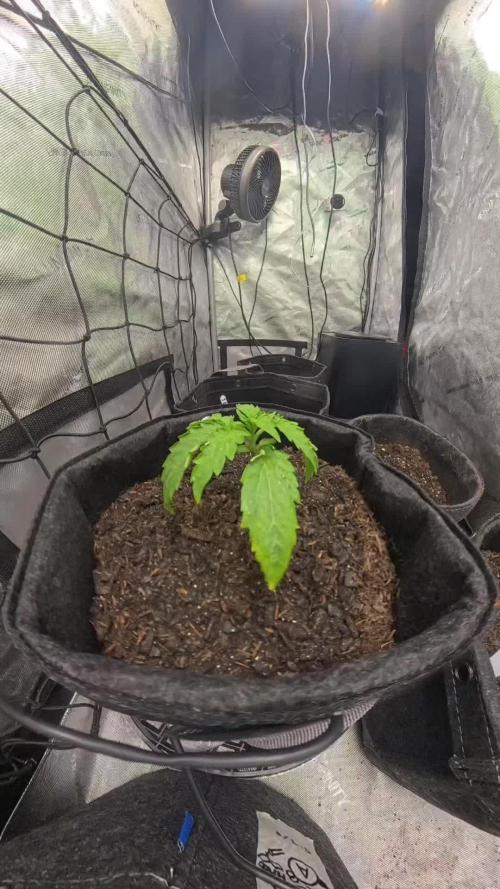
POTG continued its trend as the fastest-growing plant within the tent. The fourth and fifth nodes appeared this week.
All watering was completed by hand. Some leaf curling was observed, as well as browning at the tips of some of the oldest leaves. While not ideal, if the issue does not persist, it shouldn’t impact the harvest.
Furthermore, I was curious whether using a soil moisture meter would help with watering. While following publicly available soil moisture percentage guidelines, the plant started to develop some signs of overwatering. Within the week, I decided that sticking with my own sense of when the plants needed to be watered was much more effective. This is a useful reminder: chasing numbers is not always optimal, because no two grow setups are the same. Ultimately, you have to listen to your plants.
The fungus gnat problem has plateaued, and the neem oil application has been largely successful so far.
If we were trying to maximize harvest, I would have topped this plant at this point. However, since this is a part of a genetic expansion project, allowing us to determine our favorite strains, we are more focused on healthy plants and am not intending to force this plant to undergo much, if any, stress. Topping fast-growing autoflowers can be a useful technique, but I wouldn’t advise doing so on a slower-growing variety, as the plant may not fully recover before its internal clock flips it to the flowering stage.

Likes
16
Share


@Bread_n_Buds
Follow
Our two Green Cure F1 Hybrids of course by Zamnesia Seeds inaugurate a new photographic era for my studio: a magnificent immense, curved and perfect background has truly materialized in my farm, all in the name of Zammi.
The graphics drive me crazy and the Zs in the background like Tetris are a gem of the very talented content creator of Zammi who gave me this gift. There are so many possibilities this is only the first time I've used it...
Let's get to the plants because I'm really overexcited for this super top background and I could talk about it for hours...
As said several times but it is worth repeating when harvesting, this time we followed the logic of comparing 2 plants: the first left to grow freely with just a little cleaning and the second with the application of techniques, a mainlining to be precise.
Speed: The good news is that they practically matured together, the one without techniques is perhaps a little more mature but really just a little. Both ready in 10 weeks.
Resin/scents/taste: Truly an excellent level of resin and a fantastic coffee/chocolate scent that develops from the trichomes, it wouldn't be easy to say that it's CBD if I didn't know, delicious already in the dry room ready for 15-20 days of treatment and then off to the Autoflower World Cup, they definitely go in the CBD category.
Production: The amount of grass is not bad at all, considering that they grew in full winter in vegetative mode, that they are in an 11-liter pot, in my opinion we are around 100 grams both maybe a little less. Let's remember 10 weeks guys now the plants go very fast without losing quality.... At least those of Zamnesia...
I'm very happy to have some CBD to consume, I recently ran out of oil and I miss it a bit.
Look at the photos there are many, comparative, alone and also on a black background, I'm working on the trichomes now and will upload them soon.
The F1 Hybrids from Zamnesia are truly spectacular...think about them.
Remember that we used Soil + Fertilizers + Additives 100% organic from Plagron, we love the taste of organic grass, you can notice the difference when I taste mineral and then hydroponics let's not talk about it.. Better a little less grass but more in line with mother nature at BreadandBuds.
Choose your ideal soil and fertilizers accordingly on the Plagron website with a fantastic auto-calculation sheet and get the fertilizers on the Zamnesia website.
---- https://plagron.com/en
Try a seed of this variety that drives us crazy..
---- https://www.zamnesia.io/en/10672-zamnesia-seeds-green-cure-cbd-f1-automatic.html
Description Zamnesia // Zamnesia's breeding team has harnessed F1 genetics to bring you Green Cure CBD F1 Automatic. This autoflowering cultivar is easy to grow, accessible and reliable for all levels of experience. Ready in just 11 weeks, growers can expect impressive yields of tasty buds with a clear-headed effect that's ideal for meditative moments.
All of this is provided in a place that, according to its own words, offers "all the best that nature has to offer", in fact.
---- www.zamnesia.com
------- Curiosity --------
My plants listen to Black music by
---- www.radionula.com alternating with 432Hz Stimulants
very easy to find online try doing a search on youtube and pushing music for your girls. It's very effective from my point of view. Try it!
*** Trichomes and Video coming soon

Likes
3
Share

@BudsPerMinute
Follow
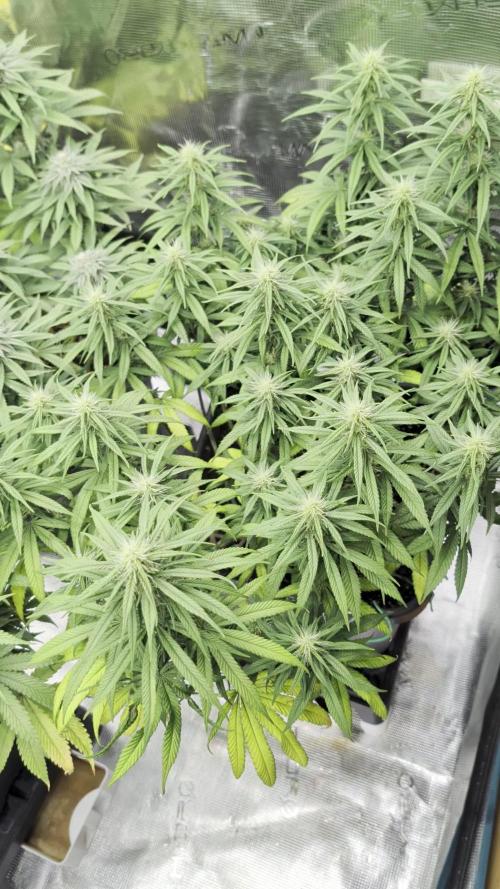
Woche 9
Die Mazar vorne im Zelt lässt sich ordentlich Zeit im Gegensatz zu den Zelt Schwestern!
Langsam fahren wir mit dem Novamax hoch um die Blüten an ihr Maximum zu pushen!

Likes
15
Share

@Ribemarti
Follow
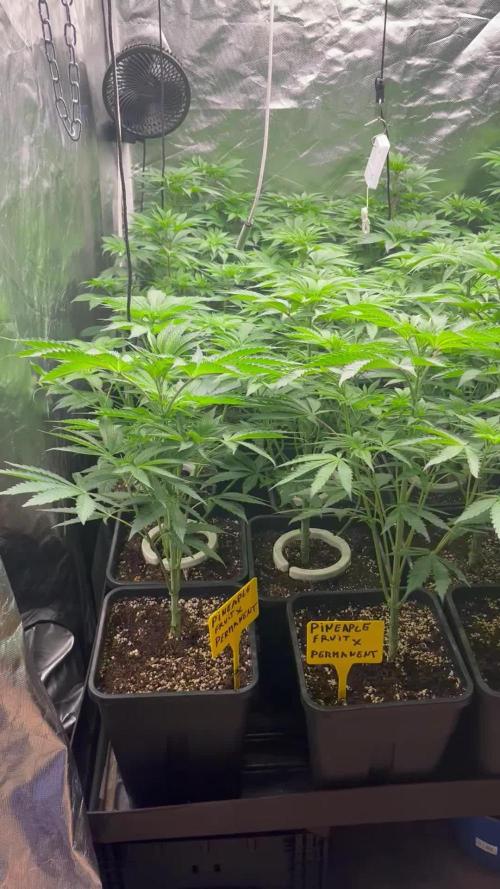
SEGUNDA SEMANA DE FLORACIÓN, LAS PLANTA ESTAN ESTIRANDO BIEN, TANTO PARA LOS LADOS COMO HACIA ARRIBA, QUEREMOS LLENAR Y NO DEJAR NINGUN HUECO, DE MOMENTO VAN COMO UNA MOTO
ESTOY REGANDO CADA PLANTA CON 1,5 LITROS, SIEMPRE RIEGO CADA 3 DIAS, EC 1080 PH 6,3 SEGUIMOS TODA LA TABLA DE BIOBIZZ
TENEMOS HASTA EL DIA 14 PARA HACER LA ULTIMA PODA DE RAMAS BAJAS, DESPUES DE DIA 14 SE PUEDEN ESTRESAR, SE VALORARA DURANTE LA SEMANA Y DOMINGO HAREMOS LIMPIEZA DE BAJOS,

Likes
5
Share


@pzwags420
Follow
I installed a PH controller but it didn't work right and only the ph up peristaltic pump is working. I will use this over my vacation as my PH drifts down naturally so this should work until i get a replacement. I watered in my gsc and other seedlings until runoff with 850 ppm heavy in nitrogen to green them up as the organic top dressing is taking too long.will see how they respond.on week 4 day 4 They are responding well to nitrogen Gsc is taking off!!!will continue nitrogen until end of this week as needed.


Likes
11
Share

@Aircoholic
Follow
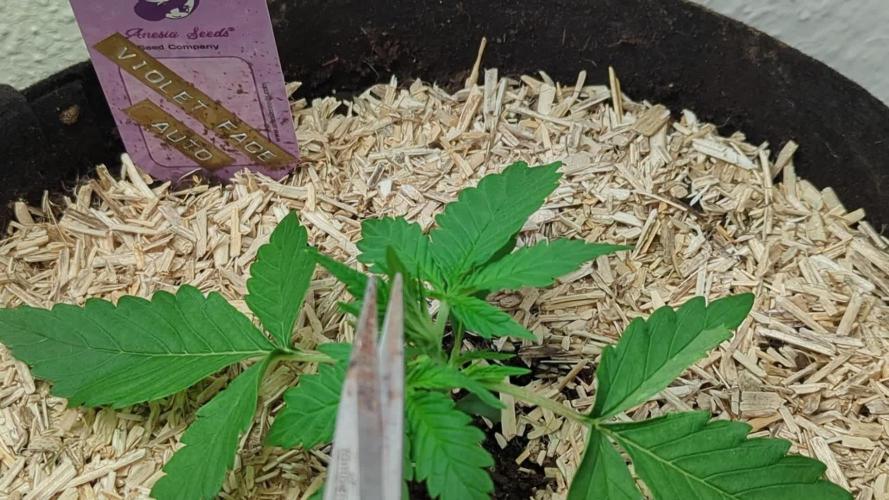
Looks like she recovered alright from the little dry patch in the watering schedule. Her leafs look healthy and vital, so I decided to top her on day 15 - maybe a day or two too early, we'll see. But I didn't just top her, I also removed the two top fan leafs - I'm aware, it's a tricky balance between the loss of energy produced from the leafs vs. giving the new growth underneath more light to stimulate growth. She'll be alright, I've got a good feeling about her!
She also received a layer of Mulch on top of the first soil layer. The idea: aiding the microbial life on the soil surface and at the same time reduce evaporation to prevent the top soil layer to dry out too quickly.

Likes
55
Share


Processing
Likes
30
Share


@BillMonroe
Follow
Compare the airpot roots versus the normal pots. No root circling. and the plant is bigger although that might be genetic. Perhaps it is due to the roots being able to get more oxygen
Transplanted late in week 3 into bigger pots,,, just water, no nutrients


Likes
25
Share


@psyych
Follow
going on great now week 7 !! about week or 2 to finish ! its startnig to get real frosty ! loove it !
new hd photos .


Likes
71
Share


@Krisis
Follow
05/22/24. Going into week 3 flower
Everything seems to be going pretty good so far. Finally got a bit of stretch and definitely have some bud formation.
As things are still so freaking dark with these ladies leaves I am still not giving a feeding. Have given them water with silica and calmag when things seem dry.
Plant 1 seems much more leafy and with many more bud sites than plant 2. Most of plant 2’s growth has not made it up to the trellis sadly.
I will be doing some cleaning up of the stuff underneath the trellis and some selective defoliation today or tomorrow.
Lights now about 75% at about 20 inches up. Temperature has been 73-82 with around 50% humidity.
I think I covered everything for now. Thanks for lookin
Likes
15
Share


@Taskot_Joe
Follow
Well she is definitely looking and smelling lovely! The outside weather is keeping things relatively easy with the grow, Not having to adjust the parameters in the tent too often, Will be looking at one or two more light feeds before I embark on the final flush! Still think she has a fair bit of fattening up to do so will try keep the page updated as much as possible!
Processing
Likes
9
Share


@Alejangrow
Follow
This week they they all took well to being topped. 🔝 ✂️ Temps are a little lower than I'd like in the veg tent but they're still chilling.☀️ I added a small humidifier to the tent to help out with this dry season.💧
Likes
32
Share


@Arcadium
Follow
Finally feel like she's headed into flower, thickening of bud sights, growth has slowed, she must of shot up 2' over the last month that flower stretch is real. This will push her to mid October unless I have a miracle, I'm really banking on nice weather.
I did a heavy defoliation on the inside, clean it up for better airflow and to make it easier come harvest.
I have to battle mold and mildew in the fall, I used to just use a foliar spray of apple cider vinegar, which works great for mildew, but I need something stronger for mold.
As such I've started a Lactobacillus Serum, that with a few drops of organic food grade cinnamon oil in a foliar spray has said to reduce instances of botrytis by 90%, anyone have experience with Lactobacillus in battling mold /mildew?

Likes
4
Share

@HanzzCZ
Follow
What’s uppp! Week twelve (fourth in bloom) is behind us.✌️🌼
This week, she didn’t grow any taller and stayed at the same height.
Two days after defoliation, I lowered the light to 25 cm. I think she handled it just fine. 👌
She doesn’t seem to be lacking anything or showing any signs of issues. 😎
The buds are starting to get frosty, gaining volume, and they smell like wild strawberries. 🍓
Good luck every one! ✌️
Any tips or advice are always welcome 😂🔥
CZ
____________________________________________________________________________________________________________________________________________________
Servus, dvanáctý týden, čtvrtý týden v květu, máme za sebou. ✌️🌼
Holka ten to týden už do výšky nešla. Dva dny po DEFO jsem snížil světlo na 25cm. Myslím si, že to pobrala v pohodě. 👌
Nevypadá, že by ji něco chybělo nebo vadilo.😎
Šišky začínají cukrnatět, nabírají na objemu a voní po lesních jahodách. 🍓
Ať se daří! ✌️kdyby měl někdo nějaký typy/rady uvítám váš komentář. 😂🔥
Likes
9
Share


@russrahl
Follow
Another week gone by already, I’m a little late getting this up this week as I was busy harvesting my other tent. Turned my air conditioner off this week because I’m pretty sure it is blowing on my one plant too much and causing some issues. Also don’t need it anymore since summer is over and temps are stable again without it. I also was forced to turn my light down again to 600w as my buds were showing signs of too much light, they have been in 600w now for a couple days and they are starting to show normal bud development again. We are into the 6th week now and gonna push them 9 prob I’m thinking, still lots of time for these girls to fatten up. That’s it till next week, Cheers💨

Likes
18
Share


@SpotWeed420Original
Follow
Y bueno Fumetillaas ya en la semana 10 cumpliendo con el propósito de este medio ... Ir informando que pasa x ende querías decirles que nunca medimos ec... La verdad no podía frenar el amarillento o esas carencias ... Controlaba ph y suficiente... Ahora empezaremos a medir ec y ph para poder tener mejor electro conductividady tener mejor absorción de nutrientes ya que medimos macetas después del riego y tenemos una ec de 4.5 a 3.5 la cual deberia estar en otros parámetros por ende ... Siempre tuvimos alimentos suficientes para ellas solo que no teniamos la implementación necesaria... Después de la 11 a 12 cortamos y subimos el final de esta planta que luchó con todo

Likes
10
Share


@KcKoolaidMan
Follow
Still vegging strong! Haha they are about the size I want before I flip. One of the center plants was a late germination and is a week behind I was trying to let it catch up in height and let it stretch out a bit more before I flipped but I’m getting close to just doing it.
They are all really full and honestly massive haha it’s not usually my style to just let them grow and not do any defoliation but hey trying something new. I will at some point thin them out a bit. I will do a bit of bottom lollipoping before I flip for sure just to help with access for watering later on.
Not much else to report, thanks for stopping by snd as always 🍻

Likes
31
Share


@The_Doctor_Green
Follow
En esta nueva semana he trasplantado a macetas de 10 litros a 2 plantitas que estaban en macetas de 3L .
La que he planteado a tierra ha tenido un crecimiento significativo de una semana a otra.
Likes
29
Share


@Rounder
Follow
Hi guys, I just let them go, free growing taking care and adapting temperature the best I can. Nutrients I had a bit more and just the minimum dosage of Cal-Mag. I AM happy and they look too.
