


🍇 Planet of the Grapes Auto











Indoor
Room Type
Defoliation
weeks 7
11 liters
Pot Size
4.2 liters
Watering
Start at Harvest
G
Germination3mo ago
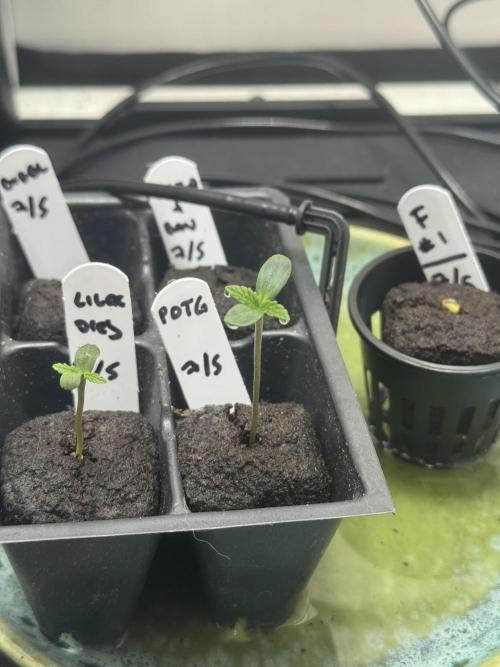
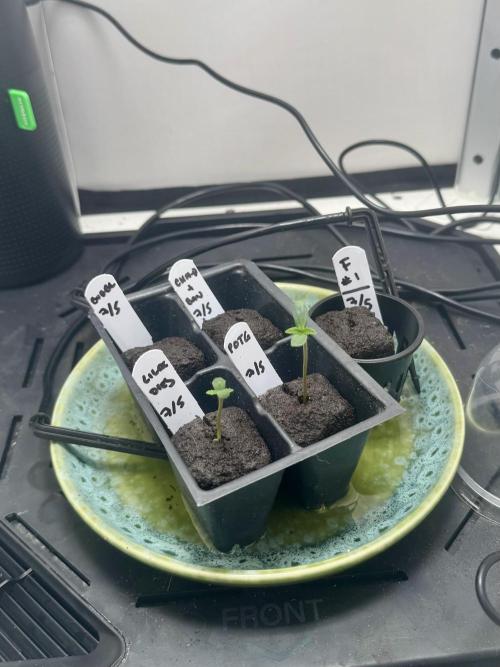
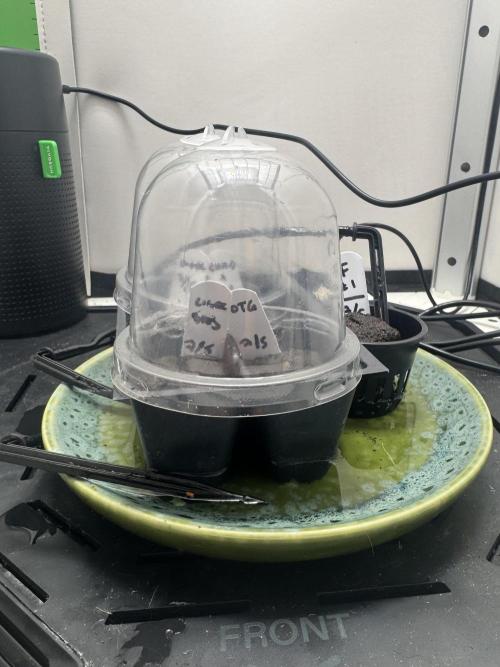

theChimp After utilizing the paper towel and Ziploc bag method, the taproot seed was placed in a root riot Plug, which was then left inside the tent for multiple days.
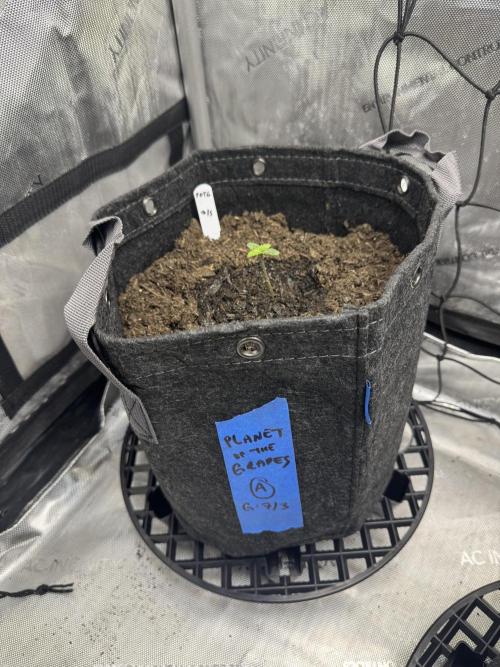
This seedling has EXPLODED in growth! This seed was germinated July 3rd, placed in the started pod July 5, and has grown stronger than anything else in the starter tent. The tap root was about an inch long when transplanted, which was the longest tap root (even though it was germinated the latest).
With multiple genetics starting within days of each other (see my profile for others), this will be a great opportunity to compare growth rate and cycles between some great seeds. I invite you all to join me on this growing journey!
2 likes
comments
Share
Used method
Paper Towel
Germination Method
1
Week 1. Vegetation3mo ago
6.4 cm
Height
18 hrs
Light Schedule
24 °C
Day Air Temp
No Smell
Smell
69 %
Air Humidity
20 °C
Solution Temp
19 °C
Night Air Temp
11.4 liters
Pot Size
0.4 liters
Watering Volume
61 cm
Lamp Distance
theChimp Weekly Summary
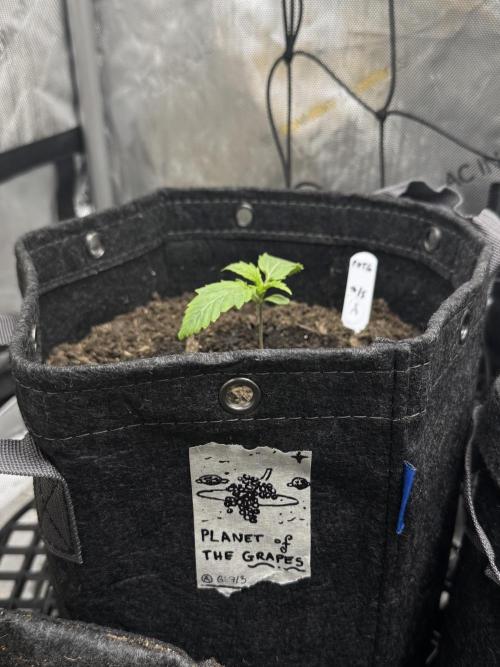
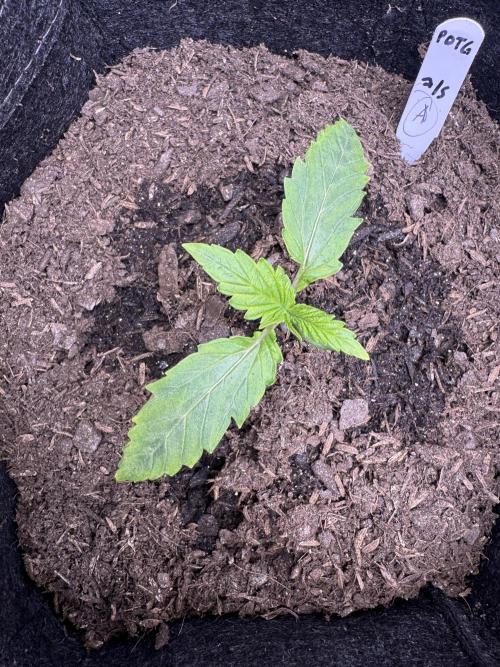
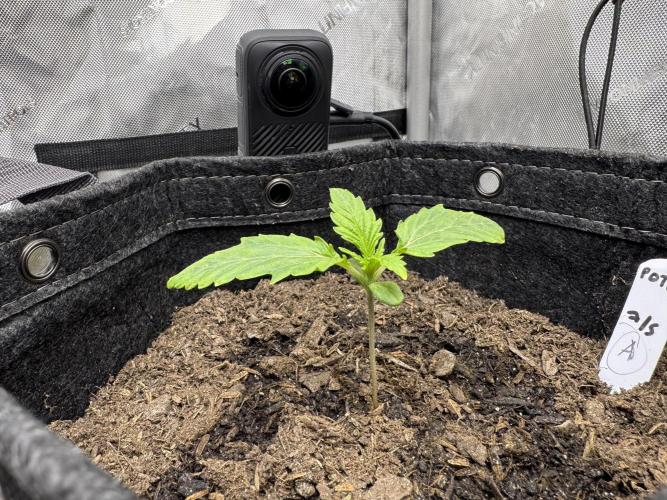
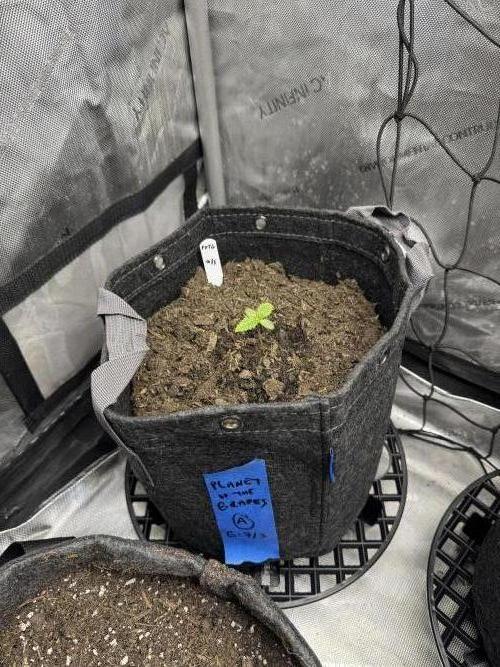
Planet of the Grapes (POTG) entered its first full week in a 3-gallon fabric pot after transplanting. Establishment was uneventful, and the seedling quickly emerged as the most vigorous plant in the tent. Throughout the week, growth remained compact with steady leaf expansion, while the primary focus shifted toward refining the growing environment through several humidifier adjustments. By the end of the week, the environment had stabilized and the plant continued developing without signs of stress.
──────────
Environmental Summary
Average Temperature: 74.0°F
Average Relative Humidity: 69.7%
Average VPD: 0.87 kPa
──────────
Day 7
Watering: 100 mL
POTG was transplanted into its permanent 3-gallon fabric pot. The FoxFarm Ocean Forest soil mixture was already at an optimal moisture level for a young seedling.
──────────
Day 8
Watering: 65 mL
No additional irrigation was required following transplant. Moisture remained available throughout the medium, allowing the seedling time to establish without unnecessary disturbance.
──────────
Day 9
Watering: None
A light 65 mL irrigation was applied as the upper portion of the medium began drying. The seedling continued establishing well in the new container with no concerns noted following transplant.
──────────
Day 10
Watering: 75 mL
The medium had dried sufficiently to justify another light watering, which was applied as a ring around the seedling rather than directly against the stem. The second set of true leaves had begun to emerge.
Most of the attention today centered on the humidifier after condensation developed on the tent ceiling. Adjusting the outlet resolved the ceiling condensation but redirected moisture onto the LED fixture, where water accumulated before dripping into one of the pots. The humidifier was repositioned so the mist traveled parallel to the floor.
A small number of fungus gnats were also observed for the first time.
──────────
Day 11
Watering: 200 mL
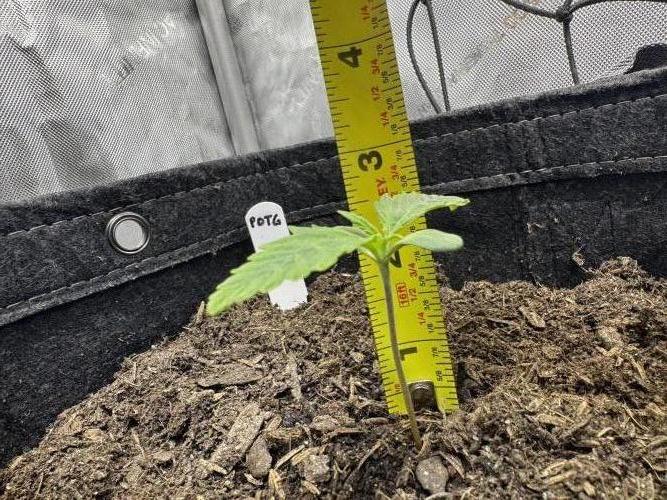
Height: 2.25 inches
The root zone had dried appropriately following the previous irrigation. The second set of true leaves expanded noticeably while maintaining a compact structure and healthy coloration.
The humidifier reservoir emptied overnight before being refilled the following morning. Despite the temporary reduction in humidity, no visible changes in growth or appearance were observed and the humidity within the tent never fell below an acceptable range.
──────────
Day 12
Watering: None
No irrigation was required today. Although the surface of the medium had begun drying, adequate moisture remained beneath the top layer.
──────────
Day 13
Watering: 300 mL
Height: 2.5 inches
Vertical growth remained largely unchanged, but leaf development continued steadily. The first pair of true leaves had reached approximately 2 in in length while the second pair had expanded to roughly half that size. The increase in canopy size was more apparent than any increase in height, indicating the plant had shifted its focus toward producing additional photosynthetic surface area.
3 likes
comments
Share
2
Week 2. Vegetation3mo ago
8.9 cm
Height
18 hrs
Light Schedule
24 °C
Day Air Temp
6.4
pH
No Smell
Smell
69 %
Air Humidity
23 °C
Solution Temp
24 °C
Substrate Temp
22 °C
Night Air Temp
11.4 liters
Pot Size
0.1 liters
Watering Volume
71.1 cm
Lamp Distance
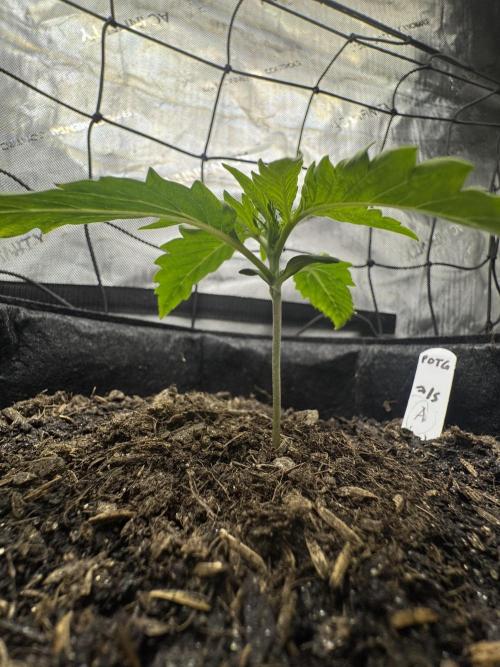
theChimp Week at a Glance
Height:
2.63” → 3.50”
Canopy:
5.0” × 3.0” → 7.0” × 5.8”
Key Developments:
- Maintained its position as the most vigorous seedling in the tent.
- First bottom watering completed with a 30-minute soak.
- Irrigation transitioned to pH-adjusted water.
- Preventative neem soil treatment applied.
──────────
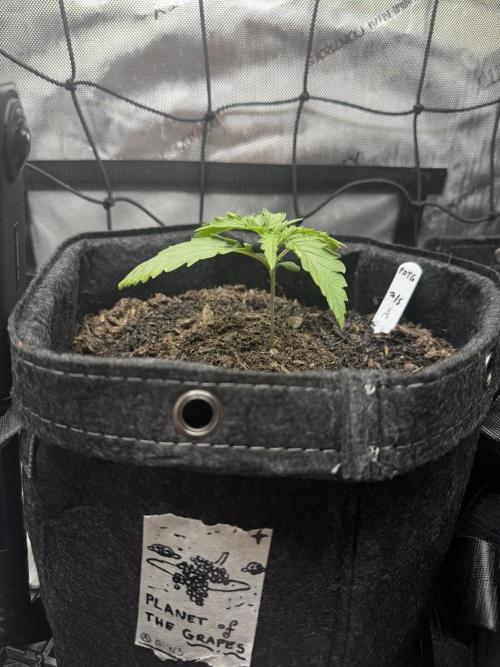
ETHOS Planet of the Grapes continued to distinguish itself as the fastest-growing plant in the garden, producing the largest gains in both height and canopy expansion during the week. Growth remained compact despite the increase in lighting, and the plant responded well to refinements in irrigation and environmental management. By the end of the reporting period, it had developed into a well-established plant with noticeably increasing vegetative momentum.
──────────
Environmental Summary
Average Day Temperature: 76.6°F
Average Night Temperature: 72.1°F
Average Relative Humidity: 70.6%
Average VPD: 0.87 kPa
──────────
Weekly Update
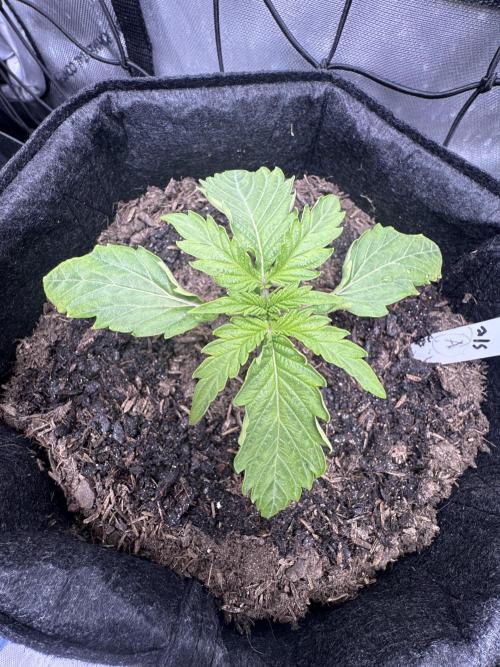
Planet of the Grapes continued to set the pace for the garden this week, showing rapid and consistent growth in both height and canopy spread. New leaves expanded quickly.
Water management evolved as the root system became established. Irrigation transitioned to pH-adjusted water, and the plant received its first bottom watering by sitting in approximately two inches of water for a 30-minute soak. This ensured the entire root zone was evenly saturated while encouraging continued root expansion throughout the fabric pot.
A dilute neem solution was also applied to the soil surface as a preventative treatment after a small number of fungus gnats were observed.
By week’s end, the plant displayed healthy color, broad leaf development, and continued vigorous growth. Its combination of compact structure, rapid canopy expansion, and strong overall vigor is hopefully an early sign for the future development of this plant.
4 likes
comments
Share
3
Week 3. Vegetation2mo ago
12.7 cm
Height
18 hrs
Light Schedule
24 °C
Day Air Temp
6.0
pH
No Smell
Smell
69 %
Air Humidity
23 °C
Solution Temp
24 °C
Substrate Temp
22 °C
Night Air Temp
11.4 liters
Pot Size
0.2 liters
Watering Volume
76.2 cm
Lamp Distance
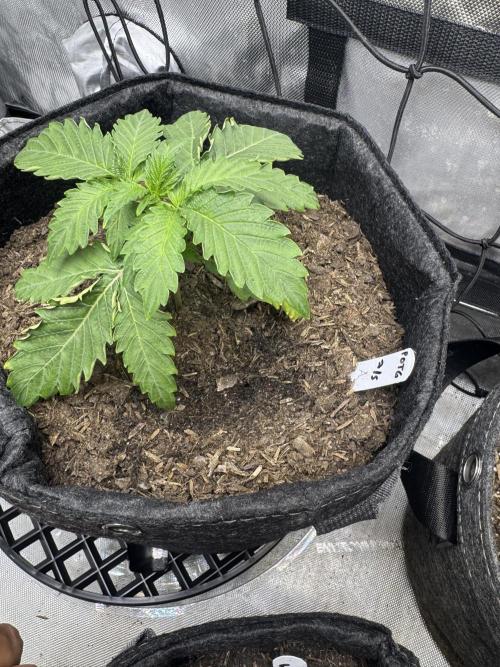
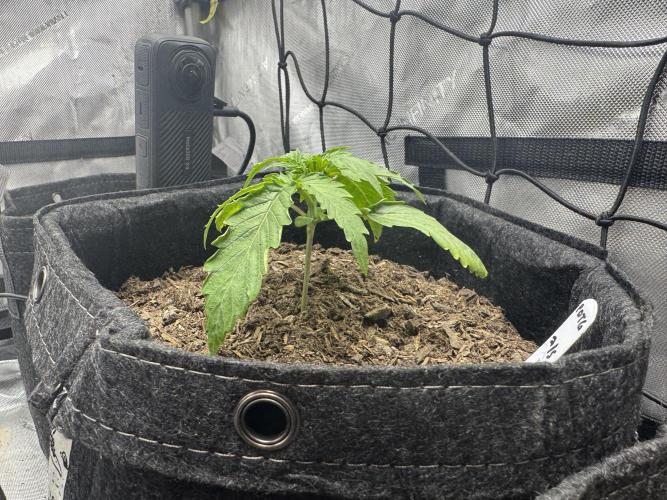
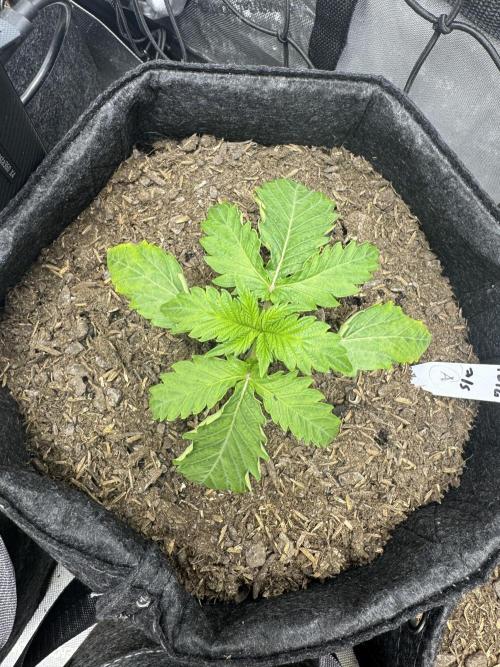
theChimp POTG continued its trend as the fastest-growing plant within the tent. The fourth and fifth nodes appeared this week.
All watering was completed by hand. Some leaf curling was observed, as well as browning at the tips of some of the oldest leaves. While not ideal, if the issue does not persist, it shouldn’t impact the harvest.
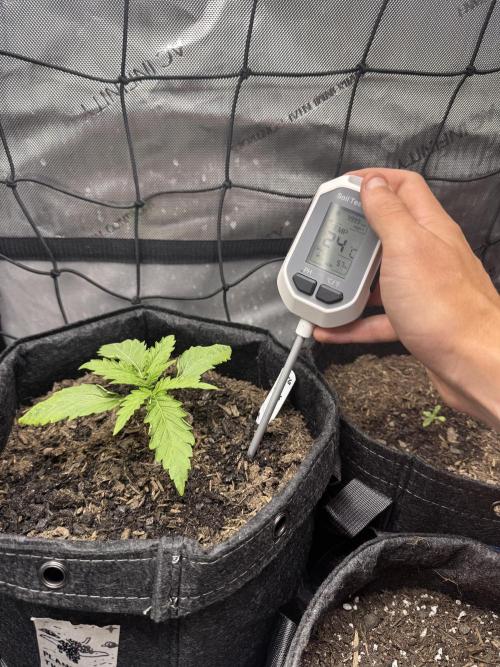
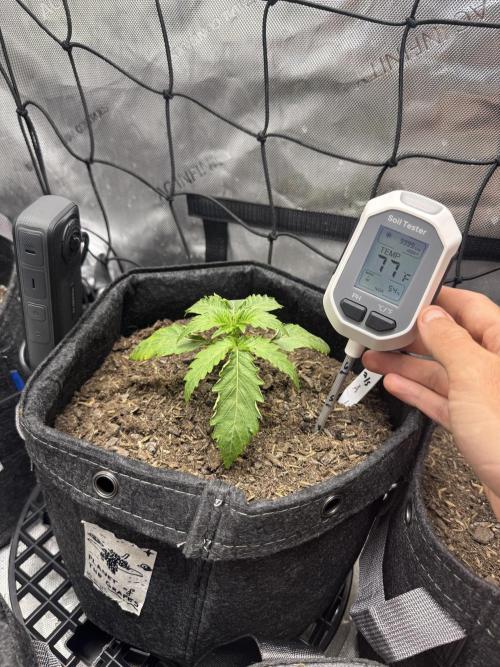
Furthermore, I was curious whether using a soil moisture meter would help with watering. While following publicly available soil moisture percentage guidelines, the plant started to develop some signs of overwatering. Within the week, I decided that sticking with my own sense of when the plants needed to be watered was much more effective. This is a useful reminder: chasing numbers is not always optimal, because no two grow setups are the same. Ultimately, you have to listen to your plants.
The fungus gnat problem has plateaued, and the neem oil application has been largely successful so far.
If we were trying to maximize harvest, I would have topped this plant at this point. However, since this is a part of a genetic expansion project, allowing us to determine our favorite strains, we are more focused on healthy plants and am not intending to force this plant to undergo much, if any, stress. Topping fast-growing autoflowers can be a useful technique, but I wouldn’t advise doing so on a slower-growing variety, as the plant may not fully recover before its internal clock flips it to the flowering stage.
2 likes
comments
Share
4
Week 4. Vegetation2mo ago
45.7 cm
Height
20 hrs
Light Schedule
24 °C
Day Air Temp
6.0
pH
No Smell
Smell
68 %
Air Humidity
23 °C
Solution Temp
23 °C
Substrate Temp
22 °C
Night Air Temp
11.4 liters
Pot Size
0.8 liters
Watering Volume
61 cm
Lamp Distance
Nutrients 2
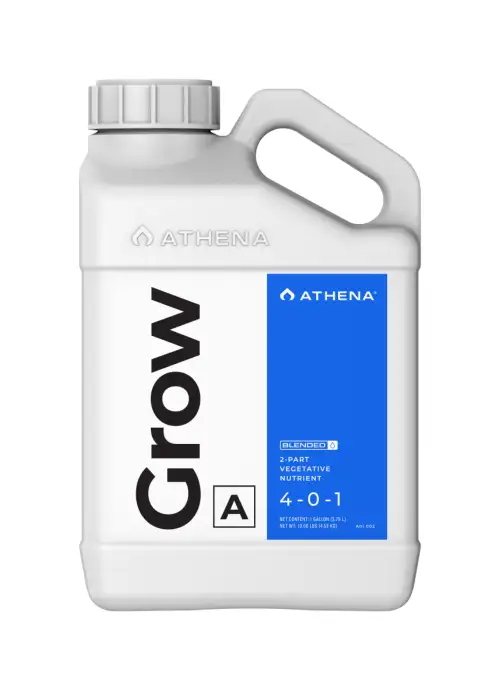
Grow A
4.5 mll
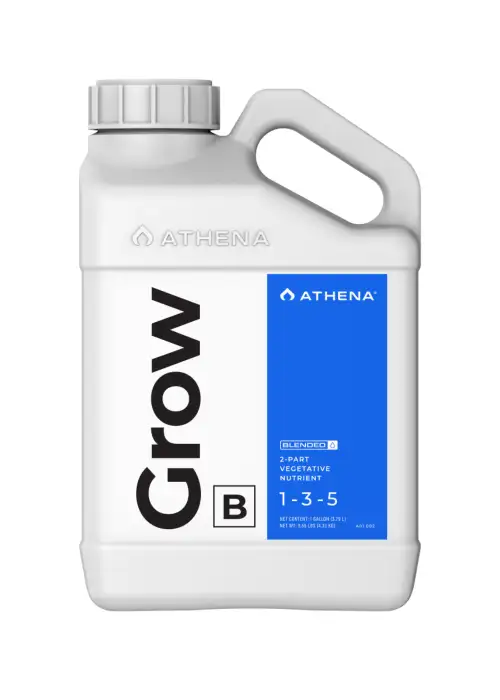
Grow B
4.5 mll
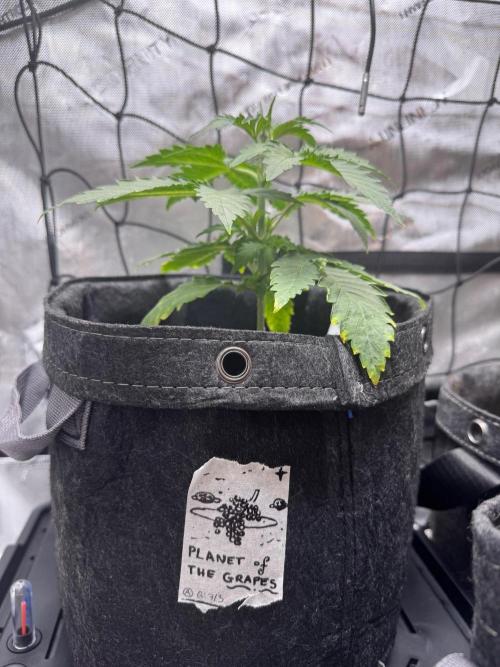
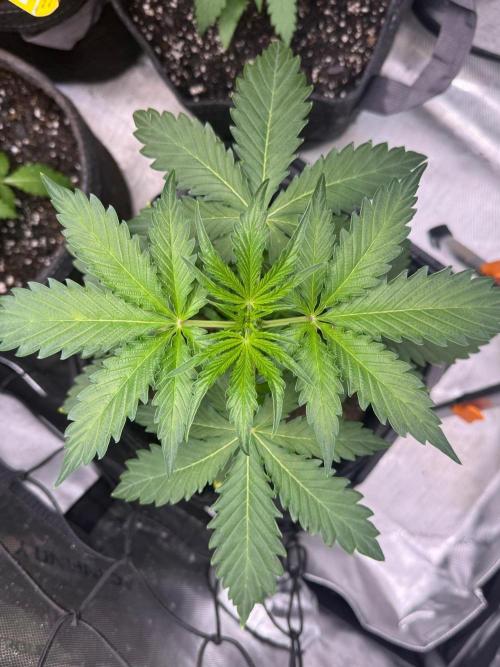
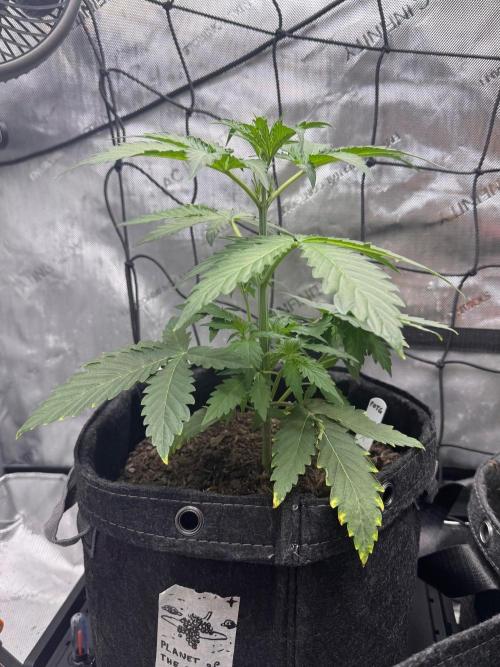
theChimp This Planet of the Grapes is turning into quite the plant! The height has nearly tripled since this time last week, peaking at 18 inches. In terms of intermodal spacing, the plant is averaging one set of flowering sites every 3.5 inches.
As we continue our journey of minimal stress, we have struck a perfect balance with the nutrition. The very tips of the leaves are burning, about 2-3mm in total. This means we are riding the line perfectly, maxing out the nutrient uptake with this beauty, and the growth we have seen absolutely supports that hypothesis. Massive growth this week, with beautifully symmetrical foliage. I press down on some of the newer growth, which helps expand out the branches. This helps with light penetration and airflow without adding much of any stress to the plant. Just don’t press down too hard!
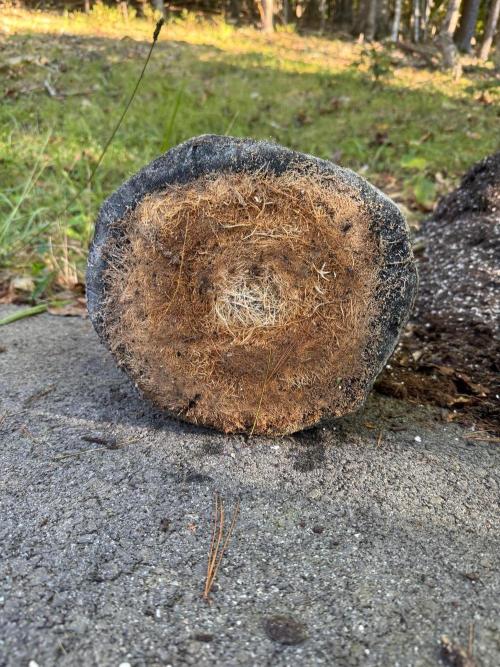
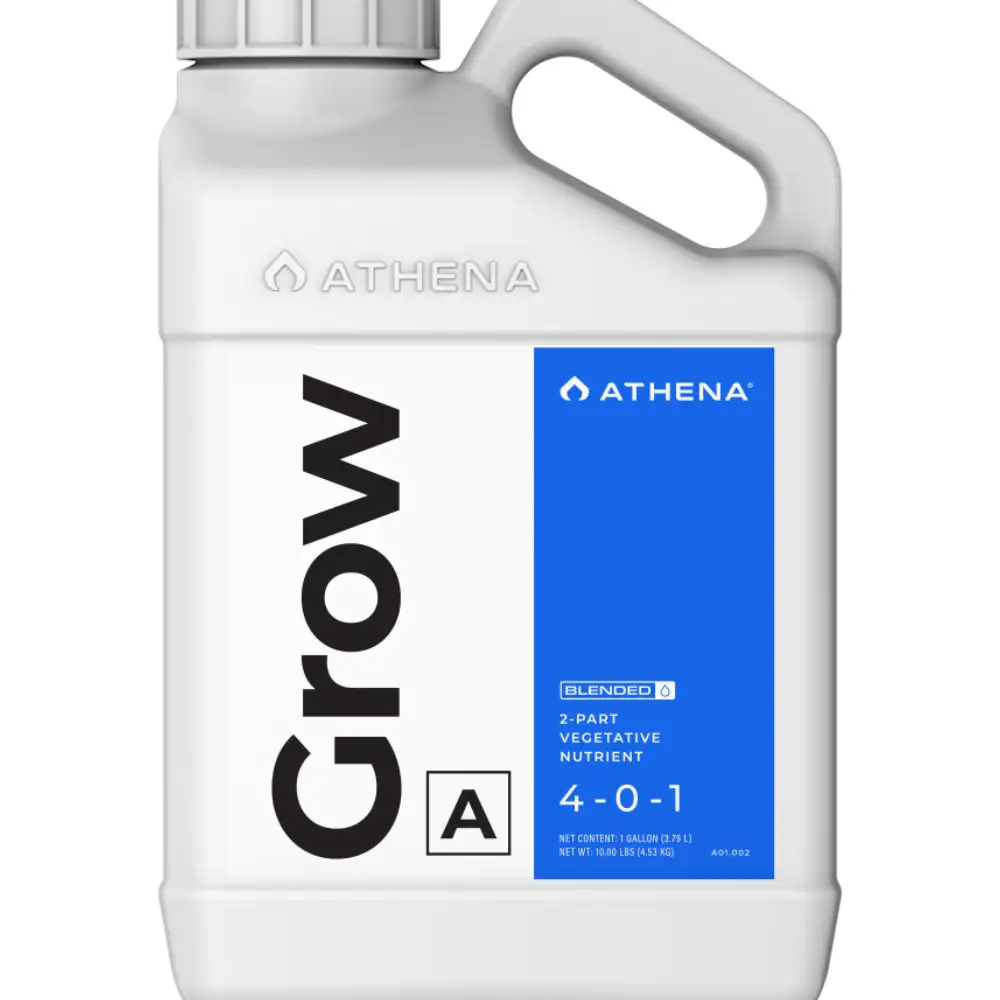
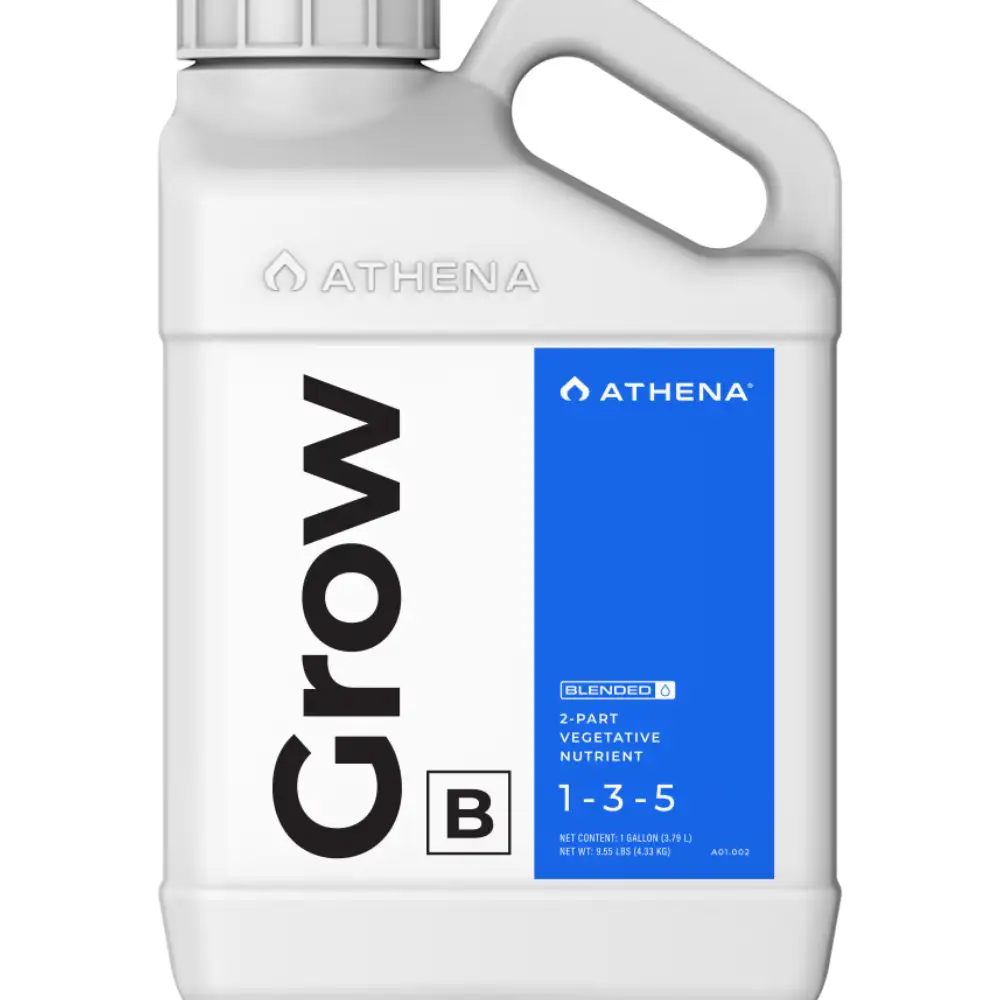
We transitioned the plant to a VIVOSUN self watering base, and fed 4.5mL of Athena Grow A and Grow B to the reservoir. The roots quickly grew through the bottom of the bag and started to wrap around the rope. To combat this, we rotate the whole plant to move the roots around and break off any micro-attachments.
Absolutely wonderful week of growth. The other photoperiods have been transferred to the veg tent and we have adjusted the lighting schedule to 20/4 since it’s just the two autoflowers in the tent, now.
3 likes
comments
Share
5
Week 5. Flowering2mo ago
76.2 cm
Height
20 hrs
Light Schedule
24 °C
Day Air Temp
6.0
pH
Weak
Smell
65 %
Air Humidity
23 °C
Solution Temp
23 °C
Substrate Temp
22 °C
Night Air Temp
11.4 liters
Pot Size
1.5 liters
Watering Volume
45.7 cm
Lamp Distance
Nutrients 2
Grow A
6 mll
Grow B
6 mll
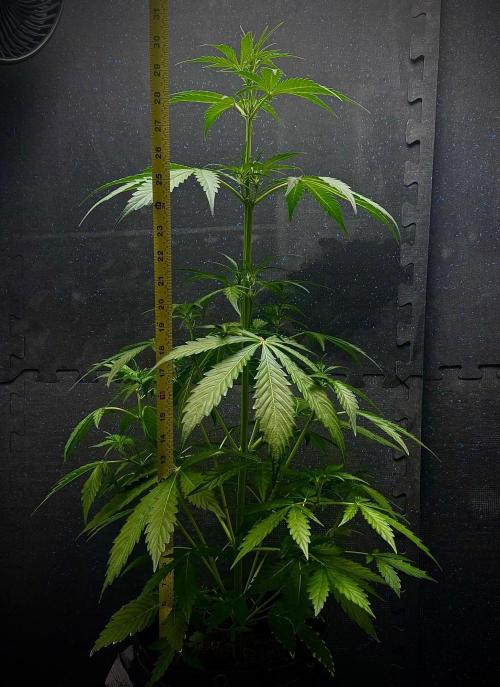
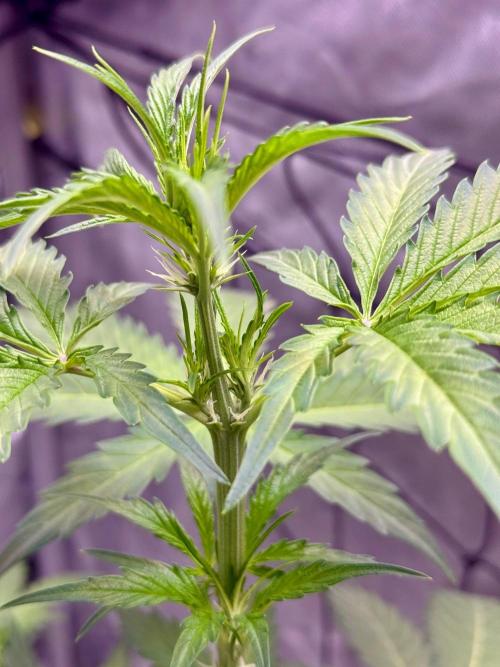
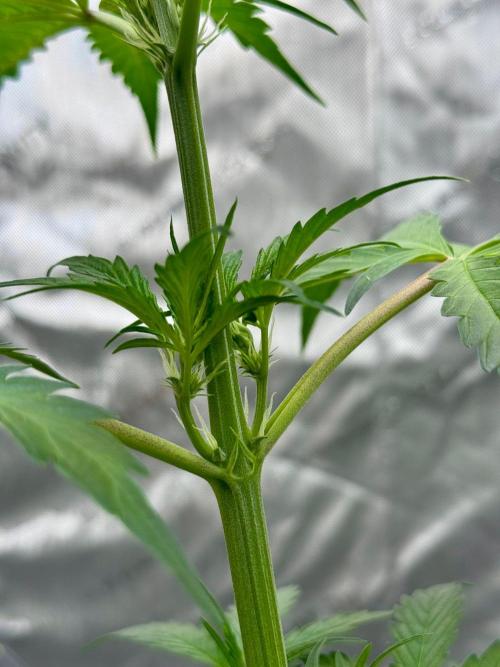
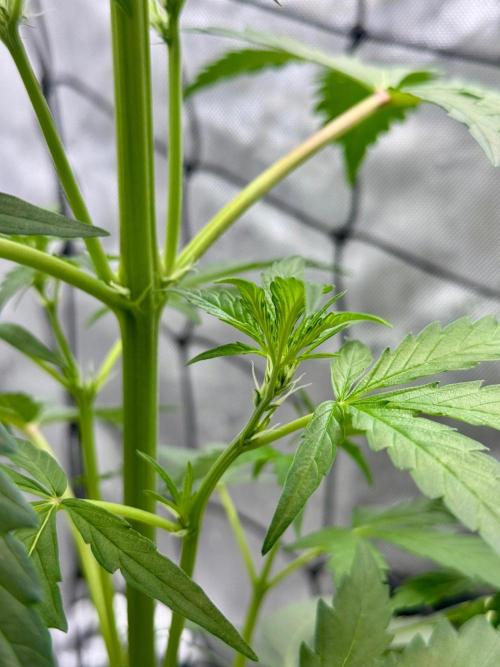
theChimp With the appearance of pistils across a couple dozen bud sites, we have officially entered the flower stage of this plant’s lifecycle. She is looking strong and ready for a successful flower cycle.
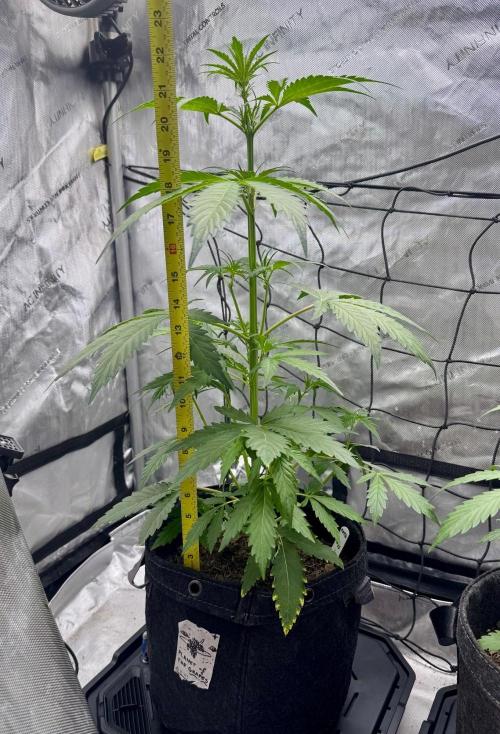
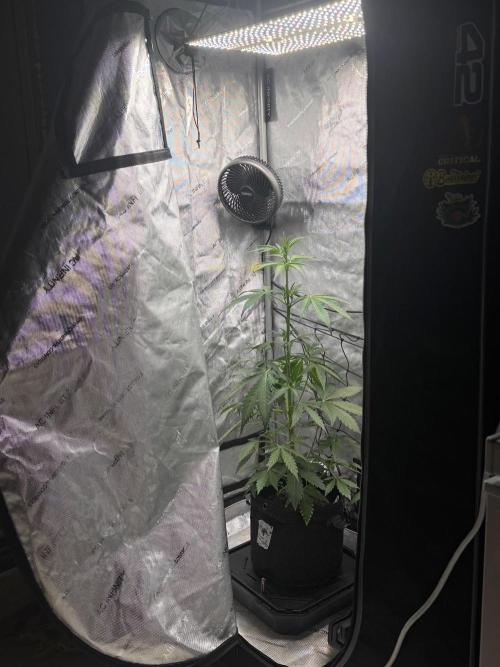
The major development this week was the beginning of a pronounced early-flower stretch. The plant increased from approximately 21 inches to 30 inches in four days, a gain of 9 inches, or ~43%, and has 9 main-stem nodes, including the top.
Architecture is beginning to change noticeably with the stretch. Across the entire 30-inch plant, the current average is 3.6 nodes/ft, equivalent to approximately 3.3 inches of vertical growth per node. We will calculate the exact pre-stretch vs. stretch node density from the next week’s measurements, in case this plant has a two week stretch cycle.
Nutrient concentration was increased from 4.5 mL/gal to 6 mL/gal each of Athena Balance Grow A and Grow B, with continued strong growth following the increase. And the previously annoying fungus gnat population has now been completely eliminated.
4 likes
comments
Share
6
Week 6. Flowering2mo ago
106.71 cm
Height
20 hrs
Light Schedule
25 °C
Day Air Temp
6.5
pH
Weak
Smell
66 %
Air Humidity
24 °C
Solution Temp
24 °C
Substrate Temp
23 °C
Night Air Temp
11.39 liters
Pot Size
2.65 liters
Watering Volume
20.29 cm
Lamp Distance
Nutrients 2
Grow A
3.17 mll
Grow B
3.17 mll
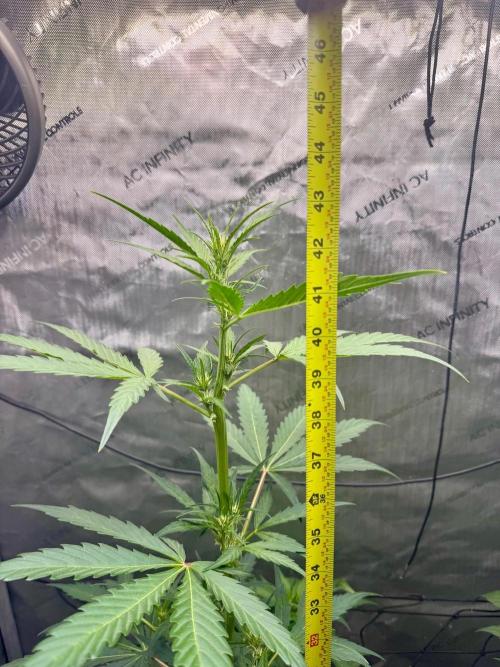
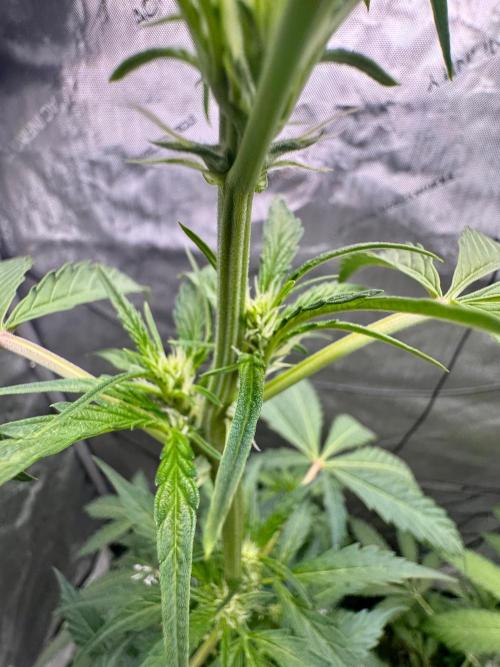
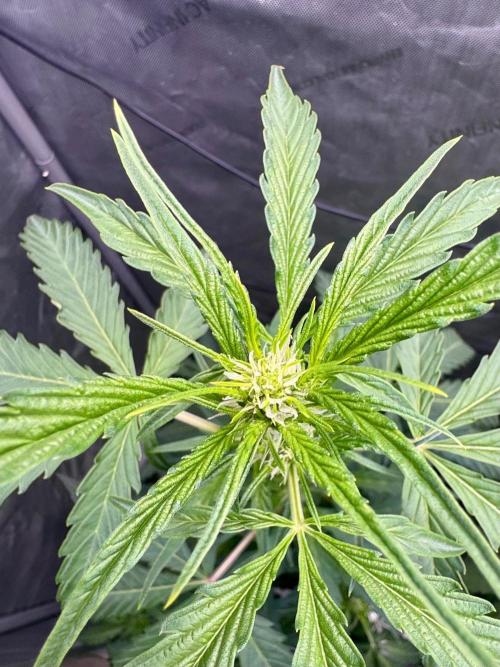
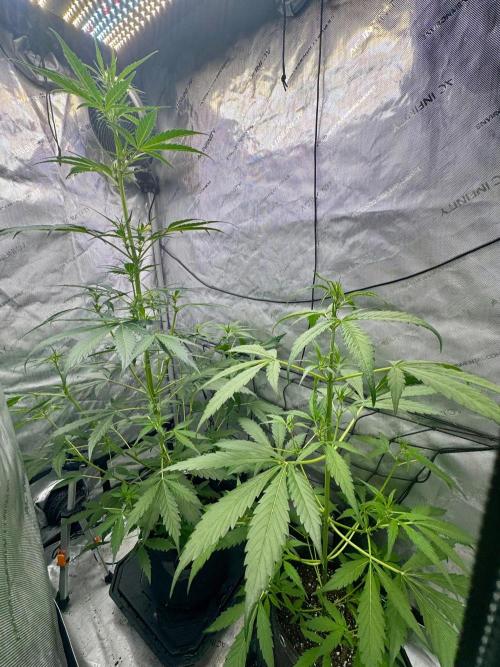
theChimp It appears the stretch phase for this plant is indeed about two weeks long. We have seen another foot of growth compared to last weeks entry. With basically no growth seen in the past two or three days, it does appear that the stretch phase has ended. Although I will certainly update on height as we keep going.
The entire reservoir of the VIVOSUN automatic watering base has been emptying about every two days recently. The plant is thirsty and is taking up all the nutrients we’ve given it. Each time I replaced the reservoir, I’m increasing an additional 3 mL per gallon of Athena Grow A and Grow B. We started at six, then nine, and the watering yesterday was a full 12 mL per gallon. I am still seeing yellowing at the tips of our leaves, about 1 to 2 mm long, which is ideal and indicates that our plant is right on the edge of maximizing its nutrient uptake.
Higher nutrients would be recommended if this plant were not potted in live soil. However, the FFOF soil continues to provide sufficient nutrition w/ our augmentation with the Athena nutrients.
In an effort to get an idea of the full shape and lifecycle of this plant, we have continued without any stressing techniques on the plant. I have only used some of the lower branches to hold down some of the larger fan leaves to allow for more light to some of the Bud sites, as you can see in the video posted.
Overall, we are really excited to be on schedule and to see this explosive plant. I also included a comparison shot of this plant with the Chem diesel X banana daddy auto, which was planted only a couple of days after the plantet of the grapes. It really shows just how fast this plant has grown, and shows why FastBuds is so loved.
5 likes
comments
Share
7
Week 7. Flowering2mo ago
127 cm
Height
20 hrs
Light Schedule
24 °C
Day Air Temp
6.5
pH
Weak
Smell
62 %
Air Humidity
23 °C
Solution Temp
23 °C
Substrate Temp
20 °C
Night Air Temp
11.39 liters
Pot Size
3.79 liters
Watering Volume
25.4 cm
Lamp Distance
Nutrients 2
Grow A
3.963 mll
Grow B
3.963 mll
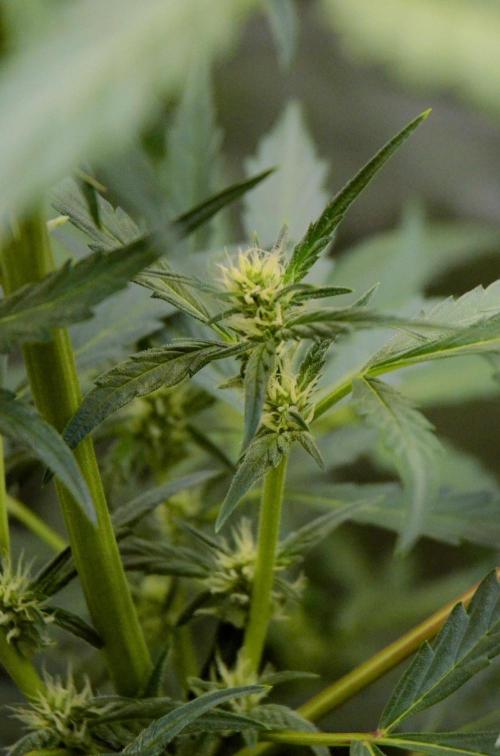
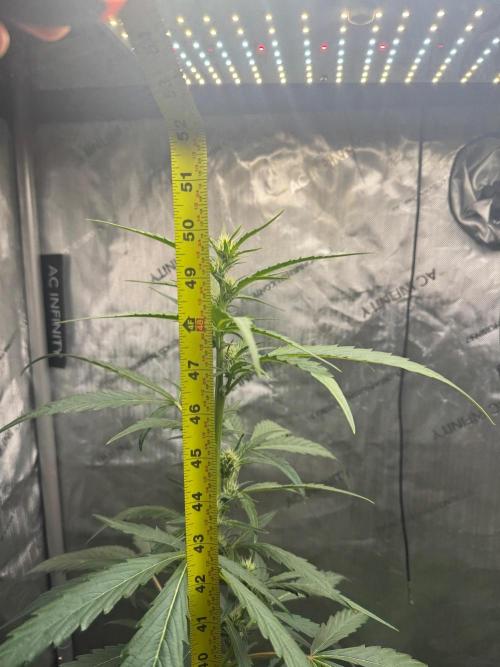
theChimp What a week! This plant has been THIRSTY! She has been drinking about a gallon a day, demanding nearly daily refilling of the base reservoir. We have continued the trend of increasing nutes with each watering, now reaching 15 mL/gal of both Athena Blended Base A and Base B. I will continue to increase nutrients as long as the small yellow tips do not expand any further.
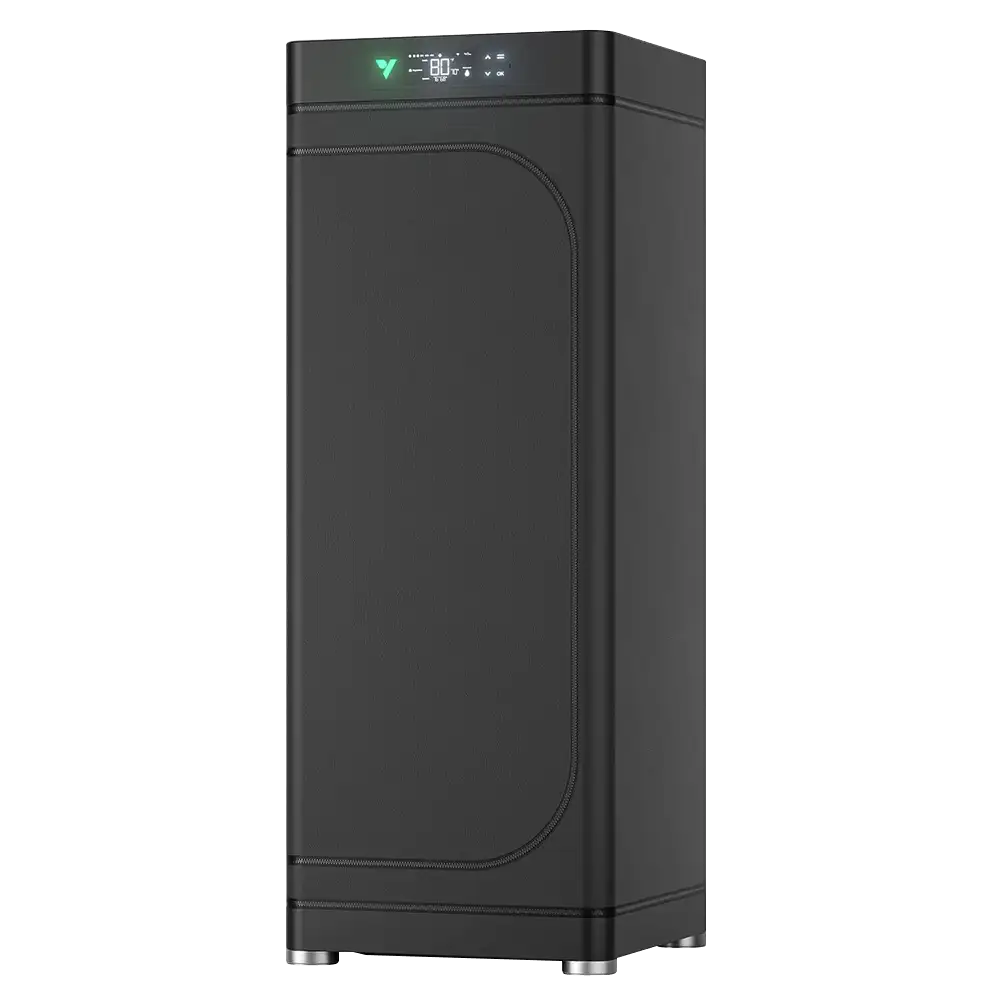
We have also since moved the plant to a new 4x4 tent for flowering. This was necessary, as the height of this plant (now surpassing 50 inches tall!), which we elected not to top, was reaching too close to the light, causing concerns for light burn and other issues. However, this does come with risks: a new tent is a new environment and there are concerns that the plant may not be able to handle it. The best way to avoid this is to run your new tent empty for a while to get an idea of the environmental conditions, to ensure you’re not taking a plant from let’s say VPD of 1.1 conditions to 2.5 (which may feel excessively dramatic, but is not entirely unheard of). Ensuring the environment is as similar as possible is essentially to reducing unnecessary stress of the plant.
This new tent also addresses a minor issue of the smaller 2x4 tent: humidity. These thirsty plants are transpiring a lot, giving off so much humidity that the lower half of the tent was staying too humid for ideal conditions. Mold prevention is essential throughout flower (though, admittedly is more important in mid to late flower).
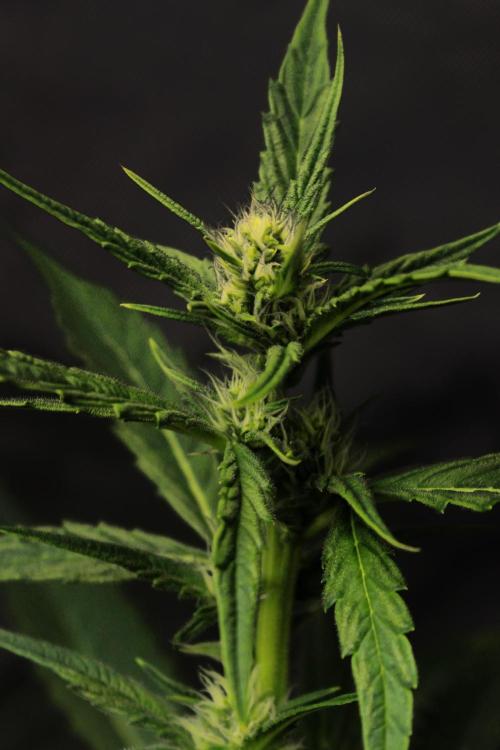
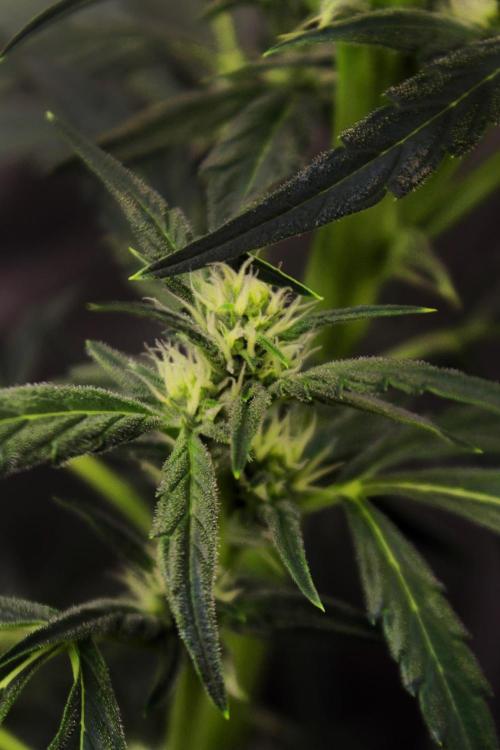
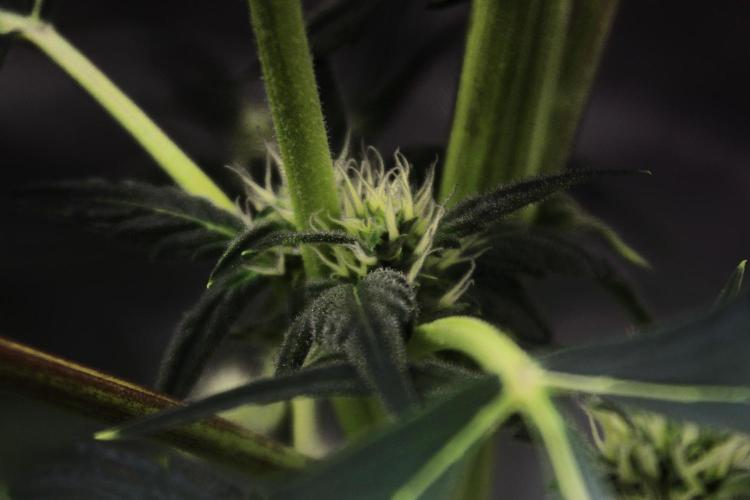
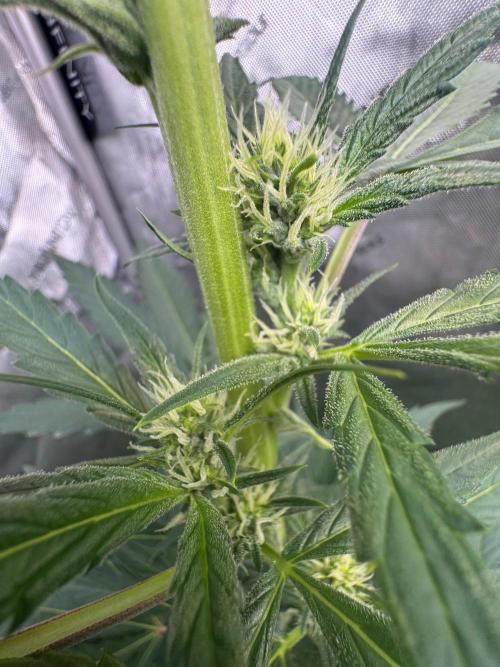
Flower development continues, with pistils growing across the plant. Trichomes are visible across sugar leaves and the plant has already started producing a noticeable weed smell. No particularly clear notes, yet. But this is great to see continued development.
In order to increase airflow and light reaching lower nodes, we committed to a moderate defoliation of the plant. This is the only real stress we have placed this plant under, but she has bounced back immediately and is showing no signs of slowing down.
2 likes
comments
Share
Used techniques
Defoliation
Technique
8
Week 8. Flowering2mo ago
129.49 cm
Height
20 hrs
Light Schedule
22 °C
Day Air Temp
6.0
pH
Weak
Smell
56 %
Air Humidity
22 °C
Solution Temp
22 °C
Substrate Temp
19 °C
Night Air Temp
11.39 liters
Pot Size
3.79 liters
Watering Volume
25.4 cm
Lamp Distance
Nutrients 3
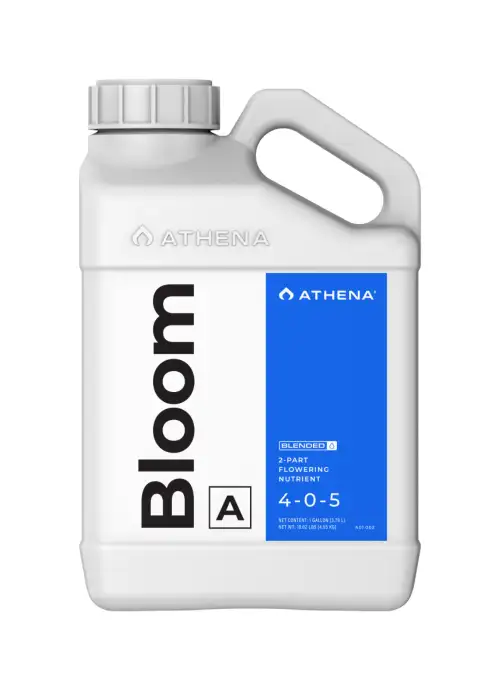
Bloom A
3.963 mll
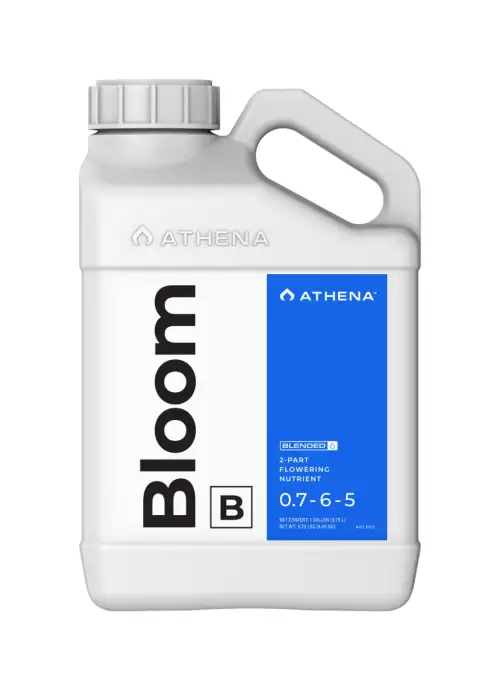
Bloom B
3.963 mll
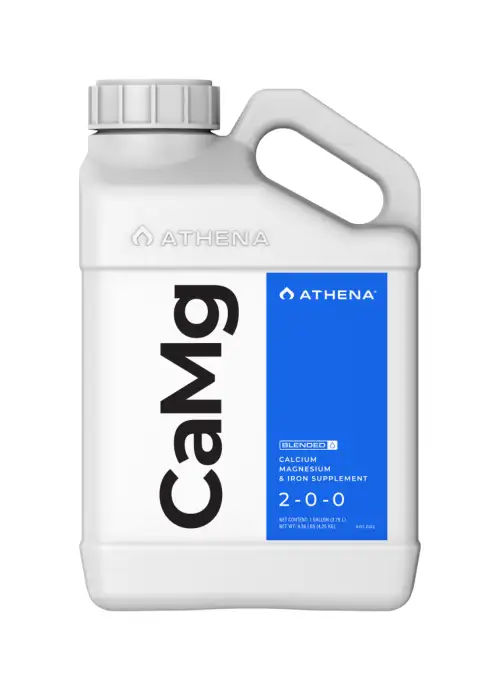
CaMg
0.528 mll
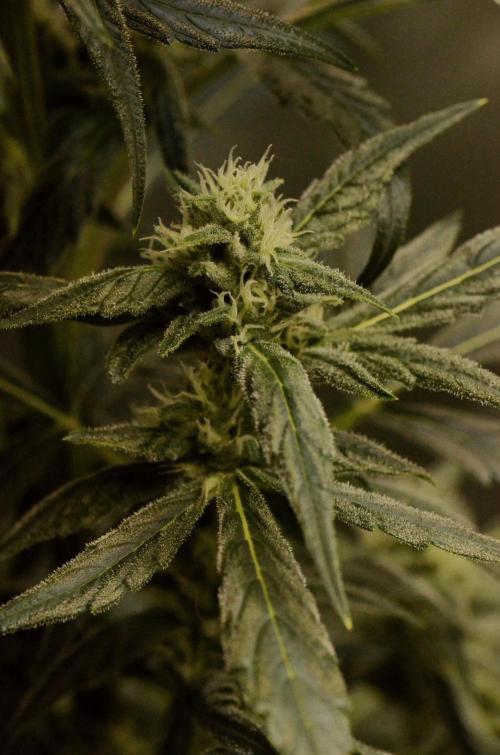
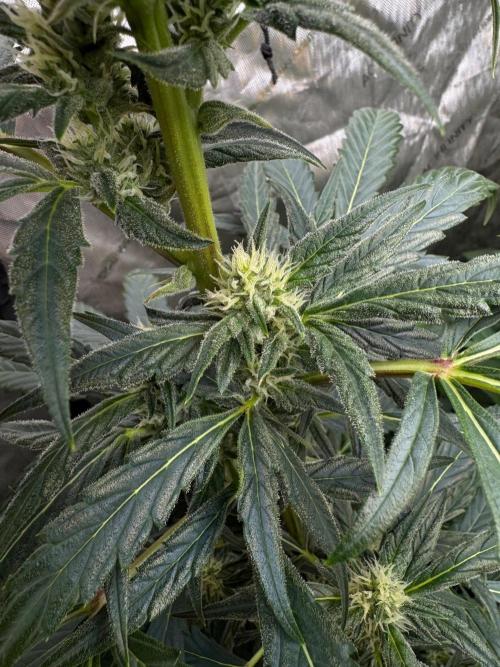
theChimp Flowering continued successfully this week, with some rather expansive growth of the bud sites. Vertical growth has essentially ceased, and she is clearly putting most of her energy into flower production.
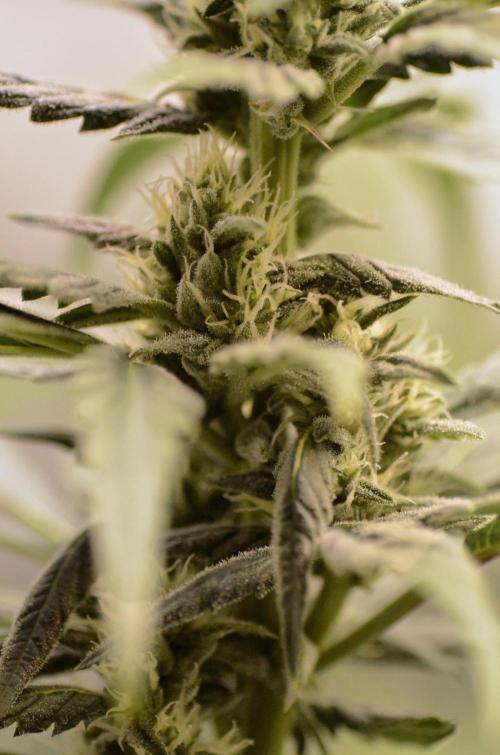
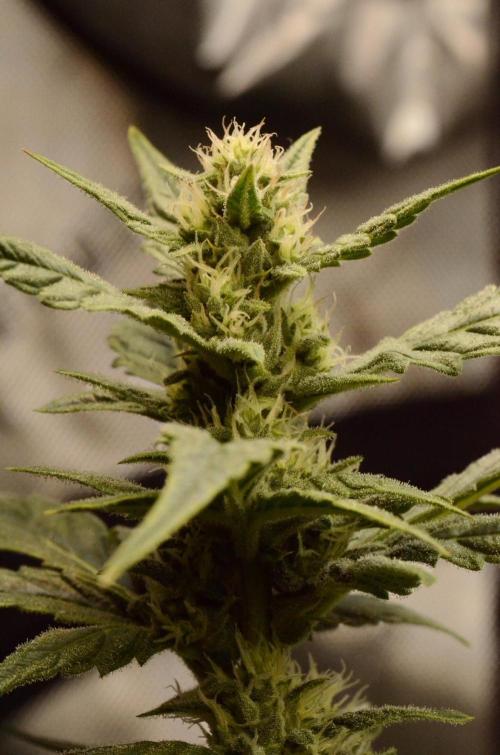
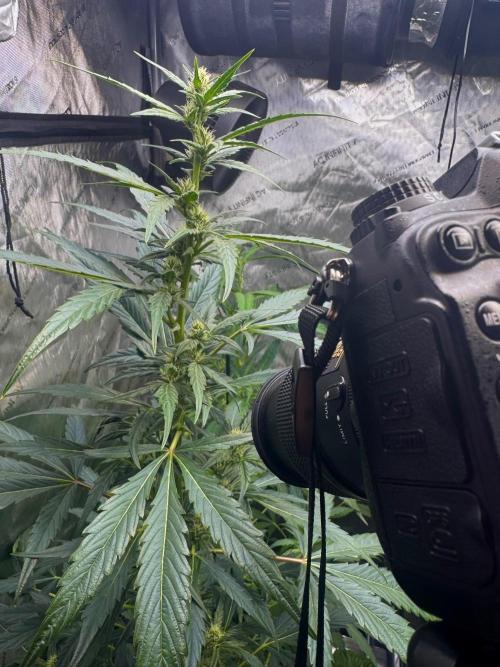
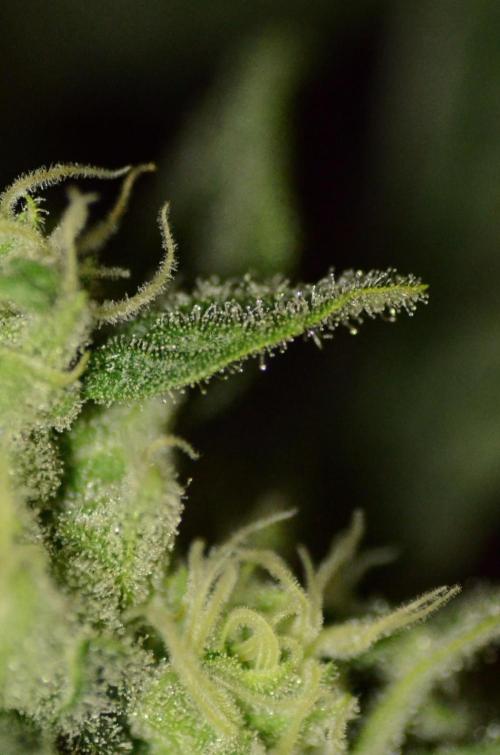
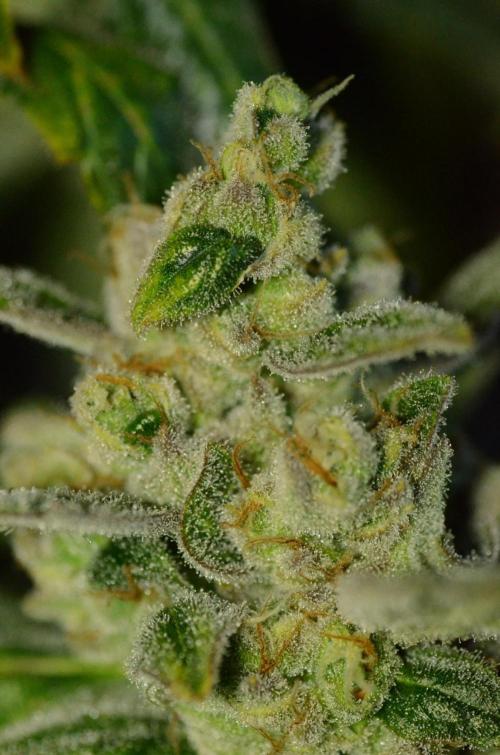
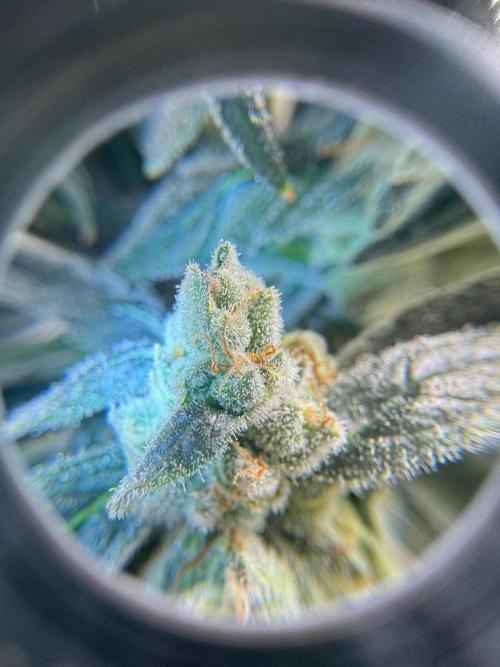
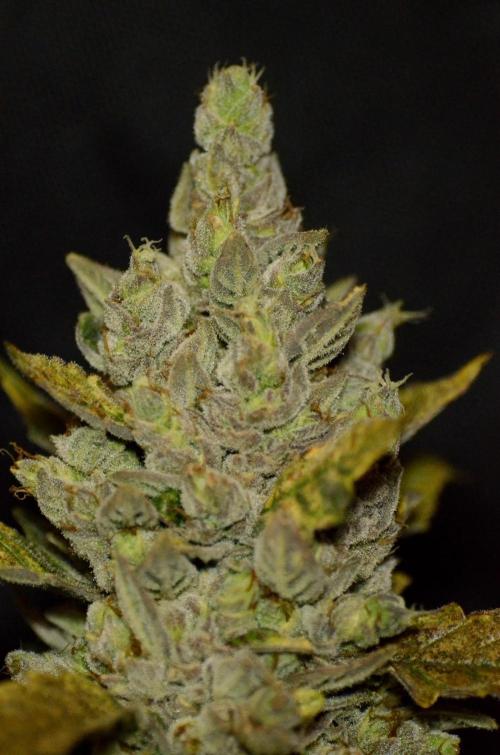
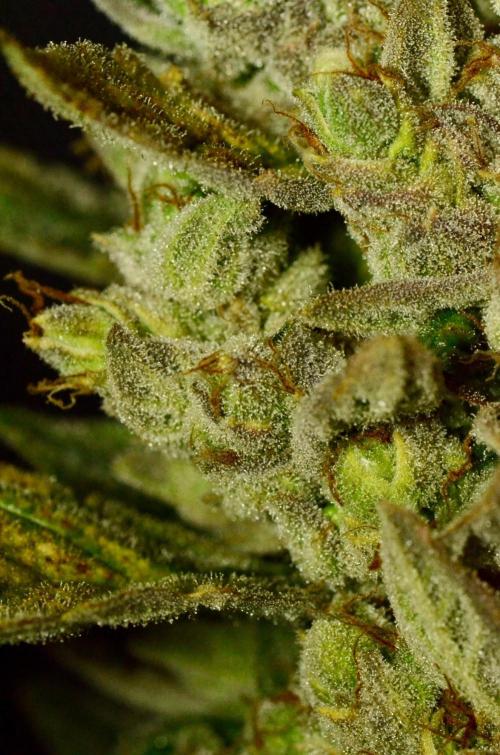
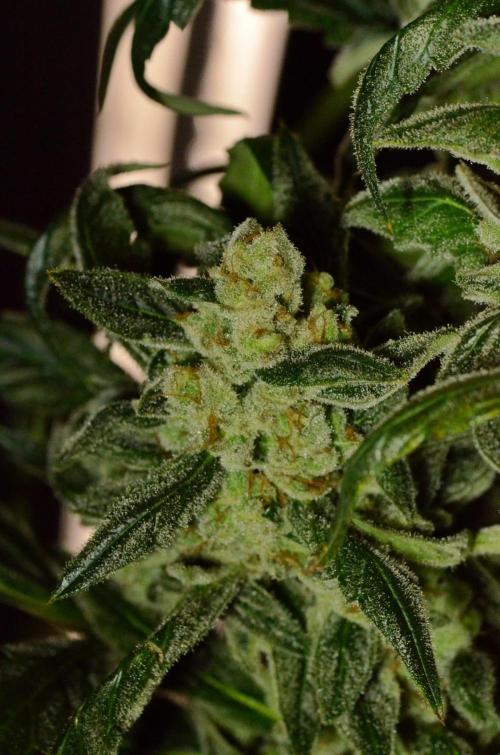
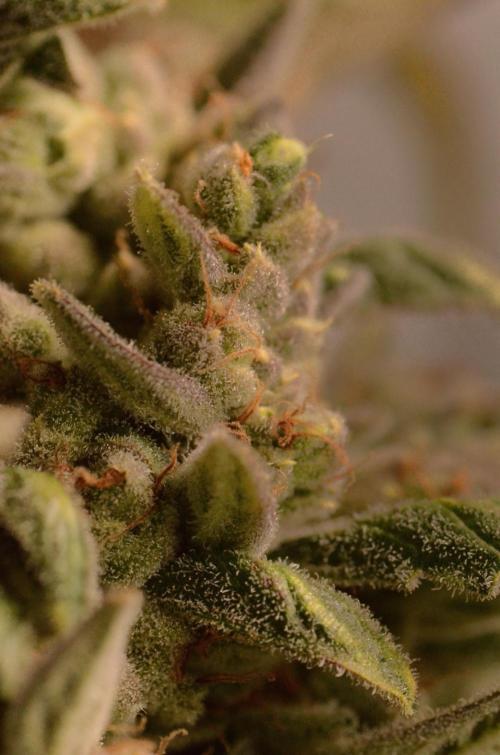
The flowers and surrounding leaves are getting rather frosty. Even more so than was to be expected, and I’m excited to see how she continues as we transition into mid/late flower. These elements were significant enough that, last week, I decided it was time to break out the big guns and start using the macro lens to take some good shots for everyone.
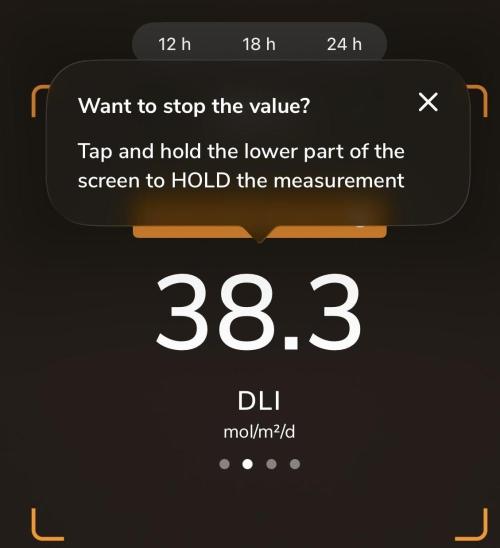
The plant has handled the tent-swap and transition to 20/4 light very well, showing no signs of stopping. The DLI at the base of the king bud rests around 38.5. I am very glad we made the swap, as you can see some premature browning of the pistils on the king bud, due to light burn from the other (shorter) tent. This is a perfect representation of the risks of not doing any training on your plant: they tend to grow like weeds! (lol)
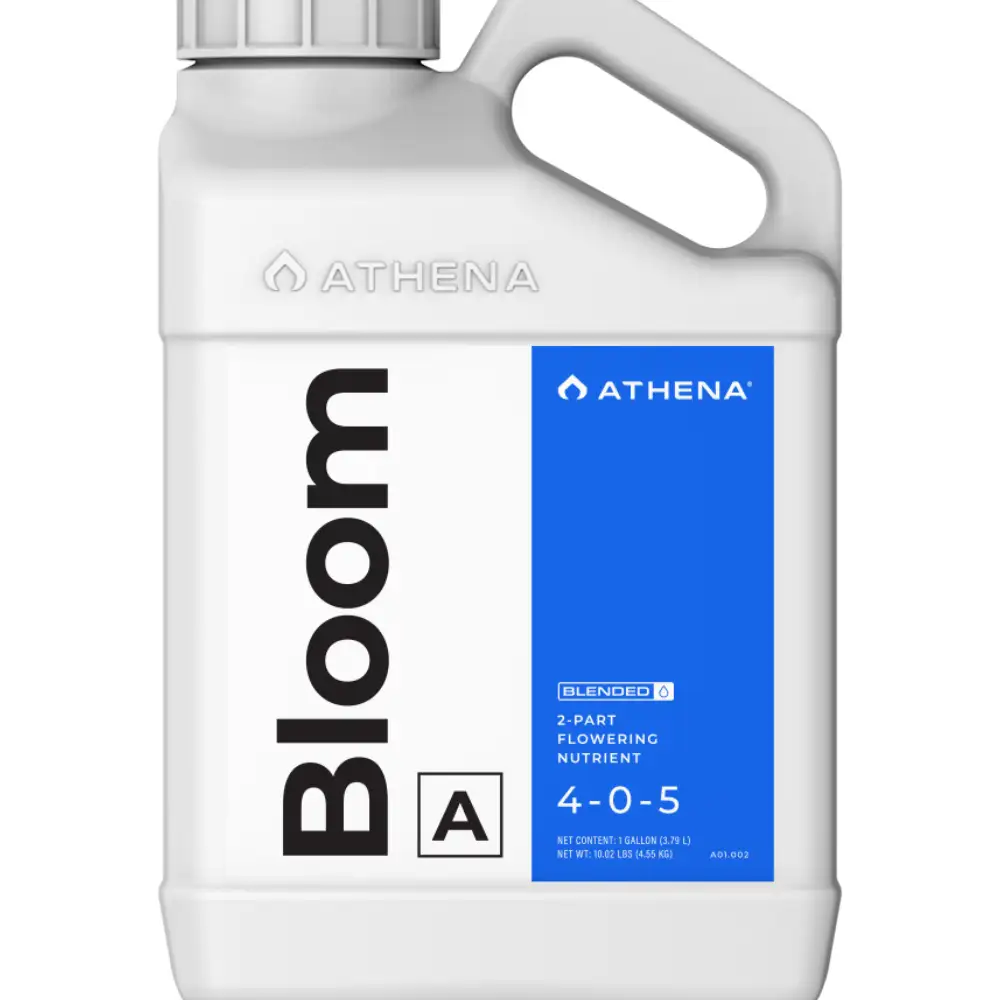
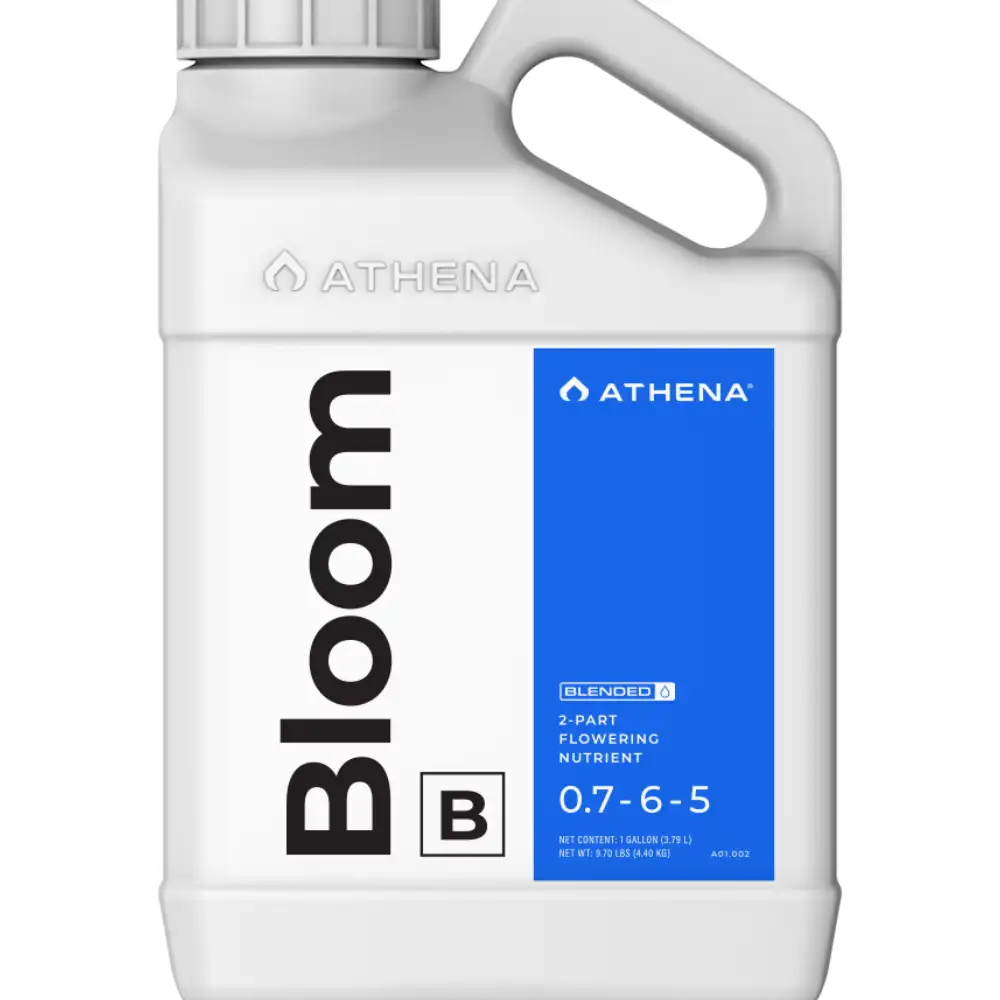
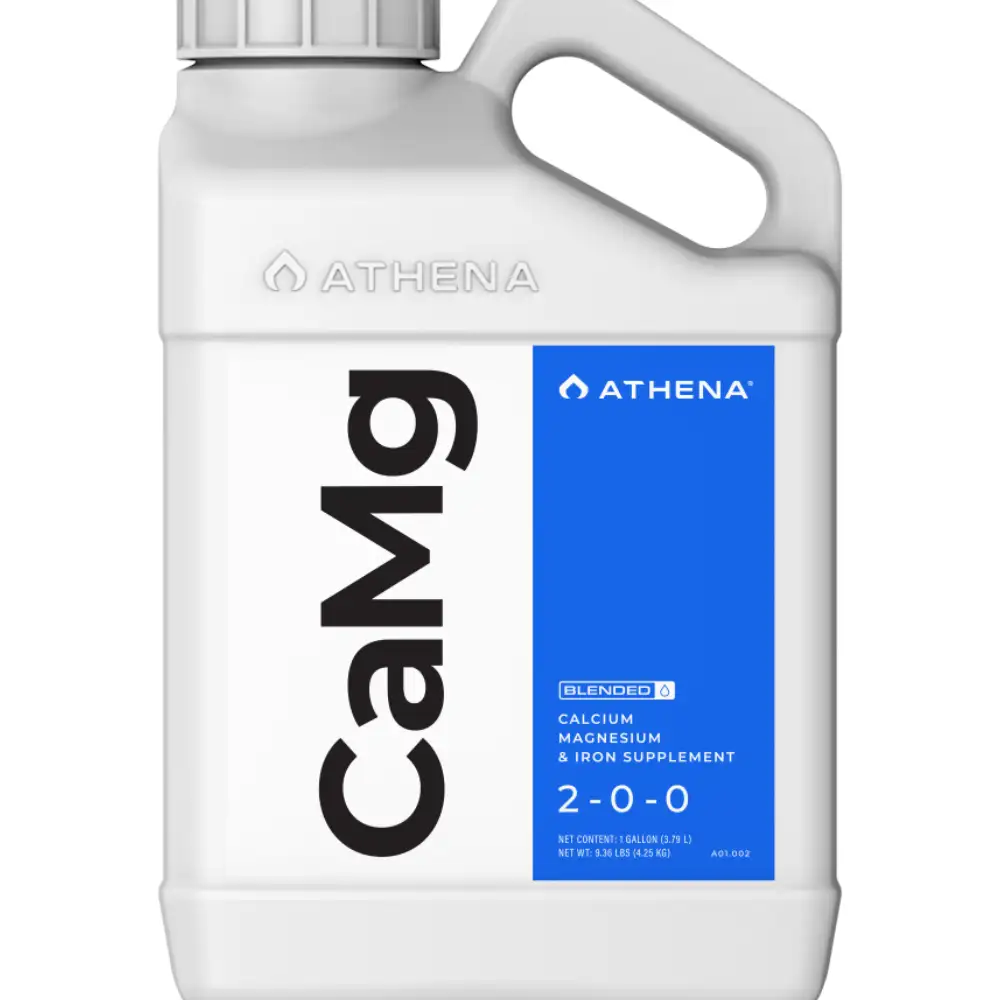
The swap to Athena Blended Bloom A/B from Grow A/B has been uneventful, with no signs of nutrient lockout or stunted development.
3 likes
1 comment
Share
9
Week 9. Flowering2mo ago

132.1 cm
Height
20 hrs
Light Schedule
23 °C
Day Air Temp
6.0
pH
Normal
Smell
58 %
Air Humidity
22 °C
Solution Temp
22 °C
Substrate Temp
20 °C
Night Air Temp
11.4 liters
Pot Size
4.2 liters
Watering Volume
20.3 cm
Lamp Distance
Nutrients 3
Bloom A
4 mll
Bloom B
4 mll
CaMg
0.7 mll
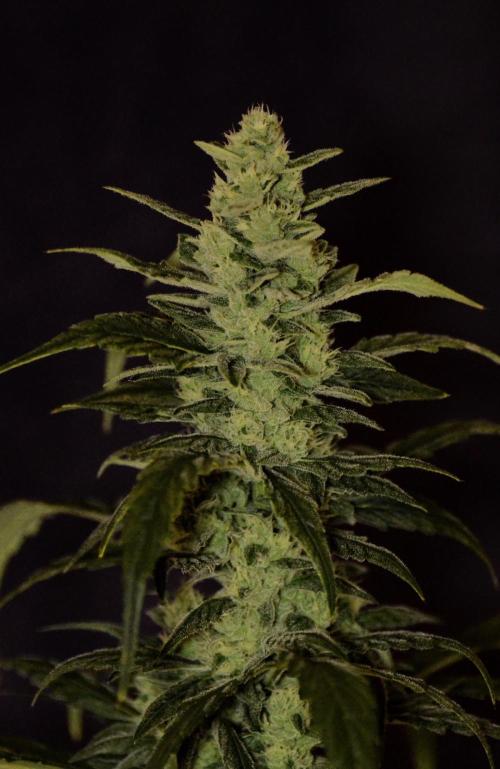
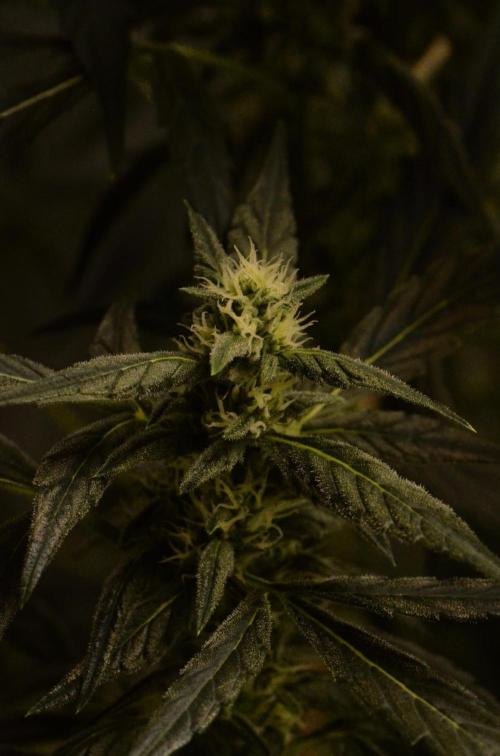
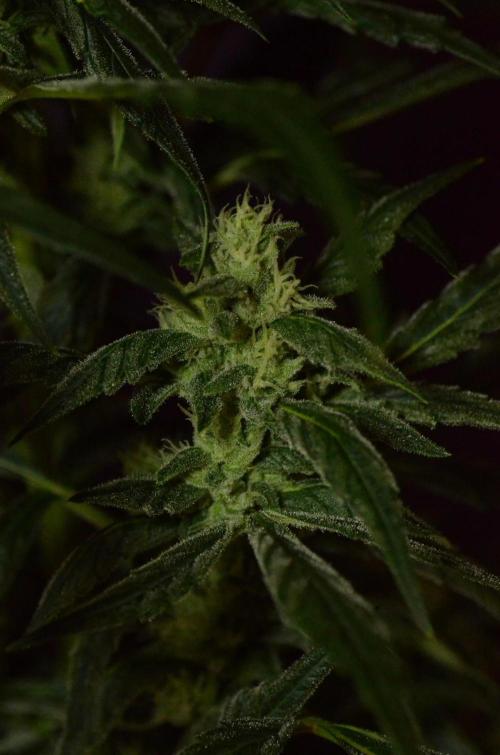
theChimp POTG continues to impress Week 5 of Flower, with significant thickening of the main cola, and visible development across every single bud site. Even the photos I took on Saturday of this week look so out of date, compared to the thickness of the plant today.
The leaves have continued to darken, which I was unclear whether this was a genetics thing or a Nitrogen overload issue, but given the below manufacturer recommended nutrients + Athena Blok. Only having .7% N, the latter would seem unlikely.
It has started to develop a strong smell. There is a strong gasoline smell when I open the tent, but the leaves/flowers are also very sticky and the rosin that comes off onto my hand/gloves after handling the plant smells strongly of artificial grape. Almost like grape kool aid! I’m excited to see this dual-scented element of it develop further as we close out flowering in the coming weeks.
My intention is to maintain the current nutrition schedule until we see browning of the lower pistils, then let it ride off senescence until we reach ~20% amber trichomes.
2 likes
comments
Share
10
Week 10. Flowering1mo ago
132.1 cm
Height
20 hrs
Light Schedule
23 °C
Day Air Temp
6.0
pH
Normal
Smell
59 %
Air Humidity
22 °C
Solution Temp
22 °C
Substrate Temp
19 °C
Night Air Temp
11.39 liters
Pot Size
4.2 liters
Watering Volume
20.29 cm
Lamp Distance
Nutrients 3
Bloom A
2.642 mll
Bloom B
2.642 mll
CaMg
0.528 mll
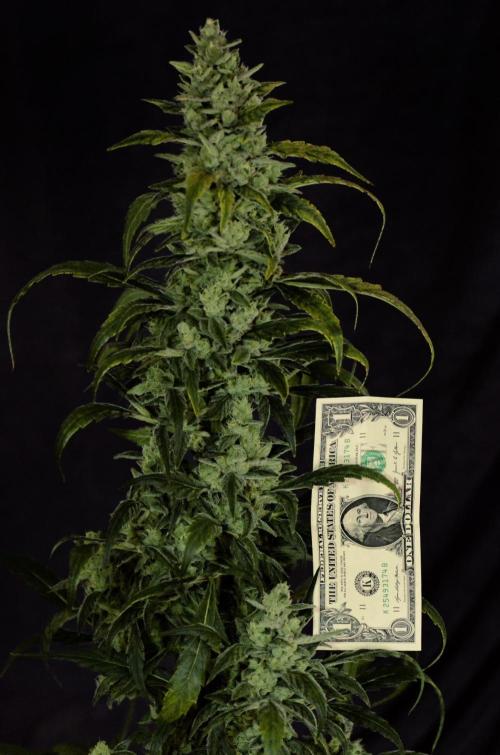
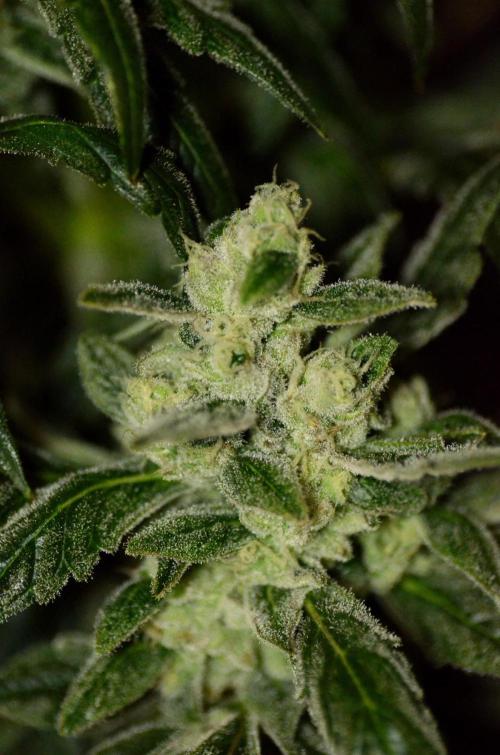
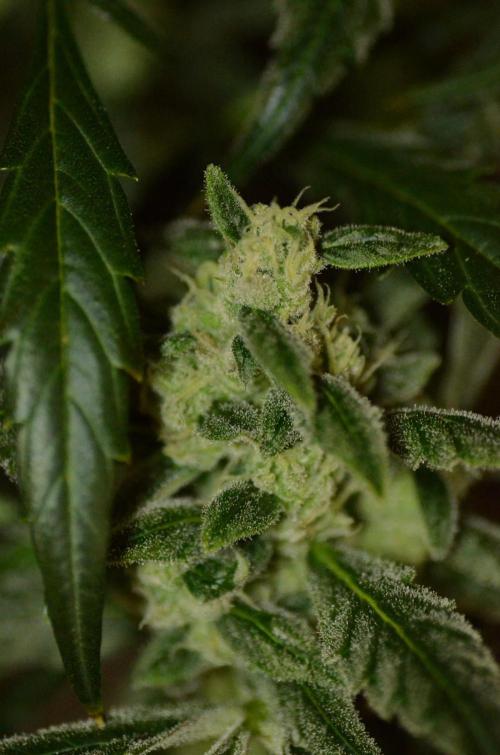
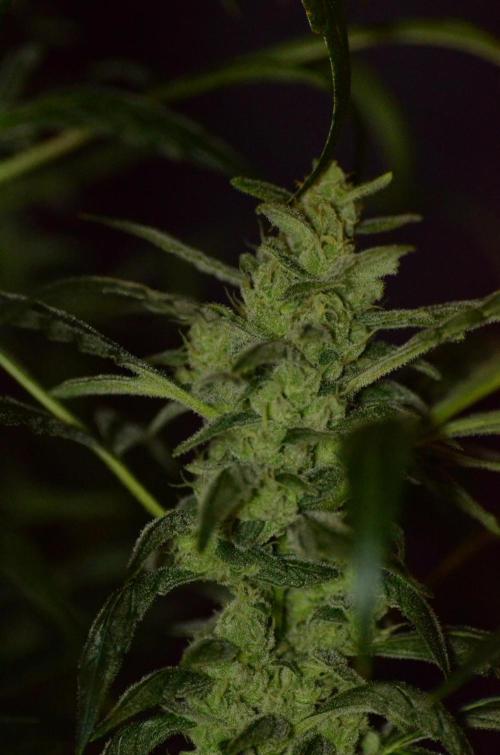
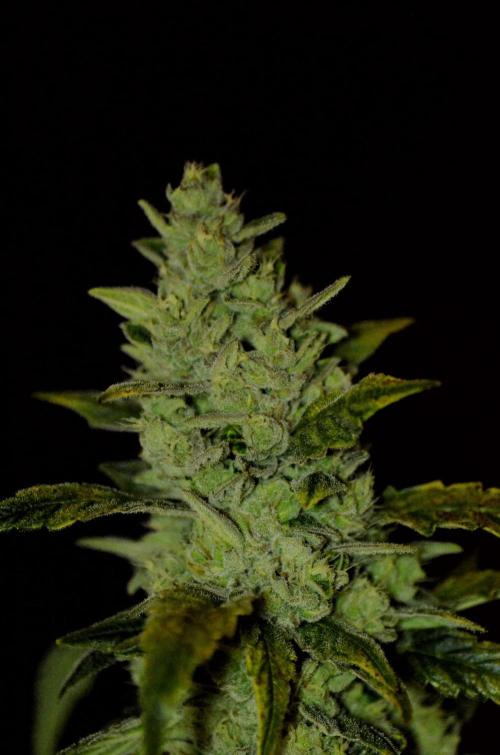
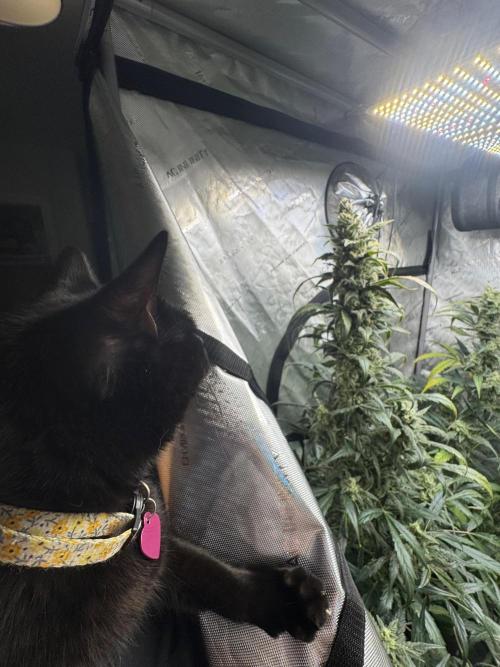
theChimp We are nearing the end! I’m expecting another two weeks or so on this massive, untrained POTG. Due to some Nitrogen toxicity, we completed a flush using FoxFarm Sledgehammer and have been feeding about 30% less than previously. This small issue has not stopped this plant from continuing to develop and thicken significantly.
I’m refilling the watering base for this plant every two days, which gives us a rough daily water intake of .75 gal. I’m predicting 100g of dry flower off this plant, though I’m hoping we can pull even more (only time will tell).
The colder weather has resulted in cooler night temperatures than ideal. This is mostly offset with the 20/4 light schedule, though.
All in all, things are going very well and I don’t have much more to tell you guys this week other than check out the size of that main cola! Massive!
4 likes
comments
Share
11
Week 11. Flowering1mo ago
137.16 cm
Height
20 hrs
Light Schedule
23 °C
Day Air Temp
6.0
pH
Normal
Smell
59 %
Air Humidity
22 °C
Solution Temp
22 °C
Substrate Temp
19 °C
Night Air Temp
11.39 liters
Pot Size
4.2 liters
Watering Volume
20.29 cm
Lamp Distance
Nutrients 3
Bloom A
2.642 mll
Bloom B
2.642 mll
CaMg
0.66 mll
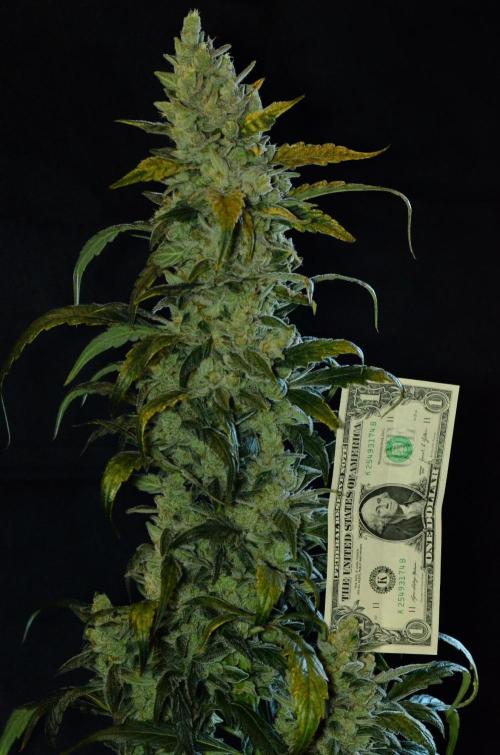
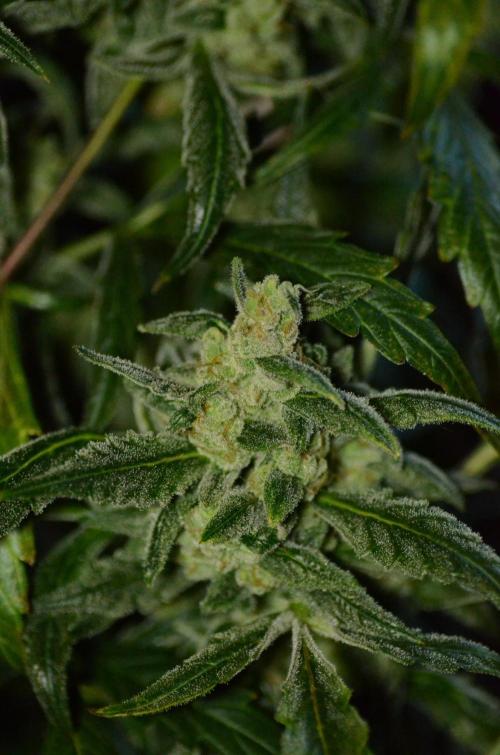
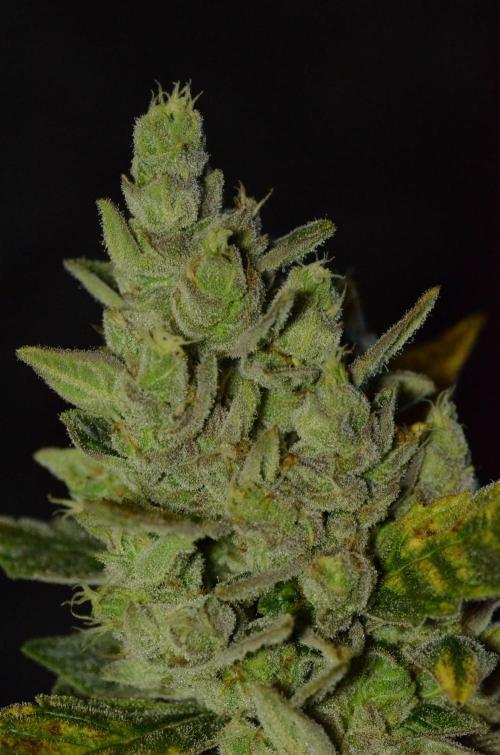
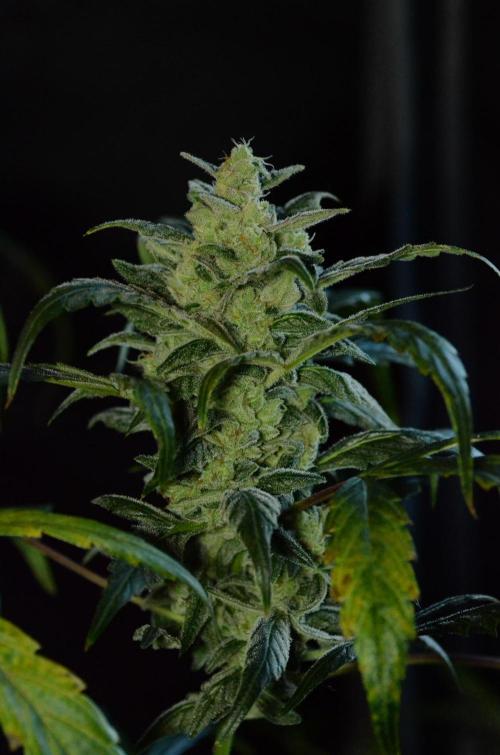
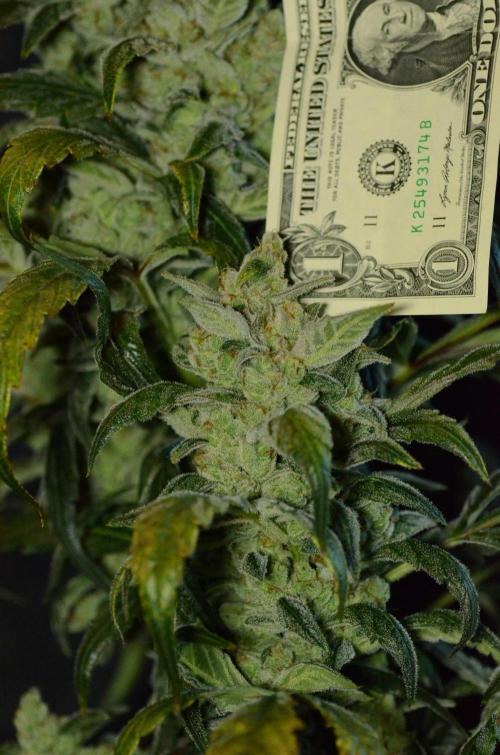
theChimp We are so close to harvest! The king bud is unbelievably thick and heavy, so much so that I have to use extra straps/rope to hold the plant up, or it will fall.
Senescence is hitting this plant hard, since we started tapering down the nutrients we were giving it due to the late Nitrogen toxicity we experienced. Not to worry, though. This is a normal process of the plant growing and (although you won’t see this on many influencer’s grows, is absolutely to be expected). The plant is signaling to us that it is reaching the end of its life cycle and is now pulling nutrients from the leaves and rest of the plant to push further to maximize flower development.
We have continued the 10/10/2.5 feeding schedule that we started post-flush, and will sustain that throughout the remainder of the life cycle? Which I only expect to be another 1.5-2 weeks at this point.
One interesting quirk I have noticed is that these flowers are turning slightly purple! This is not a phenotype I expected, and certainly not one that was advertised, but i don’t mind.
6 likes
1 comment
Share
12
Week 12. Flowering1mo ago
137.16 cm
Height
20 hrs
Light Schedule
23 °C
Day Air Temp
6.0
pH
Normal
Smell
59 %
Air Humidity
22 °C
Solution Temp
22 °C
Substrate Temp
19 °C
Night Air Temp
11.39 liters
Pot Size
4.2 liters
Watering Volume
20.29 cm
Lamp Distance
Nutrients 3
Bloom A
2.642 mll
Bloom B
2.642 mll
CaMg
0.66 mll
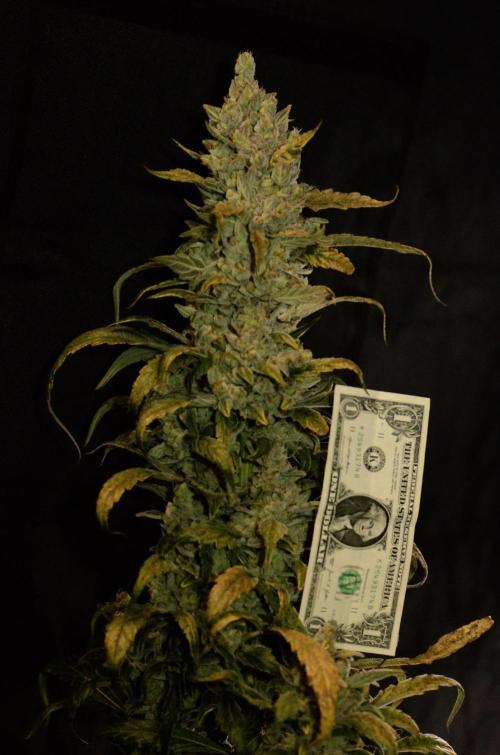
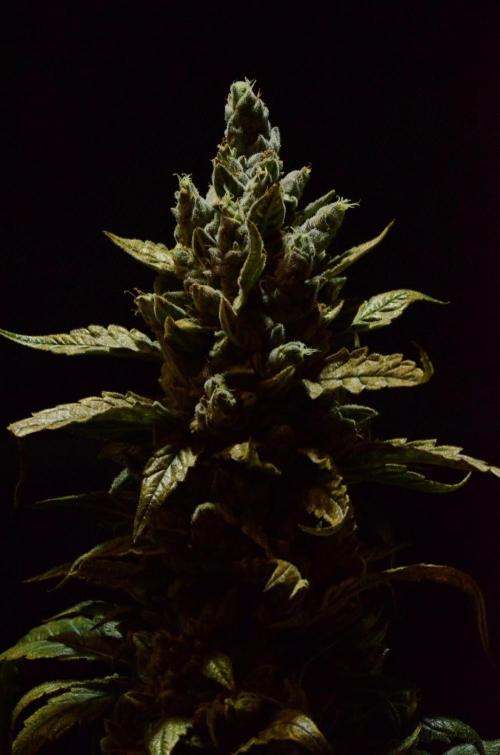
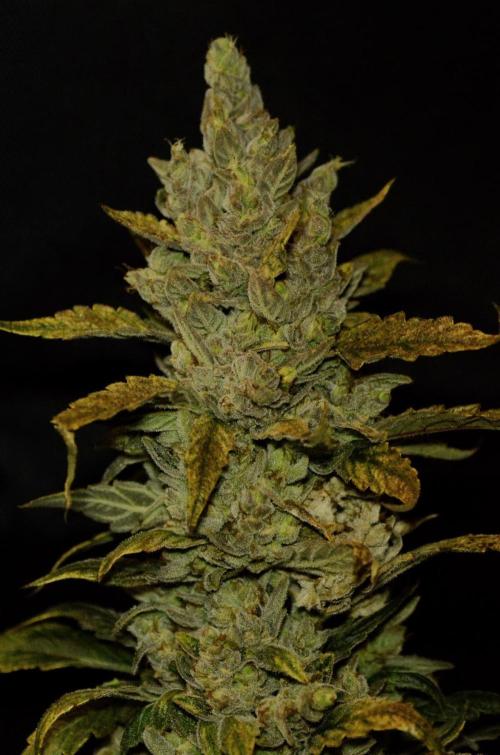
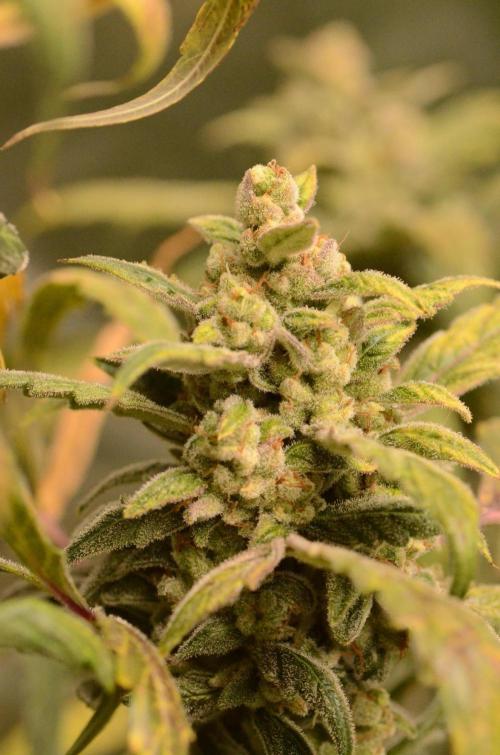
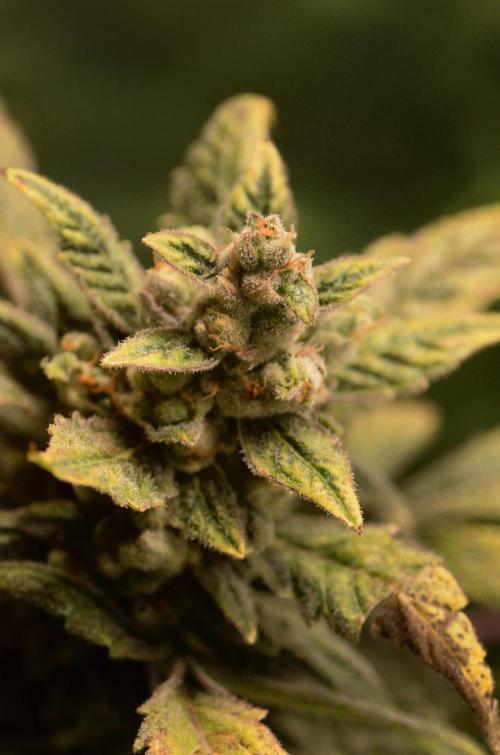
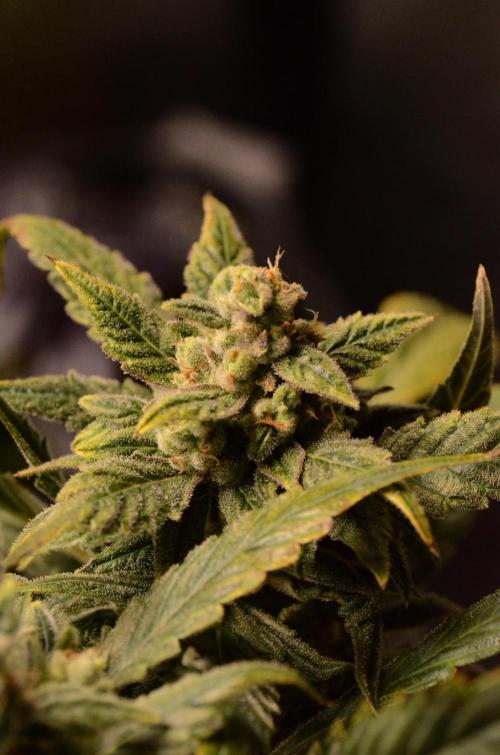
theChimp This will be my final flower entry for this plant, as we are CHOPPING HER DOWN THIS WEEK! I’m so excited to finally harvest this beauty, right as she hits that 5-10% Amber Trichome mark. This plant has exceeded my expectations for an autoflower, producing some absolutely massive buds, which have required I use extra rope to hold them up and support their weight.
The purple finish we have seen on the top cola was unexpected, but a pleasant surprise. The plant is demonstrating global senescence, and is giving me every signal in the book that she is ready for harvest.
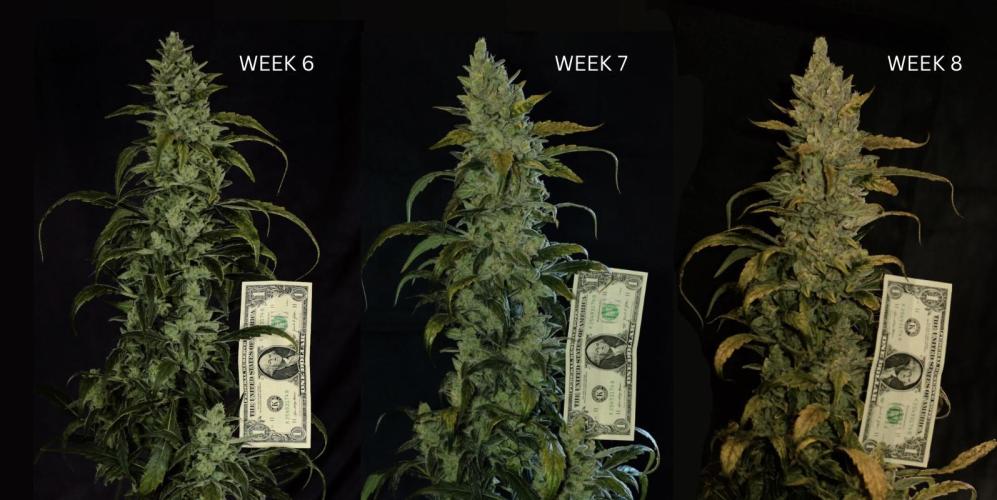
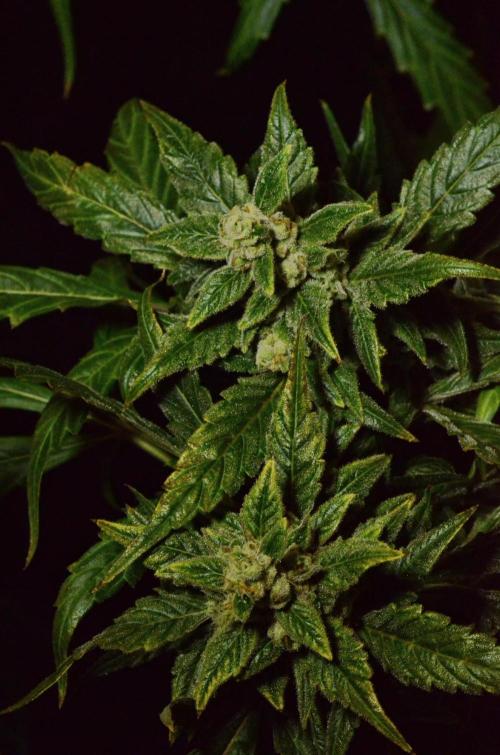
My target yield for this plant, as of week 3/4 of flower, was 100g dried. I am supremely confident we will exceed that with great ease, as the main branch itself may give us that all on its own. That thing is huge! Check out the week 6,7,8 comparison photo to see just how much she filled out in the last few weeks! Brilliant stuff.
We learned a lot along the way, making a few mistakes and adjusted for them, and ultimately achieved another successful grow! Thank you everyone for reading along, I appreciate all of the support you have given me in the past months.
6 likes
comments
Share
13
Week 13. Harvest21d ago
Happy Harvest Day!


10/10
Rated
This seed was acquired via the ETHOS Auto Multi Pack, offering a single POTG seed for growing, as well as a handful of others. From germination, these genetics shined through as a rapidly growing strain, quickly outperforming all others in our grow space. To keep up with the rapid growing pace set by this plant, we titrated the nutrients up and up until we observed some mild Nitrogen deficiency, before backing down about 20% for the remainder of the grow. This step may have helped to increase total yield, but a more consistent 50-70% of the recommended manufacturers’ nutrient recipe would have likely sufficed with less hands on effort.
There was no training done to this plant. The only alterations made were in the form of defoliation of half a dozen leaves at a time, at various points throughout the grow. Additionally, the bud sizes for the main colas made it such that additional support was required to keep them vertical. The entire plant was so top heavy it required extra bracing around the pot so that it wouldn’t fall while preparing for harvesting.
Show more
Translate
Spent 86 days
Ger Veg Flo Har
686 g
Bud wet weight per plant
192 g
Bud dry weight per plant
1
Plants
0.6 m²
Grow Room size
Easy
Difficulty

Creative, Energetic, Relaxed
Positive effects

Dry eyes
Negative effects

Pain, Insomnia, Anxiety
Medical effects

Earthy, Fruity
Taste
Height
Day air temperature
Air humidity
PH
Light schedule
Solution temperature
Night air temperature
Substrate temperature
Pot size
Lamp distance
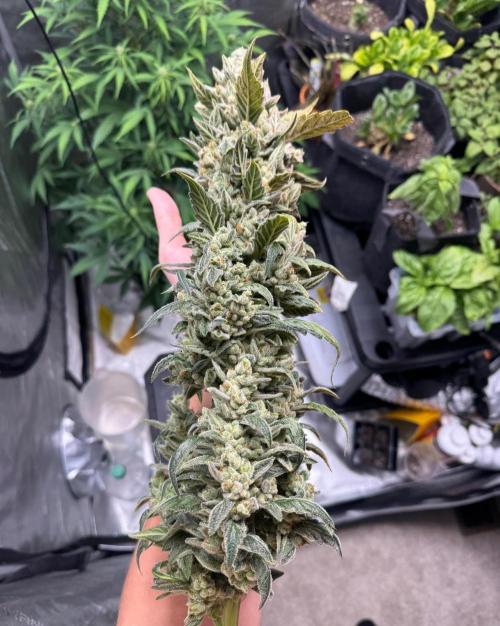
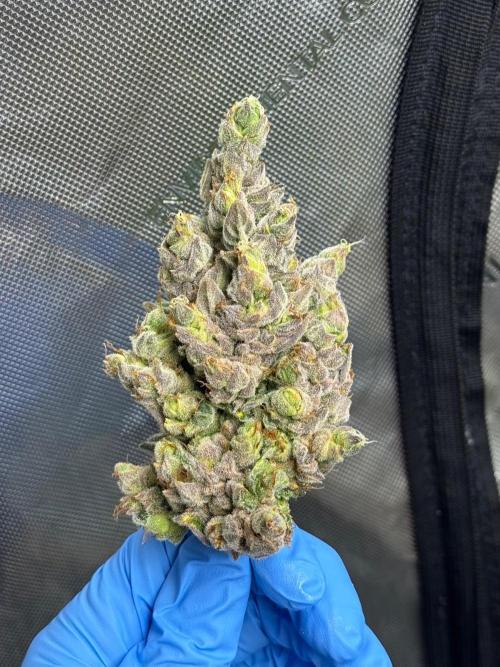
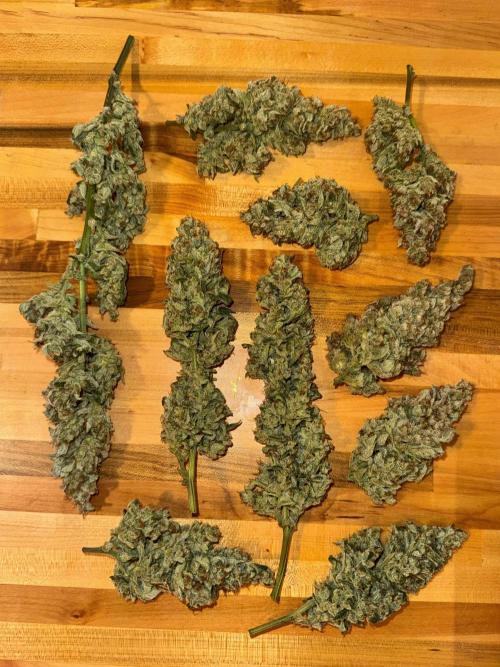
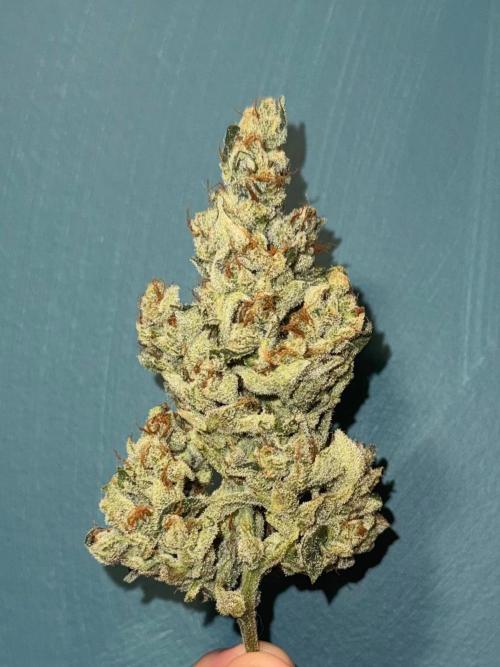
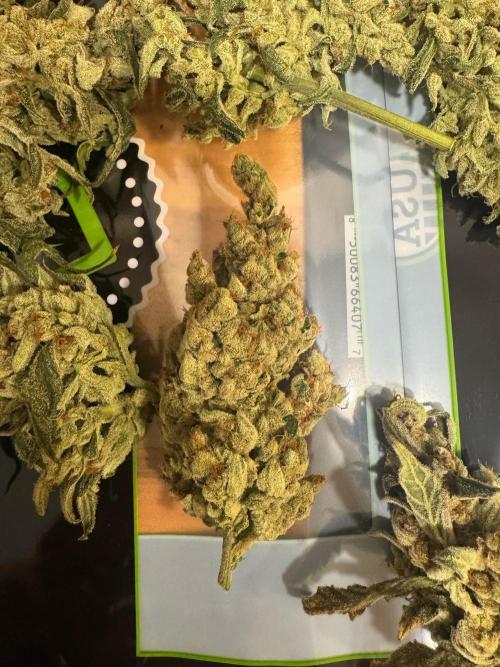
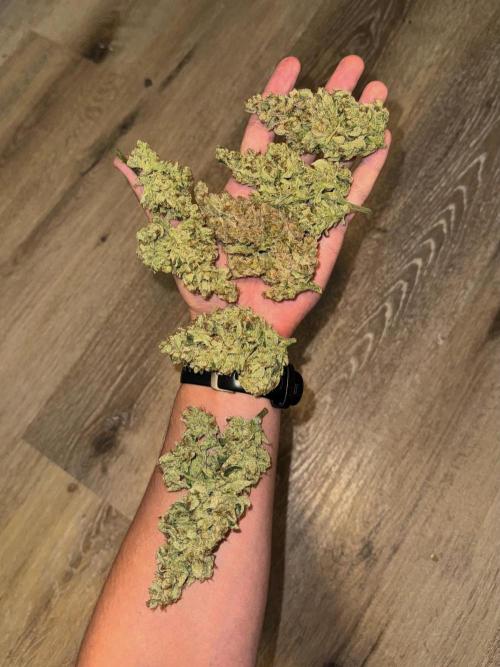
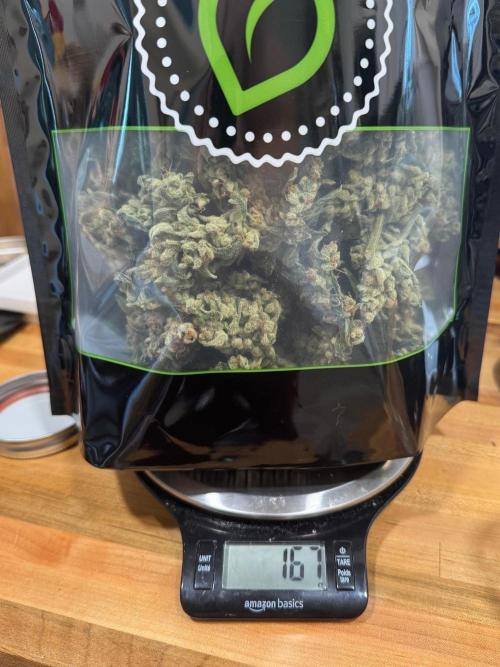
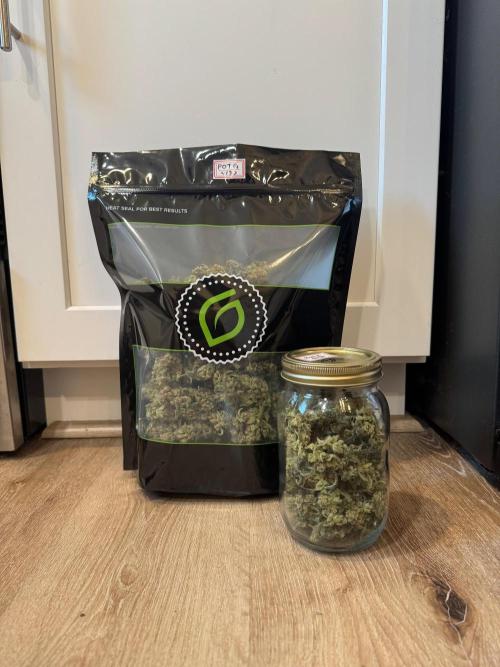
theChimp Harvest week is finally upon us! You all know how excited I was to finally chop this plant down, and it was well worth the wait. With a wet weight just shy of 700g and a dry weight of 192 g (25g of which are lower buds/larf that will be used for prerolls/hash/butter), this plant was an absolute PRODUCER.
Six full ounces of top tier dried bud, with another ounce of lowers means I was stuck in trim jail for nearly four hours in total. While I normally hang dry the entire plant, we elected to give the 24inch AC Infinity drying each a try inside a spare 2x2 tent with an exhaust fan and carbon filter. Averaging 68* F and 55-60% RH meant we went from wet trim to cure in 8 days, and boy oh boy does she smell good. Very pungent Concord grape smell, with a nice hint of earthy undertones. Truly a stellar strain.
All in all, this plant was an absolute pleasure to grow and it has been my honor sharing this journal with all of you.
5 likes
comments
Share
Equipment Reviews





2 comments
Sort by
popularity
popularity
newest
oldest

ndsgrow commentedweek 111mo ago
Awesome genetic.
like 1

MalumProhibitum commentedweek 82mo ago
Trippy video! 😻 --Me gusta! 💖
like 1

the end.
Enjoying this diary? Follow for more updates!

Prefer the old Diary view?
Go back to the old Diary view