


Likes
Comments
Share
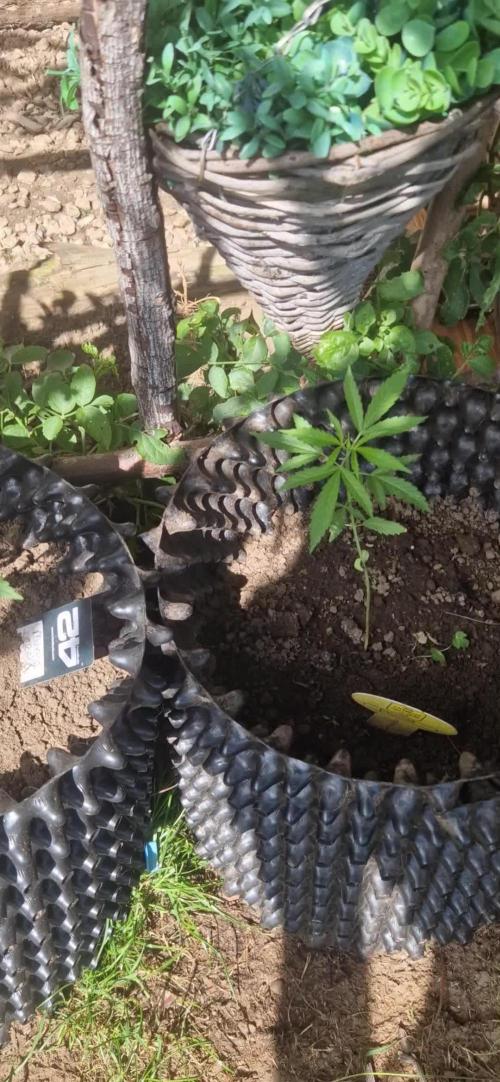

@Olduffybastard88
Follow
Plants are starting to turn purple as we enter the final week they are on water as I tempt to flush out any remaining nuits the buds are really frosted and have taken great shape over the past couple weeks

Likes
3
Share


@autogrowmadness
Follow
First ever grow so it should only get better from here , thanks fast buds for your amazing seeds !


Likes
21
Share


@Growgirl1114
Follow
Well this plant and strain has changed my mind about Sativa strains #boom she smells amazing and her buds solid !!!
Likes
12
Share


@Trickybis82
Follow
Hello again,
Like I said on my other diary, we are on the last week of Flushing this beauty too! And considering the damage she went through i cannot wait to smoke her. Ca8se simply didn't think she would pull through.
Fingers crossed on this final strech
Peace ✌️ ☮️ and love growmies


Likes
6
Share


Likes
37
Share


@Pugbutt
Follow
Still flushing to get ph back, nothing added to water this week. Buds are packing on weight and the smell is getting very sweet. Also, had to add in another support net for the extra weight these girls could start making.
Likes
1
Share


@BruWeed
Follow
11/03 - Comenzo su primera semana en etapa de crecimiento.
Pego el estiron mas rapido ahora, esta midiendo 10 cm de alto.
Seguramente la deje 3 semanas en crecimiento.
Esta semana ya le subo el ph a 6.0
Le agrego 1L de agua y de los tres fertilizantes 1ml.
En estos dias estare publicando mas imagenes de como viene.
Podes seguirme en Instagram: bruweed_
Likes
25
Share


@AsNoriu
Follow
Day unknown. Around week 17 latest.
They are MASSIVE ;)))
Budrot hitted biggest plants, they where chopped. 3 Lemonade Ogs are still in early bloom, they where trimed and cleared about 2-3 weeks ago .... Looks like nothing happened ;))) pure OneBudChristmasTrees ;)))


Likes
58
Share


@Krisis
Follow
05/21/24. Going into week 3 flower
Things are going pretty good with these girls health and happiness wise. As for Betsy I’m honestly not thrilled with her be the trellis. I don’t think it’s really worked well for her and most of her growth hasn’t even made it to the trellis. Tree has really amazed me. The turn around she’s had is crazy. From a terribly structured, goofy, no branch having weirdo, to a decent looking little plant. I’m glad I didn’t toss her when she was little and I take back saying she wasn’t worth putting into the tent. She’s small, but strong, and the branch I broke has done fine in healing and is growing a bud so yay. :)
Haven’t fed as I’ve still seen no reason to.. and somehow still see what seems like a bit too much N, which with no feeding..I’m still not understanding. Just been giving water with silica and calmag as of now.
Still have these girls containers up on wood to keep them near the same as the rest of the canopy as possible.
Lights at about 75% and 22 inches up.
Temperature 73-82. Humidity about 50%
I’m not sure what I’ll do as for under trellis cleanup here. B has most of her self under the trellis, so if I removed everything under I think she’d have like 3-4 branches LOL. Tree seems pretty chillen. I don’t think much even needs to be done. Guess I’ll figure something out.
That’s about it for now. Thanks for lookin

Likes
41
Share


@Stork
Follow
Day 120
PH 5.8
EC 0.2
PPM
DLI 6h
PPFD/
Water 18c
Day 121 Tue
PH 6.0
EC 0.2
PPM
DLI 6h
PPFD/
Water 18c
Day 123
PH 6.0
EC 0.2
PPM
DLI 6h
PPFD/
Water 18c
Day 125
PH 6.0
EC 0.2
PPM
DLI 6h
PPFD/
Water 18c

Likes
2
Share


@Yiyis_Grow
Follow
He practicado varias cosas con estas plantas.
Unas las dejamos crecer a su propio ritmo, a otras les hicimos apical, a otras LST.
Como se puede ver, algunas han tenido un muy buen crecimiento vegetativo y otras se han ido quedando pequeñas. Esto de que se quedarán algunas pequeñas lo tenía presente, pues el banco MrHide nuca me ha dado plantas automaticas grandes, sin embargo había que gastar las semillas.
Ya la mayoría está dando señales de flora, sin embargo vamos a seguir unos días más con nutriente vegetativo y así terminen de crecer lo que les falta.
La momia ya casi la sacamos y la botados, no se merece estar ahí.
Likes
24
Share


@Alpha_Green
Follow
And this is how we successfully open week 9 -
After fermenting a dose of PK compost tea at the end of last week, I poured it extensively. As always, he did them very well. They also need significantly more water again. I have now also increased the humidity a bit, because there is currently drier indoor air in the room of the cultivation area.
Let's see how long I leave my Sweet Seeds ladies. I'll decide that at short notice.
Sour Jealousy will then be able to enjoy all the space to bloom at her disposal.
Both Sweet Seeds now only get purified and aerated water and only enriched with enzymes.
It is now time to signal to both to use up their reserves. After all, their genetically pre-programmed life cycle is significantly shorter than that of sativa-dominant strains - for example, Sour Jealousy from Fast Buds.
She is only now really starting to flower, while the indica dominant strains are moving towards the glorious end.
I have also already been able to positively determine how practical and thought through to the end 2 Sanlight panels really make sense. I am not primarily concerned with more power through the lighting, but also and above all, I am concerned with the homogeneous illumination at 11 degrees inclined positioning of the solar panels. And to have the opportunity to meet the different growing conditions individually by adjusting the heights of both panels.
Of course, I will be able to strive for much higher performance in the large Homebox Ambient with CO 2 and both lamps, but area coverage is the be-all and end-all for me.
Lamps currently operate at 60% each. That's definitely enough. Because 2 x EVO 4 - 80 means to me:
Precision in the form of light - a tool that you learn to use. Everything before didn't convince and satisfy me nearly as impressively as Sanlight.
Also the advantage of being able to operate your lighting system from the outside, via Bluetooth, yes that is really very important, practical and innovative.
It makes things so much easier...
Sweet Seeds - brand new:
„Jealousy Z XL“
I can’t wait to give it a try next run…
Super noble presentation, in my opinion.
There are many reasons for an emotional attachment to a product. But one stands out in particular: the desire to design, personalize, individualize something or - in other words - the desire to own something unique and feel special as a result. Scientists have found that our buying behavior is shaped by emotions. A person does not buy a product, but an emotional feeling.
Many thanks to Sweet Seeds! 🙏
I also feel the feeling that Dark Devil gives me - as a noble high. I associate the turn with a noble, very effective and multifaceted indica dominant weed from Sweet Seeds. Creative work only works in the 1st part of the turn - haha, because then the coma phase begins with subsequent binge eating!
But even during sports I was in the vaporizer with Dark Devil and it supported me mightily during training. Maybe it depends on the activity at the time of consumption, haha
I find it very fruity in taste and smell. Very sweet terpene spectrum.
And not very top-heavy.
A wonderful body high.
Worries and fears - as if blown away…
Some here on growdiaries describe meticulously exactly how they give what, when and how much of it to the plant, etc.
I prefer to keep a diary for my passion in a different way. With passion and feeling. I feel my plants. And talk to them. They also listen to chilled music.
The Kobe beef in Japan is even massaged to classical music. ;-))
I think such information is only useful for a run to those who do it exactly the same way, under the same conditions with almost the same phenotype.
That is almost impossible. And not necessary either. I have to learn to read plants. Their signs are pointing. Become sensitive to it.
If I know why and how something happens, then I also know how to keep something like this alive. And what it takes.
And why.
So let's see what we have to do today. In any case, Lady Jealousy is being driven to the hairdresser today. Yes, we're doing beauty and wellness spa today, haha. She's so busy with branching, I'll give her a helping hand.
She has developed incredibly. And has an unusually long breath. Comparative:
She looks like a farm animal to me. In other words, what it was bred for. Very strong and healthy adult. Then bloom efficiently and productively. And that's the fascinating thing for me. The breeder creates all parameters here to perfection.
Even though I don't particularly like the marketing of Fast Buds anymore, I have to admit without envy:
"I've never experienced that before."
The phenotypes are absolute warriors, from another planet. Marketing is debatable. No problem.
But I can only marvel at these plants and their quality.
Unfortunately, too much turnover often spoils the core vision of a successful company.
…PK is on the way!
Addendum about the one, Lady Dark Devil 😈, which had to be harvested too early:
And yet:
Dark Devil gives me a deep inner satisfaction in my existence. Nothing upsets me. Nothing can disturb me, because I am one, with myself and my environment. I can only feel gratitude for that.
It gives me this broad, generous sense of inner peace.
For me, inner peace means balance, equanimity, even-mindedness, harmony, and stability.
And that's exactly what a noble special effect means to me. When a weed variety can develop medicinal qualities. When THC simply has a more complex effect on my organism, than just the usual power high.
And if, a plant that hasn't even had the opportunity to reach its full potential, can do that, it has passed all the requirements of a cannabis variation, with flying colors.
And on top of that, she seems incredibly graceful and elegantly feminine to me. It's just something very special:
She's a Sweet Seed!
Oh I see, I'm writing a real diary here... 😜
But I love that. I love grow diaries.
Look at the brave girl. She forgives me for topping, training, defoliating and in the end: that I have to kill her.
But I know then for sure, that she knows, that I really loved her.
And the fascinating homogeneity. Totally instructive.
It behaves like a photoperiod phenotype, unbelievable but true! on 14.09.2024 I moved her to the grow room with the others. So it's almost 9 weeks. I'm curious to see if she holds out. But I think so. It seems incredibly energetic and relatively relaxed to me. I'm mentally very busy with her right now. Every morning I comb through her leaf picture. Make impressions of the smallest changes.
I currently have Pk boosters or tea with her every third day, alternating. And in between only purified water with enzymes. Dark Devil and Big Devil I let slowly starve and then die of thirst. They consumed the last booster 4 days ago.
She (Sour Jealousy) currently swallows 2.5 liters per day. That's really a lot. And in the morning she wants to have something again. I think the lamps tickle out their full potential. I meticulously defoliated her and now she stands happily and despite all the exertions, like a star in the sky. My star. 🌟
Sour Jealousy is really crazy, I can say that.
And the coolest highlight will be:
Lady Jealousy will soon be able to enjoy the whole place in the sun for the "grande finale".
The smell of the two Sweet Seeds totally upsets me! I would like to bite into it.
Its killing me softly.
Very few leaves have a few dark small spots or dots at the tips of the leaves. (Sour Jealousy)
Many thanks to BerrySweetHighhat. I think the same. Will probably be calcium. She gets this from the Bio PK Booster. I keep calm and don’t panic, it’s organic. ;-))
Sour Jealousy:
Today I cleaned out small shoots again & defoliated them from below up. I think there were still too many young little shoots. Now everything should be distributed quite well. We'll see.
Tomorrow I will
probably harvest both Sweet Seeds.
Hello everybody!
Today it's Dark and Big Devil's attack. It's about time. Lady Jealousy will be allowed to use the full 0.64 sqm of cultivation area for herself from today.
Take care & bee 🐝 positive
🐝… to bee continued.
Likes
6
Share


@GingFreecss
Follow
Le piante sono supreme, verde smeraldo, in costante e incredibile crescita.
I futuri Buds sono già ben visibili e promettono più che bene, come al solito non ho seguito la regolarità della pianta ma ho intrecciato rami senza ritegno 🙈.
Per essere il primo giorno della seconda settimana di fioritura sono più che soddifatto
Grazie per essere passati Zini✌️🐵✌️
Likes
12
Share


@DogDoctorOfficial
Follow
# 💙 Project Blue Tent – Week 12
## ? Blue Waffle F1 – Pheno A
### 🌸 More Photons, More Flowers, and a Beautifully Balanced Ecosystem
Hello everyone, and welcome back to another chapter of Project Blue Tent! 💙🌱
And honestly, my friends...
LOOK AT HER! 😂🌸
We're now moving further into flowering, and I'm genuinely happy with what I'm seeing inside this little ecosystem.
Four plants. Two different cultivars. One tent. One shared environment.
Our beloved Blue Waffle F1 girls are sharing the space with their Pickle Lemon Haze F1 sisters, and every plant is giving us something interesting to observe.
But today, we're putting the spotlight on Blue Waffle F1 – Pheno A.
Because even though she's sharing the same tent, the same reservoir, and the same environmental conditions as the other girls, she deserves her own report and her own moment to shine.
And this week, we made a couple of small but meaningful adjustments.
We lowered the temperatures and humidity slightly, increased the power of our overhead LEDs, and kept the entire nutrition recipe exactly where it was.
No unnecessary changes. No complicated interventions.
Just a little refinement of the environment and a lot of appreciation for what these beautiful cultivars are showing us.
Let's get into it! 💙🌿
### 🌸 WEEK 12 – A SMALL CHANGE THAT MAKES THIS WEEK INTERESTING
Not every week needs to bring a major transformation.
Sometimes, the most interesting updates are the ones where we make a few adjustments and observe how the plants respond.
That's exactly where we are now.
The major structural work has already been completed. The canopy has been organized, the second SCROG is in place, and the under-canopy lighting experiment is underway.
Now we're concentrating on maintaining a comfortable environment while the flowers continue developing.
This week, we made two principal adjustments:
- We reduced the temperature and relative humidity slightly.
- We increased the power of the overhead LEDs to the highest level we intend to use in this 1 × 1 metre tent.
We're not running everything at 100%, and we're not necessarily trying to squeeze every possible watt out of the equipment.
Instead, we're giving the girls a little more light than before while keeping an eye on how the whole ecosystem responds.
And so far?
They're looking beautiful! 😂💙
### 💡 MORE PHOTONS – BUT WE'RE KEEPING OUR HEADS COOL
Let's talk about the lighting, because this is one of the most interesting changes this week.
We've increased the LED power to the maximum level we currently intend to use in this particular tent.
Not necessarily the maximum the equipment can deliver, but the maximum we've decided to use for this setup.
There's a difference!
I honestly don't think we need to push the lights harder just for the sake of doing it. The tent is relatively compact, and we already have a beautiful, productive-looking canopy.
But we also know that light is one of the important factors influencing plant development and flower production.
So we're giving the girls a little more photon availability and observing how they respond.
The goal isn't simply to turn up the lights and hope for the best.
It's to find a sensible balance between light intensity, temperature, humidity, and the plants' overall condition.
More light can be beneficial when the plants can use it effectively, but more isn't automatically better. The response depends on the intensity reaching the canopy, the environment, and how comfortably the plants are handling the conditions.
That's why we're not jumping straight to 100%.
We're increasing the available light while keeping the ecosystem balanced.
And now we watch.
Because the plants always get the final word. 🌿💡
### 🌸 THE WHITE PISTILS ARE CHANGING, AND THE FLOWERS ARE FORMING
This is where things are becoming particularly beautiful.
The white pistils are developing and changing as the flowers continue to form.
The flowering sites are becoming more defined, and the overall structure is starting to show us more clearly where this plant is heading.
When I look at Blue Waffle F1 Pheno A, I see a plant that's moving through another stage of her flowering journey.
We're no longer looking only at the framework we created during vegetation.
We're watching the flowers develop within that framework.
The branches, the canopy organization, the training, and the support system are all part of the picture, but the flowers are increasingly taking centre stage.
And the close-up photographs make it even more enjoyable to follow.
Every week gives us another opportunity to compare what we're seeing now with what we saw before.
The pistils. The flower structure. The developing resin. The way the plant is progressing.
It's a beautiful process to document.
And she's giving us plenty of reasons to keep the camera ready! 📸💙
### ❄️ THE FROST IS STILL ONE OF MY FAVOURITE THINGS TO OBSERVE
I have to mention the frost again, because you know me...
😂❄️
I love getting close to the flowers and seeing all those little details that are easy to miss when you're simply looking at the whole plant.
The developing flowers and sugar leaves give us so much to appreciate through the camera.
And that's one of the things I love about keeping a detailed diary.
You can see the plant from a distance and appreciate the structure.
Then you get closer, take a photograph, and discover an entirely different level of detail.
We're documenting the plant as she develops, not just taking pretty pictures.
Although, let's be honest...
the pretty pictures certainly help! 😂💙
### 🌡️ A LITTLE LESS HEAT AND HUMIDITY
Alongside the increase in LED power, we've also reduced the temperature and relative humidity slightly.
These adjustments go together as part of the overall environmental management.
When we change the lighting, we're also paying attention to the conditions around the canopy. More light can mean a different thermal load, so we want to make sure the room continues operating comfortably.
We're not changing every setting at once or rebuilding the entire environment.
We're refining the conditions while keeping the rest of the setup consistent.
And that's an important distinction.
We already have a system that we're happy with. We don't need to reinvent it every week.
We simply need to keep observing, make sensible adjustments when appropriate, and avoid changing things without a reason.
The ecosystem is working beautifully, and the goal is to keep it that way. 🌿💙
### 🌱 SAME NUTRITION, SAME RESERVOIR, SAME PHILOSOPHY
Now, here's something that hasn't changed this week.
The nutrition.
We're keeping the same recipe in the reservoir because everything is progressing well, and there's no reason to introduce unnecessary changes just because we've adjusted the lighting and environmental conditions.
Our current recipe remains:
- PLAGRON Hydro A — 2.2 ml/L
- PLAGRON Hydro B — 2.2 ml/L
- PLAGRON Power Buds — 1 ml/L
- PLAGRON pH Plus — 0.03 ml/L
- PLAGRON pH Minus — 0.03 ml/L
The pH Plus and pH Minus quantities are the recorded recipe values; the actual amount required for adjustment can vary with the source water and the solution.
We're not changing the nutrient recipe this week.
The plants are developing, the irrigation system is working beautifully, and we're happy with the overall progress.
Keeping the nutrition consistent also means we're not introducing another variable while observing the effect of the lighting and environmental adjustments.
That's part of what makes this project interesting.
We make a change where we believe it makes sense, maintain the other elements, and watch what happens.
Simple, consistent, and documented. 💙
### 💧 IRRIGATION AND DRAINAGE – THE QUIET HEROES
One of the best things about this ecosystem is that the irrigation and drainage systems are doing their jobs without demanding constant attention.
The girls are sharing the same reservoir, and the automatic irrigation system continues supporting the plants throughout the day.
When these systems are working properly, it's easy to forget how important they are.
But consistency matters.
We want a setup that supports the plants while allowing us to concentrate on observing their development.
And that's exactly what we're aiming for here.
The equipment doesn't need to be the star of every update.
Sometimes, the best compliment you can give a system is that everything is running as expected.
No unnecessary drama.
Just another part of the ecosystem working together. 💧🌿
### 🕸️ THE STRUCTURE IS ESTABLISHED – NOW WE WATCH
Remember how much work went into getting these girls to this point?
The training.
The topping.
The SCROG.
The defoliation.
The management of the stretch.
The adjustments to the available space.
The additional support.
The airflow improvements.
There was a time when the main question was how we were going to manage the canopy.
Now, the structure is established, and we're watching the plants develop within it.
The second SCROG remains an important part of that support system, while the canopy organization helps us observe the flowering sites more clearly.
We're not looking to make unnecessary structural changes this week.
The plant has a framework, the support is in place, and the focus is on monitoring her progress.
Sometimes, the best way to appreciate the work we've done is to stop interfering with it and see what the plant does next.
And that's precisely what we're doing with Blue Waffle F1 Pheno A.
### 💡 TWO LUMIFLORA FIXTURES – LIGHT FROM BELOW
Our under-canopy lighting experiment also remains part of the bigger picture.
We're using two LumiFlora 150W full-spectrum fixtures underneath the canopy, arranged in an X-cross configuration.
The main LEDs provide the primary overhead lighting, while the LumiFlora fixtures give us another way to explore supplemental lighting in the lower portions of the plants.
It's an interesting addition to this setup, particularly because the plants have developed substantial vertical structure.
But, as always, we're approaching this as an experiment.
We aren't assuming that adding lights underneath will automatically produce a particular result.
We're interested in observing how the lower flowering sites develop and how the complete lighting arrangement performs as the plants progress.
The overhead power adjustment and the under-canopy lighting are both parts of the lighting environment, but they serve different roles.
Now we continue monitoring the plants and documenting what we see.
That's what this project is about: experimenting, observing, and learning as we go. 💡🌸
### FOUR PLANTS, TWO CULTIVARS, ONE BEAUTIFUL ECOSYSTEM
This is one of the things that makes Project Blue Tent so enjoyable for me.
We have four plants sharing one tent, representing two different cultivars: Blue Waffle F1 and Pickle Lemon Haze F1.
They're growing in the same room, sharing the reservoir, and experiencing the same general environmental conditions.
And yet every plant deserves to be documented individually.
I know I've mentioned how uniform these plants can look, but I still find it fascinating.
Sometimes, looking across the canopy, the plants appear remarkably similar in their overall development.
At the same time, we need to leave room for individual differences to show themselves as flowering progresses.
That's why I'm keeping separate phenotype reports.
A shared environment gives us a useful basis for comparison, but it doesn't mean every plant will necessarily respond identically.
Each one has its own development to document.
And today, that's Blue Waffle F1 Pheno A's moment.
She's looking fantastic, and I'm genuinely happy with the way this ecosystem is progressing.
### 🌿 WHY THIS WEEK MATTERS – AND WHY IT DOESN'T NEED TO BE DRAMATIC
I think this is an important point to make.
This week matters because we've adjusted two environmental variables: temperature and relative humidity. We've also increased the overhead LED power to the highest level planned for this tent.
Those are meaningful changes to observe.
But this doesn't mean we need to make the week sound more dramatic than it is.
We haven't changed the nutrition.
We haven't introduced a completely new training technique.
We haven't rebuilt the room.
We're refining an already established setup.
And sometimes, that's exactly what a good grow update should document.
Not every week needs a breakthrough.
Not every adjustment needs to produce an immediate, obvious difference.
Some changes need time before we can properly evaluate them.
So we're recording what we've changed, appreciating what we're seeing, and giving the plants time to respond.
That's how we learn.
And that's why I enjoy documenting the entire journey rather than only showing the big moments.
The quiet weeks matter too. 💙
### 🌸 CURRENT GROW CONDITIONS
- Cultivar: Blue Waffle F1
- Phenotype: Pheno A
- Flowering: Week 12
- Height:Approximately 145 cm
- Light schedule: 12/12
- Day temperature: Reduced slightly; current value to be confirmed
- Night temperature:Reduced slightly; current value to be confirmed
- Relative humidity: Reduced slightly; current value to be confirmed
- pH: 6.01
- EC: 2.24 mS/cm, last recorded value
- Solution temperature: 25°C, last recorded value
- Substrate temperature: 24°C, last recorded value
- CO₂: Approximately 666 ppm, last recorded value
- Pot size: 8 L
- Watering volume: Approximately 1.6 L per plant per 24 hours
- Main lighting: LED power increased to the maximum planned level for this tent
- Under-canopy lighting: 2 × LumiFlora 150W full-spectrum fixtures
- Nutrient program: PLAGRON Hydro
- Nutrient recipe: Unchanged this week
Note: The previous recorded readings are retained where no new measurement was provided. They should not be interpreted as newly measured values for this week.*
### 🔭 WHAT I'M WATCHING NEXT
Now I'm particularly interested in seeing how the girls respond to the updated environment.
How will Blue Waffle F1 Pheno A progress with the increased overhead light intensity?
How will the slightly reduced temperature and humidity affect the overall balance of the room?
How will the flowers continue developing?
How will the lower flowering sites progress under the supplemental LumiFlora lighting?
And will the similarities between our Blue Waffle F1 and Pickle Lemon Haze F1 plants continue as they move further through flowering?
We don't need to answer all those questions today.
We need to keep the environment consistent, observe the plants, and record what happens.
That's the beauty of a project like this.
We're not simply trying to reach the finish line.
We're learning along the way.
### 💙 FINAL THOUGHTS – KEEP EVERYTHING SHINING
Blue Waffle F1 Pheno A is looking beautiful, and I'm genuinely happy with the direction this ecosystem is taking.
The flowers are forming.
The white pistils are developing and changing.
The structure is established.
The nutrition remains consistent.
The irrigation and drainage are working beautifully.
We've slightly reduced the temperature and humidity, increased the overhead LED power, and kept the rest of the system stable.
And that's the story of this week.
A few deliberate adjustments.
No unnecessary changes.
And a beautiful plant continuing her flowering journey.
I don't believe we need to push every setting to its absolute maximum to prove that we're doing something.
We need to find a balance that makes sense for the space, the lighting, and the plants themselves.
That's why we're not running the LEDs at 100%.
We're giving the girls more light while keeping the whole environment in mind.
And now we let the plants show us how they respond.
I'm really, really happy with this room.
Four plants. Two cultivars. One ecosystem.
And so much still to discover.
Blue Waffle F1 Pheno A deserves her own spotlight, and this week she's getting exactly that.
Keep the environment balanced.
Keep observing.
Keep learning.
And remember that sometimes the best decision is the one that allows you to appreciate what you've already built.
💙🌸🌿
### 🙏 A HUGE THANK YOU
A huge thank you to Zamnesia for making Project Blue Tent possible and giving us the opportunity to explore these beautiful Blue Waffle F1 and Pickle Lemon Haze F1 cultivars.
Thank you to PLAGRON for the Hydro nutrient line supporting the girls throughout this journey.
A massive thank you to Zamnesia for the Phytonaut LED lighting, curved scissors, and clip fans that have become important parts of this ecosystem.
Thank you to Mars Hydro for the automatic irrigation and drainage system that continues helping us maintain consistency throughout the tent.
And a special thank you to LumiFlora for the 150W full-spectrum under-canopy fixtures that we're using to explore supplemental lighting beneath the canopy.
And of course, thank you to GrowDiaries for giving us the platform to document the journey, the experiments, the lessons, and the beautiful moments along the way.
Most importantly, thank you to everyone following Project Blue Tent! 💙
We're continuing to learn, observe, and enjoy the process, one week at a time.
Until next week...
More flowers.
More observations.
More learning.
And hopefully, even more reasons to stand in front of the tent, look at these beautiful girls, and smile.
😂💙🌸
Growers Love, happy growing, and take care everyone!🌱💙
Likes
14
Share


@MUSRIME_supreme
Follow
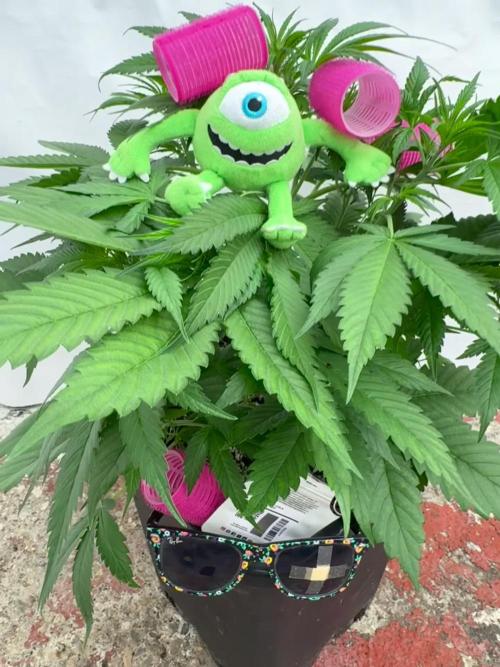
Всех тепло приветствую.
Начинаем свой репортаж, погнали!
17 добрых автоцветов от компании Errors Seeds.
Южный Урал, теплица.
Обо всем подробнее в следующих постах!🤟
Начинаем как всегда, с семян)
Они отправились в ватные диски на прорастание, далее переедут в торф-таблетки под лампу APOLLO 6.
Переезд в теплицу будет осуществляется в нашей готовности, в готовности самой собственно теплицы и САМОЕ важное, когда будет готова рассада🌱

Likes
78
Share


@Roberts
Follow
Pure Ice cream is doing great. She had a solution change 4 days ago. She is bulking and looking strong. She has a neat color mutation going on as well. Nothing else to report. ⁶Thank you Spider Farmer, Athena, and Pure Instinto Seeds. 🤜🏻🤛🏻🌱🌱🌱
Thank you grow diaries community for the 👇likes👇, follows, comments, and subscriptions on my YouTube channel👇. ❄️🌱🍻
Happy Growing 🌱🌱🌱
https://youtube.com/channel/UCAhN7yRzWLpcaRHhMIQ7X4g
Spider Farmer Official Website Links:
US&Worldwide: https://www.spider-farmer.com
CA: https://spiderfarmer.ca
UK: https://spiderfarmer.co.uk
EU: https://spiderfarmer.eu
AU: https://spiderfarmer.com.au
G5000 Light Amazon Link:
amzn.to/4643esa
UVR 40:
https://www.amazon.com/dp/B0BR7SGTHS
Discount code: saveurcash (Stackable)

Likes
10
Share


@SAKARABU
Follow
Performed a final defoliation along with the usual LST. Tried watering with only 1L to bring the watering down to every 2 days, but they started drooping a bit, so decided to stick with 2L every 3 days. Seems to work best.
Not much else to report, growing steadily and buds starting to form.
