


Likes
24
Share


@el_cultivito
Follow
Transplanted this week, 2 weeks from sprouts.
Soaked cubes 30 min in 5.5ph water with some nutrients ~550ppm
Added floraflex caps right away to avoid algae build up on cubes

Likes
1
Share

@TheBulldozerSicily
Follow
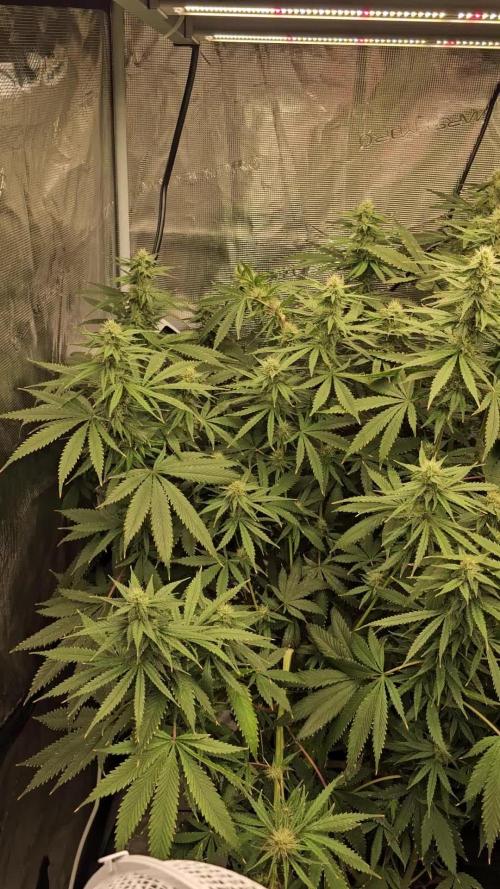
Continuano a crescere a vista d'occhio, l'unica cosa che vedo poco è la resina, sicuramente perché le temperature sono alte e lei invece sviluppa con temperature piu fresca, proverò ad aggiungere del ghiaccio nella vasca dell'acqua per fare scendere un po la temperatura e rinfrescare l'apparato




Likes
10
Share


Likes
38
Share


@CANNASIM
Follow
---GENERAL COMMENT---
Girls are at day 4 technically, but i like to update Sunday always, so keep that in mind, is 1/2 a week now.
From germination to soil emerging took 3-4 days, no issues at all. 100% germination rate from multiple breeders till now.
I will try my best to do a stress free grow again, so will grow mainly naturally.
---RQS EASY BUD---
Ironically the Easy bud is developing better and growing faster than her sister.
---DAY 10 UPDATE---
Over some days she got volume, just started to use RECHARGE, and wow, that thing works, 48H you could tell something is different, since watering with it the stem is thicker and is growing more vigorous, lets see how it will impact overall!
---DAY 14 UPDATE. WEEK 2 FINAL---
This is the last day of this week and this girl is absolutely amazing, she grew a lot, showing already the intension of shooting up more stems, i'm very happy with her, it has been a delight to grow, response in very good. Voodoo juice is of by now, will keep the recharge maintenance every other watering as i'm loving it.
Feeding program will start soon!


Likes
5
Share


@Tacofever88
Follow
Growing like a weed..... up to my chin now and I'm about 5'11"
I feel I'm going to have to add some serious reinforcement to these branches.
The blueberry cheese has some heat stress as it's out in the sun all day, also s9me twisted growth I've never saw before.
Likes
25
Share


@Cannabis_King
Follow
The ladies are fantastic I think I have a nutrient mix that works I'm super stoked to see what they yield me

Likes
3
Share


@CreoWeed
Follow
This week can be simplified as EXPLOSION!!
The plant doubled in size and I can see many main branches now, which is pretty awesome!! This is exactly what is LST is for, right!?
I am pretty amazed for seeing this explosion in the 2nd week of flowering and cannot wait to introduce the booster when flowers are going to be a little bigger, in around 6~10 days.
Now I'm keeping training her for at least 5 days, and then I'll stop so she can focus on flowering. At the e moment I'll stop training her she will also be able to have more space for herself in the tent as the other plant are going to be chopped pretty soon (other diary updated).
So stay tuned and stay high nice people!
Cheers!

Likes
Comments
Share


Likes
82
Share


@WhiteEdge
Follow
12.03.2024
Continue into week two. Target EC is the same for this week
Girls looking great. One Purple Lemonade fall into bucket! That lid is not cut with precision😏 Put some plastic to hold till now
Clean tanks and filters with h2o2+vinegar acid +bleach
Replace all filters
Mix new batch with 2ml AN connoisseur AB + Big Bud Powder + Silica - total 20l @
Donne one pass off long misting 2m
TrolMaster Tent-X arrived! Setup and registration done in seconds. Finding best placement ...
700 PPFD @ center, VPD 1.0, RH 53-56% day, RH 45-48% night, Temp Night-20c, Day-25/26c, Leaf temperature 23c, Light distance 60-65cm, CO2 750+ppm
540w@70cm distance
NT-Nutrient Tank - PH -5.9, EC -1.15, Temp-21c
14.03.2024
Top up tank with 10l off 1.2EC solution - 2ml AN Connoisseur A+B + 3g Big Bud @ 18l (1.16EC)
Replace all filters
Before top up, nutrient solution in tank is 0.86, after adding 1.2EC new mix is 1.03
PH is slightly rising, normal when EC is drooping
Girls grow nicely, no deficiencies, this week is start off stretchy faze.
Remove some big and bottom levees
PAR map 800max/600min PPFD, VPD 1.0-1.1, RH 50-54%, Temp Night-21-22c, Day-25/26c, Leaf temperature 23c, Light distance 60cm, CO2 750+ppm
580w@60cm distance
50s ON time 20min OFF time Day Time
50s Off time 30min OFF time Night Time
NT-Nutrient Tank - PH -5.92-5.99, EC -0.89-1.0, Temp-20-22c
15.03.2024
Position TrolMaster Tent-X Box on tent and connect to internet. Temperature ,Light and humidity sensor is great, I lake that all sensors and connector boxes are on RJ connectors
Great and fast install, registration and connections off all cables, censors and light! Like ability to expand system with Aqua-X and Hydro-X for irrigation ,PH/ EC/Temp monitoring off nutrient tank
Controlling solenoid valves and pump will be SUPERB!!! Recycling type off timer are great for Aero misting!
With Inkbird equipment i have issues that all connections are permanent and if you have longer cables....😡
HLG Scorpion Diablo LED light is connect via LMA-14 light adapter ! Wow i can control dimming and timing off my light via Wi-Fi😀😊😎👏🙏🙌
PAR map 800max/600min PPFD, VPD 1.0-1.1, RH 50-54%, Temp Night-21-22c, Day-25/26c, Leaf temperature 23c, Light distance 60cm, CO2 750+ppm
HLG Scorpion Diablo@83%
580w@60cm distance
50s ON time 20min OFF time Day Time
50s Off time 30min OFF time Night Time
NT-Nutrient Tank - PH -5.95-5.99, EC -0.89-1.1, Temp-20-22c
16.03.2024
Top up tank with 15l off 1.2EC solution - 2ml AN Connoisseur A+B + 3g Big Bud @ 18l (1.16EC)
Replace all filters, still everything in pristine condition after every changing, nutrient solution in tank looking and smell fresh and clean.
Reducing humidity in night time below 50% , humidifier rise temperature to 22-23c at night
Day RH is 53%, in first two hours keeping temps and humidity lower to reduce deferential form night time to 1-2c
Don't want to have more than 10-15cm off stretch in next week
Girls drink more water and nutrients every day, think around 10-12l per day
Managing EC strength with adding slightly higher nutrients solution when top up tank. Overall its around 0.9-1.0EC for most of the time
PH is stabile , slowly rise in small increments. Need to adjust @ 6.2 to 5.9 every two-three days. Probably i will leave it to swing even more.
Diablo is at 80% power @ 45-55cm from top canopy, 900+PPFD in center, lowest corners get 650+
PAR map 920max/650min PPFD, VPD -1.1, DRH 50-54%, NRH48-50%, Temp Night-21-22c, Temp Day-25/26c, Leaf temperature 23c, Light distance 45cm, CO2 750+ppm
HLG Scorpion Diablo@80%
580w@45cm distance
50s ON time 20min OFF time Day Time
50s Off time 30min OFF time Night Time
NT-Nutrient Tank - PH -5.95-5.99, EC -0.89-1.1, Temp-20-22c
17.03.2024
Top up tank with 10l - 1.2EC solution - 1.8ml AN Connoisseur A+B + 3g Big Bud @ 18l (1.16EC)
Replace all filters, install one new. Total 5 mash filters + 2 disc filters
Remove some large fan leaves from all girls. Nothing crazy. Next week is final BIG defoliation and pruning
Clean room benches a little bit after defoliation.
Whole week all girls are doing great , no sign off any kind off stress or deficiencies. Superb fast growth.
Stretching is more apparent in the end off this week. Next week is going to be madness!
18.03.2024
Raise light 10cm , adjusting to canopy level..
HLG Scorpion Diablo@83%, Set sunrise/sunset dimming @ 30min - TrolMaster Tent-X
PAR map 890max/650min PPFD, VPD -1.1, DRH 50-54%, NRH48-50%, NT-21-22c, DT-25/26c, Leaf temperature 23c, Light distance 45cm, CO2 750+ppm
Week 2 off Flowering in Summary
100l off RO water
190ml+190ml AN connoisseur A+B, 15g Big Bud Powder
70kW electricity in total for light, Pumps and AC Infinity Fans. 58kW for Light + 8kW Dehumidification + AC Infinity ventilation
Week start @ 1.14EC, nutrient strength. Strength dropping every day by 0.1-0.2. Topping up tank with 1.2EC solution bring back strength to 0.9-1.0EC
Start using AN Big Bud powder for day two off this week. For next slowly reducing Nitrogen and add more Big Bud. Next week start @ 1.2EC
Girls look superb all time, Wedding Cheesecake is going to be a biggest strain in this run. Two off them are gigantic plants, third one is little smaller.
Tropicana Cookies is short and bushy with lots off side branching. Need good defoliation next week . Purple Lemonade is also huge , all three girls
Flowering going nicely, obvious sign off formation off bud sites, pistils have shown an all girls.
PH was stabile and move from 5.85 min to 6.2 max. Swing all week without chasing perfect number.
Light distance start at 65cm from canopy finish week at 45-50cm , PPFD levels around 800-940 in center, trough whole week
Temperature vary slightly from 23c at start off day to 26c max at some points. AC Infinity T6 extracting fan program in AUTO to kick in @ 26c
Night temps around 21-23c, dehumidifier start to work at night time to bring down humidity, trying also to minimize Day/Night temperature differential for this week also
Continue in next week at same environment settings and light strength..

Likes
5
Share

@hassehujasse
Follow
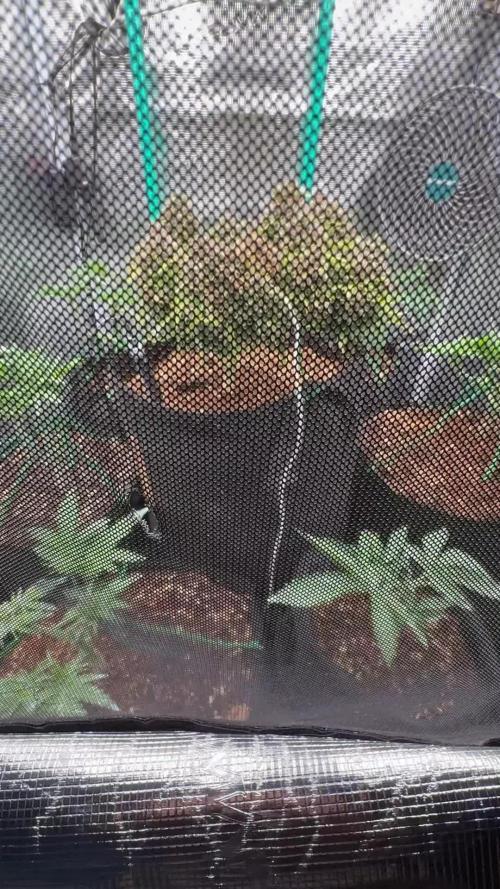
Working hard with co2 in my homemade lab.
First time Mars Hydro at 100% of his power.Two small boxes always better then just one big)))


Likes
14
Share


@Nazgul420Hafoun
Follow
Těším se přátelé.
Tento kmen jsem měl jednou venku a byla to chuťovka.
😁😁😁

Likes
13
Share


@HomeGrownFamz
Follow
This thing shocked me by how much it stretched, so much so that I have now moved the lights vertically around the plant. Bud development has been amazing. The buds have that fat dense look with the slight genetic foxtails on top. I had a small issue with humidity due to the res of the hydro system being in the tent but have added a dehumidifier now keeping RH around 43% temps @ 24.5C. Drinking around 5-6 litres per day atm!
Likes
16
Share

@Radagast_
Follow
10.08.
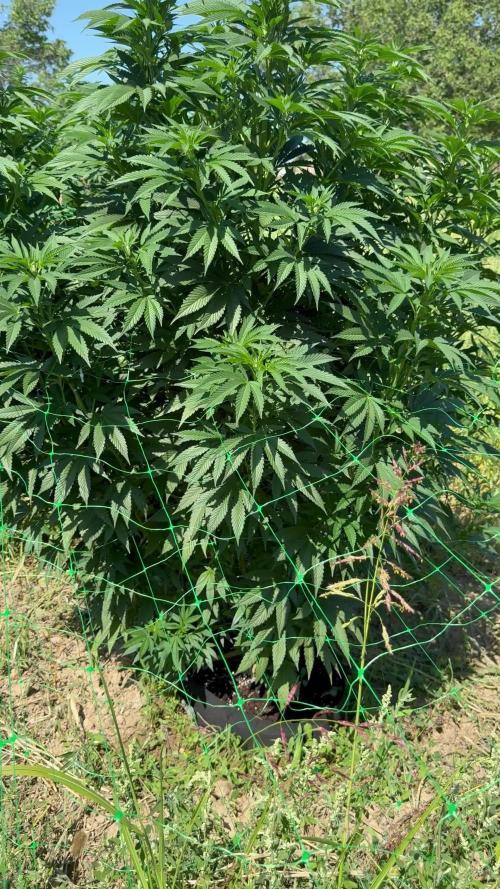
Dos Si Dos 33# 1# Day 107#
Dos Si Dos 33# 2# Day 107#
The plants are progressing well, the day before yesterday was the end of their 15th week
Both plants went into preflower this morning and 2 days ago they got a dose of bloom and half a dose of boost, and this morning they got bloom again.
Stay High and Keep Growing!!!
Likes
6
Share


@GREENPHOENIX6262
Follow
* Week 3 Veg - 1/1/2024 - 4.5 Inches - Topped main cola - Running Raw NPK only nute feed - 1 TSP a day with Myco*
Since using mainly all RAW NPK nutrients I have seen a huge difference in size, growing and healthiness.
Likes
6
Share


Likes
Comments
Share

@MetallicaDave
Follow
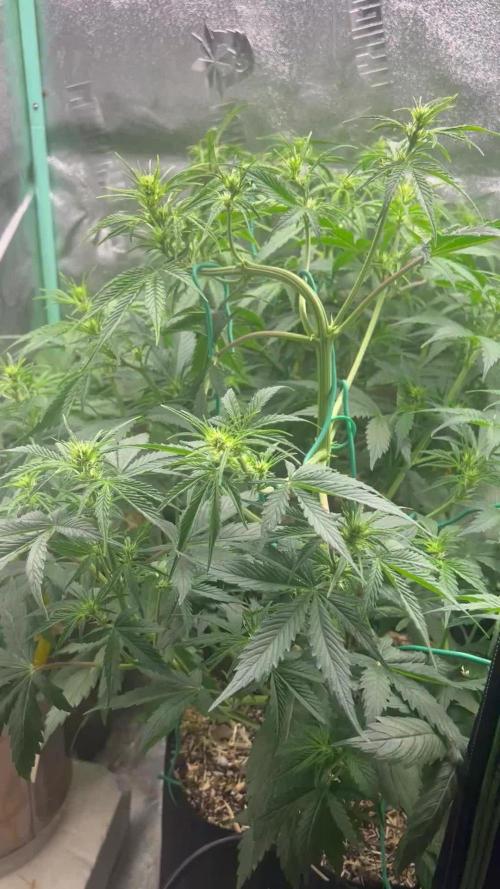
First week of FLOWERING STAGE I must have done something right two grew up huge and waited as long as possible to flower ( great for autos ). Did heavy LST on 4 of em 0 damage I bent the tallest bus by slowly massaging the trunk and te downs watering every three days up too 800 ppm of Fox Farm Cutivation Nation 4/35/26 PK Booster and 550 on small 1 gallon pots I put in worm castings pulverized egg shells 10/10/10 slow release granules and Mychorizal additives and gypsum granules mixed into the top soil I water with spray first a cup or two and do a light foliage on plants then I water appropriately 1.5 liters each third day
Likes
9
Share


@GangbudsGenes
Follow
estas pequeñas sorprendieron con la prdoduccion de resina que dieron 22 gramos aprox y 19 cada planta