


Likes
Comments
Share


@dushi_genetics
Follow
All plants are happy this is day 1 flowering stage (13/5/20). Looking forward for the flowers..
Two lights 1000w LED turned on
All lights 12 inch from top of the plants
Light schedule switch 12/12


Likes
16
Share


@SeshHouseCannabis
Follow
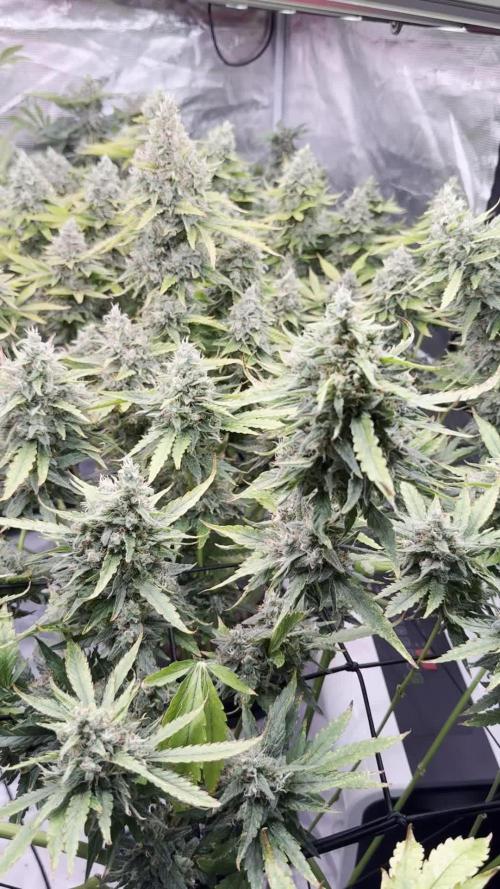
Got the filter that could be used to clean the tap water, so we changed the water in the system to be filtered water and make some upgrade on the system.




Likes
4
Share


@babaweed
Follow
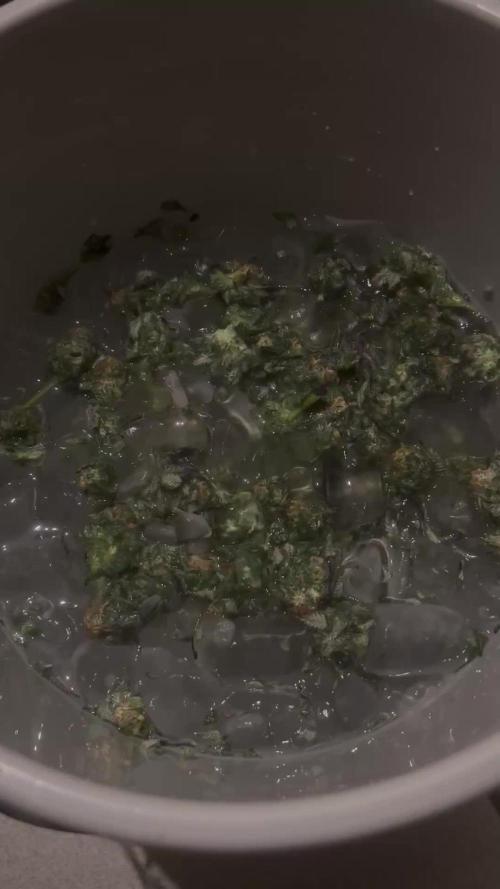
The plants are huge and they are developing preflowers. I lowered the photoperiod to 14/10 in 3 days I lowered it to 12/12. I gave water to flushing roots and now I gave phosphorus and potassium for flowering


Likes
31
Share


@MrJones
Follow
MrJones VIPARSPECTRA XS1000 LED
📜 SUMMARY - I have been given the opportunity to run the next generation of LED lights by VIPERSPECTAR, the XS1000! I set up a Stealth Cabnient and moved 3 Cream Manderain Auto XL.s under these lights, the cabinet set up is automated with WIFI light controllers, and INKBIRD Temperature and Humidity Controllers, I am very excited about this opportunity!
Specs and Discount Codes Listed Below.
🔹🔹🔹🔹🔹🔹WEEKLY GOALS 🔹🔹🔹🔹🔹🔹
🌞Environment - 80F and 50%Humidity - using Humidfyer as needed.
💧 Feeding - Feeding with FOOP Canna Organic Nutrient Line
🍃Training / Keeping Stems Stable and Strait
🕷️ IPM - Will be using Green Cleaner" 1 OZ per Gallon, and CannControl from Mammoth alternating between product each month for Integrated Pest Management.
💡 Vegetation & Flower (new) Viparspectra XS-1000 Release on March 15th.
🔹🔹🔹🔹🔹🔹🔹🔹🔹🔹🔹🔹🔹🔹🔹
📜 Week 7 underway and these girls gave finally stopped stretching, but now I need to super crop them, as they have grown up past the lights, this has never happened, a great combination of Lights, Nutrients, Environment, and Strain.
🔹🔹🔹🔹🔹🔹🔹🔹🔹🔹🔹🔹🔹🔹🔹
▶️Monday 04.05.21 / Fed about 30 ounces today - looking great!
▶️Tuesday 04.06.21 / Fed about 30 ounces today - looking great!
▶️Wednesday 04.07.21/ Today I went ahead and super cropped these auto flowers today, out about 4 inches between the lights and the canopy, much better, hoping that I have not stunted these ladies! Holding off on the feeding tonight the buckets were heavy.
▶️Thursday 04.8.21 / The ladies are responding well to the training and defoliation, these lights are full-on beast mode! The FOOP nutrients are kist pushing these plants to the max!
▶️Friday 04.09.21 / Fed about 30 ounces today - looking great!
▶️Saturday 04.10.21 / Skipped Feeding Today.
▶️Sunday 04.11.21 / Fed about 30 ounces today, the weeks ending and the girls are looking pretty good, just hoping next week to see the buds to start to get larger.
🔹🔹VIPARSPECTRA XS1000 LED🔹🔹
Amazon US:
XS1000 10% off: in10MrJones http://yx-8.cn/0y-6
XS1500 5% off: in15MrJones http://yx-8.cn/0yA
XS2000 5% off: in20MrJones http://yx-8.cn/0y2Y
XS4000 5% off: in40MrJones http://yx-8.cn/0y5k
Amazon Canada
XS1000 10% off it10MrJones https://amzn.to/38udUVe
XS1500 5% off: it15MrJones https://amzn.to/3esVUyr
XS2000 5% off: it20MrJones https://amzn.to/3l5zAfg
XS4000 5% off: it40MrJones https://amzn.to/3l7k5Uj

Processing
Likes
7
Share


@Kushizlez
Follow
Day 42-49
(Day 42) Just watered today but couldn’t go until runoff because I didn’t have enough RO. I forgot to add the probiotic too. Nonetheless, everything is starting to recover from those weird deficiencies and is looking super healthy. Plants are really bushing out now too. I had to top the zkittlez and BBB#3 again as they are just getting too big. Nothing is definitively showing sex yet but I’m seeing clues. Shouldn’t be long now. If I get 4 females or less I will use 10gal pots, 5-7 fem 5gal pots and 8-12 3gal pots.
I need to stop overwatering. Even though it doesn’t look too overwatered, it is much better to water a little bit each day at lights on. This will help keep the humidity down as well as deliver optimal oxygen to the roots speeding up plant growth considerably.
(Day 45) Gave an EM1 spray down today. The beneficial bacteria is said to overpopulate surfaces so powdery mildew and septoria can’t form. Something seems to be really working as I haven’t seen any yet.
(Day 47) I sealed up the tent and am running both dehumidifiers and it’s keeping the RH around a safe 70% night and day which is right on track with VPD. Plants are all looking super healthy. Deficiencies have pretty much all cleared up. Cold nights I’m running 600w and warmer nights I’ll run 400w.
I was asking around Instagram about white ash/good burn and a few different people assured me it has to do with mineral content of the soil. I was told the three best products for clean ash is glacial rock dust/basalt, oyster shell flour and langbeinite. I already have langbeinite so I’ll grab the other amendments today and top dress.
I grabbed the amendments and also got some Destiny Organics dark matter super soil, coco and some beneficial nematodes. Top dressed each amendment except langbeinite and mulched in some coco coir.
(Day 48) My shelf came in today and I think it may be to big for the 4x4 tent. Each square is 12”, not the 11.8” advertised. I could wipe down my flower room and set it up in there which would give my plants a good adjustment to the new lights before I flip. Or I could set it up in the veg tent but that seems like a huge hassle as the need to be moved and flipped soon anyway. I wish they would show sex already so I can toss out the plants I’m not keeping.
For flower I am considering starting over fresh with the new Destiny soil and coco mixed with some amendments. I’m concerned that my current mix might be too hot. I could also dilute it with the Destiny/coco mix. Those little bulb mites that came in with the worm castings are a little concerning as well. Some say they are just beneficial composters aka “worm bin mites” and others are telling me they’re predatory bulb mites which destroy crops like garlic. I’m leaning towards beneficial composters but in another grow I watched them devour a seedling before it sprouted. Gotta check the current roots but the plants aren’t quite ready to be transplanted.
(Day 49) Got everything in the flower tent wiped down and sprayed with alcohol then EM1 few hours later. Got the shelf set up and got all my temp controls set up and running. I put the controllers outside the tent this time and will patch any light leaks. Gave a lite compost tea at 830ppm and a velokelp foliar spray at 6ml/L. This will be the last veg feeding before I transplant into their final containers on the 31st.
BCTG#2 is a confirmed male and I pulled him. No one else is showing definitively. Roots looked super healthy with very few mites but I’m not 100% convinced they’re all clean. I saw a few mites on leaves today too.
Saw a bit of droop after the move but they all look happy just a few hours later.
Took a few clones from some sucker branches on a few of the blackberries.
Processing
Likes
13
Share


@Green_Blood
Follow
On the final few days of a 10 day flush.
Will be chopping down this week to harvest and hang dry.
Really excited to try this one. The smells in the room are unreal.

Likes
10
Share


@HideAndFly420
Follow
Day 43 this orange is running absolutely faster than the last I did. Every day flowers are getting bigggers and resin is awful to be at 42 days.
I’m really loving aptus product, but I really can’t ell what’s is pushing her so fast.
Behind, in the video, you can see another auto is a strawberry banana and germinated with just 24 h difference but is starting just now to get into flowering, same soil ‘, same feeding..
incredible
Let’s see what s happen

Likes
2
Share

@DogDoctorOfficial
Follow
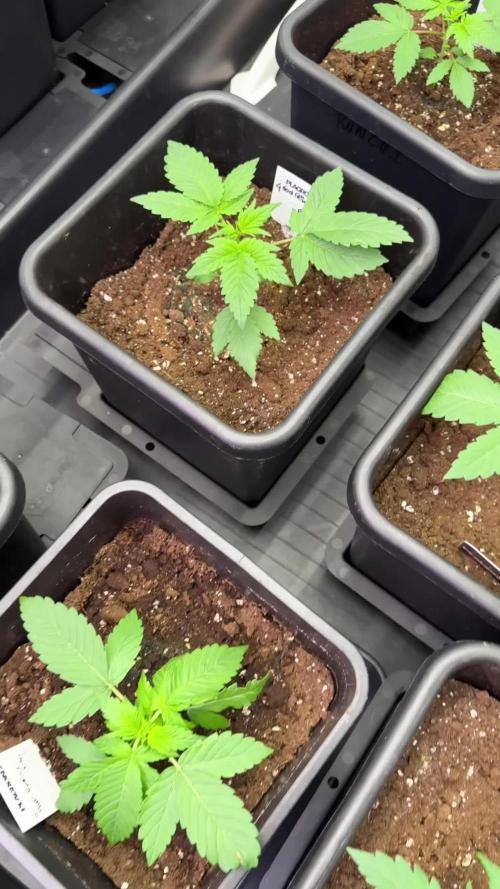
🌱 Week 3 | Purple Haze Photo | Folder 6A | Building the Foundation
Every phenotype tells its own story, and this Purple Haze is beginning to reveal exactly the kind of structure I was hoping to see. Looking back at the photographs from the beginning of the week and comparing them to where she stands today, the progress has been remarkable. The increase in leaf size, stem thickness, and lateral branch development shows that the plant has settled comfortably into her environment and is now entering a period of rapid vegetative growth.
This diary is part of my Project Blue series, where every plant receives its own individual journal. Although they all share the same environment, nutrition, and cultivation method, documenting each phenotype separately allows me to observe the subtle differences that make every plant unique. Two seeds from the same pack can behave very differently, and that’s exactly what makes growing from seed so fascinating.
Like every plant in this project, Purple Haze is being grown using the 12/12 From Seed method. Instead of giving the traditional vegetative light schedule, the plants receive a flowering photoperiod from the moment they emerge. This technique keeps the plants compact while still allowing them enough time to develop a strong structure before flowering naturally takes over. It’s an approach I enjoy because it produces efficient, manageable plants while still allowing each phenotype to express its personality.
Throughout the week the environment remained extremely stable, providing the consistency young plants need to thrive.
Environmental Conditions
• Day temperature: 27°C
• Night temperature: 25°C
• Relative Humidity: 55%
• Root Zone Temperature: 21°C
• Nutrient Solution Temperature: 20°C
• pH: 6.0
• EC: 1.3
• CO₂: approximately 666 ppm
• Light Schedule: 12/12
• Average PPFD: 600–700
Maintaining these parameters allows the plants to dedicate their energy to healthy growth rather than constantly adapting to environmental fluctuations.
Feeding Schedule
This week the nutrition remained focused on root establishment and balanced vegetative growth using the Plagron Terra line:
• Terra Grow — 1.8 ml/L
• Power Roots — 1 ml/L
• Pure Zym — 1 ml/L
• Sugar Royal — 1 ml/L
The goal isn’t to push maximum growth as quickly as possible but to encourage strong, healthy development while building a vigorous root system capable of supporting heavy flowering later in the cycle.
A Beautiful Structural Evolution
The difference between the first photographs of the week and the last ones is immediately noticeable.
The stem has thickened considerably, becoming sturdy enough to support future flower production without any assistance. Internodal spacing remains tight, creating a compact plant with multiple future flowering sites already beginning to establish themselves.
The leaves are broad, flat and richly coloured, showing no signs of nutrient deficiencies or environmental stress. New growth emerges with a healthy lighter green before maturing into the darker foliage characteristic of vigorous vegetative development.
Perhaps the most exciting change is the development of the secondary branches. Each node is now pushing strong lateral shoots, giving the plant a naturally symmetrical structure that should translate into an even canopy during flowering.
Why I’m Using Leaf Tucking Instead of Defoliation
One of the techniques I’ve been using throughout the week is leaf tucking.
Rather than removing healthy fan leaves, I simply tuck them underneath neighboring branches to expose the developing shoots hidden beneath the canopy.
This offers several advantages:
* More light reaches the lower branches.
* Airflow improves naturally.
* The plant keeps all of its solar panels, allowing maximum photosynthesis.
* No recovery time is required because nothing is removed.
Young plants need every healthy leaf they can keep. Fan leaves are the engines that drive growth, so whenever possible I prefer repositioning them instead of cutting them away. Defoliation can always come later if it becomes necessary, but at this stage gentle canopy management is more than enough.
Looking Ahead
Purple Haze is quickly becoming one of the strongest structured plants in the room. She has responded beautifully to the stable environment, balanced nutrition and simple canopy management. Every day she’s producing more side branches, larger leaves and a noticeably thicker main stem.
If she continues at this pace over the coming weeks, she should enter flowering with an excellent framework capable of producing an even canopy and plenty of well-positioned bud sites.
Sometimes the best training isn’t about bending, topping or cutting—it’s simply about giving the plant everything it needs and then getting out of its way.
A huge thank you to Plagron, Zamnesia, GrowDiaries, and everyone following this Project Blue adventure. Mr. Baggy made his usual inspection this week and left with a big smile. According to him, Purple Haze has officially entered her “future forest” phase, and judging by the way she’s growing, it’s hard to disagree.
Growers Love 🌱🛍️

Likes
12
Share


@Chucky324
Follow
Hello, this is the end of week 2 and the beginning of week 3 of flowering.
Things are going good in here this week. Got some canopy mites for the thrips damage I've seen on some leaves.
You can see the little glass jars I used to hold the bran they come in the picture under the table.
The canopy mites eat the bran mites while they are in the package.
Got in here and did some LST and some fanleaf removal. I also removed the sucker branches. They take energy away from the plant.
I guess when they activated the Growdiaries 2.2 I couldn't log on for 5 days and got discouraged and didn't report last week.
The site didn't even work right. There was about 30 pictures when the home page was up, but all the other pages were without content.
Somehow my operating system didn't get through. But they fixed it and I'm here now.
Plant #1 smells wonderful, Sweet Lemon candy and I can smell the papaya in it too.
OK. Have Fun.
Chuck.
Likes
Comments
Share


@Sn3ak92
Follow
Jan 7: Beginning of the week
Light @ 150w (raised it from 24 to 32 inch)
Jan 8: began a brew of compost tea and will feed tomorrow.
Jan 10: Topped the two C&C
Jan 13: Began training the plants (LST) and cut all the big leaves for better light exposure
Slight discoloration on some leaves I removed... Not sure what it is...
Compost tea recipe:
2 gal dechlorinated tap water
1 tbsp Wholesome Molasses
2 tbsp GaiaGreen Kelp meal
2 tbsp GaiaGreen Alfalfa meal
1 tbsp GaiaGreen 444
2 tbsp Bat guano 842


Likes
16
Share

@For2itous
Follow
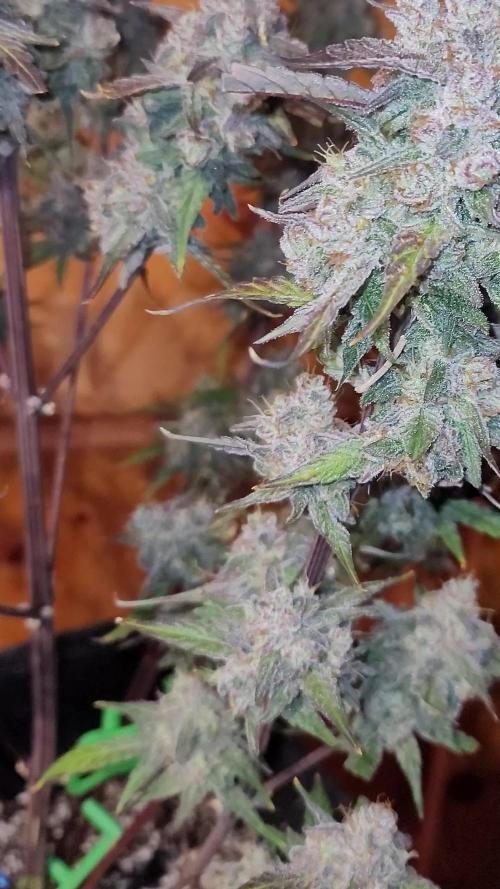
Super frosty nugs with Mango and some gas smells. Dense and very nice looking. Gonna be cut probably tomorrow can't wait. Happy growing 🌴
Likes
18
Share


@DeepRootsGrowTrees
Follow
PURPLE KUSH / KANNABIA SEEDS
WEEK #10 OVERALL
WEEK #9 VEG
This week she has stretched and she filled in with some new tops the Bud Clips really help open the plant canopy for additional growth where the plant may not of the Clips weren't applied. They work great haven't had any issues using them. Once again I've been LST training and topping her heavily to control her height. Stay Growing!!
Thank you for stopping by and taking a look it's much appreciated!!
Thank you KANNABIA 😊!!!
BUDTRAINER.COM BUD CLIPS
PURPLE KUSH / KANNABIA SEEDS

Likes
13
Share


@Jwjoh
Follow
EDIT: I've added some pics and video of my negative pressure setup to ensure no smells in my little 8x8 office! In fact, this room has the freshest smelling air in the house because it's constantly filtered XD This is what hospitals do when they quarantine people -- they put you in a negative flow room so any drafts you feel under the door, from the ceiling and windows, microscopic holes in the room, etc are going INTO the room, and exhaust is controlled through some decontamination method (I'm unfamiliar with that part of it).
This week was a huge struggle with the clones. Self-inflicted.
I was going to keep them in the buckets for a while, but when I watered them mid-diary-week pot A was not draining even though it has some decent drain holes and rocks on the bottom. I tried digging out the sides down to the bottom to try to open it up, I tried mashing on the sides and bottom of the pot to break stuff up... But it just would not stop being a pool of standing water :( So, I had to do an emergency transplant into the new perlite hempy bucket. Now other than a washed out soil/root plug about the size of my fist, I'm hydro in 100% perlite. (Manual Hydro though, I am the pump! :P) Been giving it MaxiGro since, and I think it actually really loves being in the perlite :O
After having such success with the transplant for A, I decided to transplant B right after just because. But, I didn't cut one of the LST strings all the way :facepalm: When I went to lift it out I didn't get very far at all and the main stem snapped off, leaving only one fan leaf and some tiny growth! I figured since it has a healthy root system, it'd eventually recover / stabilize. So I did one of those "whistle while sweeping it under the rug" things, and just put it back the way it was. I've noticed a bit of growth today on official end of week clone servicing day, so I went ahead and transplanted B into a hydro bucket too! Gave it 2-7-7 cactus food and a splash of CaliMagic, the higher P and K of the cactus food should help it recover faster (or so I've read).
We'll see how this goes moving forward. Even if it's a flop, it'll at least be a learning experience. I've moved plenty of plants from pot to pot, but never from grow medium to grow medium -- which is actually quite stressful and dangerous to the plant if you don't do it perfectly with all the precautions in place (like using gloves so you don't touch the roots!) I'm excited at the prospect of not having to screw around with soil any more. I can just rinse and sterilize (will use steam most likely) the perlite and it's good to go for the next grow!
A shout out to someone I met on here that has been patiently answering all my questions regarding the hempy buckets, perlite, hydro nutrients, etc. I don't want to reference them by name because I don't want to risk causing them to receive a flood of questions from a bunch of random people.
Processing
Likes
21
Share


@Onlypotent420
Follow
Hi all,
Grow area updates:
Nothing major far as area is concerned added Some yoyo’s to the net so it can be raised and lowered easily now. I also noticed I had been following ghp feeding schedule for a recirculating system when mine is drain to waste. Didn’t have in adverse effects on the plants at all actually think they loved it tbh. But I’ll notice the ppm difference on these future updates. I was using way more nutrients then what was needed. Now I get to save money lol.
Blue dream auto:
Def has the faint smell of flowering cannabis now. The branching power from the mixing blue dream and already branchy plant with the ruderalis is def perfect for a scrog set up when you trying to maximize the your yield off one plant. I had to visit the tent 3 times this week to re tuck her down. Did the last tuck Thursday so what you are seeing from the pics today is three days of growth. Crazy!!!! She sitting at about 900 ppm And that’s with cutting the the grow solution some.
Master kush photo:
She popped through the net mid this week and hit her first tuck under today. With how well she reacted to the femm job. I went ahead and topped on the new growth on each branch. Her branch structure is way more sturdy then autos for sure. Leaves are bigger as well. One is the size of my palm lol I have big hands so that’s awesome. She sitting at about 800 ppm and getting less bloom solution.
I’d also like to add I appreciate everyone’s advice far as set up and temp control. It was above 100°F the last couple days. And tent never got over 85 and as soon as the hotter part of the day was over we where back in the 70’s. Ima smoke one for y’all! 🤘🏾 Until next time #StayKited


Likes
37
Share


@MG2009
Follow
10/05/2018
I'am thinking about 2 weeks out ?🙏 Cooler weather coming soon, buds starting to swell up i believe. #2,and #4 are the only ones to get any mold. All others are clear of any sign of mold. Number 1 seems to have more of the ghost 👻 train haze smells a!most identical to it but a little something different.Brrrr it's 41° out , now it's 39°
Ps
I think #1 will go 70 -78 days 10-11weeks? Potted plants will be at 63-72 days but just a guess the trich's will tell me when.👍
Likes
4
Share


@Staffedition
Follow
Привет друзья.
Наше знакомство продолжается с новым фотоцветущим растением от Smail_Seeds сорт TROPICANNA POISONZKITTLEZ XXL F1 reg.
Сегодня растению 92 дня.
Шишки наливаются уже тяжело ей стоять)
Перевёл на 12/12 1.10.2023
Растение очень хорошо развивается, ни каких сбоев в генетике не наблюдается😀
Сорт выводим сами.
Смотри мой профиль, у нас всегда есть что то интересное.
Не забудь поставить лайк❤️, если понравилась как прошла неделя
И читайте наш TELEGRAM: https://t.me/smail_seeds
#Smail_Seeds 😀
Likes
4
Share


@adam_pawloski87
Follow
@twenty20mendocino Ateam R&D Update ~ Let’s go day 91 an these girls are doing amazing! Looking nice an healthy we will let these girls recover for a few more days from the heavy defoliation and on Sunday we will be giving them the big flip , Let’s go flower!! Updates coming soon !
Sangria has been doing her thing , been drying for12 days now so Sunday we will be giving her the trim and jar her up, but updates coming soon yall!! Let’s have an amazing productive day as well as a great safe weekend, peace love an positive vibes to y’all Cheers an blaze on 😶🌫️💨💨💨💨

Likes
22
Share


@julian100614
Follow
La semana comienza bien 👍 la planta se ve sana y esta creciendo con fuerza.
La he aplicado sus primeros nutrientes añadiendo 5ml de terra Vega de Canna a 1L de agua ajustando el pH a 6 y con una temperatura de 25°C
Veremos como responde a la poda apical que la hizimos la semana pasada, aunque parece por el momento que va muy bien 😉👌

Likes
17
Share


@Tazard
Follow
She’s a little taller than I wanted so I’ll be supercropping her for height control. She had a lot of stretch in veg due to the crowding. She has one lower branch that was taller than her meristem.
