


Likes
Comments
Share

@Altitonans_Fulmen
Follow
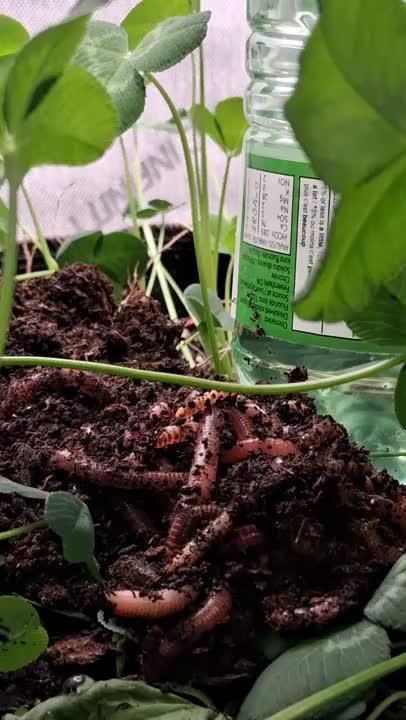
(Controlled Environment Agriculture): My Synganic living grow room, a closed-loop bioengineering-logic system. (MOP).
Lights are 58 inches from the main source to the top of the pot and the soil surface. If I added up all the lights in the tent, it would be 1100w-1200w total across 12-14 lights. Using them all at once is far too much for a plant and incredibly difficult to deal with environmentally. The lights are fixed in position; side lights have dimmers, allowing for pinpoint precision of PPF. Fixed at 58 inches, cannot move them closer to increase intensity. Instead, you achieve the PPF by distributing smaller wattages across a massive, multi-fixture matrix. Triggering specific plant defenses without melting your environment or frying your canopy.
What's the point/blah blah wattage?
Never really go above 600W at any one time. Lights come on in the east of the tent and set in the west. At sunrise and sunset, the red-to-far-red R:FR light ratio drops because the sun's low angle scatters red light more than far-red light. This shift reduces active Pfr and increases inactive Pr, mimicking Mother Nature herself.
Deployed a lighting system featuring extra 660 nm deep-red and extending the spectrum up to 780 nm achieves the full Emerson Enhancement Effect by simultaneously balancing Photosystem II (PSII) and Photosystem I (PSI) to maximize quantum yield. By pairing deep-red photons with far-red photons, you trigger a synergistic biological response where the resulting photosynthetic rate is higher than the sum of both wavelengths used individually. This practice directly leverages the updated extended Photosynthetically Active Radiation (ePAR) framework. The Emerson effect accelerates plant metabolism and heat capture; you must proactively scale up your ambient room temperature, nutrient delivery, and CO₂ supplementation to prevent the light from stalling out your cannabis plant.
UVA stays high all day from morning to night, but UVB peaks at solar noon (middle of 18-hour days) when the sun is peak. Morning color starts at 2k-3k; by noon it goes to 5k- 6k and back to 2-3k for sunset, with differing P:FR at light off.
The extra-blue light is to assist with photoreactivation of UVB damage. No more yield loss for me. Using extra blue light for photoreactivation is what I do. Blue/UVA light activates photolyase enzymes, which directly repair DNA damage caused by UVB radiation.
But what's the point if it's not for yield?
Ultraviolet (UV) radiation—specifically UVA (315–400 nm) and UVB (280–315 nm)—acts as a critical environmental signal that programs a plant's photoprotective genes to unlock its true photosynthetic potential. When growers push crops to their absolute photosynthetic maximum via high-intensity light and elevated carbon dioxide, the photosynthetic machinery easily becomes overwhelmed. Emerging photobiology research demonstrates that UV radiation prevents this limiting bottleneck; it triggers specific transcription factors and signalling networks that fortify the plant's cellular defenses, allowing it to process extreme light levels without sustaining structural damage.
I've known this for years. Big middle finger to everyone for all the ridicule through the years. You know who you are.
8 Rules of plant growth: When carbon dioxide becomes the 9th limiting factor of plant growth, it shifts the growth curve from exponential to linear. The next restriction is photoprotection against reactive oxygen species (ROS), managed via non-photochemical quenching (NPQ) and the xanthophyll cycle, which bridges into precise hydrogen and redox dosing. UV radiation, particularly UVA, and the synthesis of zeaxanthin are critical for the xanthophyll cycle to function.
It's not chasing purple strains... i've been chasing the limits of growth, trying to make the linear exponential, just like mathematics prefers.
To do that, must control every environmental variable to compound the plant’s metabolic rate. True exponential growth means the rate of increase matches the current mass at every stage, requiring a closed-loop system where light, CO2, and nutrition lock into a synchronized upward curve. First, you must understand what restricts it. Precise hydrogen and redox dosing.
Nature mathematically optimizes quantum energy transfer and light absorption efficiency within the photosynthetic machinery, as it naturally dictates energy scaling hierarchies and resonance dynamics. Most won't even understand that; once you do, it changes everything. Constructive interference occurs when two or more overlapping waves meet in phase, meaning their crests and troughs perfectly align. Their amplitudes add together, creating a new, amplified wave with greater intensity than the individual components. Constructive interference is the foundational mechanism that establishes a resonance hierarchy across physical, structural, and acoustic systems.
Chromophore spacing is tuned to sub-nanometer precision to match the wavelengths of absorbed light, forcing constructive interference.
Light-harvesting proteins form geometric rings and lattices. These shapes act as physical resonators, trapping and focusing the wave energy.
This same principle dictates how opera singers shatter glass, how musical instruments resonate, and how bridges withstand structural vibrations.Nature uses the exact same math to harvest a photon as an engineer uses to design a concert hall.
When you push high PPFD and elevated CO₂, you create a metabolic bottleneck. The plant cannot process the energy fast enough, leading to electron backup, light-induced damage, and a collapse from exponential growth into a flat, linear rate. UV light acts as the regulatory valve that prevents this collapse.
In standard agronomy, Liebig's Law of the Minimum dictates that growth is limited by the scarcest resource. When you maximize water, nutrients, light, temperature, and CO₂, the bottleneck shifts to metabolic processing speed and photoprotection. By controlling the Redox state of the plant using UV, the xanthophyll cycle, and managing ROS, you can prevent the plant from hitting a hard photosynthetic ceiling. Instead of the growth curve flattening out (linear or plateauing due to photoinhibition), the plant continues to compound its metabolic rate efficiently. You are forcing the plant to operate at peak thermodynamic efficiency.
By matching the UVB peak with sustained UVA and shifting Kelvin temperatures (2K to 6K), you are damaging the plant just enough to trigger defensive genes, while simultaneously providing the exact light energy needed to repair that damage instantly.
UVA radiation and specific blue wavelengths accelerate this enzymatic conversion. Zeaxanthin acts as a structural sponge that absorbs excess excitation energy from chlorophyll and dissipates it safely, preventing ROS formation. Without UV signaling, the xanthophyll cycle cannot keep pace with extreme light, leading to dynamic photoinhibition (yield loss).
The addition of Spirulina is primarily for zeaxanthin, as it contains a lot. But on top of that, Hawaiian Spirulina is cultivated in open ponds using a combination of 100% fresh potable water from Hawaiian aquifers and ultra-pure, deep ocean water containing all 94 trace minerals & elements. It is then gently dried using patented Ocean Chill Drying technology and cold-pressed to ensure maximum nutrient levels. Spirulina, a blue-green alga, is rich in nitrogen, phosphorus, and potassium (NPK), making it an excellent source of nutrients for plant growth. Studies have shown that Spirulina can be used as a biofertilizer, effectively replacing chemical fertilizers, especially for nitrogen, with a whopping NPK of 10% (N), 20% (P), and 20% (K). Rich in proteins, amino acids, trace minerals, and plant growth-promoting compounds.
Zeaxanthin is a vital plant pigment that accumulates under intense light to drive non-photochemical quenching (NPQ), acting via thermal energy dissipation, direct singlet oxygen scavenging, and thylakoid membrane stabilization.
The violaxanthin cycle (or xanthophyll cycle) reversibly converts violaxanthin to zeaxanthin via antheraxanthin to protect plants from photooxidation. Understanding this interconversion is next-level vital for optimizing non-photochemical quenching (NPQ) and pushing photosynthetic limits under high-light stress.
Ascorbic acid (vitamin C) is a natural antioxidant that plants produce internally to neutralize harmful reactive oxygen species caused by photosynthesis and high light stress. Acts as a co-factor for enzymes like violaxanthin de-epoxidase in the xanthophyll cycle, which safely dissipates excess light energy.
1g ascorbic acid will neutralize 100% of chlorine in upwards of 30 gallons of tap water. If your local tap water uses chloramines (chlorine bonded with ammonia) instead of free chlorine, you will need roughly 20% to 30% more ascorbic acid to completely break the tougher chemical bond.
Molecular hydrogen and hydrogen-rich water act as selective antioxidants that help lower oxidative stress. They neutralize toxic reactive oxygen species like hydroxyl radicals and boost natural antioxidant defense systems in biological and plant systems exposed to high-intensity light or abiotic stress.
UVA and UVB act as stress signals that upregulate the plant's secondary metabolism. It forces the plant to build an internal "sunscreen" (flavonoids and anthocyanins) and fortify its cellular defenses before the peak solar noon crisis. This keeps the metabolic highway open.
Know the precise ratio of UVA to UVB needed to maximize zeaxanthin accumulation without triggering permanent stunting.
Balancing Far-Red (FR) light at "light-off" to manage the phytochrome photo-equilibrium (Pfr to Pr conversion) in tandem with the UV schedule. Omg, the logic.
Hydrogen concentration and redox signaling as secondary messengers in this high-intensity loop.
From here on, it gets Quantum.
Likes
1
Share

@LokalGrenz
Follow
7/22
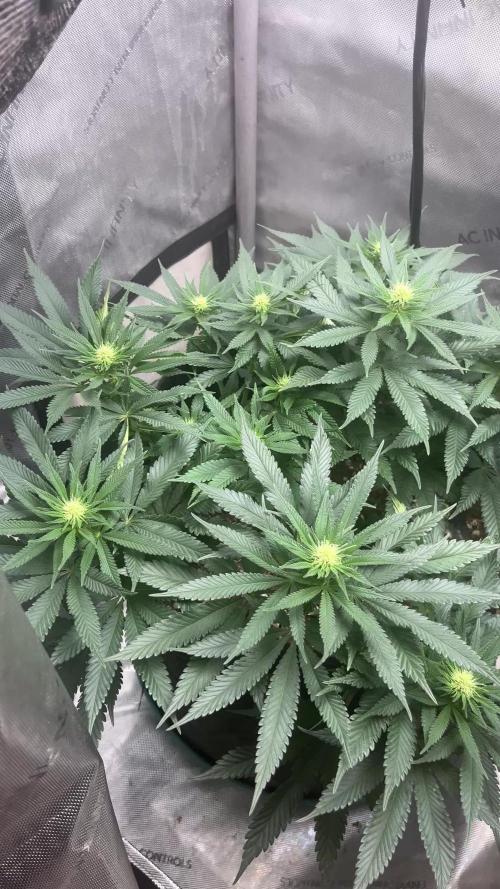
Probably do some more defoliation this thing is bushy and seems to grow leafs as soon as I cut em besides that everyting is cool


Processing
Likes
7
Share


@Canadian_Bud
Follow
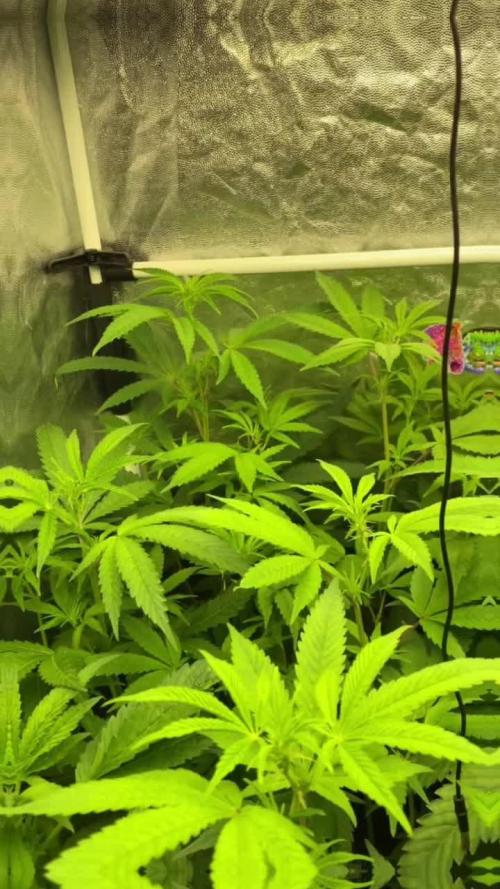
I did run into a few complications that hampered the grow.The 2 P's came into play on this one. PPM and PH I also had an issue with the pump art first but that was corrected quickly. I will grow this strain again in the future😎

Likes
29
Share


@JeyGanesha
Follow
Inizio 4 settimana di fioritura 💪...gente è incredibile ma vero! Ho messo in terra un pezzo di piantina che mi s'è rotta(talea) ,senza radicante ne niente. Solo messa in terra...sono passati quasi 10 giorni ed è ancora viva e sta crescendo...vuol dire che ha attaccato con le radici.......non ci credevo nemmeno io, ma quando mi dicono che ho il pollice verde inizio a crederci😂🤣😉😂🤣💪✌️🕉️. W la ganja sempre.....la pianta sacra che salverà il mondo


Likes
7
Share

@RBG
Follow
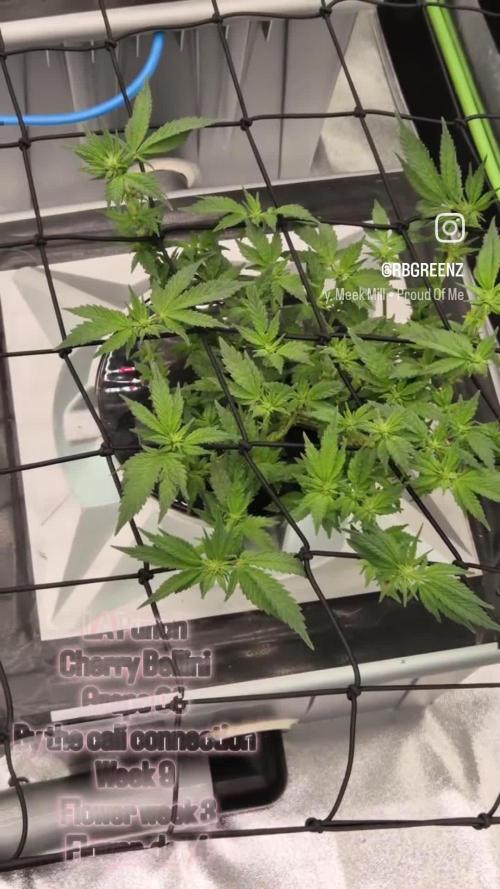
28/10/25
Nutrients change today ( a day early ) because i didnt like how she smelt, so flushes, filled hit with 400ml sleeps then flushed, refilled and nutrients
Floramax veg 1
Floramax Rezin plus
Floramax flowering enhancer
Floramax Organabud
Green Planet vitathrive
Isn cal mag
Green planet massive bloom
Green planet bud booster ( 30ml scoops x 4 )
Cyco platinum series silica
Sleeps with the fishez ( HOCI )
Hit 4.8 e.c, changed 100L got 2.3-2.4e.c, 6.1ph. Used a lot but wanted to get rid of the Green planet line plus the ISN cal mag as im switching out to sensi cal mag
Week 3 here we go!
29/10/25
Light defoil and scrogg spread, trying to use the net as much as possible to get that light in
Processing
Likes
4
Share


@Cogollo_eu
Follow
*** Encontrarás la traducción a Español al final de la traducción en inglés ***
----- MEDIUM & EQUIPMENT -----
Luminary: HLG 100 v2 3000 k
Tent: DR60 - 0.6 x 0.6 m
Intractor/Extractor: None
Vent: 10W Static
Pots: 3 galon textile
Nutrients: B.A.C., Advanced nutrients & Atami
Soil: BioBizz
----- GROWING DATES -----
Seeds planted on Soil - May the 4th (be with you), I am them father
Harvest - June 21th
Complete Cycle from Seed - 76 Days
Light Hours complete cycle - 19 Hrs
----- NUTRIENTS USED -----
Bases & Stimulators: B.A.C.
Additives: Advanced Nutrients
Others: ATAMI Bloombastic
Cleaning: One Week with Advanced Nutrients “Flawless Finish”
----- GROWING -----
@Techniques, there were 2 plants:
A taller one that growed it’s own, she was 1.07 m tall, you can see in the videos how she looks like, itˋs an Auto Beast.
A smaller one on where i applied 2 techniques, a double topping (Topping x3), and a bit defoliation as can be shown in the video, she ended up with 0.5 m tall, 4 main colas, and the most dense buds i had among my autos.
@Weight:
The weight dried was surprisingly equal in both plants, while the bigger plant ended up in 67 gr, the small one was 62 gr and with much more bud density and crystal concentration, anyway both plants were very dense and crystal poblated. On wet, the weights were 276 g vs 226 g the smaller, what is translated wet2dry in a 24,28% vs 27,43% for the smaller one FTW!.
That difference is very well appreciated in the density of the smaller plant buds, while both are very dense/compact/strong, the smaller plant buds are really MoonRocks.
@Trim:
Well well well, this part was awesome, very very very little amount of trim material, i finish the trimming of the bigger plant in about 6 min and 15 for the smaller what is real awesome in both cases, and the quality of the trims was incredible too, very good to ice wash it.
@ Final product:
The final product is almost equal in both plants, the smallest one acquired a stronger taste and concentration of crystals than the taller one, while both tastes are strong grapefruit, when you smoke buds from the small one is like real eating a grapefruit and it leaves a residual taste to orange some seconds after exhaling it, and when you touch or tear up any of both plants, the smell is also very strong to Grapefruit. My friends were shocked by the strong taste and smell to grapefruit it has, really.
Good Job Spliff Seeds!, awesome strain!, I will grow it again for sure. 💪👌👌
***** ESPAÑOL *****
----- GENÉTICA DUTCH AUTO (Spliff Seeds NL) -----
Dutch Auto es una genética increíble en todos los aspectos, desde la facilidad de cultivarla hasta el producto final, pasando por la resistencia, la salubridad, el tamaño de la planta y la sencillez del pelado, son todo aspectos increíbles y notables de la planta. Sin podas, toppings ni cortes masivos, la planta ha alcanzado 1,07 m con una cola principal de más de 35 cm y una producción final de 67 gr de un producto espectacular, con un sabor de esos que se te quedan grabados y por el cual pasas a reconocerla de inmediato (lo que ocurría antiguamente (1998) con la Skunk). Los cogollos son compactos, gordos, duros, pegadizos y muy olorosos. El aroma y sabor del producto final es muy cítrico, es muy reconocible el sabor fuerte a pomelo, y en el caso de la planta pequeña deja un suave sabor a naranja en boca después de exhalarlo.
----- MEDIOS Y EQUIPO -----
Luminaria: HLG 100 v2 3000 k
Tienda de cultivo: DR60 - 0.6 x 0.6 m
Intractor/Extractor: Ninguno
Ventilador: 10W Static
Tiestos: Textiles de 3 galones
Nutrientes: B.A.C., Advanced nutrients & Atami
Sustrato: BioBizz
----- TIEMPOS DEL CULTIVO -----
Semilla a tierra - 4 de Mayo
Cosecha - 21 de Junio
Ciclo completo desde semilla - 76 Días
Horas de luz - 19 Hrs ciclo completo
----- NUTRIENTES USADOS -----
Bases y Estimuladores: B.A.C.
Aditivos: Advanced Nutrients
Otros: ATAMI Bloombastic
Limpieza: Una semana con “Flawless Finish”
----- CULTIVO -----
@Técnicas, son 2 plantas:
Una alta que ha crecido sin técnicas aplicadas, ha alcanzado 1,07 m de alto, en los vídeos se puede ver cómo es una Auto brutal.
Una pequeña a la que le he aplicado 2 técnicas, un topping doble (3 cortes) y una ligera defoliación que se puede ver en el vídeo. Esta planta ha acabado midiendo 0,5 m, teniendo 4 colas principales y los cogollos más densos que me haya dado ninguna auto.
@Peso:
El peso en seco es sorprendentemente parecido en ambas plantas, mientras que la planta grande ha terminado pesando 67 gr, la pequeña ha acabado en 62 gr y con cogollos más densos y poblados de cristales que la grande, aun así, ambas plantas han dado cogollos compactos y muy poblados. En húmedo los pesos fueron 276 gr Vs 226 gr la pequeña, lo que es una diferencia de húmedo a seco de 24,28% Vs 27,43% la pequeña. Esta diferencia es bien notable en la densidad de los cogollos de la planta pequeña que son como rocas lunares.
@Pelado:
Bueno bueno bueno, esta parte ha sido increíble, muy muy poca cantidad de restos de corte, acabé el pelado de la grande en unos 6 minutos y unos 15 para la pequeña lo que es increíble en ambos casos. Me he quedado sorprendido por la poca cantidad de material a pelar y la calidad de la misma, excelente para hacer bubble hash.
@ Producto final:
El producto final es casi igual en ambas plantas, la pequeña ha adquirido un sabor más fuerte y una concentración de cristales superior a la planta grande, mientras que ambas saben fuertemente a pomelo, cuando fumas de la pequeña, es como estar metiéndote un pomelo en la boca además de que deja un ligero sabor a naranja después de exhalarla. A la hora de tocarla o desmenuzar cualquiera de ellas el resultado es igualmente un fuerte aroma a pomelo. Mis amigos fumadores se quedaron realmente impresionados del fuerte sabor cítrico a pomelo que tiene, en serio, es increíble.
Muy buen trabajo Spliff Seeds, Dutch Auto es una genética increíble, la volveré a plantar seguro!!! 💪👌👌

Likes
12
Share


@Terpyboyz
Follow
Not been active over the past 2/3 weeks, all is now in flowering stage week 1 - day 5
Had a few temps/RH issues but should hopefully be all sorted now got s dehumidifier and I’ve turned off 1 Mars hydro, and lowered then Lumi led to 250w. Just a video and a few snaps.
Added the TNB co2 canister and it was a dud waste of money - going to try a simple home made recipe for co2 see if that works
Thanks🙌🏻🍁💯


Likes
60
Share

@TrickzGrowz
Follow
Servus Moin!
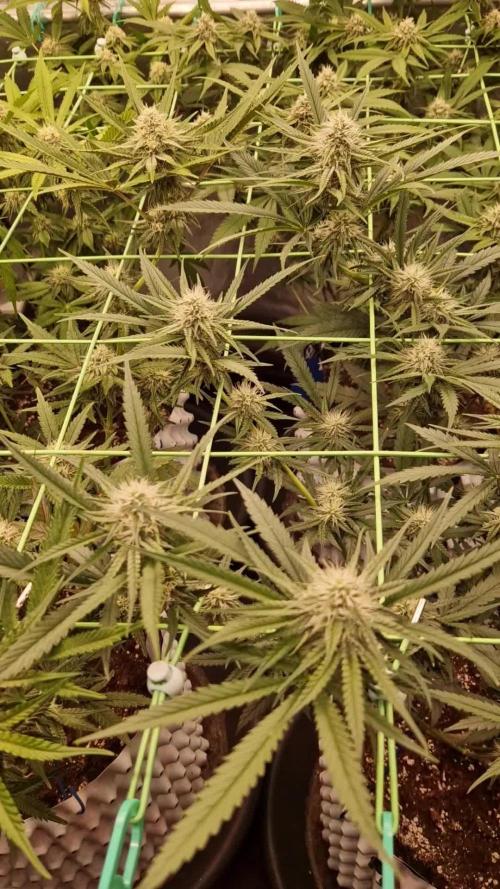
Die F025 macht jetzt langsam richtig dicke Buds. Sie hat ein sehr süßen, limonischen oldschool Geruch. Mir gefällt dieser Geruch sehr. Zum Glück habe ich noch 4 Samen von ihr. Könnte ein Grow-again werden.


Processing
Likes
28
Share


@Elysian_gardens710
Follow
Days 33-35
Both ladies have been transplanted and moved into the Veg tent! If you look in the video you can see the setup.
Both are in 10.5"x10.5" square nursery pots approx 3Gal each. Both were put into happy frog soil using azos and recharge during transplant.
I have them under an optic 8+ with a cob as supplemental lighting
Day 37:
A light defoliation day today, especially for #1. I removed all the mature fan leaves that were blocking any bud sites or nodes at all. Essentially leaving the top 2 mature leaves in tact. I honestly did not want to do this! It was heart wrenching to mutilate such a beautiful naturally growing plant 🤷♂️ practicality wins in the end tho. I removed the 2 oldest lowest fan leaves from #2 as well. More for sanitation reasons. They werent8blocking anything but the uh were dragging in the dirt and starting to fade anyhow. I actually kept 1 leaf. My 1st time ever doing this. The leaf is so neat, overlapping itself.
*transplant update day 37*
In my very green opinion they look to be struggling a bit with the transplant. I like to wet my medium prior to placing the rootball in, sometimes it's great and the roots chase it. Sometimes they get a little water logged and it takes a week b4 watering. I'm thinking it's the latter in this scenario.
Day 38; #1's top fan leaves are rolling in again. I figured it was heat but the surface area doesn't get above 78° which from what I've read is fine. Maybe it's a strain issue? Looks very imdica, ma uh be is accustomed to a cooler climate?
Day 39:
I lowered #1 about a foot further from the light. She is still all curled up tho. It isn't heat. I watered them at transplant per my usual routine. 2 other plants stranded extremely bad and these 2 are acting goofy. I probably over did it that day
Day 42 and 43
In day 42 CMOG #1 needed some water. It's her 1st drink since transplant. #2 on the other hand is drinking a bit less. I also took 2 upper fan leaves off #1(I hate doing it, but gotta promote those bud sites!! Day 43nothing really to report. I videotaped myself plucking a couple lower fan leaves. I'm raising the fan a bit more above #2 to keep wind stress down.
Day 44: 🚨⛈️Emergency!!⛈️🚨
Power is out! My light cycle is as follows: on at 6pm off at 12pm.
Its 2:45am right now and the power has gone out. Which was wierd because it went out b4 the storm hit! It was fricken midday when the outtage happen!! My poor Chocolate Mint OG 😖 keeping humididty down is gonna be hard and my grow is very far from and natural light source even if they were on the same cycle as nature 🤷♂️🤦♂️ if ur reading this say a quick prayer! Thanks!!🙏✌️🌱

Likes
2
Share


@MrGreen_theOG1978
Follow
I ran out of beastie blooms so I went ahead and switched to sonic blooms. It's a lot stronger than beastie so we will see if there is a difference. But here we are at week 4. Everything is going pretty smooth, I did a res change. Been changing around every 14 days I notice a little nitrogen build up if I go any longer than 14 days. Very low nitrogen feeding plant


Likes
109
Share


@OrganicNature420
Follow
Day 73
She looks a little under fed. Definitely way behind the others. Lovely citus smell coming from her though and very sticky. Doesn't help I've now run out of Bloom aswell as big fruits so going to have to have a think on what to do. Thinking of using dry amendments to finish it off as its Organic and I have a load. Peace 💚🌱
Likes
37
Share


@BnV405
Follow
Great week decided to give big bloom and grow big fox farm. They LOVED IT! I cut dosage in half for half gal watering can. We just bought a clone also gorilla glue
Update my husband decided to defoliate it some. Will post pictures tom after feeding


Likes
11
Share


@Velasko240
Follow
End of Week 9 of Flowering!
I skipped Week 8 because I literally had no time for an update, but not much changed anyway.
Temperatures spiked brutally - during Week 8, my growbox hit 32°C (90°F). To compensate, I dimmed the light to 75% power and raised it to about 60 cm above the canopy. This kept temps around 29°C (84°F), with occasional peaks at 31°C (88°F). Gotta say, the ventilation helps a ton, and I avoided any "foxtailing."
Since mid-Week 8, I’ve cut all nutrients and only fed pH’d water at 6.2.
The plants are still drinking, and under the 60X jeweler’s loupe, they clearly need more time. Most trichomes are still clear/milky, with very few amber ones—especially on the leaves rather than the buds. I’m a bit worried the heat might’ve delayed ripening.
A good sign, though: the natural yellowing of leaves suggests we’re nearing the end of the cycle.
The Sensi Stars (supposedly 8-week flowering time) still need longer, despite having the fattest, densest buds of the bunch.
For now, I’m sticking to plain water and checking trichomes daily, hoping to chop some plants soon. Pics are below - though I couldn’t get decent loupe shots (blame my phone’s potato cam and the tiny lens size, lol xD).
Shoutout to all you legends! Catch you next update.
Peace! ✌️


