


Likes
Comments
Share

@DogDoctorOfficial
Follow
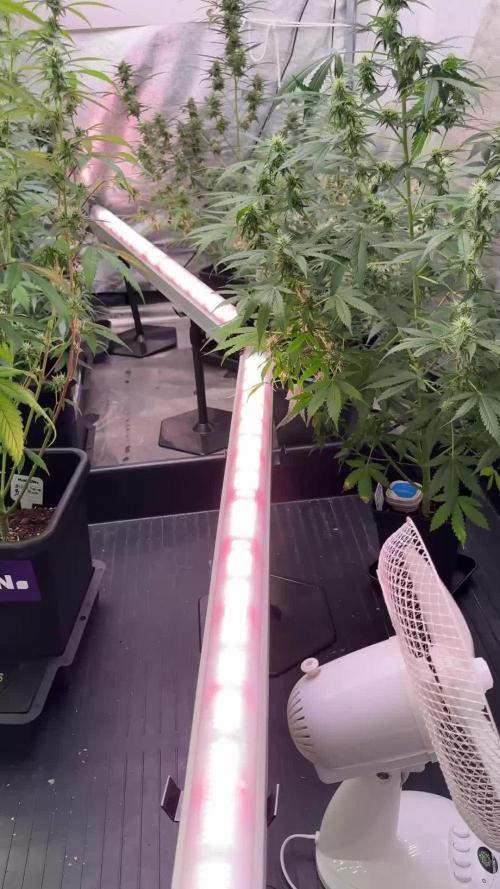
🌸 Pink Rosay Auto by Zamnesia | Pheno A | Week 9
💗 Small Plant. Massive Presence. An Absolute Beauty.
There are plants that are big.
There are plants that are tall.
There are plants that fill every available centimetre of a tent.
And then...
there are plants like Pink Rosay Pheno A.
She's something different.
She's small.
She's compact.
She's incredibly dense.
And somehow, she manages to carry an absolutely ridiculous amount of flower for a plant of her size.
Every time I look at her, I find myself thinking the same thing:
How did all of that fit into this little plant? 😂💗
This girl continues to impress me.
Not because she's trying to compete with the giants around her.
Not because she's stretching toward the ceiling.
But because she has taken her relatively small frame and turned almost every available centimetre into productive flowering structure.
And honestly...
few plants are like this.
At least, few plants I've had the pleasure of growing.
She's compact in size.
But she is absolutely not compact in personality.
🌸 Week 9 – She's Still Radiant
Pink Rosay continues moving beautifully through flowering.
The plant remains around 111 cm, but that number really doesn't tell the story.
Height is only one measurement.
Look at the flowers.
Look at the density.
Look at the way the buds occupy the structure.
Look at the proportion between the plant itself and the amount of flower she's carrying.
That's where this girl becomes special.
The flowering sites have developed into substantial, clearly defined flowers, with impressive structure and increasingly mature-looking resin coverage.
The calyxes continue swelling.
The pistils are changing as the flowers progress.
And the overall appearance is becoming increasingly impressive.
She's not simply producing flowers.
She's packing them in.
And she's doing it beautifully.
💗 Small Frame. Huge Flower-to-Plant Ratio.
This is probably the characteristic I appreciate most about her right now.
Pink Rosay has one of those structures where you can immediately see how much of the plant is dedicated to flowering.
She's compact.
But the flowers are large relative to the plant.
The branches aren't disappearing into endless stretches of empty space.
Instead, they're carrying substantial flowering structures throughout the canopy.
The result is something I find incredibly satisfying to look at:
a small plant with an enormous flowering presence.
It's almost like someone took a much larger plant and compressed it.
😂
And that's exactly why I keep calling her special.
You can find tall plants.
You can find massive plants.
But finding a plant that remains this compact while developing this much flower relative to her overall size?
That's something I really appreciate.
🌿 The Beauty Is in the Structure
The structure is another thing that continues catching my attention.
She's dense, but she doesn't look chaotic.
The flowers have their places.
The branches support them.
The foliage surrounds the developing buds.
And the whole plant has that feeling of everything working together.
There's a real sense of balance here.
That's important.
Because density by itself isn't necessarily impressive.
A plant can be dense simply because everything is crowded together.
Pink Rosay is different.
She has organized density.
Her compact structure has become a framework for the flowers rather than simply a mass of foliage.
And after the selective defoliation we performed previously, the plant has continued developing beautifully.
We didn't strip her.
We didn't try to expose every single flower.
We simply opened areas where necessary and then stepped back.
And now...
we let her do what she does best.
Build flowers.
✂️ After the Defoliation – Now We Watch
The selective flowering defoliation from the previous week has now become part of the story.
Some foliage was removed where it was contributing to unnecessary congestion, while plenty of healthy leaves were deliberately left behind.
That distinction remains important to me.
I'm not interested in making a plant look naked.
I'm interested in making the canopy functional.
And Pink Rosay still has plenty of green.
The remaining leaves are working.
They're capturing light.
They're supporting photosynthesis.
They're feeding the developing flowers.
And the plant is responding exactly how I hoped she would.
So this week?
No need to reach for the scissors again.
She's beautiful.
She's balanced.
She's developing.
Leave her alone.
Sometimes cultivation is knowing when to intervene.
Sometimes it's knowing when to stop.
Right now, I think Pink Rosay is telling me very clearly:
"I've got this."
😂💗
❄️ The Flowers Are Becoming Serious
The flowers are now entering a really exciting stage.
They're no longer just developing structures.
They're becoming proper flowers.
The calyxes are becoming more pronounced.
The pistils are beginning to change.
The buds are gaining density and volume.
And the resin continues to become increasingly visible.
When you look closely at the photographs, there is so much happening.
Every flower has layers.
Pistils crossing through the developing structures.
Calyxes stacking around one another.
Sugar leaves emerging through the flowers.
And resin covering the surfaces.
This is where the plant starts becoming more than just a green plant under a light.
The architecture you spent weeks watching develop is finally turning into the thing you've been waiting for.
Flowers.
And Pink Rosay is producing some beautiful ones.
📸 A Photographer's Dream
This girl is also becoming incredibly enjoyable to photograph.
Her structure gives you the wide shots.
Her compact frame tells the story.
But then you move closer...
And suddenly the entire image changes.
The flowers are full of texture.
The pistils create those beautiful fine lines.
The calyxes create layers.
The resin catches the light.
And the surrounding leaves provide that deep green background.
It's one of those plants where I can understand why macro photography and growing became so connected for me.
You can photograph the whole plant...
and then spend another hour looking at one flower.
There's always another detail.
Another texture.
Another little piece of biology happening right in front of the lens.
And Pink Rosay is giving me plenty to photograph.
💡 Eating Photons
The lighting system remains unchanged.
The Future of Grow Black Series LED continues providing the primary overhead illumination, with the Lumiflora under-canopy lighting adding another layer of light into the lower portions of the garden.
And Pink Rosay is clearly making use of the available energy.
The plant has plenty of flower structure.
The foliage remains strong.
And the flowers continue progressing.
This is another reason I like having different phenotypes growing together.
The environment gives them the opportunity.
But their genetics decide what they do with it.
Some plants turn that opportunity into height.
Some into branches.
Some into enormous individual flowers.
Pink Rosay seems to have chosen:
"I'll just make everything count."
And I love that.
🌿 The 8×8 Perspective
When I step back and look at the entire 8×8 Adventure, Pink Rosay becomes even more interesting.
There are plants around her that are significantly taller.
There are plants that occupy much more physical space.
There are plants that look enormous from across the room.
And then there's this little powerhouse.
Standing there at around 111 cm...
covered in flowers.
It's a perfect reminder that comparing plants purely by height doesn't make much sense.
A plant's potential isn't measured by the ruler alone.
It's in the architecture.
The density.
The flower distribution.
The health.
The efficiency of the canopy.
And ultimately...
what she gives you at the end.
And Pink Rosay is giving me plenty of reasons to be excited.
💧 Feeding & Environment
The current program continues consistently:
🌱 Plagron Terra Bloom — 2.2 ml/L
🌿 Plagron Power Buds — 1 ml/L
✨ Plagron Green Sensation — 1 ml/L
🍯 Plagron Sugar Royal — 1 ml/L
⚗️ Lemon Kick / pH adjustment as required
Current recorded conditions:
🌸 Flowering: Week 9
📏 Height: 111 cm
💡 Light schedule: 12/12
🌡️ Day temperature: 29°C
🌙 Night temperature: 25°C
💧 Relative humidity: 60%
⚗️ pH: 6.0
⚡ EC: approximately 2.0 mS/cm
🌡️ Solution temperature: 25°C
🌱 Substrate temperature: 26°C
🌬️ CO₂: 529 ppm
? Pot size: 15 L
💦 Watering: approximately 1.4 L per plant / 24h
Nothing dramatic needs changing.
The plant is progressing.
The environment remains stable.
The flowers are developing.
So we stay consistent and let the biology continue doing the work.
🌬️ Density Means Attention
Because Pink Rosay is so compact and flower-dense, environmental management remains something I pay close attention to.
The more compact the flowering structure becomes, the more important airflow and general cleanliness become.
That's not unique to Pink Rosay.
It's simply part of managing a dense flowering canopy.
And this is also why the work we did previously wasn't simply cosmetic.
Opening selected areas can give light and air better pathways through the structure.
But again...
there is a balance.
I don't want to destroy the very thing that makes this phenotype special.
Her density is part of her identity.
So we're managing it rather than fighting it.
💗 Phenotype Spotlight – One of the Special Ones
I think I'm finally comfortable saying this:
Pink Rosay Pheno A is one of those plants that doesn't come around every day.
Maybe I'm biased.
Of course I am. 😂
I've been watching her develop for weeks.
I've photographed her.
I've watered her.
I've watched her change.
I've watched the flowers develop from tiny early structures into what we're seeing now.
So yes...
I'm attached.
But even objectively looking at her structure, there's something unusual about the relationship between her size and her flowers.
She's small.
She's compact.
She's balanced.
And yet she's carrying an enormous amount of flowering structure for that frame.
That's what makes her interesting.
Not simply that she's beautiful.
It's how she's beautiful.
And that's the difference.
🔭 Where Is She Going?
This is the question now.
And honestly...
I don't know.
That's what makes it exciting.
She's progressing quickly.
The flowers are developing beautifully.
The pistils are changing.
The calyxes are swelling.
The resin is becoming increasingly apparent.
And the structure is already impressive.
But there's still a story left to write.
How much more will those flowers swell?
How much more density will they gain?
How will the resin develop?
How will those compact colas finish?
And ultimately...
what will this little powerhouse look like when she decides she's finished?
I'm very curious.
Because if she continues on this trajectory...
she could be something really special.
❤️ Final Thoughts – Let Her Shine
Pink Rosay Pheno A has officially reached the point where I don't think I can call her simply "the small plant" anymore.
She's small.
Yes.
But that's almost irrelevant now.
Because look at what she's carrying.
Look at the flower-to-plant ratio.
Look at the structure.
Look at the density.
Look at the development.
Look at those flowers.
This is one of those plants where the ruler tells one story...
and the camera tells another.
The ruler says:
111 cm.
The plant says:
"And?" 😂
Because she doesn't need another 50 centimetres.
She has already done an incredible job with the centimetres she has.
She's compact.
She's dense.
She's balanced.
She's beautiful.
She's developing some seriously impressive flowers.
And every week, I find myself liking her more.
So this week, I'm not going to ask whether Pink Rosay might surprise us.
I'm going to say something much simpler:
She already has.
And now I'm just curious to see how far she can take it.
This little lady has earned her spotlight.
Not because she's the biggest.
Not because she's the tallest.
But because she has managed to turn a small frame into something that feels absolutely enormous.
Pink Rosay Pheno A.
Small plant.
Huge flowers.
Beautiful structure.
Exceptional presence.
And one hell of a personality.
💗🌸❄️
🙏 Thank You
A huge thank you once again to Zamnesia for these beautiful Pink Rosay genetics.
Thank you to Plagron for supporting the nutrition throughout the journey.
Thank you to Future of Grow for the Black Series lighting.
Thank you to Lumiflora for bringing the under-canopy lighting into this experiment.
Thank you to TrolMaster for the environmental control.
And, of course, thank you to everyone following the 8×8 Adventure on GrowDiaries.
Every phenotype has something different to teach us.
Every plant writes a different story.
And Pink Rosay Pheno A?
She's writing one of my favourites.
She's small.
She's compact.
She's absolutely packed with flowers.
And she's becoming more beautiful every single week.
So let's keep watching.
Let's keep photographing.
Let's keep learning.
And let's give this little powerhouse exactly what she deserves:
the spotlight. 💗✨
Until next week...
Small frame. Huge flowers. Let her shine.
Growers love and happy growing! 🌱💚🌸

Likes
19
Share


@Astroboy
Follow
Full flower mode..😃
I added some nutrient to the mix.
Picture was taken on day 24
Everything going very well, happy grower

Likes
29
Share


Likes
3
Share


@Xabii
Follow
DISCLAIMER START
EC Value on weekly page is the actual value, my EC meter was not calibrated and gave extremely false values, that's why it went so bad, corrected it on the weekly page when I noticed it, the EC value in the comment is wrong, the rest is correct.
DISCLAIMER END
Plant grew a little this week, is still way to small and also full on in bloom.
Drastically increased distance to the light from 30cm to almost 60cm, I always used to do that in previous grows but for some reason thought I had to do 30cm this time !? could also be a reason it didn't grew as usually.
The mutation I found on leaf grew bigger.
Will move the plant some when next week in to a smaller plant since it will not grow much bigger anymore.
Added a new light to the tent, the Kingbrite P55 320W, when the plant is moved it will be back under the Mars Hydro SP3000.
Switched to 24h light on the last day.
Values are average of the day.
DATE - EC(us/cm)
20250322 1368
20250323 1390
20250324 1394
20250325 1422
20250326 1459
20250327 1459
20250328 1512
DATE - PH
20250322 5.75
20250323 5.79
20250324 5.82
20250325 5.84
20250326 5.90
20250327 5.90
20250328 5.91
DATE - ORP (mV)
20250322 26
20250323 180
20250324 95
20250325 85
20250326 67
20250327 68
20250328 61
DATE - °C - RH% (Tent Temp/RH)
20250322 23.4 48
20250323 23.9 54
20250324 23.3 56
20250325 23.9 53
20250326 22.7 61
20250327 23.2 52
20250328 24.9 46
DATE - °C (Reservoir)
20250322 19.4
20250323 20.3
20250324 20.4
20250325 20.3
20250326 20.0
20250327 19.4
20250328 20.5
DATE - CF
20250322 13.68
20250323 13.90
20250324 13.94
20250325 14.22
20250326 14.59
20250327 14.59
20250328 15.12

Likes
49
Share


@Roberts
Follow
FBT 2401 is doing great. She got her first lst a few days ago. Looks like the diluted solution worked well. She has started making good progress. Thank you Fast Buds. 🤜🏻🤛🏻🌱🌱🌱


Likes
92
Share


@DogDoctorOfficial
Follow
🌸 Week 4 Flower Report: Growth, Challenges & Big Changes! 🌸
Hey, Grow Diaries Fam! ✨
We’re here at Week 4 of Flower, and what a week it’s been—packed with challenges, adjustments, and exciting progress! Before diving into the details, let’s start with a note on my flowering timeline. While this is Week 4, I don’t start counting flower days the moment I flip to 12/12. Instead, I wait for the plants to show true signs of bloom. It’s a small but significant distinction that keeps things accurate and aligned with the plants’ development. 🌱
Defoliation: Timing is Everything!
Defoliation is a critical part of the flowering stage, and I typically wait until Day 21. However, this week, I tackled it earlier on Day 17 because:
1️⃣ The room was simply too full.
2️⃣ And most importantly—the Papaya Zoap had other plans!
She’s a fighter—determined, defiant, and constantly reaching for the moon. Despite intense training like super cropping, she’s still pushing upward, nearly outpacing the LED lights. Challenges like this remind us of a simple truth: gardening mirrors life. It’s about resilience, adaptation, and unwavering determination. 💪
This week, I added a second SCROG layer. While this net will support the flowering colas, it’s also there to strategically manage the Papaya Zoap. Why? Because experience has taught me that if she grows out of the LED’s range, she won’t finish properly—and that could disrupt the balance for every other plant in the tent. It’s all about teamwork, even in the garden. 🌟
Defoliation was intense, removing nearly all the leaves with stems to clear space and boost airflow. The tent now looks dramatically different! For the full before-and-after transformation, be sure to check out my YouTube channel—trust me, you’ll want to see this process up close! 🎥✨
Switching to Aptus Holland Minerals
A major milestone this week: I’ve transitioned entirely to Aptus Holland Minerals. 🌊 From now on, it’s just minerals—no more organic inputs. This marks the start of a new chapter, and I’m incredibly curious to see how the plants react to these changes. Here’s the current nutrient mix:
• System Clean: 0.5 ml/L
• Regulator: 0.15 ml/L
• RO Water Conditioner: 0.8 ml/L
• All-in-One Liquid: 2.1 ml/L
I’m keeping the pH at 6.1 and TDS at 556 ppm, and so far, the plants are thriving. This week also included a thorough system clean, ensuring everything runs smoothly as we enter the final flowering stages. 🌿
Bud Development: Pure Magic!
The bud formation across all the genetics is nothing short of incredible. Every plant is thriving, and the canopy is lush, vibrant, and full of potential. I’ve raised the PPFD to 750 for this stage, with temps steady at 25°C and RH at 63%—keeping the VPD dialed in at 1.11. The TrolMaster ecosystem, paired with the AutoPots, makes managing these precise conditions seamless. With more time to focus on the plants, I can give them the daily care they deserve. 💚
Shoutouts & Gratitude
A huge thank you to my sponsors and supporters: TrolMaster, Aptus Holland, Pro-Mix, Cannakan, and the amazing seed banks. Your incredible products and technology make this journey possible. 🌟
To the Grow Diaries community and all my followers—thank you for your energy, love, and even the challenges from the haters. It all fuels this incredible process, and I apprecilove every bit of it.
Special shoutout to Brother Daggadna—check him out on Instagram and show some love! 💚
The plants are heading into the next phase of bloom, and I can’t wait to share how this story unfolds. 🌸✨
As always, stay tuned, stay positive, and let’s keep growing strong together! 🙌
Growers’ love to all 💚
#TrolMaster #AptusHolland #GrowLife #CannabisCommunity #FlowerWeek4 #NeverGiveUp #GrowWithLove #IndoorHorticulture #Defoliation #PPFD #ControlledEnvironment #SCROGNet #DogDoctorOfficial
Discount Codes so you can save big on your next check out 💚💚💚
Kannabia - DOGDOCTOR 30% off
SeedsmanSeeds - DOGDOCTOR 10% off
CannaKan- DOGDOCTOR 15% off
terpyz.eu - DOCTOR 15% off
The Neutralizer - PORKIT5-DOG 15% off
As always thank you all for stopping by, for the love and for it all , this journey of mine wold just not be the same without you guys, the love and support is very much appreciated and i fell honored and so joyful with you all in my life 🙏
With true love comes happiness 💚🙏 Always believe in your self and always do things expecting nothing and with an open heart , be a giver and the universe will give back to you in ways you could not even imagine so 💚
Friendly reminder all you see here is pure research and for educational purposes only
Growers Love to you all 💚💚💚
P.S. – A Deep Dive into the ICL-300: Revolutionizing Under-Canopy Lighting
The ICL-300 isn’t just another LED—it’s a game-changer for under-canopy lighting. Unlike traditional LED systems that project light in a single direction, the ICL-300’s 300-degree design ensures even light distribution beneath the canopy. 🌟 This unique feature means that no part of your plant is left in shadow, creating a balanced environment for lower buds to thrive.
Key Tech Specs & Benefits:
• 300-Degree Light Distribution: This design fills the under-canopy space with optimal light, enhancing photosynthesis where it often gets neglected. 🌱
• Full Spectrum Output: Tailored to meet the specific needs of plants at every stage, ensuring quality growth from base to apex.
• Energy Efficiency: Advanced LED technology delivers maximum output with minimal energy usage, keeping costs down and sustainability up. 💡
• Durability & Heat Management: Built with high-quality materials, the ICL-300 stays cool and reliable, even in intense growing environments.
Why It Matters:
Under-canopy lighting is a game-changer for growers aiming to maximize yield and quality. Typically, lower buds receive less light, resulting in larfy or underdeveloped flowers. The ICL-300 changes that dynamic entirely by turning shadows into opportunity. 🌟 With light evenly dispersed across the entire plant, you’re not just growing; you’re sculpting a masterpiece.
For me, the ICL-300 is more than a tool—it’s a partner in innovation. It ensures that every plant in my grow room has equal opportunity to shine, from the top colas to the smallest buds at the base. When paired with a carefully managed ecosystem, like the one powered by TrolMaster, the potential for consistent, top-quality harvests reaches new heights.
This isn’t just about adding light—it’s about adding value, efficiency, and balance to the grow process. I’m beyond excited to see how the ICL-300 transforms the game in my tent, and I can’t wait to share the results with you all! 💚


Processing
Likes
11
Share





Likes
25
Share

@eldruida_lamota
Follow
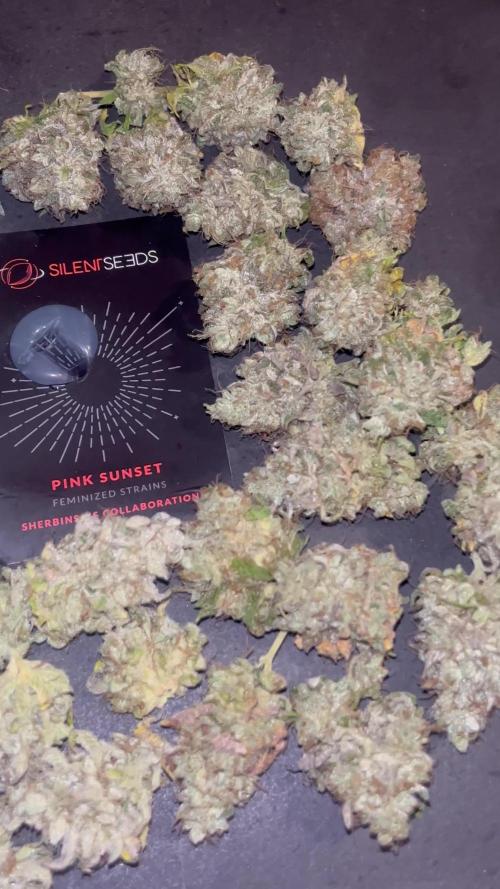
Venga familia que ya viene la cosecha de estas Pink Sunset de SilentSeeds, que ganas que tenia ya de pasarles la tijera.
Que locura de variedad , me encantó cultivarla, que aromas y que flores aparte de piedras, se ven muy resinosas y muy apetecibles.
a sido una genética con la que disfruté bastante todo el proceso, crece bastante vigorosa y al final saca unos tonos llamativos y muy pegajosos.
No supuso ningún problema todo el ciclo fue perfecto.
Seguramente aproveche los restos y las flores pequeñas para extraer en seco a 160 micras.
Agrobeta:
https://www.agrobeta.com/agrobetatiendaonline/36-abonos-canamo
Mars hydro:
Code discount: Eldruida
https://www.mars-hydro.com/
Hasta aquí es todo , espero que lo disfrutéis, buenos humos 💨💨.

Likes
Comments
Share

@mihixd
Follow
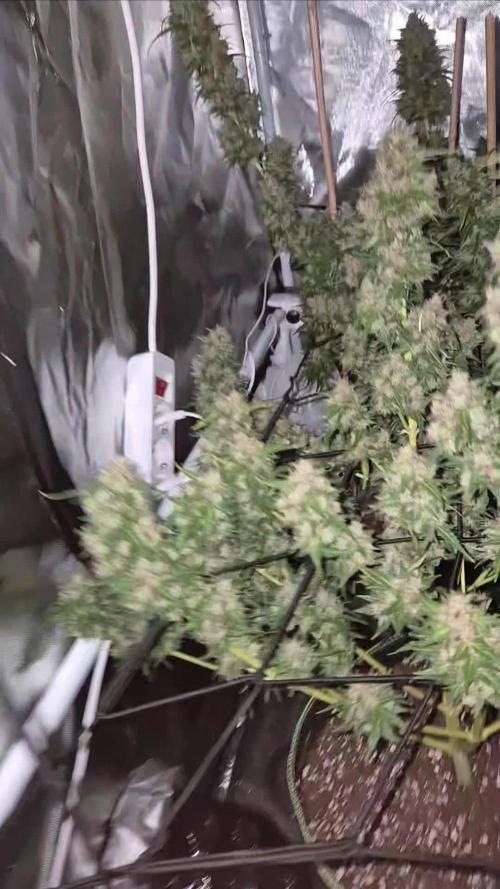
Plants are looking good! I harvested the 2 plants on the left on D82. Drying them in a 4x2 rn, the 2 remaining plants will stay in flower tent until the drying tent clears up. They could use an extra 10 days for a little more size :). Very strong smell! my carbon filter was struggling haha.
D78
10L
D81
8L
D82
2 harvested
Processing
Likes
10
Share


@GIJOSE
Follow
Week 6 veg! Today we go over how to transplant or up pot, I show you how I mix my soil, and how I adjusted my newt strength. Hope everyone is hanging in the with the lockdown. Hope everyone is doing well. Cheers!-G.I.JOSE


Likes
12
Share


@Jays_Not_Here_Man
Follow
Nearing the finish line! OMG these ladies are blowing me away 😳 the Tricomes are carpeted, the buds are fat and dense. I’ve been. Tapering off all the nutrients and feeding ph’d water until I get 10-15% runoff from the pot to help break up the pockets left behind and to use up what’s left in the plant. Have some very distinct phenos, all of them are stellar but there are a few standouts… won’t be much longer 🇨🇦👊❤️



Likes
56
Share


@AsNoriu
Follow
Day 71. Huge lack of food, girls are eating themself and size of NL brings me tears, had huge hopes for that plant .....
Bob is way behind, on cola of SBG is 20% amber ... Stupid to grow two plants in one pot ...
But ...
GSC is becoming little princes! her colours, smell , frost - I love it ! Think it will be very solid and dense buds too ...
Few weeks left max, only water till chop
Video and few photos were taken before some yellow or dead leaf collection.
Happy Growing !!!