


Likes
Comments
Share


@Stacy_smokez
Follow
Currently trying this run a different way using herbs now I will come back with how many grams yielded from one plant. Overall this grow journey was a process and I can’t wait to explore more. 144g of dried flower and 90g of trimmings

Likes
8
Share


@Ninjabuds
Follow
Very much euro genetics. It has buds all the way down its sold and buds will be decent size interesting growth patterns

Likes
10
Share


@Ultraviolet
Follow
Voltage, also known as electric pressure, electric tension, or (electric) potential difference, is the difference in electric potential between two points. In a static electric field, it corresponds to the work needed per unit of charge to move a test charge between the two points. In the International System of Units (SI), the derived unit for voltage is named volt.
The voltage between points can be caused by the build-up of electric charge (e.g., a capacitor), and from an electromotive force (e.g., electromagnetic induction in generators, inductors, and transformers). On a macroscopic scale, a potential difference can be caused by electrochemical processes (e.g., cells and batteries), the pressure-induced piezoelectric effect, and the thermoelectric effect. Since it is the difference in electric potential, it is a physical scalar quantity.
A voltmeter can be used to measure the voltage between two points in a system. Often a common reference potential such as the ground of the system is used as one of the points. A voltage can represent either a source of energy or the loss, dissipation, or storage of energy.
Dropping the temps will slightly raise the humidity, air holds less % water the colder it is. Lights on 25-35rh% the same water content will spike to 50rh% + at night just by dropping the temps.
At night all the juice photosynthesis has been storing up is mashed and mixed up to make all the goodies we need for bud, water is used to transport all these things everywhere, like little solvent transport devices, once a nutrient/protein has been delivered to destination the plant needs to get rid of all this excess water molecules it was using to transport. The only solution at night is to spit it back out into the air at night. During the peak of flower, this can catch a grower unaware, with a 4x4 full tent it can be a challenge to control all that moisture exhaust overnight especially if you're really pushing the limits.
We live in a water world, above or below, our misconception is we live on dry land, we don't live in less watery conditions than above or below. We fit into a very narrow band of moisture that just so happens to be full of lots of air and everything else required for life.
Got my first full whiff of the smell of purple lemonade, always surprises me how accurately the smell fits names, the dominant terpenes in the Purple Lemonade weed strain are carene, linalool, limonene, and myrcene. Carene gives this strain its sweet, citrus flavor and some woody notes, whereas the linalool I recognize so well from Granddaddy Purp. Myrcene has been shown to have sedative qualities while bringing musky, earthy elements to the flavor profile.
Trichome production started to ramp up, and the plant that grew taller/closer to UV showed noticeably thicker coatings. The taller plant shows slight yellowing of lower leaves, and the smaller plant is green and lush but the buds are slightly less progressed, interesting.
I super-cropped the main stem of the tall one just over a week ago (clean). I expected it to be the one slightly behind in development.
The plant has roughly 10-15% "Total resources" that it keeps in case emergencies arise. Reserves if you will.
My rationale behind breaking anything goes hand in hand with slowing things down as production is lost due to the time it takes to repair damage.
I recall watching a YouTube video, where a curly hair gentleman would super crop in a manner to damage but not disrupt using a twisting method, using fingers and thumbs placing them close together one goes clockwise other counter clock this varies a lot depending on the thickness of stem but what you wait for is a tiny snap, it may take several rolls to weaken if walls are tough I found. No snapping or bending of the stem, you want just to fracture it but not puncture this way the xylem and phloem channels remain flowing,the damage is repaired almost instantly and the 10-15% is dispatched with very little repair time. Everything in the general vicinity of the stress will now grow stronger so as to prevent further similar damage.
This is why I had expected the tall one to lag behind in development once I had cropped it but low and behold it worked and the tall one has slightly more developed buds.
The effects of birdsong on plant life may at first glance be far-fetched. Nigh on ten years ago an article appeared in Nexus Magazine on the discovery or invention of a method of growing plants using bird sounds. Christopher Bird and Peter Tompkins describe the development of Dan Carlson’s Sonic Bloom in their book The Secret Life of Plants. Many others have, it seems, recognized the role of birdsong in the growth of plants, and influenced or directly helped Carlson to develop his invention.
Dan Carlson’s desire to see that no one need be hungry through shortage of food sought to understand the optimum growth of plants. He discovered that plants also feed from ‘the top down’ as well as the roots. Underneath all leaves are pores called stomata which open to take in nutrients and moisture from the air. Carlson’s observation that the more bird life there is on the farm, the more abundant is plant life, has been echoed by farmers throughout history, except in modern times. Where there is little bird life, plants are stunted, and dwarfed. Nature has the birds sing at dawn and dusk, which dilates the stomata, and so feeds the plants. One can immediately see the importance of trees.
The development of Sonic Bloom was to create birdsong, which is played to the plants, while a foliar nutrient is sprayed onto the plants at the same time as they are being stimulated by the sound, to enhance their growth. This method produced fantastic results in the amount of abundantly nutritious produce from one plant, often in poor soils and in drought conditions. Carlson showed that the breathing leaves of plants are the source of the nutrient intake for growth. This of course is also true for humans—the breath is food. We shall discourse on this on another occasion. Plants transfer nutrients to the soil via this breathing, and Carlson showed that his plants improved the soil and helped earthworms proliferate.
The secret of Sonic Bloom was the development of the music of the same frequency as the dawn chorus of the birds. With the help of a Minneapolis music teacher, Michael Holtz, a cassette was prepared. It seems that both birds and plants found Indian melodies called ragas delightfully suitable. This is actually quite profound, although the American farmers, especially women, who had to endure this music whilst it was played to the plants, found it irritating. Holtz found the “Spring” movement of Vivaldi’s The Four Seasons appropriate and concludes: “I realized that Vivaldi, in his day, must have known all about birdsong, which he tried to imitate in his long violin passages.
Holtz, it is related by the authors Bird and Tompkins, also realized that the violin music dominant in “Spring” reflected Johann Sebastian Bach’s violin sonatas broadcast by the Ottawa University researchers to a wheat field, which had obtained remarkable crops with 66 percent greater yield than average, with larger and heavier seeds. Accordingly, Holtz selected Bach’s E-major concerto for violin for inclusion on the tape. “I chose that particular concerto,” explained Holtz, “because it has many repetitions but varying notes. Bach was such a musical genius he could change his harmonic rhythm at nearly every other beat, with his chords going from E to B to G-sharp and so on, whereas Vivaldi would frequently keep to one chord for as long as four measures. That is why Bach is considered the greatest composer that ever lived. I chose Bach’s string concerto, rather than his more popular organ music, because the timbre of the violin, and its harmonic structure, is far richer than that of the organ.
Birdsong has long been loved but also studied with reference to the musical scale and harmonics. As Holtz deepened his study he said, “I began to feel that God had created the birds for more than just freely flying about and warbling. Their very singing must somehow be intimately linked to the mysteries of seed germination and plant growth.
The spring season down on the farms is much more silent than ever before. DDT killed off many birds and others never seem to have taken their place. Who knows what magical effect a bird like the wood thrush might have on its environment, singing three separate notes all at the same time, warbling two of them and sustaining the others.
Tree and bird life are essential to Earth's existence, which Carlson, Holtz, and others have shown, but indeed others see and feel. “Plants”, says Steiner, “can only be understood when considered in connection with all that is circling, weaving, and living around them. In spring and autumn, when swallows produce vibrations as they flock in a body of air, causing currents with their wing beats, these and birdsong, have a powerful effect on the flowering and fruiting of plants. Remove the winged creatures, Steiner warns, and there would be stunting of vegetation. Nothing more needs to be added here.
It has been said that you cannot hurt the humblest creature or disturb the smallest pebble without your action having a reaction upon something else...You cannot think of an evil thought, no matter how private, without it having an effect upon somebody else. Whatsoever you do in life sets up some form of resonance.
When I say the morning chorus of the birds awakens the earth I mean that the characteristic song of the birds sets in motion a series of vibrations which react upon other forms of life. Remember, the soil of the earth is full of living microorganisms. The plants are also living organisms. You, yourselves, are living organisms. Now, this is the beauty and wonder of it all—when one aspect of nature has been moved into a state of resonance it immediately relays its vibrational motion to something else.
So when I say the dawn chorus awakens the earth I literally mean what I say. I do not suggest that the earth would come to a standstill without the bird song, but I do mean that life on earth would be sluggish and ineffectual without that first instigating outburst of vibrational power poured forth at just the right pitch and tone to set off a chain effect.
I know some of you will say, what happens in those parts of the world where there are no birds? Well, what does happen? Very little, I assure you. The hot deserts and the polar regions where there are few, if any, birds are not renowned for their wonders of nature. It is as though they are asleep. Nothing grows, few things live. Little resonates and there is a great stillness over everything.
You see, that outburst of sound just before dawn is like the little lever that works the bigger lever which turns the wheel which moves the machine…and so on. Never underestimate small things.
Animals are blessed with instantaneous and unthought-out wisdom. They are in direct contact with God and they act and live as though they are fully aware of it. Men are also in contact with God, but most of them act as though they have never heard of God because they are largely veiled from their divine center by their own thinking minds of which they are so proud.

Likes
21
Share
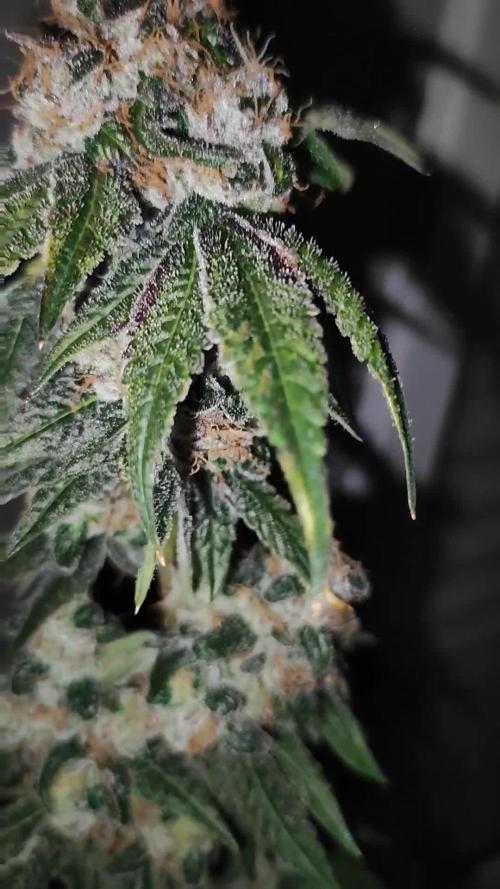

@Bncgrower
Follow
Overall it was a good harvest, it could have been much better if I hadn't switched to the Cultivator Series line... But as soon as my order arrives I'll be back to Athena again 🙌
Likes
2
Share


@Franco123
Follow
the plants both critical kush and medical mass have sprouted quietly 8 seeds or planted and 8 are germinated i am happy and thank royal Queen seeds of warnings sent

Likes
8
Share


@DonPerion1983
Follow
Sensi skunk! Fem not auto! Few other bcn critical fem seeds planted around 3 weeks after the sensi seeds! Any signs that they actually female? First time growing! Some have been topped and lst tried! Also removed a few fan leafs from the bottom! Feeding every two days one hour after lights come on! Main 3 big plants are about 42 days old since germination so I put them into flowering 8 days ago! Not sure if it was too early! When lights go of I have a oil heater that keeps the temperature at the same level 25-29 degrees is this correct? I’m currently using canna coco a and b nutrients with cal mag my mix is 40 ml of canna a 40ml canna b 40ml cal mag mixed in to tap water 10 litres! I’ve feed them this mix since they were two weeks old! Recently feeding 1.8 litres every other day as stated above!
Should I be adding flower nutes now?
Up the feeding level?
Few leafs look like there getting a few brown spots! Do I need to increase cal mag help needed as come this far and don’t wanna mess things up as cost me a fortune so far cheers


Likes
15
Share


@FishTankGrow
Follow
Day 21 - Past week or so was rough (drooping leaves), which recovered during the night period. I figured it was either light or heat. Turns out the lights were way to bright (brown tips, bleaching leaves, drooping leaves). Turned off the 300 watt LED. Turned the Two 75 watt LEDS TO 40% plant is now stretching out nicely. Will turn light up slowly once stretch looks good. Happy New Year!
Day 22 - Stretch looks good turned lights up 5% and leaves stopped stretching so back to 40%.
Day 23 - Everything is resolved. Lights were way to bright. Caused the plant to stay short and brown tips. Reduced lights by 60% and now it’s beginning to stretch a little during the day and a lot at night. Added nutes back in and reduced the water to 2 cups per day.
Day 25 - added 5% on lights. Stretching nicely. Manage vertical growth with filling out using the lights.
Day 26 - looking good increased water to 12oz per day.
Day 27 - lights up 5% back down 5%. I leave it alone now. Couple gnats flying around. Not sure if it is a problem?

Likes
111
Share


@Teamdirtbag2
Follow
She is keeping up with the Critical Kush thsts for sure. All have grown almost 1 foot this past week. All I can do is smile. I made my goal. 48 inches by June 15 , it's only the 1st of June. Trees to be.....
So it's time to shit or get off the pot. Wtf am I going to do. Time to transplant....


Likes
18
Share


@Ultraviolet
Follow
*Pre-flowers have micro trichomes upon formation, LOL. Based on my early observation, I predict that these will be frosty frosty on the trichomes.
Added 20lbs of black lava rock as mulch, raising soil temp around 1 and a half degrees to 72.8F.
Some nice little bud formations are creeping up already. Nice little foliar spray of some aminos to the underside of the leaf. Hard to guage or know how much the aminos help, but after reading how energy intensive it is for the plant to make them from scratch its something I feel I need to do as a habit.
An EC (Electrical Conductivity) meter, one that's made for the soil, it's so useful, as it indirectly indicates soil moisture as well as salt mineral nutrient levels. Just pop your metre stick in the soil and if ec is low, then it's time to water. Once there is water to assist in the conduction of electricity, the EC" will kick back up. 0.3-1.8, if it stays low, then you know it's time to add more mineral salt ferts! While Electrical Conductivity primarily indicates the overall salt content in soil, pH provides information about the relative proportion of cations (positively charged ions) in the soil's salt capacity. High EC signifies a higher salt concentration, while pH reflects the balance of cations like calcium, magnesium, potassium, ammoniacal nitrogen, sodium, and hydrogen.
Smaller leaves have less surface area for stomata to occupy, so the stomata are packed more densely to maintain adequate gas exchange. Smaller leaves might have higher stomatal density to compensate for their smaller size, potentially maximizing carbon uptake and minimizing water loss. Environmental conditions like light intensity and water availability can influence stomatal density, and these factors can affect leaf size as well. Leaf development involves cell division and expansion, and stomatal differentiation is sensitive to these processes. In essence, the smaller leaf size can lead to a higher stomatal density due to the constraints of available space and the need to optimize gas exchange for photosynthesis and transpiration. In the long term, UV-B radiation can lead to more complex changes in stomatal morphology, including effects on both stomatal density and size, potentially impacting carbon sequestration and water use. In essence, UV-B can be a double-edged sword for stomata: It can induce stomatal closure and potentially reduce stomatal size, but it may also trigger an increase in stomatal density as a compensatory mechanism. It is generally more efficient for gas exchange to have smaller leaves with a higher stomatal density, rather than large leaves with lower stomatal density. This is because smaller stomata can facilitate faster gas exchange due to shorter diffusion pathways, even though they may have the same total pore area as fewer, larger stomata
Sugars, classified as carbohydrates, are composed of the elements carbon (C), hydrogen (H), and oxygen (O). They are characterized by the general formula (CH2O)n, where 'n' represents the number of carbon atoms. The most basic units of sugars, called monosaccharides, have this ratio of carbon, hydrogen, and oxygen. For example, glucose and fructose, both monosaccharides, have the formula C6H12O6.
The reality of your typical plant. After harvest, with all water remove,d you are left with. (Ballpark)
Mother-nutrients: Carbon 47%, Oxygen 43%, Hydrogen 4%.
Macro-nutrients: Nitrogen 3%, Phosphorus1%, Potassium1%, Calcium1%, Magnesium0.5%, Sulfur0.5%.
Micro-nutrients: All the rest combined 1%
Nothing good can happen in a soil that can't breathe. The aerobic zone in soil is crucial.
Microorganisms can break down sugars into their constituent atoms, though they don't typically do so completely to the individual elemental level (carbon, hydrogen, oxygen) in one step. Microorganisms utilize sugars through metabolic pathways like glycolysis and fermentation, converting them into simpler molecules like pyruvate and then potentially to other compounds like lactic acid, ethanol, or carbon dioxide, releasing energy in the process.
Glycolysis:
This is a central pathway where a glucose molecule (a common sugar) is broken down into two molecules of pyruvate. This process generates some ATP (energy) for the cell.
Fermentation:
If oxygen is limited, some microorganisms can ferment pyruvate, producing various end products like lactic acid (in lactic acid fermentation), ethanol and carbon dioxide (in alcoholic fermentation), or other organic acids.
Further Breakdown:
The products of glycolysis and fermentation can be further broken down through other metabolic pathways, potentially leading to the release of carbon dioxide and water, and the extraction of more energy.
Not Always to Atoms:
While some microorganisms can completely oxidize sugars to carbon dioxide and water, releasing all their energy, others may stop at intermediate stages, producing various organic compounds.
Role of Enzymes:
Microorganisms use specific enzymes to catalyze each step in these breakdown pathways.
In summary, while microorganisms don't typically reduce sugars to individual atoms in one go, they break them down into simpler molecules, releasing energy and potentially forming new compounds as part of their metabolism.
In conditions of high CO2 concentration, the pH of a solution or system will decrease, becoming more acidic. Conversely, low CO2 concentrations lead to an increase in pH, making the solution more alkaline or basic. This relationship is due to the chemical reactions involving CO2 and water, which produce carbonic acid and influence the concentration of hydrogen ions, ultimately determining the pH
Likes
8
Share


@Piro420
Follow
Finally the stretched stopped.
Cut about 10 tops bent about 20 with 90s. Still right in the lights. They are looking very happy even though they are so close to the light ( thanks to high c02 levels most likely.)
Another week or 2 before I cut the temps and co2 levels down.
Been trimming all leaves below light line.
Stinky and brutally sticky I feel like Clark griswold with pine sap when ever I am bending the tops and such..
I think even with them being in the lights I will still get a few pounds of premium flower to smoke :)


Likes
5
Share


@ChiloteAnonimo
Follow
- Día 1 de la segunda semana de flora con riego foliar de calmag
- Videos tomados día 2 de la segunda semana


Likes
43
Share


@MrGrow
Follow
10.06.2023
RACCOLTO_RED HOT COOKIES
Sweet Seeds
🌱 142 giorni dal seme
🌼 70 giorni fioritura
⚖️ 2895 grammi non secchi totale di 4 piante
Tutto è andato per il meglio in questa corsa. Le 4 piante di Red hot cookies si sono dimostrate veramente forti.
Colori stupendi a fine fioritura, non rossi come speravo, profumo di terra, dolcezza e aspro mescolati con note di gas, un profilo terpenico molto interessante. Lo scrog effettuato da me, non credo abbia dato il massimo potenziale di queste piante, con il tempo migliorerò anche questo aspetto, ma spero di stare su 1 hg a pianta di media. Aggiornamento a breve con peso a secco, foto dei fiori ripuliti e rapporto sulla potenza di questa varietà.
Ringrazio tutti quelli che sono passati a vedere il mio diario, a tutti i like i commenti e ai consigli.. un grande love a tutta la community di growdiaries 💚🙏

Likes
25
Share


@Mr_ZAF_Budz
Follow
So Day 60 of 12/12 and the girls are ripening perfectly. Trichomes are mostly cloudy but I think they need a few more days for sunset sherbet and another week or 2 for the Plat. GSC. Obviously the amnesia haze will go for another 3-4 weeks.
Hope you guys enjoy the update ✌️🏼

